Toward a strategy for remediation of pedagogical practice in SL

I’ve recently reviewed findings from three completed research cycles based on the primary case (MIL) and SL in my PhD-project. The case study was conducted at the Danish online Masters program on ICT and Learning (MIL) at Aalborg University and consisted of remediating a course in three consecutive research cycles spanning from 2007-2009. Based on the findings I’ve started to outline a strategy for remediation of pedagogical practice in SL. In a newly published article Hunsinger & Krotoski (2010:94) state that “trying to reproduce experiences that exist in our physical world is often not the best strategy for designing learning and research experiences in virtual environments”, and they call for strategies that go beyond replicating and reconstructing physical environments. Combining my own findings with ideas from Vygotsky (1978), Wenger (1998) and especially Bolter & Grusin’s “Remediation. Understanding New Media” (1999), I’ve found that it is possible to identify two different strategies;

  • Respectful remediation. Main objective is to reproduce prior practice with no apparent critique – often focusing on a quantitative outcome. Other media are represented without manipulation in the mediation. In general, this type of remediation enhances the authenticity and enforces the authority of the original media and practice. Tradition, familiarity, and certainty are keywords in this strategy. Changes are experienced as minor, evolutionary modifications and typically only involve change in modality, not specific activities.
  • Radical remediation. Main objective is to reinvent prior practice based on critical review – often focusing on a qualitative outcome. Other media are represented manipulatively in the mediation. In general, this type of remediation challenges both authenticity and authority of the original media and practice. Innovation, alienation, and uncertainty are keywords in this strategy. Changes are experienced as major, revolutionary transformations, and typically involve change in both modality and activities.

Given the technologic, pedagogic, and not least ontological complexity of a rich medium like SL, I’ve found that an overall respectful remediation strategy isn’t a viable choice, but it is also possible to distinguish between respectful and radical remediation at the tactic level, and here I’ve found that a combination is fruitful. Furthermore, since SL not a an abstract space for interaction, but a remediated world, also the participants (remediated as avatars) and the teaching and learning environment (remediated as places) can be remediated either respectfully or radically.

In “Learning in 3D – adding a new dimension to enterprise learning and collaboration” Kapp & O’Driscoll claim that the first step to escape Flatland and avoid routinization is to “distance oneself from existing processes and practices and examine a newly emerging technology on its own merits“, and they speak of right and wrong ways of dealing with teaching and learning in 3D:

Done right, 3DLEs provide the opportunity for instructional designers to overcome their captivation with the classroom and move in a direction that is more congruent with the needs of the increasingly digitized and virtualized enterprise. Done wrong, 3DLEs will remain the domain of digital avatars in digital classrooms discussing content on digitally rendered PowerPoint slides. (Kapp & O’Driscoll. 2010:56).

While I do agree that any technology/medium should be examined in its own right, I do find it a bit hasty to dismiss prior experience and practice, and I find the dichotomy of right/wrong inappropriate. Naturally, it is possible to talk about more or less suitable ways of designing and using media, but it’s a very complex issue and should involve consideration of all elements of the practice. In my case study, I experimented with the use of slideshows in the two last research cycles, and found that this kind of respectfully remediated practice could have the same benefits and pitfalls as in the world outside SL. However, I also found that the build-in backchannel made it possible to draw use of the mediums more unique affordances by combining simultaneous use of text-chat and voice. By encouraging the students to comment and post questions during a presentation, an otherwise inactive one-way presentation can turn into quite an engaging teaching and learning activity. Nonetheless, by adding this component to the activity, the “rules of engagement” changed, as far as both the teachers and students needed to learn new roles and communication skills. Learning to deal with this kind of multi-voiced communication takes time, but it has the potential to open up and democratize the dialogue. My point here is that a seemingly respectful remediation in SL actually can result in radical changes, and another important aspect is that I don’t see respectful and radical remediation as a dichotomy, but as a dualism. Further, whether or not something is perceived as being respectful or radical will differ between individuals, communities, and cultures.

I’m not arguing that we should cease from experimenting with completely new ways of doing things, but my findings clearly show that an element of respectful remediation is important – at least until the participants have reached a certain level of experience and mastery of the medium. As an educator, I find that one of the advantages of respectful remediation is that it’s based on recognition and familiarity enabling the user to build on prior experience, and changes are experienced as minor, evolutionary modifications, which potentially leaves more energy for the participants to focus on the task at hand, rather than on the medium and the mediation. I’m currently working on designing a model to illustrate the complexity of different remediation strategies, so more on this will follow …

/Mariis

References

Hunsinger, J. & Krotoski, A. (2010): Learning and researching in virtual worlds. In: Learning, Media and Technology, 35:2, p. 93-97

Vygotsky, L.S. (1978): Mind in society. The development of higher psychological processes. (trans. M. Cole). Cambridge, MA: Harvard University Press.

Wenger, E. (1998): Communities of Practice. Learning, Meaning and Identity. Cambridge, MA: Harvard University Press.

Bolter, J. & Grusin, R. (1999): Remediation. Understanding New Media. Cambridge, MA: MIT Press.

Kapp, K. & O’Driscoll, T. (2010): Learning in 3D. Adding a new dimension to enterprise learning and collaboration. Pfeiffer.

The AVATAR project: “Added Value of teAching in a virTuAl woRld”

Alumni from The Danish Online Masters Program in ICT and Learning (MIL) and one of the participants in my first research cycle in SL back in 2007, Inger-Marie F. Christensen from Southern University of Denmark (SDU), is currently involved in an interesting project called AVATAR “Added Value of teAching in a virTuAl woRld”.

The project runs for two years (December 2009 – November 2011), is co-financed by the European Commission under the Lifelong Learning Sub-Programme Comenius, and involves partners from Austria, Bulgaria, Denmark, Italy, Spain and the UK.

AVATAR is inspired by the lack of ICT use in schools throughout Europe despite the possible educational benefits and social learning opportunities they promote, and the project’s primary aim is to enhance the quality of teaching and education in secondary schools.

So far a six-month research phase has been completed based on desktop research, online questionnaires, video interviews, and case studies. The next phase of the project will be to design, build and develop training contents, activities and virtual labs for an upcoming AVATAR course “Teaching in a Virtual World” on an e-learning platform combined with SL and Teen Grid. This course is expected to run from mid-January 2011 and will be open for secondary school teachers and their students. The project partners will collectively select about 100 secondary school teachers from each partner country to participate in the course and test out virtual worlds in their classrooms. Towards the end of the course, each teacher trainee will design a “project work”, consisting of a lesson or course in a subject of their choice to test out on a group of students at their school.

The AVATAR course aims at enhancing the level of ICT use in education by providing teachers with new methodological and pedagogical tools. Virtual Worlds (VW) can help teachers and students learn key skills and information in different subjects, while incorporating collaborative learning and a learning-by-doing approach.

Course description and application form is expected to be published here on the project website by the end of July :-)

/Mariis

My first presentation at UCB’s Center for New Media

Today I did my first presentation of my PhD project at UCB. Sadly only a few people turned up, but they seemed engaged and asked a lot of questions, so that was good. It was the first time I presented some of my recent ideas on remediation, so that was quite interesting for me personally. I clearly need to refine my thoughts and the lack of proper English vocabulary, when I want to make a specific point, is really, really frustrating, but it is all part the learning process and I feel confident that it will become easier as time passes.

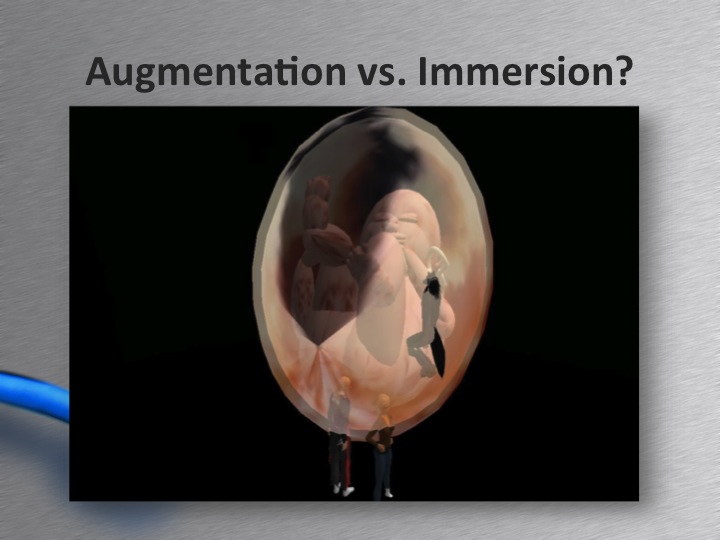
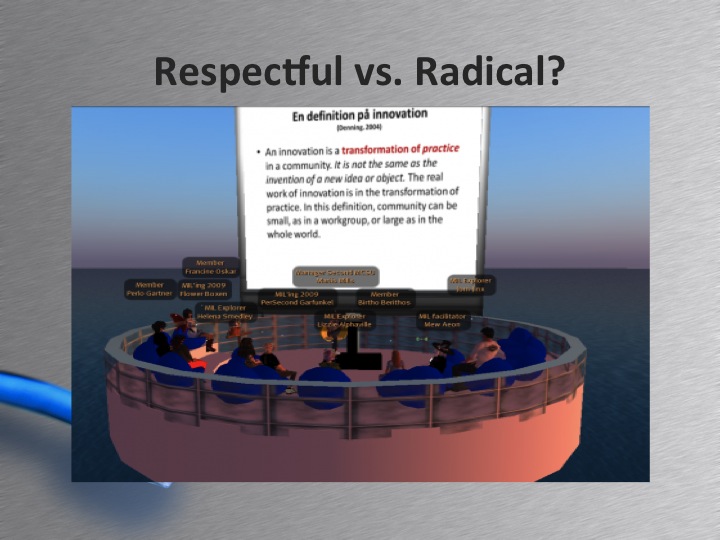
Among other things I addressed one of the challenges I currently have in relation to my thoughts on remediation. I’ve incorporated several dichotomies in my models for remediation, but I only see them as theoretical/analytical tools – reality (in whatever shape it represents itself) is much more complex and I don’t necessarily consider them to be mutually exclusive. Another problem is that some of the concepts I’m using are ambiguous, so I have a lot of work ahead of me in determining how I will define these concepts, and as examples of this uncertainty I presented the following three slides:

BTW, for the presentation I’d found a nice template displaying an Ethernet cable, which I thought suited the topic very well – only later I realized that as part of the terms of use I’m not allowed to upload them to any sort of file sharing site and this is why they can only be found here in pdf format … and so I will not use that type of template again!

/Mariis

Google docs and EtherPad in SL Viewer 2

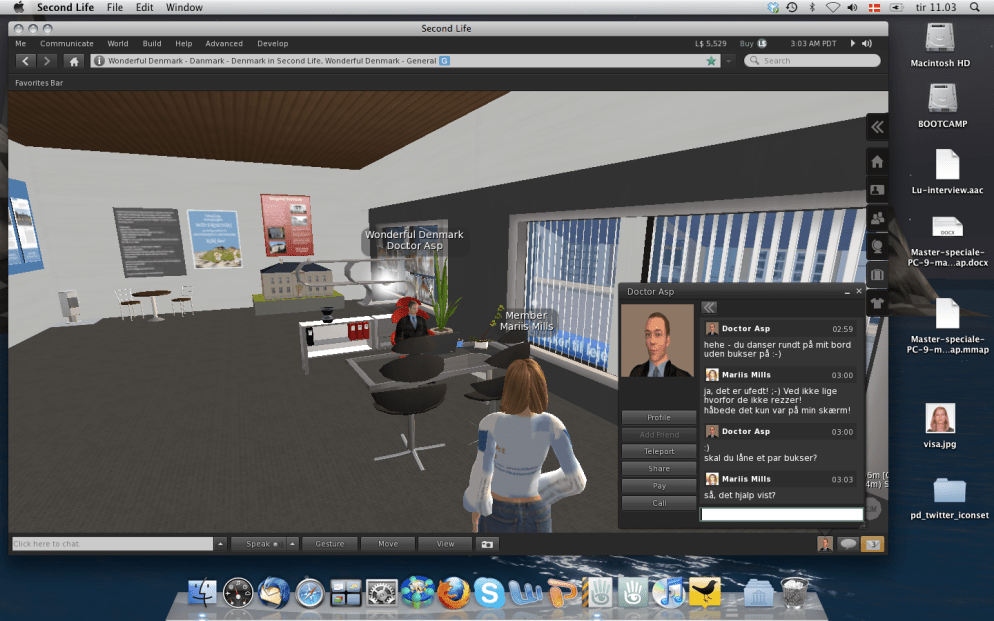
Yesterday my master student, PerSecond and I continued our test of Shared Media in the new SL viewer. When we first tried it out last week, we didn’t have much success, but my ever so helpful landlord, Doctor Asp had some ideas, and so I started off by testing it with him on my holodeck.


In Asp’s office – Asp is official Linden Lab SL solution provider and I highly recommend him :-)


Life in Beta = testing, testing, testing …

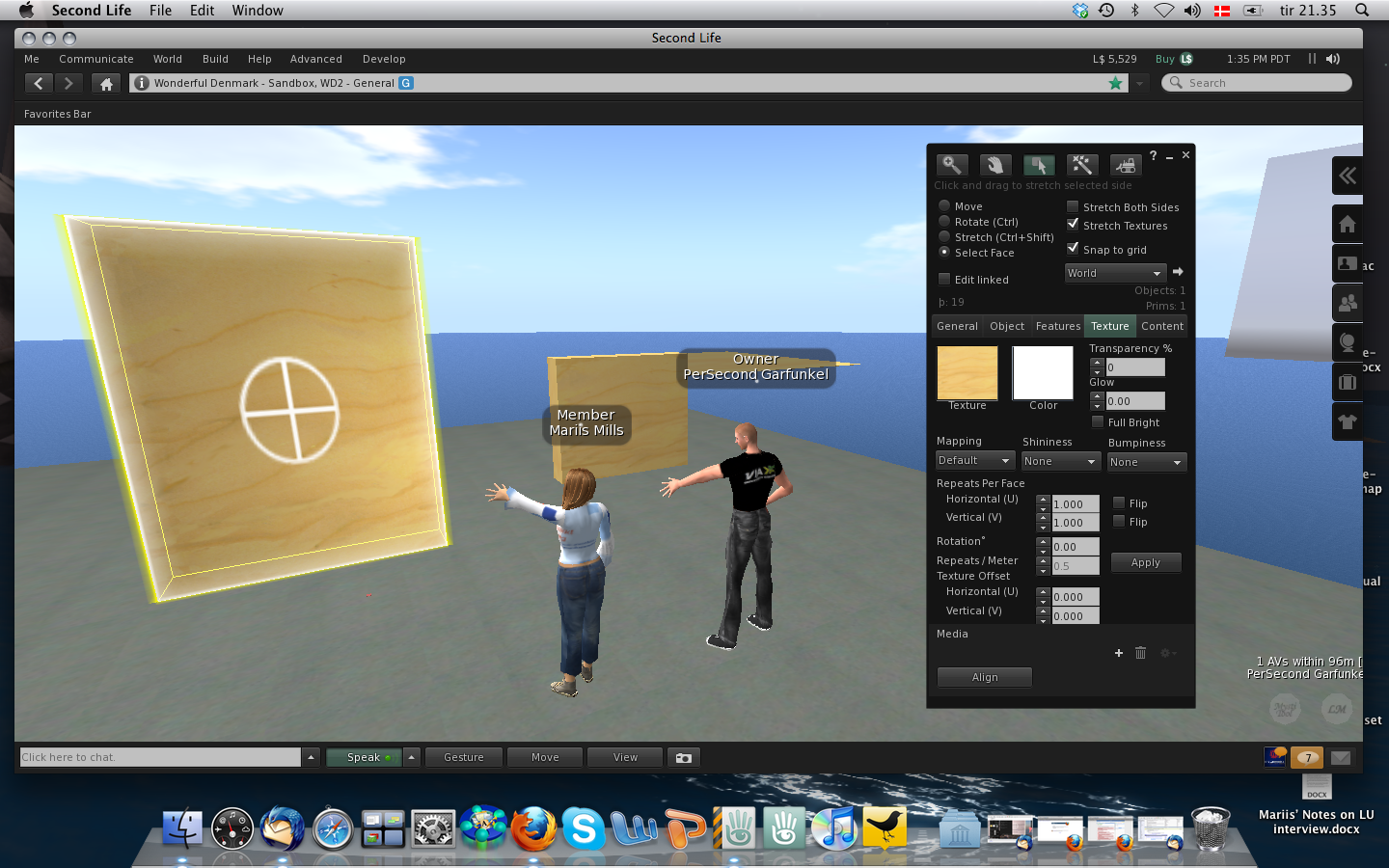
Later in the evening I met with PerSecond for our weekly session and asked him to set up a prim in his private home – not in his LL home, where nosy neighbours might disturb (none of us have yet found the time to check out privacy and security settings in our LL homes).

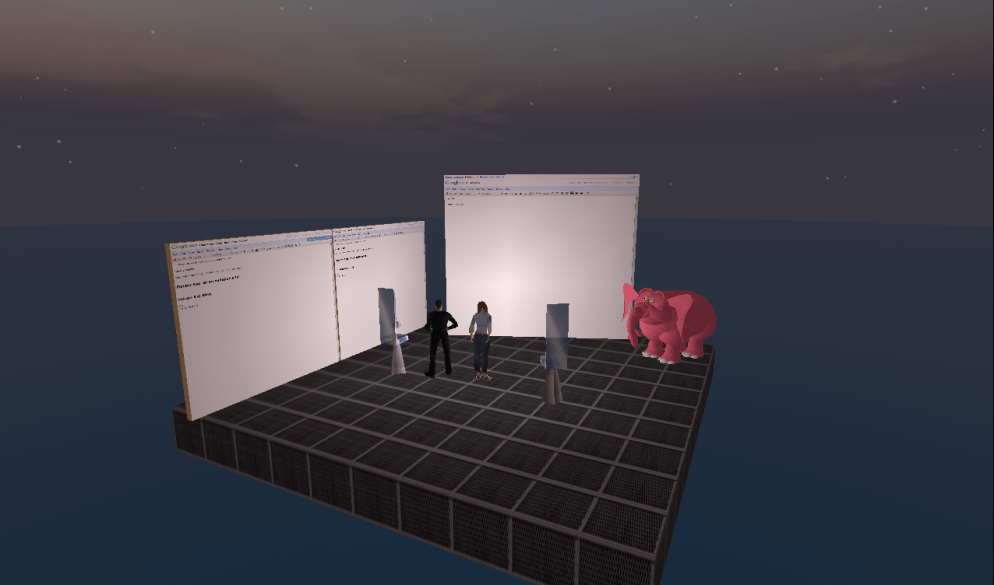
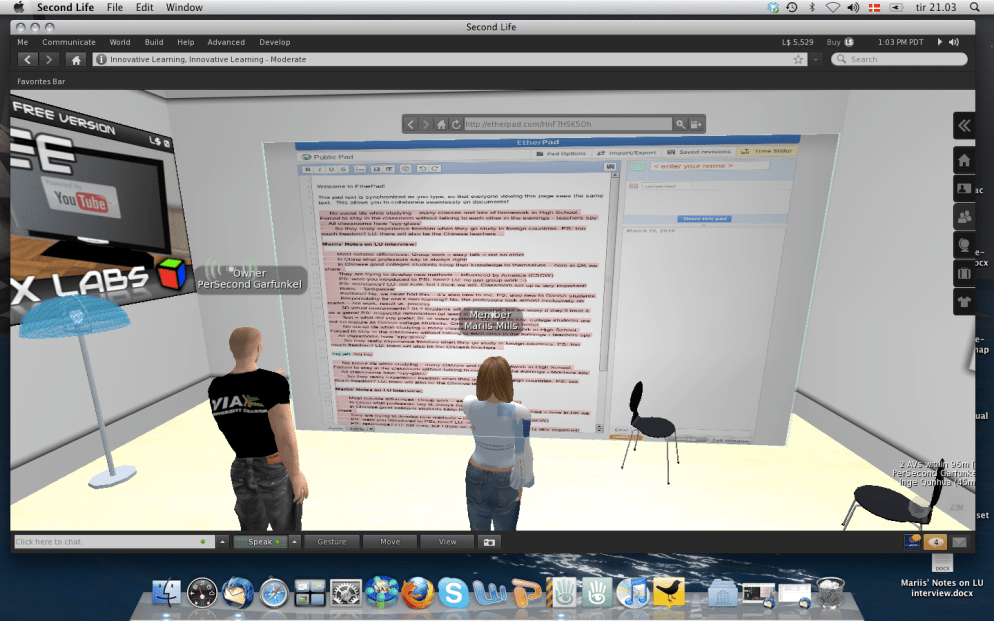
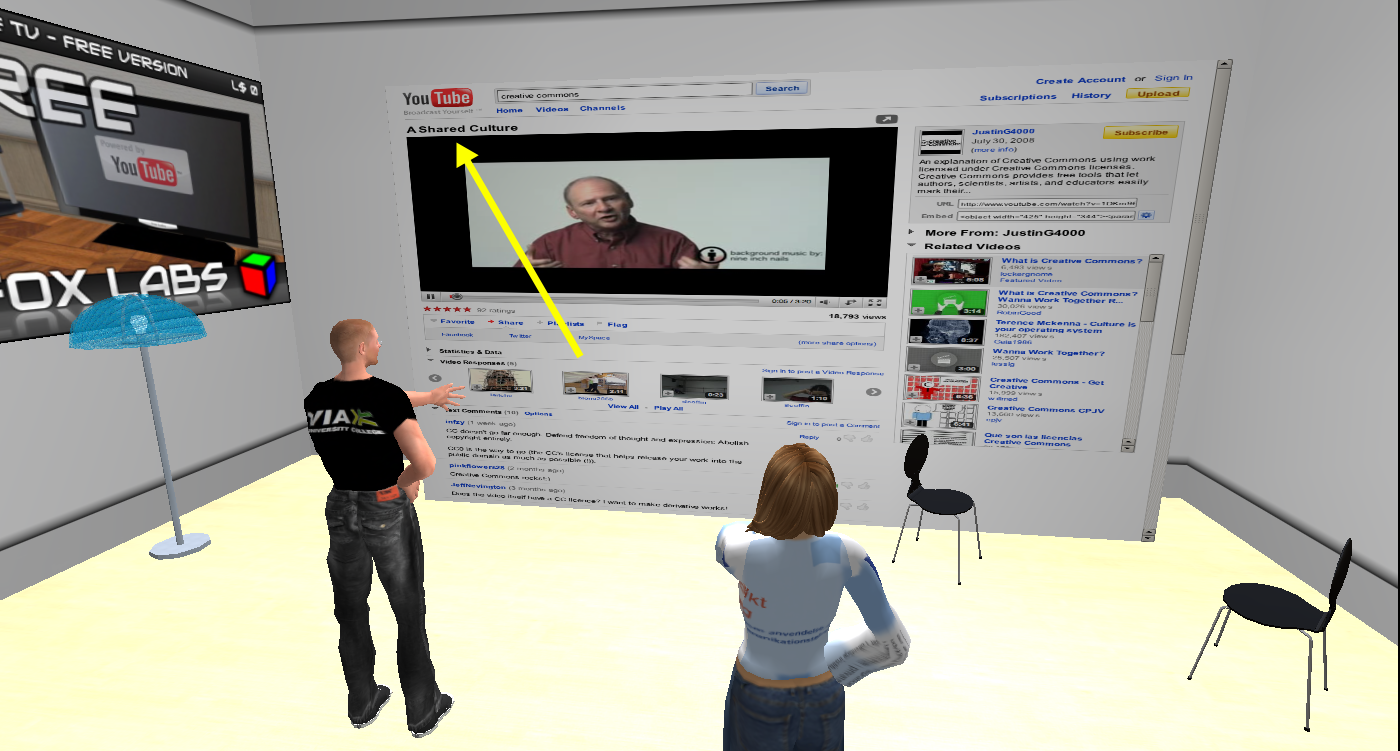
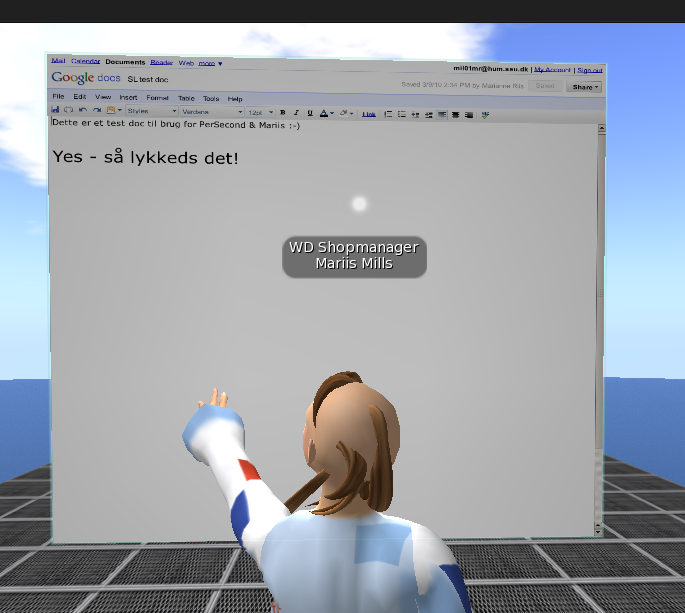
We succeeded in setting up both Google docs and EtherPad, writing in them real time (and seeing it without having to reload!), but ended up most satisfied with the EtherPad doc that loaded much quicker on our machines. PerSecond works in Windows, so we get to test both platforms. We continued testing some YouTube videos while trying to figure out what to do about security settings and discussing the most appropriate use in a teaching and learning situation.

Since the docs we tested were completely public our next step was to test security settings to see if in any way we could control access and interaction, and so we went to a sandbox, where both of us had building rights and set up new prims.

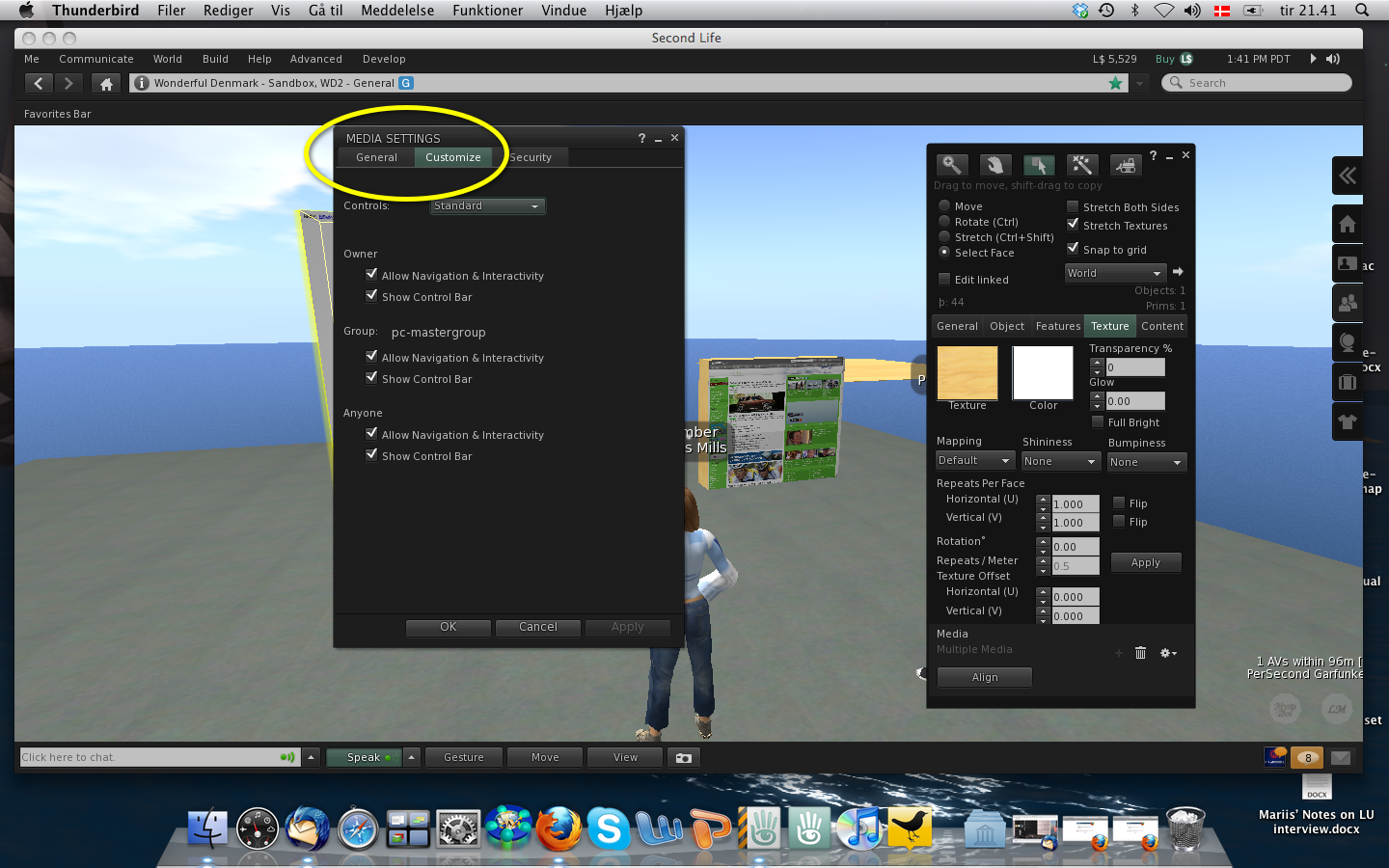
Under Customize in the Media Settings it is possible to change control of the prim, and we tried out several settings thinking it would be possible to limit control to our group.

In this phase of the testing we needed to bring in our alts; Placebo and Memo, who were not members of our group, and so we logged in and out several times trying out different combinations.

Despite our efforts we did not succeed in limiting control to our group. When the prim was controlled by Owner only, we found that Anyone and Group were restricted to clicking on links (but with automatic reload to the page chosen by Owner), but we had hoped it would be possible to set this for the group, so we’ll continue testing … Now, neither PerSecond nor I are experienced builders, so we may very well be missing out on some obvious points, so if anyone reading this has constructive advice it would be greatly appreciated :-)

/Mariis

Setting up for Shared Media test in SL viewer 2

This semester I have the pleasure of supervising, PerSecond a Master student from The Master programme on ICT and Learning (MIL). In his Master thesis PerSecond will investigate the possibility of using SL as platform in a Danish-Chinese PBL collaboration he and his colleagues at VIA University College are involved in. PerSecond and I are meeting in-world for our sessions and today I went in to set up for a test of the new Shared Media feature in SLV2.

For unclear reasons* SLV2 really runs slowly on my machine, so for a while there I had to work as a cloud – and let me tell you; that’s a bit distracting!

Anyways, I did mange to set up for a test of google.docs … though I seem to have a recurring “bad-hair-day” ;-)

I’m hoping the problems I experience won’t influence our test later tonight, so that I can get back to our experimentation in a future post …

/Mariis
*) I did read Gwyneth’s excellent post on improving Mac performance, but I can’t force Texture Memory beyond 128, and GL tot stays at 67/192 … so I’m thinking it may be a) a PICNIC error or b) my (still) malfunctioning Mac :-(