LOM nr. 3: Læringspotentialet i virtuelle verdener

Online tidsskriftet Læring og Medier nr. 3 handler denne gang om læringspotentialet i virtuelle verdener.

Om artiklerne:

Rejseguide til Second Life I erkendelsen af at mange har en mening om virtuelle verdner og at kun få har faktiske erfaringer, indledes LOM #3 med Inger-Marie F. Christensens rejseguide ”Turen går til Second Life”. Artiklen er optaget uden for review. Formålet med denne artikel er at give et overblik over Second Life for at gøre det muligt for førstegangsbesøgende at orientere sig og planlægge meningsfulde besøg in-world. Artiklen er opdelt i to sektioner. I første sektion har forfatteren samlet en række praktiske oplysninger om bl.a. avatarfænomenet, installation af Second Life, tidsforskel, valuta samt kommunikationsformer og transport/navigation in-world. I anden del af artiklen har en række dedikerede og entusiastiske Second Life brugere bidraget med slurls til og en kort beskrivelse af deres favoritsteder. Der er noget for enhver smag.

Interview med og rundvisning ved avatar Gunhild Soderstrom – 2 Second Life-optagelser
Første optagelse tager seeren med på en rundvisning in-world, hvor Gunhild Soderstrom præsenterer Percipitopia, der bl.a. byder på en rekonstruktion af den irske filosof George Berkeleys hjem ”Whitehall” på Rhode Island og The White Room of Disorientation, der illustrerer Berkeleys ”Theory of vision”. Rundvisningen afsluttes med en solopgang ved klippen Hanging Rock, hvor Berkeley efter sigende har udtænkt flere af sine teorier. Bag avataren Gunhild Soderstrom gemmer sig lektor i filosofi Cynthia Grund fra SDU, som avataren Inga Miles alias Inger-Marie Christensen i anden optagelse har interviewet i Second Life. Det er blevet til en diskussion om læringspotentialet i virtuelle verdner og om Cynthias konkrete Second Life projekt Percipitopia, der er et eksperiment med 3D mediering af museumsundervisning. Begge produktioner er optaget uden for review.

Rum og rammer i det virtuelle
Efter det indledende afsnit omkring Second Life og det efterfølgende eksempel og interview optaget i Second Life, introducerer Simon Heilesen i ”Rum, rammer og biblioteker i den virtuelle verden” til, hvordan den virtuelle verdens miljø anvendes og opleves i en faglig sammenhæng. Heilesen tager udgangspunk i det danske biblioteksprojekt Info Island DK i Second Life, og sammenligner det med en række andre typiske biblioteker i in-world i relation til design. Han konkluderer, at den virtuelle verden kommer med en række betingelser af både mental og metaforisk art, som både sætter ramme og betingelser for anvendelsen og udfoldelsen.

Litteraturundervisning og virtuelle verdner
Artiklen ”Verklig fiktion om virtuell verklighed” af Ylva Lindberg tager udgangspunkt i spørgsmålet om, hvorfor og hvordan humaniora skal integrere ny teknik, underforstået den virtuelle verden repræsenteret af Second Life. Lindberg tager afsæt i et konkret forsøg på at anvende Second Life i litteraturundervisningen og argumenterer for, at den virtuelle verden er et oplagt sted at lade litteratur og teknik mødes. Afslutningsvis binder Lindberg litteraturen og den virtuelle verden sammen på ny vis, idet hun viser, hvordan to konkrete romaner omhandlende virtuelle verdener, kan knytte an til væsentlige indsigter og diskussioner om litteraturens genstand.

Virtuelt læringsmiljø til sygeplejestuderende
I artiklen ”CaseConnexion – udvikling af et virtuelt læringsmiljø til sygeplejestuderende” videregiver Line Zimmer Rasmussen og Linda Hauschildt Nielsen deres erfaringer i forbindelse med udviklingen af et interaktivt 3D læringsmiljø. Læringsmiljøet indeholder hospitalsstuer og patienter, som gør det muligt for sygeplejestuderende at omsætte teori til praksis, og tager udgangspunkt i problembaseret læring, hvor de studerende arbejder med cases og opnår øvelse via simulationer. Artiklen indeholder didaktiske refleksioner over valg af platform samt over de principper, der ligger til grund for det konkrete design af læringsmiljøet, herunder overvejelser mht. professionstænkningens indflydelse på disse designprincipper. Artiklen afsluttes med vigtige anbefalinger ift. hvordan undervisere og studerende klædes på til at gennemføre succesfulde læringsforløb in-world.

Hvad mener de studerende selv?
Lillian Wiese har foretaget en analyse af en gruppe studerendes oplevelser i Second Life med henblik på at vurdere, hvor velegnet den virtuelle verden er som platform for udvikling af et 3D-online læringsmiljø baseret på edutainment og pervasive learning. I artiklen ”De virtuelle verdeners læringspotentiale” videregiver hun resultaterne samt egne konklusioner og anbefalinger. Endvidere peger Lillian Wieses analyse af de studerendes oplevelser på nødvendigheden af at skabe gennemtænkte forløb med interessante og veltilrettelagte aktiviteter. Hun anbefaler, at der skabes trygge rammer både psykisk og fysisk og peger på behovet for mentorer og coaches.

Det er fælles for artiklerne i dette nummer af LOM, at de alle illustrerer, hvordan en remediering af undervisning og andre praksisser til en 3D virtuel verden kræver nytænkning frem for overførsel af traditionelle processer og rammer. Nytænkningen viser sig altafgørende for at kunne skabe meningsfulde forløb for deltagerne. CaseConnexion er et glimrende eksempel på, hvordan de virtuelle verdners helt unikke karakteristika anvendes til at skabe immersiv læring, der sætter det sensomotoriske i spil og giver de lærende mulighed for at opnå praksiserfaring.

Det samme gør sig også gældende i VIA University College projektet ”Innovative Learning”, der er nævnt i artiklen ”Turen går til Second Life”, og som netop har modtaget ”Den Nationale e-Læringspris 2009”.  Innovative Learning er et 3D læringsmiljø, der er konstrueret som en byggeplads, og hvor tømmerlærlinge uddannes indenfor sikkerhed og miljø. Her viser Second Life sit potentiale som læringsplatform for unge og ældre, der ikke har gode erfaringer med det overvejende boglige uddannelsessystem i Danmark. Virtuelle verdner er unikke på den måde, at de ikke primært er baseret på sproglige erkendelsesformer, men tværtimod har en stærk visuel og kropslig dimension. Måske er det netop virtuelle verdner, der kan være medvirkende til at give det danske uddannelsessystem et løft og bidrage til at opfylde målsætningen om, at flere unge skal igennem dels en ungdomsuddannelse og dels en videregående uddannelse.

/Mariis

Life is all about stories

… and fortunately there are some great storytellers out there – here’s an amazing video from Sound’r:

While I’m not an artist, I do believe that storytelling plays an important role in my line of work too – or as Gordon Wells puts it:

Constructing stories in the mind or storying, as it has been called is one of the most fundamental means of making meaning; as such it is an activity that pervades all aspects of learning  . . . Through the exchange of stories, teachers and students can share their understandings of a topic and bring their mental models of the world into closer alignment. In this sense, stories, and storytelling are relevant in all areas of the curriculum. (Wells.1986:194)

Tomorrow, November 2nd I’ll be starting yet another in-world course. This time around, my friend and former MIL student, Mew Aeon will join me as co-facilitator.

Mew
What’s Mew’s story?

I’m truly delighted and grateful that Mew has accepted to join me in the course. I’m sure we’ll co-create some great teaching and learning stories together with the participants :-)

/Mariis

Reference

Wells, G. (1986). The Meaning Makers: Children Learning Language and Using Language to Learn.Portsmouth, NH: Heinemann.

SLecture 1 – observations from the PBBL course

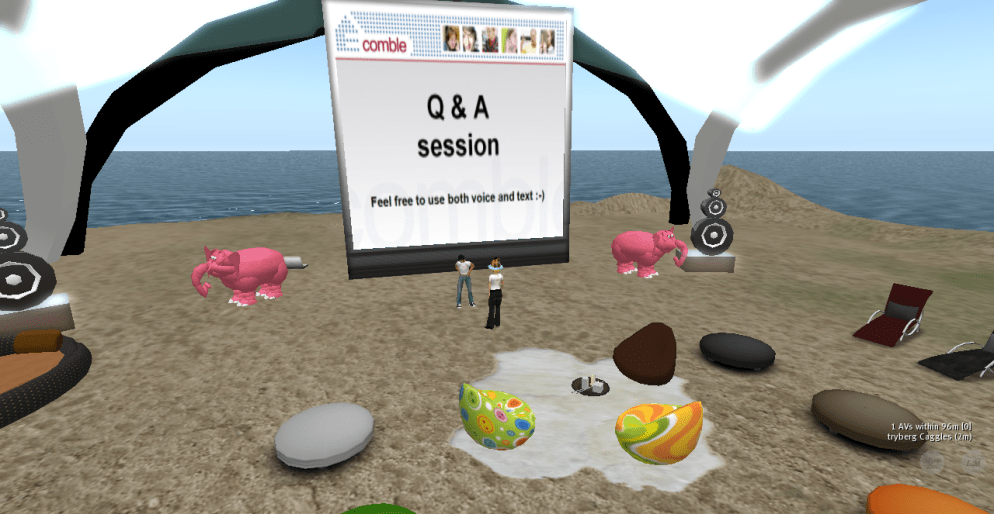
In the PBBL course we have planned 10 lectures in SL and a number of optional informal meetings. Last night we had the first lecture and in this post I’ll reflect a bit on some of my observations. We have 23 participants from 5 countries and an unknown number of Danish on-campus students enrolled. As one of the requirements to pass the course we have asked the participants to attend a minimum of 5 lectures of their own choice (for the students the requirements are different) – so first of all it was interesting to see how many participants/students would actually show up. I’m using the MystiTool to keep track of this and at a certain point in time I counted 22, incl. my colleagues Heilyn, Thomas and Jacob, but some attendees did unfortunately have technical problems so my estimate is that 17 is the most reliable number.

SLecture1_a
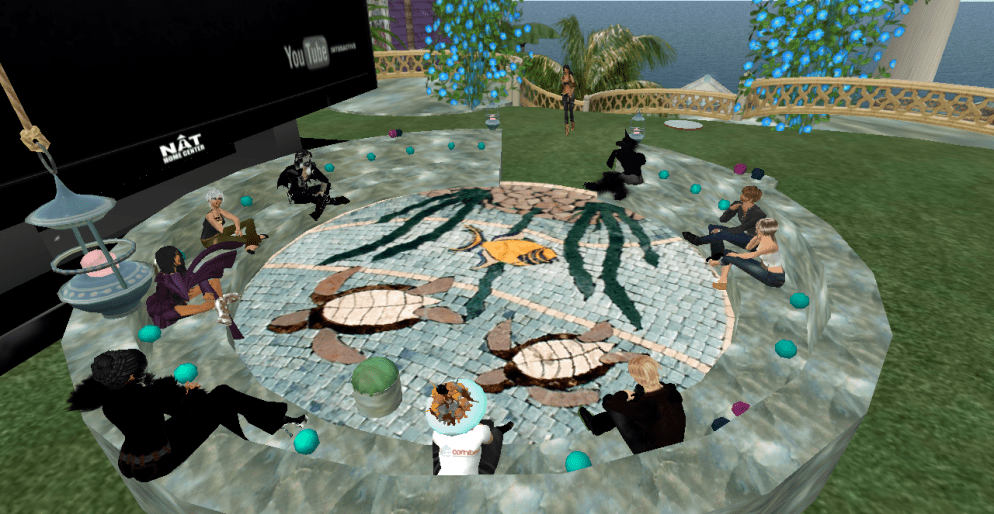
SLecture 1 in session …

Based on my experience from the two other courses I’ve run in SL and our preparation meetings last week, I anticipated some voice and text chat problems, so I had posted the following program and guidelines for in-world communication in our Moodle platform prior to the SLecture and of course had these slides on the CZ presenter:

Program010909

Commnunication010909

My overall impression is that the SLecture went well, not least since those who managed to get voice and text working engaged in eager questioning and commenting on the different topics for this SLecture; BL, PBL and the various course elements. But there were also challenges and some serious technical problems:

·         The voice and chat check lasted 45 min. which was longer than anticipated. I did point out in the beginning of the SLecture that it should be regarded as a test lecture, but I’m still somewhat surprised it took that long. There were, however, completely new faces in this SLecture and there are still some participants struggling with general voice settings, use of headset and unstable Internet connections.
·         There are still a few of the enrolled participants who have not yet joined our in-world COMBLE group, and a few who do not know how to change their Active Title. The course preparation week was optional and I expected people would join the activities based on their own judgments. This is something I would seriously consider revising in a future course …
·         Since none of the participants or us as facilitators are native English speakers we all struggle with the language. It’s the first time I’ve personally run a course in English and I must say I find it very time consuming and challenging.  With 7 open chat windows, lots of new names, and the language barrier I did find it rather difficult to stay 100 % focused on my presentation. But this is just a matter of experience, so I do not worry too much about it. According to the feedback my main points came across reasonably clear.
·         When we sent out the initial materials for the course, I had made a tutorial for creating the SL account, and in this I recommended that they created their first names so that they would be easy to say/write in English. But I don’t think this message came across clear enough. At least there are a few names I find very difficult to say/write. This could also be a cultural thing and for sure my Polish, Estonian, German and Argentinean pronunciation needs work ;-) I also suspect that for some of the participants the fact that I address them by their first avatar names takes some getting used to – most likely many of them do not identify with those names (yet) and some seem surprised when they discover that I’m actually speaking/writing to them. This probably will change in time. In a future course I would try to explain the name issue more detailed, though.
·         It was the first time I used the CZ presenter and it worked fine. Nonetheless, I will try to find some sort of podium to place the laptop on, so that its position is fixed and I can return to it more smoothly without having to adjust its position.
·         In the two previous courses I’ve run in-world I’ve been the only facilitator and I must say I enjoy having my colleagues with me this time. Not only are they able to help and answer some of the questions (that I might miss!) in the chat, but it is also very beneficial to be able to get their immediate feedback on these SLectures afterwards.

tryberg
After the SLecture my colleague, tryberg and I stayed and reflected a bit on the event…

Next SLecture is tomorrow and I’m really looking forward to that, because this has turned out to be a great learning experience :-)

/Mariis

Virtual Relationships and Roadside Philosophy

Another new friend I made at the SLCC is Pamala Clift also known as The Roadside Philosopher.  Pamala held a well-attended Sunday morning session entitled “Shhh, The Realities of Virtual Relationships”. The crowd seemed diverse with representatives from all the communities, which actually is no surprise since we all have to deal with relationships no matter our in-world intentions. While waiting for everybody to get seated Pamala played this video to set the tone of the session:

As another interesting way of getting us started Pamala asked us all to fill out our 1.life profiles with “catchy” descriptions, she then read out loud our descriptions asking the audience if this particular person was someone people might be interested in meeting RL and then we were asked to stand up and show our RL avatars. This was quite daunting to me – not because I hide my RL identity, but because I’m quite shy RL. I really missed my avatar in that moment, but I did get up feeling safe in the company of kindred spirits. Interesting experience…

Pamala proceeded with a presentation of her thoughts on SL relationships bravely disclosing her own experience with her newbie in-world marriage and her current relationship with in-world partner Yossel – a relationship her RL husband accepts. Others from the audience told their stories of trying to make cross-over from SL to RL relationships – heartfelt stories that were very far from this successful story Hamlet just reported on.

As I understood it there had been some doubts on whether a session like this would be appropriate for the convention, and I’m guessing it has to do with the potential mature content. And yes there was talk about sex and human genitalia, but if anybody could pull off a session like that, it would be Pamala. With her very warm, humorous and open minded spirit she managed the session with elegance, and in all fairness sex was only a very small part of the conversation – emotional relations between humans and avatars were predominant.

I found myself to be quite smitten by Pamala’s personality and back in Denmark I decided to join her in-world group “The Roadside Philosophers”, and yesterday I participated in a 2 hour discussion on Post Mortem Existence at Pamalot.

RP_003

Post Mortem Existence is of course a very complex topic and I’m not able to refer to any conclusions since we evidently didn’t reach any. It was, however a very nice experience. The meeting was well-attended, people were open and friendly and Pamala moderated very well.  The group was founded back in 2007 and holds biweekly meetings on different topics chosen by the members. Here’s the description from the group charter:

1st person group..using SL as a metaphor in the search for truth.. Your thoughts are just as valid as any. Out-of-the box thinkers. Individuals that like to challenge convention by exploring new ideas. No rudeness or hostilities allowed. Brain storming can only work if no idea is stupid but presented with rational thought.

RP_008

To me being in SL is in itself an ontological challenge and I do so enjoy philosophical discussions, so I’ll be joining these meetings whenever possible. Next meeting will be on September 5th, at 8 AM SLT and the topic will be Dreams. Possibly something on the logic and reality of dreams … I’m not quite sure, but Pamala will refine the topic before sending out a group notice.

/Mariis