SLecture 1 – observations from the PBBL course

In the PBBL course we have planned 10 lectures in SL and a number of optional informal meetings. Last night we had the first lecture and in this post I’ll reflect a bit on some of my observations. We have 23 participants from 5 countries and an unknown number of Danish on-campus students enrolled. As one of the requirements to pass the course we have asked the participants to attend a minimum of 5 lectures of their own choice (for the students the requirements are different) – so first of all it was interesting to see how many participants/students would actually show up. I’m using the MystiTool to keep track of this and at a certain point in time I counted 22, incl. my colleagues Heilyn, Thomas and Jacob, but some attendees did unfortunately have technical problems so my estimate is that 17 is the most reliable number.

SLecture1_a
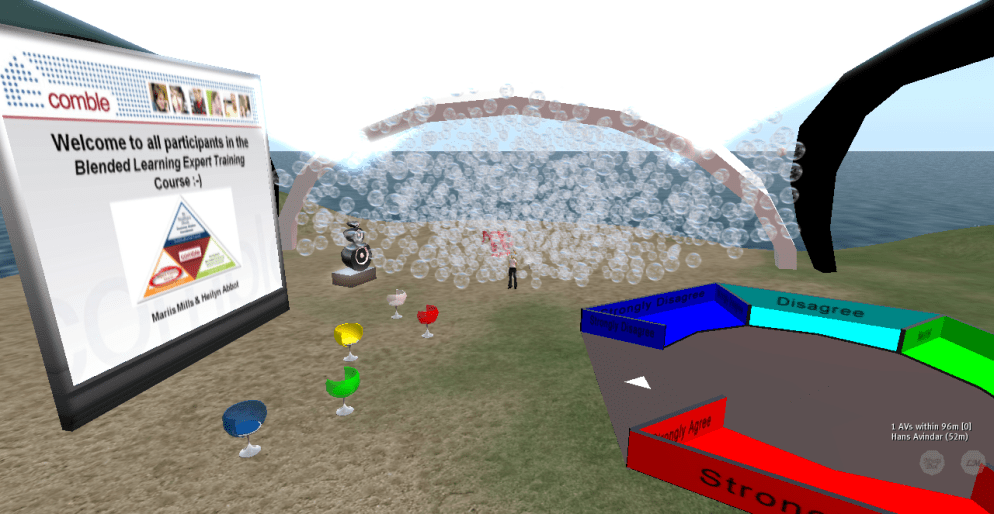
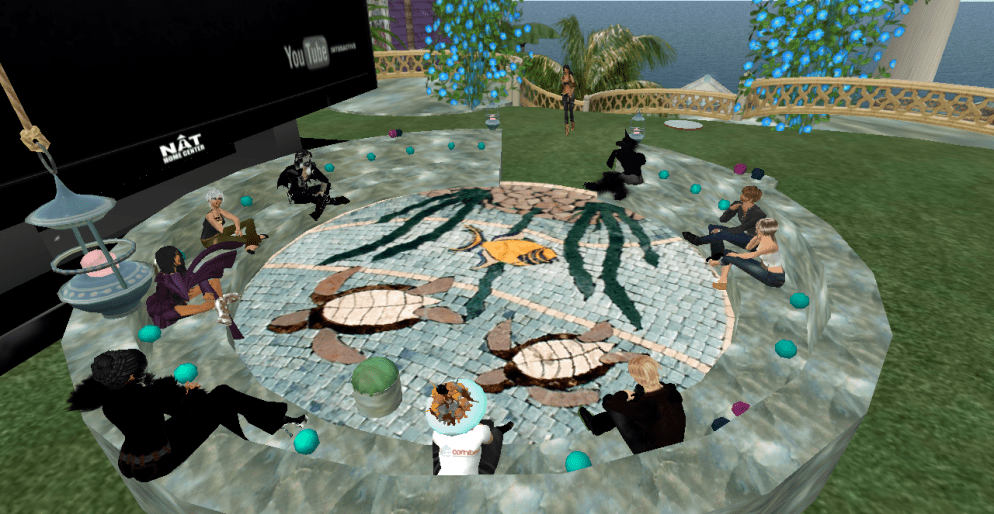
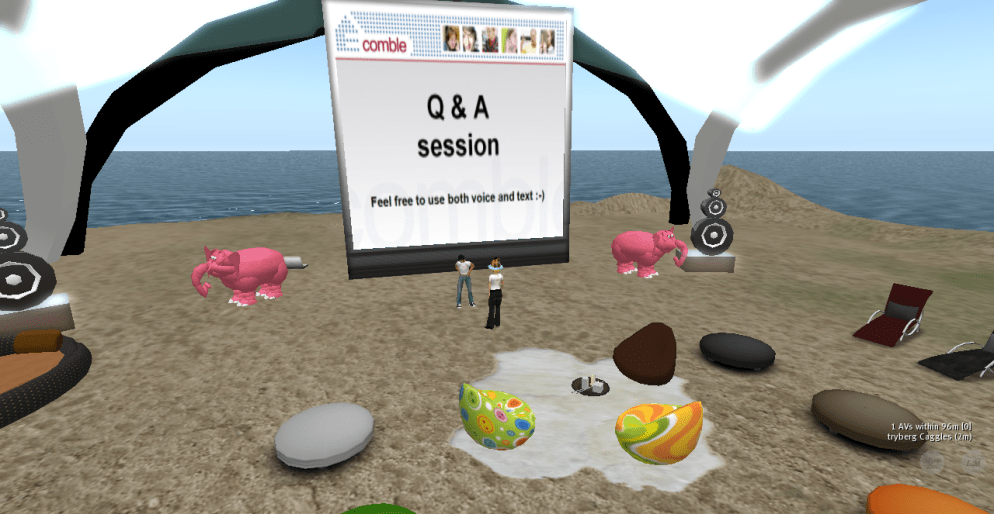
SLecture 1 in session …

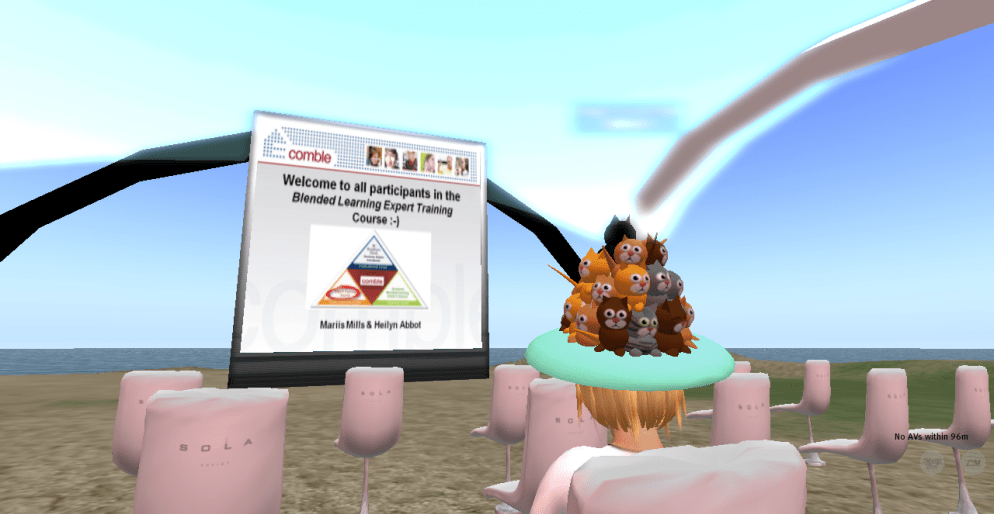
Based on my experience from the two other courses I’ve run in SL and our preparation meetings last week, I anticipated some voice and text chat problems, so I had posted the following program and guidelines for in-world communication in our Moodle platform prior to the SLecture and of course had these slides on the CZ presenter:

Program010909

Commnunication010909

My overall impression is that the SLecture went well, not least since those who managed to get voice and text working engaged in eager questioning and commenting on the different topics for this SLecture; BL, PBL and the various course elements. But there were also challenges and some serious technical problems:

·         The voice and chat check lasted 45 min. which was longer than anticipated. I did point out in the beginning of the SLecture that it should be regarded as a test lecture, but I’m still somewhat surprised it took that long. There were, however, completely new faces in this SLecture and there are still some participants struggling with general voice settings, use of headset and unstable Internet connections.
·         There are still a few of the enrolled participants who have not yet joined our in-world COMBLE group, and a few who do not know how to change their Active Title. The course preparation week was optional and I expected people would join the activities based on their own judgments. This is something I would seriously consider revising in a future course …
·         Since none of the participants or us as facilitators are native English speakers we all struggle with the language. It’s the first time I’ve personally run a course in English and I must say I find it very time consuming and challenging.  With 7 open chat windows, lots of new names, and the language barrier I did find it rather difficult to stay 100 % focused on my presentation. But this is just a matter of experience, so I do not worry too much about it. According to the feedback my main points came across reasonably clear.
·         When we sent out the initial materials for the course, I had made a tutorial for creating the SL account, and in this I recommended that they created their first names so that they would be easy to say/write in English. But I don’t think this message came across clear enough. At least there are a few names I find very difficult to say/write. This could also be a cultural thing and for sure my Polish, Estonian, German and Argentinean pronunciation needs work ;-) I also suspect that for some of the participants the fact that I address them by their first avatar names takes some getting used to – most likely many of them do not identify with those names (yet) and some seem surprised when they discover that I’m actually speaking/writing to them. This probably will change in time. In a future course I would try to explain the name issue more detailed, though.
·         It was the first time I used the CZ presenter and it worked fine. Nonetheless, I will try to find some sort of podium to place the laptop on, so that its position is fixed and I can return to it more smoothly without having to adjust its position.
·         In the two previous courses I’ve run in-world I’ve been the only facilitator and I must say I enjoy having my colleagues with me this time. Not only are they able to help and answer some of the questions (that I might miss!) in the chat, but it is also very beneficial to be able to get their immediate feedback on these SLectures afterwards.
tryberg
After the SLecture my colleague, tryberg and I stayed and reflected a bit on the event…

Next SLecture is tomorrow and I’m really looking forward to that, because this has turned out to be a great learning experience :-)

/Mariis

Problem Based Blended Learning course next 6 weeks

Monday August 24th my colleague, Heilyn Camacho – also from e-Learning Lab at Aalborg University, and I kicked off a 6 week course on Problem Based Blended Learning (PBBL).  We have designed the course as part of an EU funded research project called COMmunity of integrated Blended Learning in Europe (COMBLE). In the COMBLE project my colleagues and I from Aalborg University work together with 3 other lead partners from Estonia (University of Tartu), Germany (The University of Applied Sciences Wildau)  and Poland (Marie Curie Sklodowska University).

Comble-1

We have all been offering the course to our affiliated partners which means that we have participants not only from the above mentioned countries, but also from Argentina and since Heilyn is from Costa Rica we really have an international cross-cultural setting. Most participants come from the academic sector, but we also have a few participants from the cooperate world. Besides this my colleagues, Thomas Ryberg and Jacob Davidsen will at some point bring in Danish on-campus 7th semester students from Human Centered Informatics.

The main objective of the course is to provide the participants with a combination of conceptual, theoretical and practical strategies with regards to designing, implementing and teaching/training courses of different duration in blended modality using an overall PBL approach. There is no consensus on how to define Blended Learning. We will, however use this definition from Sonja Trapp (2006:1) as a starting point:

Blended learning can be defined as the combination of multiple approaches to pedagogy or teaching, e .g. self-paced, collaborative, tutor-supported learning or traditional classroom teaching. Blended learning often refers specifically to the provision or use of resources which combine e-learning with other educational resources.

What makes this PBBL course particular interesting and challenging is the fact that there are no f2f activities for the adult participants – we only meet each other online in different platforms. For the on-campus students this of course will differ a bit, but as I understand it their main activities will also take place online. Heilyn and I have chosen Moodle as our main platform for the teaching and learning activities.

COMBLE-Moodle

Flexibility not only regarding place, but also time is a keyword in this course, and in our point of view Moodle provides a good environment for especially text-based, asynchronous activities. Our participants are located in different time-zones and should be able to contribute at any convenient time, but a far more important argument for using an asynchronous platform for the main activities can be found in our pedagogical foundation. We have chosen to blend Problem Based Learning with elements from Action Learning and in both strategies reflection is a keyword.

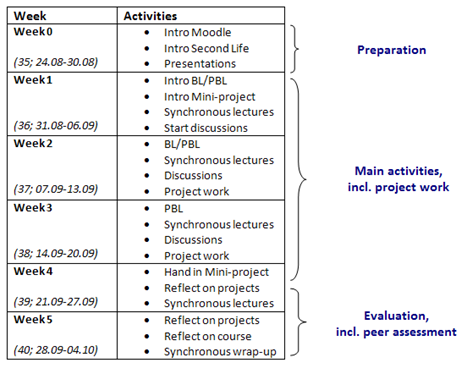
By and large the course design is heavily inspired by another course I run at the Masterprogramme in ICT and Learning (MIL), and based on my experience from that course we have also chosen to use Second Life (SL) as main platform for synchronous activities in this PBBL course. The course outline can be seen in the picture below:

CourseOutline

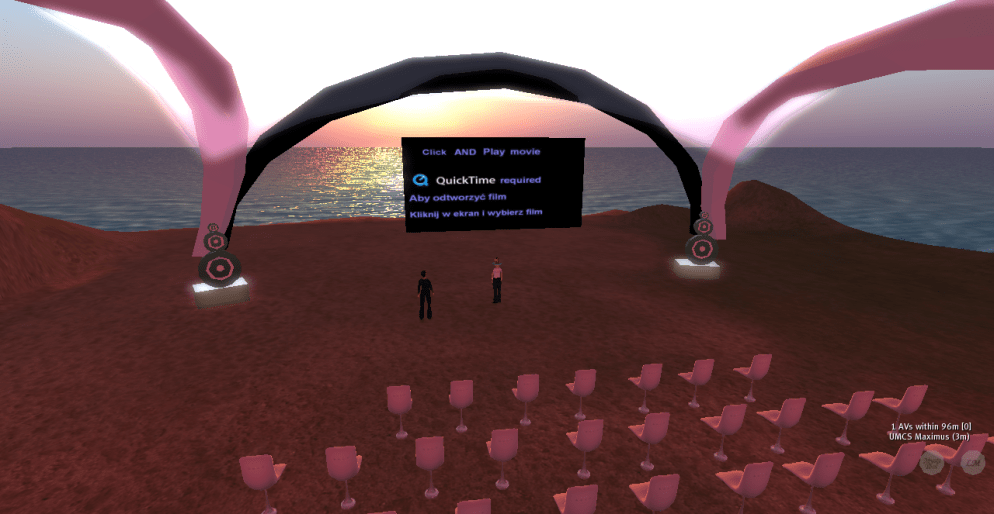
Since Aalborg University does not own land in SL – I only rent a small place on the Island Wonderful Denmark for my MIL course – our Polish partner has kindly let us use their Second UMCS Island for the course. Below is a picture of what the main teaching and learning area looked like, when we fist arrived there:

SeconUMSC
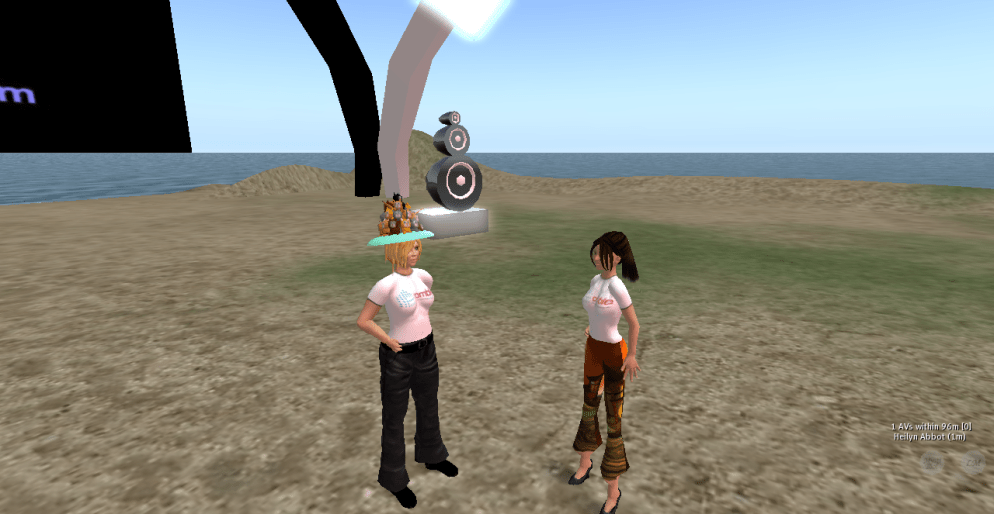
Second UMCS owner, UMCS Maximus, and I discussed the design of the area …

Mariis_Heilyn
Later Heilyn and I met to discuss the design …

Presenter_003
One of the first changes was replacing the existing presenter with The Clever Zebra presenter …

My dear friend, Coughran Mayo, recommended the CZ presenter and thanks to Fleep Tuque’s great video, I easily managed to set it up :-) Even though Heilyn, Thomas and I will use traditional presentations in our in-world lectures we still wanted the environment to better reflect our pedagogical foundations, so we also had the white chairs removed.

Island_003
Yeah! .. lots of empty space to play with …

This week of the course is preparation week meaning that the participants are expected to familiarize themselves with both Moodle and SL. Only a few of the participants have prior experience with SL, so this week has been spent on learning the basic features of SL. As a preliminary setting I put up a few objects to enable the participants to practice very basic, but important skills such as learning how to walk and sit:

Island2_003

I rezzed 5 chairs close to each other – trying to walk in between without bumping into any of them is not an easy task for newbies ;-) I also rezzed “The Opinionater”, created by Entropy Hax, which can be bought for the tiny sum of 99 Lindens at this location. Besides being a great tool for decision making I like the fact that “The Opinionater” is interactive making walking practice a bit more fun.

This week I’ve also held optional in-world “Get-off-to-a-good-start” meetings, and here are some pictures from those meetings:

TestisTour_1
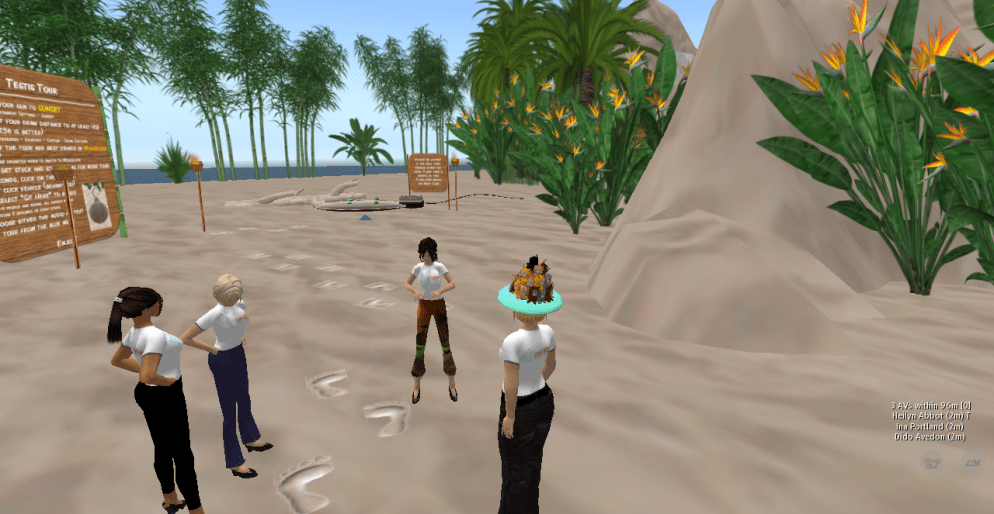
Heilyn and I getting ready to embark the Testis Tour with participants Dido and Ina

TestisTour_2
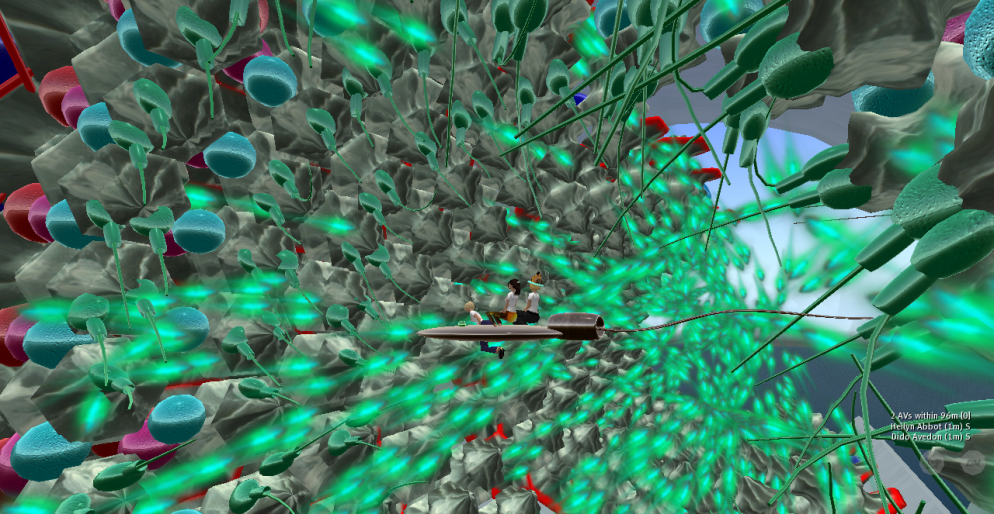
Um, “immersed” inside a testis …

Womb
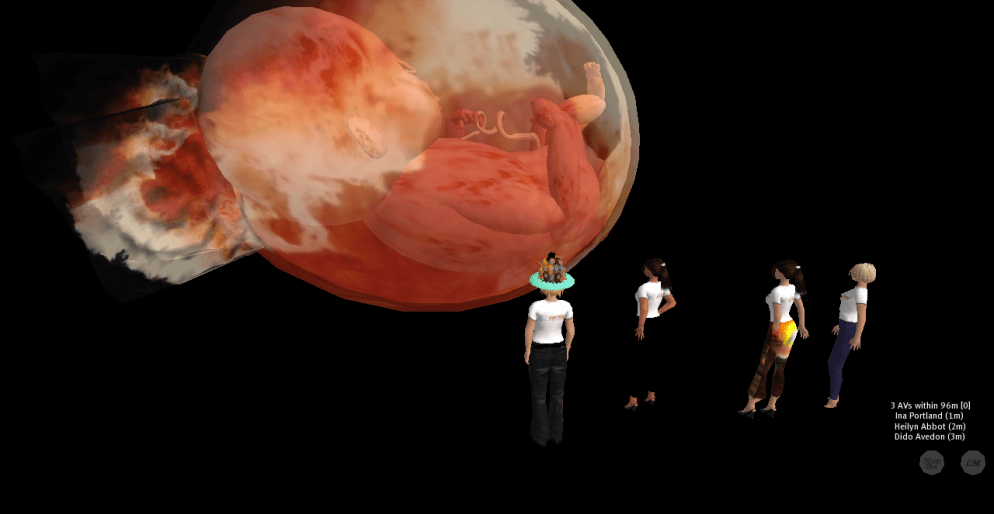
and outside a womb in Doctor Asp‘s (my regular landowner :-) amazing holodeck

Building
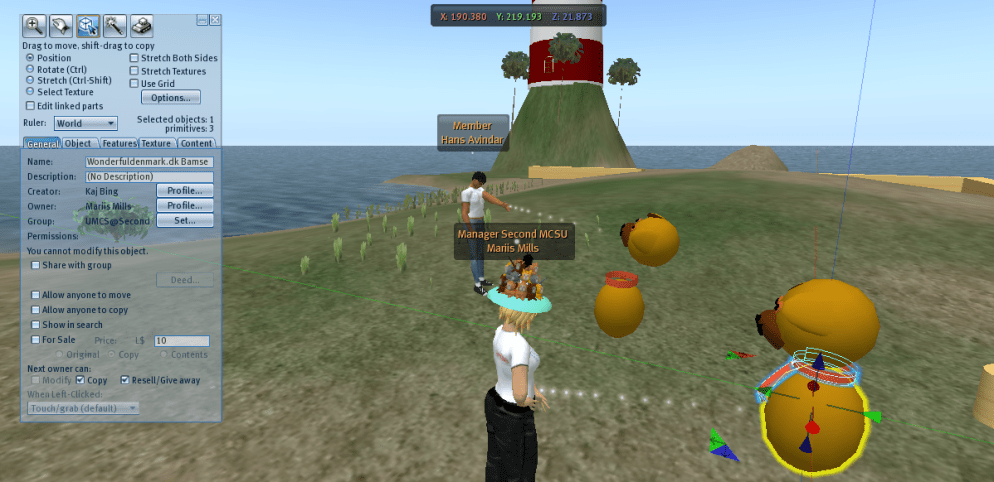
Participant, Hans and I trying to build Bears … LOL not easy, since the Bear is meant to wear!

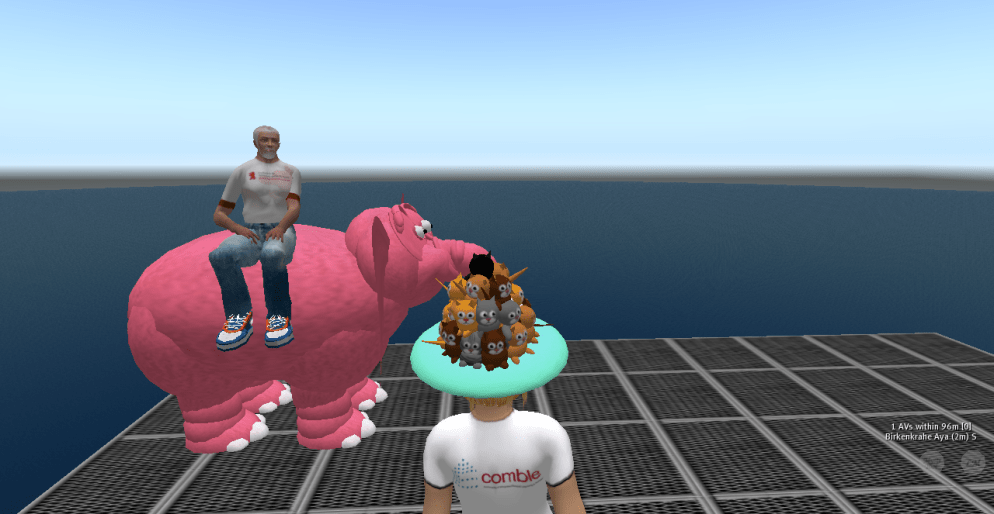
The Bear was created by Danish resident, Kaj Bing, and can be found in Wonderful Denmark’s Freebie Factory, where you’ll also find my favorite SL object; The Pink Elephant created by Asp himself :-)

Marcus
Last night participant, Marcus and I met in my place …

Marcus is one of the participants with a couple of years experience in SL. BTW Marcus directed my attention to an interesting post written on this first week’s impressions by participant, Susanne from Germany :-)

Both Heilyn and I are using this PBBL course to collect empirical data for our PhD-projects and we will meet later today to assess this first week as part of our own Action Learning cycles. We will post our reflections in Moodle, so that the participants are able to see how we actually try to apply the chosen research and teaching and learning strategy in our own projects encouraging the participants to comment on our thoughts. Furthermore Heilyn and I will rearrange the teaching and learning area to match the next weeks’ activities …

And I will for sure return with more posts on this as the course progresses …

/Mariis

Virtual Relationships and Roadside Philosophy

Another new friend I made at the SLCC is Pamala Clift also known as The Roadside Philosopher.  Pamala held a well-attended Sunday morning session entitled “Shhh, The Realities of Virtual Relationships”. The crowd seemed diverse with representatives from all the communities, which actually is no surprise since we all have to deal with relationships no matter our in-world intentions. While waiting for everybody to get seated Pamala played this video to set the tone of the session:

As another interesting way of getting us started Pamala asked us all to fill out our 1.life profiles with “catchy” descriptions, she then read out loud our descriptions asking the audience if this particular person was someone people might be interested in meeting RL and then we were asked to stand up and show our RL avatars. This was quite daunting to me – not because I hide my RL identity, but because I’m quite shy RL. I really missed my avatar in that moment, but I did get up feeling safe in the company of kindred spirits. Interesting experience…

Pamala proceeded with a presentation of her thoughts on SL relationships bravely disclosing her own experience with her newbie in-world marriage and her current relationship with in-world partner Yossel – a relationship her RL husband accepts. Others from the audience told their stories of trying to make cross-over from SL to RL relationships – heartfelt stories that were very far from this successful story Hamlet just reported on.

As I understood it there had been some doubts on whether a session like this would be appropriate for the convention, and I’m guessing it has to do with the potential mature content. And yes there was talk about sex and human genitalia, but if anybody could pull off a session like that, it would be Pamala. With her very warm, humorous and open minded spirit she managed the session with elegance, and in all fairness sex was only a very small part of the conversation – emotional relations between humans and avatars were predominant.

I found myself to be quite smitten by Pamala’s personality and back in Denmark I decided to join her in-world group “The Roadside Philosophers”, and yesterday I participated in a 2 hour discussion on Post Mortem Existence at Pamalot.

RP_003

Post Mortem Existence is of course a very complex topic and I’m not able to refer to any conclusions since we evidently didn’t reach any. It was, however a very nice experience. The meeting was well-attended, people were open and friendly and Pamala moderated very well.  The group was founded back in 2007 and holds biweekly meetings on different topics chosen by the members. Here’s the description from the group charter:

1st person group..using SL as a metaphor in the search for truth.. Your thoughts are just as valid as any. Out-of-the box thinkers. Individuals that like to challenge convention by exploring new ideas. No rudeness or hostilities allowed. Brain storming can only work if no idea is stupid but presented with rational thought.

RP_008

To me being in SL is in itself an ontological challenge and I do so enjoy philosophical discussions, so I’ll be joining these meetings whenever possible. Next meeting will be on September 5th, at 8 AM SLT and the topic will be Dreams. Possibly something on the logic and reality of dreams … I’m not quite sure, but Pamala will refine the topic before sending out a group notice.

/Mariis

Survey and interview on in-world teaching

Yesterday I had the pleasure of being interviewed by Esme Qunhua in-world. I think that being interviewed is always interesting since it forces you to reflect and articulate your ideas and practice – and helping each other is truly part of the SL community spirit.

Esme, aka Jane Wilde, is a member of the MAT Faculty at Marlboro College Graduate Center and a Doctoral student at University of Albany, N.Y.  Esme is doing her research on teaching and learning via SL (higher education level or in professional development) and currently she runs an in-world class entitled Teaching and Learning in Virtual Worlds.

Esme_interview

As part of her research Esme has created a survey on teaching experience and pedagogical conceptions in SL and she is also looking for SL teachers willing to participate in interviews. So please help Esme in collecting interesting data :-)

Feel free to take the survey and/or contact Esme for an interview.

/Mariis

BTW
Esme will take part in the educational track at the SLCC09 doing a presentation “Tripping through SL – An Educator Tours SL for Instructional Resources” on Friday, August 14th.

Amplifying student engagement through design

To date I’ve completed two research cycles in my PhD, and both cycles were conducted within a specific course at The Masterprogramme on Ict and Learning (MIL). The course is entitled “Ict and Didactic Design” and basically the students are asked to analyze, assess and reflect upon the teaching and learning potential of SL. In order to do so, we ask the students to focus on five mandatory topics; Didactics and target groups, Orientation and navigation, Interactivity, Learning processes and Audio-visual elements.

The students are expected to discuss these topics asynchronously in our main virtual teaching and learning environment, FirstClass® (FC) and during synchronous in-world activities (typically lasting between 1-3 hrs.). So far I’ve spent most of my time reflecting on the use of SL, but since I’m investigating SL as a supplement and not as stand-alone environment in my PhD, I’ve now been looking a bit at the use of FC in the two research cycles. I’ll start with a brief description of the two cycles.

FirstCycle

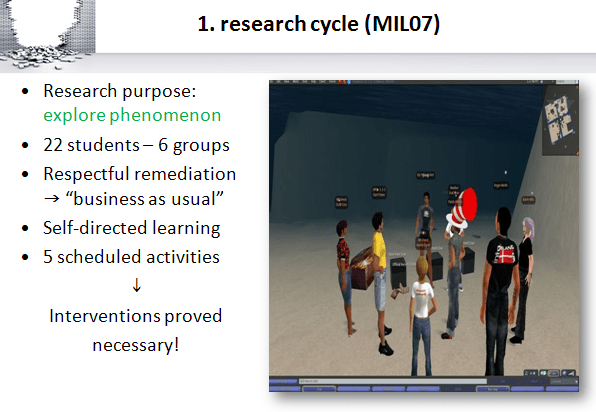
I was rezzed as Mariis Mills in March 2007, and I conducted the first research cycle about half a year later. The main purpose of the first cycle was to explore SL as phenomenon in order to understand this media’s potential as teaching and learning environment.  Several studies conducted at MIL (Dircknink-Holmfeld.2002; Dirckinck-Holmfeld et al. 2004; Sorensen & Takle. 2005) indicate that the majority of our students participate in one or several communities of practice, CoP (Wenger. 1998) during the masterprogramme, and I also wanted to observe what would happen to these CoP’s as a consequence of remediating into SL.

SecondCycle

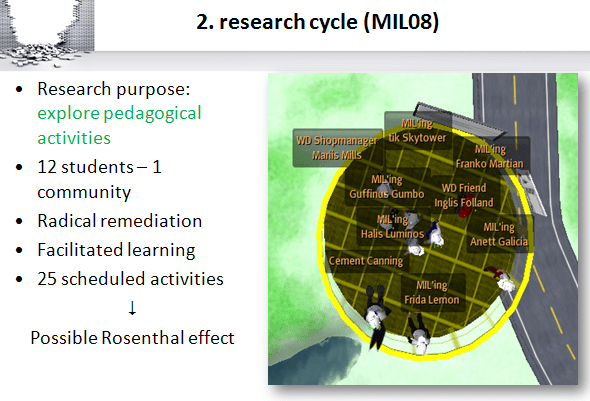
The second research cycle was conducted in the Fall 2008. Based on the findings from the first cycle and additional experience and research the course was redesigned in several ways.  Even though the first cycle confirmed the presence of CoP’s, I decided to try to enhance the community creation and feeling by asking the students to work as one entity instead of working in their usual smaller study groups. I also changed my own role from being a somewhat distant observer to a fully engaged participant and facilitator. In the first research cycle there were only 5 scheduled activities, but in the second cycle I decided to focus on many different pedagogical activities resulting in a total of 25 (this post further elaborates on these activities).

Apart from the changes mentioned above, I also decided to change the design (and thus expected use) of the FC setting. As stated by Nyvang, Tolsby & Dirckinck-Holmfeld (2004) VLEs/LMS’ and other systems we use for teaching and learning are never neutral in the sense that they always convey some underpinning pedagogical philosophy. And like physical buildings these systems can be designed more or less optimal to support different types of teaching and learning processes.  In FC the user is able to see a tree structure of the way we’ve organized the many conferences in the left side of the screen, and for many users this tree structure provides an overview. The picture below shows the tree structure as it appeared in the two cycles:

MIL07-08_TreeStructures

The SL course is part of the first course (m4c1) in the 4th module and as such it would be found below the main conference for that module. In this first course the students can choose either SL (3D world) or Global Conflicts (3D game) as analytical objects. Traditionally the students work in small study groups (K-gruppe). In the MIL07 case the conferences for the students’ groups were placed directly below the main course conference (used by all students and the teachers for communication regarding the course in general), while the two conferences for more specific communication regarding the analytical objects were placed in the bottom of the tree structure. A tentative interpretation of this structure would put emphasis on the study groups, which for many students probably made perfect sense, since it was in these group conferences their main activities were supposed to take place. At a glance this structure did not however indicate which groups were working with SL respectively GC. Though working in separate groups many MIL students appreciated following the work of their fellow students and they proposed that we designed for a better overview over the groups’ interests in the future.

So in the MIL08 case we decided to place the study group conferences below the two conferences for the analytical objects, which also meant that the GC and SL conferences moved up in the hierarchical tree structure – perhaps putting more emphasis on the subject matter? There was another major difference, namely that I decided that the students who chose SL should work in one large group/as a community meaning that the 12 SL students were not assigned separate group conferences. In ‘07 there was only one conference dedicated to SL and this proved to be inappropriate since we used that one conference for all SL related communication including meeting information, literature upload, small talk etc. making it very difficult to locate specific information as the course progressed. Thus in the MIL08 case I created several sub-conferences each dedicated to specific topics and types of information. I also utilized different icons to indicate the differences between these conferences and when the student clicked on the main SL conference he/she would get an overview of all these affiliated conferences as show in the right side of the picture above.

As mentioned before the tree structure in FC is shown in the left side of the user’s screen. In the right side the same information is presented in a different way/view. In the MIL07 case the right side could look like this:

MIL07_FCactivity_area

and in the MIL08 case it could look like this:

MIL08_FCactivity_area

Apart from the aesthetic perspective which I’ll leave for the reader to assess, I do think that the MIL08 design provides a much better overview. The red circles point to the main activity areas  – in MIL07 in the study groups, in MIL08 in the topic conferences. The ’08 students did not place any of their postings in the “Interactivity” conference. Nonetheless they did discuss interactivity quite vividly, but as they explained, they often found the separation of topics somewhat artificial, and this may be something I need to design differently in the next research cycle (Fall 2009).

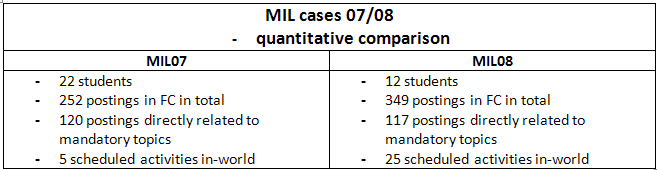
Anyway, my purpose in this post is to investigate whether the design made a difference in the way the students used FC. In both cycles the students were asked to post a minimum of 3 postings in order to pass the course. The majority of MIL students are part-time students, full-time employed and actively engaged in other life activities. Even so MIL students are renowned for their very high engagement and activity level. In the table below I’ve compared some data from the two cycles:

MILcasesQD

My involvement in the topics discussions was quite similar in the two cycles, and already back in 2007 I was highly impressed by the students’ engagement and level of activity, but as you can see the engagement of the MIL08 students was extraordinary in all aspects. Bear in mind that besides participation in numerous online activities the students also need to find time to study the mandatory course literature!  All students passed both courses, but in each cycle 1-2 students were asked to elaborate on their findings/reflections in order to pass. The quality of the students’ discussions was high in both courses, but it was quite clear that the MIL08 students’ postings were more informed with regards to SL.

I’m quite confident that the amplified engagement, level of activity and quality in the MIL08 case stems from a combination of redesigns, but as FC is part of the collected teaching and learning environment, I do believe that careful consideration and design of the FC structure is an important part of the whole design puzzle and as such should be given appropriate attention.

/Mariis

References

Dirckinck-Holmfeld, L. (2002): CSCL – Computer Supported Collaborative Learning – Projektpædagogiske læringsformer i virtuelle omgivelser. IN: Uddannelse, læring og It. 26 forskere og praktikere gør status på området. IN: Undervisningsministeriet. http://pub.uvm.dk/2002/uddannelse/5.html

Dirckinck-Holmfeld, L., Sorensen, E.K., Ryberg, T., Buus, L. (2004). A Theoretical Framework for Designing Online Master Communities of Practice. IN: Proceedings of the 4th Networked Learning Conference.

Nyvang, T., Tolsby, H. & Dirckinck-Holmfeld, L. (2004): E-læringssystemer og projektpædagogik – pædagogikkens krav til systemdesign og funktionalitet. IN: Georgsen, M. & Bennedsen, J. (ed.): Fleksibel læring og undervisning – erfaringer, konsekvenser og muligheder med ikt, s. 207-238. Aalborg Universitetsforlag.

Sorensen, E.K. & Takle, E.S. (2005). Investigating knowledge building dialogues in networked communities of practice. A collaborative learning endeavour across cultures. IN: Interactive Educational Multimedia, No.10.

Wenger, E. (1998). Communities of Practice. Learning, Meaning, and Identity. Cambridge University Press.