Case MIL09: Didactic Design Discussion – 1

In the MIL course my co-facilitator Mew Aeon and I currently are running in SL the students are expected to analyze SL as teaching and learning environment, and in order to stimulate the students’ critical reflections we have prepared 4 discussions on different topics related to ICT-based Didactic Design. Last night we had the first discussion and for this I had prepared some slides (in Danish) focusing on two main topics; the field of Didactics and target groups.

8 students are enrolled in the course and since 3 of them did not have the possibility to participate in our recent f2f kick-off introductions  I had decided to repeat some central points. First of all there is the term ICT-based Didactic Design, which my colleague, Professor Birgitte Holm Sørensen from the Danish School of Education defines like this:

The process by which the purpose, the goals and the content is determined, and where the planning, the organization and the arena for teaching and learning is shaped based on theories and in relation to ICT-based practice in a context.

Via course readings the students are introduced to various didactic theories and models – one of the latter being the so called Didactic Triangle (usually attributed to German Pedagogical Philosopher Johann Friedrich Herbart 1776-1841) that depicts the basic relationships between teacher – content – student. Though all of us can agree that the field of Didactics includes more elements than the relationships in the Didactic Triangle it does, in my opinion, highlight the fundamentals and creates an excellent starting point for discussions on some of the key issues in Didactics.


Key issues in Didactics: content and actors

Now, what I find particularly interesting when you combine ICT with Didactic Design is that ICT not only serve as materials but also as arena or “room” for teaching and learning –an aspect which clearly is amplified when using 3D virtual technology like SL.  Most MIL students can be characterized as being tech-savvy educators/trainers for whom it is relevant to further enhance their competencies in integrating ICT in their practice and we naturally ended up discussing what impact especially web 2.0 tools/services will have on the way we think and practice didactics.

As I see it Web 2.0 tools/services have the potential of changing our perspectives and thus practices regarding:

  • Users – both the students and the teachers with regard to relations/roles/responsibilities
  • Participation – as we shift from consumption to (co-)production
  • Multimodality – new possibilities to design for teaching and learning processes
  • Networks and connections – from local to global citizenship
  • Knowledge management – both from an information and communication perspective and with regard to security and ethics
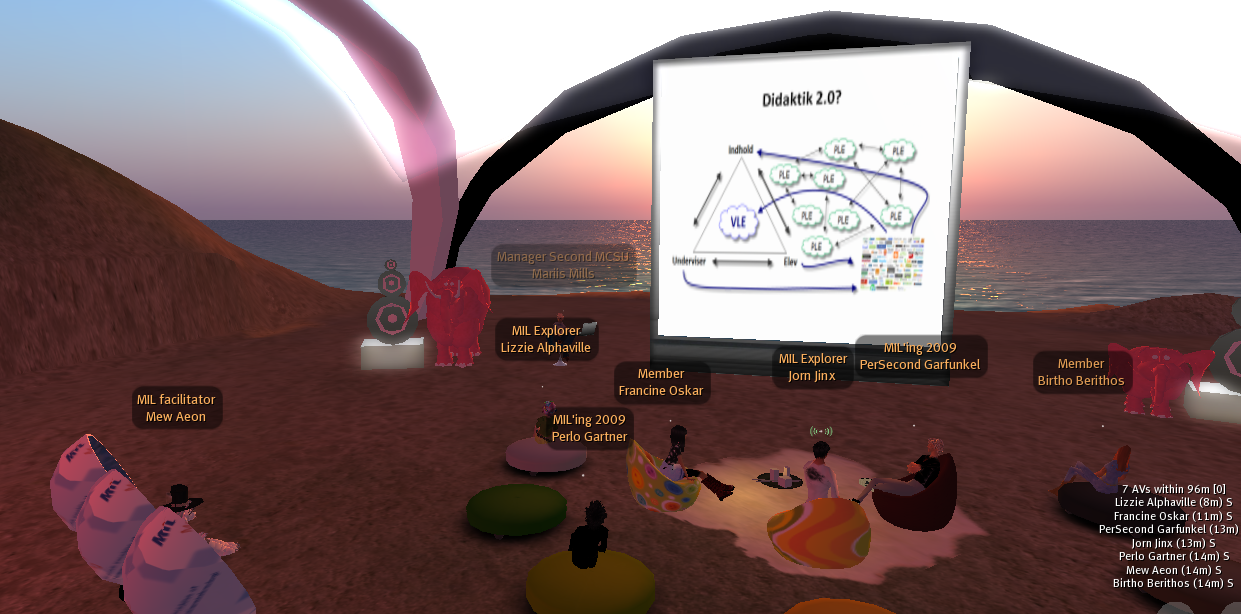

How does web 2.0 change the way we think and practice didactics?

For the last decade the Danish pedagogical debate has been focusing on learning and learners (in opposition to teaching and teachers) – and this shift in perspective has been highly welcome and much needed. On the other hand this shift seems to have placed the role of the teacher in some sort of vacuum (are teachers obsolete in the future as polemically stated by David Gelernter ?) making the challenges related to especially ICT integration more difficult and complex than necessary. When discussing target groups we therefore also encourage the MIL students to carefully consider the roles of the teachers. Much as anticipated we did not reach any solid conclusions on any of the topics, but I do believe the discussions inspired the students and I’m looking forward to the next session later this week.

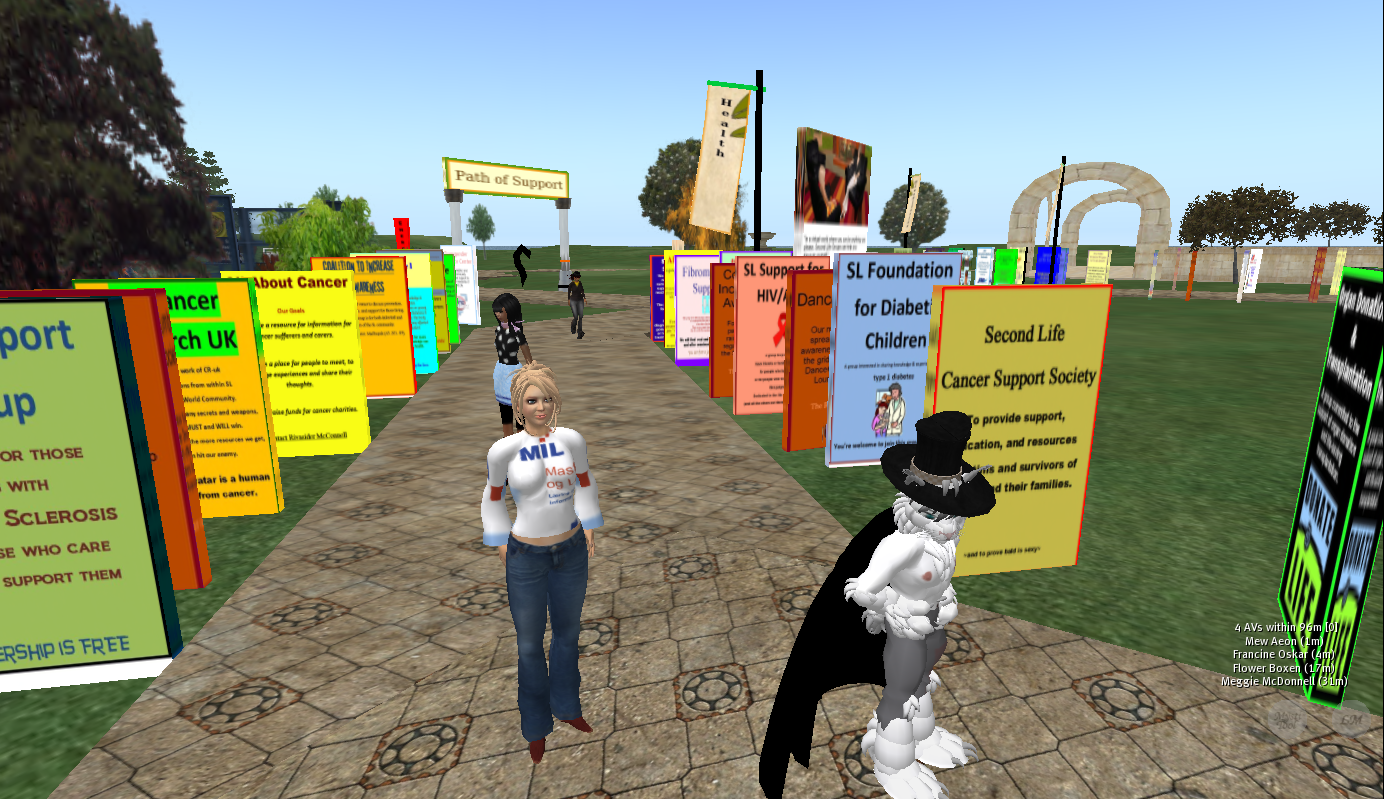
As part of our focus on target groups who could benefit from an environment like SL, we ended the night by visiting Health Info Island, including The Path of Support and finished off by investigating the Virtual Guide Dog.

/Mariis

Book release: ICT and Learning – reflected practice

Together with colleagues Ulla Konnerup, Søren Skøtt Andreasen & Lone Dirckinck-Holmfeld I’ve co-edited an anthology entitled “ICT and Learning – reflected practice”.  What makes this anthology unique is that all the authors are alumni from the Masterprogramme in ICT and Learning (MIL).  Through 7 articles the authors discuss and reflect upon the use and purpose of ICT in different learning contexts covering the educational sector and one public hospital. The anthology is in Danish – and so will the rest of this post be …


Front cover by Helle Fibiger

Ikt og læring – reflekteret praksis er en antologi, der er blevet til på baggrund af masterprojekter udarbejdet i forbindelse med afslutning af Masteruddannelsen i Ikt og læring (MIL). Ideen til antologien kom fra alumner, som fandt det relevant at sætte fokus på den iderigdom, kreativitet og nye viden, der skabes i udarbejdelsen af disse afgangsprojekter.

Gennem antologiens syv artikler fremlægger, diskuterer og reflekterer de 13 forfattere en række vidt forskellige cases, som dog alle har koblingen af ikt og læring til fælles. Forfatternes meget forskellige teoretiske inspirationskilder, metodiske fremgangsmåder og brug af diverse typer af ikt viser bredden inden for dette spændende felt som er i konstant udvikling.

Antologien henvender sig derfor også bredt til alle, som interesserer sig for ikt og læring, hvad enten der er tale om teoretikere, praktikere, undervisere, studerende, arbejdsgivere og ansatte, for hvem reflekteret brug af ikt er en del af den daglige praksis i et samfund, hvor livslang læring om noget er på dagsordenen.

Emneord: Ikt, livslang læring, pædagogik, design, praksis, refleksion

Antologien’ s pris er kr. 198,- og den kan bestilles via Aalborg Universitetsforlag.

/Mariis

“Dialogic Spaces” – Dialogic Education and Research Group

On Monday June 22nd I had the pleasure of participating in the first meeting in a study group “Dialogic Spaces” aimed at exploring dialogue from various perspectives within educational research and practice. The group was initiated by Assistant Professor, PhD Thorkild Hanghøj and several of his colleagues all from Dept. of Curriculum research at the Danish School of Education. Thorkild specializes in educational gaming and will incidentially join me at the Master in ICT and Learning (MIL) in the fall in our ICT and Educational Design module. Coming from Aalborg University’s Dept. of Communication I’m very happy to get the opportunity to collaborate with this group of researchers who all have such very strong foci on educational research. Besides Thorkild the following people are part of the group:

  • Lars Birch AndreasenE-learning; netbased education; virtual learning environments, Netmediated communication and collaboration.
  • Lisbeth FrølundeMultimodality theory and visual culture, Design and development of digital learning and play materials.
  • Jeppe BundsgaardEducational Theory and Curriculum in relation to the Danish Subject and Information Technology, Critical Discourse Analysis.
  • Mads HaugstedMother tongue and didactics; verbal communication, colloquial language, speech skill.
  • Christian Brund – just started as a PhD Candidate with a project on the role of the teacher in relation to educational gaming … no link yet

Together we cover a wide range of research interests but with the concept Dialogic we have found a common denominator.  Dialogic is most commonly attributed to the work of the Russian philosopher, literary critic and scholar, Mikhail Mikhailovich Bakhtin and though his work will play an important role in our endeavors it isn’t an exclusive Bakhtinian group.  We spent our first meeting stating our interests in using Dialogic perspectives, defined the organization and goals of the group and finally discussed a couple of papers (Dysthe. 2006 & Wegerif. 2006) both focusing on the use of Bakhtin in educational research. So far we’ve decided to meet f2f once a month in the fall primarily to discuss literature hoping that these dialogues! will inspire all of us in our future work. Further down the line we hope to be able to hold public seminars and finally write an anthology covering especially, but not exclusively  Scandinavian Dialogic perspectives within educational research and practice which also means that we will invite international colleagues to come join us.

I was first introduced to Bakhtin in the early 90’ies when I studied literature for three years, but it has been years since I actually used his ideas and concepts more explicitly. In spite of this, I do find the Dialogic perspective interesting on multiple levels in relation to my current PhD research:

  • Ontological level – according to Bakhtin living is participating in an ongoing dialogue and I couldn’t agree more. Accepting dialogue as ontological premise naturally influences the main purpose and the main processes of education; empowerment as preparation for and – as it is the case in HE/FE –  continuation of democratic, participatory citizenship. This way of thinking and practicing education very much aligns with a Scandinavian approach to both education and research in general and with exploration of new social media in particular (e.g. Rheingold. 2008 on Participative Pedagogy for a Literacy of Literacies).
  • Epistemological level – as a consequence of the ontology it is through dialogue with both ourselves and the surrounding world that we’re able to create meaning. Thus, as educators we need to focus on teaching students how to engage in the dialogues through which knowledge is constantly being constructed, deconstructed and reconstructed (Wegerif. 2006:60). It’s also worth noticing that if we accept the dialogic premise, the main mechanism for learning is taking the perspective of another in a dialogue (ibid:64)!
  • Methodological level– up until now I’ve been reluctant to coin my methodological approach, usually just stating that I’m applying some sort of Action Research. However, I recently decided to try to apply and further develop a methodology called Dialogue Design which was developed by three of my colleagues from the MIL steering committee, Janni Nielsen, Lone Dirckinck-Holmfeld and Oluf Danielsen (2003) back in the late 90’ies in relation to a large European research and development project on Multimedia and Network in Co-operative Research and Learning (MANICORAL). This particular methodology, based on different types of Action Research, puts forward dialogue and mutual learning as guiding principles.  Dirckinck-Holmfeld and Nielsen are also my PhD supervisors, and I will be spending most of the fall with Nielsen at Copenhagen Business School focusing on this part of my PhD work.
  • Didactic/pedagogical level – as teaching and learning space SL offers many possibilities of engaging in dialogic activities. Communicating simultaneously via both text and voice, incl. via avatar (as embodiment) and context are probably the affordances I currently find most interesting and I anticipate Bakhtin’s polyphony concept and his ideas on intertextuality (both in multimodal variations) will be useful in my attempt to theorize/analyze and design for such phenomena.

In applying a Dialogic perspective on my PhD I’ve got a sense of coming full circle and I’m really looking forward to an inspiring fall with extended readings and lots of dialogue … yeah :-) It also means that I’m in the process of editing my PhD page here on the blog … it’ll be back sometime during the summer.

/Mariis

References

Dysthe, O. (2006): Bakhtin og pedagogikken – Kva ein tidlegare ukjend artikkel fortel om Bakhtins pedagogiske praksis. IN: Norsk Pedagogisk Tidsskrift. 06/2006

Nielsen, J.; Dirckinck-Holmfeld, L. & Danielsen, O. (2003): Dialogue Design – with Mutual Learning as Guiding Principle. IN: International Journal of Human-Computer-Interaction. 15(1)

Wegerif, R. (2006): Dialogic education: what it is and why do we need it? IN: Education Review, vol. 19, no 2.

BTW

Stephen Downes recently directed my attention to a post on Streams vs. Blogs written by Jay Cross. In this post Cross reflects on blogs stating that:

Blogs are author-centric in a world that’s increasingly about relationships. Blogs are slanted toward me, me, me, me, me; the net is inexorably moving to us, us, us, us, us. Dialog trumps monolog.

While I do agree that some blogs tend to be very author-centric the few blogs/bloggers I chose to follow on a regular basis are highly Dialogic in my point of view. Adapting a Bakhtinian view engaging in dialogue with oneself can be very fruitful and furthermore the very nature of blogs (the intertextuality and the multiple voices coming forward through extensive linking) exemplifies a connected perspective on relationships and dialogue in a networked world.  The mere fact that I learned about Cross’ post via Downes shows my point. Granted that the premises for dialogue have changed dramatically, it still is dialogue to me … Nonetheless, I do agree with Cross that new services gradually will change the way we communicate, but like Downes I will not stop blogging any time soon – it’s just one way of communicating among others ;-)

Mark Molaro interviews Jimmy Wales

Thanks to a post on the Association of Internet Researchers mailing list yesterday I discovered a series of interviews on YouTube “The Alcove” conducted and co-produced by Mark Molaro.

TheAlcove

To date there are 46 interviews covering a wide range of topics.

As an example I’ve chosen Molaro’s most recent interview which is with Wikipedia co-founder Jimmy Wales. In the interview Molaro and Wales discuss the origin of Wikipedia, the community’s core values, credibility, Ayn Rand and Objectivism, and the future of Wikipedia, incl. the Wikia project.

Despite the fact that I don’t agree on the objectivist epistemology, I appreciate Wikipedia very much and use it on a regular basis, mainly when I come across new concepts and/or people and especially when I need to refresh my memory. There has been a lot of debate regarding the credibility of Wikipedia and especially as an educator and researcher I find this issue important though it’s not a topic I want to cover in this post.  Suffice to say that personally I would be very reluctant to use Wikipedia as primary source and for sure I would not use it as the only source, but this I wouldn’t do with any source anyway…

/Mariis

Networked Learning Conference 2010 – Cfp

At Aalborg University we’re very proud to host the 7th international conference on Networked Learning 3rd & 4th May, 2010.

The Networked Learning Conference is an international, research-based conference. Since its inception in 1998 the conference has developed a strong following by international researchers. In addition it is well supported by practitioners, managers and learning technologists interested in contributing to and hearing about research in this area. The conference is considered a major event in the international ‘technology enhanced learning’ conference circuit. Conference papers are peer reviewed by international researchers in the field, and published in proceedings and online.

Keynote Speakers
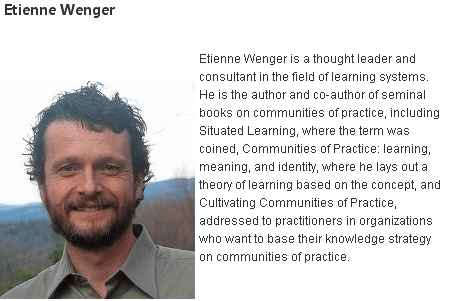
The 2010 conference features keynote presentations and discussions by two leading international researchers: Yrjö Engeström & Etienne Wenger.

Yrjo
Etienne

Conference themes
The conference is an opportunity to participate in a forum for the critical examination and analysis of research in networked learning i.e. learning and teaching carried out largely via the Internet/Web which emphasizes dialogical learning, collaborative and cooperative learning, group work, interaction with on-line materials, and knowledge production.

Papers critically reporting on the results of research and evaluation in Networked Learning are invited on the main themes of:

  • Understanding, Designing and Facilitating Learning in a Networked World
  • Theories and Methodologies for Research in Networked Learning
  • Impact on Learning of Networked Technologies
  • Learning in Social Networks and Networked Learning
  • Participation and Alienation in Networked Learning
  • Embedding Networked Learning in Public and Private Organizations
  • Formal and Informal learning in Networked Learning
  • Work Based Networked Learning and Knowledge Management
  • Problem Based Networked Learning
  • Practice Based Research for Professional Development
  • Issues of Social Justice and Social Responsibility in Networked Learning
  • Globalization and Interculturality in Networked Learning
  • Networked Learning and International Development

Conference papers will be peer reviewed by international researchers, and published in electronic proceedings and online. The conference steering committee will be supporting symposium organizers in publishing selected papers in special issues of refereed journals.

Submission date
Last date for submission of full papers for review: Friday 13th November, 2009

More details on submission

Further information about Networked Learning
You may find inspiration in the conference proceedings from previous years, and here I’ve copied a definition of networked learning from the British “Networked Learning in Higher Education” project:

Networked Learning:
learning in which C&IT is used to promote connections: between one learner and other learners, between learners and tutors; between a learning community and its learning resources.

Questions about the conference?
Please note that I’m not personally involved in the organization of this conference – questions should be directed to NLC Committee Administrator, Alice Jesmont, Educational Research Department, County South, Lancaster University, Lancaster. LA1 4YD. UK

nlc2010@lancaster.ac.uk

Symposium on Second Life in networked distance education
I would like to use this opportunity to invite 2-3 other distance educators using SL to participate in creating a suggestion for a symposium on the use of SL in networked distance education – if this has caught your interest please contact me for further elaborations in-world or on regular e-mail: mil01mr@hum.aau.dk

I’m hoping to see many Danish and International colleagues at this conference :-)

/Mariis