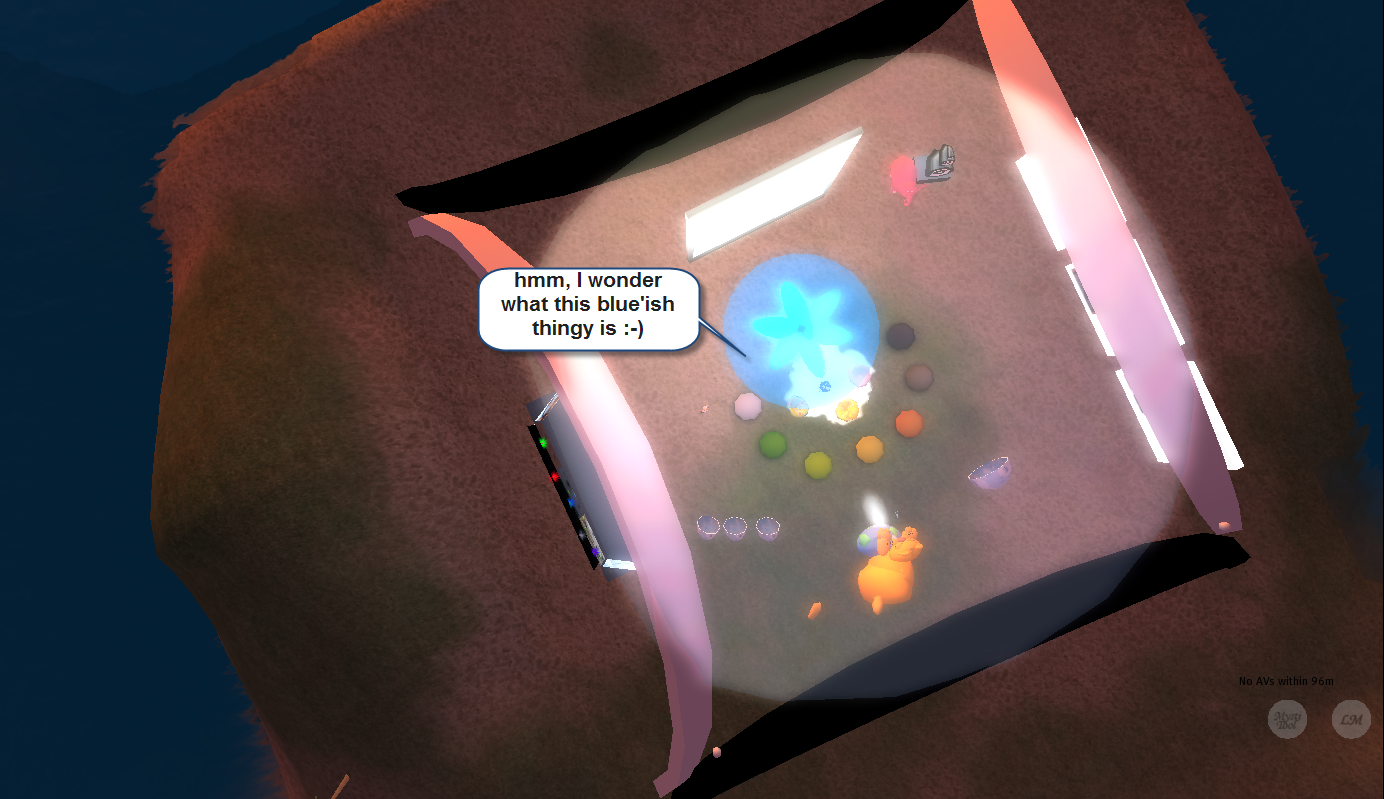
Case MIL09: Student analysis of SL – part 1

As part of the MIL course this year the students could choose to do their didactic analysis of SL either asynchronously in FirstClass or synchronously in SL, and 6 out 8 students chose the latter. Regardless of mode the students were asked to investigate 5 elements of particular importance when dealing with didactic analysis; Didactics (understood as theoretical foundation) and target groups, Orientation and navigation, Interaction, Learning processes and Audio-visuals. All of the students received the Zebra presenter and could use the sandbox to arrange the setting for their presentations, but they were also encouraged to find tools and places on their own. Each presentation was set to last approx. 2 hrs. and judging by the comments from all the students who chose the SL format, the analysis thus ended up feeling like an oral exam. In this and upcoming posts I’ll present some of the students’ findings and reflections.

Perlo & Francine


EduIsland 4: Practice classroom

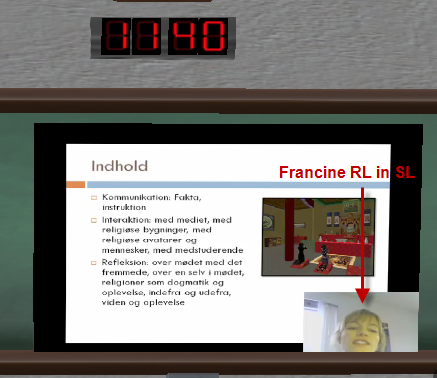
First up were Perlo & Francine who had found a free practice classroom for trainee teachers at one of the EduIslands. Perlo & Francine had chosen to prepare their analysis as a streamed video which we were able to watch via the presenter in the classroom. As foundation for their analysis they had chosen the Didactic Relation model and the target group was adult students at a Teacher College studying religion. The purpose of using SL should be to conduct field studies that would otherwise be impossible to do in real life within the given college settings. Perlo & Francine envisioned using SL as part of a blended learning environment where they would include a wiki for the students’ asynchronous reflections and also f2f activities e.g. workshops aimed at teaching the students how to use SL.

One of the advantages Perlo & Francine pointed out about SL is the way the medium allows the user to change perspective, not only via camera controls, but rather because of the avatar phenomenon that enables the user to have a detached, 3rd person view on him-/herself and the activities/interactions in the environment. Conversely they also pointed to the other pole in the participation-observation continuum, where – provided you feel immersed or attached to your avatar – you would be able to participate (almost) like a native in different cultures. This change of perspective and the ontologically challenging question of being present or not was underlined by the way Perlo & Francine chose to present their thoughts as themselves in the video, but displayed on a screen and discussed in-world as avatars.

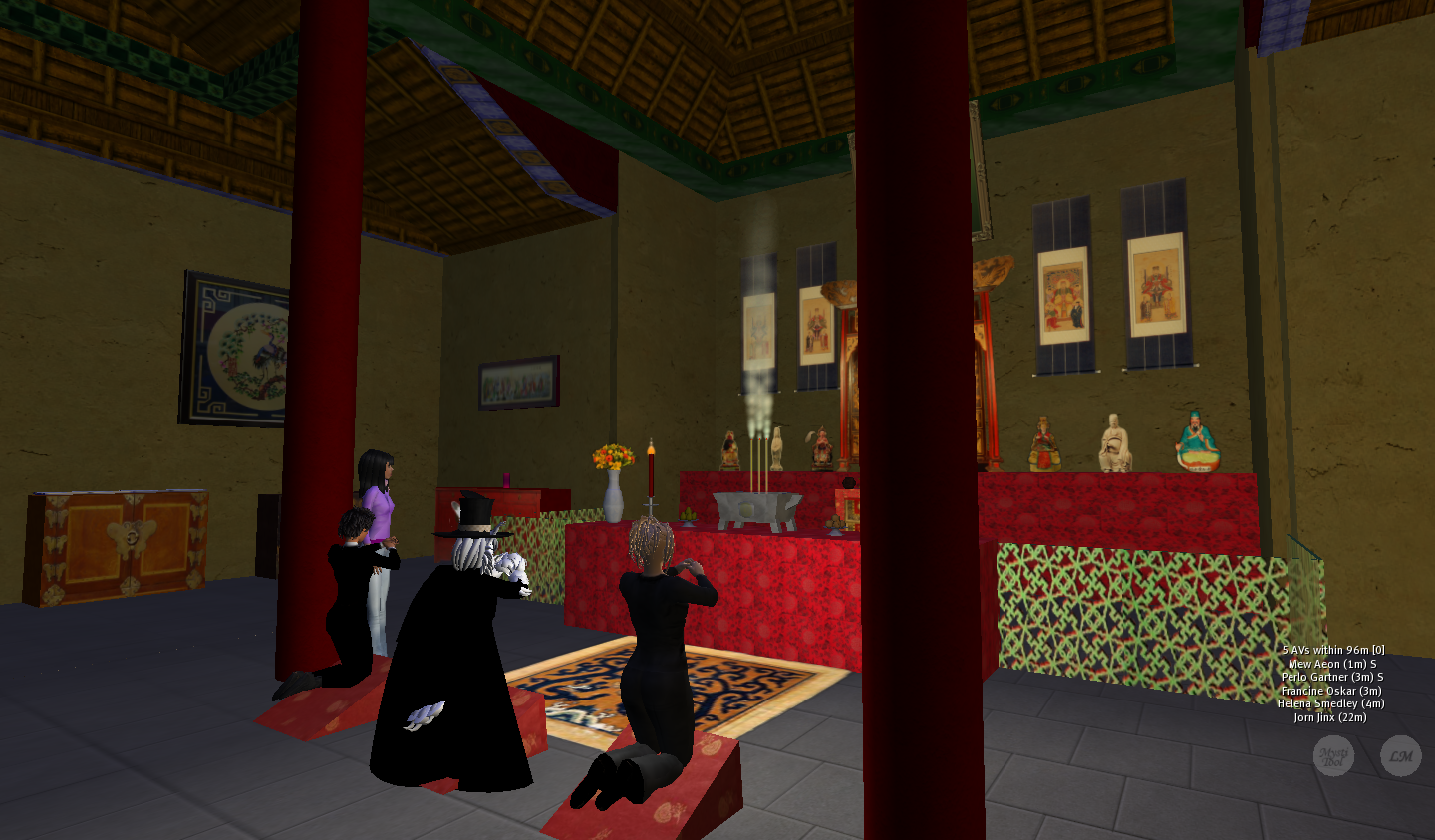
Despite their enthusiasm about SL as teaching and learning medium, they also worried about especially technical challenges, the fact that most communication in SL is in English and the rather vast amount of time that is needed to get to know SL sufficiently so that the students actually would be able to use SL as intended. Nonetheless, they did find the possibility to do field studies via SL to be really appealing and worth trying out, and they are currently preparing a course that’ll be running in the beginning of 2010. After the presentation we visited a couple of the religious places that would be relevant in their course:


The Kaaba at IslamOnline


Looking at The Black Stone – something NpIRL for non-muslims …


Praying at The Cijian Temple

Afterwards Perlo & Francine reflected on the experience in FirstClass and they both focused on the many things – especially technological – that you need to pay attention to when teaching in-world. Compared to f2f they found it more difficult to control and mange the activities, make sure everybody understood their instructions and when touring making sure nobody got lost. These are quite typical impressions from initial teaching experience in-world – but don’t worry –  it does get easier in time :-)

/Mariis

Case MIL09: Didactic Design Discussion – 2

In the 2. Didactic Design Discussion in the MIL course I’d chosen to focus on some of the central points from my own PhD-project since it also deals with analysis of SL as teaching and learning environment. Discussing some of my own ideas with the students naturally is very inspiring and rewarding for me personally, but I’m also hoping (and sensing) that the students benefit from seeing my approach to the problem, and judging from the vivid discussion I do believe, I managed to challenge some of their presumptions. I’m not able to reproduce all of it, but I will try to highlight a few issues.

Essentially my PhD-project is aimed at improving Blended Learning within Higher and Further Education through remediation and redidactization. Through a process of designing and redesigning two specific Blended Learning courses within 6 research cycles the aim is to enhance learner experience and learning outcome by using new augmented/immersive 3D media and a learner centered Problem Based pedagogical approach. In both cases the target group is adult teachers/ trainers from the educational and the private/industrial sector from different countries.


PhD-project overview – Fall 2009

The concept remediation (in relation to new media) was coined by Jay David Bolter and Richard Grusin (2000), but there was no explicit value or quality identified with different ways of remediating in the original concept. However, Tringham, Mills and Ashley (2007) further developed the remediation concept in their Remediated Places Project and came up with two distinct strategies for remediation, respectively respectful and radical. In my point of view these two strategies can be extended to include pedagogical considerations and thus inform more general implementation strategies for blended teaching and learning using new media.

I first introduced the MIL students to the concepts of respectful and radical remediation in the course last fall and like this year’s students they immediately adopted the terminology. If you’ve ever been in SL you’d know why – it makes perfect sense to distinguish between the two both with regard to people, places and practices. The interesting question nonetheless is whether remediation changes anything in the way we think and practice teaching and learning …


Is a slide show presentation in SL an innovation?

According to Peter Denning an innovation can be defined as a transformation of practice in a group, community or culture – it is not enough just to come up with a brilliant idea or create a new artifact. Surely there are many different definitions of innovation, but I agree with Denning and it aligns very well with Wenger’s 1998 social theory on Communities of Practice, which is one of my core inspirations. Changing practice is easier said than done and Steven Warburton has identified 7 barriers to innovation in 3D environments like SL:

  • Technical – machine and human related [and standards related]
  • Identity – the tension between playfulness and professionalism
  • Culture – reading the codes and etiquette of SL
  • Collaboration – building trust
  • Time – even simple things take time 
  • Economic – nothing is for free
  • Design – perhaps this is a meta-barrier but SL does offer up very particular design challenges

Besides these I would add another meta-barrier, namely the inherent paradox between (re-)production and innovation that all participants in education are facing. This is what I call the didactic double bind. In general double bind is described as dilemmas in communication, and SL seems to be filled with conflicting messages. After the session one of the students posted this photo as her take on a in-world double bind:

The text for that photo could read: ”SL is an open environment. Join us if you can”. Naturally, the experienced SL resident would know that the dilemma in this particular situation is metaphorical – a shift in camera angle and you’d be there… the perspective on the situation would change and shifting perspective, looking at dilemmas at a higher level of abstraction is one way of solving double bind situations and would according to Bateson. 1972 mean learning at level III. And this is actually one of the reasons why I find SL so interesting – if we assume that the learner overcomes the initial difficulties and gets accustomed to the environment it provides rich opportunities for learning at higher levels, because SL inevitable challenges the learner both ontologically and epistemologically due to the whole meta-cognitive nature of the in-world experience.

After this we moved on to discuss the concepts of immersion and augmentation and what these two apparently conflicting ways of engaging in an environment like SL could mean – not least when it comes to teaching and learning practice. Again the students were eager to discuss and we covered a lot of important points on which I will return in a later posting. Suffice to say that we all agree with Tateru Nino on this:

It’s not all black and white.
The whole immersion versus augmentation debate is clouded by one trivial little detail. One is not the opposite of the other. The two aren’t even mutually exclusive.

We ended the session by trying out the Opinionater – it really is a very efficient and fun tool for stimulating discussions :-)

/Mariis

Experiments with Classroom settings

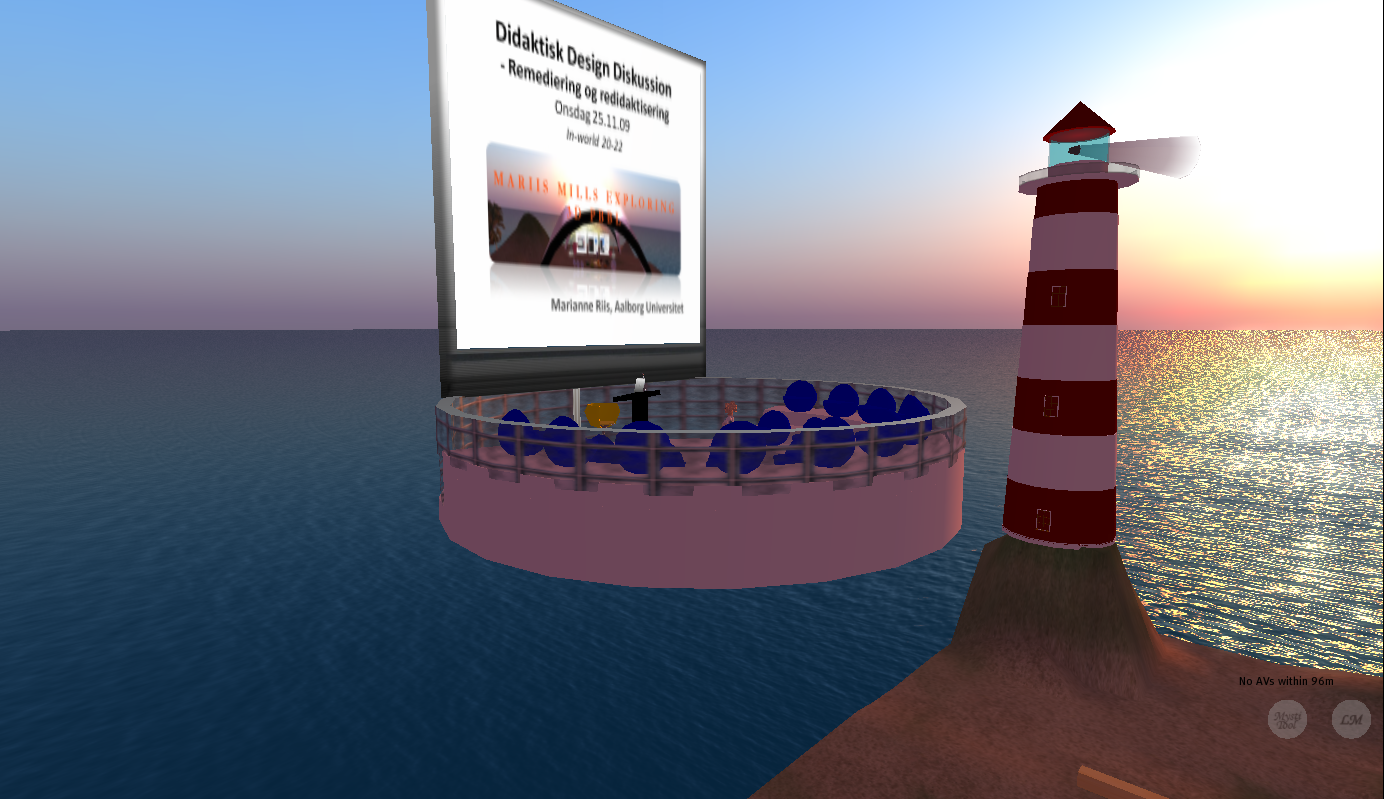
Due to technical difficulties on Wednesday, I decided to postpone our 2nd in-world Didactic Design Discussion to Sunday.  My co-facilitator, Mew is in charge of the 3rd discussion set for Monday, and since we’re both using the Zebra presenter and he has already set up our teaching and learning area for this, I decided to experiment with an alternative classroom setting up in the air over our sandbox.

Now, who would want to go to class RL or “in” a conventional web-conferencing system, when instead you can be in a beautiful place like this??


We’ll also experiment a bit with The Opinionater on Sunday, but I’ll wait with setting up that, since it does seem to steal the attention of the participants once it has been rezzed :-)

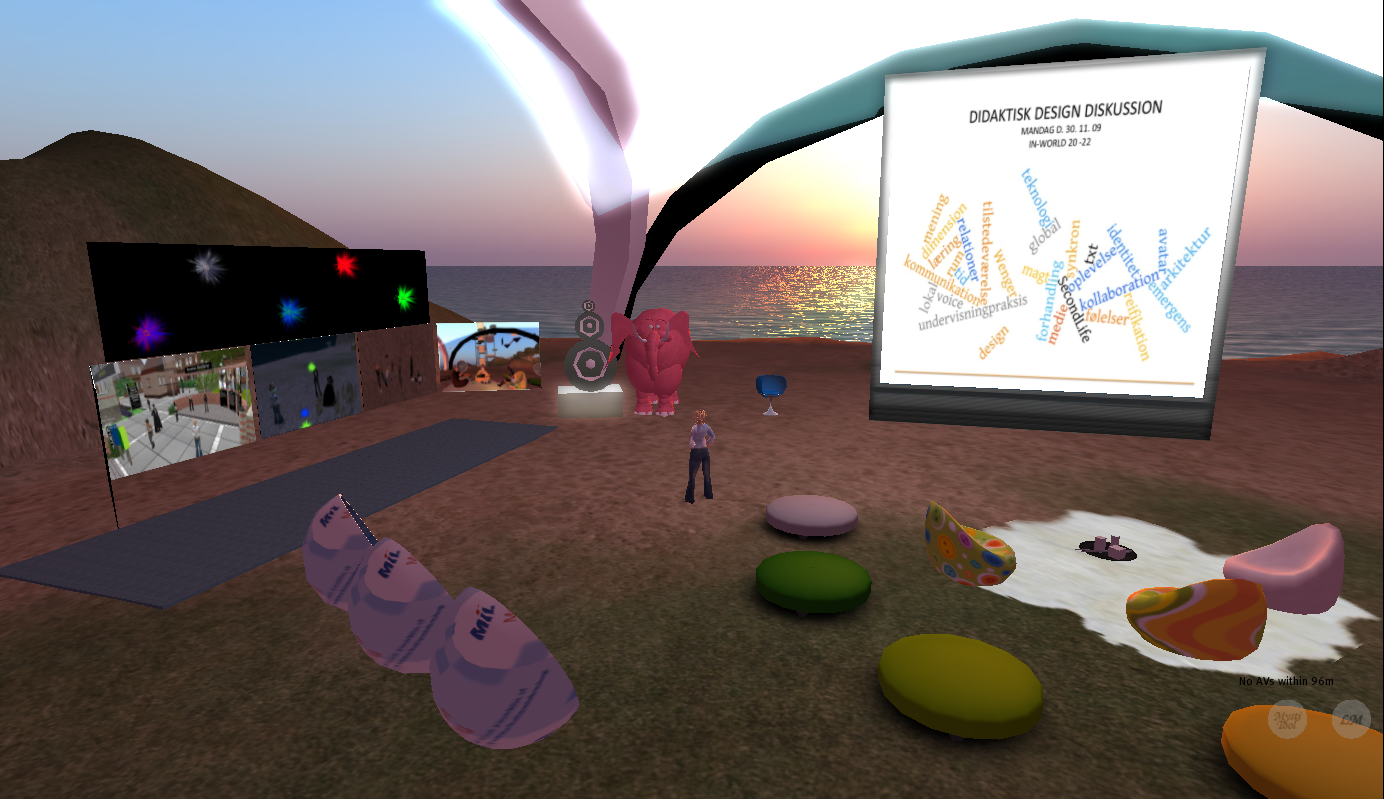
Mew likes to build and script and he has set up an interesting display for his discussion combining a conventional presentation with … well, something else :-) I’m not sure exactly what it is, but I’m looking forward to seeing it “in action” on Monday …

Mew also has some sort of a surprise in store for us up under the roof … very exciting!

More to come on this for sure …

/Mariis

More observations from the PBBL course

So we’re approaching the final week of the PBBL course and it is time to reflect a bit. My colleague Heilyn and I have managed to reflect on the course activities for every week and we have posted these reflections in Moodle, so that the participants could get an idea of why we have designed course elements in certain ways and what we have thought of the outcome. These meta-reflections  (on which the participants have commented) have proved to be very valuable in both our and the participants’ learning experience and it is definitely a course component I want to further develop in my next course. In this post I’ll highlight some of our reflections.

In the first SLecture the text and voice check took almost 45 min. and Heilyn and I agreed that this was unacceptable, so in the second SLecture we reduced the scheduled time to 15 min. and we put out further information on voice settings etc.  It worked for the majority of the participants, but there still seems to be 1-2 participants in every session struggling with technical problems. We actually asked everybody to check out if they could access especially SL before enrolling in this course, but in future courses this should be stressed, since we cannot help/ do anything about local problems e.g. firewall problems, inadequate graphics cards, poor internet connections and lack of headset etc. In designing this course we had planned a preparation week where participants were expected to solve a newbie assignment aimed at learning the basic skills in SL. These activities were optional and unfortunately very few participants decided to make use of this offer. For future courses we would recommend making newbie assignments/activities mandatory.
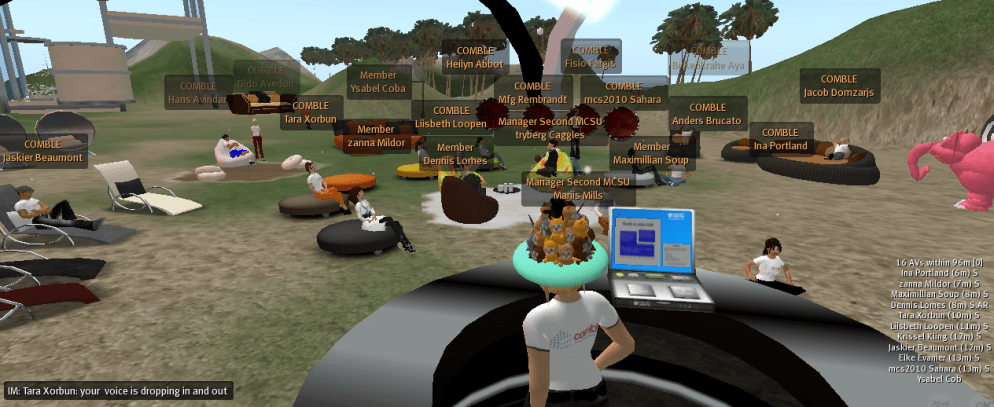
SLecture2
SLecture 2 in session …

In this course the participants are expected to work in Teams and Heilyn and I decided to form the teams based on nationality. The argument for this type of division was quite pragmatic. We knew that all participants would have difficulties in finding time to participate, so we figured it would ease their process if they were able to work in their own languages  for some of the activities (mainly the Mini-project work), and in the second SLecture these Learning Teams met for the first time.  Whether this has been a good decision we’ll know more about in the final course evaluation …
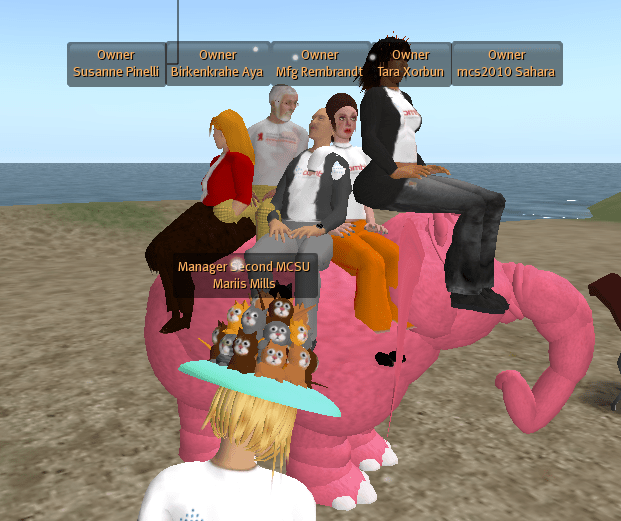
Germany
Learning Team Germany decided to meet on one of the Pink Elephants …

The third SLecture was Heilyn’s first real teaching experience in SL, and I think she did a great job. Her presentation was about Action Learning and by the end of the SLecture the Learning Teams were asked to go shopping for Team mascots.  I asked Heilyn about her experience and she pointed out two things. First of all she did not consider doing a presentation a creative way of teaching. I agree, but I do believe presentations are necessary when the participants have little or no prior experience with the subject matter, come from very different pedagogical cultures, speak different languages and in general have very different prerequisites. Lecturing then serves the purpose of trying to establish common ground, common language, common terminology and as a means to clarify questions. I also believe that the participants’ general SL skills should be taken into consideration before planning more difficult activities. Besides this, I do believe that lectures in SL are quite different from conventional f2f lectures due to the possibility of using simultaneous voice and text.

Heilyn-SL3
SLecture 3 in session …

Another point Heilyn made was that she felt somewhat alone during the SLecture, in the beginning she felt worried because she couldn’t see the participants’ reactions. It felt like talking to an empty space, but then the comments started to appear in the chats. By the end she was more tired than usual after a 2 hr lesson. Before the SLecture, we discussed if she should ask the participants to wait with their questions till after the presentation, but I recommended her to allow for questions during exactly because I thought she might otherwise feel quite alone – and it is also more interesting for the participants if they are allowed to contribute to the discussion. But lecturing this way and in a foreign language certainly is something you need to learn and especially when there are many questions/comments it can be difficult to stay focused. I’ve logged both local and group chat from all the lectures and as an example there were a total of 33 pages in the second SLecture – that is a lot of information you need to attend to while lecturing …
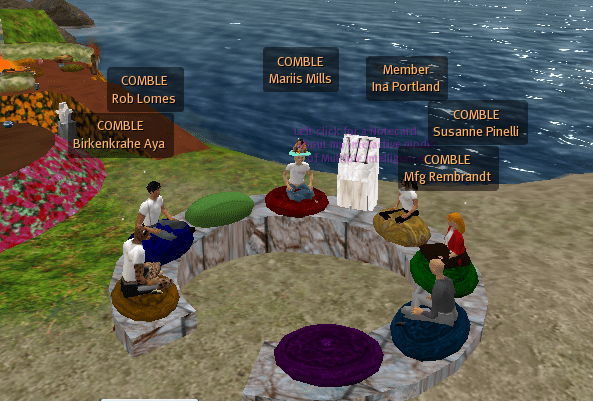
Optional-MI
Discussion on the MI theory …

Recognizing that participation in lectures is not the most interesting way to get to know SL, we have also included Optional visits, and in the first visit I showed the participants Zotarah Shepherd’s MI design and Thursday Xu’s designs of Bloom’s taxonomy and Wenger’s CoP.  Touring, exploring and trying out things together in an informal way combined with discussion on topics that are somewhat peripheral to the subject matter is in my opinion a very nice activity, and judging from the feedback the participants also appreciate this kind of activity.
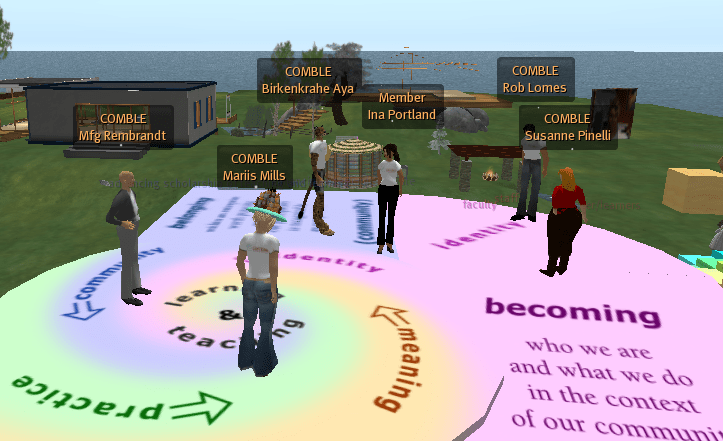
Wenger060909
Discussion on the CoP theory …

The fifth SLecture was on PBL, networked learning and web 2.0 technologies conducted by my other colleague, Thomas. I was not able to attend, but judging by the comments in Moodle the participants enjoyed the lecture. At this point in the course Heilyn and I decided to make part of the lectures more interactive, since the participants now seemed more at ease in SL. For the 6th SLecture we prepared 5 statements on PBL/AL and used them together with the Opinionater tool. This turned out to be a very interesting exercise. We had not anticipated that the participants would disagree to the extent that they actually did.

Statement3
No consensus on problem types in PBL/AL …

The Opinionater is a quite simple tool, but highly effective. We managed to have some interesting discussions on different aspects of PBL/AL and in that sense the tool also served as a formative evaluation tool giving us educators some hints on the participants’ perceptions. After this exercise I took some of the participants to U21 Global Island where we tried out the Metaphor Tour.
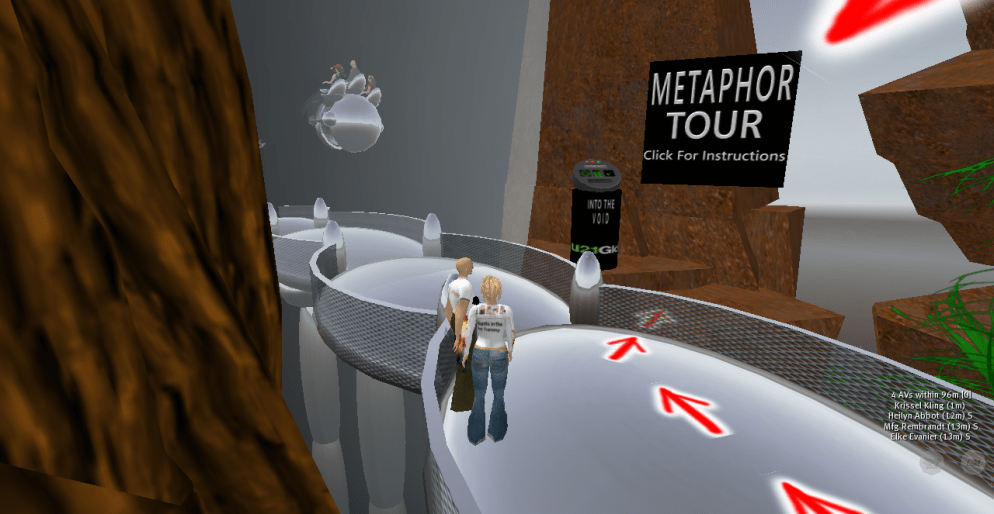
160909_014

The Metaphor Tour … a trip focusing on constructivist learning  …

In the second optional visit we met my friend, Inge Qunhua who is a Danish educator and SL designer. Inge has a lot of creative ideas and has made several small displays of her designs on her island.

130909_011
Investigating one of Inge’s designs …
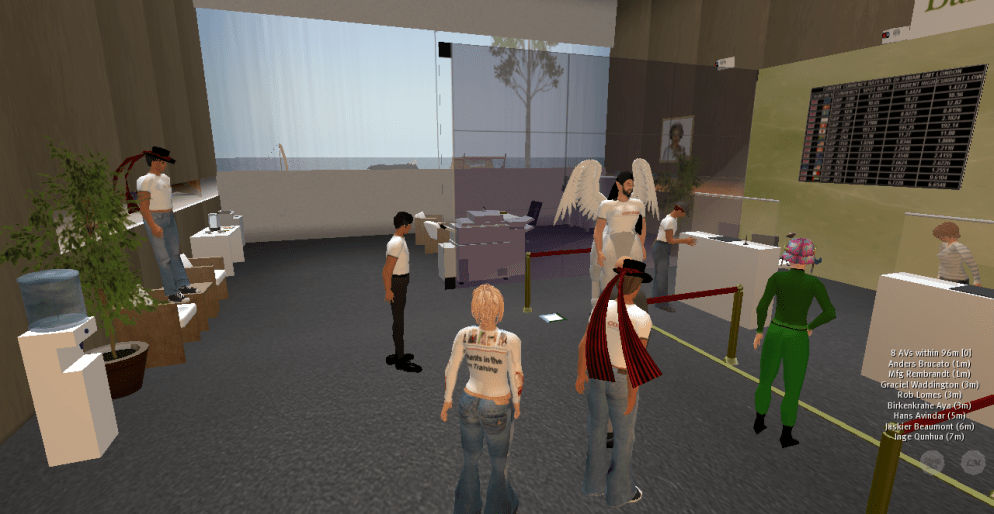
130909_017
The Bank setting in Inge’s holodeck …
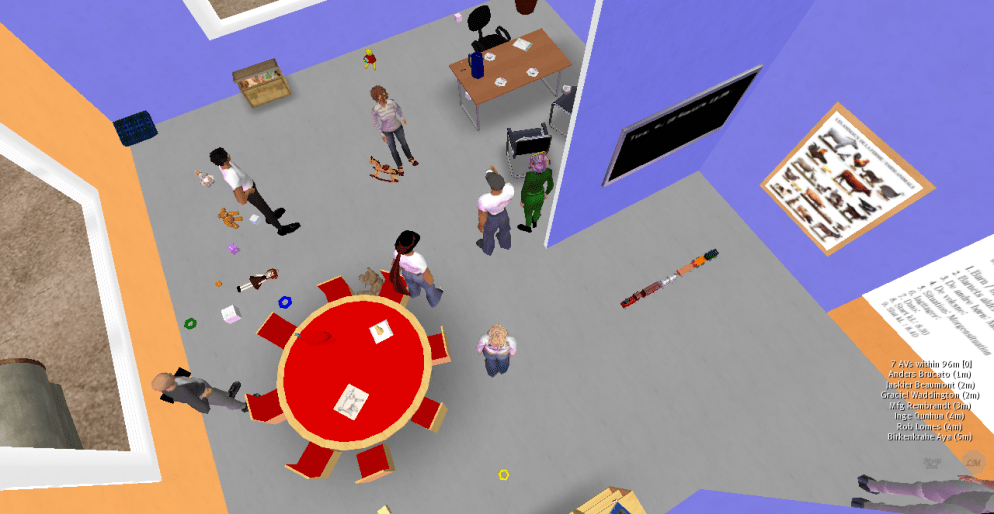
130909_022
The Kindergarden …

In the seventh SLecture this week we experimented with video display, but it did not turn out quite as we had hoped it would. However, we have not yet reflected on this experience, so I’ll return to that in a future post. This week the participants were expected to hand in their Mini-projects on Friday. Only 3 out of 6 teams did so, and this in my opinion is not satisfactory.  For the last 10 years I’ve been using project work in my teaching and I’ve never before had the experience of only half of the students/participants handing in projects. One team has asked for an extension of the deadline, whereas the two other teams haven’t given us any indication of what’s going on.

Mascot display
Learning teams displaying their mascots in the sandbox …

This course has been designed as a test course with the aim of finding out whether this certain design is sustainable and even though we all have learned a lot, I’m not convinced that this particular design is suitable for the general learning objectives.  Learning about PBL – especially the way we see this at Aalborg University, where we combine PBL with project organization – is a process that needs a lot of time. I’ve been skeptical of the very short course period (6 weeks, incl. preparation) from the beginning. We actually wanted to design a 10 week course, but preliminary investigations among our project partners indicated that a 10 week period would be too long. I can think of several reasons as to why only half of the teams managed to hand in their projects on time, but I’ll wait with further conclusions till we have done both project and course evaluation next week….

/Mariis

April Blog-o-the-Month nominee :-)

During the night I received the following message from fellow SL resident, Scottmerrick Oh:

Hey Mariis, congrats on your nomination for the April Blog-o-the-Month at the ISTE Island Blogger’s Hut! There’s voting all the merry month of March there so encourage all your virtual pals to go vote! Also feel free to grab the “Nominated” graphic at Oh!VirtualLearning! (http://scottsecondlife.blogspot.com) and post it if you will, or just sit back and see how the masses vote! Cheers, and thanks for the wonderful blog!

I’ve absolutely no idea who nominated my blog, but I think it’s a honor to be nominated by peers, and whoever it is; TY – at this point in time this kind of appreciation was really welcome :-)

You can check out April month’s other nominees at Scott’s blog – and if you wish to participate in the vote follow this link to The Blogger’s Hut on ISTE Island.

iste-blog-hut

/Mariis