My first SL screencast

MIL alumni, Carsten Storgaard, recently pointed my attention to Screenr – a nice little tool for creating screencasts. So yesterday, when I was preparing to talk about immersion vs. augmentation in SL as part of the next Didactic Design Discussion in the MIL course, I decided to try it.

One of the best examples of in-world immersion to me was the Tunnel of Light build by Spiral Walcher, but unfortunately that place does no longer exist. Instead I had a look at Spiral’s pics and found myself ending up at his Vision Store where I did my first attempt at in-world sceencasting:

Vodpod videos no longer available.

Obviously I have a lot to learn about camera angles, movement etc. and I’m not convinced that Screenr is the best tool for in-world productions.

Nonetheless, I do recommend that you explore this beautiful place first hand – also have a look at Spiral’s Glow Show at Ball State University ll – it’s absolutely breathtaking!

Incidentally, I will be participating in a workshop on Machinima tomorrow at Roskilde University, so look out .. I may just be returning with more machinima-wanna-be-attempts in the future ;-)

/Mariis

Case MIL09: Didactic Design Discussion – 1

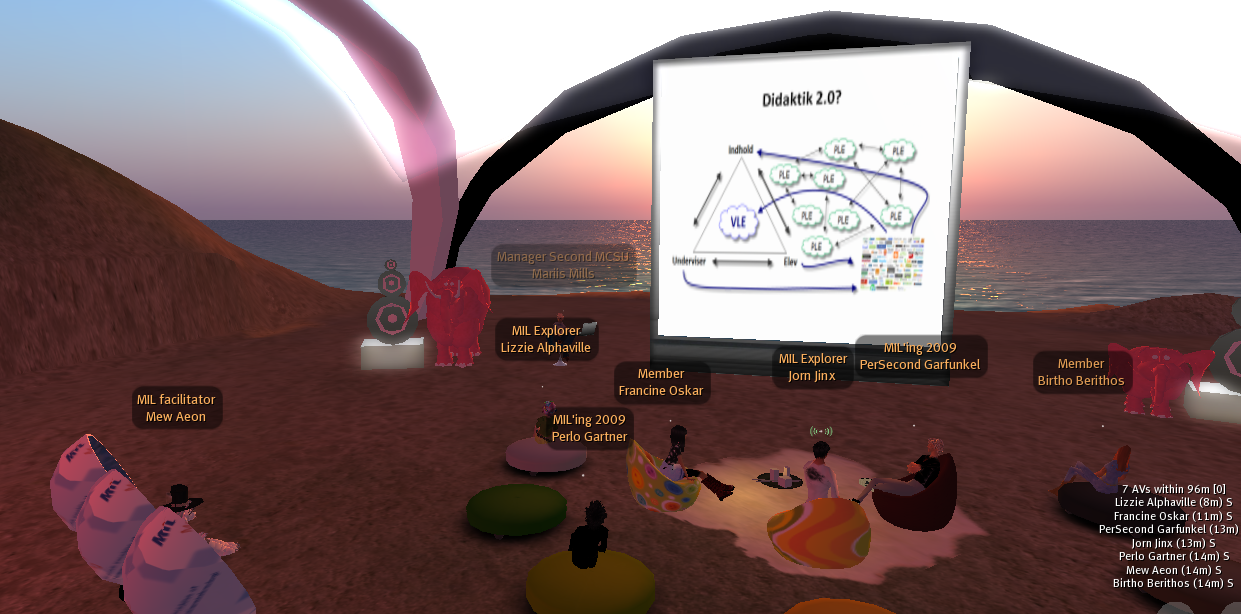
In the MIL course my co-facilitator Mew Aeon and I currently are running in SL the students are expected to analyze SL as teaching and learning environment, and in order to stimulate the students’ critical reflections we have prepared 4 discussions on different topics related to ICT-based Didactic Design. Last night we had the first discussion and for this I had prepared some slides (in Danish) focusing on two main topics; the field of Didactics and target groups.

8 students are enrolled in the course and since 3 of them did not have the possibility to participate in our recent f2f kick-off introductions  I had decided to repeat some central points. First of all there is the term ICT-based Didactic Design, which my colleague, Professor Birgitte Holm Sørensen from the Danish School of Education defines like this:

The process by which the purpose, the goals and the content is determined, and where the planning, the organization and the arena for teaching and learning is shaped based on theories and in relation to ICT-based practice in a context.

Via course readings the students are introduced to various didactic theories and models – one of the latter being the so called Didactic Triangle (usually attributed to German Pedagogical Philosopher Johann Friedrich Herbart 1776-1841) that depicts the basic relationships between teacher – content – student. Though all of us can agree that the field of Didactics includes more elements than the relationships in the Didactic Triangle it does, in my opinion, highlight the fundamentals and creates an excellent starting point for discussions on some of the key issues in Didactics.
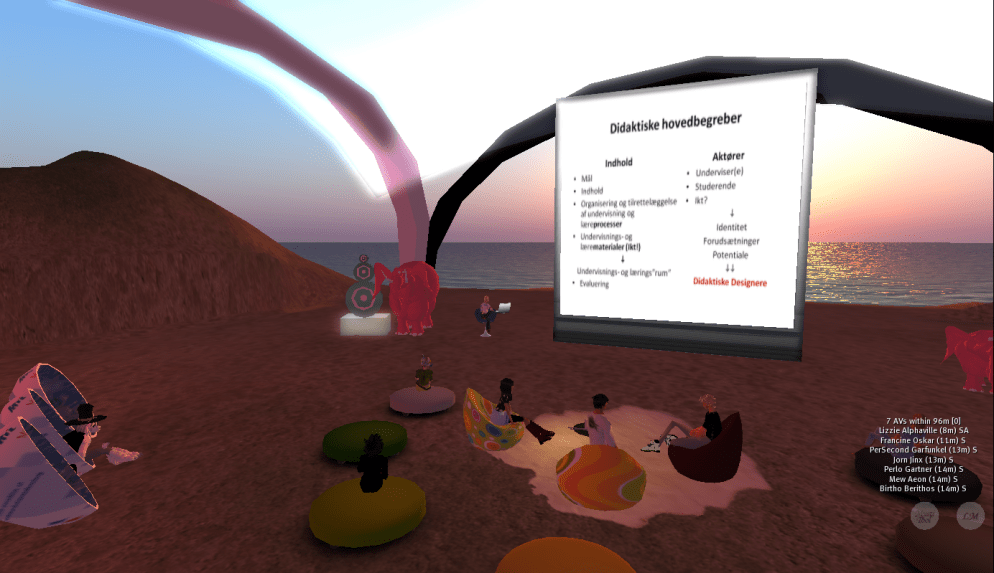

Key issues in Didactics: content and actors

Now, what I find particularly interesting when you combine ICT with Didactic Design is that ICT not only serve as materials but also as arena or “room” for teaching and learning –an aspect which clearly is amplified when using 3D virtual technology like SL.  Most MIL students can be characterized as being tech-savvy educators/trainers for whom it is relevant to further enhance their competencies in integrating ICT in their practice and we naturally ended up discussing what impact especially web 2.0 tools/services will have on the way we think and practice didactics.

As I see it Web 2.0 tools/services have the potential of changing our perspectives and thus practices regarding:

  • Users – both the students and the teachers with regard to relations/roles/responsibilities
  • Participation – as we shift from consumption to (co-)production
  • Multimodality – new possibilities to design for teaching and learning processes
  • Networks and connections – from local to global citizenship
  • Knowledge management – both from an information and communication perspective and with regard to security and ethics
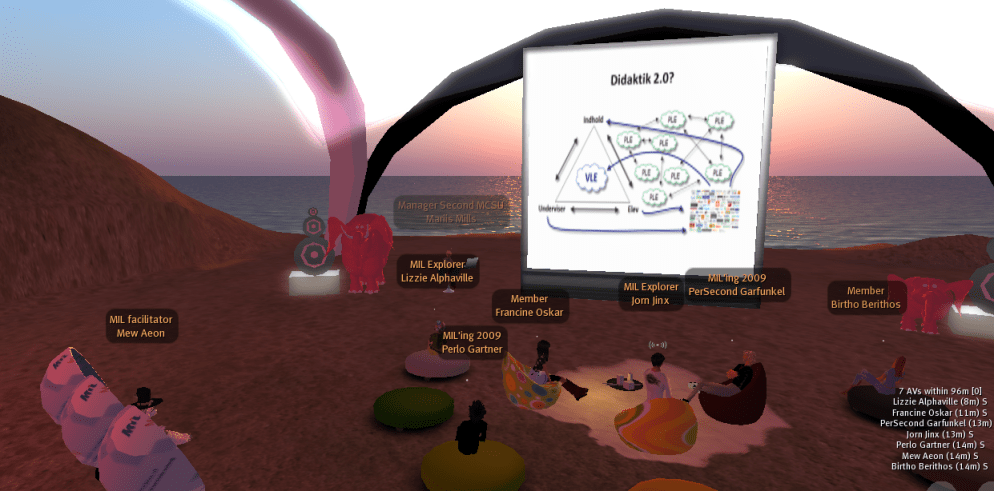

How does web 2.0 change the way we think and practice didactics?

For the last decade the Danish pedagogical debate has been focusing on learning and learners (in opposition to teaching and teachers) – and this shift in perspective has been highly welcome and much needed. On the other hand this shift seems to have placed the role of the teacher in some sort of vacuum (are teachers obsolete in the future as polemically stated by David Gelernter ?) making the challenges related to especially ICT integration more difficult and complex than necessary. When discussing target groups we therefore also encourage the MIL students to carefully consider the roles of the teachers. Much as anticipated we did not reach any solid conclusions on any of the topics, but I do believe the discussions inspired the students and I’m looking forward to the next session later this week.

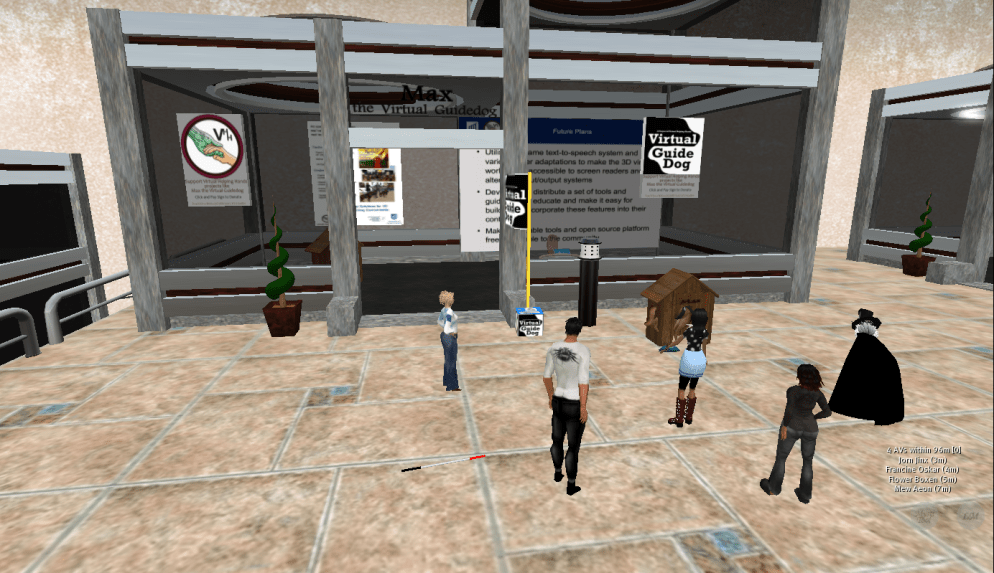
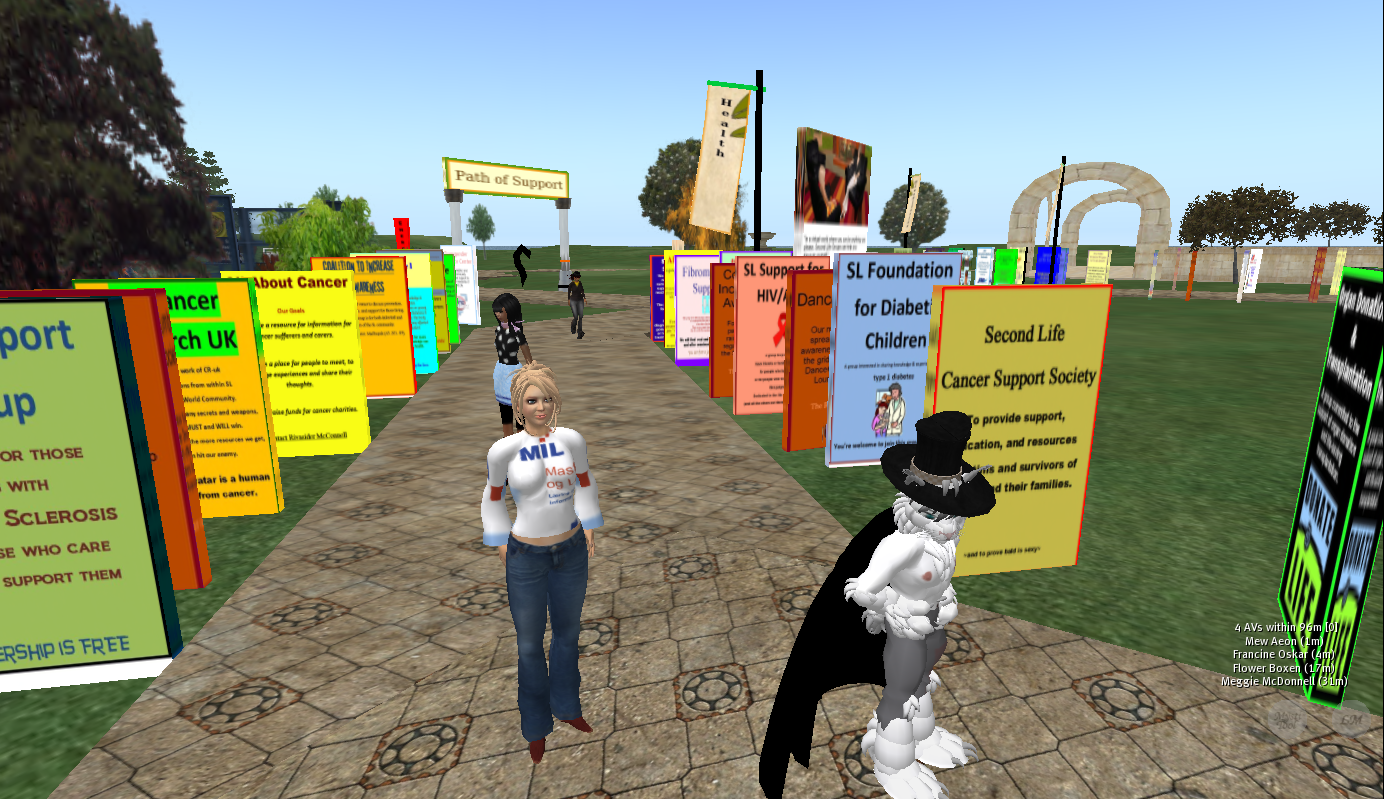
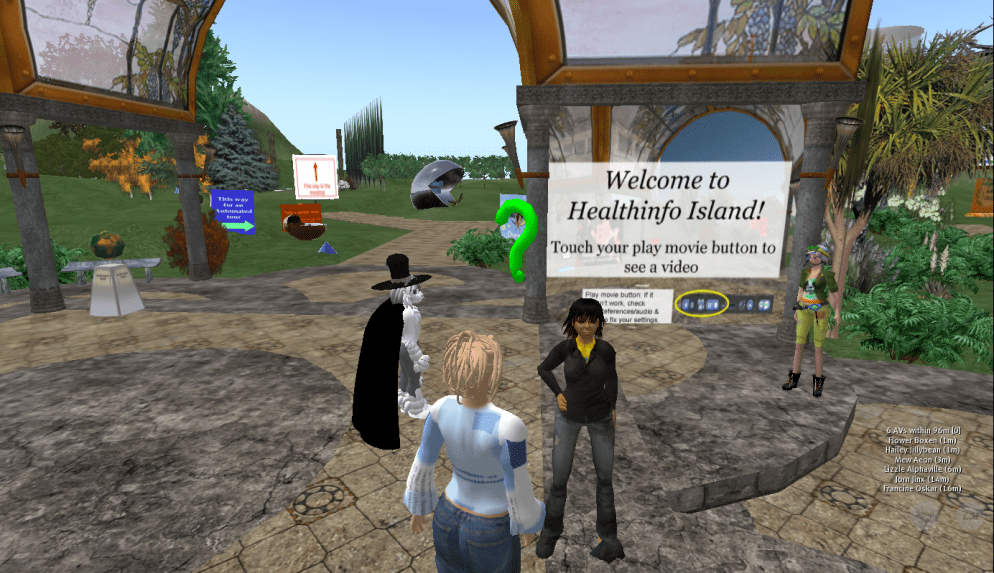
As part of our focus on target groups who could benefit from an environment like SL, we ended the night by visiting Health Info Island, including The Path of Support and finished off by investigating the Virtual Guide Dog.
/Mariis
LOM nr. 3: Læringspotentialet i virtuelle verdener

Online tidsskriftet Læring og Medier nr. 3 handler denne gang om læringspotentialet i virtuelle verdener.


Om artiklerne:

Rejseguide til Second Life I erkendelsen af at mange har en mening om virtuelle verdner og at kun få har faktiske erfaringer, indledes LOM #3 med Inger-Marie F. Christensens rejseguide ”Turen går til Second Life”. Artiklen er optaget uden for review. Formålet med denne artikel er at give et overblik over Second Life for at gøre det muligt for førstegangsbesøgende at orientere sig og planlægge meningsfulde besøg in-world. Artiklen er opdelt i to sektioner. I første sektion har forfatteren samlet en række praktiske oplysninger om bl.a. avatarfænomenet, installation af Second Life, tidsforskel, valuta samt kommunikationsformer og transport/navigation in-world. I anden del af artiklen har en række dedikerede og entusiastiske Second Life brugere bidraget med slurls til og en kort beskrivelse af deres favoritsteder. Der er noget for enhver smag.

Interview med og rundvisning ved avatar Gunhild Soderstrom – 2 Second Life-optagelser
Første optagelse tager seeren med på en rundvisning in-world, hvor Gunhild Soderstrom præsenterer Percipitopia, der bl.a. byder på en rekonstruktion af den irske filosof George Berkeleys hjem ”Whitehall” på Rhode Island og The White Room of Disorientation, der illustrerer Berkeleys ”Theory of vision”. Rundvisningen afsluttes med en solopgang ved klippen Hanging Rock, hvor Berkeley efter sigende har udtænkt flere af sine teorier. Bag avataren Gunhild Soderstrom gemmer sig lektor i filosofi Cynthia Grund fra SDU, som avataren Inga Miles alias Inger-Marie Christensen i anden optagelse har interviewet i Second Life. Det er blevet til en diskussion om læringspotentialet i virtuelle verdner og om Cynthias konkrete Second Life projekt Percipitopia, der er et eksperiment med 3D mediering af museumsundervisning. Begge produktioner er optaget uden for review.

Rum og rammer i det virtuelle
Efter det indledende afsnit omkring Second Life og det efterfølgende eksempel og interview optaget i Second Life, introducerer Simon Heilesen i ”Rum, rammer og biblioteker i den virtuelle verden” til, hvordan den virtuelle verdens miljø anvendes og opleves i en faglig sammenhæng. Heilesen tager udgangspunk i det danske biblioteksprojekt Info Island DK i Second Life, og sammenligner det med en række andre typiske biblioteker i in-world i relation til design. Han konkluderer, at den virtuelle verden kommer med en række betingelser af både mental og metaforisk art, som både sætter ramme og betingelser for anvendelsen og udfoldelsen.

Litteraturundervisning og virtuelle verdner
Artiklen ”Verklig fiktion om virtuell verklighed” af Ylva Lindberg tager udgangspunkt i spørgsmålet om, hvorfor og hvordan humaniora skal integrere ny teknik, underforstået den virtuelle verden repræsenteret af Second Life. Lindberg tager afsæt i et konkret forsøg på at anvende Second Life i litteraturundervisningen og argumenterer for, at den virtuelle verden er et oplagt sted at lade litteratur og teknik mødes. Afslutningsvis binder Lindberg litteraturen og den virtuelle verden sammen på ny vis, idet hun viser, hvordan to konkrete romaner omhandlende virtuelle verdener, kan knytte an til væsentlige indsigter og diskussioner om litteraturens genstand.

Virtuelt læringsmiljø til sygeplejestuderende
I artiklen ”CaseConnexion – udvikling af et virtuelt læringsmiljø til sygeplejestuderende” videregiver Line Zimmer Rasmussen og Linda Hauschildt Nielsen deres erfaringer i forbindelse med udviklingen af et interaktivt 3D læringsmiljø. Læringsmiljøet indeholder hospitalsstuer og patienter, som gør det muligt for sygeplejestuderende at omsætte teori til praksis, og tager udgangspunkt i problembaseret læring, hvor de studerende arbejder med cases og opnår øvelse via simulationer. Artiklen indeholder didaktiske refleksioner over valg af platform samt over de principper, der ligger til grund for det konkrete design af læringsmiljøet, herunder overvejelser mht. professionstænkningens indflydelse på disse designprincipper. Artiklen afsluttes med vigtige anbefalinger ift. hvordan undervisere og studerende klædes på til at gennemføre succesfulde læringsforløb in-world.

Hvad mener de studerende selv?
Lillian Wiese har foretaget en analyse af en gruppe studerendes oplevelser i Second Life med henblik på at vurdere, hvor velegnet den virtuelle verden er som platform for udvikling af et 3D-online læringsmiljø baseret på edutainment og pervasive learning. I artiklen ”De virtuelle verdeners læringspotentiale” videregiver hun resultaterne samt egne konklusioner og anbefalinger. Endvidere peger Lillian Wieses analyse af de studerendes oplevelser på nødvendigheden af at skabe gennemtænkte forløb med interessante og veltilrettelagte aktiviteter. Hun anbefaler, at der skabes trygge rammer både psykisk og fysisk og peger på behovet for mentorer og coaches.

Det er fælles for artiklerne i dette nummer af LOM, at de alle illustrerer, hvordan en remediering af undervisning og andre praksisser til en 3D virtuel verden kræver nytænkning frem for overførsel af traditionelle processer og rammer. Nytænkningen viser sig altafgørende for at kunne skabe meningsfulde forløb for deltagerne. CaseConnexion er et glimrende eksempel på, hvordan de virtuelle verdners helt unikke karakteristika anvendes til at skabe immersiv læring, der sætter det sensomotoriske i spil og giver de lærende mulighed for at opnå praksiserfaring.

Det samme gør sig også gældende i VIA University College projektet ”Innovative Learning”, der er nævnt i artiklen ”Turen går til Second Life”, og som netop har modtaget ”Den Nationale e-Læringspris 2009”.  Innovative Learning er et 3D læringsmiljø, der er konstrueret som en byggeplads, og hvor tømmerlærlinge uddannes indenfor sikkerhed og miljø. Her viser Second Life sit potentiale som læringsplatform for unge og ældre, der ikke har gode erfaringer med det overvejende boglige uddannelsessystem i Danmark. Virtuelle verdner er unikke på den måde, at de ikke primært er baseret på sproglige erkendelsesformer, men tværtimod har en stærk visuel og kropslig dimension. Måske er det netop virtuelle verdner, der kan være medvirkende til at give det danske uddannelsessystem et løft og bidrage til at opfylde målsætningen om, at flere unge skal igennem dels en ungdomsuddannelse og dels en videregående uddannelse.

/Mariis

Another SL project wins Innovation prize

Tuesday and Wednesday this week the Research Network, that connects Danish universities and research institutions, held its annual conference and announced that this year’s winner of the Innovation Prize is Inge Knudsen/Inge Qunhua and her work on innovative in-world designs for teaching and learning.


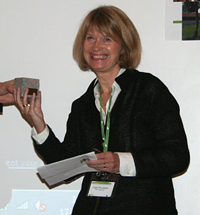
Inge getting the prize RL :-)

Inge was one of the first Danish residents I met when I rezzed back in spring 2007. Inge is always very happy, friendly and helpful and I enjoy taking my students to visit her and her island. Inge has embraced the many affordances of SL, has created new and interesting designs and has more than 300 hrs. of international teaching experience in-world. So I’m truly delighted that she got this kind of recognition and combined with the other award recently given to a SL project (where Inge btw also played an important role) this really is good news for all of us :-)

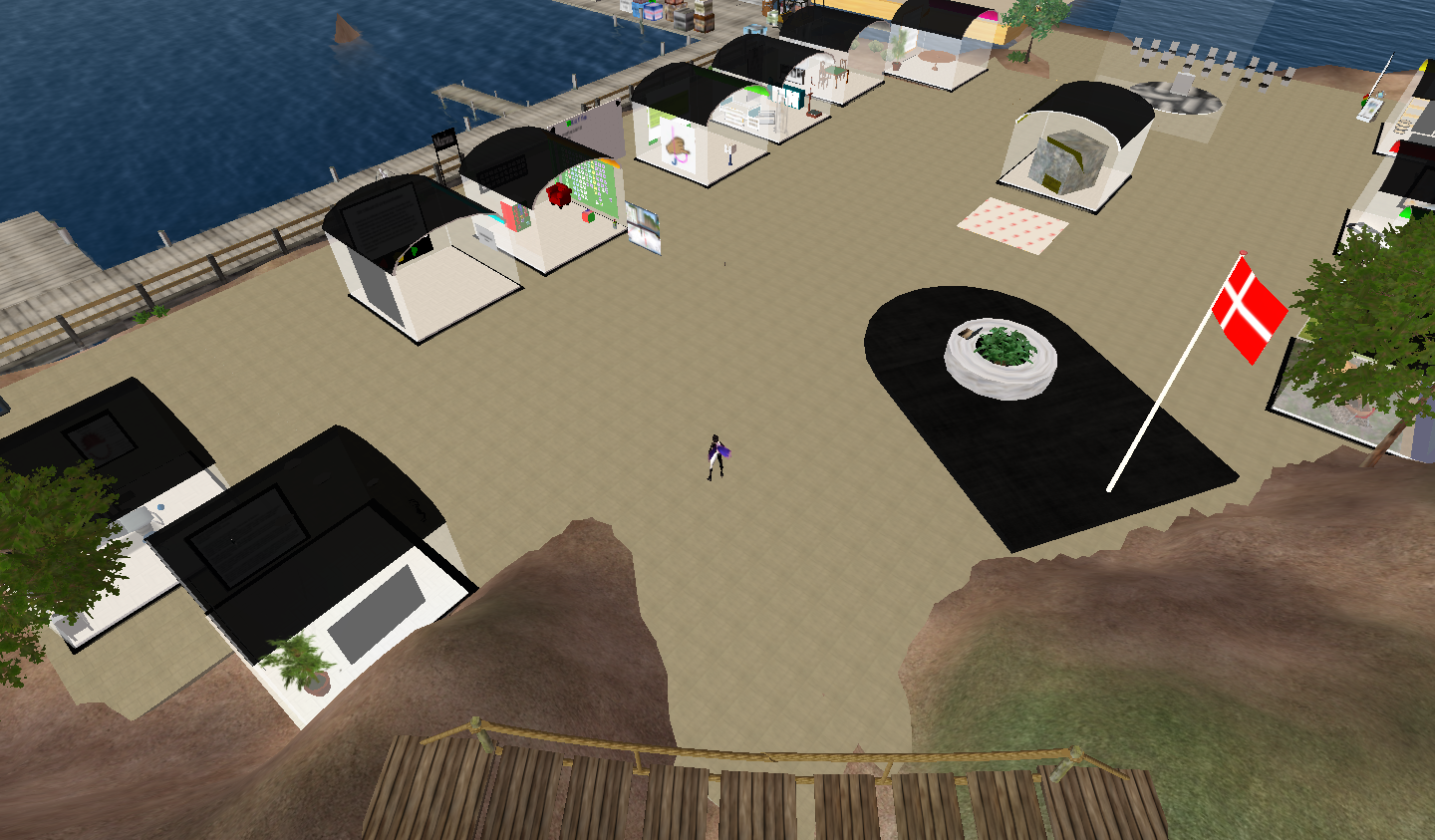
A short description and the jury’s arguments for giving Inge the prize can be read here (in Danish), but I really encourage you to explore Inge’s designs first hand in-world …


Overview over the small kiosks where some of Inge’s designs can be found

Inge is currently enrolled as a first year student at The Masterprogramme in ICT and Learning (MIL) and the good news broke just as I was going in-world with my class and we quickly decided to congratulate her in her own environment :-)

/Mariis