“Dialogic Spaces” – Dialogic Education and Research Group

On Monday June 22nd I had the pleasure of participating in the first meeting in a study group “Dialogic Spaces” aimed at exploring dialogue from various perspectives within educational research and practice. The group was initiated by Assistant Professor, PhD Thorkild Hanghøj and several of his colleagues all from Dept. of Curriculum research at the Danish School of Education. Thorkild specializes in educational gaming and will incidentially join me at the Master in ICT and Learning (MIL) in the fall in our ICT and Educational Design module. Coming from Aalborg University’s Dept. of Communication I’m very happy to get the opportunity to collaborate with this group of researchers who all have such very strong foci on educational research. Besides Thorkild the following people are part of the group:

  • Lars Birch AndreasenE-learning; netbased education; virtual learning environments, Netmediated communication and collaboration.
  • Lisbeth FrølundeMultimodality theory and visual culture, Design and development of digital learning and play materials.
  • Jeppe BundsgaardEducational Theory and Curriculum in relation to the Danish Subject and Information Technology, Critical Discourse Analysis.
  • Mads HaugstedMother tongue and didactics; verbal communication, colloquial language, speech skill.
  • Christian Brund – just started as a PhD Candidate with a project on the role of the teacher in relation to educational gaming … no link yet

Together we cover a wide range of research interests but with the concept Dialogic we have found a common denominator.  Dialogic is most commonly attributed to the work of the Russian philosopher, literary critic and scholar, Mikhail Mikhailovich Bakhtin and though his work will play an important role in our endeavors it isn’t an exclusive Bakhtinian group.  We spent our first meeting stating our interests in using Dialogic perspectives, defined the organization and goals of the group and finally discussed a couple of papers (Dysthe. 2006 & Wegerif. 2006) both focusing on the use of Bakhtin in educational research. So far we’ve decided to meet f2f once a month in the fall primarily to discuss literature hoping that these dialogues! will inspire all of us in our future work. Further down the line we hope to be able to hold public seminars and finally write an anthology covering especially, but not exclusively  Scandinavian Dialogic perspectives within educational research and practice which also means that we will invite international colleagues to come join us.

I was first introduced to Bakhtin in the early 90’ies when I studied literature for three years, but it has been years since I actually used his ideas and concepts more explicitly. In spite of this, I do find the Dialogic perspective interesting on multiple levels in relation to my current PhD research:

  • Ontological level – according to Bakhtin living is participating in an ongoing dialogue and I couldn’t agree more. Accepting dialogue as ontological premise naturally influences the main purpose and the main processes of education; empowerment as preparation for and – as it is the case in HE/FE –  continuation of democratic, participatory citizenship. This way of thinking and practicing education very much aligns with a Scandinavian approach to both education and research in general and with exploration of new social media in particular (e.g. Rheingold. 2008 on Participative Pedagogy for a Literacy of Literacies).
  • Epistemological level – as a consequence of the ontology it is through dialogue with both ourselves and the surrounding world that we’re able to create meaning. Thus, as educators we need to focus on teaching students how to engage in the dialogues through which knowledge is constantly being constructed, deconstructed and reconstructed (Wegerif. 2006:60). It’s also worth noticing that if we accept the dialogic premise, the main mechanism for learning is taking the perspective of another in a dialogue (ibid:64)!
  • Methodological level– up until now I’ve been reluctant to coin my methodological approach, usually just stating that I’m applying some sort of Action Research. However, I recently decided to try to apply and further develop a methodology called Dialogue Design which was developed by three of my colleagues from the MIL steering committee, Janni Nielsen, Lone Dirckinck-Holmfeld and Oluf Danielsen (2003) back in the late 90’ies in relation to a large European research and development project on Multimedia and Network in Co-operative Research and Learning (MANICORAL). This particular methodology, based on different types of Action Research, puts forward dialogue and mutual learning as guiding principles.  Dirckinck-Holmfeld and Nielsen are also my PhD supervisors, and I will be spending most of the fall with Nielsen at Copenhagen Business School focusing on this part of my PhD work.
  • Didactic/pedagogical level – as teaching and learning space SL offers many possibilities of engaging in dialogic activities. Communicating simultaneously via both text and voice, incl. via avatar (as embodiment) and context are probably the affordances I currently find most interesting and I anticipate Bakhtin’s polyphony concept and his ideas on intertextuality (both in multimodal variations) will be useful in my attempt to theorize/analyze and design for such phenomena.

In applying a Dialogic perspective on my PhD I’ve got a sense of coming full circle and I’m really looking forward to an inspiring fall with extended readings and lots of dialogue … yeah :-) It also means that I’m in the process of editing my PhD page here on the blog … it’ll be back sometime during the summer.

/Mariis

References

Dysthe, O. (2006): Bakhtin og pedagogikken – Kva ein tidlegare ukjend artikkel fortel om Bakhtins pedagogiske praksis. IN: Norsk Pedagogisk Tidsskrift. 06/2006

Nielsen, J.; Dirckinck-Holmfeld, L. & Danielsen, O. (2003): Dialogue Design – with Mutual Learning as Guiding Principle. IN: International Journal of Human-Computer-Interaction. 15(1)

Wegerif, R. (2006): Dialogic education: what it is and why do we need it? IN: Education Review, vol. 19, no 2.

BTW

Stephen Downes recently directed my attention to a post on Streams vs. Blogs written by Jay Cross. In this post Cross reflects on blogs stating that:

Blogs are author-centric in a world that’s increasingly about relationships. Blogs are slanted toward me, me, me, me, me; the net is inexorably moving to us, us, us, us, us. Dialog trumps monolog.

While I do agree that some blogs tend to be very author-centric the few blogs/bloggers I chose to follow on a regular basis are highly Dialogic in my point of view. Adapting a Bakhtinian view engaging in dialogue with oneself can be very fruitful and furthermore the very nature of blogs (the intertextuality and the multiple voices coming forward through extensive linking) exemplifies a connected perspective on relationships and dialogue in a networked world.  The mere fact that I learned about Cross’ post via Downes shows my point. Granted that the premises for dialogue have changed dramatically, it still is dialogue to me … Nonetheless, I do agree with Cross that new services gradually will change the way we communicate, but like Downes I will not stop blogging any time soon – it’s just one way of communicating among others ;-)
Community of Inquiry (COI) in Virtual Worlds study

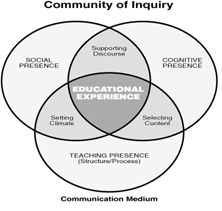
Early this spring Ross McKerlich, Terry Anderson & Brad Eastman invited me to participate in a research study on the usefulness of the Community of Inquiry (COI) model as evaluation tool in virtual worlds. Originally the COI model was developed in the late 1990’ies as framework for evaluating educational experience in text-based online environments by D. Randy Garrison, Terry Anderson and Walther Archer:

Central to the study introduced here is a model of community inquiry that constitutes three elements essential to an educational transaction – cognitive presence, social presence, and teaching presence. Indicators (key words/phrases) for each of the three elements emerged from the analysis of computer conferencing transcripts. The indicators described represent a template or tool for researchers to analyze written transcripts as well as a guide to educators for the optimal use of computer conferencing as a medium to facilitate an educational transaction.

communitymodel_small(COI website)

The COI model was developed as part of a Canadian Social Sciences and Humanities research funded project entitled “A Study of the Characteristics and Qualities of Text-Based Computer Conferencing for Educational Purposes”. Further details on that project, including papers describing the theoretical and methodological underpinnings of the model can be found on the COI website.

Given the COI model’s wide spread use in different educational settings it is by no means coincidental that one of the original founders, Terry Anderson, has found it important to explore the applicability of the model in new immersive environments such as the 3D virtual world, Second Life (SL). Together with McKerlich Anderson conducted a preliminary, qualitative exploratory study in SL in 2007 and basically confirmed that the model also can be used in assessing educational experience in immersive environments (McKerlich & Anderson. 2007).  Not unexpectedly, they did however also find that some adjustments would be appropriate – e.g. extending categories demonstrating social presence. This 2007 study did not allow for the authors to examine methodological issues such as validation deeply. Furthermore McKerlich and Anderson found the phenomenological experience of both learners and teachers would be worth further investigation.

Based on these preliminary findings, McKerlich and Anderson now together with Brad Eastman have initiated a new more quantitative oriented study – and this is also the study I’ve been invited to participate in. Unfortunately, I’ve not been able to contribute with very much so far due to a longer personal leave of absence from my work in general.  Nevertheless, during my absence they have successfully finished the work on developing an evaluation tool – in the shape of a survey intended for students with educational experience in immersive environments – based on original and new indicators of respectively social, cognitive and teaching presence.  The tool was publicly launched last week on several mailing lists relevant for educators using immersive worlds and the data have started to accumulate. We would of course like as many answers as possible though, so if this has caught your interest please have a look at the survey here.

Further down the line we’ll start processing the data and evaluate the tool – also by conducting in-world observations. Participation in this kind of study is quite exciting but also very challenging for me coming from a highly qualitative oriented research background. But I’m also pretty sure that I’ll learn a lot and that we’ll have some interesting discussions :-)

/Mariis

Lessons learned from presenting SL via SL

UNINETT2009

Thursday June 11th  a former MIL student, Cecilie Aurvoll had invited me to present my SL project at the UNINETT 2009 conference in Norway. Unfortunately I was unable to attend IRL, so we decided that I should do my presentation from within SL.

Obviously to make such a presentation you need an on-site mediator who’ll be able to log in-world and interact/communicate so that the audience gets an impression of the real time possibilities and challenges.  It was the second time I presented SL at a conference in this way and even though I think it it’s a good idea, I also think it’s easier said than done – at least I’ve learned a few valuable lessons.

The first time I did this kind of presentation one of my students, who together with the rest of his group had been studying SL for several months and therefore had quite a lot experience with SL and its functionality, acted as mediator. During this session we had an ongoing voice conversation and I knew that I could easily direct/instruct him (e.g. ask him to interact with objects) and just in general ask him to show the audience different things on his screen. The in-world locations we visited were places where the student and I had been before and he instinctively knew where to place his avatar and how to use his camera for the audience to get the best view.  From the feedback we got on this session it was evident that especially the ongoing voice conversation and the interaction between our avatars and in-world objects left the audience with a reasonable impression of SL.

The scenario for the second presentation at the UNINETT conference was somewhat different. The mediator was a local technician whom I didn’t know but only met shortly in-world the day before where he told me that his experience with SL was limited. This is by no means a critique of his work during the session – I actually thought he did very well, but there were some differences compared to the first session.  During the session we were accompanied by Cecilie and one of her friends, and since they both were located in different RL locations I hope we managed to show how SL can be used as an alternative to more conventional meeting tools. However, because I was unsure of the mediators ability to use different functionalities I hardly asked him to do anything, which in hindsight made his interaction (projected to the audience) rather passive. Ideally the session could have been rehearsed in real time beforehand but how often is that realistic? I’d made a manuscript, including landmarks and points to be aware of for both sessions, and for future presentations it probably would be a good idea to share this with the mediator in advance instead of just verbally expressing my intentions.

Another difference was related to the communication. Not entirely certain that I would be able to understand all their Norwegian I’d recommended that they communicated mainly by text, while I used voice. I also thought it would be interesting to show how the voice-text combination usually works very well. Voice presentations with texting audience are common in-world, I’ve attended many such sessions and so far I’ve found it to be both satisfactory and engaging.  I did forget one crucial point though; the difference in perception when you’re immersed respectively nonimmersed. When I watch the recording of the session it strikes me as being pretty boring listening to my avatar talking, while text pops up occasionally on the screen. From the view of the outsider it almost comes across as traditional one-way communication – at least that’s my sentiment and even though I don’t know how the audience perceived it, I would recommend mutual voice in the future.

Despite these challenges I do find this way of presenting SL to be a viable alternative when RL presentation isn’t an option – I still just have a lot to learn ;-)  In fact I think presenting SL via SL often is better than flat 2D presentations, but it depends on the purpose and it is a different story …

/Mariis

BTW; for those who understand Norwegian, Cecilie and her colleague, Kristine Sevik wrote an interesting article on the educational potential of Virtual Worlds for the conference.

Networked Learning Conference 2010 – Cfp

At Aalborg University we’re very proud to host the 7th international conference on Networked Learning 3rd & 4th May, 2010.

The Networked Learning Conference is an international, research-based conference. Since its inception in 1998 the conference has developed a strong following by international researchers. In addition it is well supported by practitioners, managers and learning technologists interested in contributing to and hearing about research in this area. The conference is considered a major event in the international ‘technology enhanced learning’ conference circuit. Conference papers are peer reviewed by international researchers in the field, and published in proceedings and online.

Keynote Speakers
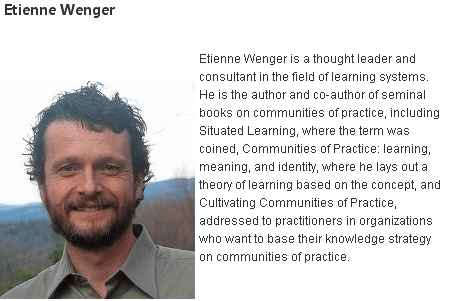
The 2010 conference features keynote presentations and discussions by two leading international researchers: Yrjö Engeström & Etienne Wenger.

Yrjo
Etienne

Conference themes
The conference is an opportunity to participate in a forum for the critical examination and analysis of research in networked learning i.e. learning and teaching carried out largely via the Internet/Web which emphasizes dialogical learning, collaborative and cooperative learning, group work, interaction with on-line materials, and knowledge production.

Papers critically reporting on the results of research and evaluation in Networked Learning are invited on the main themes of:

  • Understanding, Designing and Facilitating Learning in a Networked World
  • Theories and Methodologies for Research in Networked Learning
  • Impact on Learning of Networked Technologies
  • Learning in Social Networks and Networked Learning
  • Participation and Alienation in Networked Learning
  • Embedding Networked Learning in Public and Private Organizations
  • Formal and Informal learning in Networked Learning
  • Work Based Networked Learning and Knowledge Management
  • Problem Based Networked Learning
  • Practice Based Research for Professional Development
  • Issues of Social Justice and Social Responsibility in Networked Learning
  • Globalization and Interculturality in Networked Learning
  • Networked Learning and International Development

Conference papers will be peer reviewed by international researchers, and published in electronic proceedings and online. The conference steering committee will be supporting symposium organizers in publishing selected papers in special issues of refereed journals.

Submission date
Last date for submission of full papers for review: Friday 13th November, 2009

More details on submission

Further information about Networked Learning
You may find inspiration in the conference proceedings from previous years, and here I’ve copied a definition of networked learning from the British “Networked Learning in Higher Education” project:

Networked Learning:
learning in which C&IT is used to promote connections: between one learner and other learners, between learners and tutors; between a learning community and its learning resources.

Questions about the conference?
Please note that I’m not personally involved in the organization of this conference – questions should be directed to NLC Committee Administrator, Alice Jesmont, Educational Research Department, County South, Lancaster University, Lancaster. LA1 4YD. UK

nlc2010@lancaster.ac.uk

Symposium on Second Life in networked distance education
I would like to use this opportunity to invite 2-3 other distance educators using SL to participate in creating a suggestion for a symposium on the use of SL in networked distance education – if this has caught your interest please contact me for further elaborations in-world or on regular e-mail: mil01mr@hum.aau.dk

I’m hoping to see many Danish and International colleagues at this conference :-)

/Mariis

Ambivalence regarding projects like Sametime 3D

Via SLTalk I just read about Sametime 3D, an ongoing IBM Research and Lotus initiative to integrate enterprise business applications with virtual world applications. This video shows the integration of Lotus Sametime with OpenSim.

According to IBM’s press release the main purpose of this initiative is to “make it easier for widely dispersed businesspeople to interact and collaborate without the time and expense of in-person meetings.” And here is another quote:

The new software overcomes several challenges that have existed for businesses wishing to hold meetings in virtual worlds:

  • First, businesses can collaborate the way in which they are accustomed, using software they may already have, such as electronic presentations, enterprise security, and instant messaging tools.
  • Second, IBM has prefabricated a variety of re-useable spaces specifically designed for productive meetings, making it unnecessary for adopters to painstakingly build meeting rooms each time they want to meet.
  • Third, these spaces are secure, overcoming privacy concerns manifest in many public areas of popular virtual worlds.
  • And finally, colleagues not wishing to participate in a given virtual meeting can still view documents, presentations and results from those sessions — or even snapshots of a previous meeting.

I have to admit that I’m somewhat ambivalent about projects like these, that is projects behind “closed doors”. I think it’s great that companies like IBM research and experiment with virtual worlds and possible mash up’s between 2D and 3D. And I do appreciate the need for especially private companies to operate on their own servers, securing the data etc.  – and this may also be appropriate in certain educational settings. My fear though, is that this sort of “closed door” behavior becomes the prevailing trend. If we all stay in our own little walled gardens, there’s no need to dub them “worlds”…

Of course I’m aware that there are de facto many closed doors in real life too, but I still believe that one of the major affordances of virtual worlds like SL is the inter-cultural openness in all aspects of the word. Where else do I accidently bump in to fascinating, clever and friendly people? Just this week I made two new acquaintances, Benjamin, who turned out to be a Danish US based e-learning consultant and Digi, a Scottish anthropologist with a special interest in freedom of expression :-)

In the MIL course that I ran in the fall ’08 I had planed several visits to both Danish and international colleagues, and I know that the students really appreciated these opportunities to meet, discuss and reflect on professional matters with people from different educational cultures – meetings that would have been impossible to realize outside SL.

I’ve always felt that if 3D virtual worlds were to make a really, really important and innovative contribution to educational technology the secret would lie in the community – the global community feeling in SL is what brings and binds us together. Quoting Lennon; You may say that I’m a dreamer – but I’m not the only one ;-)

/Mariis