Quantitative learning outcome of the MIL course

12 students participated full time in the MIL course, one student divided his attention between SL and the second analytical object, the serious learning game, Global Conflicts, and 2 students who also chose Global Conflicts attended some SL activities ad hoc. The official learning goals of the course (regardless of choice) according to the MIL curriculum were;

The intellectual competence goals are that the student attains competence in:

  • identifying, reflecting on and appraising the scientific basis of ICT and didactic design formulating
  • analyzing and assessing problems within ICT and didactic design.

The professional competence goals are that the student attains competence in:

  • understanding and appraising theories and methods relating to didactic design
  • analyzing and assessing ICT based learning products and virtual learning environments on the basis of theories and methods relating to didactic design.

The practical competence goals are that the student attains competence in:

  • analyzing and assessing ICT based learning products and virtual learning environments on the basis of theories and methods relating to didactic design.

Besides these official goals, I stated that it was my hope that this SL course would force the students to reconsider familiar didactic elements and think out-of-the-box. When trying to articulate his learning outcome, one of the students suggested that this could be done in answering the following 3 questions; 1) What is your most significant learning outcome? 2) Has it been hard? And 3) How does this course differ from other MIL courses?

I think the second question is rather interesting and closely connected to the last question, but also to SL as a medium itself. It is widely recognized that SL has a very steep learning curve and that it takes a lot of time and effort to get accustomed to SL. Based on the general course findings and especially the many interesting discussion I had with the students I will return to this matter in a future post. In this post, I wish to focus on the course design and what this meant for the quantitative learning outcome in general.
ddd141208_005
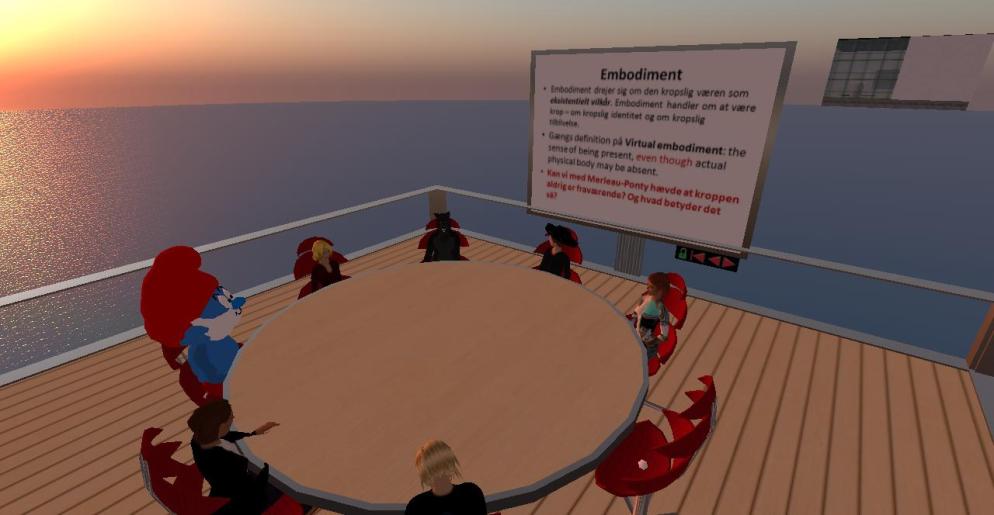
Didactic Design Discussion … on embodiment

The course is accredited with 4 ECTS points, which means that there is an expected workload of approx. 100 hours. MIL students are used to working hard, so I was a bit surprised when the student posed this particular question. On the other hand, I knew that this course was quite different from other MIL courses because of all the synchronous activities. Initially I told the students that I only expected them to participate in one synchronous activity in-world during the course, but all of them chose to participate in several. One of the major challenges of conducting distance education for further studies is to maintain a high level of flexibility. The MIL students are all attending the programme in their spare time from work and life in general, and most activities are asynchronous so that the students can chose to participate whenever they can fit it into their busy schedules. Since I knew that many of the students wouldn’t be able to attend on specific days, I tried to plan the activities covering most days of the week, including the weekends so that they had lots to choose from. From November 5th to December 15th there were a total of 25 activities with duration between 1-3 hours. The flip side to this was of course the risk that some students felt that they missed important stuff whenever they weren’t able to attend our in-world meetings. Furthermore the assessment criteria (a minimum of 3 postings in our asynchronous platform) of the course conflicted with the general workload. The students were asked to post their reflections in 5 different conferences covering essential didactic elements;

  1. Didactics and target groups – 32 postings by 12 students and me (8). Approx. 40 A4 pages.
  2. Orientation and navigation – 8 postings by 5 students and me (1). Approx. 8 A4 pages.
  3. Interaction0 posts!
  4. Learning processes – 68 posting by 11 students and me (21). Approx. 83 A4 pages.
  5. Audio-visuals – 9 postings by 2 students and me (4). Approx. 15 A4 pages.

Given that the official criteria was 3 postings corresponding to 3 A4 pages the degree of student activity has been uniquely high also considering the fact that besides these asynchronous discussions we had many, many long discussion in-world! I must say that I’m quite impressed :-)

Even though all students didn’t comment in all of the conferences it was clear from our in-world discussions that they had been reading and reflecting on all of the postings. We also had a general meta conference, which I mainly used to inform the students of upcoming activities and the students posted thoughts they could not fit into one of the 5 above mentioned conferences – there was a total of 232 postings there! Finally there was a conference where the students presented their avatars.
kgi161108_001
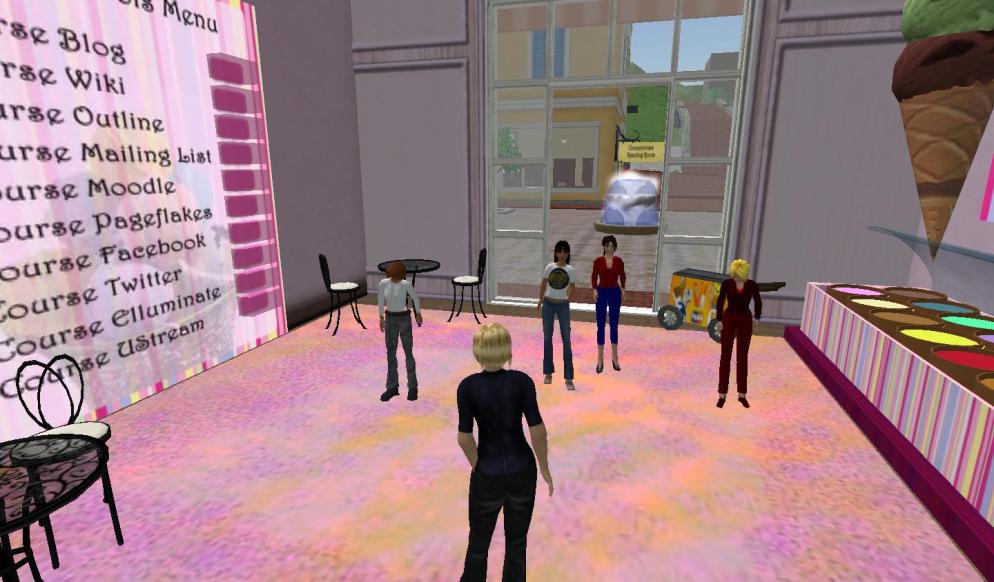
Visiting The Connectivism Course in Chilbo …

MIL students are generally recognized for their huge engagement, but I have to say that this course has exceeded even my highest expectations and it quite funny since the students initially expressed anxiety and fear of not meeting the official criteria.

The assessment criteria and the workload were topics we discussed eagerly during the course, and these are didactic elements that I need to reconsider, not only because the workload may prevent some students from choosing this course in the future, but also because 3 asynchronous postings may not be the best way to show learning potential and outcome of SL. I will return to this in a future post where I’ll be evaluating the different in-world activities also. For now I’ll plunge into the students own articulations of their qualitative learning outcomes and return asap … but based on the course activities I think its safe to say that all the students reached the course goals admirably!
/Mariis

Visit to Rockcliffe/ Phelan Corrimal

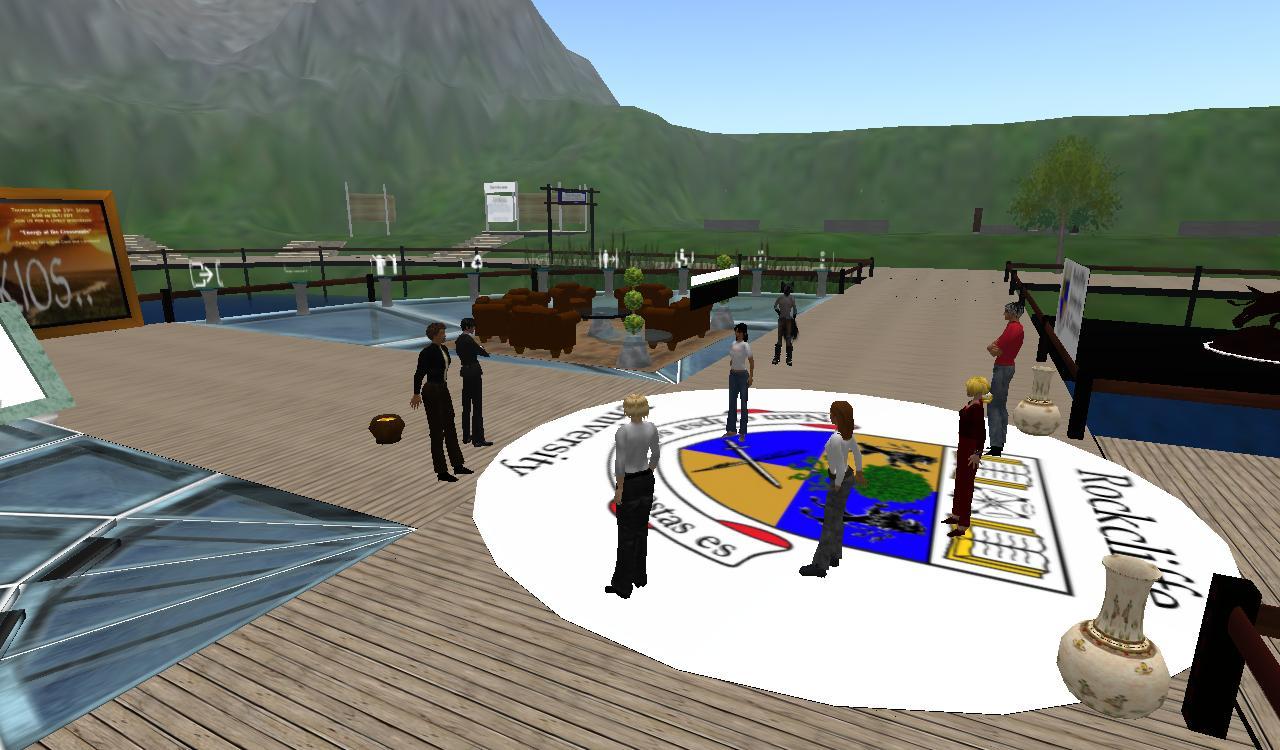
On Monday November 24th the MIL students and I visited Phelan Corrimal at Rockcliffe University. The Rockcliffe University Consortium is a distance learning organization servicing worldwide virtual learners and businesses. Located in Canada, the United States and the metaverse Rockcliffe University Consortium provides education, training and real time collaboration for its virtual members by incorporating interactive 3D immersive learning environments. Rockcliffe also is one of the Metanomics partners hosting part of the community on Mondays. Phelan is the President of Rockcliffe and is a very experienced in-world resident, so it was a great privilege that he took the time to share some of his thought on metaverse-based education and give us a tour to some of the locations on Rockcliffe’s many islands.

We started off in the reception area, unfortunately I had some initial voice-problems, but Phelan and the students seemed to manage just fine without me :-)

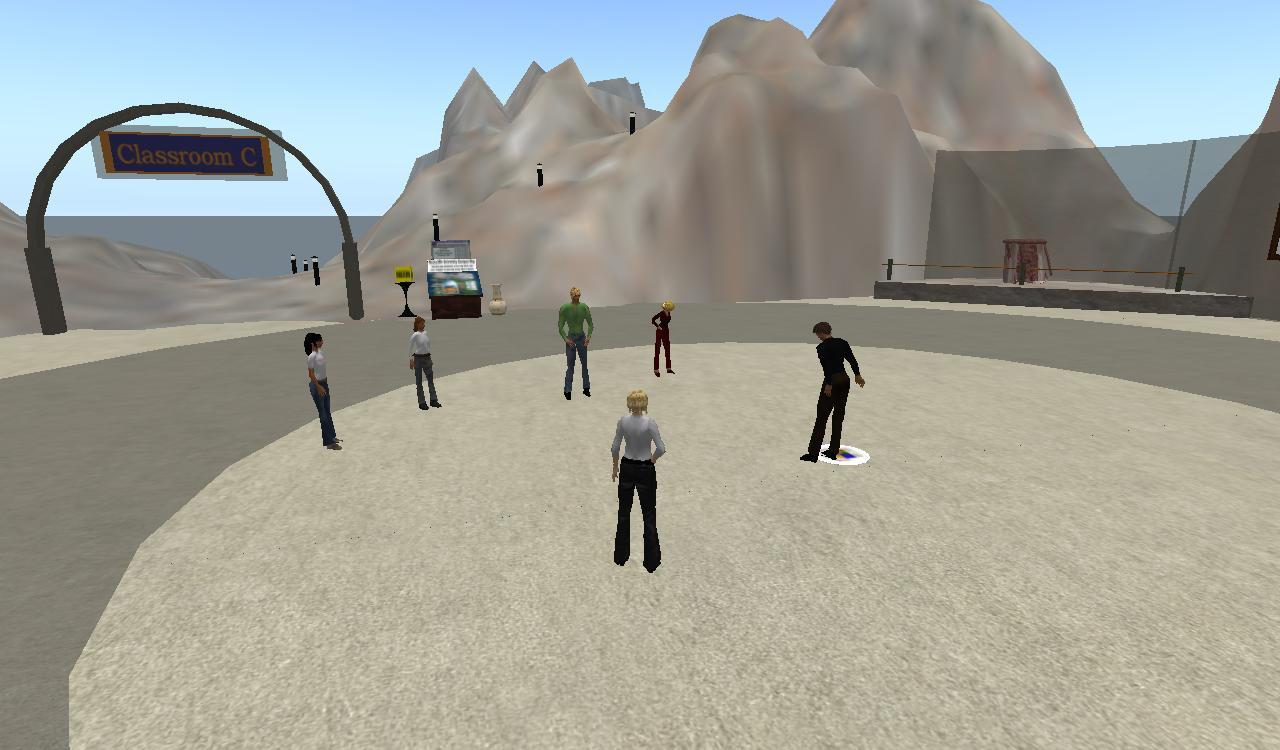
rockcliffe_002
At the Rockcliffe reception listening to Phelan

While we were standing in the reception area an unknown avatar arrived. Usually when an avatar arrives in the middle of a discussion he/she will be greeted in the text-chat, but this was not the case. The students and I discussed this later on, since it was a breach in normal behavior, and we all agreed that the reason why nobody greeted this particular avatar was that he/she had explicit sexual references in his title. All of us are adults, pretty open minded and I don’t think any of us are particularly sensitive, but somehow sexual references just wasn’t appropriate in this context. Interestingly, the avatar representation made it more obvious that we were ignoring somebody and I did feel a bit impolite – a sentiment I don’t think I would have had, if I had just been ignoring a textual message …

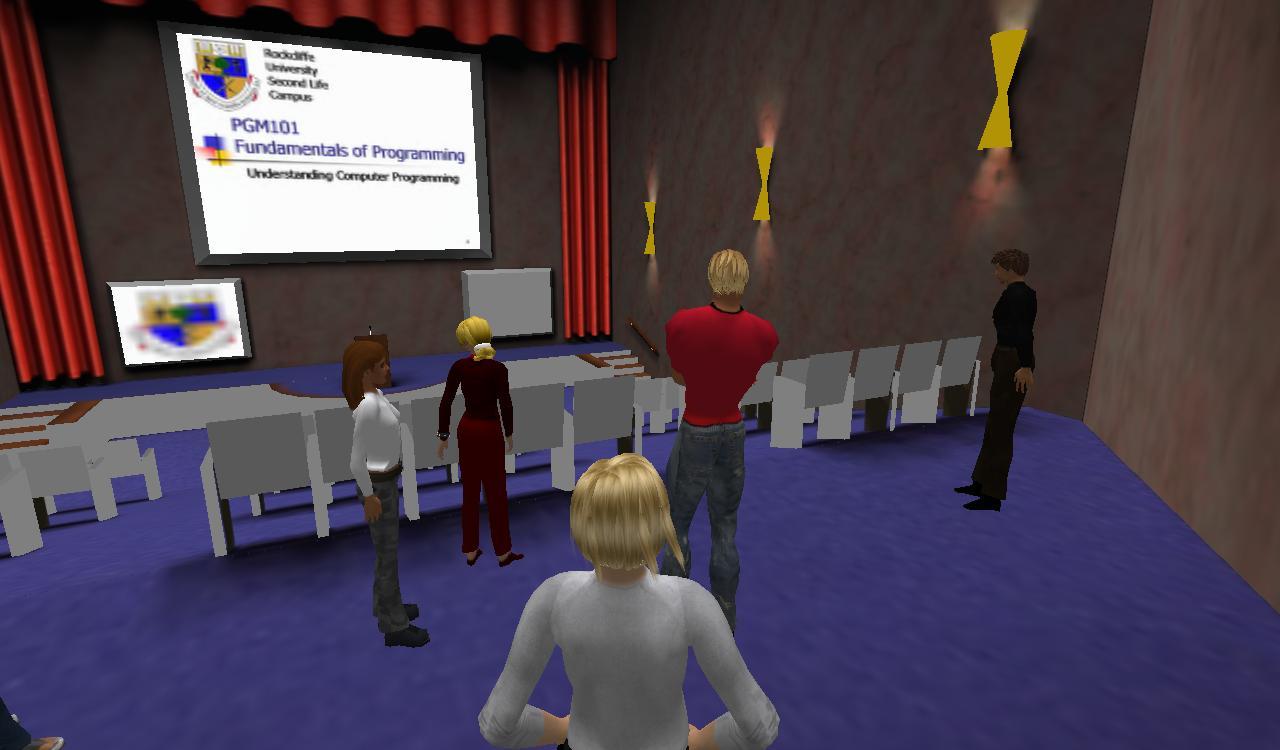
rockcliffe_004
Investigating one of the more traditional classrooms

One of the topics Phelan talked about was how to create sustainable education in the metaverse. Unlike other in-world projects Rockcliffe isn’t funded by organizations or sponsors and developing a sustainable economy is one of the biggest challenges Phelan and his staff are facing. We discussed the possibility of having open classes with the option to buy some sort of certification, diploma or the like afterwards. It’s my impression that Phelan very much would like to employ a temporary kind of open-content’ish principle to their in-world work, but that’s easier said than done!

rockcliffe_007
Another type of classroom

Phelan had been attending the E-Learn World Conference in Las Vegas a few days before meeting us, and as he explained his head was filled with lots of inspiration. One of these sources of inspiration was Constance Steinkuehler (though I’m not sure she attended the above mentioned conference), who has done extensive research into MMOs, including learning potentials, cognitive theory and media literacy. Apparently she’s also looking at Second Life and explores the “3rd Places” concept  in that context. As far as I know, the  concept of “3rd Places” was coined by Ray Oldenburg in his book The Great Good Place, and can be used to define places where we gather publicly to facilitate and strengthen local democracy and community. Both references surely need a closer investigation in the future.

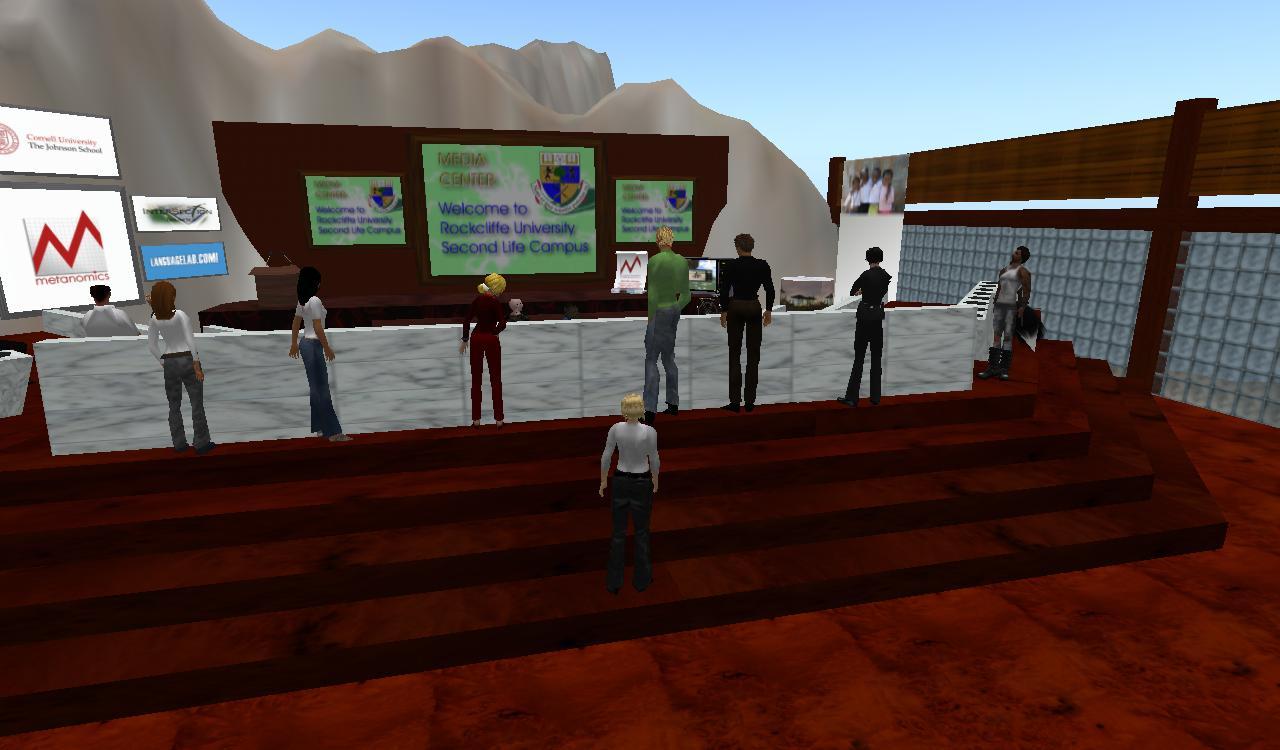
rockcliffe_008
Visiting the Metanomics show from the Rockcliffe partner location

We ended the tour in one of the less traditional classroom settings where Phelan and his staff have experimented with building interactive learning objects – some of them supplemented by both text and voice-over instructions. Some of the courses at Rockcliffe are designed to learn building in-world and this is one of the areas used for that, including a large sandbox. This is also one of the areas that Phelan hopes to find time to expand and further develop in the future.

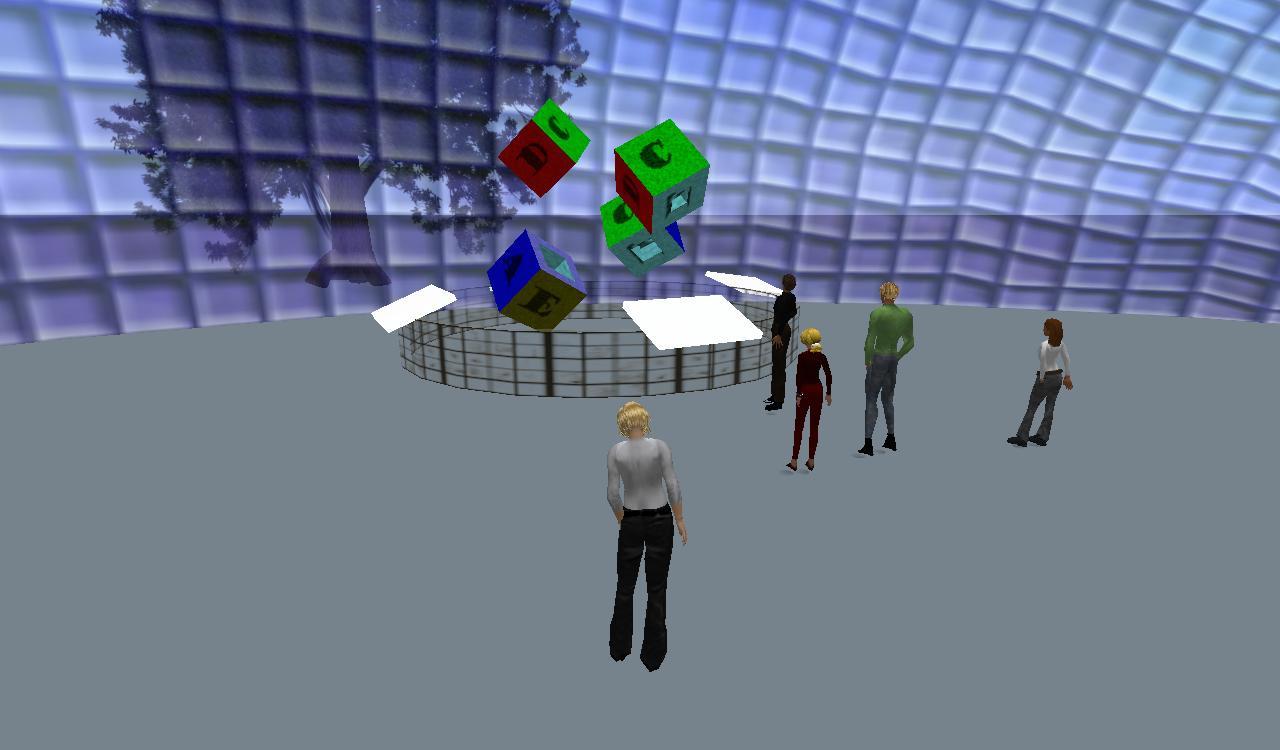
rockcliffe_010
Studying an interactive learning object

I had the great pleasure of meeting Phelan RL at The SLCC’08 in Florida in September, and we had some fun and very interesting talks during the convention. Phelan, in my view, truly is of the metaverse visionaries and I’m really grateful that he took the time to meet us. I know the students appreciate these meetings with other avatars/people very much, and with his interest in e-learning and research Phelan was a very relevant and good guy to visit – TY Phelan :-)

/Mariis

A visit to The Funny Farm?

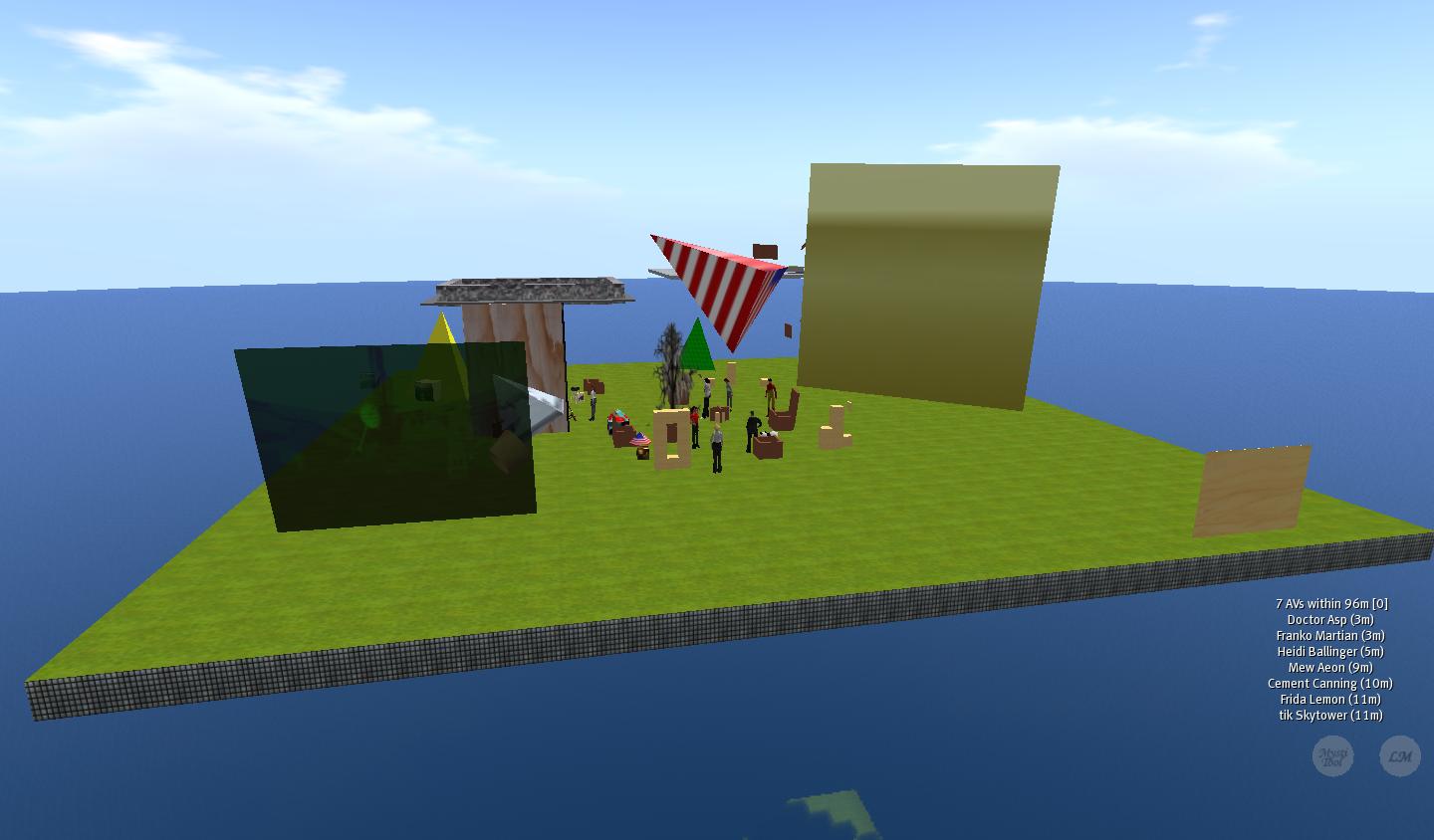
Today my MIL students had their second building class skillfully facilitated by Dr. Asp and Heidi Ballinger. When we returned to the sandbox it was clear that some of the students had been practicing their building skills since last class:

bygge2-1

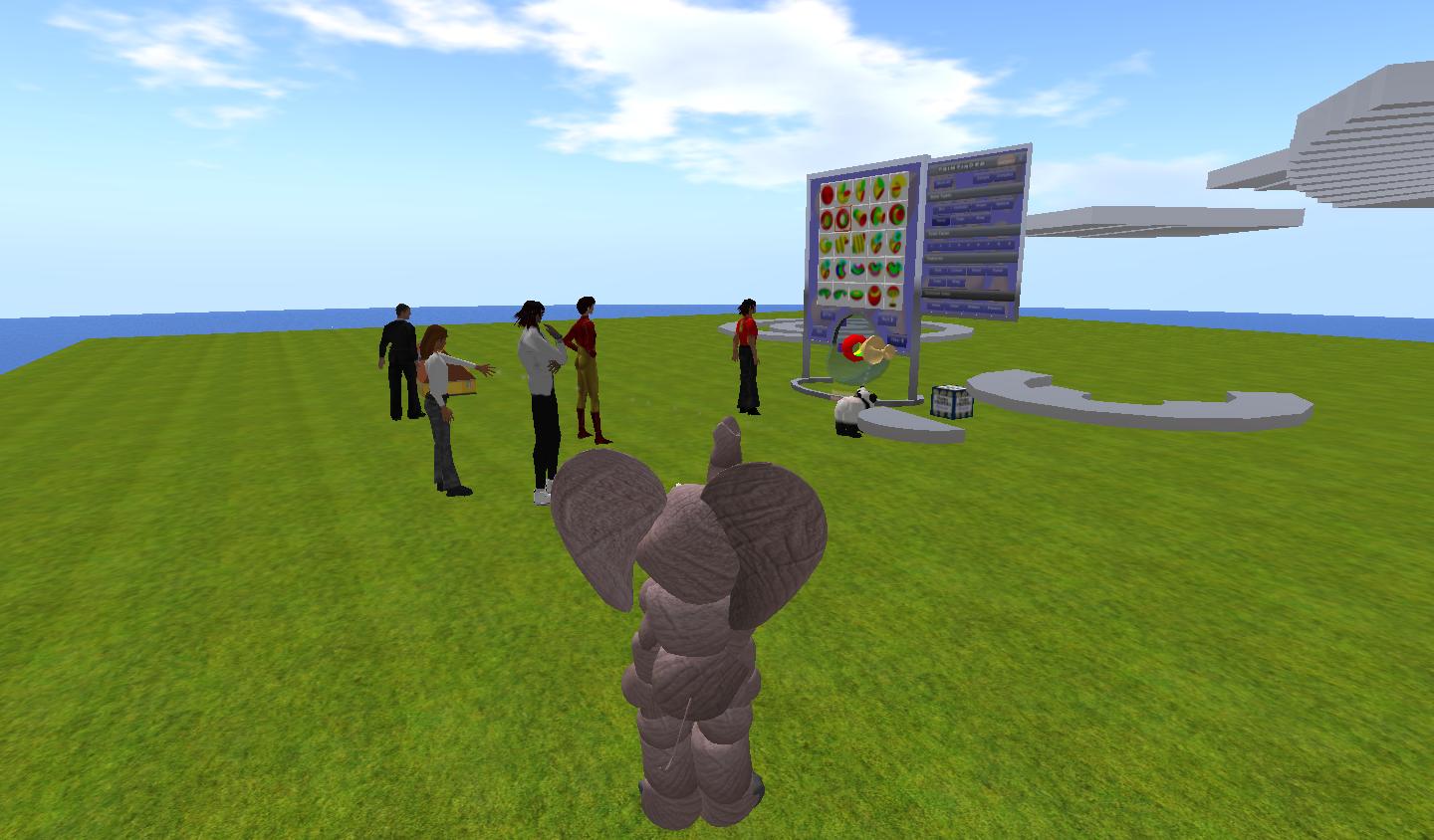
As the class started I took off looking for animal avatar shapes, which one of the students had expressed an interest in. I found several places, and naturally I was too curios not to try some of the shapes I found. Unfortunately I’m having trouble getting some of the shapes off again, so for now I look like an elephant!

By the end of the class I returned to see, what they all had been up to. Ballinger was showing the students a building tool, Prim Finder, created by Anthony Hocken from Crystal Gadgets.

bygg2-2

Ballinger was in her famous Panda look, I was the big clumsy elephant and maybe some of the students will try out new shapes … so who knows, perhaps by the end of the MIL course it will be like visiting the Funny Farm :-)

/Mariis

Visit to Pop Art Lab/ Claus Uriza

On Thursday November 20th the MIL students and I visited Claus Uriza, CEO of Pop Art Lab. As usual we met in the Holodeck before going to see Claus. Two of the students had been shopping animations and Franko could not help showing off his new swimming moves :-) I have to say that I truly appreciate this ability to attend meetings in new ways. Even though we’re engaged in serious academic studies, I do not really get why it always has to be so conservative and boring … show me hard evidence that learning only occurs when it hurts, and I might change my mind! Until then … let’s have fun while working!

201108_004
Swimming … or rather floating moves :-)

At 11:30 AM SLT we showed up at Pop Art Lab, which has just been redesigned so that Claus and his team can start having live music events recorded by SLCN.tv – I think they start out on December 5th, but you can always check out Claus’ blog for updates.

201108_007
Checking out Claus’ office in-world …

Claus gave us a tour of the Lab while talking about his project in-world. Claus’ mission is to give residents musical experiences combining the latest music releases with live events, the latter usually during weekends.

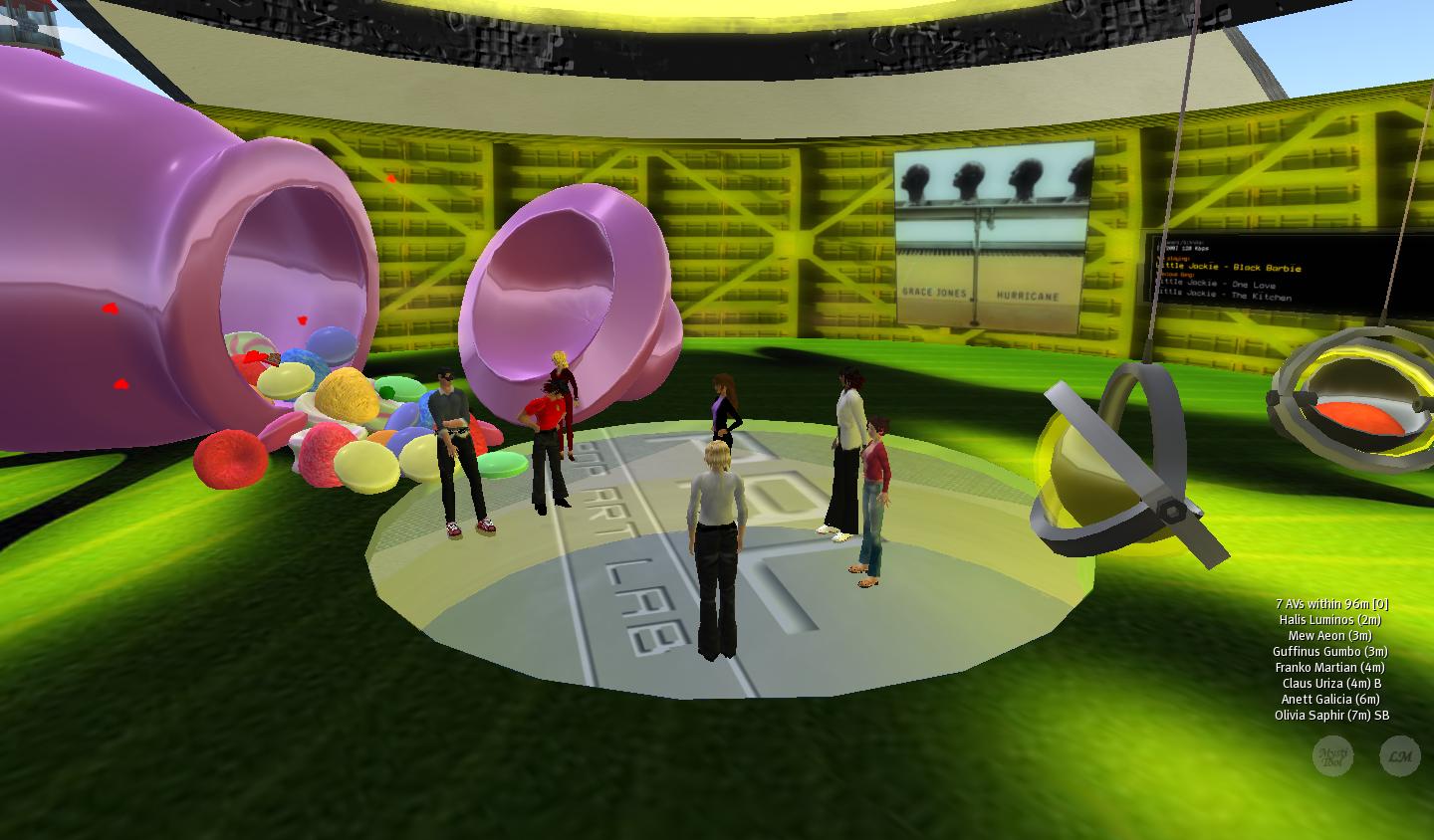
The Pop Art Lab consists of 4 Domes playing the latest releases in different genres – here we are in the Pop section listening to Grace Jones still going strong :-)

201108_008

When planning the in-world activities I was initially completely focused on showing the students educational sites, but I quickly realized that such a focus would deprive the students of valuable lessons and most likely they would not be able to grasp the huge potential of SL.  So I’ve arranged for us to meet with various personalities and in many different settings. Visiting Claus not only provided the students with factual information on how to manage sound in-world, it also showed the students the sort of dedication and community, which I personally find most appealing about SL. Also it was an opportunity to talk a bit about the SLCN.tv – not many newcomers realize that we actually have our own TV station … quite remarkable for a virtual world!

201108_009
Part of the studio where SLCN.TV will be recording live music events

We ended the tour in an underwater world below the Lab, and this really was Franko’s right element!

201108_010

When Claus left we debriefed the visit and I tried to explain some of my didactical thoughts and arguments, and it seemed as if the students appreciated this type of visit very much. I guess they too can become a bit tired of speaking about education all the time :-) It was also the first time for most of the students to meet and talk to somebody other than me (and our 2 guest teachers Dr. Asp and Heidi Ballinger), and of course that’s always interesting. Most of the students are still a bit shy when it comes to connecting with others in-world and I tried to explain how I felt when first entering the world.

Earlier on Claus had expressed his sentiment of SL being a very friendly and easy going place – and I agree. For sure we sometimes hear of unpleasant incidents and I too have been griefed, but in general SL truly is a nice place to be.

These first weeks of the MIL course I’ve arranged for us to meet with Danish in-world friends, and I want to thank them for helping me out. Next week we’ll start visiting some of my international friends, and both the students and I are looking forward to doing that :-)

/Mariis