Visit to Rockcliffe/ Phelan Corrimal

On Monday November 24th the MIL students and I visited Phelan Corrimal at Rockcliffe University. The Rockcliffe University Consortium is a distance learning organization servicing worldwide virtual learners and businesses. Located in Canada, the United States and the metaverse Rockcliffe University Consortium provides education, training and real time collaboration for its virtual members by incorporating interactive 3D immersive learning environments. Rockcliffe also is one of the Metanomics partners hosting part of the community on Mondays. Phelan is the President of Rockcliffe and is a very experienced in-world resident, so it was a great privilege that he took the time to share some of his thought on metaverse-based education and give us a tour to some of the locations on Rockcliffe’s many islands.

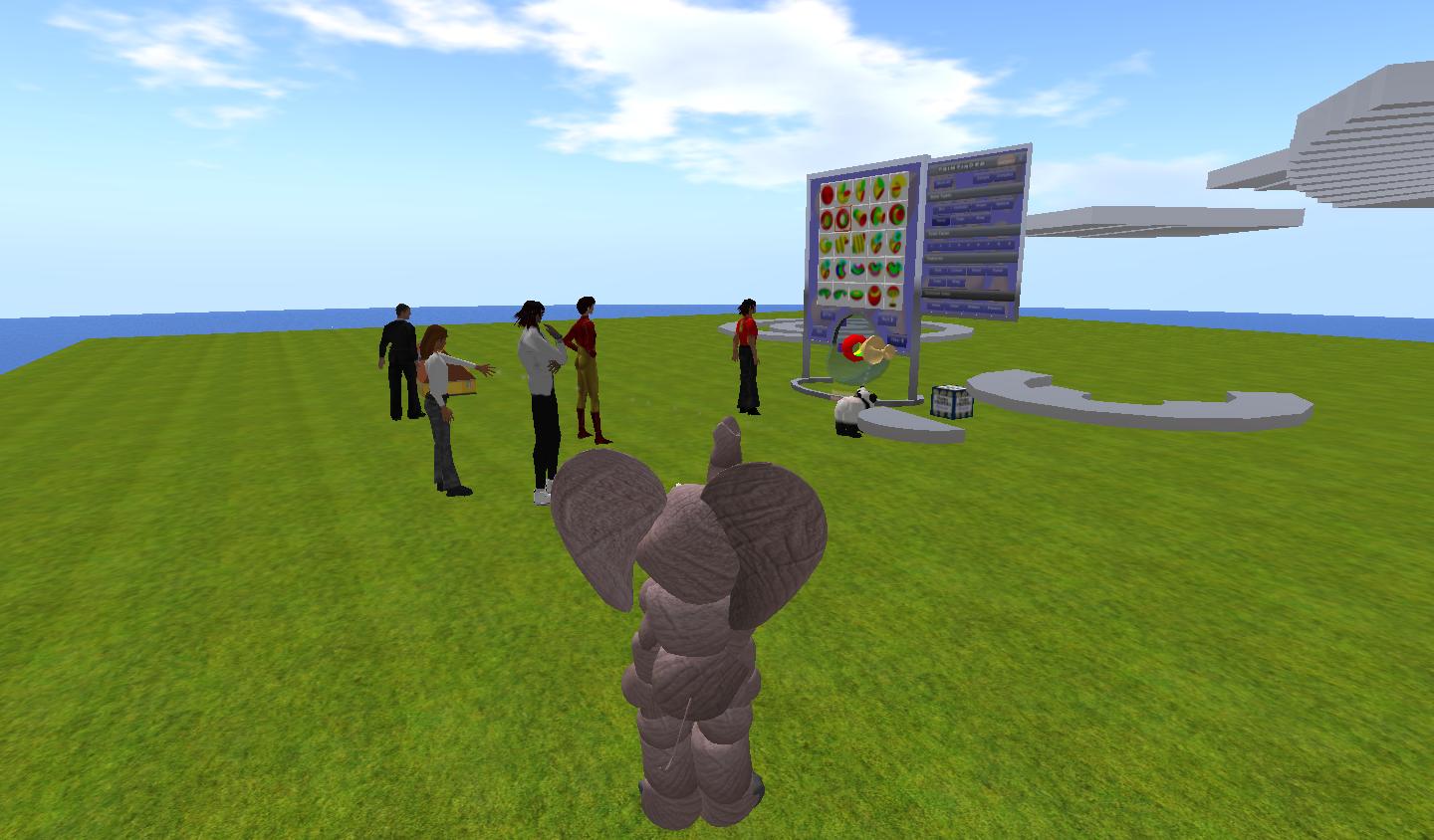
We started off in the reception area, unfortunately I had some initial voice-problems, but Phelan and the students seemed to manage just fine without me :-)
rockcliffe_002
At the Rockcliffe reception listening to Phelan

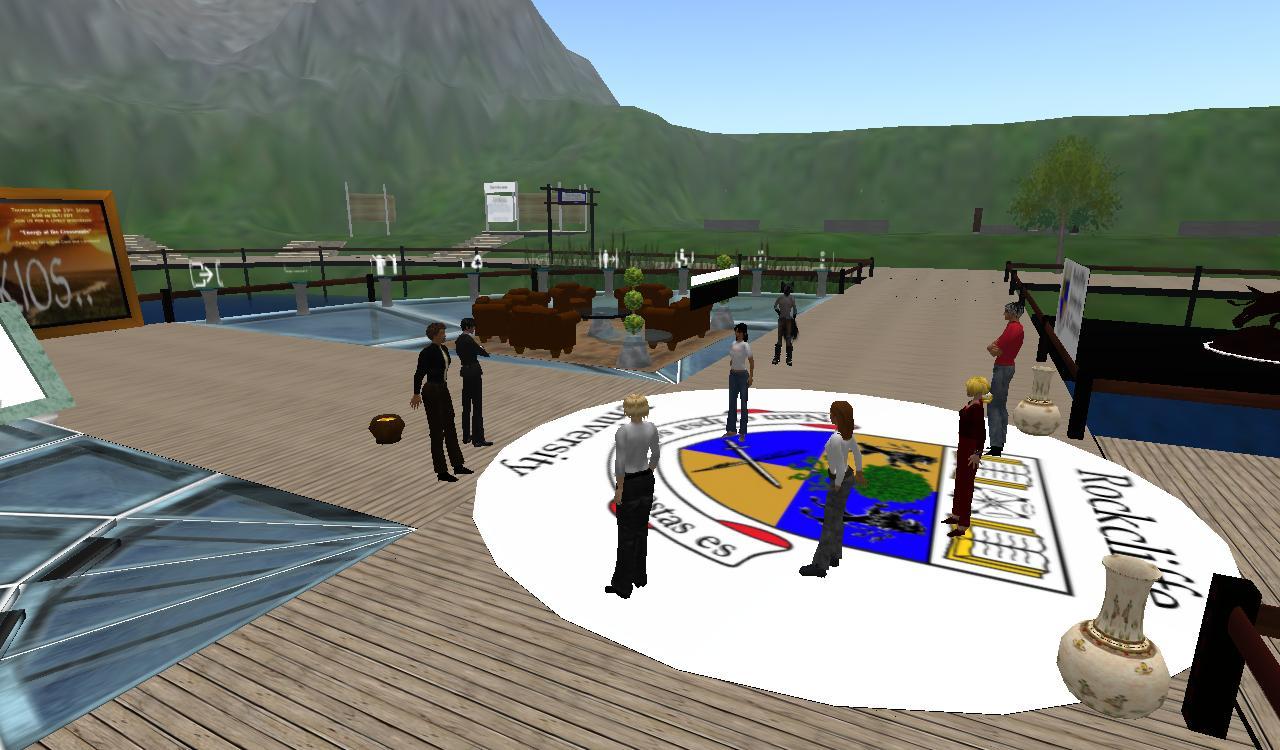
While we were standing in the reception area an unknown avatar arrived. Usually when an avatar arrives in the middle of a discussion he/she will be greeted in the text-chat, but this was not the case. The students and I discussed this later on, since it was a breach in normal behavior, and we all agreed that the reason why nobody greeted this particular avatar was that he/she had explicit sexual references in his title. All of us are adults, pretty open minded and I don’t think any of us are particularly sensitive, but somehow sexual references just wasn’t appropriate in this context. Interestingly, the avatar representation made it more obvious that we were ignoring somebody and I did feel a bit impolite – a sentiment I don’t think I would have had, if I had just been ignoring a textual message …
rockcliffe_004
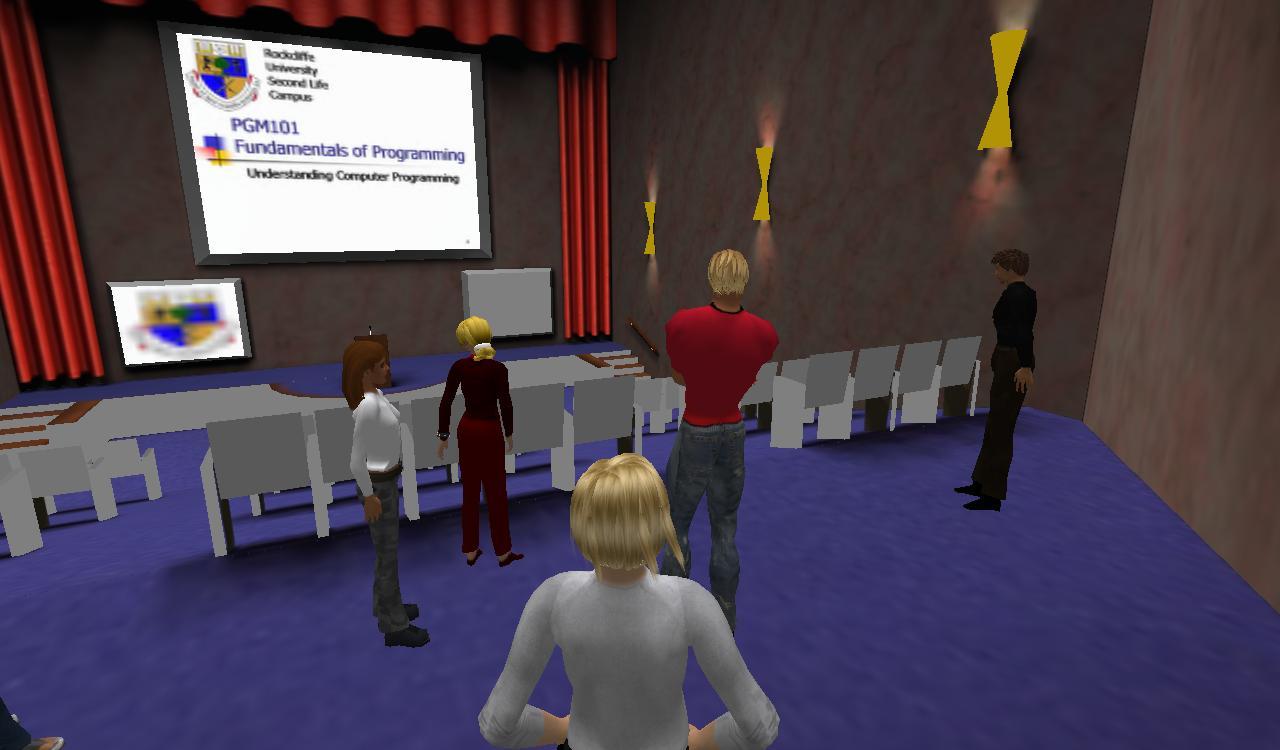
Investigating one of the more traditional classrooms

One of the topics Phelan talked about was how to create sustainable education in the metaverse. Unlike other in-world projects Rockcliffe isn’t funded by organizations or sponsors and developing a sustainable economy is one of the biggest challenges Phelan and his staff are facing. We discussed the possibility of having open classes with the option to buy some sort of certification, diploma or the like afterwards. It’s my impression that Phelan very much would like to employ a temporary kind of open-content’ish principle to their in-world work, but that’s easier said than done!
rockcliffe_007
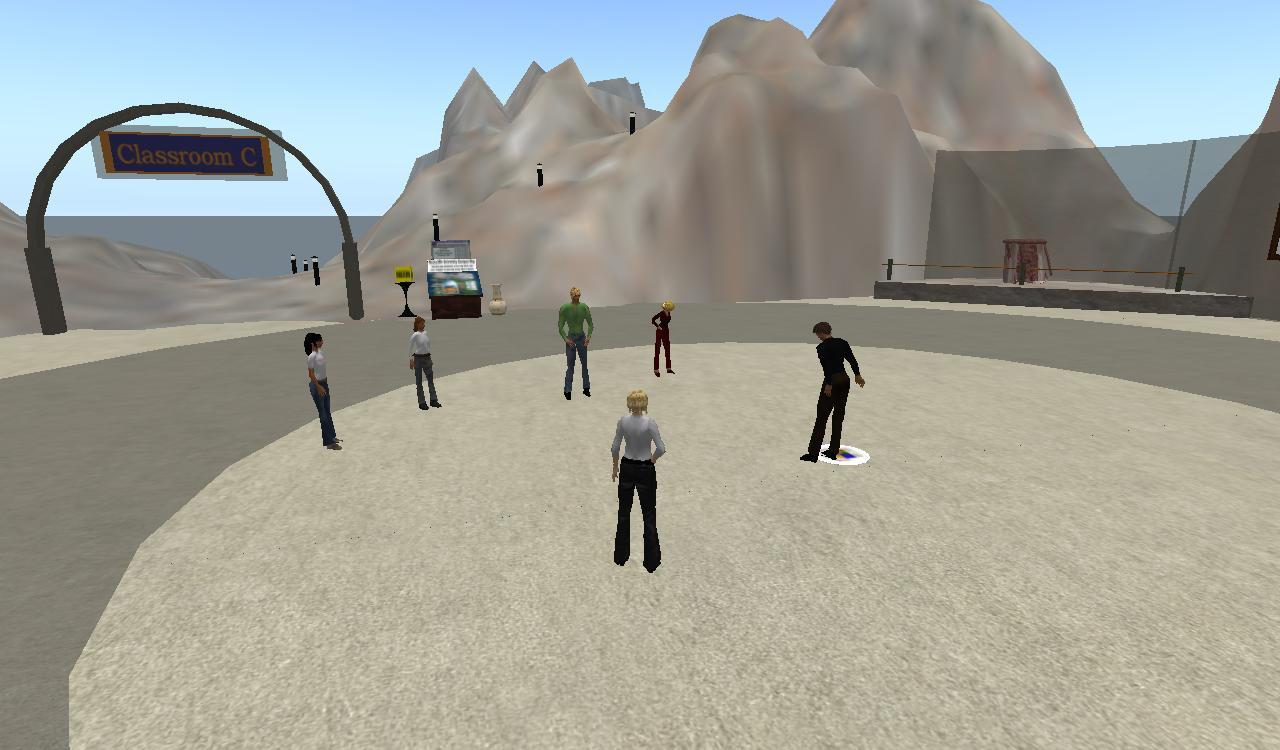
Another type of classroom

Phelan had been attending the E-Learn World Conference in Las Vegas a few days before meeting us, and as he explained his head was filled with lots of inspiration. One of these sources of inspiration was Constance Steinkuehler (though I’m not sure she attended the above mentioned conference), who has done extensive research into MMOs, including learning potentials, cognitive theory and media literacy. Apparently she’s also looking at Second Life and explores the “3rd Places” concept  in that context. As far as I know, the  concept of “3rd Places” was coined by Ray Oldenburg in his book The Great Good Place, and can be used to define places where we gather publicly to facilitate and strengthen local democracy and community. Both references surely need a closer investigation in the future.
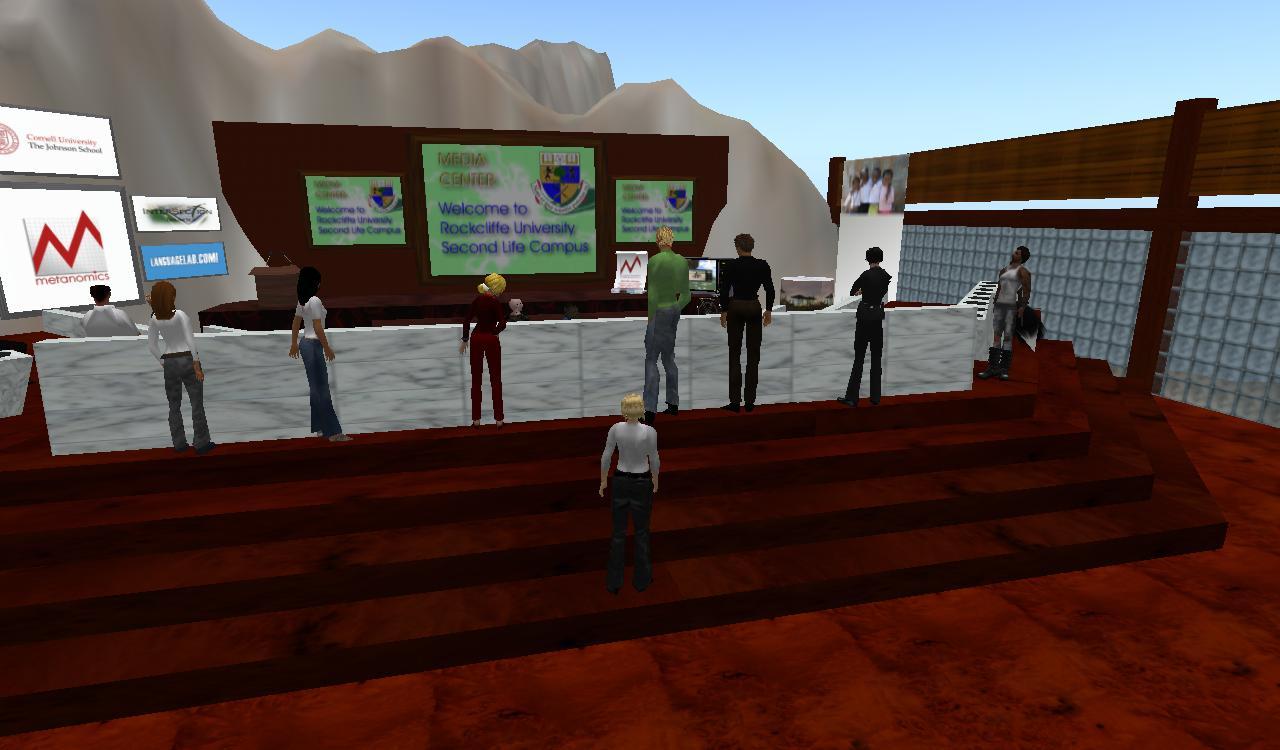
rockcliffe_008
Visiting the Metanomics show from the Rockcliffe partner location

We ended the tour in one of the less traditional classroom settings where Phelan and his staff have experimented with building interactive learning objects – some of them supplemented by both text and voice-over instructions. Some of the courses at Rockcliffe are designed to learn building in-world and this is one of the areas used for that, including a large sandbox. This is also one of the areas that Phelan hopes to find time to expand and further develop in the future.
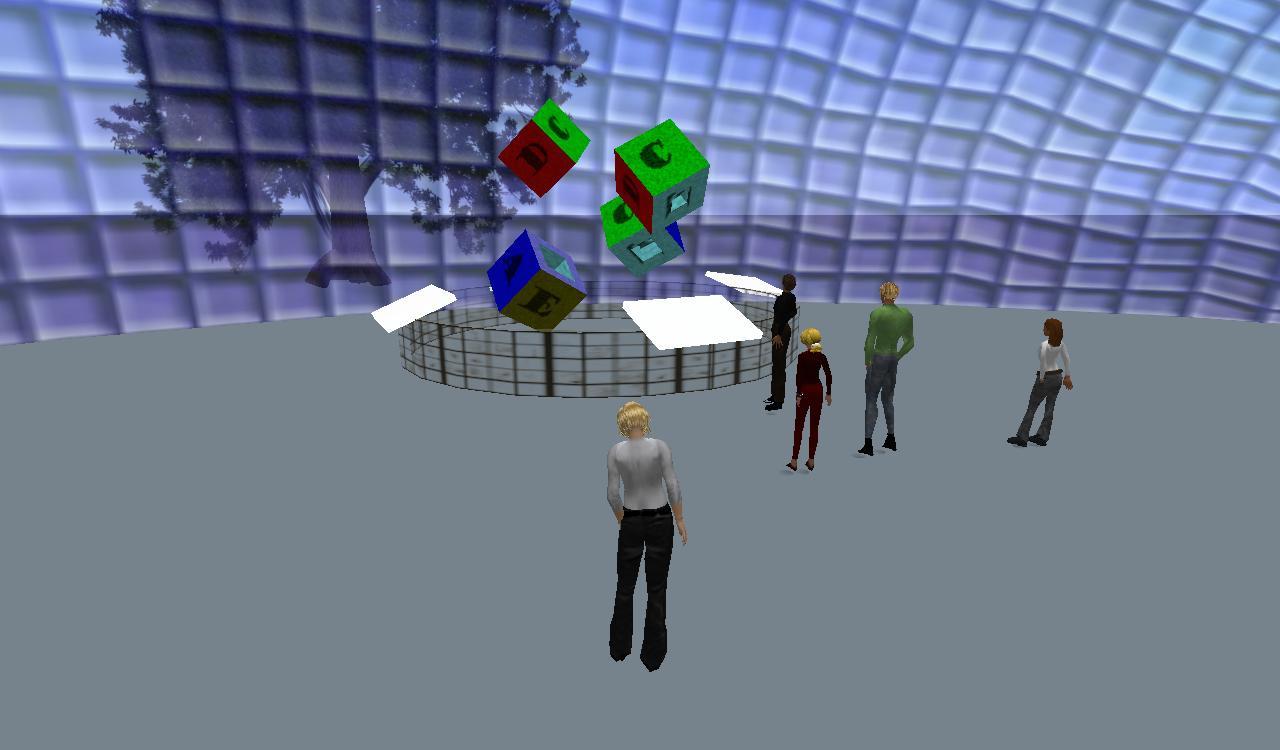
rockcliffe_010
Studying an interactive learning object

I had the great pleasure of meeting Phelan RL at The SLCC’08 in Florida in September, and we had some fun and very interesting talks during the convention. Phelan, in my view, truly is of the metaverse visionaries and I’m really grateful that he took the time to meet us. I know the students appreciate these meetings with other avatars/people very much, and with his interest in e-learning and research Phelan was a very relevant and good guy to visit – TY Phelan :-)

/Mariis
NMC Publishes Results of 2008 SL-Educators Survey

New Media Consortium (NMC) has conducted its second annual survey of educators in SL, which provides a yearly snapshot of the demographics and activities of educators who are active in SL.

A link to the survey was sent to by email to individuals within the NMC’s SLcommunities and to the SL Educators Listserv (SLED). 358 individuals responded to the survey, a 170% increase from the number who answered last years survey.

Quoted below are a few highlights of NMC’s own comparison to the 2007 survey:

Educators are moving from exploration to use of Second Life for teaching and learning. More respondents report being involved in an educational-related activity in Second Life (increasing from 54% in 2007 to 71% in 2008). More than half report that the organization they are affiliated with owns a sim (up from 36% in 2007) and 74 individuals report in 2008 they own their own sim. This year 29% of survey participants report holding virtual office hours in SL; 37 of them (12%) have taught a class entirely in SL (up from 14 or 8% in 2007).

Educators are expanding their Second Life social networks. This year recorded an increase in the numbers of people educators maintain as contacts. In 2007, 53% reported 10 or fewer contacts while in 2008 , this percentage dropped to 32%. The most common range for the size of their contact list in 2008 was 11-30 and the number reporting more than 100 contacts doubled from 2007 (4% to 8%).

This year’s educators are much more experienced in Second Life. The percentage who have been in Second Life for 1-3 years increased from 30% in 2007 to 56% this year. However, the demographics of this group are about the same; in terms of game experience most self-classify as “Pac-Man” generation. More than two-thirds are between 36 and 55 years old, and more than 75% do not play console games or MMORPGs. Also similar to last year, about half of the respondents find time for Second Life by watching less television.

You’ll find the survey summary and results as pfd-files at the bottom of this page.

/Mariis

A visit to The Funny Farm?

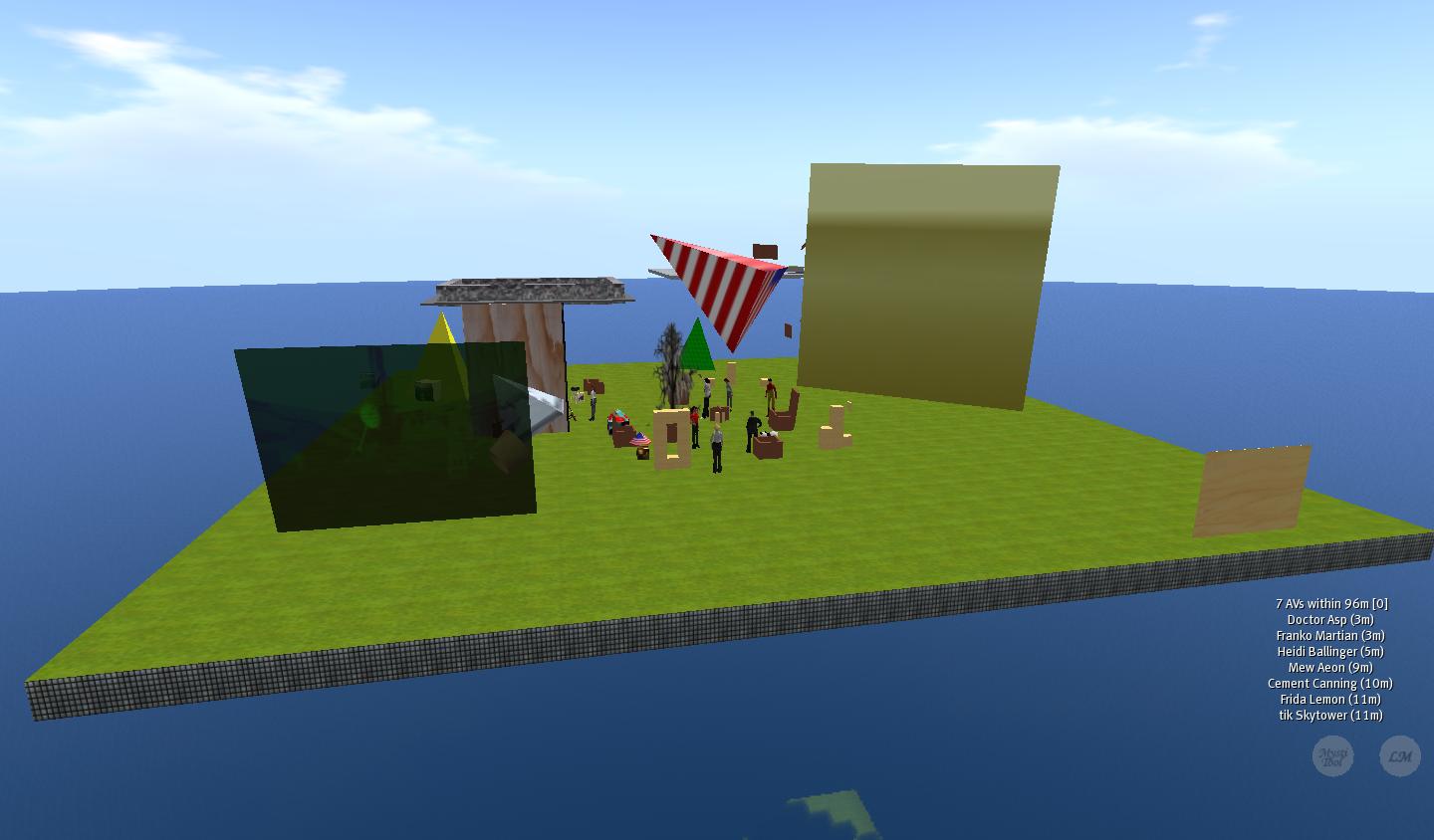
Today my MIL students had their second building class skillfully facilitated by Dr. Asp and Heidi Ballinger. When we returned to the sandbox it was clear that some of the students had been practicing their building skills since last class:

bygge2-1

As the class started I took off looking for animal avatar shapes, which one of the students had expressed an interest in. I found several places, and naturally I was too curios not to try some of the shapes I found. Unfortunately I’m having trouble getting some of the shapes off again, so for now I look like an elephant!

By the end of the class I returned to see, what they all had been up to. Ballinger was showing the students a building tool, Prim Finder, created by Anthony Hocken from Crystal Gadgets.

bygg2-2

Ballinger was in her famous Panda look, I was the big clumsy elephant and maybe some of the students will try out new shapes … so who knows, perhaps by the end of the MIL course it will be like visiting the Funny Farm :-)

/Mariis

Does in-world teaching include anonymous acting?

Preparing for a class next week I’ve been revisiting some of the resources that I’ve recommended for my MIL students. One of the articles, Jolly (2006), I’ve chosen because it describes the multiple roles of the in-world teacher. Based on a triple case study conducted in-world during term three of 2006 at Central Gippsland Institute of TAFE (GippsTAFE™) in south-east Victoria, Jolly has identified several roles of the teacher – here listed numerically to ease my reference:

  1. Teacher as explorer
  2. Teacher as a learner
  3. Teacher as avatar
  4. Teacher as a client
  5. Teacher as  inductor
  6. Teacher as guide
  7. Teacher as planner
  8. Teacher as innovator
  9. Teacher as debriefer
  10. Teacher as an industry expert
  11. Teacher as preparer
  12. Teacher as facilitator
  13. Teacher as communicator

Besides the roles 4 and 10, which are directly linked to the subject matter in the cases and 3, which of course is distinct for teaching in virtual worlds, I don’t think the identified roles differ that much from conventional teaching – at least not when I compare the list to my own and my colleagues teaching at E-Learning Lab in general, and at MIL in particular. Teaching in an age heavily influenced by new technology and the Internet, in my opinion, naturally calls for multiple roles of the teacher, it is however interesting to see the roles listed, which also is one of the reasons why I recommend this article to my students.

Another argument for introducing the students to this article is much more important though. I think this article invites (even provokes) for discussions regarding the teacher’s ethical responsibilities. Returning to the 3rd role, teacher as an avatar, Jolly states:

It is important that the teacher has a number of avatars, each performing a different role. Their appearance, character traits, language, ‘likes’ and ‘dislikes’ may vary significantly. The students may not know who is behind any given avatar. (Jolly, 2006:8 – my highlight)

And Jolly continues explaining:

In the real world, the students clearly knew myself (Malcom Jolly) and fellow project team member Glenda McPherson through a range of face-to-face meetings/discussions with them. When we were in Second Life as Malcolm Dalgleish and Glenda Arrow, the students knew that we were behind the characters and this served an important role. As Glenda and Malcolm, the students knew that they could always turn to us for support/assistance. For some students this was very important and reassuring. (ibid: 8 – my highlight)

However, at other times Jolly played out the role of a different character:

As GippsTAFE Gonzales, the owner of GippsTAFE Island, my attire was more formal; I acted differently and exhibited different characteristics to Malcolm Dalgleish. I didn’t offer assistance unless specifically asked for it. From the student’s perspective, all they knew was that I was one of the project team. (ibid: 8 – my highlight)

Continuing the role-playing, Jolly sometimes acted as 4) a client in the “painting and decorating” class:

My role was to be the client, meet the student and discuss with them the type of refurbishment I wanted in my house. The students did not know who I was or where in the real world I was located. I was simply ‘the client’. In order to get to know me the student had to question me, ascertain my ‘likes’ and ‘dislikes’ or form assumptions based on my appearance or mannerisms. (ibid: 9 – my highlight)

Jolly sums up the experience of using different avatars/identities:

It is important that students know support is available through particular people (avatars) but it can also be extremely powerful for the teacher to assume other identities. These characters may simply be people passing by or standing around observing – their use provides the teacher with wonderful material when conducting a debriefing session. (ibid: 9)

I do believe that one of the great pedagogical potentials in avatar-based teaching and learning lies in the possibility to role-play, and I suppose Jolly and his colleagues were trying to enhance authenticity by acting out different characters. Want I don’t understand, is the need for anonymity, and I have to say that this example oversteps some of my personal ethical boundaries. Wouldn’t it be possible to role-play without anonymity, I mean, doesn’t acting exactly entail that you assume a different character? To me one of the most important roles of the teacher – if not the most important – is to be trustworthy, and that simply doesn’t align with acting anonymously in my point of view.

I’m greatly puzzled by this, since Jolly in so many other parts of the article expresses some very emphatic and sympatric thoughts. The 3 cases were conducted mainly at closed islands in-world, and I realize that the students were aware that they might encounter anonymous project staff members, but I still find it problematic to use anonymity like this in an educational context.

Nevertheless, the article makes for interesting discussions on the whole anonymity issue of online teaching and learning, and I’m looking forward to hearing my students’ responses to this.

/Mariis

It’s a Dogs life … or is it?

Exploring the world just for fun is a favourite habit of mine – fortunately I have good in-world friends, who’ll help me out in doing so ..

Chimera encouraged me to visit her new place at Jokaydia .. little did I know that she would turn up as a dog!

dog_0031
Chimera barking at a giant cat … didn’t seem to have any impact though … Cats just are Cool!

We went on exploring the many islands – and I have to say that Jo Kay aka Jokay Wollongong‘s experience in building really shows … what a pleasure finally to be on islands build for avatars!

We also managed to have fun trying to take pictures while swinging :-)

dog_009

Anyway, the Jokaydia community really looks like an intereting educational place and I definately need to visit some more …

/Mariis