Case MIL09: Didactic Design Discussion – 4

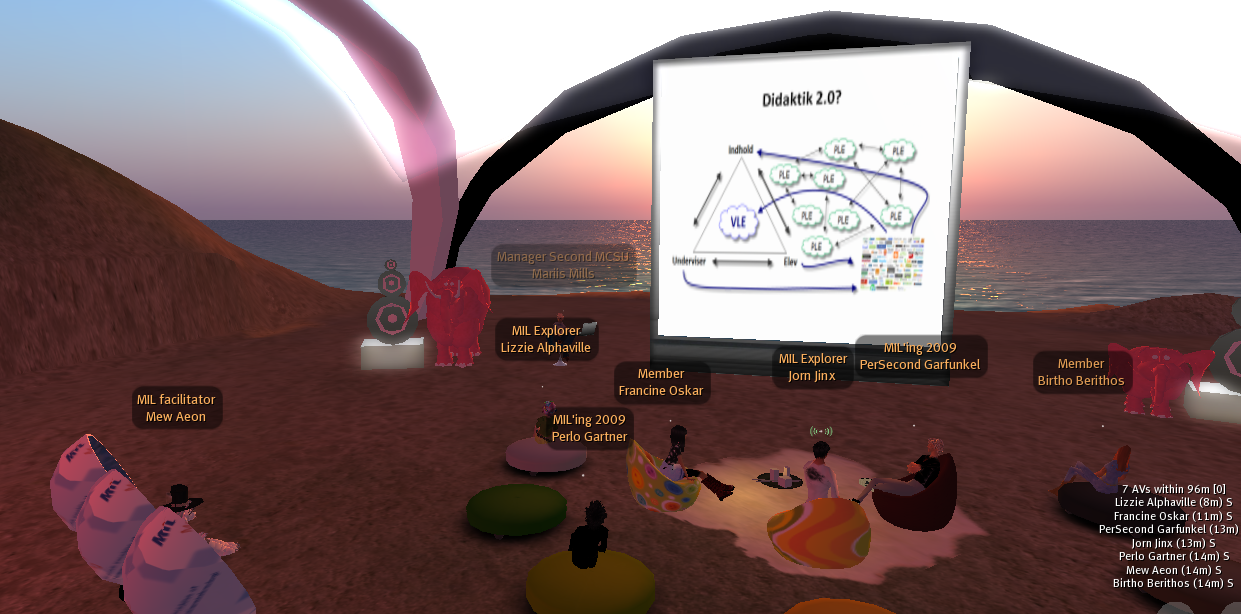
On December 3rd we had a special edition of the Didactic Design Discussion in the MIL course, since both Terry Anderson and Ross McKerlich visited us to talk about the Community of Inquiry (COI) model. The COI model was developed in the late 1990’ies as framework for evaluating educational experience in text-based online environments by D. Randy Garrison, Terry Anderson and Walther Archer. Given the COI model’s wide spread use in different educational settings it is by no means coincidental that one of the original founders, Terry Anderson, has found it important to explore the applicability of the model in new online environments such as the 3D virtual world, Second Life (SL). Together with McKerlich Anderson conducted a preliminary, qualitative exploratory study in SL in 2007 and basically confirmed that the model also can be used in assessing educational experience in 3D virtual environments (McKerlich & Anderson. 2007). Anderson and McKerlich later invited Brad Eastmann and I to participate in the continued study of COI in 3D virtual worlds and as part of this study we record different educational experiences in SL to be used for later analysis.
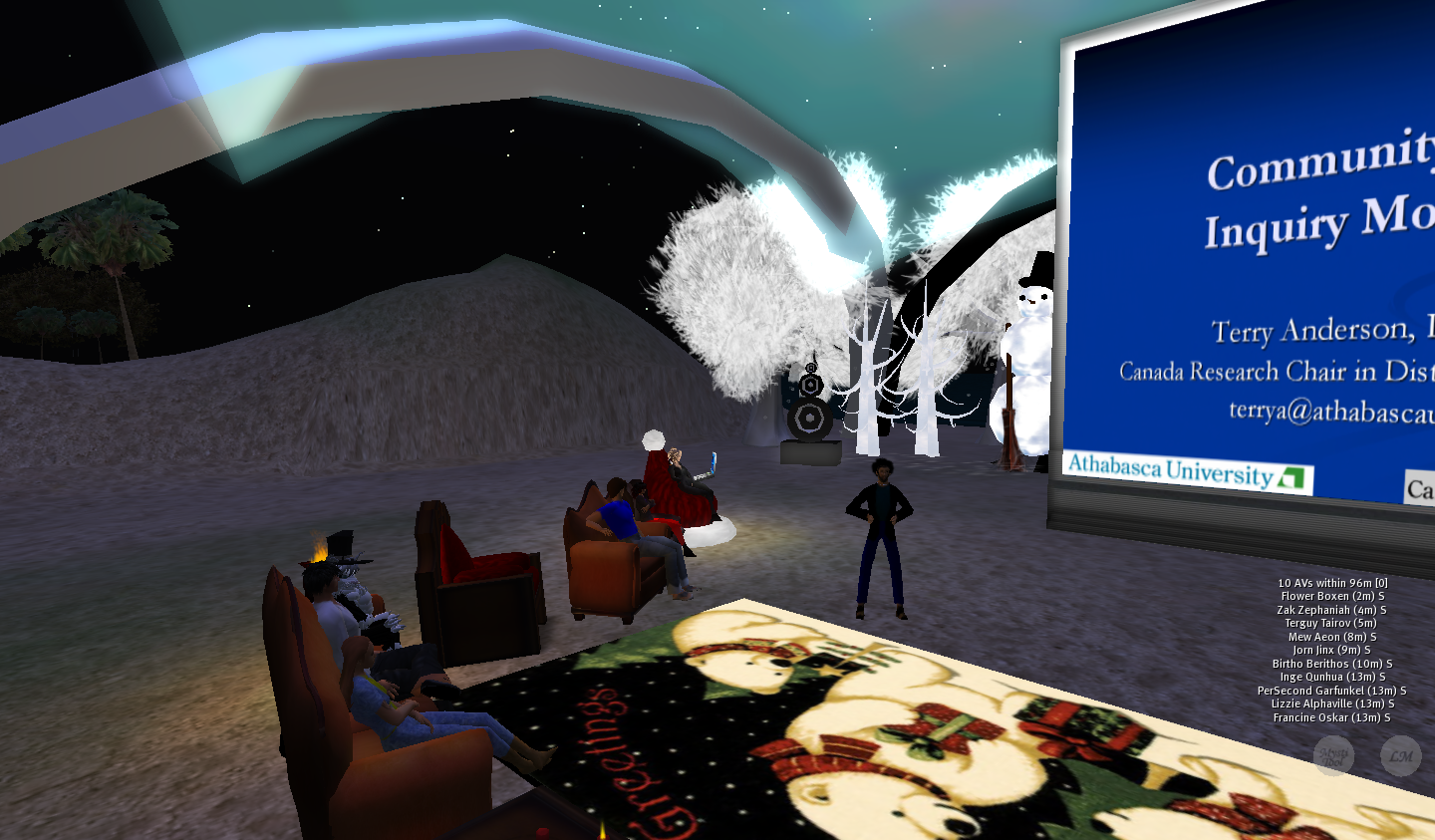

Terry presenting COI to the MIL students

Besides being an excellent tool with regard to analyzing interaction and communication the COI model, which consists of 3 different  types of presence indicators (cognitive, social and teaching), can also be used as a heuristic tool for designing online educational experiences. The MIL students in this year’s course are all educators involved in course designing within blended learning and they all seemed to find the COI model interesting and relevant to their current work. What I appreciate about the model is the fact that it deals with presence and not immersion which otherwise seems to be the buzz word when studying 3D virtual worlds. Even though both presence and immersion have to do with the user experience, I do find there is an important difference between the two concepts. Based on the four research cycles I’ve completed in my PhD project so far, my experience is that all users achieve a sense of presence when they enter a virtual environment like SL, which I think above all has to do with the avatar and its ability to move around and meet other avatars, communicate and interact in real time. It is, however not my impression that all users in these types of environments achieve the sense of immersion – at least not if immersion is defined by a sense of “willing suspension of disbelief” as proposed by Dede. 2005 among others.  An important part of this discussion is of course how one chooses to define the concepts and since I intend to use both presence and immersion in my own model this is something I’ll return to.

After the presentation, McKerlich introduced to our survey related to the COI study and we went on to use The Opinionater, which once again proved its worth as a great tool for initiating discussions.

/Mariis

Case MIL09: Didactic Design Discussion – 2

In the 2. Didactic Design Discussion in the MIL course I’d chosen to focus on some of the central points from my own PhD-project since it also deals with analysis of SL as teaching and learning environment. Discussing some of my own ideas with the students naturally is very inspiring and rewarding for me personally, but I’m also hoping (and sensing) that the students benefit from seeing my approach to the problem, and judging from the vivid discussion I do believe, I managed to challenge some of their presumptions. I’m not able to reproduce all of it, but I will try to highlight a few issues.

Essentially my PhD-project is aimed at improving Blended Learning within Higher and Further Education through remediation and redidactization. Through a process of designing and redesigning two specific Blended Learning courses within 6 research cycles the aim is to enhance learner experience and learning outcome by using new augmented/immersive 3D media and a learner centered Problem Based pedagogical approach. In both cases the target group is adult teachers/ trainers from the educational and the private/industrial sector from different countries.


PhD-project overview – Fall 2009

The concept remediation (in relation to new media) was coined by Jay David Bolter and Richard Grusin (2000), but there was no explicit value or quality identified with different ways of remediating in the original concept. However, Tringham, Mills and Ashley (2007) further developed the remediation concept in their Remediated Places Project and came up with two distinct strategies for remediation, respectively respectful and radical. In my point of view these two strategies can be extended to include pedagogical considerations and thus inform more general implementation strategies for blended teaching and learning using new media.

I first introduced the MIL students to the concepts of respectful and radical remediation in the course last fall and like this year’s students they immediately adopted the terminology. If you’ve ever been in SL you’d know why – it makes perfect sense to distinguish between the two both with regard to people, places and practices. The interesting question nonetheless is whether remediation changes anything in the way we think and practice teaching and learning …


Is a slide show presentation in SL an innovation?

According to Peter Denning an innovation can be defined as a transformation of practice in a group, community or culture – it is not enough just to come up with a brilliant idea or create a new artifact. Surely there are many different definitions of innovation, but I agree with Denning and it aligns very well with Wenger’s 1998 social theory on Communities of Practice, which is one of my core inspirations. Changing practice is easier said than done and Steven Warburton has identified 7 barriers to innovation in 3D environments like SL:

  • Technical – machine and human related [and standards related]
  • Identity – the tension between playfulness and professionalism
  • Culture – reading the codes and etiquette of SL
  • Collaboration – building trust
  • Time – even simple things take time 
  • Economic – nothing is for free
  • Design – perhaps this is a meta-barrier but SL does offer up very particular design challenges

Besides these I would add another meta-barrier, namely the inherent paradox between (re-)production and innovation that all participants in education are facing. This is what I call the didactic double bind. In general double bind is described as dilemmas in communication, and SL seems to be filled with conflicting messages. After the session one of the students posted this photo as her take on a in-world double bind:

The text for that photo could read: ”SL is an open environment. Join us if you can”. Naturally, the experienced SL resident would know that the dilemma in this particular situation is metaphorical – a shift in camera angle and you’d be there… the perspective on the situation would change and shifting perspective, looking at dilemmas at a higher level of abstraction is one way of solving double bind situations and would according to Bateson. 1972 mean learning at level III. And this is actually one of the reasons why I find SL so interesting – if we assume that the learner overcomes the initial difficulties and gets accustomed to the environment it provides rich opportunities for learning at higher levels, because SL inevitable challenges the learner both ontologically and epistemologically due to the whole meta-cognitive nature of the in-world experience.

After this we moved on to discuss the concepts of immersion and augmentation and what these two apparently conflicting ways of engaging in an environment like SL could mean – not least when it comes to teaching and learning practice. Again the students were eager to discuss and we covered a lot of important points on which I will return in a later posting. Suffice to say that we all agree with Tateru Nino on this:

It’s not all black and white.
The whole immersion versus augmentation debate is clouded by one trivial little detail. One is not the opposite of the other. The two aren’t even mutually exclusive.

We ended the session by trying out the Opinionater – it really is a very efficient and fun tool for stimulating discussions :-)

/Mariis

Case MIL09: Didactic Design Discussion – 1

In the MIL course my co-facilitator Mew Aeon and I currently are running in SL the students are expected to analyze SL as teaching and learning environment, and in order to stimulate the students’ critical reflections we have prepared 4 discussions on different topics related to ICT-based Didactic Design. Last night we had the first discussion and for this I had prepared some slides (in Danish) focusing on two main topics; the field of Didactics and target groups.

8 students are enrolled in the course and since 3 of them did not have the possibility to participate in our recent f2f kick-off introductions  I had decided to repeat some central points. First of all there is the term ICT-based Didactic Design, which my colleague, Professor Birgitte Holm Sørensen from the Danish School of Education defines like this:

The process by which the purpose, the goals and the content is determined, and where the planning, the organization and the arena for teaching and learning is shaped based on theories and in relation to ICT-based practice in a context.

Via course readings the students are introduced to various didactic theories and models – one of the latter being the so called Didactic Triangle (usually attributed to German Pedagogical Philosopher Johann Friedrich Herbart 1776-1841) that depicts the basic relationships between teacher – content – student. Though all of us can agree that the field of Didactics includes more elements than the relationships in the Didactic Triangle it does, in my opinion, highlight the fundamentals and creates an excellent starting point for discussions on some of the key issues in Didactics.


Key issues in Didactics: content and actors

Now, what I find particularly interesting when you combine ICT with Didactic Design is that ICT not only serve as materials but also as arena or “room” for teaching and learning –an aspect which clearly is amplified when using 3D virtual technology like SL.  Most MIL students can be characterized as being tech-savvy educators/trainers for whom it is relevant to further enhance their competencies in integrating ICT in their practice and we naturally ended up discussing what impact especially web 2.0 tools/services will have on the way we think and practice didactics.

As I see it Web 2.0 tools/services have the potential of changing our perspectives and thus practices regarding:

  • Users – both the students and the teachers with regard to relations/roles/responsibilities
  • Participation – as we shift from consumption to (co-)production
  • Multimodality – new possibilities to design for teaching and learning processes
  • Networks and connections – from local to global citizenship
  • Knowledge management – both from an information and communication perspective and with regard to security and ethics


How does web 2.0 change the way we think and practice didactics?

For the last decade the Danish pedagogical debate has been focusing on learning and learners (in opposition to teaching and teachers) – and this shift in perspective has been highly welcome and much needed. On the other hand this shift seems to have placed the role of the teacher in some sort of vacuum (are teachers obsolete in the future as polemically stated by David Gelernter ?) making the challenges related to especially ICT integration more difficult and complex than necessary. When discussing target groups we therefore also encourage the MIL students to carefully consider the roles of the teachers. Much as anticipated we did not reach any solid conclusions on any of the topics, but I do believe the discussions inspired the students and I’m looking forward to the next session later this week.

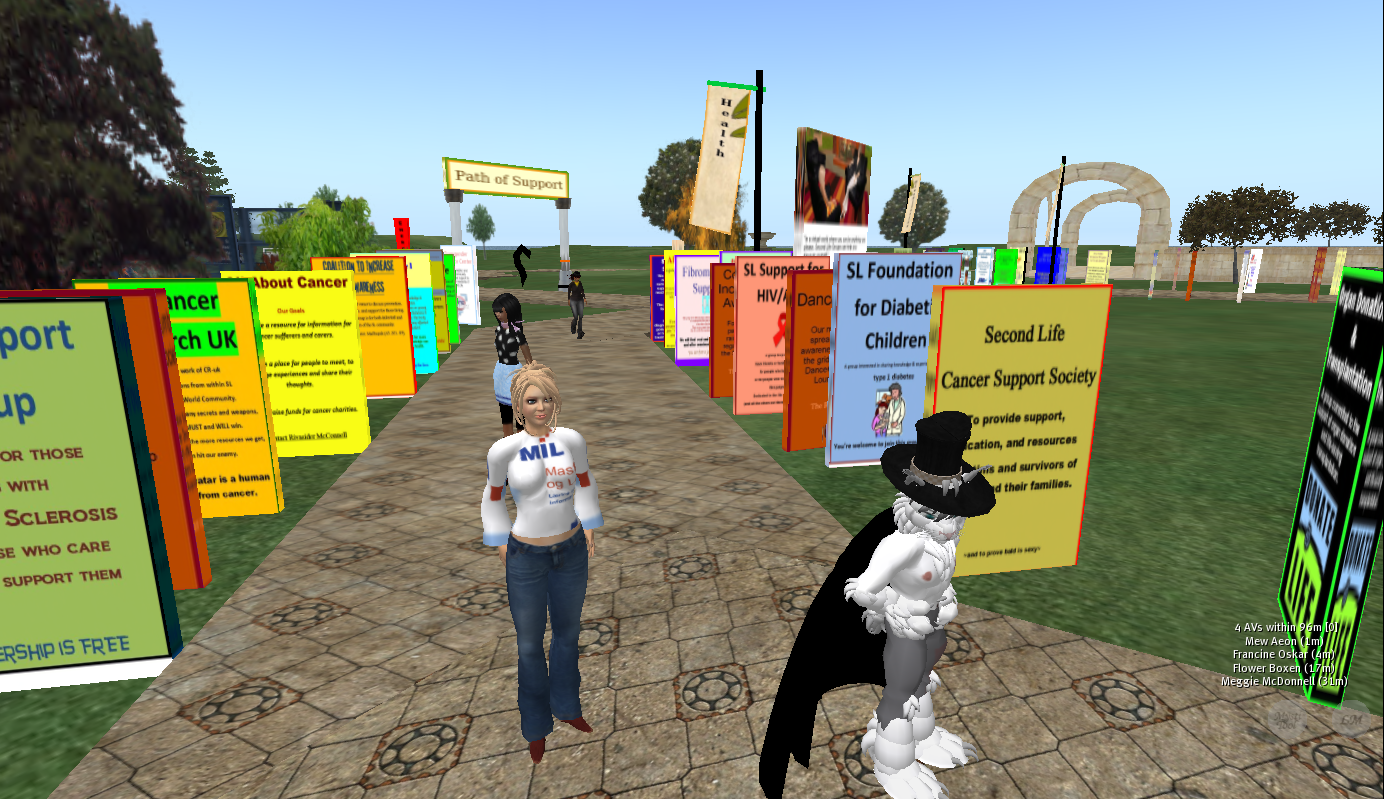
As part of our focus on target groups who could benefit from an environment like SL, we ended the night by visiting Health Info Island, including The Path of Support and finished off by investigating the Virtual Guide Dog.

/Mariis

Another SL project wins Innovation prize

Tuesday and Wednesday this week the Research Network, that connects Danish universities and research institutions, held its annual conference and announced that this year’s winner of the Innovation Prize is Inge Knudsen/Inge Qunhua and her work on innovative in-world designs for teaching and learning.


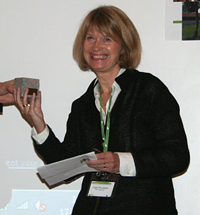
Inge getting the prize RL :-)

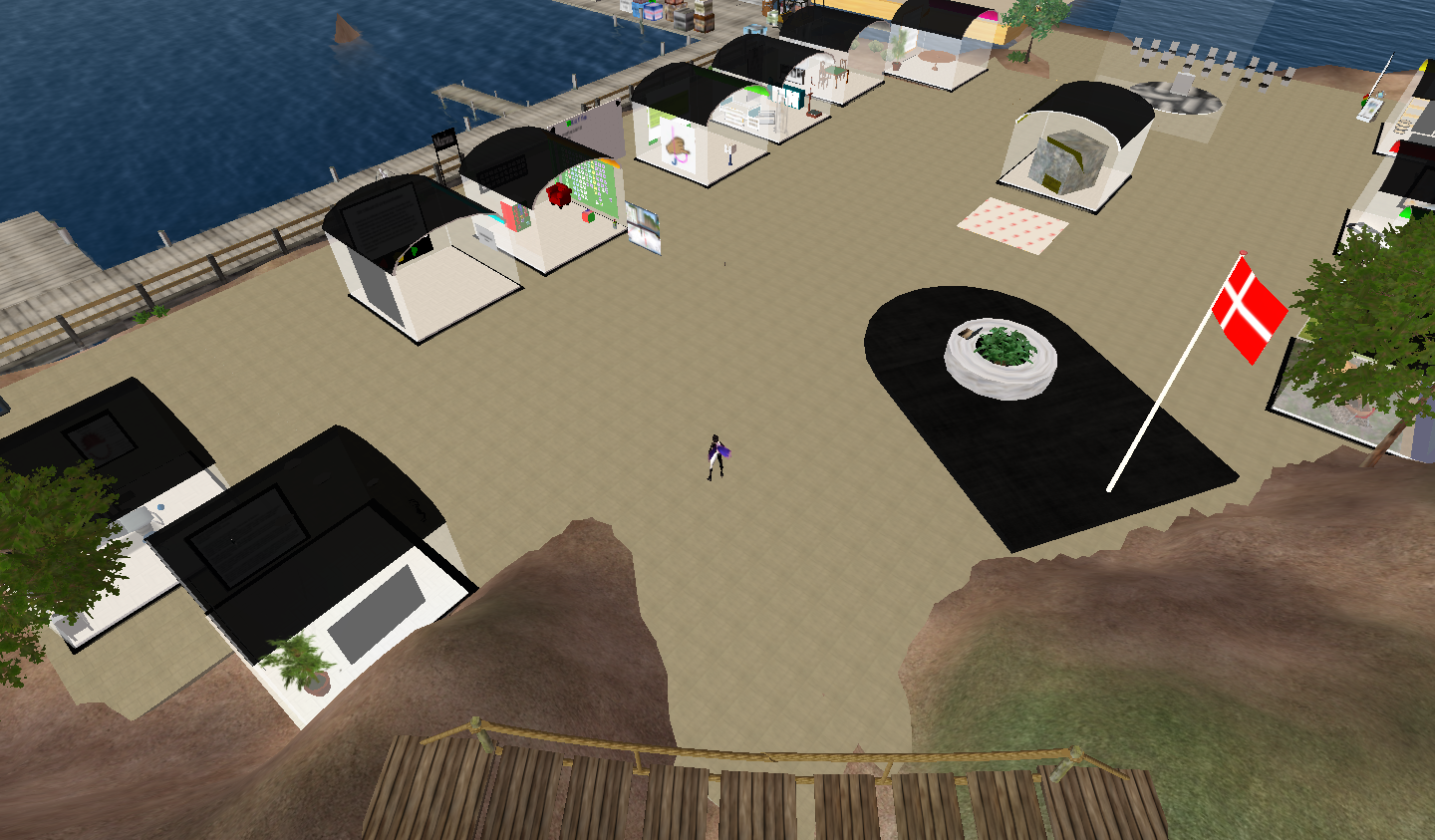
Inge was one of the first Danish residents I met when I rezzed back in spring 2007. Inge is always very happy, friendly and helpful and I enjoy taking my students to visit her and her island. Inge has embraced the many affordances of SL, has created new and interesting designs and has more than 300 hrs. of international teaching experience in-world. So I’m truly delighted that she got this kind of recognition and combined with the other award recently given to a SL project (where Inge btw also played an important role) this really is good news for all of us :-)

A short description and the jury’s arguments for giving Inge the prize can be read here (in Danish), but I really encourage you to explore Inge’s designs first hand in-world …


Overview over the small kiosks where some of Inge’s designs can be found

Inge is currently enrolled as a first year student at The Masterprogramme in ICT and Learning (MIL) and the good news broke just as I was going in-world with my class and we quickly decided to congratulate her in her own environment :-)

/Mariis


Methopedia – new tool for teaching and learning design

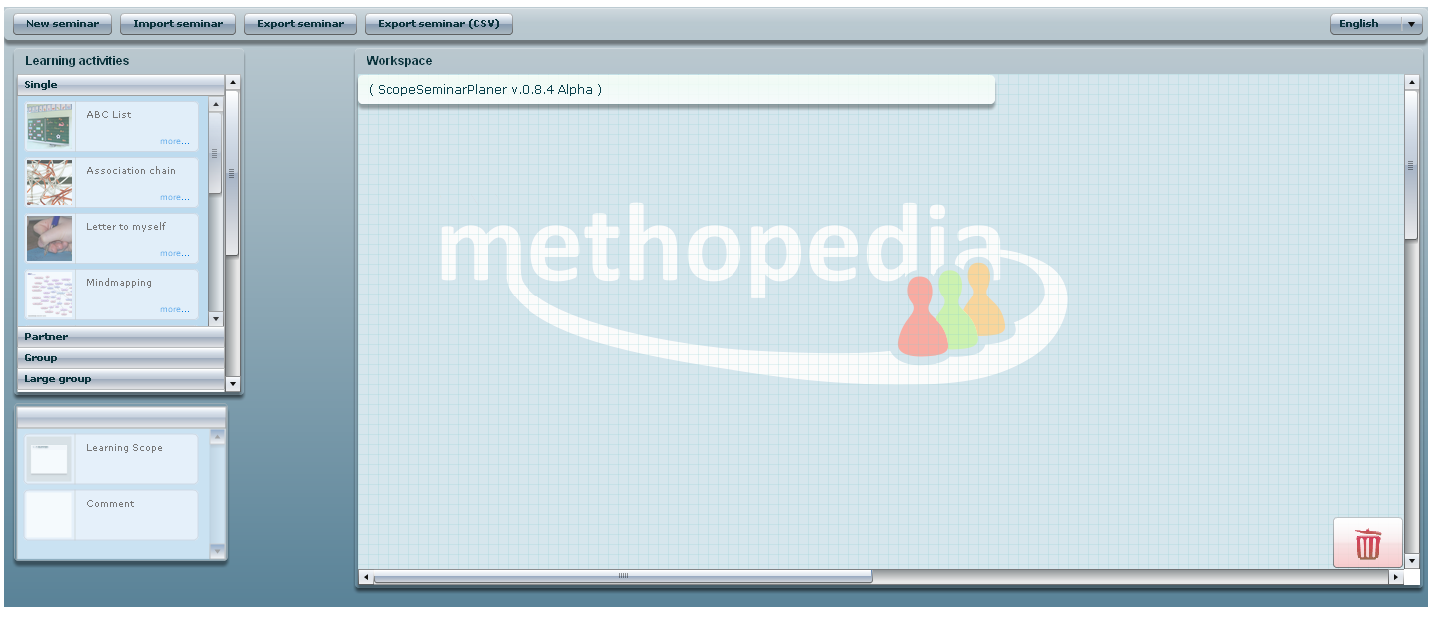
In relation to the COMBLE project where my colleague Heilyn Camacho and I designed and implemented a course on Problem Based Blended Learning using Moodle and SL, other project partners have been working on developing a wiki that focuses on teaching and learning methods and approaches: Methopedia.

As part of the wiki community concept anyone can add and share content concerning teaching and learning activities, methods, approaches and designs.  Complementary to the wiki our partners from University of Applied Science Wildau have developed a flash tool for designing different kinds of teaching and learning events – the Learning Designer.

The main idea is that the Designer tool can import whatever is put into Methopedia and then the user can create visual overviews of events spanning from short activities to seminars and courses.

Learn more about the tool from this video:

The partners have also written a paper on the work with Methopedia which was recently presented at the 8th European Conference on e-Learning (ECEL).

/Mariis