RL conference on SL

On Friday October 31st University of Southern Denmark (SDU) will host a Danish 1 day conference on SL.

Speakers are:

  • Linda Hauchildt Nielsen (Centre for Educational Media, CVU Lillebælt)
  • Inge Knudsen (Horsens Business School)
  • Cynthia Grund and Jesper Pilegaard (University of Southern Denmark, SDU)
  • Sisse Siggaard Jensen (University of Roskilde, RUC)
  • and me …

We will show and discuss some of the potentials we see in using SL in different areas of the educational sector. Come join us :-)

Registration before October 20th is required. For more info look here.

/Mariis

NoEL visits Zotarah Shepherd’s MI build

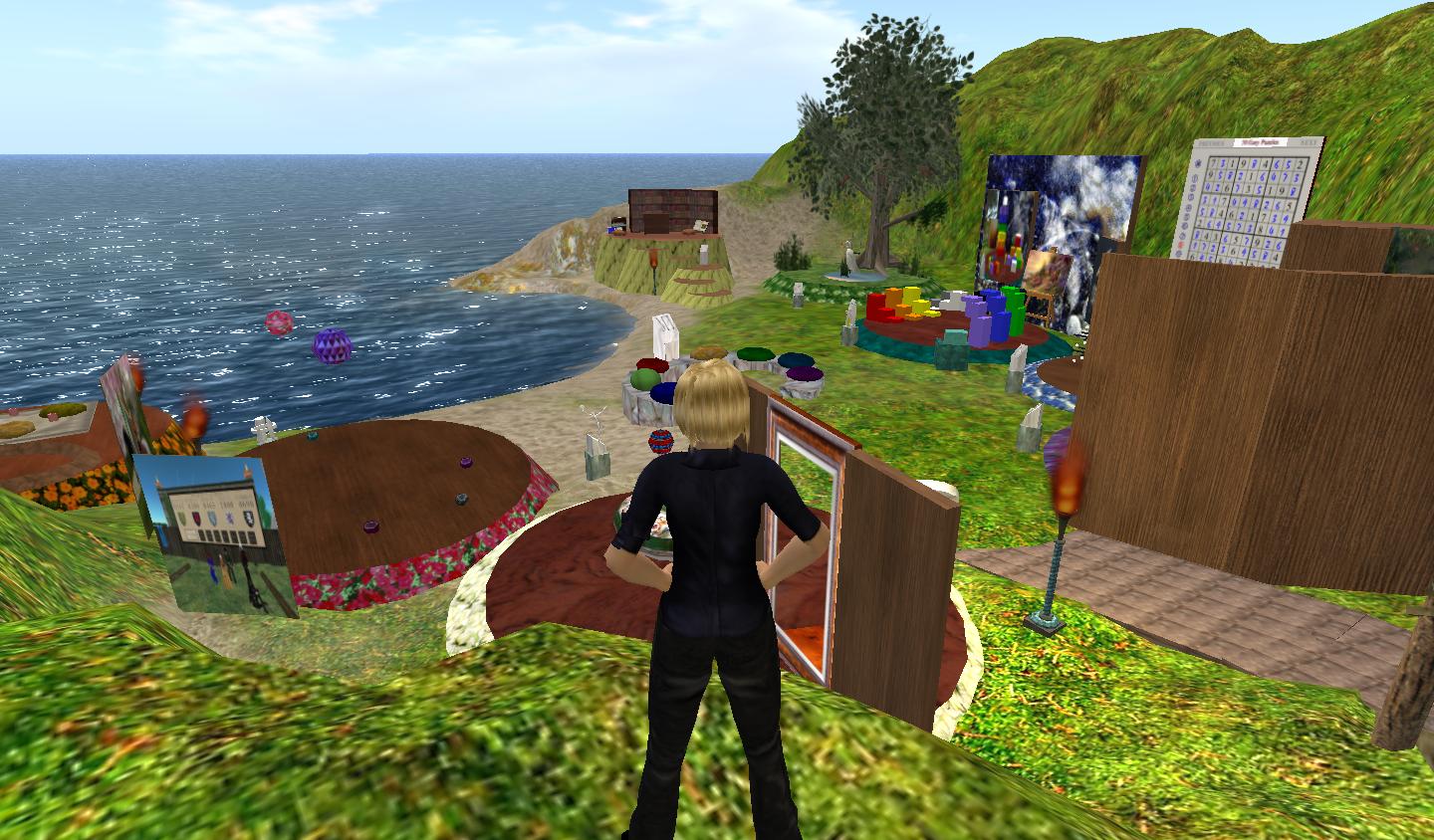
On Tuesday September 30th the NoEL group will visit Zotarah Shepherd on the Koru Island to learn more about her creation of Howard Gardner’s Multiple Intelligences. Zotarah is currently working on her MA in Education CTL at Sonoma State University (California).

Zotarah asks her guests to consider the following questions:

  • Would you use the information in a classroom for teens?
  • Looking over the topics in the curriculum which of them would be most useful to teens?
  • Do you think that SL is an appropriate venue for presenting this information to teens?
  • Would you use interactive builds in SL to teach classes?
  • How well do think my builds work for illustrating the concepts?

We have to meet Zotarah at 20:30 on the Koru Island – use the landmark, including Curriculum send via group notice in-world :-)

/Mariis

CCK08 – Lessons learned (1)

This post is about the Massively Online Open Course on Connectivism and Connective knowledge (CCK08) facilitated by Stephen Downes and George Siemens. SL resident Fleep Tuque has organized an in-world cohort that holds weekly meetings. On Tuesday September 16th I attended for the first time, and it turned out to be quite a learning experience.

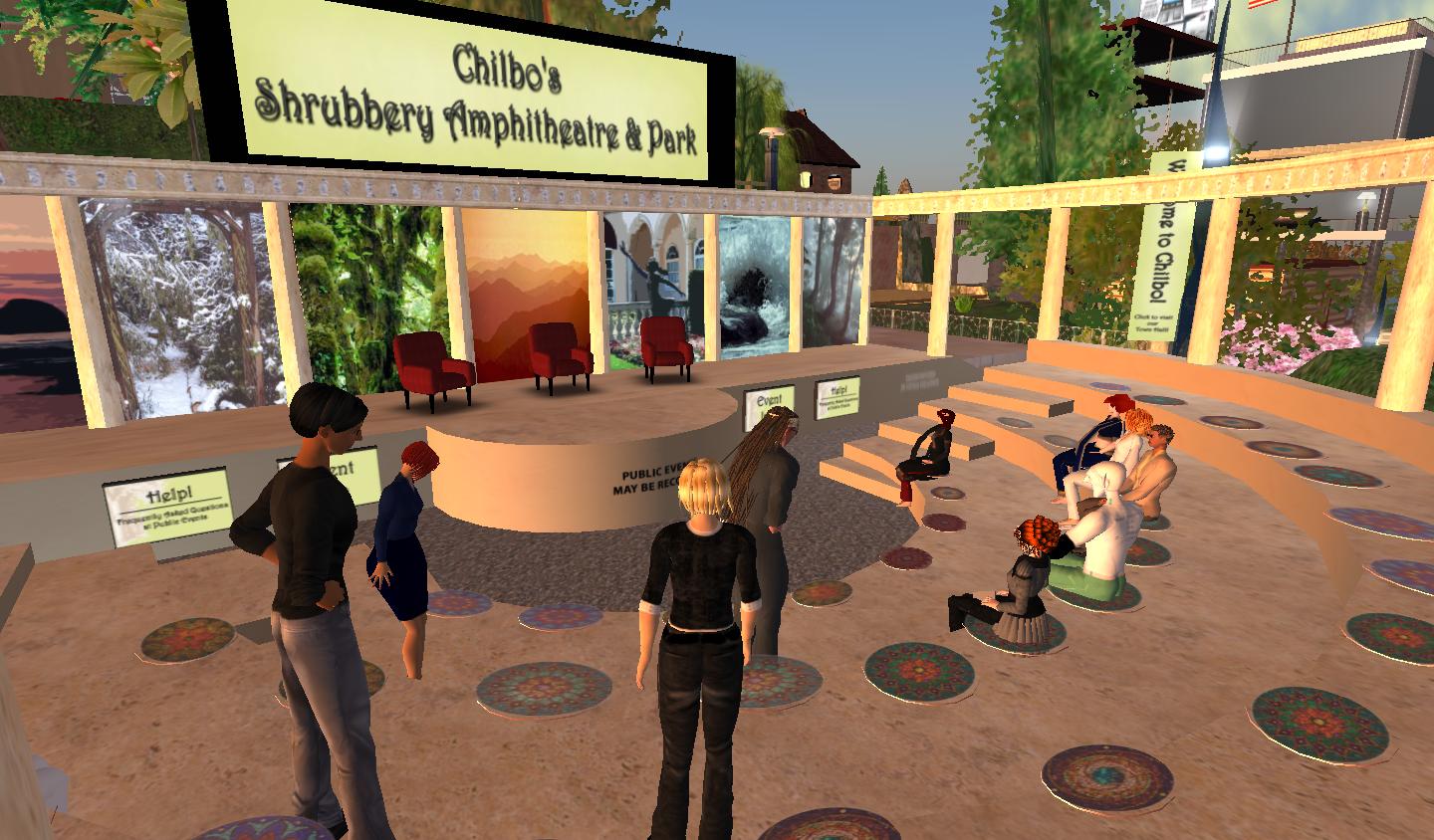
When I first arrived at The Shrubbery Amphitheatre , I was friendly greeted by some of the other participants text chatting about the course and some of the readings. Quickly the theatre was filled with more members of the cohort and the discussions started to flourish on topics/questions like;

What is Connectivism, is Connectivism a theory, is the question “what is ..” the right one to ask about Connectivism, the concept theory itself is ambiguous, is Connectivism a sort of pragmatism, technology and context as keys for learning, is it plausible to compare the learning process with neural networks, technology helps dealing with information overload as well as it creates overload, internal memory vs. external memory, are we becoming more reliant on external memory as information overload increases.

And then the discussion ended by a debate on the participants’ familiarity with C-map, Mindmeister and Diigo.

After this half hour of discussion we teleported to The Connectivism Village to have a look at the different facilities Fleep and Graham Mills have designed for the course in-world.


By the end of the session my computer chrashed, but fortunately Fleep stores the text trancripts in the cohort’s wikispace – TY Fleep, that’s really helpful in many ways :-)

So what did I learn from this experience?

1) The language barrier may be a larger problem than first anticipated. Being a non-native English speaker I found it difficult to follow the intense text chatting, and it was impossible for me to contribute to the discussion in-situ. I did understand everything, but it takes time for me to reflect and formulate answers/comments, and since the discussion evolved round many different topics, my contributions probably would seem “out of place” (at least in a timely aspect), so I settled for active listening. I do believe there’s a learning potential in active listening, but it was quite unusual to be in the lurking position ;-)

2) I’m not a fan of text chatting, and I don’t think I ever will be – at least not when discussing complex matters. I’ve been confirmed in my presumption that text chat is best suited for decision making and quick clarification, not as a tool for serious, lengthy debates. However, I don’t want to dismiss text chat as a tool for serious debating just yet. I think it may work if the topic was well defined and narrow.

You may think that I’m more of an asynchronous learner, but I don’t think that’s the case. RL I just love intense discussions, and I can easily handle complex diversity and people interrupting each other. Online it s a different story though. When engaged in synchronous online discussions with many participants I do prefer a more structured organization than usual. RL we’re used to looking at non-verbal signs to decode wither someone is finished, about to say something etc. When non-verbal signs are not possible, I think we may have to compensate in other ways e.g. by structuring the turn-taking.

3) One of the current problems of the cohort is that not all of us (me included!) have read the suggested literature, so we do not yet have “common ground”, which I think can be quite essential for fruitful discussions. As I see it, many of us are still trying to ground ourselves in the many, many different course materials both in- and out-world.

4) As other participants I suspect that Siemens and Downes deliberately have designed the course so that it will illustrate the complexity of connected learning. Siemens (2004/2005) states:

Connectivism is the integration of principles explored by chaos, network, and complexity and self-organization theories. Learning is a process that occurs within nebulous environments of shifting core elements – not entirely under the control of the individual. Learning (defined as actionable knowledge) can reside outside of ourselves (within an organization or a database), is focused on connecting specialized information sets, and the connections that enable us to learn more are more important than our current state of knowing.

Learning how to manage this complexity becomes pertinent, and since there are clear references to chaos theory, it’s only natural (?) that this learning process is quite confusing and at least initially somewhat unpleasant.

5) One of the reasons why I signed up for this course was that I wanted to return to the role of the learner. I actually don’t think I really ever leave this role, but this is a more formal role. Other people (Siemens, Downes, cohort participants) have great influence on my current learning, and being an online facilitator myself, I think it’s important to return to this role occasionally.

As it turns out I, together with my colleague Jørgen Lerche Nielsen, am facilitating an online course with 23 new MIL students parallel with the CCK08. I follow the students discussions and watch them trying to find common ground and become familiar with a way of learning and debating which to most of them is completely new. Participating in the CKK08 reminds me how difficult, confusing, frustrating, exiting, and fun it can be to enter a new community of practice. Lave & Wenger’s (1991) and Wenger ‘s (1999) theories on situated learning and communities of practice in fact are some of the theories that my students have chosen to discuss, and I don’t think it’s all coincidental. The concept of being a legitimate peripheral participant seems very appropriate for all of us.

One of the key points is that you need to become an active participant in the practice of the community, but initially you have to join the community and learn at the periphery. As you become more competent you’ll move more to the centre of the particular community.

A concluding comment would therefore be that even though I may not have achieved the expected goals of the course so far?, I’ve learned other important things, and I don’t have a feeling of disconnection, rather of being in the periphery … slowly moving towards the centre …

/Mariis

References

Jean Lave and Etienne Wenger (1991) Situated Learning. Legitimate peripheral participation, Cambridge: University of Cambridge Press.

Etienne Wenger (1999) Communities of Practice. Learning, meaning and identity, Cambridge: Cambridge University Press.

George Siemens (2004/2005) Connectivism. A Learning Theory for the Digital Age.

Metanomics Professor Bloomfield visits Denmark

Professor Robert Bloomfield, Beyers Sellers in-world, from Cornell University, Johnson Graduate School of Management is visting Denmark as guest of the Roskilde University research project “Sense-making strategies and the user-driven innovations of virtual worlds”.

In-world Bloomfield is the host of the highly popular weekly tv-show “Metanomics”.

The term Metanomics describes the study of economics and policy in the “metaverse” of online virtual worlds. Metanomics focus on economic issues in virtual worlds like Second Life or There. Metanomics examine how residents of these online places establish, manage and regulate their enterprises, and how academics study and educate these communities, and use these virtual worlds as research laboratories.

This Fall season will be kicked off live from Roskilde Universty on Monday September 22nd at 21:00 Danish time (noon SLT).  The show will feature the following guests:

Metanomics opens it’s second year! Live from Copenhagen at Noon on Monday, September 22, we turn the tables when Benjamin Duranske, author of Virtual Law and editor of virtuallyblind.com , poses questions to Metanomics Host Robert Bloomfield about his experience producing the first year of Metanomics. We revisit the distinction between the three major subfields of virtual world economies — immersionist, augmentationist, and experimentalist — as we examine the inner workings of the weekly multi-world virtual event. Sisse Siggaard Jensen will be “On the Spot” of Roskilde University to talk about her virtual worlds research project and the many organizations collaborating to bring virtual worlds to life in Denmark. And Robert Bloomfield will close out the show with commentary about this week’s dramatic financial events and their relationship to the metaverse.

Check out Heidi Ballinger‘s post on Bloomfield’s visit, and have a look at Metanomics’ homepage – there is more than 40 shows archived for you to watch, and information on how to watch live shows.

/Mariis

“Wonderful Denmark” – review/log

On Wednesday September 10th the NoEL group visited Dr. Asp on 3 Danish islands to learn more about 5 specific attractions.
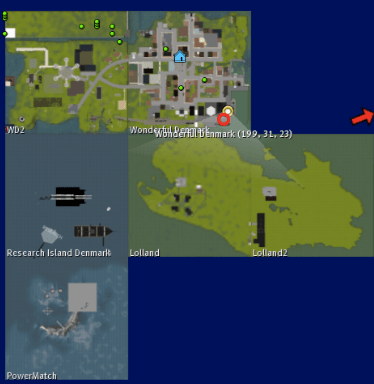

Wonderful Danish Island Complex, including Heidi Ballinger‘s PowerMatch and the Virtual Worlds Research project’s island; Research Island Denmark.

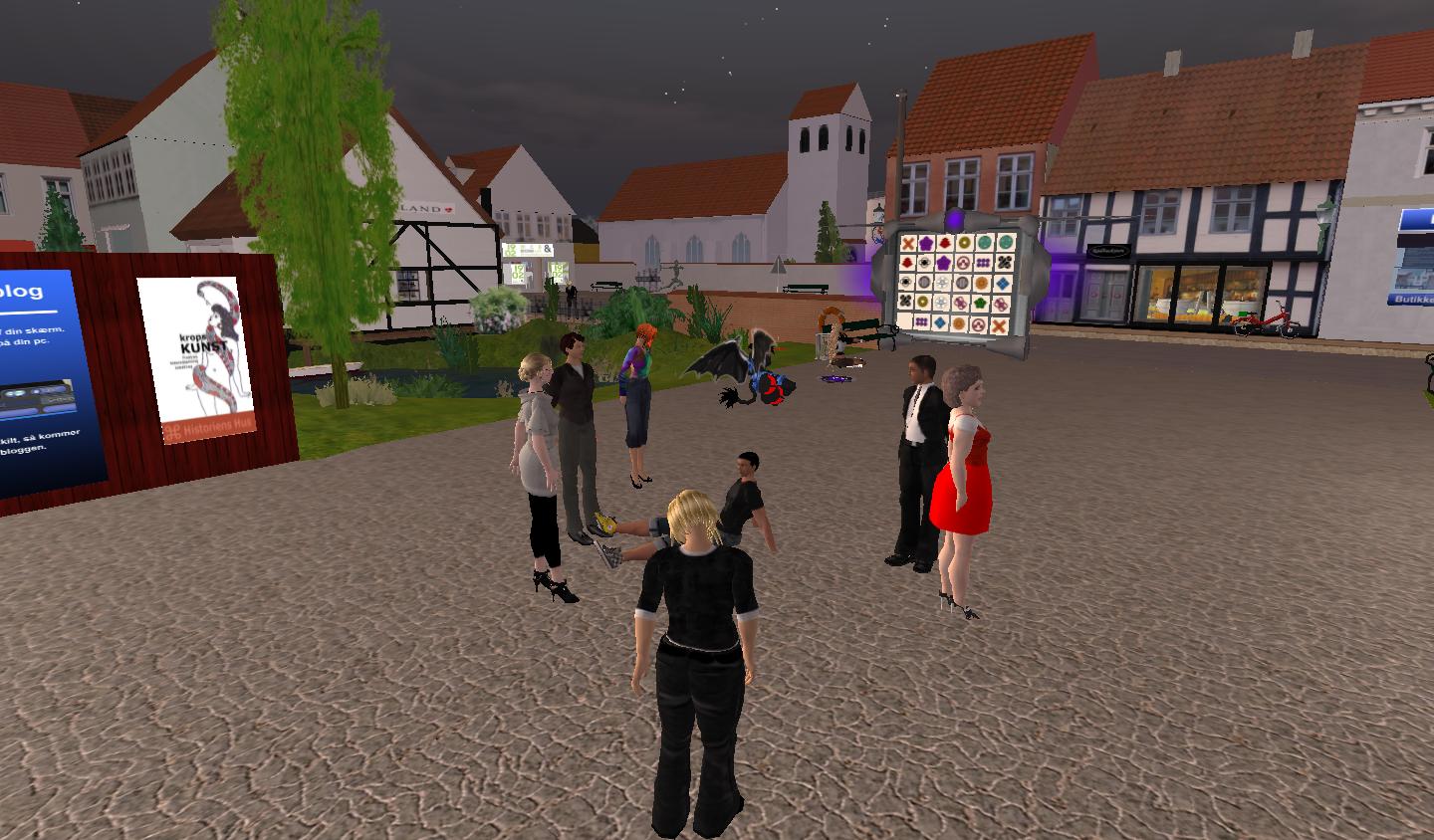
As usual some of the NoEL members meet at 20:00 at the town square on Wonderful Denmark for informal chat and sound rehaersal. Here we also had the opportunity to welcome a SL newbie, Preben Mortenwold and invite him to join our group :-) Don’t give up, Preben – you’ll get the hang of it .. it is a whole new world!

Here Dr. Asp told us a bit about his SL-based company, his work as a realtor and the services he and his team have to offer in-world. Please see the log below for further information on this.

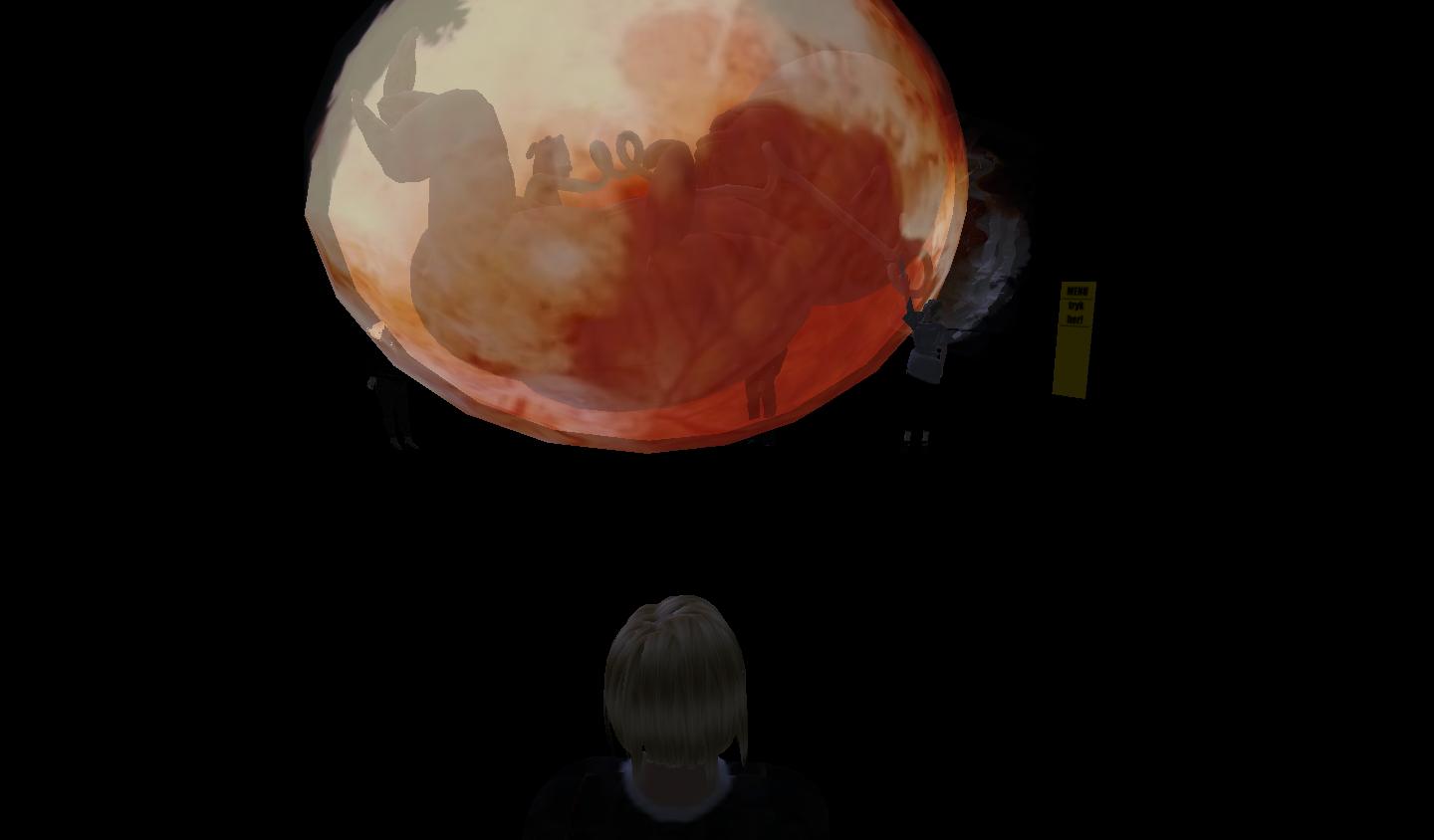
Then we headed off to our first location, Holodækket (The Holodeck), which offers 9 different settings/contexts.

We were all quite baffled when standing inside the uterus of a pregnant woman looking straight at the fetus – what a surreal experience! Imagine the learning potential if the different stages of a pregnancy were made like holodecs. A great example of using SL to create things NpIRL!
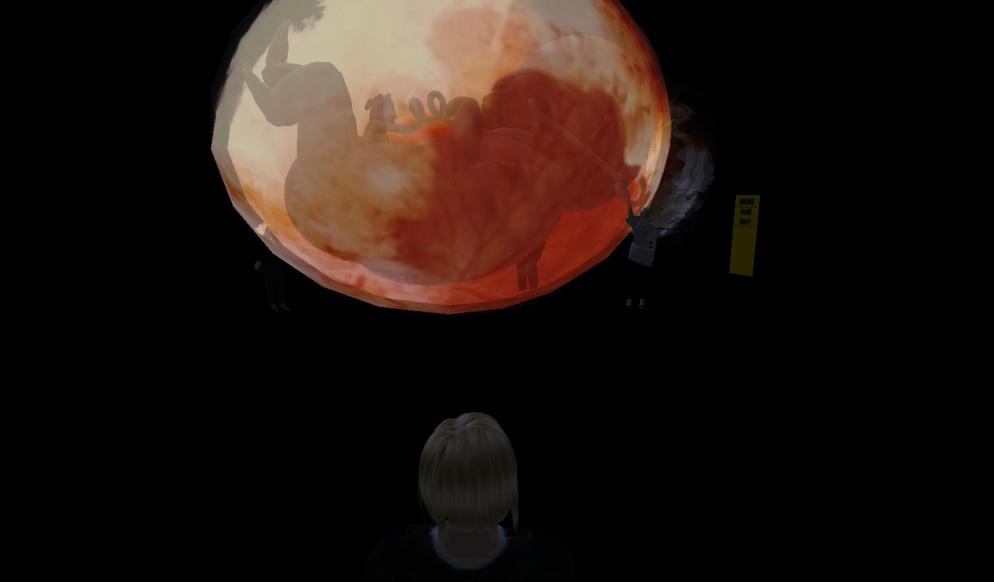
In fact we all agreed that the holodeck technique has a huge pedagogical potential – both in terms of respectful and radical remediation, role-playing, living history and more traditional informative purposes.

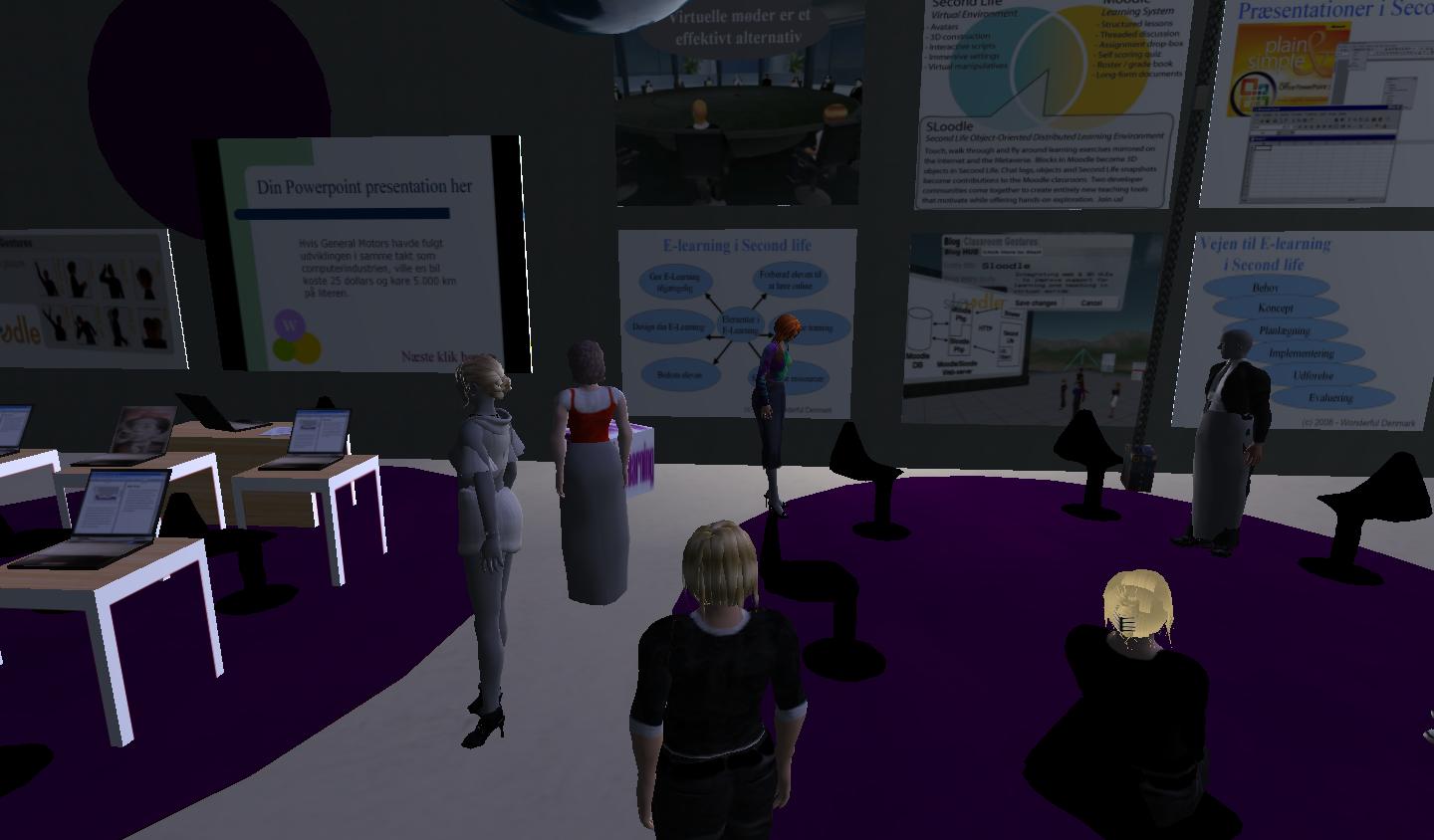
Next location was e-lærings huset (House of e-learning), where Dr. Asp showed us different 2D and 3D techniques applicable for e-learning in SL.
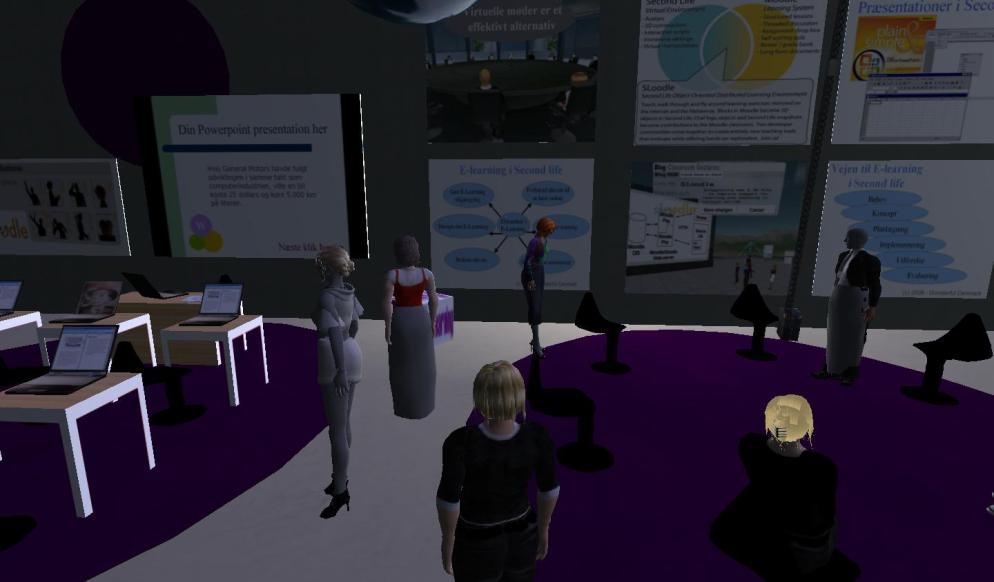
A recurring topic in our NoEL conversations is to what extend educators should remediate RL into SL. There are no easy answers, but in my opinion the overload of respectful remediation, doesn’t necessarily stem from lack in pedagogical imagination, but is also a consequence of the steep learning curve. I think most educators will experiment with more radical remediation as their building and scripting skills improve … but I may be naive …

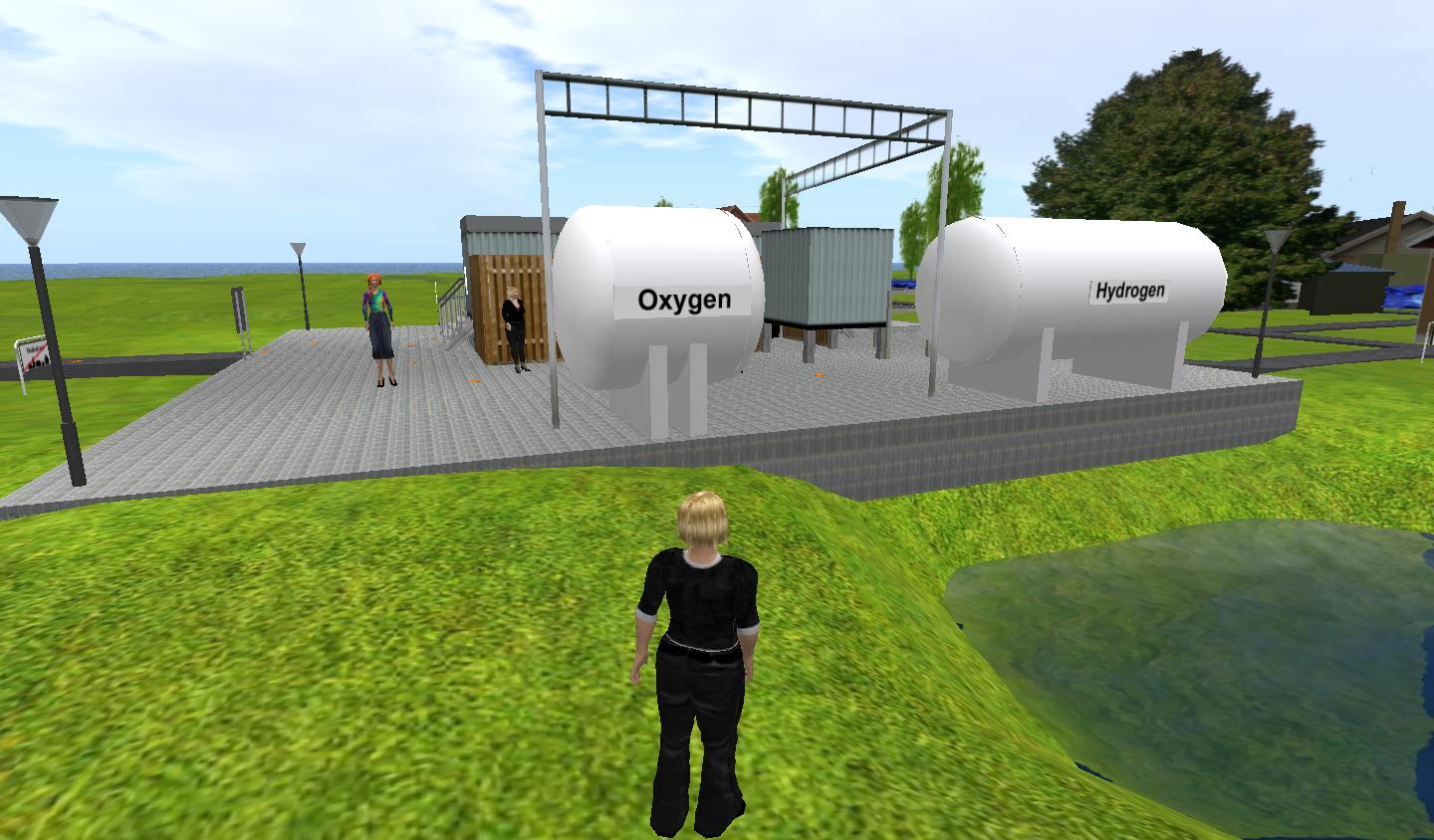
Our third location was Baltic Sea Solutions, which serves as a Community for Testing Facilities within Energy and Environmental Studies build also with the upcoming Climate Conference in Copenhagen, 2009 in mind. On location Dr. Asp and his team have build a Hydrogen test facility (RL), and on the ground you’ll find orange dots, that will guide you through in the most pedagogical/informative manner.

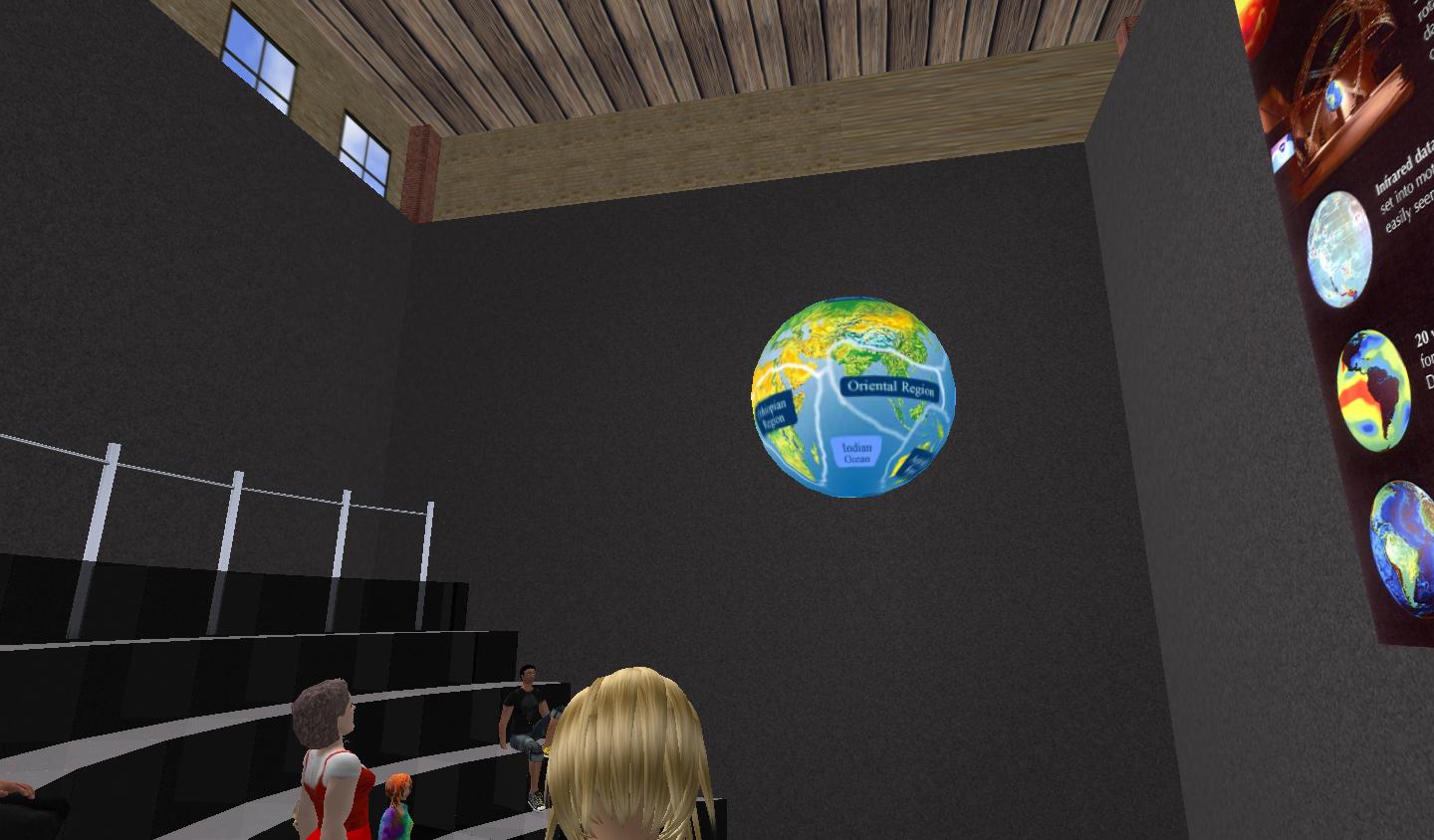
Looking through the lens of climate change we continued the tour to Science on a Sphere, a respectful remediation of NOAA’s similarly named project;

Science On a Sphere (SOS)® is a room sized, global display system that uses computers and video projectors to display planetary data onto a six foot diameter sphere, analogous to a giant animated globe. Researchers at NOAA developed Science On a Sphere® as an educational tool to help illustrate Earth System science to people of all ages. Animated images of atmospheric storms, climate change, and ocean temperature can be shown on the sphere which is used to explain what are sometimes complex environmental processes, in a way that is simultaneously intuitive and captivating.
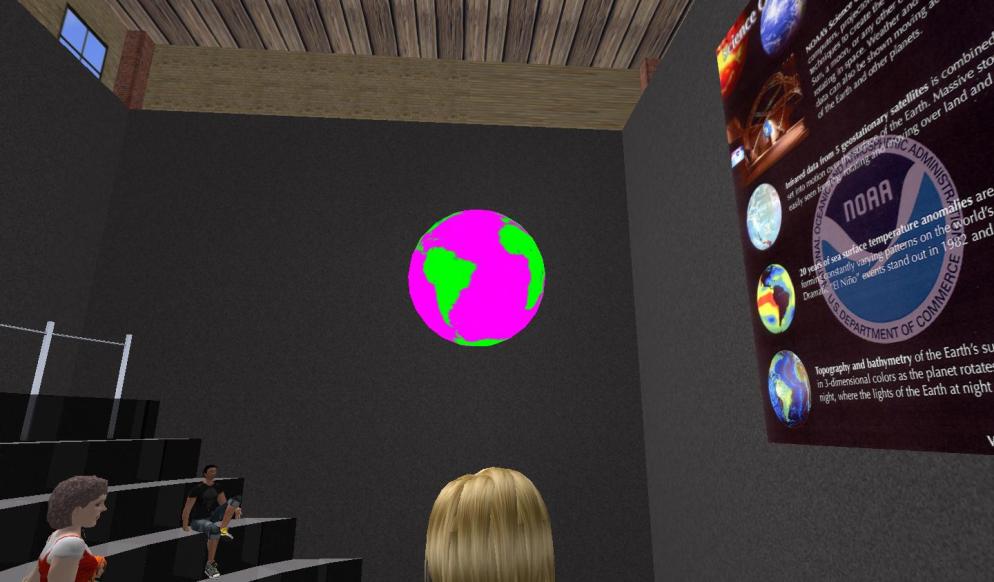
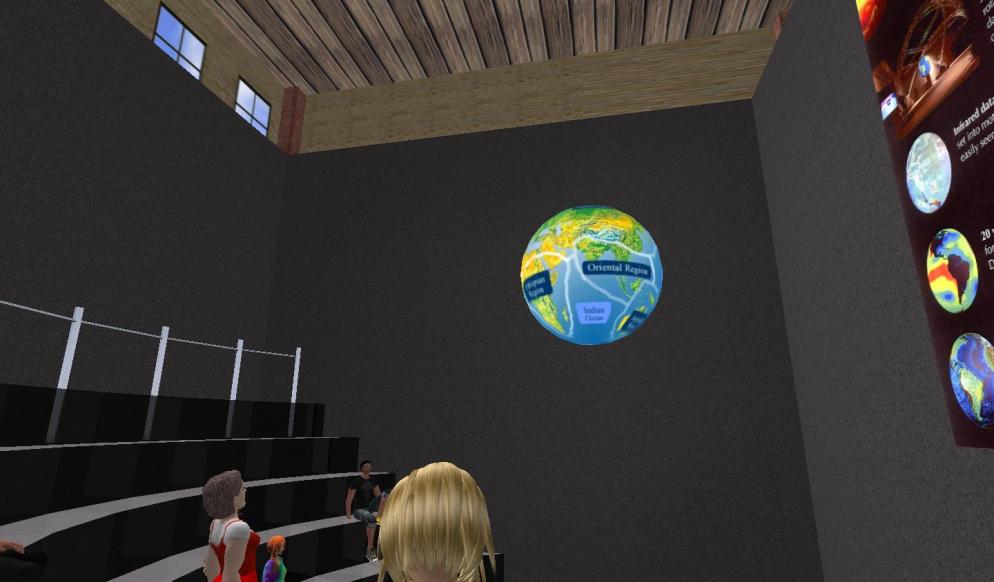
As I understand it the RL SOS has been extremely expensive and complex to build, so there is a reasonable cost-benefit argument for re-building in-world and potentially more people will have access. This is a project in progress, and Dr. Asp hopes to be able to animate the Sphere in more ways (based on RL data e.g. wind, temperature, demographics) in the future.

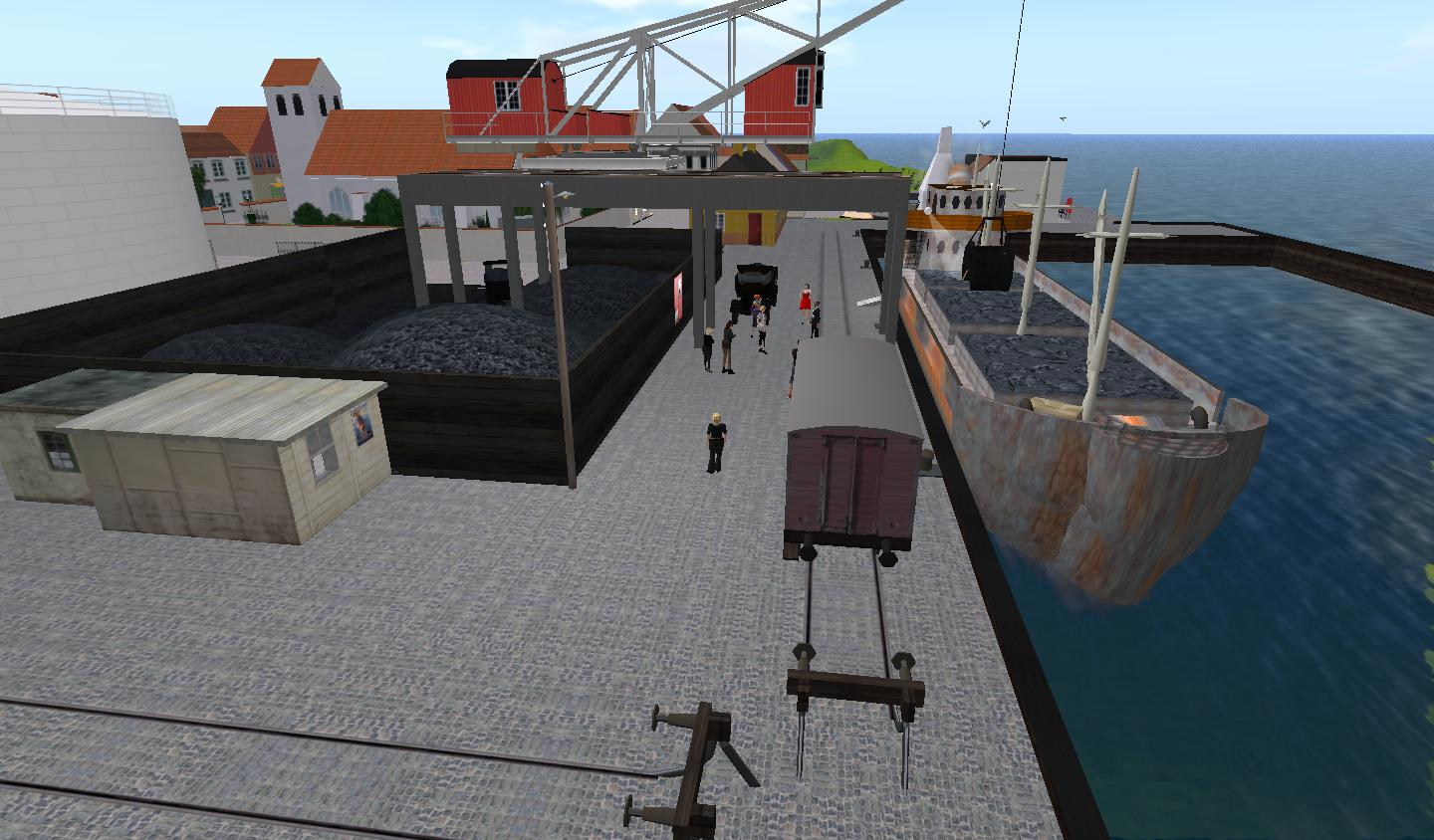
Finally we went to see one of Dr. Asp’s personal favorites, Mariager havnekran (Crane of Mariager Harbour). Dr. Asp is fascinated by old buildings and enjoys rebuilding them as authentically as possible in SL.
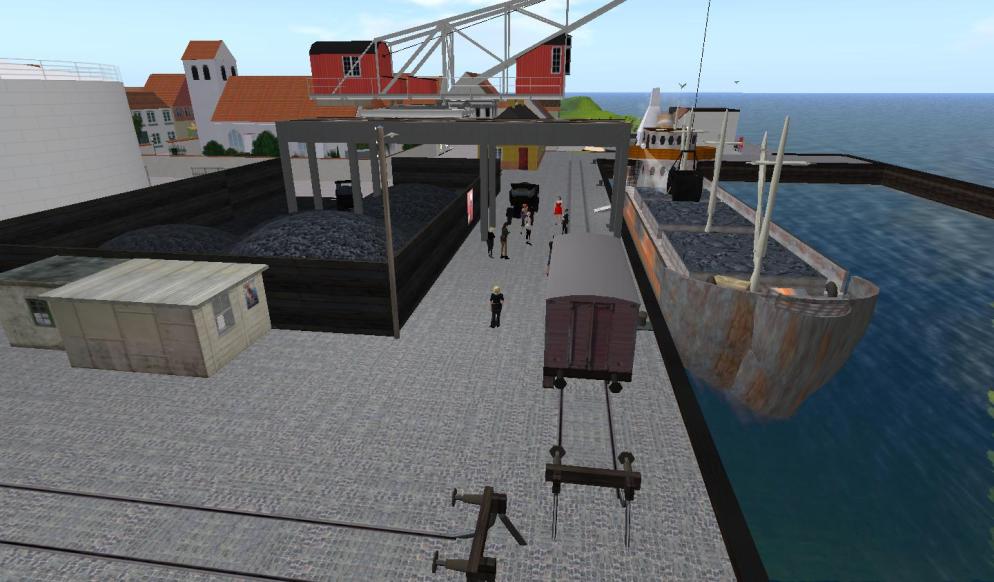
Dr. Asp’s SL version of Mariager Havnekran and below RL

All in all it was a very inspirational tour, and even though I personally was jetlagged, I sensed that the NoEL group had a very nice evening. Dr. Asp and his team often build new things and we only saw a few of the many possibilities these islands have to offer, so I’m pretty sure we’ll return!

Thanks to Dr. Asp for not only guiding us, but also for helping me out in filling out the blanks in the sl-meetinglog_wd_091008 :-))

/Mariis

Note:

At the town square on Wonderful Denmark you’ll find landmarks to all sorts of interesting locations