Book release: ICT and Learning – reflected practice

Together with colleagues Ulla Konnerup, Søren Skøtt Andreasen & Lone Dirckinck-Holmfeld I’ve co-edited an anthology entitled “ICT and Learning – reflected practice”.  What makes this anthology unique is that all the authors are alumni from the Masterprogramme in ICT and Learning (MIL).  Through 7 articles the authors discuss and reflect upon the use and purpose of ICT in different learning contexts covering the educational sector and one public hospital. The anthology is in Danish – and so will the rest of this post be …


Front cover by Helle Fibiger

Ikt og læring – reflekteret praksis er en antologi, der er blevet til på baggrund af masterprojekter udarbejdet i forbindelse med afslutning af Masteruddannelsen i Ikt og læring (MIL). Ideen til antologien kom fra alumner, som fandt det relevant at sætte fokus på den iderigdom, kreativitet og nye viden, der skabes i udarbejdelsen af disse afgangsprojekter.

Gennem antologiens syv artikler fremlægger, diskuterer og reflekterer de 13 forfattere en række vidt forskellige cases, som dog alle har koblingen af ikt og læring til fælles. Forfatternes meget forskellige teoretiske inspirationskilder, metodiske fremgangsmåder og brug af diverse typer af ikt viser bredden inden for dette spændende felt som er i konstant udvikling.

Antologien henvender sig derfor også bredt til alle, som interesserer sig for ikt og læring, hvad enten der er tale om teoretikere, praktikere, undervisere, studerende, arbejdsgivere og ansatte, for hvem reflekteret brug af ikt er en del af den daglige praksis i et samfund, hvor livslang læring om noget er på dagsordenen.

Emneord: Ikt, livslang læring, pædagogik, design, praksis, refleksion

Antologien’ s pris er kr. 198,- og den kan bestilles via Aalborg Universitetsforlag.

/Mariis

Mark Molaro interviews Jimmy Wales

Thanks to a post on the Association of Internet Researchers mailing list yesterday I discovered a series of interviews on YouTube “The Alcove” conducted and co-produced by Mark Molaro.

TheAlcove

To date there are 46 interviews covering a wide range of topics.

As an example I’ve chosen Molaro’s most recent interview which is with Wikipedia co-founder Jimmy Wales. In the interview Molaro and Wales discuss the origin of Wikipedia, the community’s core values, credibility, Ayn Rand and Objectivism, and the future of Wikipedia, incl. the Wikia project.

Despite the fact that I don’t agree on the objectivist epistemology, I appreciate Wikipedia very much and use it on a regular basis, mainly when I come across new concepts and/or people and especially when I need to refresh my memory. There has been a lot of debate regarding the credibility of Wikipedia and especially as an educator and researcher I find this issue important though it’s not a topic I want to cover in this post.  Suffice to say that personally I would be very reluctant to use Wikipedia as primary source and for sure I would not use it as the only source, but this I wouldn’t do with any source anyway…

/Mariis

Networked Learning Conference 2010 – Cfp

At Aalborg University we’re very proud to host the 7th international conference on Networked Learning 3rd & 4th May, 2010.

The Networked Learning Conference is an international, research-based conference. Since its inception in 1998 the conference has developed a strong following by international researchers. In addition it is well supported by practitioners, managers and learning technologists interested in contributing to and hearing about research in this area. The conference is considered a major event in the international ‘technology enhanced learning’ conference circuit. Conference papers are peer reviewed by international researchers in the field, and published in proceedings and online.

Keynote Speakers
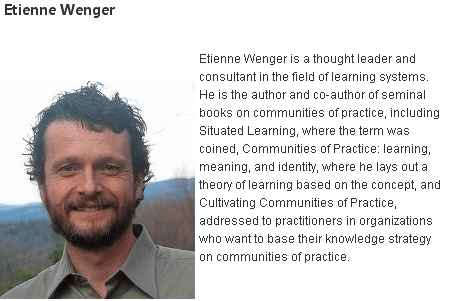
The 2010 conference features keynote presentations and discussions by two leading international researchers: Yrjö Engeström & Etienne Wenger.

Yrjo
Etienne

Conference themes
The conference is an opportunity to participate in a forum for the critical examination and analysis of research in networked learning i.e. learning and teaching carried out largely via the Internet/Web which emphasizes dialogical learning, collaborative and cooperative learning, group work, interaction with on-line materials, and knowledge production.

Papers critically reporting on the results of research and evaluation in Networked Learning are invited on the main themes of:

  • Understanding, Designing and Facilitating Learning in a Networked World
  • Theories and Methodologies for Research in Networked Learning
  • Impact on Learning of Networked Technologies
  • Learning in Social Networks and Networked Learning
  • Participation and Alienation in Networked Learning
  • Embedding Networked Learning in Public and Private Organizations
  • Formal and Informal learning in Networked Learning
  • Work Based Networked Learning and Knowledge Management
  • Problem Based Networked Learning
  • Practice Based Research for Professional Development
  • Issues of Social Justice and Social Responsibility in Networked Learning
  • Globalization and Interculturality in Networked Learning
  • Networked Learning and International Development

Conference papers will be peer reviewed by international researchers, and published in electronic proceedings and online. The conference steering committee will be supporting symposium organizers in publishing selected papers in special issues of refereed journals.

Submission date
Last date for submission of full papers for review: Friday 13th November, 2009

More details on submission

Further information about Networked Learning
You may find inspiration in the conference proceedings from previous years, and here I’ve copied a definition of networked learning from the British “Networked Learning in Higher Education” project:

Networked Learning:
learning in which C&IT is used to promote connections: between one learner and other learners, between learners and tutors; between a learning community and its learning resources.

Questions about the conference?
Please note that I’m not personally involved in the organization of this conference – questions should be directed to NLC Committee Administrator, Alice Jesmont, Educational Research Department, County South, Lancaster University, Lancaster. LA1 4YD. UK

nlc2010@lancaster.ac.uk

Symposium on Second Life in networked distance education
I would like to use this opportunity to invite 2-3 other distance educators using SL to participate in creating a suggestion for a symposium on the use of SL in networked distance education – if this has caught your interest please contact me for further elaborations in-world or on regular e-mail: mil01mr@hum.aau.dk

I’m hoping to see many Danish and International colleagues at this conference :-)

/Mariis

Handbook of Emerging Technologies for Learning

George Siemens & Peter Tittenberger (unfortunately his personal website is currently unavailable)  just released their number 1 version of “Handbook of Emerging Technologies for Learning”. A wiki, which will continue to be updated is available, but it’s also possible to view it as a pfd-file.

handbook

Siemens & Tittenberger encourage everyone to comment, discuss and react – so enjoy studying it :-)

/Mariis

Ambivalence regarding projects like Sametime 3D

Via SLTalk I just read about Sametime 3D, an ongoing IBM Research and Lotus initiative to integrate enterprise business applications with virtual world applications. This video shows the integration of Lotus Sametime with OpenSim.

According to IBM’s press release the main purpose of this initiative is to “make it easier for widely dispersed businesspeople to interact and collaborate without the time and expense of in-person meetings.” And here is another quote:

The new software overcomes several challenges that have existed for businesses wishing to hold meetings in virtual worlds:

  • First, businesses can collaborate the way in which they are accustomed, using software they may already have, such as electronic presentations, enterprise security, and instant messaging tools.
  • Second, IBM has prefabricated a variety of re-useable spaces specifically designed for productive meetings, making it unnecessary for adopters to painstakingly build meeting rooms each time they want to meet.
  • Third, these spaces are secure, overcoming privacy concerns manifest in many public areas of popular virtual worlds.
  • And finally, colleagues not wishing to participate in a given virtual meeting can still view documents, presentations and results from those sessions — or even snapshots of a previous meeting.

I have to admit that I’m somewhat ambivalent about projects like these, that is projects behind “closed doors”. I think it’s great that companies like IBM research and experiment with virtual worlds and possible mash up’s between 2D and 3D. And I do appreciate the need for especially private companies to operate on their own servers, securing the data etc.  – and this may also be appropriate in certain educational settings. My fear though, is that this sort of “closed door” behavior becomes the prevailing trend. If we all stay in our own little walled gardens, there’s no need to dub them “worlds”…

Of course I’m aware that there are de facto many closed doors in real life too, but I still believe that one of the major affordances of virtual worlds like SL is the inter-cultural openness in all aspects of the word. Where else do I accidently bump in to fascinating, clever and friendly people? Just this week I made two new acquaintances, Benjamin, who turned out to be a Danish US based e-learning consultant and Digi, a Scottish anthropologist with a special interest in freedom of expression :-)

In the MIL course that I ran in the fall ’08 I had planed several visits to both Danish and international colleagues, and I know that the students really appreciated these opportunities to meet, discuss and reflect on professional matters with people from different educational cultures – meetings that would have been impossible to realize outside SL.

I’ve always felt that if 3D virtual worlds were to make a really, really important and innovative contribution to educational technology the secret would lie in the community – the global community feeling in SL is what brings and binds us together. Quoting Lennon; You may say that I’m a dreamer – but I’m not the only one ;-)

/Mariis
