Off the record – #grcviz2011

I’m currently participating in a Gordon Research Conference, at Bryant University, Smithfield, RI, where I was invited to speak about my research in SL. This has been a great honor, and I’m truly enjoying my time here; meeting a lot of very clever, nice, cool, and fun people from all sorts of different disciplines, and the industry in a very international setting – all people who are engaged in using “Visualization in science and education“.


Unlike previous conferences I’ve participated in, GRC’s have a strict “off the record” policy, meaning that we are not allowed to disclose information from the talks, poster sessions, informal discussions etc. Being used to sharing all sorts of information through various social media, this really is a very different approach to knowledge presentation and dissemination. I’m honestly feeling somewhat ambivalent about this; I appreciate the need for a “space” where you can actually present unfinished/unpublished ideas. On the other hand, the conference has brought together so many interesting and talented people, who present such cool projects, that my immediate response normally would be to share this with my network. Since the list of speakers is public information, we have agreed that it will be ok just to share general information – and this some of us are doing via the hash tag #grcviz2011. Despite the fact that this makes the title of this post an oxymoron, it really is an amazing conference, where I’ve gained a lot of new insights and ideas!

This slideshow requires JavaScript.


The beautiful Bryant U 

Since the conference is cross disciplinary, I’ve once again been reminded just how different we approach research and justify knowledge, and in general perceive the phenomena we are investigating. Coming from a very strong qualitative research tradition, I’ve been puzzled and admittedly provoked by some of the more quantitative presentations I’ve seen – and I’m confident this works the other way round. This is, however, a very healthy thing, and if nothing else, I bring back a greater appreciation for mixed methods studies! And it has me thinking that we really need to research and come up with new and better ways of e.g. evaluating learning processes and their outcomes. In fact, I would say that I go home with more questions than answers, but again I think that is a very good thing … :-)

/Mariis

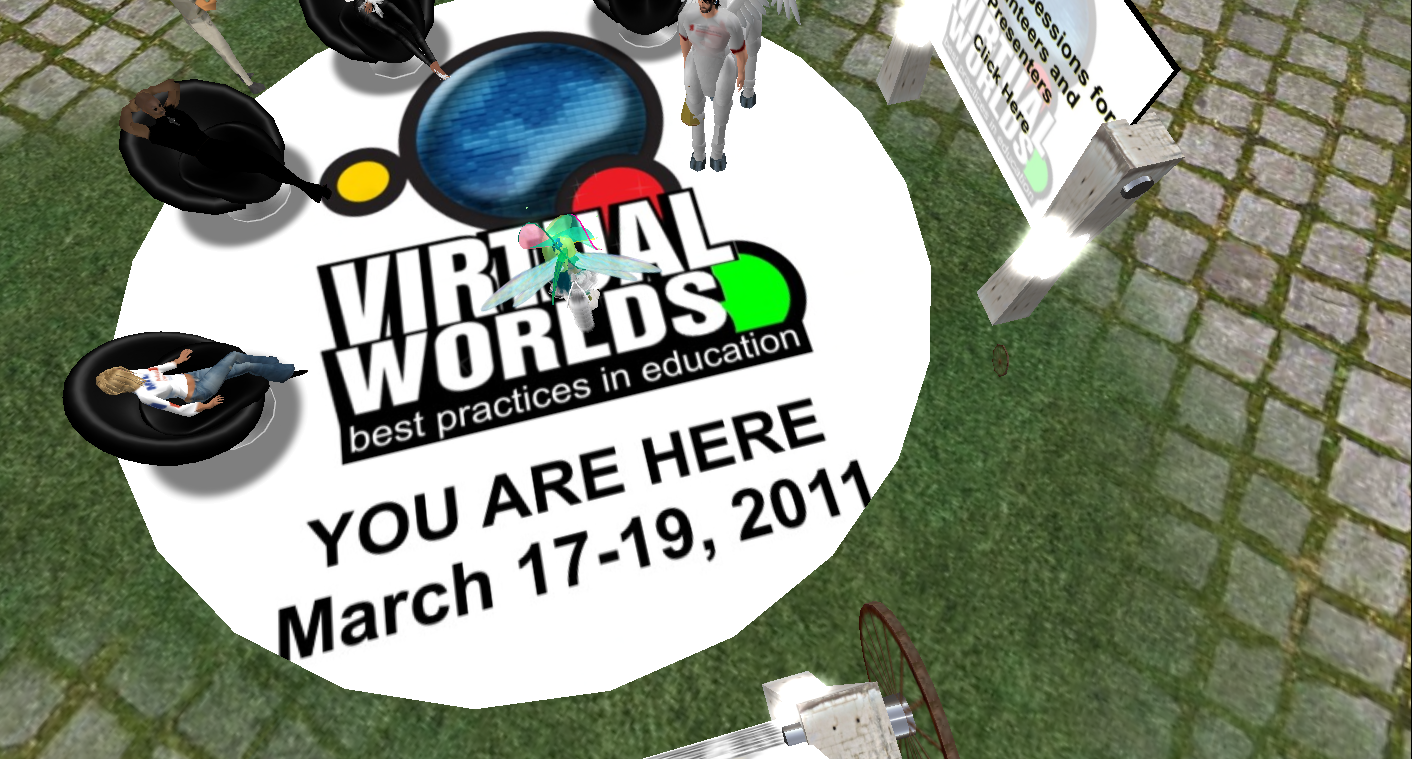
Virtual Worlds Best Practice in Education 2011 panel

On March 17-19 the 4th annual Virtual Worlds Best Practice in Education (#VWBPE11) will be taking place in SL and other Virtual Worlds such as OpenSim, World of Warcraft, Eve Online and Club Penguin.

The VWBPE is is a community-based conference that provides opportunities for participants in all virtual worlds to share current research,  teaching, and learning practices in 3D virtual environments. This 53 hour conference will provide opportunities for sharing and further understanding virtual world technology, and will focus on teaching/learning, scholarly work, projects, events, activities and new and innovative tools for virtual education. According to the VWBPE-website this year’s conference is about people, the community, and it’s about being together;

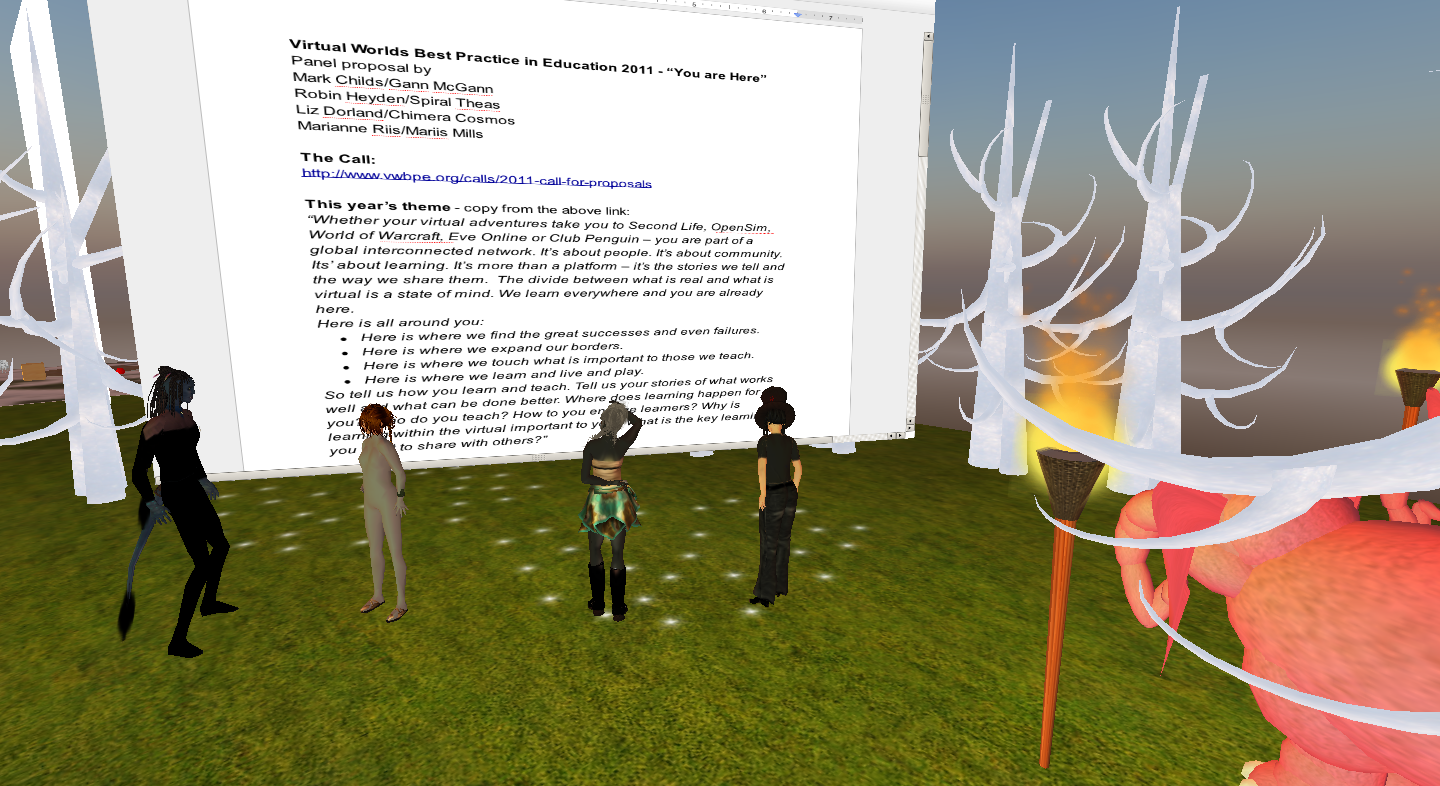
This year’s theme is You are Here. The divide between what is real and what is virtual is a state of mind. We learn everywhere and you are already here.

Here is all around you:

  • Here is where we find the great successes and even failures.
  • Here is where we expand our borders.
  • Here is where we touch what is important to those we teach.
  • Here is where we learn and live and play.

I have been attending the conference for a couple of years as an observer, which has been very inspirational, and I highly recommend anyone interested in 3D Virtual Worlds to participate in this amazing, free event! :-)

Furthermore, this year I have the great pleasure of doing a panel discussion together with 3 SL friends and colleagues: Chimera Cosmos, Spiral Theas, and Gann McGann.


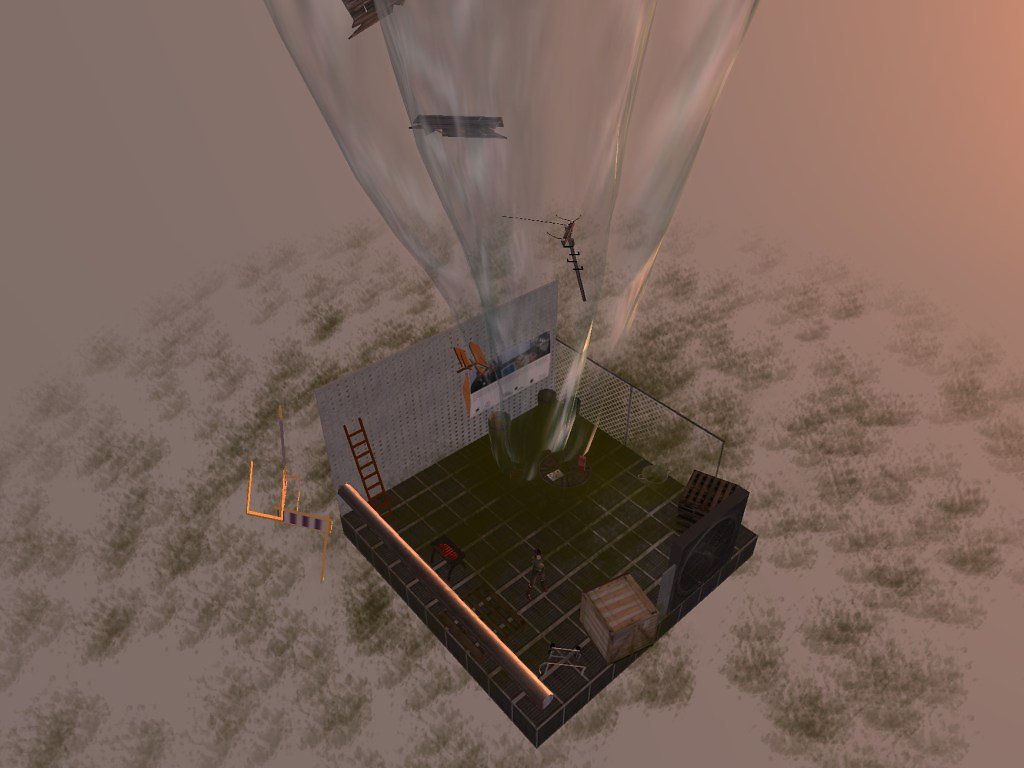
First planning session on my holodeck with Gann & Chimera

Our session is entitled: Hats, HUDs, Wands and Weather:  Building Activities for Engagement in Second Life. One of the things we all appreciate about SL is the fun and playful parts of this environment, which could include changing the avatar’s appearance and using different types of artifacts – e.g. in our first meeting Chimera couldn’t help but show off one of her magic wands ;-)


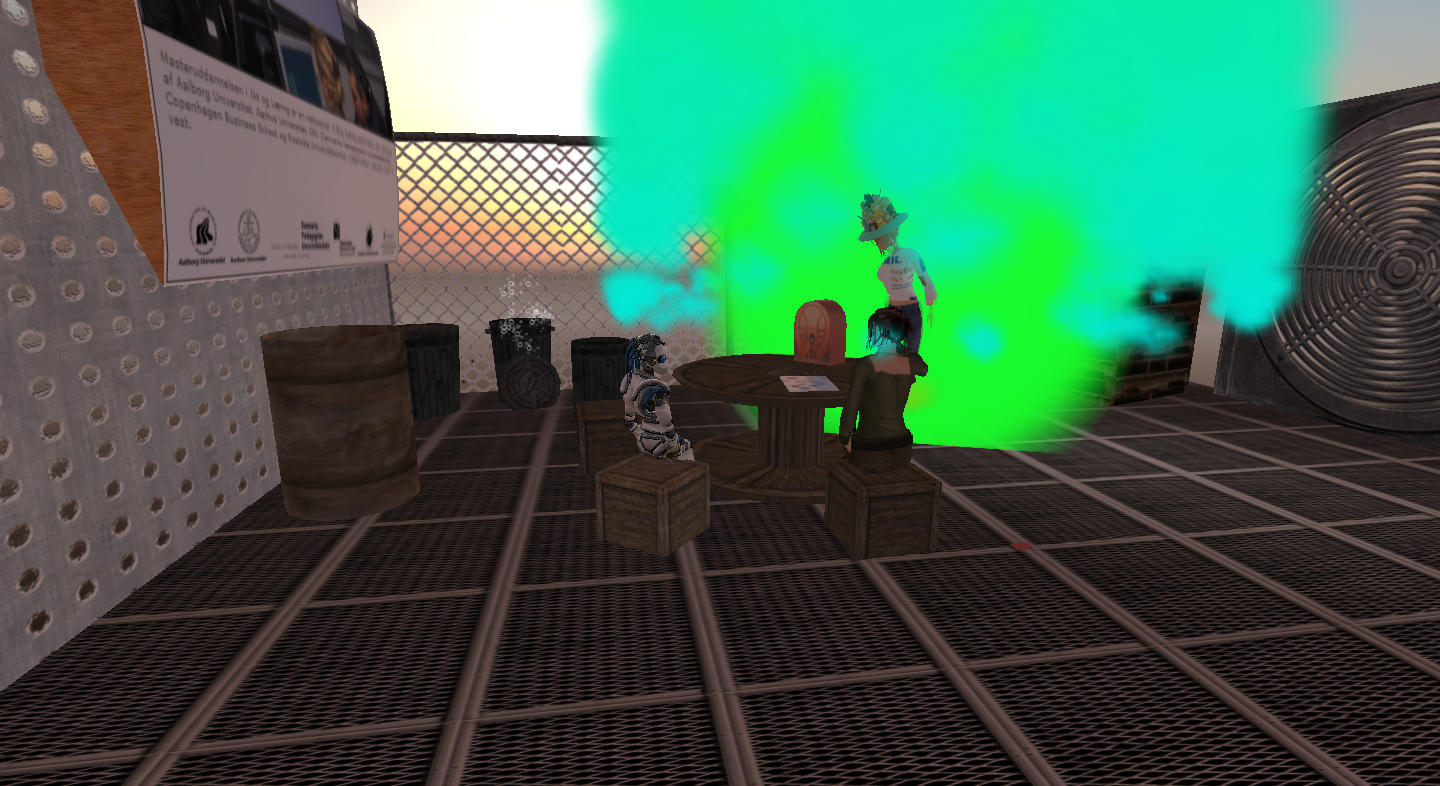
And in fact after Gann and I left, Chimera used her tornado stick on the holodeck as seen in this photo from Chimera’s KoinUp stream:


Chimera’s koinup

While the user-controlled ability to change both the environment and one’s appearance definitely is an important part of SL, we as educators are also concerned about the kind of activities that can promote, facilitate, and not least sustain engagement in teaching and learning in an environment such as SL.


Gann, Spiral, Chimera and I discussing the call for VWBPE in our second meeting

We all have both positive and a few negative experiences with teaching in SL, and so in our panel we have decided to focus on activities that help overcome some of the barriers for meaningful, and sustained engagement in SL as stated in our proposal:

There are numerous barriers to engagement in virtual worlds. First, new residents must become familiar with the interface. Beyond technical considerations, the nature of their early experiences will determine whether and how quickly they will build an identification with their avatar and a reason to stay. Without this, it is likely that their interest in further engagement in the virtual world will lessen and their participation will drop off. A sense of presence and identity through embodiment and immersion is an important contributor to ongoing and satisfactory participation in the world and finding the motivation to continue to return until the technical and navigational thresholds are surmounted. This roundtable will discuss the essential acts, the “ah-ha” or Eureka moments, the triggering gizmos, features, activities or places that inspire students or colleagues (and have inspired us) to continue to participate.

In other words, what works to help new residents pass these technical and navigational thresholds? The speakers will share their own stories drawn from their work with students in higher education, business people, health professionals, and education colleagues. Presentations will include demonstrations and audience participation.


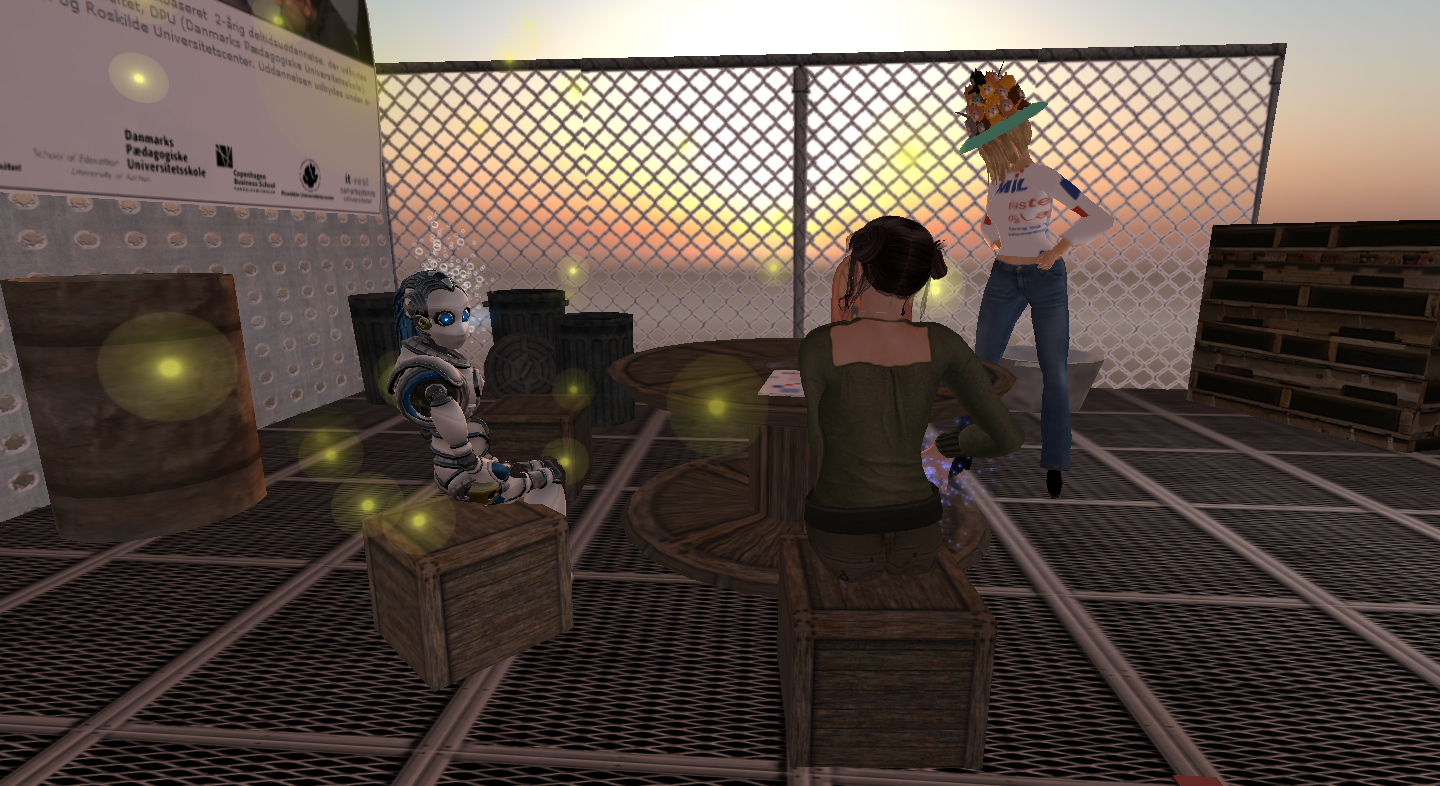
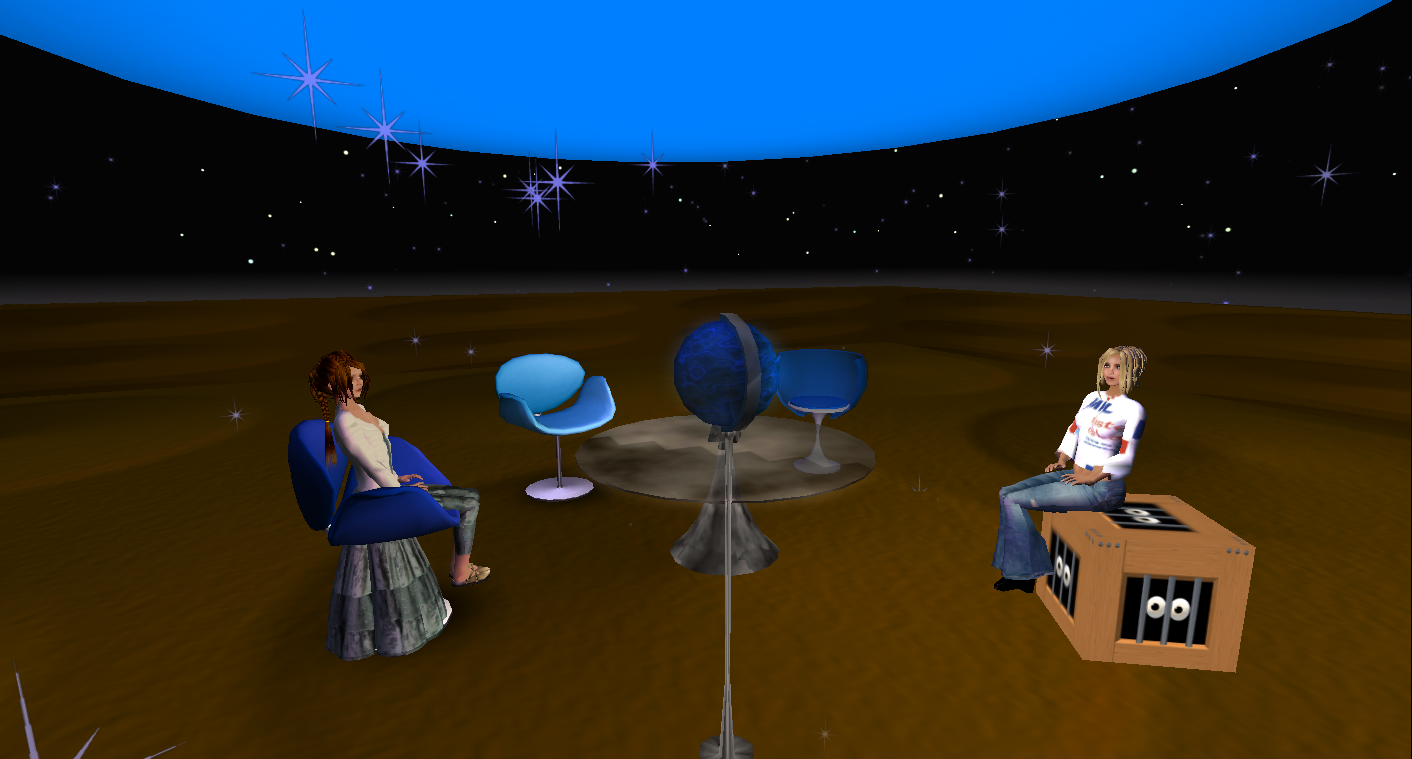
Spiral and I chatting under the Blue Thinking hat before our third panel meeting


Identity issues are very important in SL – and we will be showcasing Identity-cubes as part of the session

As mentioned above Gann, Spiral, Chimera, and I will be sharing some of our experiences, but we are also very much hoping to hear from the audience, and so we hope You will join us :-)

Update
We will be presenting Friday, March 18th from 8AM-10AM SLT (16-18 Dansk tid) – Building South, Room South Auxiliary, and the rest of the schedule can be found here

Also please note that even though the conference is free, you need to register in order to participate via this link. By registering you will be helping the organizers plan out resources to ensure the conference runs smoothly and that there is allocated enough space to ensure everyone gets an opportunity to participate.

/Mariis

For inspiration here are three posts I wrote about VWBPE last year:

First day impressions

Second day impressions – part 1

Second day impressions – part 2 – this one also includes my reflections on Chimera & Spiral’s 2010 session

The Purpose of Education, Human Rights, and New Media

Recently, a really interesting initiative about the purpose of education was launched by UK educators Doug Belshaw and Andy Stewart in the social media sphere. Their plan is to facilitate a critical mass of people all talking about the purpose(s) of education, starting with 500-word blog posts and Twitter campaigns, and culminating, with simultaneous large meetings/conferences further down the line. As I understand it, this initiative has been inspired by a UK election decisive for education set to take place in 3 year’s time, but Belshaw and Stewart are aiming for an international debate, and have set an ambitious goal:

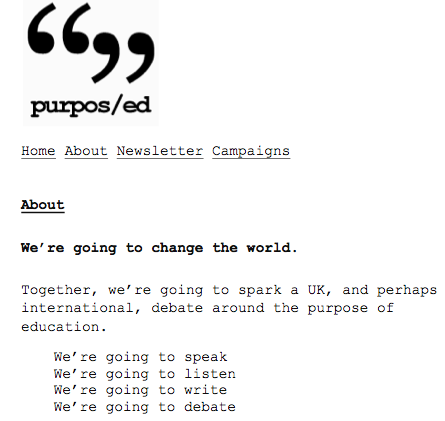
From the website: Purpos/ed

The blog initiative was kick-started on February 1st on the Purpos/ed website, and so far a number of bloggers have contributed in raising their voices and joining the debate. Some of these contributions can be found in the archive, while others may be located by following the hashtags #purposed, and #500words. Furthermore is is possible to connect through a Facebook page. If you have an interest in education this is definitely an initiative worth following.

As for my own take on the purpose of education, I’ve always been inspired by the 1948 Universal Declaration of Human Rights, and in particular article §26, (1,2);

Everyone has the right to education. (…) Education shall be directed to the full development of the human personality and to the strengthening of respect for human rights and fundamental freedoms. It shall promote understanding, tolerance and friendship among all nations, racial or religious groups, and shall further the activities of the United Nations for the maintenance of peace.

Education may be a human right, but for many different reasons becoming educated within the existing educational system is sadly not a given. Stephen Downes highlights this in his contribution with reference to his own educational path, and Lou McGill points to the challenges for kids with special needs. Unsurprisingly, many of the purpos/ed contributions echo thoughts similar to those in the declaration, the tricky part is of course how to promote, facilitate, and obtain these goals. Several authors point to new media as a means to broaden the scope of education and to tear down walls whiter these are mental, physical, or virtual. Dean Groom advocates the idea that education should extend beyond the idea of schools/institutions as being the sole places for education, whereas Fred Garnett calls for education aimed at participation.

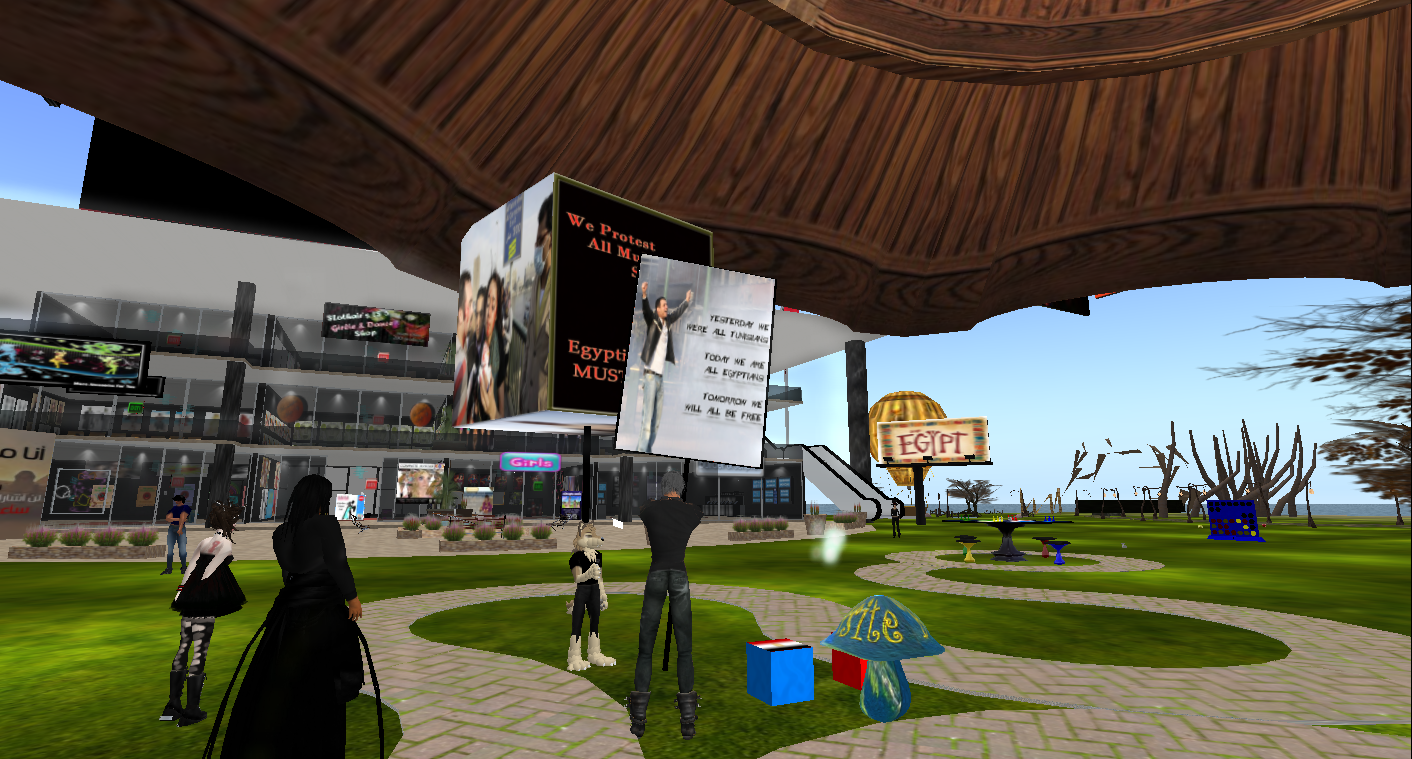
Shifting perspective to my own current research within the 3D virtual world, Second Life (SL), I see a huge potential in using this particular kind of edtech to tear down several “walls”. Ever since I first logged into SL back in the spring of 2007 one of the aspects I’ve come to appreciate most about this virtual world is the participatory affordances enabling both me and my PD-students to connect, communicate, and collaborate with people in general, and educators in particular from all over the physical world. We have been given the opportunity to meet, and discuss cross-cultural differences in education, and to interact with a variety of educational designs – all of this contributing to new perspectives on education, teaching, and learning. Informal encounters and spontaneous activities are other very positive aspects of SL, and as it is the case in many other new media, the users of SL quickly respond to current affairs – something that recently could be witnessed during the Egypt crisis. Having heard of activities on the Egyptian island I went in to have a look on Friday February 11th shortly before it was announced that Pres. Mubarak would step down.


Protesters on the Egyptian Island, Friday February 11th 2011

Hamlet Au of the New World Notes blog and Rik Riel of the “Betterverse: Nonprofits in the Virtual World” blog have covered several of these activities on the Egyptian island, and Chantal Harvey has captured some of the ambience after Pres. Mubarak’s resignation in this short machinima:

Virtual worlds have previously been used in protesting, expressing thoughts and hopes of freedom, and in general just to direct attention towards different causes as reported in Mashable by Rita J. King co-director of the Understanding Islam through Virtual Worlds project. What’s interesting here is the role not only Virtual Worlds, but new media in general play in distributing and sharing knowledge, something that also Pres. Obama noted in his remark on Egypt ; “a new generation emerge – a generation that uses their own creativity and talent and technology to call for a government that represented their hopes and not their fears; a government that is responsive to their boundless aspirations.

In a very interesting article on the correlation between social media and political changes, Charlie Beckett asks how this new media landscape could/should change the way journalists “report on revolution and feed into the post-revolutionary politics and general political communications”. As an educator I could ask similar questions about new media’s influence. I’m currently experiencing the way new media change the way we think and practice education, and I must say that I’m overall optimistic. New media bring along affordances of participation, collaboration, and ultimately of empowerment. Most importantly new media force us to rethink, reframe, and reform – and this current Purpos/ed initiative is one of many interesting ways to get involved …

/Mariis

Conference on IT and Innovative Learning Environments

Thursday/Friday his week I’ll be attending a conference/workshop on “It and innovative learning environments” at university level organized by the Danish Ministry of Science in Copenhagen.

I’m especially looking forward to hearing the two keynote speakers:

  • Phillip D. Long, Ph.D. Professor of Innovation and Educational Technology and Founding Director, Centre for Educational Innovation and Technology, University of Queensland, Australia.
  • Renate Fruchter, Ph.D. Founding Director of Project Based Learning Laboratory and Senior Research Engineer, Department of Civil Engineering, Stanford University, USA

I’ve never met Professor Long, but I’ve read a some of his publications concerning design of learning spaces (i.e. Trends in Learning Space Design), and I think he has some pretty interesting takes on educational design. He is scheduled to talk about Open Scholarship and Learning, which should be interesting too!

I’ve had the pleasure of meeting Professor Fruchter a couple of times during my recent research stay in the Bay Area. She’s a very energetic and positive woman, and I think it’ll be fun to reconnect with her. During this research stay a bunch of my colleagues from 5 different Danish universities and I attended a 2-day workshop at Stanford exploring the future of e-learning, and since this conference is kind of a follow-up event I’m also looking forward to reconnecting with them and the organizers from Innovation Center Denmark in Silicon Valley.

I’m also interested in hearing the Danish Minister of Science, Charlotte Sahl-Madsen’s thoughts on innovative learning and the future of our universities … On Friday I’ll be attending different workshops, and here I’m especially looking forward to hearing what colleagues from the Danish School of Education, Tina Bering Keiding & Morten Misfeldt have to say on the alignment between learning and physical space – not least since this is a topic I normally don’t pay much attention to due to my explicit focus on virtual space/place in my PhD-project.

Dan Gilbert, Learner Designer Technologist, Learning Innovations Inc. will facilitate a workshop entitled Innovative Tools and Techniques to Enhance Creativity in Your Classes: Connecting Design Thinking with Teaching and Learning”, and this should be interesting too. I’ve previously attended a workshop by Dan and it was inspirational and great fun!

Finally, I’m really looking forward to seeing how conference participants will be using Twitter #itlearning. This will be my first Danish conference organized with the explicit goal of using Twitter and I have no idea how this will be received – but I am expecting a lot of fun :-)

/Mariis

#vwbpe 2010 – 2nd day impressions (part two’ish)

Continuing my reflections on the 2nd day of the VWBPE-conference the next session I participated in was on “Rapid Development of Interactive Educational Content in Virtual Worlds: From Analysis to Evaluation”– a panel consisting of DoctorPartridge AllenFirery Broome, Quincy Solo Sherman Gustafson, who shared their experiences with content development. The panel spoke of their work with “Immersive Learning Simulations” (ILS) and the premise was stated in the abstract, which can be found here in the programme;

Emerging technologies in Immersive learning, like Second Life, afford us significant opportunities to explore new mechanisms for educational interaction, but they also present us with a wealth of new challenges. A common theme with the adoption of such technologies is that we are recycling older technologies rather than genuinely leveraging the tools and resources exposed by the new technology. This panel is composed of people who have been confronting this challenge, and working diligently to embrace both the new immersive learning technology and to fully utilize the new features and facilities inherent in those technologies.

I always find it highly inspirational to hear other instructional designers talk about their approach and their theoretical foundations, and a couple of things struck me in this. First of all there seems to be growing consensus on using the term “immersive” to describe the main affordance of technology/media like Second Life. I understand the need to distinguish Second Life from other types of virtual teaching and learning environments, but I find the use of “immersive” somewhat problematic. If by “immersive” we simply refer to a sense of “being in a place” as opposed to the less concrete “space” concept, I agree that virtual worlds like Second Life can promote this sense, but it is only a potential, not a given. I’ve had students in all my in-world courses that didn’t feel immersed at all, but this is also a matter of how you define “immersive” and something I’ll return to in later posts. Secondly, I agree with the panel that there are two major strategies for the technology/media adoption namely “recycling” and “genuine leveraging the new affordances” – two strategies that I refer to as respectful vs. radical remediation and have incorporated in my model for 3D-remediation of people, places and practices.
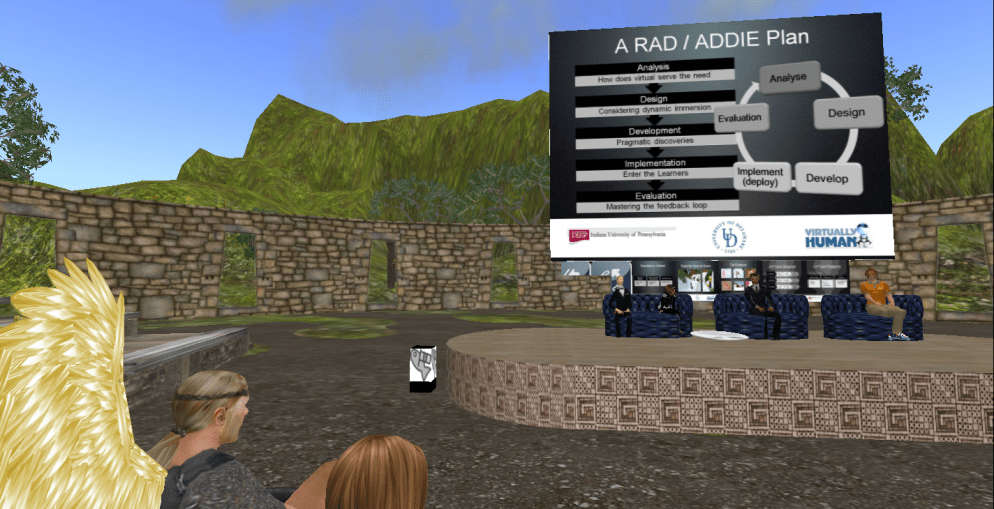
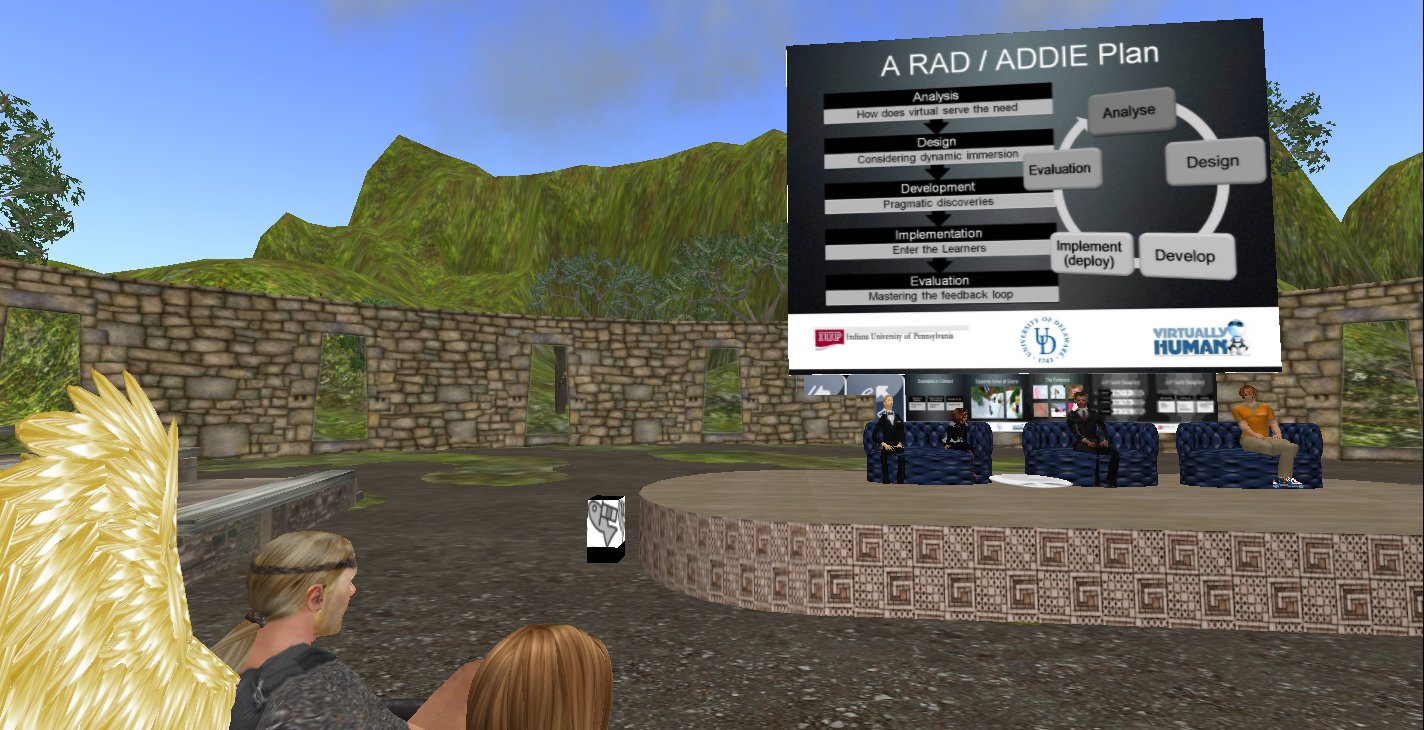
When describing their work the panel referred to the ADDIE model, one of the most common instructional design models that resembles the classic Action Research cycle of planning, acting, observing and reflecting – especially if continual feedback is applied i.e. through the use of RAD.

After I started writing this post my Mac broke down again – this time apparently for good – and sadly I hadn’t taken any backup of my vwbpe-photos or notes, so the rest of this will be based on memory (hence the ‘ish in the title).

The next event “Learning in 3D: A New Educational Dimension” with Abbott Bundy & Wada Trip was something I had been really looking forward to. When I did my first lecture on SL back in the fall 2007 I relied heavily on the work – primarily blog postings – of both Abbott & Wada and I’ve been following them on a regular basis ever since. Based on the abstract for the session it was clear that they would talk about their book “Learning in 3D. Adding a New Dimension to Enterprise Learning and Collaboration”, and since I haven’t read it, I found it quite interesting – the session is archived here on Treet.tv.

Afterwards Abbott wrote a post on his experience stating that he had seen the future of conferencing – in many ways I tend to agree that participation through 3D Virtual worlds can replace RL participation, but I think it’ll be quite some time before the larger part of at least the academic society will follow and it also requires a whole new outlook on identity validation. So many people I meet tell me they would never take an avatar serious. Essentially Abbott & Wada talked about instructional design, principles and practices and demonstrated a model they’ve come up with and I definitely need to have a closer look at that. They also mentioned Light Sequent, who also contributed to the book and who wrote a Masters Thesis on “Learning archetypes as tools of Cybergogy for a 3D educational landscape: a structure for eTeaching in Second Life.” It is worth noticing that they use the word archetype in a non-jungian way, and more as some sort of  characteristic traits of pedagogical practice (building blocks i.e. instructional strategies, methods for facilitating learning) – a bit confusing, I think, but I need to read the book to learn more…

Another much anticipated session was conducted by my two friends Chimera Cosmos & Spiral Theas, who presented their work with “Learning in a Virtual World: Using SL for Medical Education” – slides can be found here. There’s also a recording of the session here, but as you can hear the sound wasn’t terrific, especially Spiral’s voice was breaking up. Based on a pilot study on Continuing Medical Education, that they did together with colleagues and 14 participant family practice physicians (described in an article here) Chimera & Spiral presented some interesting results and also showed us how they had been experimenting with the use of mock avatars in role-playing. At a certain point Chimera logged in (via another computer) as the diabetic patient, Mariana Hexicola and started communicating with the audience. From the post Spiral wrote afterwards it was evident that they deliberately wanted to show, not just talk about, the things they had implemented in the pilot study.
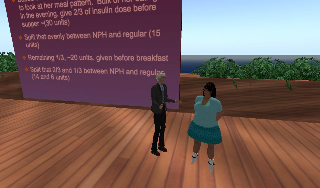
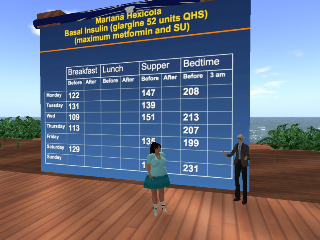
Pictures kindly provided by Spiral show the overweight, diabetic patient, Mariana interacting with the Professor as part of the pilot study.

The study proved some highly interesting results with participant improvement in clinical skills, but what also was fascinating, was the participants’ rating of the experience in SL as they all agreed that the experience was superior to other online methods, and the majority felt that the SL method was as good as, if not better than, f2f methods. Having read the above mentioned article, I’m quite sure that the success stems from a very deliberate instructional design strategy, which addressed the participants’ needs not only as learners of a particular subject matter, but also as users of SL. Even though it is a small study, I think it supports the growing body of studies done by especially natural scientists in virtual worlds very nicely, and the article is well worth a read even for educators in other fields.

After this, the next session I wanted to attend was on “Creating a Positive First Hour Experience“, which of course is highly relevant, but as the presenter decided to do his session in text only, I decided to skip it. SL simply doesn’t appeal to me without voice … I might as well read a regular text in my own pace. Instead I decided to get some sleep before attending the last session (at 5 am in Denmark), which was by another friend of mine, Tab Scott who has been actively teaching and researching in SL since 2005.

RL Tab is Director of Creative Research Lab at Montana State University and Tab presented some of the many projects the lab has been involved in since 2005 and also gave some hints as to where they are heading in the future – there’s a recording of the session here. A central keyword of the CRLab is collaboration, and when Tab first entered SL is was to investigate whether SL could be used as an environment to support collaboration, and well they’ve been using it in teaching architecture and arts classes successfully ever since. One of the many things I appreciate about Tab’s philosophy and approach to using SL is that he doesn’t see it as a stand-alone technology. Now, first of all there’s a very pragmatic reason for that, namely the stability of the environment. As Tab mentioned using SL back in 2005 (and even when I entered in 2007) could be really frustrating due to technical issues, constant updates of the viewer, maintenance etc. The stability of SL has improved a lot, but there still is a risk that you or your students will have technical problems, so a backup plan is highly recommendable. (i.e. Chimera and Spiral had Skype as backup as part of their instructional design). But I think a more appealing reason for not using SL alone stems from the fact that even though the core of the environment is 3D, the more interesting uses (naturally depending on your goals) often come when combing it with other 2D technologies such as SNS, shared documents and streamed media and at the CRLab they work with the concept of PLE’s thus trying to ensure that the students become media literate in a broader sense. Given that most new users find the learning curve in SL pretty steep, I think it makes perfect sense to include some more familiar technologies that also can help reduce the alienation some new users experience.

At the CRLab collaboration goes way beyond university and even state and county boarders, and another of Tab’s points was that we as in-world educators need to help each other validate the use of SL. I agree and I think that even though educators have been tirelessly using SL for many years now, it still is an emerging technology and in my point of view we have yet to pass the early adopter phase. Someone in the audience, who had been using SL for three years, mentioned that his problem wasn’t to get the students to use SL, but rather the rest of the faculty – and this is definitely something I can relate to.

Having a conference like this vwbpe – with proceedings expected in May 2010 – certainly is a good way of spreading the message and thus hopefully convincing more educators to at least have a go at using SL. I spent two great, inspirational and meaningful days participating in this, and my only regret – just like at RL conferences – is that I missed so many other interesting sessions. But unlike most RL conferences, many of the sessions were recorded:

All sessions on Treet.tv
All sessions on Metaworld

/Mariis