Visualizing the identity puzzle

As I’m preparing for an upcoming talk at the GRC “Visualization in Science and Education” conference at Bryant University, R.I., I’m trying out different types of visualization tools. Among other topics, I’ll be talking about avatar identity and what this means in terms of learning. For this part I’m considering the use of a puzzle and this is simply a test to see how it works embedded here …

Click to Mix and Solve

/Mariis

Virtual Worlds Best Practice in Education 2011 panel

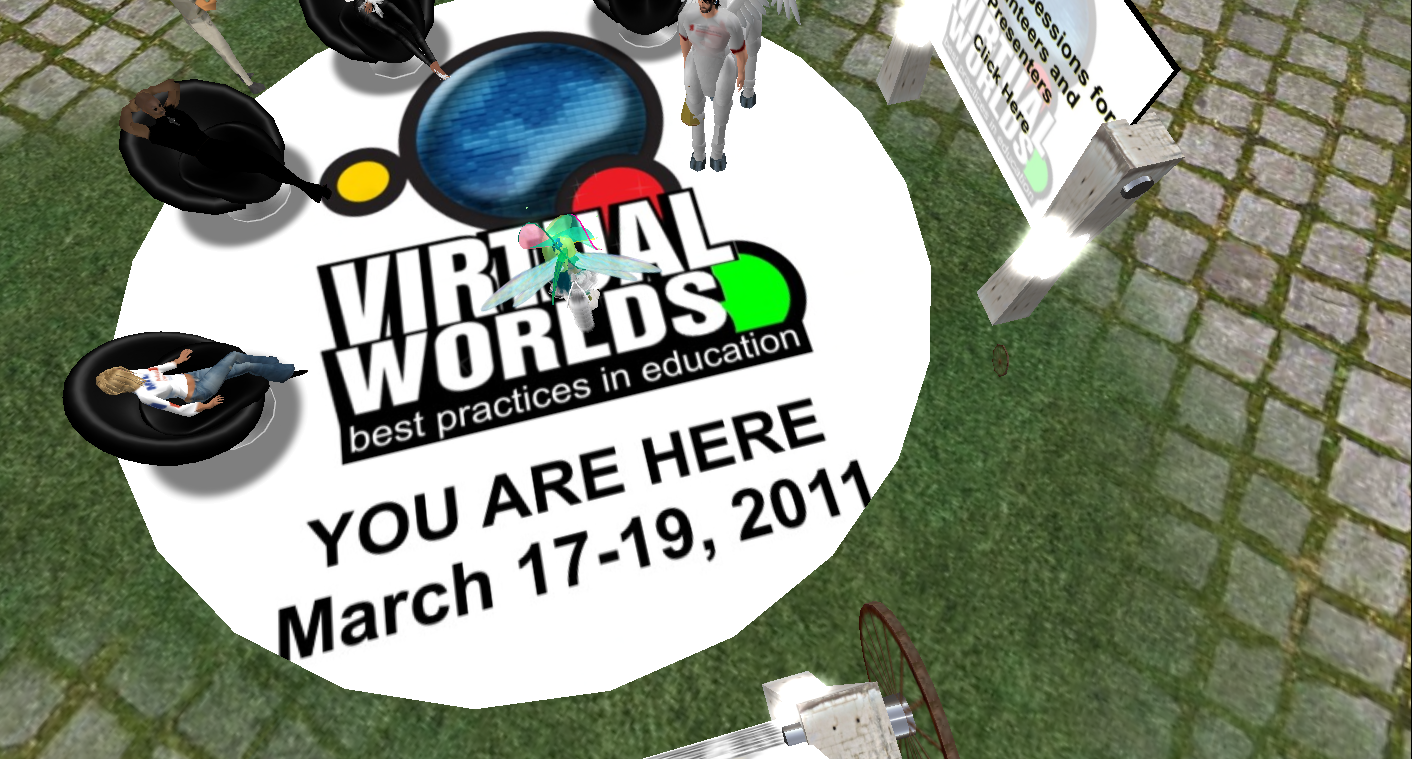
On March 17-19 the 4th annual Virtual Worlds Best Practice in Education (#VWBPE11) will be taking place in SL and other Virtual Worlds such as OpenSim, World of Warcraft, Eve Online and Club Penguin.

The VWBPE is is a community-based conference that provides opportunities for participants in all virtual worlds to share current research,  teaching, and learning practices in 3D virtual environments. This 53 hour conference will provide opportunities for sharing and further understanding virtual world technology, and will focus on teaching/learning, scholarly work, projects, events, activities and new and innovative tools for virtual education. According to the VWBPE-website this year’s conference is about people, the community, and it’s about being together;

This year’s theme is You are Here. The divide between what is real and what is virtual is a state of mind. We learn everywhere and you are already here.

Here is all around you:

  • Here is where we find the great successes and even failures.
  • Here is where we expand our borders.
  • Here is where we touch what is important to those we teach.
  • Here is where we learn and live and play.

I have been attending the conference for a couple of years as an observer, which has been very inspirational, and I highly recommend anyone interested in 3D Virtual Worlds to participate in this amazing, free event! :-)

Furthermore, this year I have the great pleasure of doing a panel discussion together with 3 SL friends and colleagues: Chimera Cosmos, Spiral Theas, and Gann McGann.
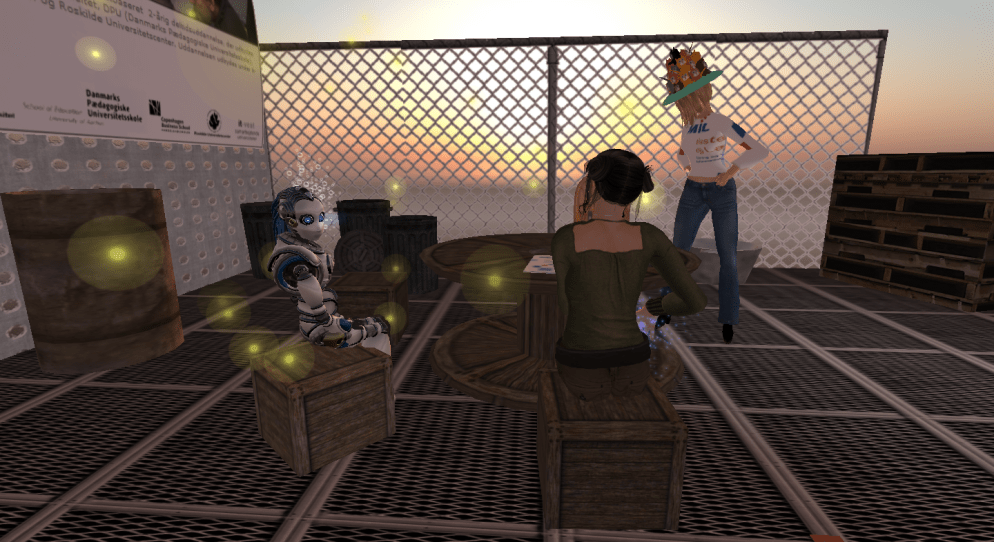

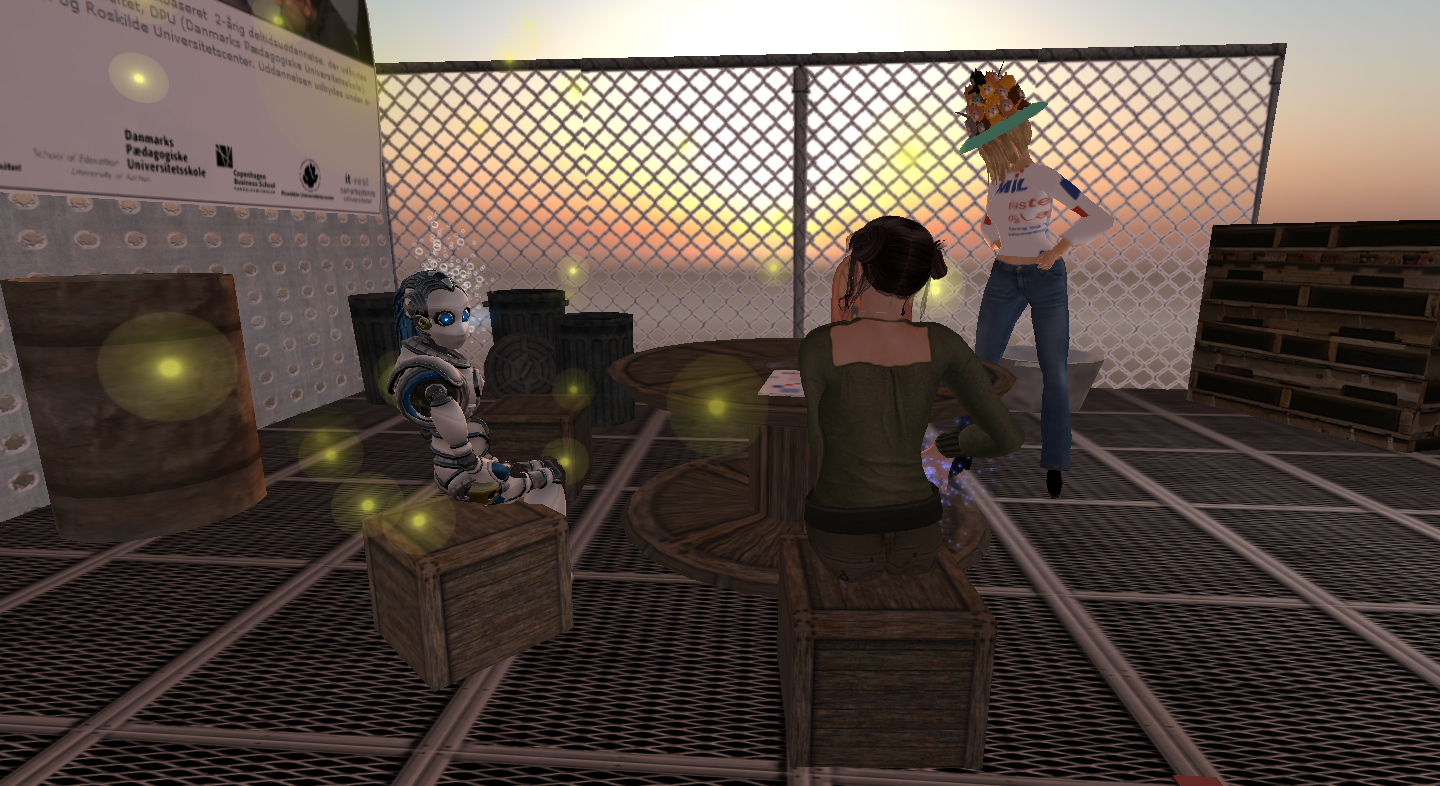
First planning session on my holodeck with Gann & Chimera

Our session is entitled: Hats, HUDs, Wands and Weather:  Building Activities for Engagement in Second Life. One of the things we all appreciate about SL is the fun and playful parts of this environment, which could include changing the avatar’s appearance and using different types of artifacts – e.g. in our first meeting Chimera couldn’t help but show off one of her magic wands ;-)
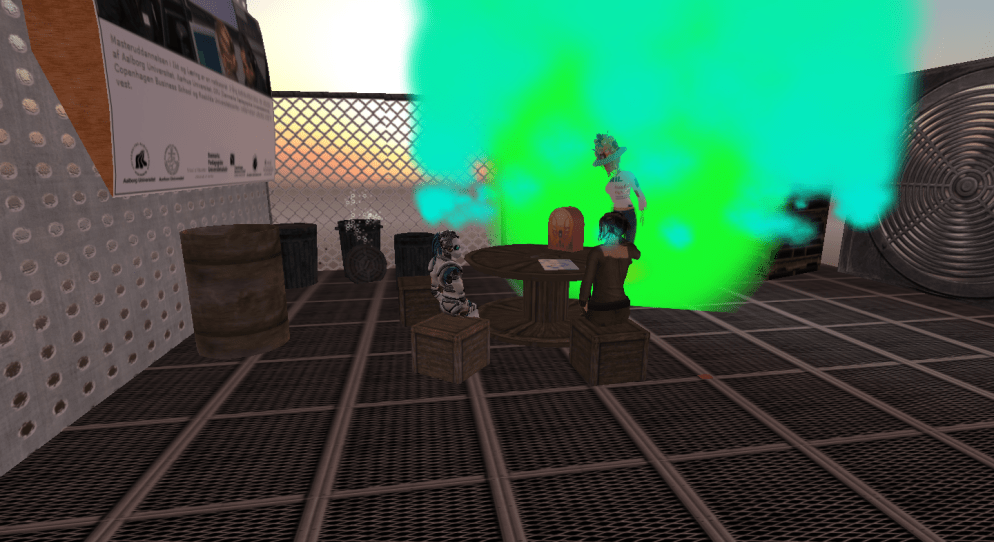

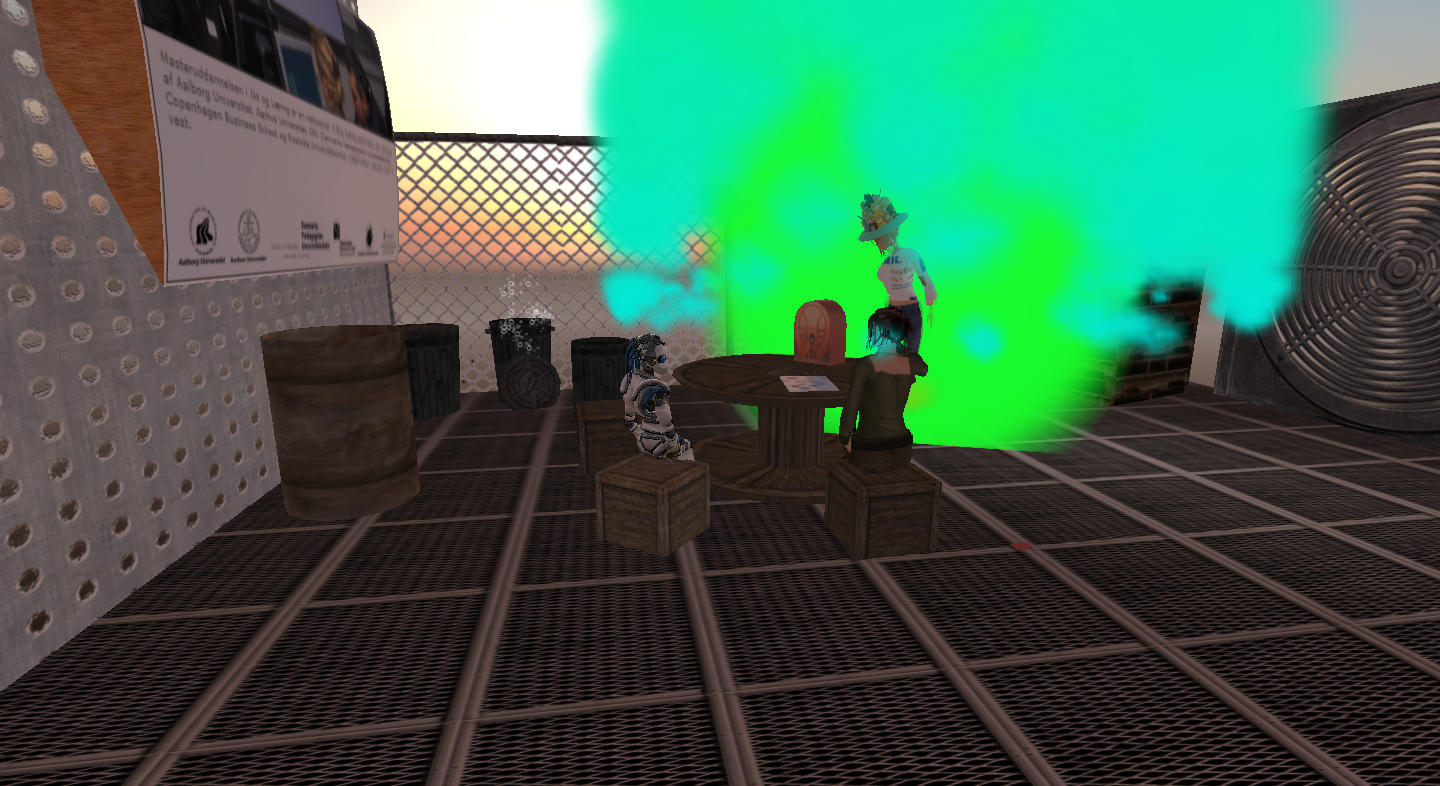
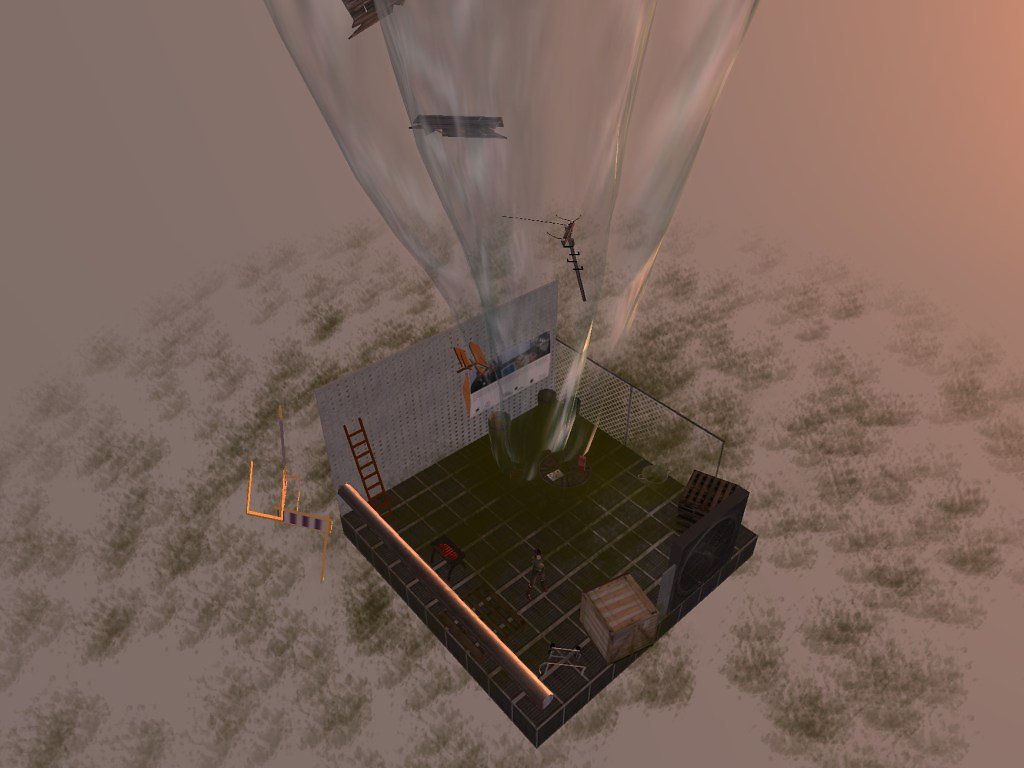
And in fact after Gann and I left, Chimera used her tornado stick on the holodeck as seen in this photo from Chimera’s KoinUp stream:


Chimera’s koinup

While the user-controlled ability to change both the environment and one’s appearance definitely is an important part of SL, we as educators are also concerned about the kind of activities that can promote, facilitate, and not least sustain engagement in teaching and learning in an environment such as SL.
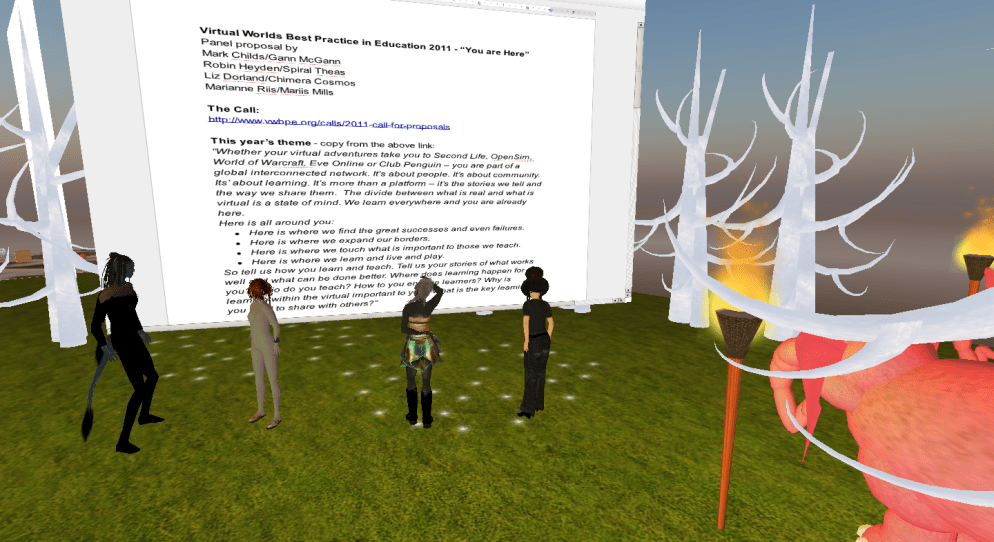

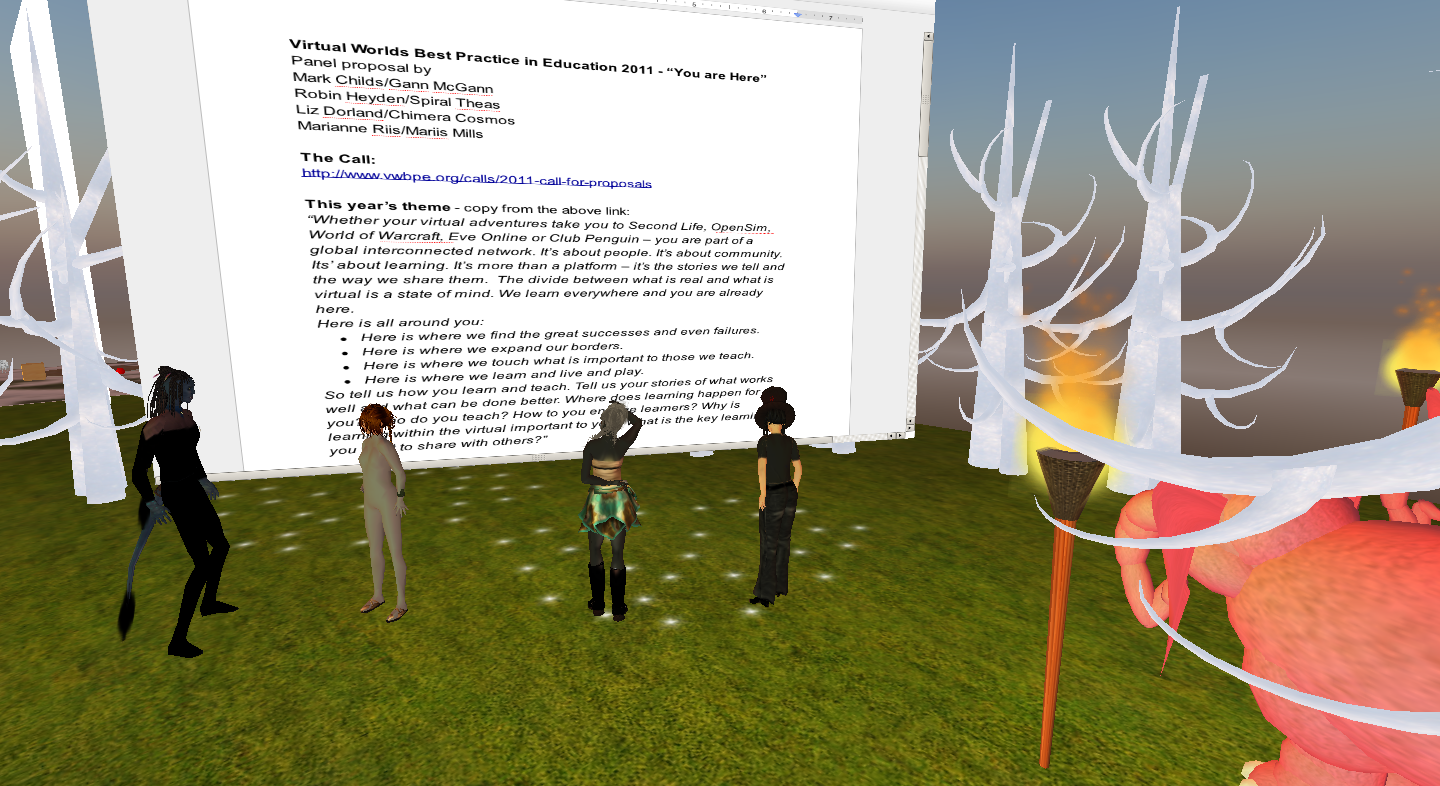
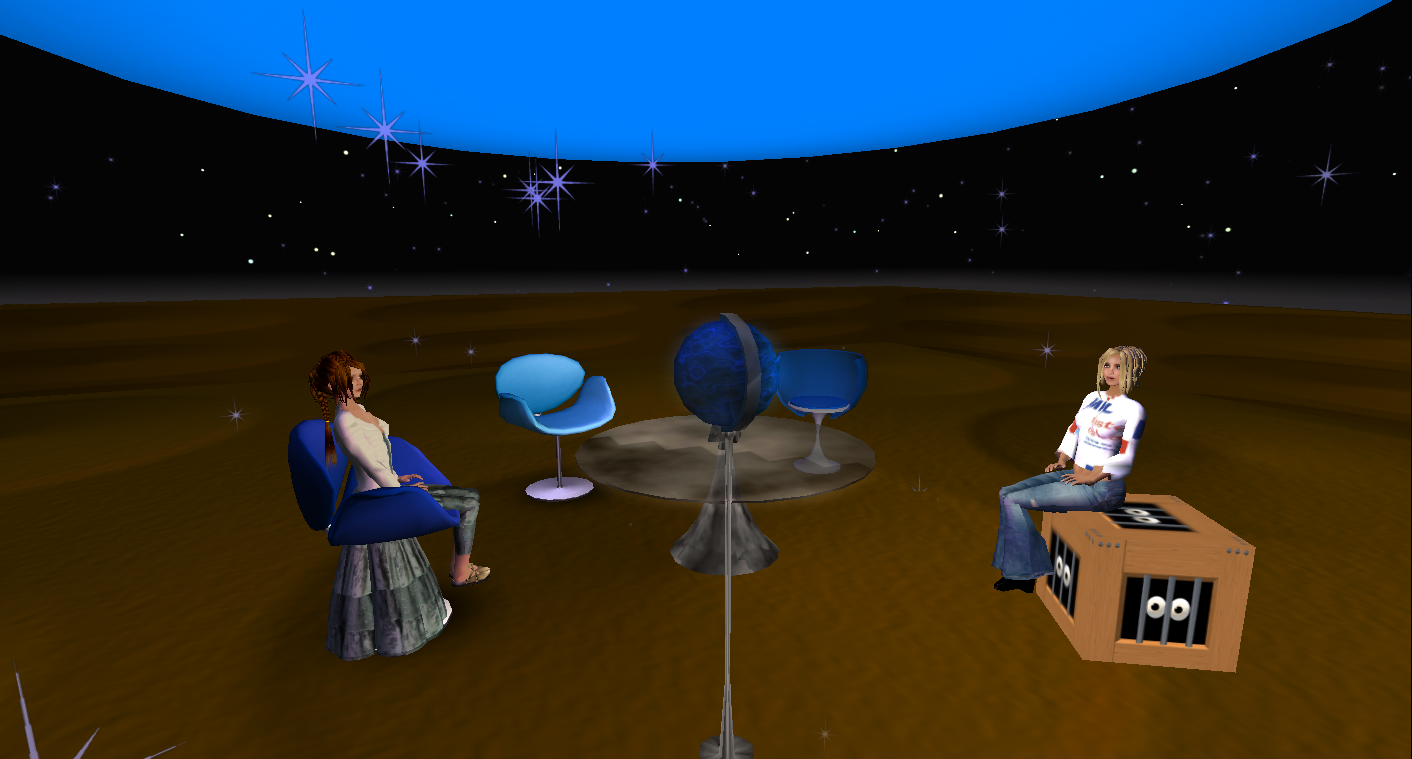
Gann, Spiral, Chimera and I discussing the call for VWBPE in our second meeting

We all have both positive and a few negative experiences with teaching in SL, and so in our panel we have decided to focus on activities that help overcome some of the barriers for meaningful, and sustained engagement in SL as stated in our proposal:

There are numerous barriers to engagement in virtual worlds. First, new residents must become familiar with the interface. Beyond technical considerations, the nature of their early experiences will determine whether and how quickly they will build an identification with their avatar and a reason to stay. Without this, it is likely that their interest in further engagement in the virtual world will lessen and their participation will drop off. A sense of presence and identity through embodiment and immersion is an important contributor to ongoing and satisfactory participation in the world and finding the motivation to continue to return until the technical and navigational thresholds are surmounted. This roundtable will discuss the essential acts, the “ah-ha” or Eureka moments, the triggering gizmos, features, activities or places that inspire students or colleagues (and have inspired us) to continue to participate.

In other words, what works to help new residents pass these technical and navigational thresholds? The speakers will share their own stories drawn from their work with students in higher education, business people, health professionals, and education colleagues. Presentations will include demonstrations and audience participation.


Spiral and I chatting under the Blue Thinking hat before our third panel meeting
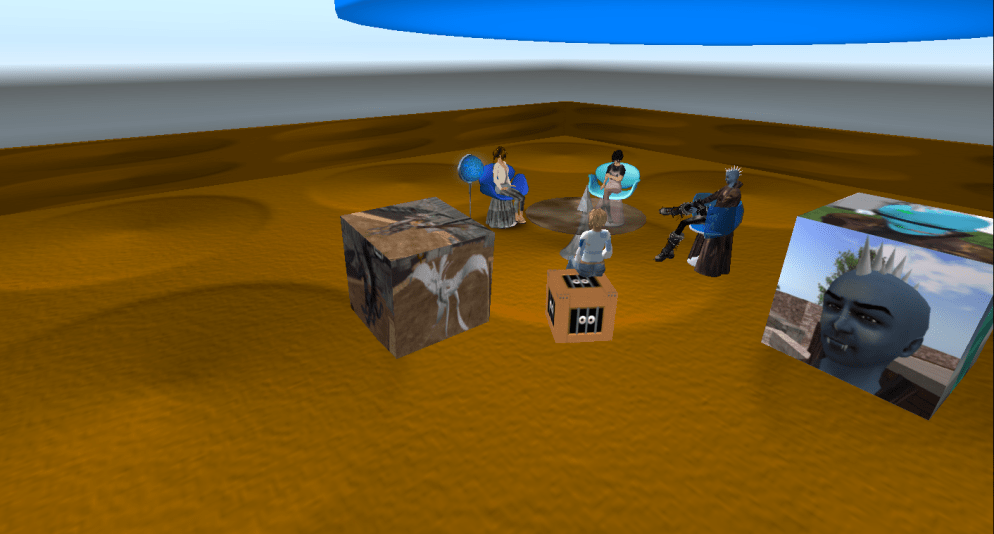

Identity issues are very important in SL – and we will be showcasing Identity-cubes as part of the session

As mentioned above Gann, Spiral, Chimera, and I will be sharing some of our experiences, but we are also very much hoping to hear from the audience, and so we hope You will join us :-)

Update
We will be presenting Friday, March 18th from 8AM-10AM SLT (16-18 Dansk tid) – Building South, Room South Auxiliary, and the rest of the schedule can be found here

Also please note that even though the conference is free, you need to register in order to participate via this link. By registering you will be helping the organizers plan out resources to ensure the conference runs smoothly and that there is allocated enough space to ensure everyone gets an opportunity to participate.

/Mariis

For inspiration here are three posts I wrote about VWBPE last year:

First day impressions

Second day impressions – part 1

Second day impressions – part 2 – this one also includes my reflections on Chimera & Spiral’s 2010 session

The Purpose of Education, Human Rights, and New Media

Recently, a really interesting initiative about the purpose of education was launched by UK educators Doug Belshaw and Andy Stewart in the social media sphere. Their plan is to facilitate a critical mass of people all talking about the purpose(s) of education, starting with 500-word blog posts and Twitter campaigns, and culminating, with simultaneous large meetings/conferences further down the line. As I understand it, this initiative has been inspired by a UK election decisive for education set to take place in 3 year’s time, but Belshaw and Stewart are aiming for an international debate, and have set an ambitious goal:

From the website: Purpos/ed

The blog initiative was kick-started on February 1st on the Purpos/ed website, and so far a number of bloggers have contributed in raising their voices and joining the debate. Some of these contributions can be found in the archive, while others may be located by following the hashtags #purposed, and #500words. Furthermore is is possible to connect through a Facebook page. If you have an interest in education this is definitely an initiative worth following.

As for my own take on the purpose of education, I’ve always been inspired by the 1948 Universal Declaration of Human Rights, and in particular article §26, (1,2);

Everyone has the right to education. (…) Education shall be directed to the full development of the human personality and to the strengthening of respect for human rights and fundamental freedoms. It shall promote understanding, tolerance and friendship among all nations, racial or religious groups, and shall further the activities of the United Nations for the maintenance of peace.

Education may be a human right, but for many different reasons becoming educated within the existing educational system is sadly not a given. Stephen Downes highlights this in his contribution with reference to his own educational path, and Lou McGill points to the challenges for kids with special needs. Unsurprisingly, many of the purpos/ed contributions echo thoughts similar to those in the declaration, the tricky part is of course how to promote, facilitate, and obtain these goals. Several authors point to new media as a means to broaden the scope of education and to tear down walls whiter these are mental, physical, or virtual. Dean Groom advocates the idea that education should extend beyond the idea of schools/institutions as being the sole places for education, whereas Fred Garnett calls for education aimed at participation.

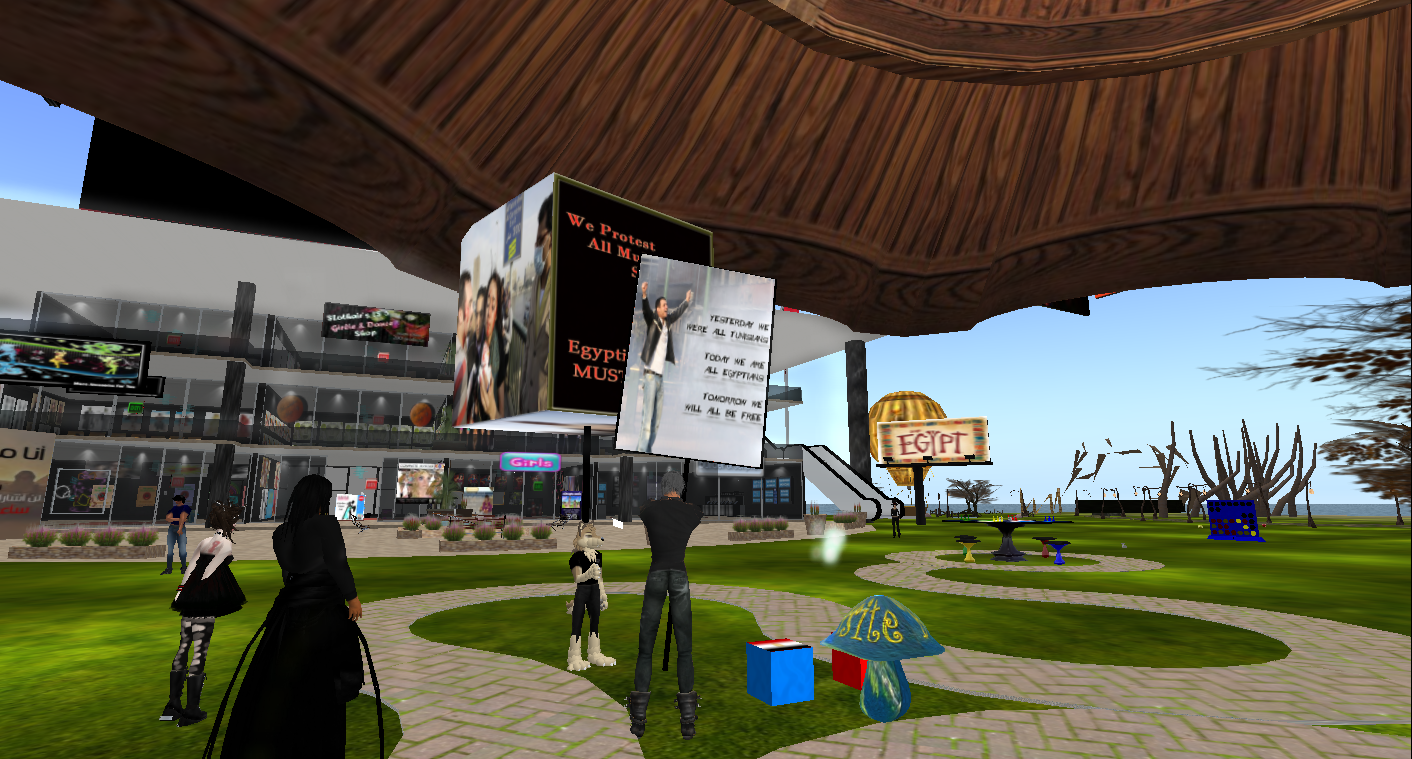
Shifting perspective to my own current research within the 3D virtual world, Second Life (SL), I see a huge potential in using this particular kind of edtech to tear down several “walls”. Ever since I first logged into SL back in the spring of 2007 one of the aspects I’ve come to appreciate most about this virtual world is the participatory affordances enabling both me and my PD-students to connect, communicate, and collaborate with people in general, and educators in particular from all over the physical world. We have been given the opportunity to meet, and discuss cross-cultural differences in education, and to interact with a variety of educational designs – all of this contributing to new perspectives on education, teaching, and learning. Informal encounters and spontaneous activities are other very positive aspects of SL, and as it is the case in many other new media, the users of SL quickly respond to current affairs – something that recently could be witnessed during the Egypt crisis. Having heard of activities on the Egyptian island I went in to have a look on Friday February 11th shortly before it was announced that Pres. Mubarak would step down.


Protesters on the Egyptian Island, Friday February 11th 2011

Hamlet Au of the New World Notes blog and Rik Riel of the “Betterverse: Nonprofits in the Virtual World” blog have covered several of these activities on the Egyptian island, and Chantal Harvey has captured some of the ambience after Pres. Mubarak’s resignation in this short machinima:

Virtual worlds have previously been used in protesting, expressing thoughts and hopes of freedom, and in general just to direct attention towards different causes as reported in Mashable by Rita J. King co-director of the Understanding Islam through Virtual Worlds project. What’s interesting here is the role not only Virtual Worlds, but new media in general play in distributing and sharing knowledge, something that also Pres. Obama noted in his remark on Egypt ; “a new generation emerge – a generation that uses their own creativity and talent and technology to call for a government that represented their hopes and not their fears; a government that is responsive to their boundless aspirations.

In a very interesting article on the correlation between social media and political changes, Charlie Beckett asks how this new media landscape could/should change the way journalists “report on revolution and feed into the post-revolutionary politics and general political communications”. As an educator I could ask similar questions about new media’s influence. I’m currently experiencing the way new media change the way we think and practice education, and I must say that I’m overall optimistic. New media bring along affordances of participation, collaboration, and ultimately of empowerment. Most importantly new media force us to rethink, reframe, and reform – and this current Purpos/ed initiative is one of many interesting ways to get involved …

/Mariis

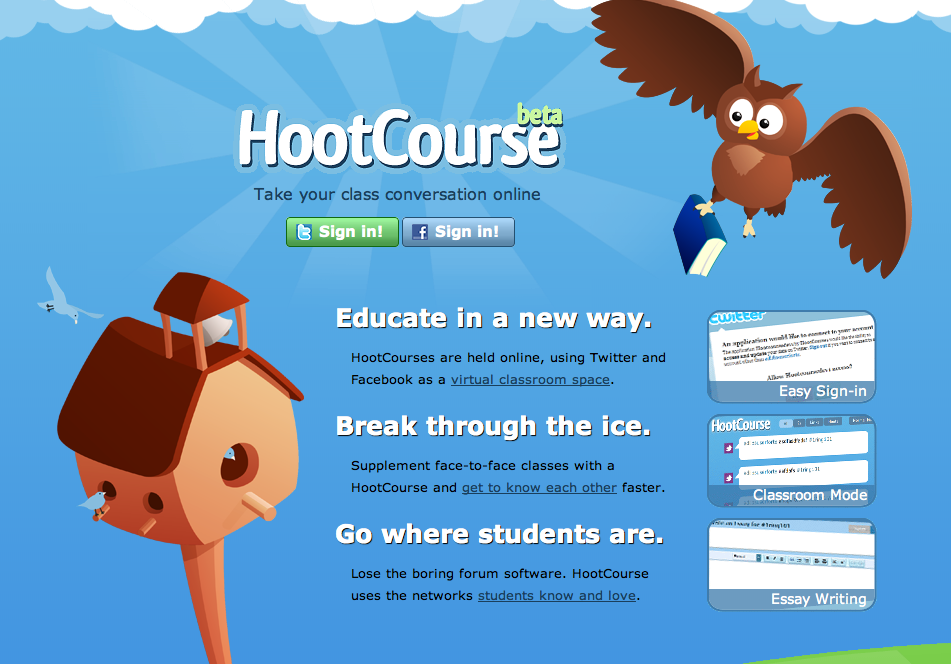
Testing #HootCourse #ToolsJam and blogging to wordpress as part of the essay feature .. I think ;-)

Currently testing the Essay feature in #HootCourse via @JennFor in #ToolsJam “classroom”. Not quite sure how this works … but HootCourse definitely look like an interesting new tool :-)

Will update this post on the blog if it works as anticipated …

/Mariis

UPDATE from within WP (because I do so like pictures!;-)

So this new HootCourse tool seems to work vey well!

I tested via a “course” called “ToolsJam” – as I understand it, courses are simply akin to hashtags, but you can make them both private and public. If you need more than 140 characters Blogger, Xanga, Posterous are also part of the toolbox.

My tweets as they appeared in the #ToolsJam course (created by @JennFor) in the HootCourse app,

in Twitter, and here’s how this post originally looked in my Tweetdeck:

It is also possible to connect through #FB, but I haven’t tried that yet. I wasn’t really planning on exploring a new tool at this moment, but a tweet from @JennFor got me interested, and I do see great potential for engaging students, and others used to (micro-) blogging and connecting through #SoMe. Will definitely test some more …

Different aspects of Being There Together

On February 1oth Dr. Ralph Schroeder of The Oxford Internet Institute will be giving a talk entitled ” Being There Together: Social Interaction in Virtual Environments” on the CAVE island at 9AM SLT.

The talk is organized by the Applied Research in Virtual Environments for Learning Special Interest Group (ARVEL SIG) as part of their ongoing in-world discussions.

This talk will be of particular interest to me given that different ways of being there together are some of the core concerns in my PhD, and the first book I read in relation to my PhD research was in fact “The Social Life of Avatars” (2002) edited by Dr. Schroeder. Since then I’ve been following Dr. Schroeder’s work, and especially some of the articles he has published in The MIT Journal, “Presence – Teleoperators and Virtual Environments“. In my opinion the different ways of being there together are closely connected to different perspectives of the perception of presence that humans potentially get when interacting with computers (the HCI perspective), and in this regard I think it is possible (at least in an analytical sense) to distinguish between

  • a sense of being – related to self-presence
  • a sense of there – related to tele-/or virtual presence
  • a sense of togetherness – related to co-presence

In so far as you define a “virtual environment” to include the affordance of creation, I would add a sense of doing, which then in turn also could relate to doing together (co-creation), and then could relate to social presence. However, these are my preliminary thoughts, and it is important to stress that there is no consensus in the literature as to neither definition nor use of the terms of presence. When I’m done with the final analysis of my data, I’m hoping to be more articulate on this matter. An interesting challenge here is also that I’m hoping to connect Wenger’s (1998) 4 components of learning (practice, community, identity, and meaning) to the different aspects of presence, and this will be tested in my analysis. Regardless of this outcome, I find it important to emphasize that when dealing with virtual environments such as 3D virtual worlds doing together becomes just as – if not more – important as being together. And I have a strong feeling (not very academic yet, I know ;-) that becoming together may be even more important … anyways, these are some of the issues I’m currently struggling with in my PhD-work.

As I understand it, Dr. Schroeder will focus on results from his latest 2011 book (with the same title as the talk) “Being There Together. Social Interaction in Shared Virtual Environments“, which I haven’t read yet. Nonetheless, Dr. Schroeder’s slides for the talk have already been put up for viewing on the island, and judging from these, the talk will include some of the ideas Schroeder expressed in a 2007 paper entitled “Virtual Environments and Other Media for Being There Together: Towards a Convergence of Technologies, Uses, and Research Agendas.” In this paper Schroeder compares “virtual environments” (VEs) with three other technologies: 1) videoconferencing, 2) online spaces for socializing and gaming, and 3) online awareness and social networking technologies. One of the things that puzzle me about this is the way Schroeder defines “virtual environments”:

VEs are defined as providing the sensory experience of being in a place other than the you are physically in, and being able to interact with that place [1, 2] A shorthand is to say that these are technologies for ‘being there’, and multi-user VEs for ‘being there together’ [3]. (Schroeder. 2007: 1 – see original for references)

And in the video below Dr. Schroeder repeats at least the first part of this definition of VEs :

It is in fact not so much the definition that puzzles me, but rather the way Dr. Schroeder uses it to differentiate between VEs and other media. In the 2007 paper Schroeder summarizes his comparison of the four technologies in this table below:


Figure 1 from Schroeder. 2007:5

When looking at this table actually a couple of things puzzle me. First of all, I’m wondering what kinds of technologies Schroeder would label as VEs? In the above mentioned 2002 book Schroeder links VR and VE tech closely, and that could perhaps explain the “face with limited expressiveness, and body” in the Appearance cell, but I’m honestly not sure … Secondly, when I look through my SL-avatar-based glasses, I guess a medium like SL would best fit in the column of “Online spaces for gaming and socializing”, but again I’m not sure. However, if this is where Schroeder would place SL it brings forward new questions/comments. As a general comment I would say that SL fits the definition of a VE in that it also gives the user the experience of being in another place, being able to interact in this place, and of being there with others. Schroeder does in fact point to an increasing overlap between different technologies, and so I wondering why he doesn’t reserve VE as an overarching concept or definition. In more specific terms related to SL I would comment on some of the claims in the column;

  • ad. Realism: judging from the rest of the paper I think Schroeder mainly refers to fidelity here, which would explain the “low” claim. However, whiter or not something is perceived “real” in psychosocial terms remains highly controversial.
  • ad. Object and environment interaction: here I’m simply not sure what Schroeder means by “restricted field view” – at least not if it refers to the user’s control over different POVs?
  • ad. Communication and interaction: while it is true that much communication in SL is synchronous (text/voice chat), the asynchronous aspect should not be neglected, and this is something that has improved with the Shared Media feature that enables users to communicate in web-based systems outside SL from inside SL, and this of course does not have to real-time.

I’m fully aware that a general comparison can’t and shouldn’t capture more system specific nuances, and Schroeder recognizes that this comparison may “be drawn too sharply – in reality many of them overlap” (2007:2). Even so, I’m really looking forward to meeting Dr. Schroeder in-world later this week, and I’m hoping that I get the chance to ask him to elaborate on some of these issues – and meanwhile I’m impatiently waiting for his new book to arrive :-)

/Mariis

Reference

Schroeder, R. (2007) Virtual Environments and Other Media for Being There Together: Towards a Convergence of Technologies, Uses, and Research Agendas. Proceedings of Presence 2007, Barcelona, Spain, October 2007.