CCK08 – Lessons Learned (2)

This post is about the Massively Online Open Course on Connectivism and Connective knowledge (CCK08) facilitated by Stephen Downes and George Siemens. This week I couldn’t attend any of the SL cohort meetings, so I decided to participate in the weekly Ustream ® session for the first time. This meant that I had to face a couple of learning challenges.

1) I’ve never used Ustream, so I had to figure out how to in a technical manner, but fortunately it turned out to be quite intuitive and user-friendly, and the sound quality was pretty good.

2) I also had to get accustomed to this particular synchronous way (speak combined with text chat) of communicating. I’ve been using video conferencing for a couple of years now, but different systems and mainly as facilitator. There were between 47-54 participants while I was logged in. Speakers were Siemens and Downes, and Dave Cormier moderated the discussion – also by asking some of the questions posed by the participants in the chat. Ustream’s video option wasn’t used, which didn’t bother me since I actually find small pictures of people’s heads constantly shifting very distracting. Compared to my text chat experience last week, I found this session easier to follow. I think Cormier did a really good job, it’s not an easy task to moderate :-)

3) It was the first time in the CCK08 I meet participants outside my more familiar SL cohort, and I was a bit concerned that I might feel somewhat disconnected, but I didn’t. This time the context was unfamiliar, but I recognized the voices of both Siemens and Downes, and I’ve had the opportunity to study more of this week’s course materials and I also have some previous experience with this week’s topic (Networks). In the chat I suddenly recognized Jenny :-), who commented on my CCK post last week, but otherwise the usernames represented complete strangers. There was at least one more Dane, Ivrig (Eager), but I have absolutely no idea who that might be? Anyway, I did end up feeling connected, but not in the same sense as last week. I think Jenny’s thoughts on the difference between Network and Community as expressed by Wenger could apply here:

In the words of Etienne Wenger, ‘every community is a network, but not every network is a community’. In a community ‘there is a level of identification that goes beyond degrees of connectedness.’

There’s no doubt that I identify more with the SL cohort than the rest of the CCK participants, but I have a feeling that as the weeks pass by I’ll get more and more acquainted with the non-SL participants and ideally they too can become a valuable community of learning practice. Some of us did ask for Siemens’ and Downes’ take on the distinction between networks and community, but we will focus on that later on in the course, so more on this topic will follow ..

On a completely different topic, there is a question that keeps coming back to me regarding the epistemology of Connectivism. I’m not sure it will make much sense to others, since I find it hard to articulate, but I’ll give a shot – if nothing else documenting is a way of keeping it alive!

I don’t mean to suggest that I have found an epistemological truth in other theories, I don’t even think such a truth exists – the genesis of knowledge is far too complex, but I am however very inspired by my second PhD supervisor, Janni Nielsen’s thoughts on this. According to Nielsen we perceive and generate knowledge via 3 different domains;

  1. Senso-motoric
  2. Emotions
  3. Symbols

No hierarchy intended by the numbers, but 1 and 2 also constitute the domains for tacit knowledge, and when studying Connectivism I find it hard to recognize these domains. I do appreciate Siemens’ distinction between Neural/Biological, Conceptual and External Social and I do think there are some similarities between these types of networks (Siemens)/domains (Downes) and the above mentioned. But … where is the Body in Connectivism, is it just a Cartesian container for the Brain (the Neural) or how is the Biological to be understood –and how do we understand these questions in relation to technology and especially the Web. Would it be plausible in relation to Connectivism to state that technology can provide a perception of embodiment ..

Hmmm !? :-( … learning really can be challenging. Embodiment is a core concept in my PhD project, so I do have to figure out what to think of these questions. Luckily I have 2 ½ years left to do so.

/Mariis

Classroom Research and Didactics

Next week I’ll be attending a PhD course entitled ”Classroom Research and Didactics” at The Danish School of Education, Aarhus University. All Danish PhD students must participate in PhD courses equivalent to a minimum of 30 ECTS points, and with this course I’ll hopefully earn 5 points.  Since one of the courses I facilitate at the Master Programme in ICT and Learning (MIL) is about Educational Design and ICT, and given that my primary case in which I’m doing part of my PhD research is that course, I think this PhD course will be especially relevant for my project.

The course is facilitated by Professors from The Danish PhD Programme on Didactics and Curriculum Research. Coming from another Danish University and another PhD Programme (HCCI), it will be quite interesting to learn how they define central pedagogical concepts/terms and what they define as relevant research methodologies. Even before the course has started I’m interested in the terms from the course title, and according to the course description (in Danish only) they could be defined as follows:

·         Classroom – an institutional room.

·         Didactical oriented classroom research – emphasizes the relation between on one side didactically founded goals and intentions and on the other side the actual practice in the classroom.

Part the course literature is about “belief research” implying that teachers’ underpinning beliefs can explain much of the actual classroom practice, and a course objective will be for us to examine and probably challenge our pre-understandings. In trying to do so, I’ll focus on the classroom term in this first post on the course.

Classroom
It is my understanding that the term denotes a tradition within Danish Educational Research, and it is widely used both by researchers and practitioners especially in what I think would be equivalent to K12. However, I don’t think the term is appropriate when describing my own project.  At least to me, the classroom term brings associations of a strictly physical setting, a specific way of organizing the teaching and learning processes, and the term “class” indicates young learners.

My course is blended with approximately 5 hrs. face-to-face confrontation out of a total of five weeks, which means that the vast majority of the course is conducted online in both a traditional 2D learning platform (FirstClass®) and in the 3D virtual world, Second Life ® (SL). Room is simply too restricted a term to describe the setting, and I do prefer learning environment. When emphasizing learning, I do realize that there’s a risk of “forgetting” the teacher/facilitator, but since the term also indicates a very important and much needed paradigmatic shift from almost exclusive focus on the teacher/teaching to the learners/learning processes in educational research and pedagogy in general, I think this term is acceptable – at least as part of a working terminology.

When examining teaching and learning in 3D virtual worlds (and perhaps to a lesser degree in 2D settings) the whole concept of context (room, space, place, environment etc.) becomes highly relevant. The 3rd dimension is, in my opinion, what make these contexts both particular and interesting seen from an educational perspective. So this is something I will return to again and again during my project.

I do appreciate the institutional character of the classroom concept, and my focus is also on teaching and learning in a formal, university setting. However, this doesn’t mean that informal learning processes will be neglected in my own research. In fact, my pilot study (22 participants 5 weeks in SL, fall ’07) indicated that the 3D world setting amplified the students’ motivation and engagement for connecting and collaborating in more informal relations – also with other residents. Here I see another argument for not restricting my terminology to a room metaphor.  If SL is recognized and truly appreciated as a world the implications are numerous, and the complexity of the phenomena becomes apparent.

The term class is used in describing an entity of learners e.g. in a concrete course, but it is a term that we primarily reserve for describing organization in K12, which also is why we would call the learners “pupils” in that context, whereas learners at university level typically would be called “students”.  The learners in my course are adults, and we usually refer to them as students. The distinction between pupils and students may come across as academic babble, but I do think it is relevant in the sense that this distinction also indicates a difference in the roles and responsibilities of all parties involved in the teaching and learning processes.  The term student is actually debated quite often at The MIL Programme, because the term still indicates what you might call an old-fashioned view on the power balance in the learning situation and because there still is a passive, transfer element associated with the term.  So quite often we resolve to call our learners participants.

As organizing principle the term class tends to describe a situation where the whole entity of learners is addressed simultaneously, and apart from our 4 yearly face-to-face seminars, we rarely use this type of one-to-many communication. The MIL Programme is based on a Problem Oriented Project Pedagogy (POPP), which I will elaborate on in future posts. For now it suffices to say, that it basically means that we organize our participants in small groups working and theorizing on real life problems. Connected to these groups will be one or several supervisors practicing different roles/methods ranging from instruction to facilitation depending on the needs of the groups.

My initial critique of the term classroom may be too one-sided, I may not be aware of the current status of the term within classical educational research (which is how I would characterize the research at The Danish School of Education when comparing it to my own university), so I’m looking forward to discussing this and learning more during the course …

/Mariis

Metanomics Professor Bloomfield visits Denmark

Professor Robert Bloomfield, Beyers Sellers in-world, from Cornell University, Johnson Graduate School of Management is visting Denmark as guest of the Roskilde University research project “Sense-making strategies and the user-driven innovations of virtual worlds”.

In-world Bloomfield is the host of the highly popular weekly tv-show “Metanomics”.

The term Metanomics describes the study of economics and policy in the “metaverse” of online virtual worlds. Metanomics focus on economic issues in virtual worlds like Second Life or There. Metanomics examine how residents of these online places establish, manage and regulate their enterprises, and how academics study and educate these communities, and use these virtual worlds as research laboratories.

This Fall season will be kicked off live from Roskilde Universty on Monday September 22nd at 21:00 Danish time (noon SLT).  The show will feature the following guests:

Metanomics opens it’s second year! Live from Copenhagen at Noon on Monday, September 22, we turn the tables when Benjamin Duranske, author of Virtual Law and editor of virtuallyblind.com , poses questions to Metanomics Host Robert Bloomfield about his experience producing the first year of Metanomics. We revisit the distinction between the three major subfields of virtual world economies — immersionist, augmentationist, and experimentalist — as we examine the inner workings of the weekly multi-world virtual event. Sisse Siggaard Jensen will be “On the Spot” of Roskilde University to talk about her virtual worlds research project and the many organizations collaborating to bring virtual worlds to life in Denmark. And Robert Bloomfield will close out the show with commentary about this week’s dramatic financial events and their relationship to the metaverse.

Check out Heidi Ballinger‘s post on Bloomfield’s visit, and have a look at Metanomics’ homepage – there is more than 40 shows archived for you to watch, and information on how to watch live shows.

/Mariis

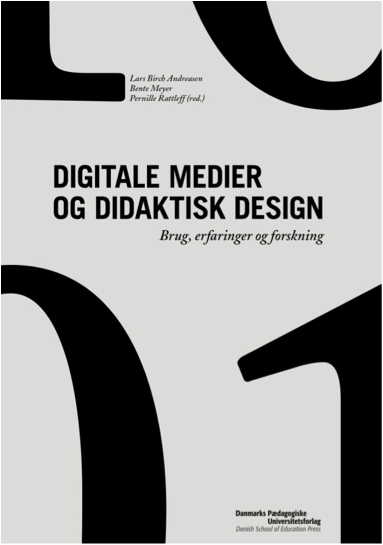
Book release: Digital Media and Didactical Design

Today we have a book release; ”Digital Media and Didactical Design – use, experiences and research”. Together with Lone Dirckinck-Holmfeld and MIL alumni Torben Iversen, Ulla Konnerup, Merete Lindemann, Steener Oxbjerre, Torben Pihler and Dorthe S. Schmidt I’ve written an article on collaboration in virtual learning environments based on Master thesis work. It is in Danish though, and so will the rest of this post be ..

Antologien er redigeret af Lars Birch Andreasen, Bente Meyer og Pernille Rattleff og har bidrag fra en række forskere, der diskuterer deres erfaringer med og forskning i brug af digitale medier i undervisnings- og læringssammenhænge.

Antologien er dedikeret til professor Birgitte Holm Sørensen som hyldest til hendes arbejde og betydning for forskningen i medier, it og læring i de seneste årtier.

I denne anledning er der reception på DPU torsdag d. 25. september 2008 kl. 16 i vandrehallen (lokale D170), Tuborgvej 164, 2400 København NV.

Alle er velkomne!

Kort anmeldelse i Folkeskolen.dk kan læses her

/Mariis

Pernille Rattleff om bogens tilblivelse

NoEL visits “Percipitopia”

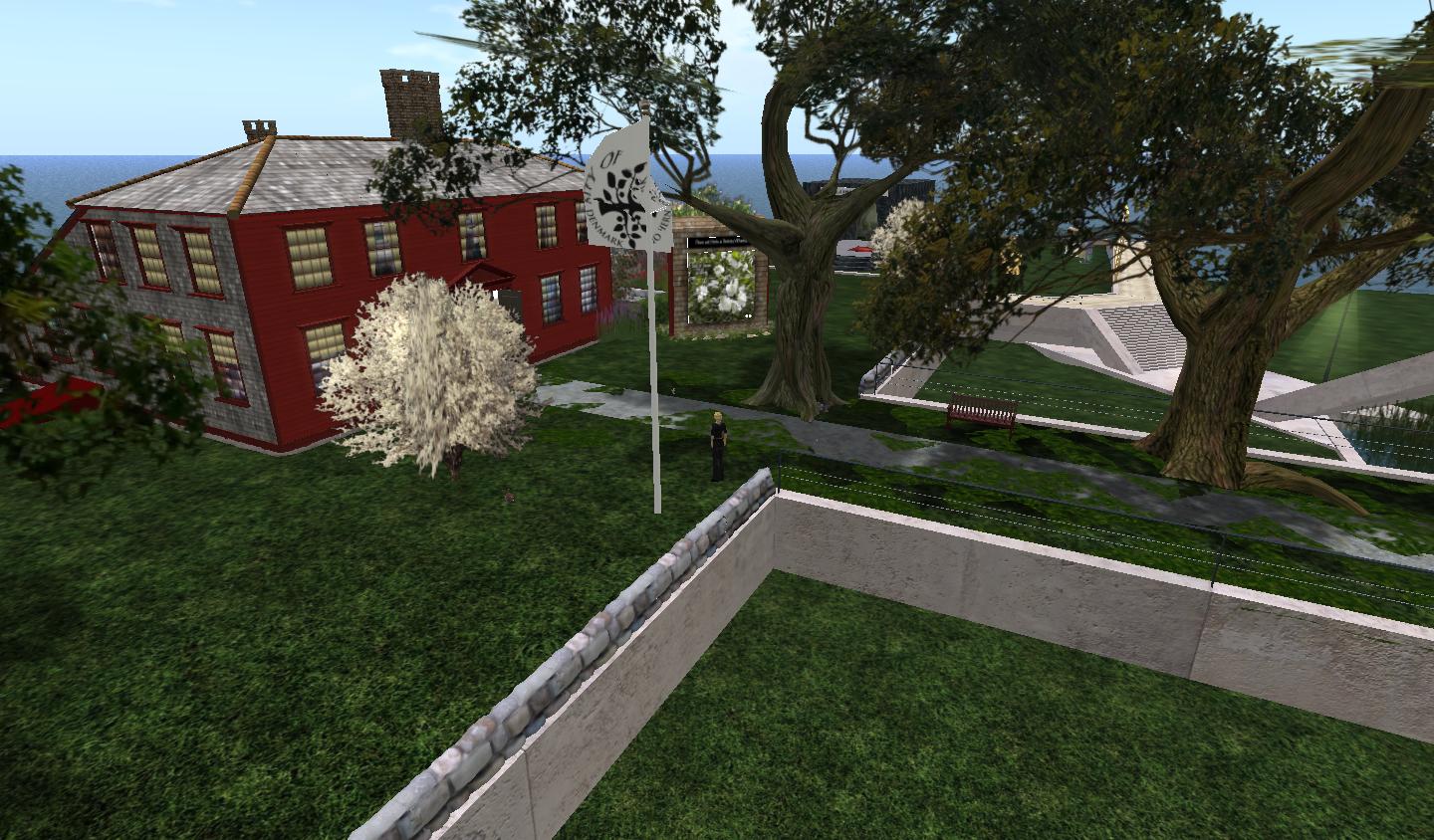
On Monday September 22nd NoEL will visit Gunhild Soderstrom and Bitterleaf Menges on their island, Bifrost property of University of Southern Denmark (SDU).

Cynthia M. Grund (alias Gunhild Soderstrom and Associate Professor of Philosophy at the University of Southern Denmark, SDU) and Jesper Pilegaard (alias Bitterleaf Menges and SL-Developer) will lead the NoEL group on a tour of Percipitopia and SDU-SL.

About the tour:

SDU-SL is the virtually real campus of the University of Southern Denmark, of which Percipitopia is an extension. Percipitopia takes as its point of departure a “virtual Whitehall” in which visitors are introduced to the ideas of Irish philosopher George Berkeley, and from which further examination of philosophical issues and the history of philosophy is facilitated. The actual Whitehall was Berkeley’s American home 1729-1731, and now functions as a museum for his life and work. Berkeley (1685-1753) is best known for his doctrine of immaterialism, the view that the objects of perception have no extra-mental existence, that reality consists solely of perceivers and perceptions. While Scholar in Residence at Whitehall during July 2007 and July 2008, Cynthia M. Grund experienced firsthand the positive influence which authenticity of setting exerted when teaching visitors about Berkeley, his philosophy and the Enlightenment. Percipitopia is being developed cooperatively by Gunhild Soderstrom and Bitterleaf Menges. Percipitopia seeks to build upon Grund’s experiences with research and teaching in a real-life museum context by experimenting with the notion of the teaching museum in a virtual context.

For 2 recent papers on the project, please see

As an added bonus, the tour will be concluded by teleporting to Mercantec-SL in order to see how the needs of this sort of educational institution may be met in Second Life. Bitterleaf Menges – who is responsible for the look and feel of SDU-SL’s main campus – has just put the finishing touches on Mercantec-SL.

We have to meet Gunhild and Bitterleaf at 20:00 (11 AM SLT) at the town square in Wonderful Denmark to socialize and test sound settings – see in-world notice for further landmarks and info.

/Mariis

If only Danish-speaking avatars show up, the tour will be conducted in Danish; if any English-speaking avatars are present, we will be happy to conduct the tour in English.