Thursday June 11th a former MIL student, Cecilie Aurvoll had invited me to present my SL project at the UNINETT 2009 conference in Norway. Unfortunately I was unable to attend IRL, so we decided that I should do my presentation from within SL.
Obviously to make such a presentation you need an on-site mediator who’ll be able to log in-world and interact/communicate so that the audience gets an impression of the real time possibilities and challenges. It was the second time I presented SL at a conference in this way and even though I think it it’s a good idea, I also think it’s easier said than done – at least I’ve learned a few valuable lessons.
The first time I did this kind of presentation one of my students, who together with the rest of his group had been studying SL for several months and therefore had quite a lot experience with SL and its functionality, acted as mediator. During this session we had an ongoing voice conversation and I knew that I could easily direct/instruct him (e.g. ask him to interact with objects) and just in general ask him to show the audience different things on his screen. The in-world locations we visited were places where the student and I had been before and he instinctively knew where to place his avatar and how to use his camera for the audience to get the best view. From the feedback we got on this session it was evident that especially the ongoing voice conversation and the interaction between our avatars and in-world objects left the audience with a reasonable impression of SL.
The scenario for the second presentation at the UNINETT conference was somewhat different. The mediator was a local technician whom I didn’t know but only met shortly in-world the day before where he told me that his experience with SL was limited. This is by no means a critique of his work during the session – I actually thought he did very well, but there were some differences compared to the first session. During the session we were accompanied by Cecilie and one of her friends, and since they both were located in different RL locations I hope we managed to show how SL can be used as an alternative to more conventional meeting tools. However, because I was unsure of the mediators ability to use different functionalities I hardly asked him to do anything, which in hindsight made his interaction (projected to the audience) rather passive. Ideally the session could have been rehearsed in real time beforehand but how often is that realistic? I’d made a manuscript, including landmarks and points to be aware of for both sessions, and for future presentations it probably would be a good idea to share this with the mediator in advance instead of just verbally expressing my intentions.
Another difference was related to the communication. Not entirely certain that I would be able to understand all their Norwegian I’d recommended that they communicated mainly by text, while I used voice. I also thought it would be interesting to show how the voice-text combination usually works very well. Voice presentations with texting audience are common in-world, I’ve attended many such sessions and so far I’ve found it to be both satisfactory and engaging. I did forget one crucial point though; the difference in perception when you’re immersed respectively nonimmersed. When I watch the recording of the session it strikes me as being pretty boring listening to my avatar talking, while text pops up occasionally on the screen. From the view of the outsider it almost comes across as traditional one-way communication – at least that’s my sentiment and even though I don’t know how the audience perceived it, I would recommend mutual voice in the future.
Despite these challenges I do find this way of presenting SL to be a viable alternative when RL presentation isn’t an option – I still just have a lot to learn ;-) In fact I think presenting SL via SL often is better than flat 2D presentations, but it depends on the purpose and it is a different story …
/Mariis
BTW; for those who understand Norwegian, Cecilie and her colleague, Kristine Sevik wrote an interesting article on the educational potential of Virtual Worlds for the conference.
The Networked Learning Conference is an international, research-based conference. Since its inception in 1998 the conference has developed a strong following by international researchers. In addition it is well supported by practitioners, managers and learning technologists interested in contributing to and hearing about research in this area. The conference is considered a major event in the international ‘technology enhanced learning’ conference circuit. Conference papers are peer reviewed by international researchers in the field, and published in proceedings and online.
Keynote Speakers
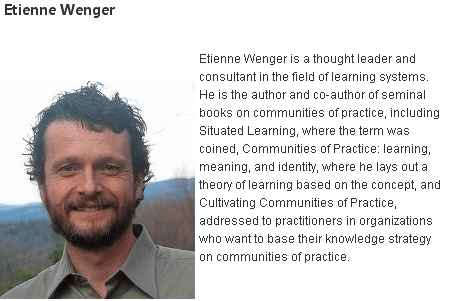
The 2010 conference features keynote presentations and discussions by two leading international researchers: Yrjö Engeström & Etienne Wenger.
Conference themes
The conference is an opportunity to participate in a forum for the critical examination and analysis of research in networked learning i.e. learning and teaching carried out largely via the Internet/Web which emphasizes dialogical learning, collaborative and cooperative learning, group work, interaction with on-line materials, and knowledge production.
Papers critically reporting on the results of research and evaluation in Networked Learning are invited on the main themes of:
Understanding, Designing and Facilitating Learning in a Networked World
Theories and Methodologies for Research in Networked Learning
Impact on Learning of Networked Technologies
Learning in Social Networks and Networked Learning
Participation and Alienation in Networked Learning
Embedding Networked Learning in Public and Private Organizations
Formal and Informal learning in Networked Learning
Work Based Networked Learning and Knowledge Management
Problem Based Networked Learning
Practice Based Research for Professional Development
Issues of Social Justice and Social Responsibility in Networked Learning
Globalization and Interculturality in Networked Learning
Networked Learning and International Development
Conference papers will be peer reviewed by international researchers, and published in electronic proceedings and online. The conference steering committee will be supporting symposium organizers in publishing selected papers in special issues of refereed journals.
Submission date
Last date for submission of full papers for review: Friday 13th November, 2009
Networked Learning:
learning in which C&IT is used to promote connections: between one learner and other learners, between learners and tutors; between a learning community and its learning resources.
Questions about the conference?
Please note that I’m not personally involved in the organization of this conference – questions should be directed to NLC Committee Administrator, Alice Jesmont, Educational Research Department, County South, Lancaster University, Lancaster. LA1 4YD. UK
Symposium on Second Life in networked distance education
I would like to use this opportunity to invite 2-3 other distance educators using SL to participate in creating a suggestion for a symposium on the use of SL in networked distance education – if this has caught your interest please contact me for further elaborations in-world or on regular e-mail: mil01mr@hum.aau.dk
I’m hoping to see many Danish and International colleagues at this conference :-)
On Wednesday, January 21st I participated in a Master Class on Learning 2.0 and Knowledge Media at Aarhus University.Terry Anderson (Athabasca University) and Simon Heilesen (Roskilde University) were guest lecturers, while my MIL colleagues Christian Dalsgaard, Jørgen Bang and Elsebeth K. Sorensen (Aarhus University) served as moderators. Six Master- and PhD Candidates from different Danish Universities besides me participated, four of us giving short presentations of our projects.
Anderson gave an interesting presentation entitled “Overview of Research Methodologies for Social Software Research”, which initiated quite a discussion on research methodologies especially within educational research. Anderson was critical of educational research asking what results in fact had been able to instigate real change in educational practices. This lead to a critical overview of three dominant research paradigms respectively Quantitative, Qualitative and Critical. Anderson quoted a study by Mary M. Kennedy (1999):
The findings from this study cast doubt on virtually every argument for the superiority of any particular research genre, whether the criterion for superiority is persuasiveness, relevance, or ability to influence practitioners’ thinking. (from Anderson’s presentation above)
According to Anderson, who also is the director of Canadian Institute of Distance Education Research (CIDER), there is a need for development of new research strategies emphasizing possibilities for innovation and change. Anderson pointed to Design Based Research (DBR) as a potential strategy. At ELL we have a strong tradition of employing Action Research (AR) based strategies, including DBR, which in my point of view is a variant of AR. Both strategies are:
Iterative
Process and utility oriented
Intervention driven
Collaborative
Multileveled
Theory generating
However, there are at least two major differences between AR and DBR, namely the role of the researcher and the role of theory. In DBR the researcher works closely together with the practitioners, whereas in AR – especially in educational research – the researcher quite often also is the practitioner studying his/her own practice as a participant/insider. In DBR the role of theory is clearly defined as the point of departure of the research process:
Design-based researchers’ innovations embody specific theoretical claims about teaching and learning, and help us understand the relationships among educational theory, designed artifact, and practice. (DBRC.2003:5)
In AR theory isn’t necessarily applied from the beginning of the research process but to a higher degree grounded by the practice in the different research cycles, thus making it a more open strategy. Still, in claiming this I want to stress that there are many different takes on AR strategies. See Raelin (1999) for a good overview of different action based strategies.
Heilesen proceeded with another interesting presentation on “Learning 2.0 – Conditions and potentials of the social web”. There are so many comments to be made on this topic, but one of the issues Heilesen addressed was the potential of using new digital social technologies as means to change conventional conference participation from a typical closed and time limited event to a more open and continuous activity – exemplified by the MetaverseU conference at Stanford, February 2008 (where both Heilesen and I participated ;-). Anyone who has participated in RL conferences knows that it can be a somewhat dreary experience based mainly on one-to-many communication, and in my personal experience it can also be quite difficult to expand the effect/outcome afterwards. This issue of “frustrating conferences” is currently being addressed by George Siemens and colleagues. Note the upcoming open, online conference on this topic and see Siemens, Tittenberger & Anderson (2008) for a really interesting perspective on this.
After the lunch break, I and three other candidates were asked to present our projects. Presenting a PhD project in 15 min. really is an ungrateful task making it quite difficult to convey a coherent and comprehensible impression. On the other hand, I have to admit that at this stage in my PhD research many of my ideas and thoughts still need to be qualified by further research and a Master Class can be a really good opportunity to discuss this kind of “work-in-progress”. In my presentation, I chose to focus on the possibility of using SL as a knowledge medium – primarily based on the preliminary findings of my 2. research cycle, which was conducted in November/December 2008.
One of the things, which were critiqued as being unclear in my presentation, was my use of the concepts respectful and radical remediation. Initially I was inspired by Tringham, Mills & Ashley (2007) and their experiences from the Remediated Places Project, where they used these two concepts (elaborating on Bolter & Grusin.1999) as a way of describing different ways of remediating. Based on my own experiences from remediating a specific course via SL I do find these two concepts very useful in describing not only different ways of remediating places, but also people and practices. There is, however, no doubt that I need to further develop and qualify my work on this, so that I can convey a more coherent, and thus convincing argument on this.
All in all, it was a very inspiring learning experience to participate in this Master Class, so my concluding words will be thanking all the participants :-)
/Mariis
References
Bolter, J. & Grusin, R. (1999): Remediation. Understanding New Media. The MIT Press
Kennedy, M. M. (1999) The problem of evidence in teacher education. In: Roth, R. (Ed). The Role of the University in the Preparation of Teachers. (pgs 87-107). London: Falmer Press.
Next week I’ll be attending a conference and a Master Class on “Knowledge Media” at Aarhus University.
The purpose of the Knowledge Media Conference is to discuss the role of new digital media within education in the knowledge society. What are the potentials of digital media in relation to learning, knowledge sharing and knowledge construction? The conference will focus on use of digital media for learning and knowledge acquisition in both formal and informal situations. The conference includes presentations from invited keynote speakers. Further, the conference will present the results of a research project at the Centre for IT & Learning on Knowledge media, 2007-2008.
Themes
Education for all?
New learning environments: Web 2.0 and Social Software
Friedrich Hesse, Knowledge Media Research Center, Tübingen, Germany
Lars Qvortrup, School of Education, Aarhus University, Denmark
Jørgen Bang, Institute of Information and Media Studies, Aarhus University, Denmark
Lynne Schrum, George Mason University, USA
I’m especially interested in hearing Anderson’s talk on “Learning and Teaching beyond the Course Into Networks and Collectives”. The idea that social media, knowledge media or whatever you wish to call new digital media, slowly will dissolve our notion of courses (understood as fixed, teacher-driven activities) as a means of learning seems to gain more and more recognition and attention, and it’ll be interesting to hear Anderson’s thoughts on this in my own area (distance education) – not least since my PhD fundamentally is about course design, hmmm …
The Master Class, with Terry Anderson and Simon Heilesen (senior researcher at the Virtual Worlds Research, Roskilde University) as speakers, will also adress the potentials of digital media in relation to learning, knowledge sharing and knowledge construction. I’ll do a short presentation of Second Life as Knowledge Medium in Distance Education based on my experiences with the MIL course in the 2 research cycles so far. I think it’s a really good idea to hold the Master Class the day after the conference, because I’m quite sure many questions and ideas will come to me, so it’s nice to get an opportunity to discuss more informally.
Monday October 13th I attended a RL seminar at Roskilde University arranged by the Danish research project Sense-making strategies and user-driven innovations in virtual worlds: A critical analysis of virtual market dynamics, cultural and social innovation and knowledge construction. Focus was on design for learning in virtual worlds – especially in SL. Here are some of my personal highlights …
Sisse Siggaard Jensen gave a short presentation of the research project, and what I find most interesting is that the project will be empirically driven and based on collaboration between universities, institutions and private companies, hereby providing an opportunity for researches and practitioners to benefit from each other. Read more about the project here. I’m not part of the research project, but do collaborate with several of the people involved, and since the research on virtual worlds still is rather limited in Denmark, I think it’s pertinent that we join forces – so many thanks to the team for making this event public :-)
John Lester opened with a keynote on SL. Before joining Linden Lab in 2005, Lester worked with creating online communities for both patients and medical staff at the Department of Neurology at Massachusetts General Hospital and at Harvard Medical School. Lester’s background within Neurology gives him a really interesting take on learning, which in his term is bound by biology. As far as I understand Lester, this means that we as humans used to navigate real life actually may find many strengths and advantages in 3D virtual worlds as a sort of default predisposition. Some of the characteristics of humans such as recognizing patterns, navigating in 3D, communicating with other people, creating communities and using tools do seem very applicable or transferable (not without problems though ;-) From a learning theoretical point of view this really is interesting, and I would love to hear Lester talk more specifically on this!
A keyword for Lester when talking about SL was sharing – SL is all about shared experience, and shared places. Elaborating on this, Lester identified several examples of shared places based on different modes of reality:
Shared places based on reality – e.g. replicas of RL places
Shared places based on intangible reality – e.g. molecular structures
Shared places based on soon-to-be reality – e.g. prospects
Shared places based on imaginative reality – e.g. art performances
Returning to biology Lester pointed out that our brains appriciate or even demand places and faces, that we crave emotional bandwidth, and that education in SL therefore should be seen at the intersection between people and places reminding us that there are humans behind most avatars.
Lester also provided some updated stats on SL:
30.000 CPU’s (regions)
2.000 square kilometers
540.000 residents spending an average of 56 h/m
Average age of SL resident: 35 yrs.
Gender neutral
65% of residents outside North America
I’ve had the pleasure of meeting Lester twice now, and I have to say that he really incorporates the SL community feel – no wonder he is such a popular Linden :-)
Next up was Denise Doyle from University of Wolverhampton. Doyle has been involved in The Immersed in Learning Project since the beginning in 2007. Creating the Kriti Island has been part of this project in order to have a place for collaboration both nationally and internationally. Kriti Island has also hosted a very successful artist lead project on Reality Jam – an interactive exhibition contemplating creative practices. Doyle has a special research interest in interactive narratives and is using SL as a place for experimenting with different theoretical concepts and as a teaching and learning tool in undergraduate programmes in Digital Media.
Jeremy Hunsinger, from the Centre for Digital Discurses and Culture, Virginia Polytechnic Institute and State University, whom you may know from the weekly SLEd Lessons in Second Life, did a talk on Interaction and Interactivity in SL pinpointing the many boring, non interactive builds in-world and addressing some of the technical problems students may encounter when entering SL. Hunsinger reminded us what a dreadful experience SL can be if it is cluttered by technical problems and if you only explore the world on your own. I agree that SL is best experienced together with others. SL is about collaboration and community first and foremost. So many places in SL are still just pointless replica of RL with no interactivity other that clicking on notecards or being redirected to out-of-world websites. I do feel that realistic rebuild can be appropriate, but respectful remediation just shouldn’t be the prevailing principle for in-world learning design – where is the innovation in that?
With his avatar rezzed back in 2005 Terry Beaubois certainly is one of the more experienced and persistent residents, and it was really illuminating to learn more about Beaubois’ work and research. As Director of Creative Research Lab (CRLab), Montana State University Beaubois has a vision of bringing together academic staff and students from different disciplines both RL and in-world. Being a RL professor of Architecture Beaubois intuitively started out by creating a spectacular place for his students in-world, when it suddenly dawned on him that he actually was depriving them of perhaps some of the most valuable lessons in doing so, and so he tore down the build and let the students do the work. Sharing control and responsibility with his students seemed to be an important part of Beaubois’ pedagogical philosophy and I really enjoyed meeting a teacher who focused so much on the students and their needs.In some projects Beaubois and colleague Larry Johnson have brought together students from disciplines such as art, architecture, and film, and he proudly showed us this little film created as a result of this collaboration:
Final speaker of the day was Kim Holmberg from the Department of Information Studies at Åbo Akademi in Finland. Holmberg is an expert in social media and Library 2.0 and was the first university lecturer to use SL in education. Holmberg reported from a study he did together with colleague Isto Huvila, where they used SL as an alternative learning platform in distance education. Holmberg and Huvila found that SL cannot replace face-to-face, but as an alternative platform SL proved to be more “fun”, and they wish to study this particular aspect further. Holmberg was very interested in the avatar phenomena and how this kind of representation influences the learning processes. Holmberg also focused on the fact that we persist (especially as newbies) on bringing RL behavior into SL even though it doesn’t make much sense – e.g. when we sit down or face the one speaking. In this aspect, I think Holmberg’s talk supplemented Lester’s initial ideas of biological and cultural predispositions very well.
Summarizing the many interesting talks and discussions isn’t easy, but I was personally confirmed in some of my own findings and I was reminded of the complexity of design for learning (in general!).
SL – as a 3D learning platform – has a huge potential, but there still are many critical aspects to consider. The entrance and beginning phase as a newbie in SL can be filled with technical problems that need to be addressed both in- and out-world. Offering a possibility for humans, represented as avatars, to meet synchronously across time zones and geographical place, SL gives us a unique chance to explore communication, interaction, embodiment and many other natural and cultural phenomena. So far, in my personal opinion, much educational design in SL does not take advantage of the new possibilities to design learning environments NpIRL, but I do think this is only natural. When entering a new environment we bring our cultural and biological predispositions/experiences primarily in order to survive, to find “common ground” both literally and figuratively speaking. Only when the new environment has become habitual, I think we’ll be able to cross the intersections between the many modes and possibilities of reality. Since research in learning in virtual worlds like SL is still in its infancy, I’m quite confident that the future will bring exciting, mind-blowing examples of design for learning in 3D – and the great speakers clearly showed us how to continue this endeavor …



 Mariis' digitale refleksioner