Via George Siemens my attention has been directed towards The Edge Foundation Inc. – a non-profit private organization established in 1988 with a mandate “to promote inquiry into and discussion of intellectual, philosophical, artistic, and literary issues, as well as to work for the intellectual and social achievement of society.”
Every year The Edge asks its contributors a big question, and with reference as to how technology and science can lead to changes in our practices and perceptions, this year’s question was:
What will change everything? What game-changing scientific ideas and developments do you expect to live to see?
150 prominent thinkers have contributed, and there really are some radical food-for-thoughts, and as part of my new year’s resolution of eating more wisely I decided to indulge myself ;-) Here are a few of my favorites with relevance to my current research interests …
Kevin Kelly – A New Kind of Mind
It is hard to imagine anything that would “change everything” as much as a cheap, powerful, ubiquitous artificial intelligence—the kind of synthetic mind that learns and improves itself.
When this emerging AI, or ai, arrives it won’t even be recognized as intelligence at first. Its very ubiquity will hide it.
While we will waste the web’s ai on trivial pursuits and random acts of entertainment, we’ll also use its new kind of intelligence for science.
The scientific method is a way of knowing, but it has been based on how humans know. Once we add a new kind of intelligence into this method, it will have to know differently. At that point everything changes.
Following this line of thought I can’t help but think of Connectivism, which in my opinion aims at rethinking our ways of knowing and knowledge “creation” in itself, and thus teaching and learning … I’m not sure that I’ve fully understood Connectivism and its implications, but I do know that my encounters with it so far have changed my own way of thinking education, teaching and learning. I’ll return to this in a post on some of the more qualitative outcomes of the MIL course, the primary case in my PhD.
Howard Gardner – Cracking Open the Lockbox of Talent
For the first time, it should be possible to delineate the nature of talent. This breakthrough will come about through a combination of findings from genetics (do highly talented individuals have a distinctive, recognizable genetic profile?); neuroscience (are there structural or functional neural signatures, and, importantly, can these be recognized early in life?); cognitive psychology (are the mental representations of talented individuals distinctive when contrasted to those of hard workers); and the psychology of motivation (why are talented individuals often characterized as having ‘a rage to learn, a passion to master?)
Note, however, that will not illuminate two other issues:
1. What makes someone original, creative? Talent, expertise, are necessary but not sufficient.
2. What determines whether talents are applied to constructive or destructive ends?
These answers are likely to come from historical or cultural case studies, rather than from biological or psychological science. Part of the maturity of the sciences is an appreciation of which questions are best left to other disciplinary approaches.
Gardner’s MI Theory was mandatory reading when I went to Teacher College in the late 90’ies and I do appreciate the debate and the confrontation with the conventional IQ concept. I do, however, think that Gardner has been greatly misinterpreted leading to misunderstandings of the power of teaching and learning. In this comment Gardner himself goes against the notion that anyone can achieve anything through hard work (putting enormous pressure on all teachers!). I’m not saying that we as teachers shouldn’t strive at facilitating the best learning circumstances for all our different students, but let’s be realistic! When that’s said, I think that I’ve come to see more and more evidence of yet another type of relatively autonomous intelligence, namely one concerned with virtual 3D. At the moment, this is just a gut feeling based on my observations, but I will try theorizing on this in a future post. I don’t expect MI, Learning styles or whatever you wish to call it to be a big part of my PhD, but naturally I will focus on my target group’s prerequisites and potentials for learning.
Chris Anderson (TED) – A Web-Empowered Revolution in Teaching
Five years ago, an amazing teacher or professor with the ability to truly catalyze the lives of his or her students could realistically hope to impact maybe 100 people each year. Today that same teacher can have their words spread on video to millions of eager students. There are already numerous examples of powerful talks that have spread virally to massive Internet audiences.
Driving this unexpected phenomenon is the fact that the physical cost of distributing a recorded talk or lecture anywhere in the world via the internet has fallen effectively to zero. This has happened with breathtaking speed and its implications are not yet widely understood. But it is surely capable of transforming global education.
For one thing, the realization that today’s best teachers can become global celebrities is going to boost the caliber of those who teach. For the first time in many years it’s possible to imagine ambitious, brilliant 18-year-olds putting ‘teacher’ at the top of their career choice list. Indeed the very definition of “great teacher” will expand, as numerous others outside the profession with the ability to communicate important ideas find a new incentive to make that talent available to the world. Additionally every existing teacher can greatly amplify their own abilities by inviting into their classroom, on video, the world’s greatest scientists, visionaries and tutors.
The idea that technology based knowledge has the potential to change the world certainly isn’t new and some of the other Edge Contributors are still waiting for the changes to appear (e.g. Haim Harari below), but the idea that this could lead to young people wanting to step into the teaching business I find really intriguing. Being a TED devotee myself, I sure do understand the power of high quality distributed knowledge sharing, and if the possibility of fame could inspire some, so be it … let’s just hope that somewhere along the way they’ll recognize and appreciate some of the real qualities of possessing the world’s greatest job :-)
BTW for a more radical take on changes to come in the educational area have a look at David Gelernter, who among other things wants to replace teachers with parent-chosen, cloud-resistant “learning tracs” … I appreciate the problem, but I don’t agree on the solution.
Thomas Metzinger – Soul-Travel for Selfless Beings
It is entirely plausible that we may one day directly control virtual models of our own bodies directly with our brain.
First, we manage to selectively block the high-bandwidth “interoceptive” input into the human self-model—all the gut feelings and the incessant flow of inner body perceptions that anchor the conscious self in the physical body.
Second, we develop richer and more complex avatars, virtual agents emulating not only the proprioceptive feedback generated by situated movement, but also certain abstract aspects of ongoing global control itself—new tools, as Brockman would call them. Then suddenly it happens that the functional core process initiating the complex control loop connecting physical and virtual body jumps from the biological brain into the avatar.
I don’t believe this will happen tomorrow. I also don’t believe that it would change everything. But it would change a lot.
In evaluating SL as part of the MIL course one of the students pinpointed the missing link between the avatars and our physical bodies stating that there was a huge discrepancy between all the activities we were enjoying in-world compared to our bodies passively sitting in front of the screens. Due to present technological limitations, my guess is that the majority of virtual world users don’t really feel immersed until after many months (if ever), so Metzinger’s predictions surely would change a lot. Like Metzinger, I don’t expect this to happen over night, so meanwhile I’ll have to look closer at ensuring future MIL students a smoother entrance into SL.
Haim Harari – At Last: Technology will Change Education
Of the six billion people on our planet, at least four billions are not participating in the knowledge revolution.
The “buzz words” of distant learning, individualized learning, and all other technology-driven changes in education, remain largely on paper, far from becoming a daily reality in the majority of the world’s schools. The hope that affluent areas will provide remote access good education to others has not materialized.
So, my game-changing hope and prediction is that, finally, something significant will change on this front. The time is ripe. A few novel ideas, aided by technologies that did not exist until recently, and based on humanistic values, on compassion and on true desire to extend help to the uneducated majority of the earth population, can do the trick.
This is a change that will create a livable world for the next generations, both in affluent societies and, especially, in the developing or not-even-yet-developing parts of the world. Its time has definitely come. It will happen and it will, indeed, change everything.
This is one of the longer comments on The Edge, and Harari puts forward 5 very intersting and worth reading arguments for why this much needed change finally could happen in the year(s) to come. If I didn’t share Harari’s vision there would be no point in having this job. I don’t think my own teaching will change a whole lot, certainly not everything! But in helping other educators (MIL’s target group), I do believe that my colleagues and I are contributing to a positive change.
During the MIL course the students highlighted the fact that we met with educators and business people from all over the world, and this element is something I wish to further develop. Meeting and talking to people from different cultures may not change everything, but it is a small step in the right direction … For a related Edge comment on the impact of culture have a look at Timothy Taylor‘s thoughts.
Mihalyi Csikszentmihalyi – The End of Analytic Science
The idea that will change the game of knowledge is the realization that it is more important to understand events, objects, and processes in their relationship with each other than in their singular structure.
Western science has achieved wonders with its analytic focus, but it is now time to take synthesis seriously. We shall realize that science cannot be value-free after all.
Unfortunately, it does not seem to be enough to protect the neutral objectivity of each separate science, in the hope that the knowledge generated by each will be integrated later at some higher level and used wisely. The synthetic principle will have to become a part of the fundamental axioms of each science. How shall this breakthrough occur? Current systems theories are necessary but not sufficient, as they tend not to take values into account. Perhaps after this realization sets in, we shall have to re-write science from the ground up.
It is by no means accidental that I’ve chosen to finish this post by quoting Csikszentmihalyi’s comment. First of all, I totally agree with Csikszentmihalyi that science/research can’t be value-free. I just don’t see how that would be possible being that it is always humans that interpret the data wither they are quantitative or qualitative. And yes, sometimes we programme systems to detect patterns in large data sets, but it still is humans doing the programming. I may be naïve or even uninformed on this. Many of the Edge comments predict radical changes in AI, and I may be forced to change my opinion on this in the future. More importantly though this comment denotes one of the key changes I need to execute in my PhD in 2009, where I need to (re-)consider some methodological issues that have arisen during the 2 research cycles I’ve completed so far. Without getting into too much detail in this way too long post, I did encounter some major difficulties in a) being both the teacher and the researcher in my primary case, which leads to b) how do I interpret the data securing some degree of validity acknowledging a)?
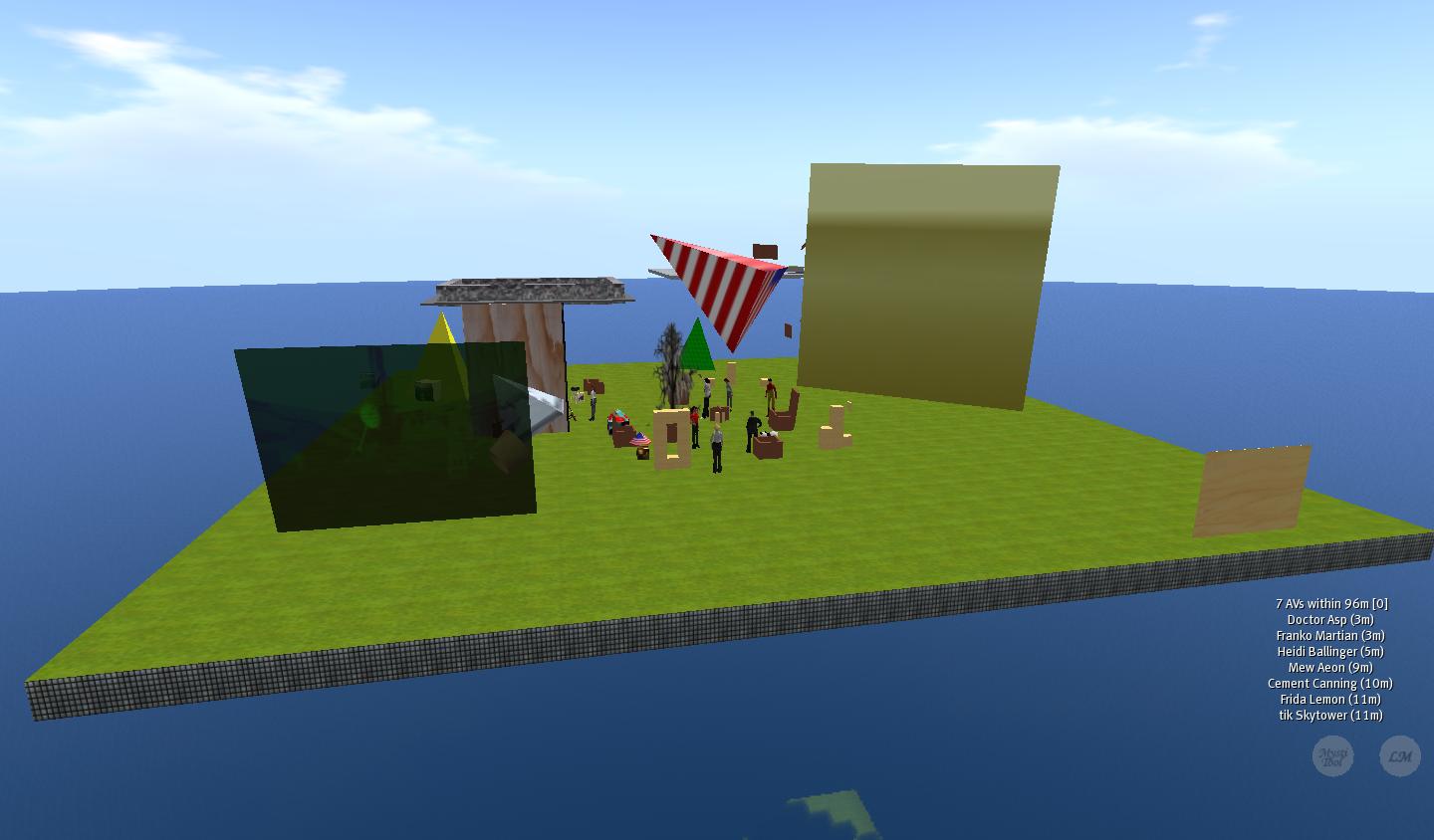
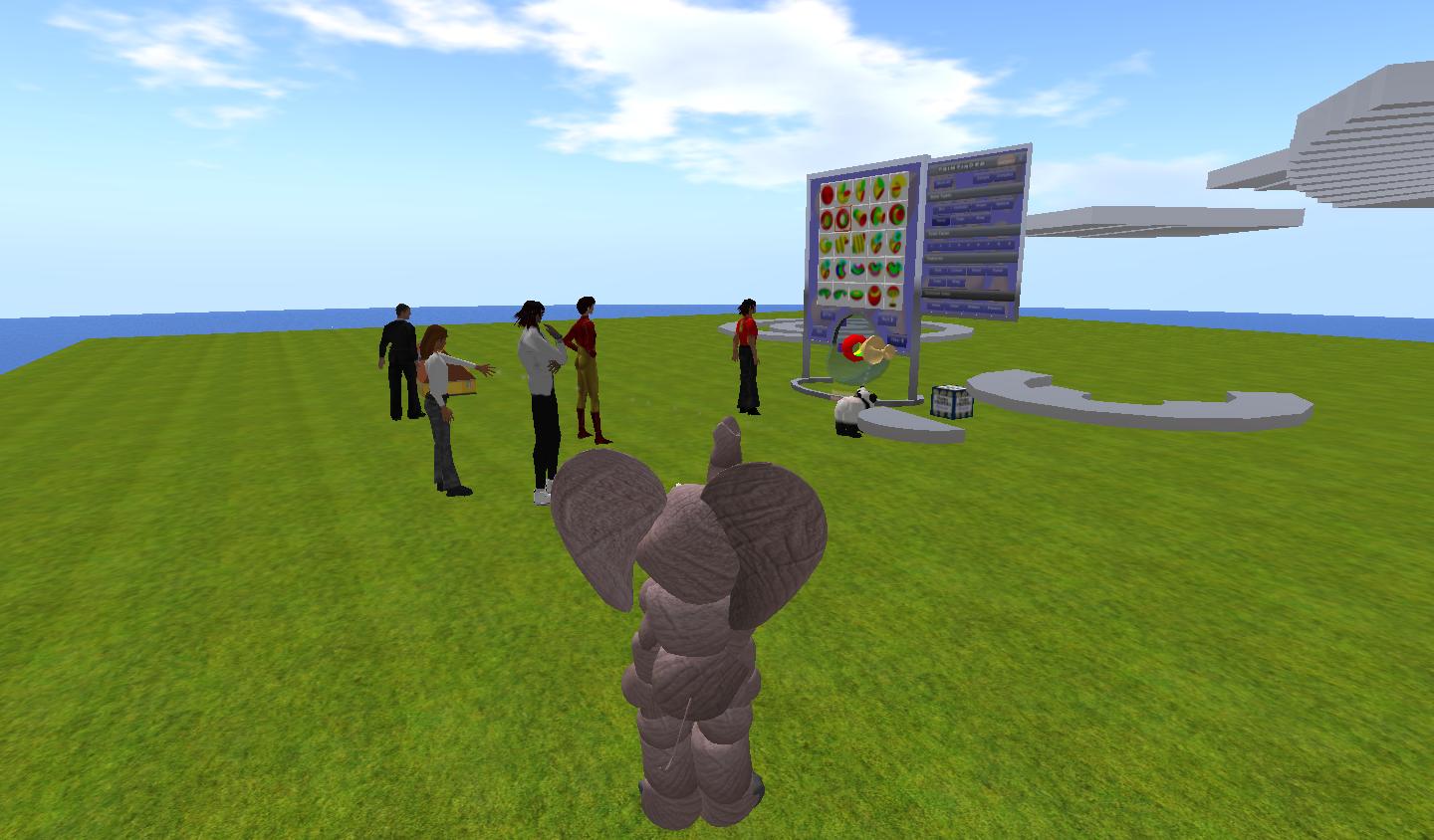
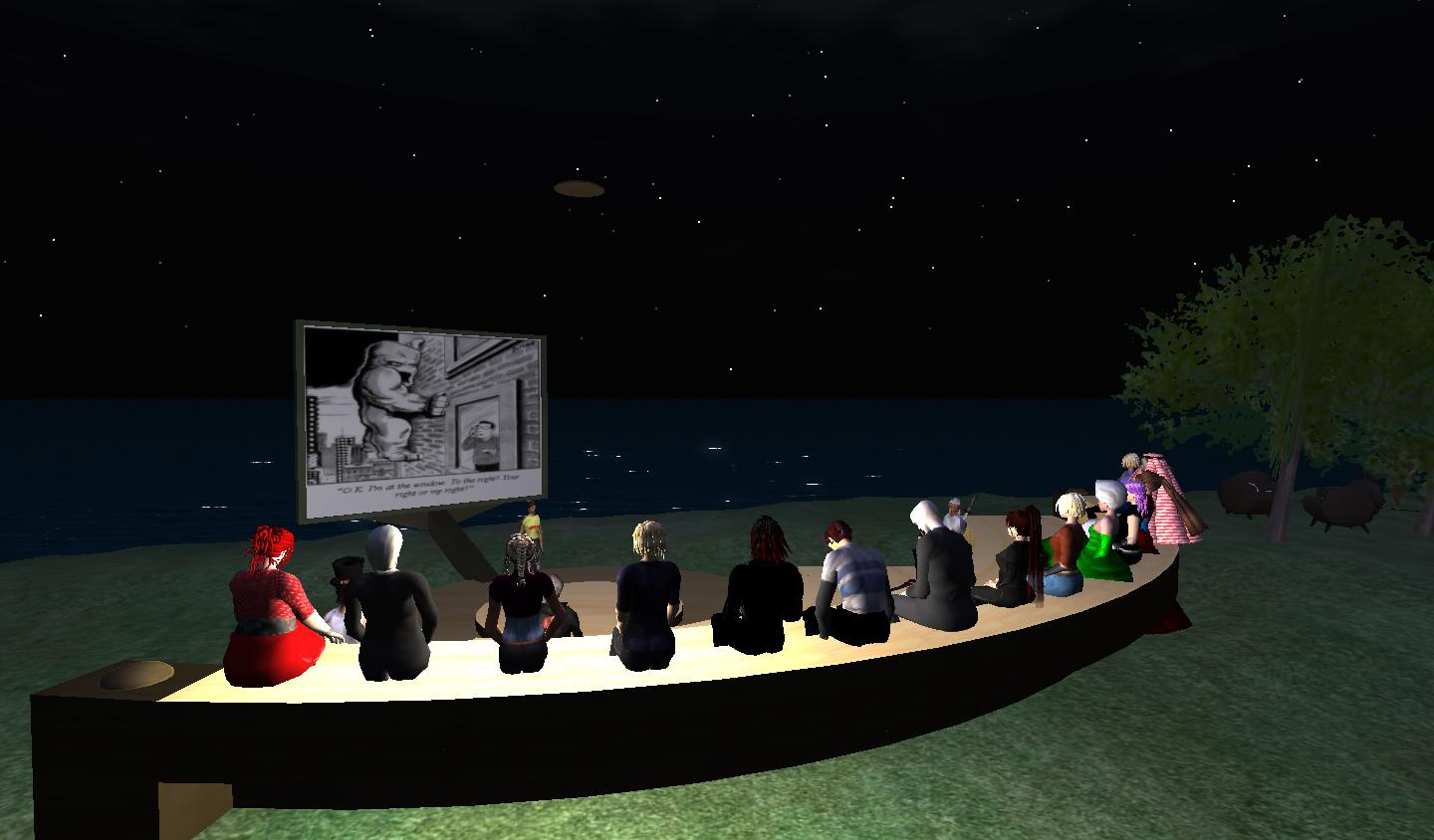
On Friday January 2nd I attended this year’s first research meeting at Rockcliffe University, where Rockcliffe CEO, Phelan Corrimal, spoke on “Research in Virtual Environments: Data Collection & Validity”.

Researchers at Rockcliffe discussing threaths to research validity …
Unfortunately I still haven’t felt comfortable in joining these discussions actively. My English simply isn’t good enough when it comes to speedy answering, but I do enjoy these discussions very much anyway. I always find some sort of inspiration in these discussions getting new references, learning new phrases, discovering new concepts, and most important listening to researchers from various disciplines clearly enhances my general knowledge about research in virtual environments. It is nonetheless increasingly frustrating not being able to participate more actively in the many interesting discussions, especially because coming from a Scandinavian research tradition I think I may be able to contribute with some (very) different perspectives, so a more personal change in 2009 will be to take a risk and participate more actively … and maybe that will change everything … at least for me :-)
/Mariis
 Mariis' digitale refleksioner