Yesterday, I was invited to talk about learning theory and design for teaching and learning in SL by the MICA group – thank you George Djorgovski/Curious George and all those who attended :-) I promised to make my slides available:
/Mariis
Yesterday, I was invited to talk about learning theory and design for teaching and learning in SL by the MICA group – thank you George Djorgovski/Curious George and all those who attended :-) I promised to make my slides available:
Disclosure; this is by no means intended to be an analysis of Lego Universe – that would not be fair at all. It is simply a reflection on my first experience with this MUVE.
I’m not a Gamer, I never have been, and I doubt that I ever will become one. Nonetheless, I do try to keep an eye on what colleagues are doing in the gaming sector, and yesterday I had the opportunity to try out Lego Universe in relation to the 2011 Virtual Worlds Graduate UnSymposium (VWGUS).

The Virtual Worlds Graduate UnSymposium’s blog.
The VWGUS is organized by a team of dedicated educators who have a special interest in using different kinds of MUVEs like MMORPGs and Virtual Worlds. This year’s symposium ran for two days, and I joined in for the session about Lego Universe conducted by Knowclue Kidd.
Knowclue’s wiki – Marianne Malmstrom’s bio.
I don’t know Knowclue personally, but I’ve heard of her work and seen her at the Virtual Worlds Best Practice in Education conference.

Participants at the VWGUS2011 in the ARVEL CAVE area.

Knowclue Kidd talking about her work with LegoU.
Even though I didn’t know the first thing about Lego Universe, I was definitely smitten by Knowlue’s enthusiasm; you could easily tell that she’s a dedicated teacher! While Knowclue was talking about her work, we were encouraged to create accounts, download clients, and log in to the game. So, as I understood it, the gameplay is that inside the Lego Galaxy some sort of evil force is tearing through the galaxy and breaking everything. It’s the player’s job to join Nexus Force and save the universe, and the first stop is to build a Lego brick rocket that will enable you to leave the starting point and join the other players in groups and quests.

Download in progress – using my favorite name.
Initially, I was very happy to see that I could use my regular online name – for me this really is my first point of identification.
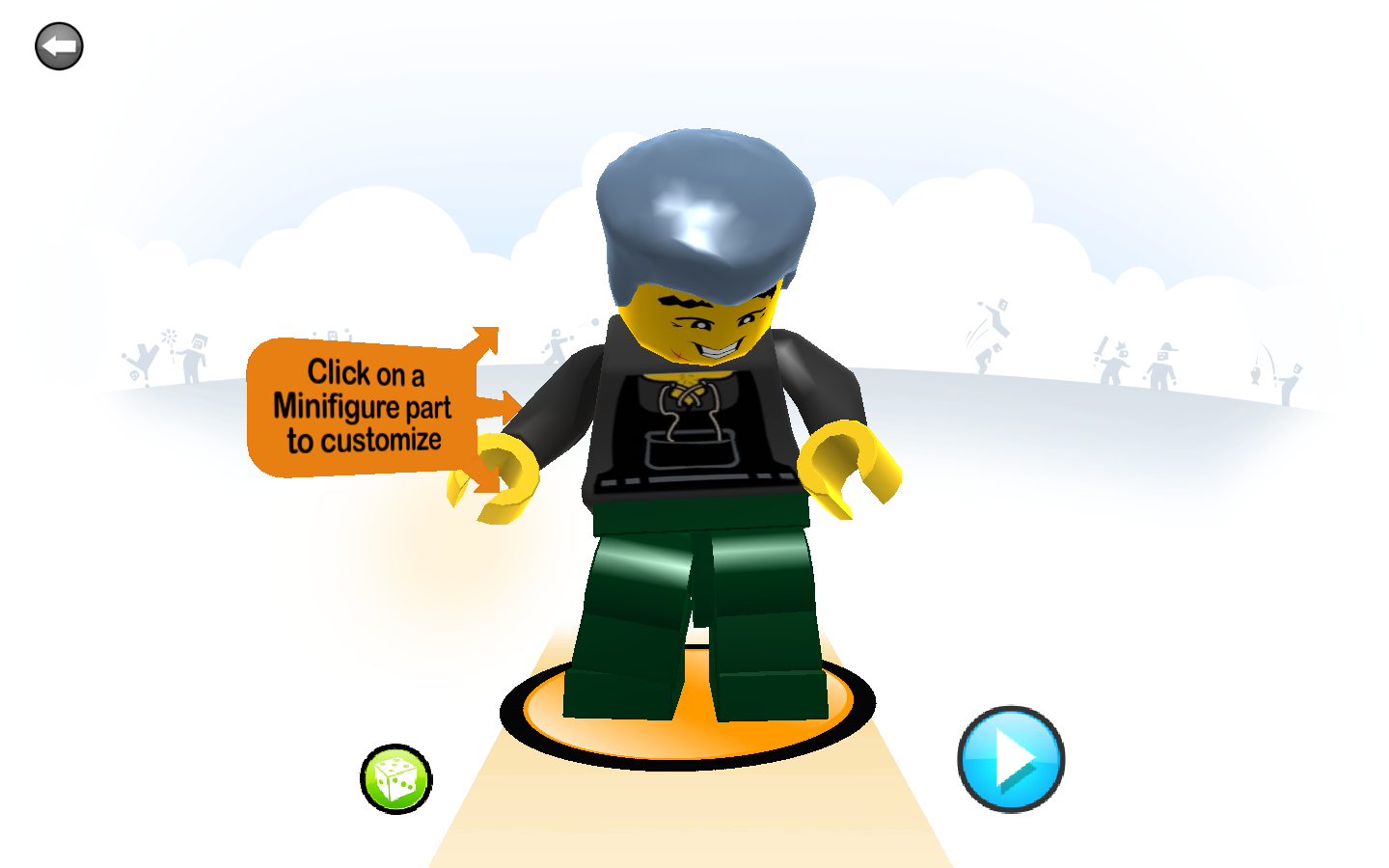
My character – customizable.
Ok, so in this universe, I’d be a small brick figure. No worries, from playing around with my alts in SL I’m used to experimenting with different appearances. Also, if we had not been pressed on time, there seemed to be plenty of possibilities to customize the look. But then the next step was to choose a new name!? Why, what was up with that? How was I to find the other players (avatars from SL), hmmm ….
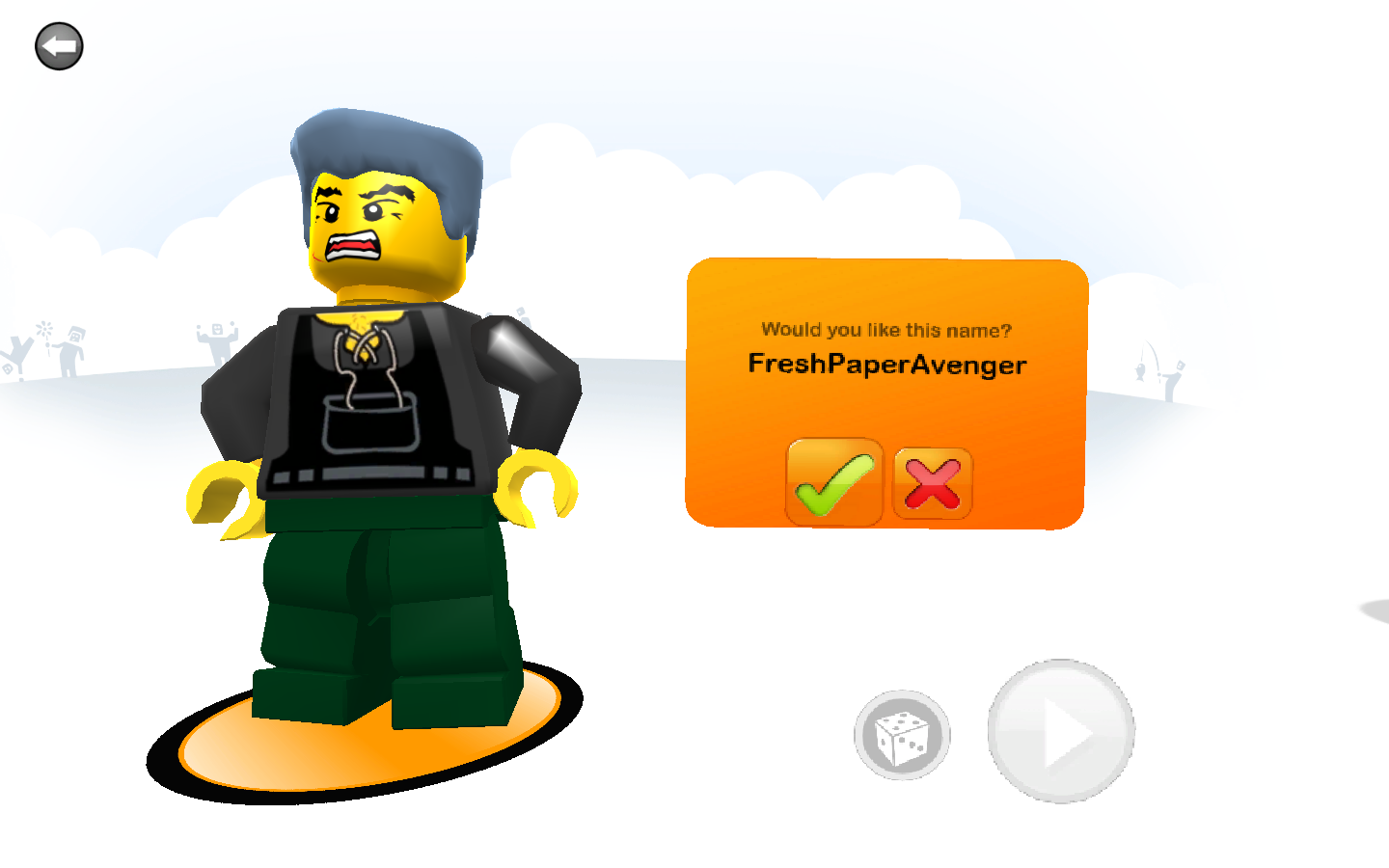
My new name …
Reluctantly I accepted a new name, and the game could begin.

First impression of the universe – kids can handle a lot more information than you would expect.
Wauw! The first thing that struck me was how beautiful this universe is. Let’s face it; regardless of how much I appreciate SL, the first impression is oftentimes very grey and very laggy. In this universe I was almost overwhelmed by the colors, sounds, moving objects, dialogue boxes, and all the many things happening all at once. My fingers immediately hit alt + arrow keys in an attempt to control the camera/my POV. I had no luck with this, but it could be simply because of my inexperience. Another thing that struck me was the pace; everything seemed to happen in a very upbeat tempo, other characters were running around fast and furious trying to smash “enemies”. Not knowing exactly what to do, I tried to do the same, but with the unexpected consequence that I often found myself lashing out/hitting other characters, when all I wanted was to chat with them – no, I’m really not a gamer ;-)

Talking to “Bob” – apparently my first mission was to unlock my imagination.
I noticed that many of the other characters were running up towards a platform in the distance, and so I followed, smashing everything I met on my way. Here we met, Bob, a NPC, who told us to unlock our imagination by collecting 6 “imagination power ups”. Still not having a clue, I simply watched and copied some of the other characters’ actions, smashed some more objects, and actually managed to complete this first mission resulting in moving up a level. Very motivating to be able to progress so early in the game :-)
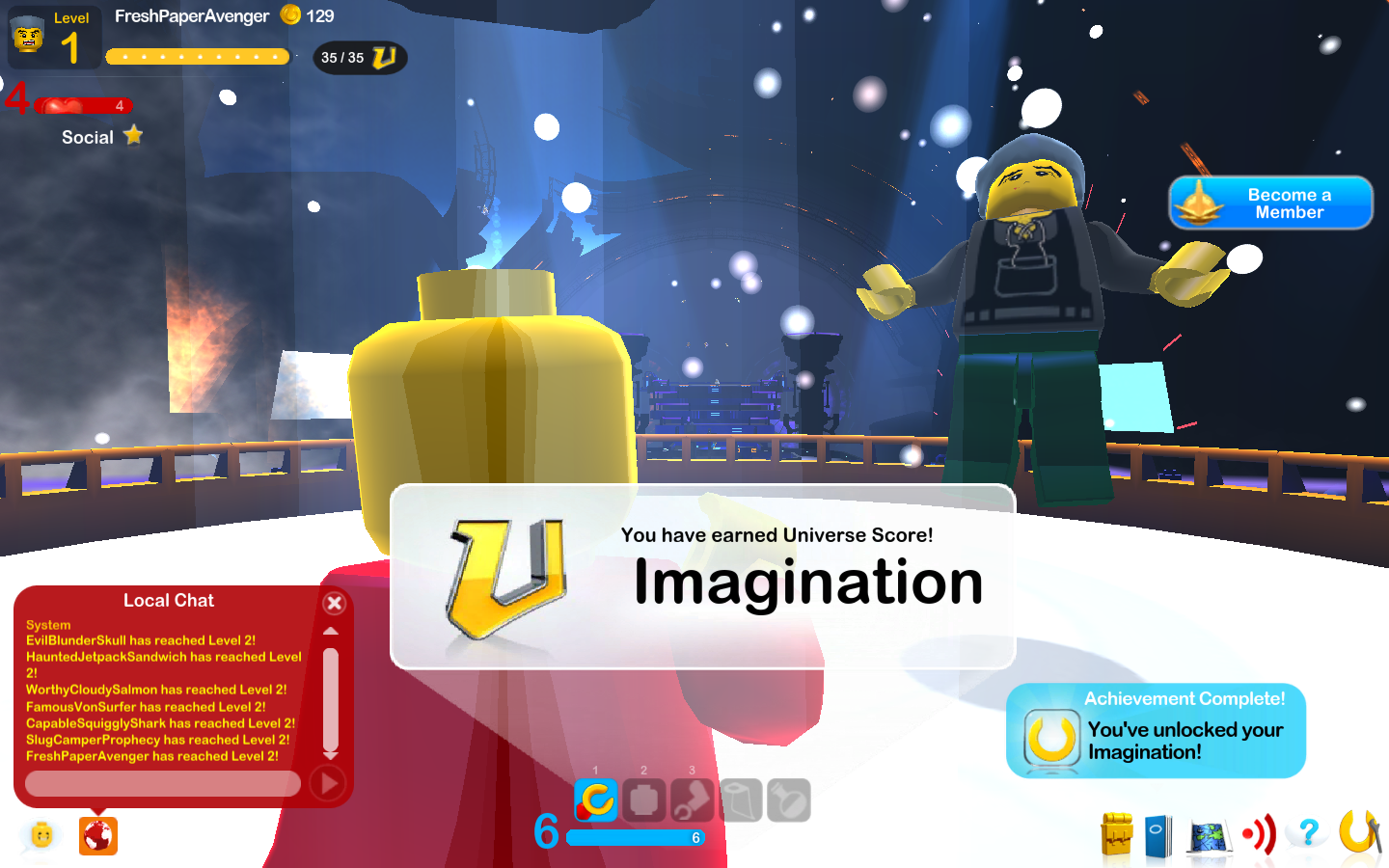
First mission complete – so far, so good.
According to Bob, the next mission was to find Sky Lane, who could teach me how to build a rocket that I would need to leave this place and join the others in the Nexus Force. Again, I looked at the other characters, and I did spot Mrs. Lane, but I simply couldn’t figure out how to get to her. I went back to Bob, but he was not very helpful … and so I gave up. Anyways, it was time to leave the game and go back to SL to finish the session.

Alas! I ran out of imagination :-(
Evidently, I had spent a little too much time in the Lego Universe, because the in-world session was ending, and I decided not to participate in the next session that was about Quest Atlantis. One game was enough for me in one day.
So, what’s the takeaway from this experience? Well, if nothing else, I learned about my own shortcomings and habits/expectations when it comes to MUVEs. It should be noted that I only spent about 20 min. in the Lego Universe, so my reservations are not targeted against this particular environment. Yet, having been in SL since 2007, I’ve become accustomed to some in-world/in-game features that proved to be very important for my initial (and perhaps overall) experience.
First of all, there is the name-thing. When I entered SL, I could choose at least my first name almost freely (provided someone else hadn’t already taken it), which gave me the opportunity to use my regular handle and that way establish the first connection/identification with my avatar. Entering a (Lego) universe, where “my” name had absolutely no reference to me, seemed like a setback. However, I suspect that in the case of Lego this has to do with issues of security, a way of protecting the youngsters for whom this game is intended. In time, I’m sure the players learn to identify with their new names.
Second, my positive experience of SL is very much depending on my ability to change my POV. To me the embodiment in SL is mainly based on vision, sure there is the build-in sound of walking, but that seems more like a distraction because it doesn’t really resemble walking (at least not compared to my RL). There are also the build-in sounds of flying and teleporting, but again I find it hard to relate to those (probably because I obviously lack RL comparison). So, to obtain the sense of embodiment that to me relates to the degree of immersion, I usually rely on vision. Further, the ability to change POV, zoom and orbit influences my orientation and navigation. As mentioned above, it could be that it is possible to control the POV in Lego Universe, I just didn’t figure out how to during my short visit …
Third, in SL there is no gameplay, nobody tells me what to do, what the purpose of being there is, how I should interact etc. In SL, it is still “my world, my imagination” on a whole different level than in other MUVEs. When entering a game-world it is crucial that the gameplay appeals to you, that you find it relevant, accept the terms, and literally play by the rules. In all fairness, I’m not exactly the target group for Lego Universe and judging from the talk by Knowclue, her pupils clearly like this universe very much. Sadly, Lego announced just a few days ago that they will be terminating Lego Universe by the end of January 2012. I don’t know where that leaves Knowclue, but given her engagement and enthusiasm about this, I’m sure she will find other virtual universes to explore to the benefit of her pupils and colleagues :-)
While humbly accepting “Bob’s” harsh verdict on my lack of imagination in that particular universe, I leave you with this machinima created by Knowclue and some of her pupils:
/Mariis
Hat tip to Ener Hax for pointing to this report made by The National Gang Intelligence Center (NGIC) who prepared the 2011 National Gang Threat Assessment (NGTA) that examines emerging gang trends and threats posed by criminal gangs to communities throughout the US. It comes as no surprise that “gangs are becoming increasingly savvy and are embracing new and advanced technology to facilitate criminal activity and enhance their criminal operations”:
According to NGIC reporting, gang recruitment and intimidation is heavily facilitated through the Internet. Gangs use social networking sites such as Facebook to promote their gang, post photos of their gang lifestyle, and display their bravado, which ultimately influences other youth to join gangs. (NGTA, 2011:41)
Following this line of thoughts, nor should it come as a surprise that Virtual Worlds also are mentioned, but I admit that I was in fact surprised to see SL highlighted in this context:
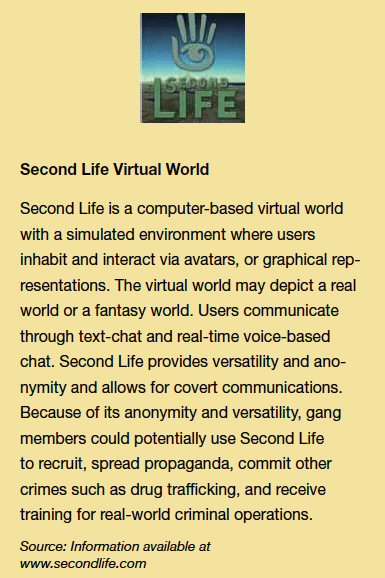 NGTA, 2011:41
Of course it makes perfect sense; the military has been using virtual reality/virtual worlds to simulate and train for decades, so why not gangs. Yet, for someone who has been using SL for years, this perspective does come off as a bit exaggerated, and I admit that it made me chuckle over the morning coffee. I tend to agree with Maria Korolov‘s comment on this:

I mean no disrespect; I know that gangs pose a serious and oftentimes lethal threat to many, many people all over the world. It’s just very interesting to see a different perspective on one of my favorite technologies. Paraphrasing McLuhan; “We become what we behold. We shape our technology, and then our technology shapes us.” Context always matters!
/Mariis
BTW; according to the above-mentioned report OMG is not an expression of surprise, but stands for Outlaw Motorcycle Gang … context, context …
About a month ago, I spent one week at the Universidad Nacional (UNA) in Costa Rica participating in two research projects, and on some level this Mimi & Eunice strip sums up my experience:
I don’t mean to say that I went to Costa Rica thinking that my colleagues there are doing anything wrong, but I did have a rather naïve presumption that the greatest challenge for facilitating change would be pedagogical. However, as it happened there were other just as important challenges, and the research stay turned out to be very educational for me.
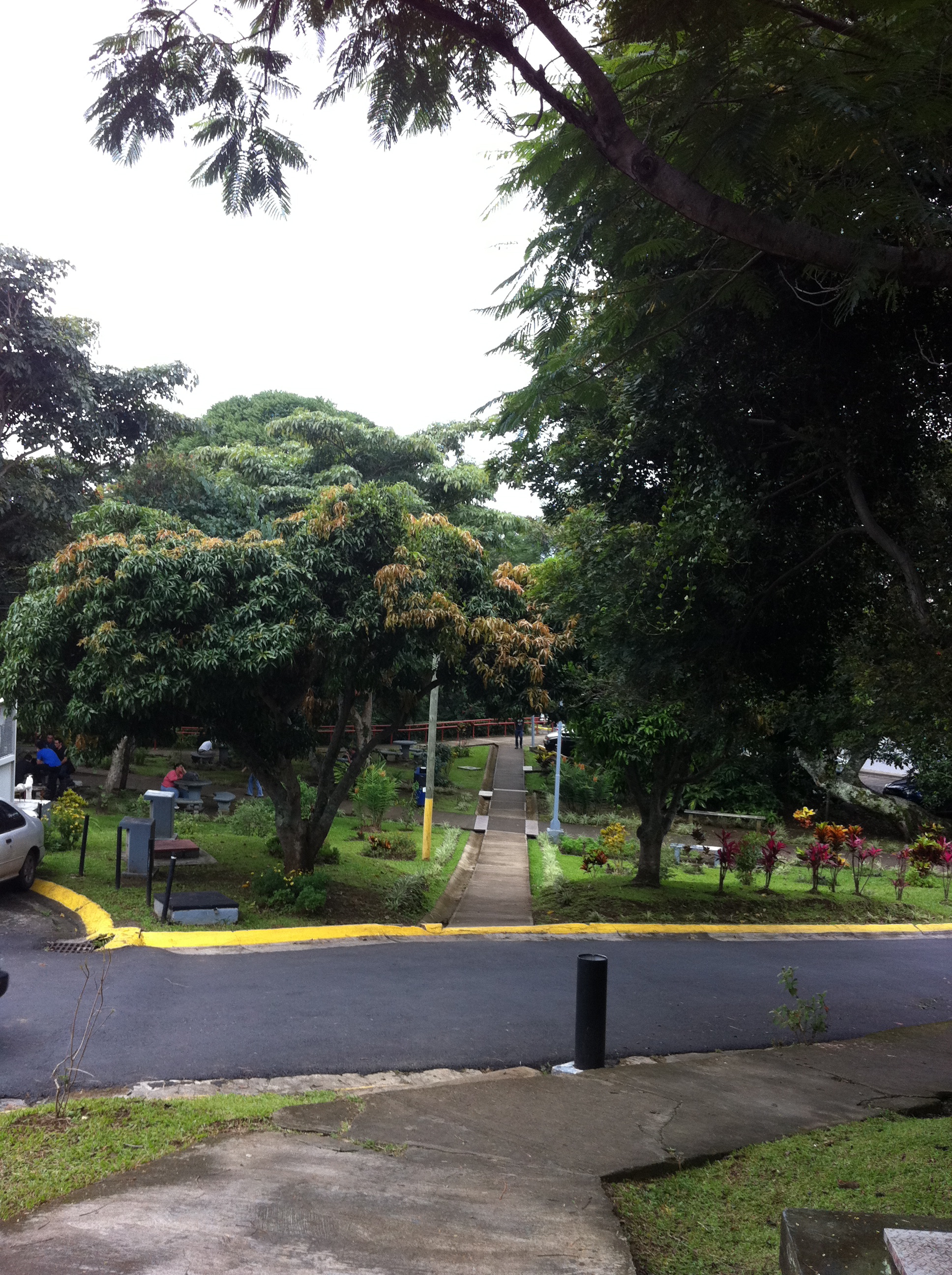 From the UNA campus – very exotic seen from the eyes of a Dane.
The first project is called ” Curricular Innovation of Study Plans in the disciplinary area of System Engineering at the Universidad Nacional, considering POPP (problem oriented project pedagogy) as a methodological approach”. Dra. Mayela Coto and Máster Sonia Mora are the local researchers in this project. Maylea Coto received her PhD from Aalborg University (AAU) in December 2010, but is back living in Costa Rica with her family.
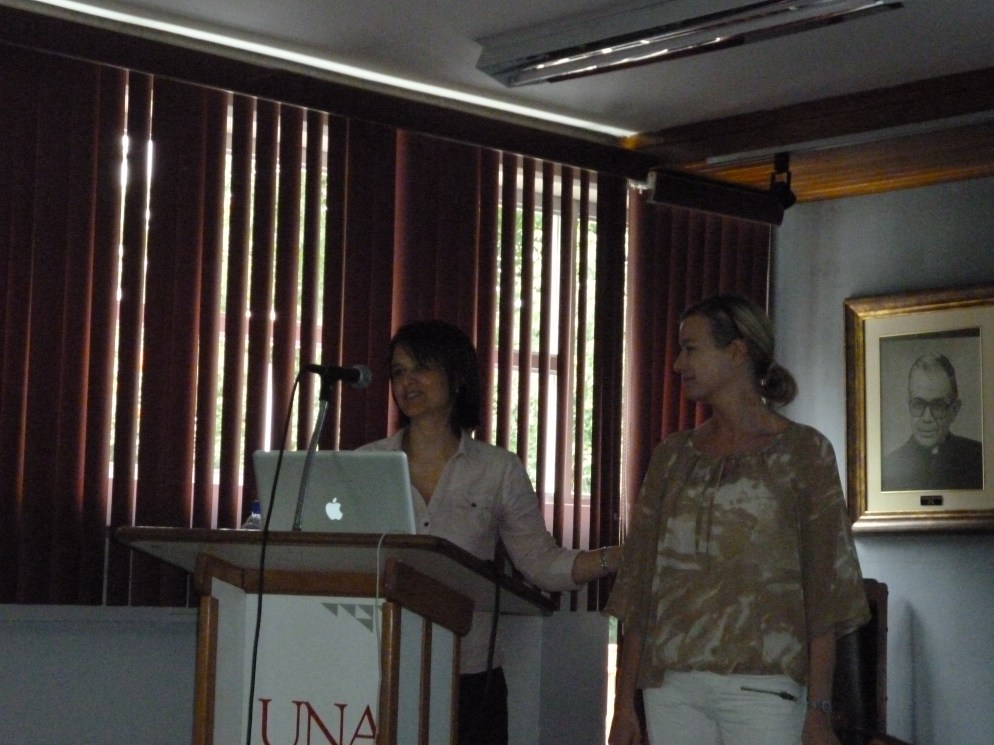
My role in this project is fairly limited. I was invited to give an introductory lecture on the Aalborg PBL model (incl. the particular POPP approach) and to participate in a couple of workshops and research meetings focusing on implementing PBL.
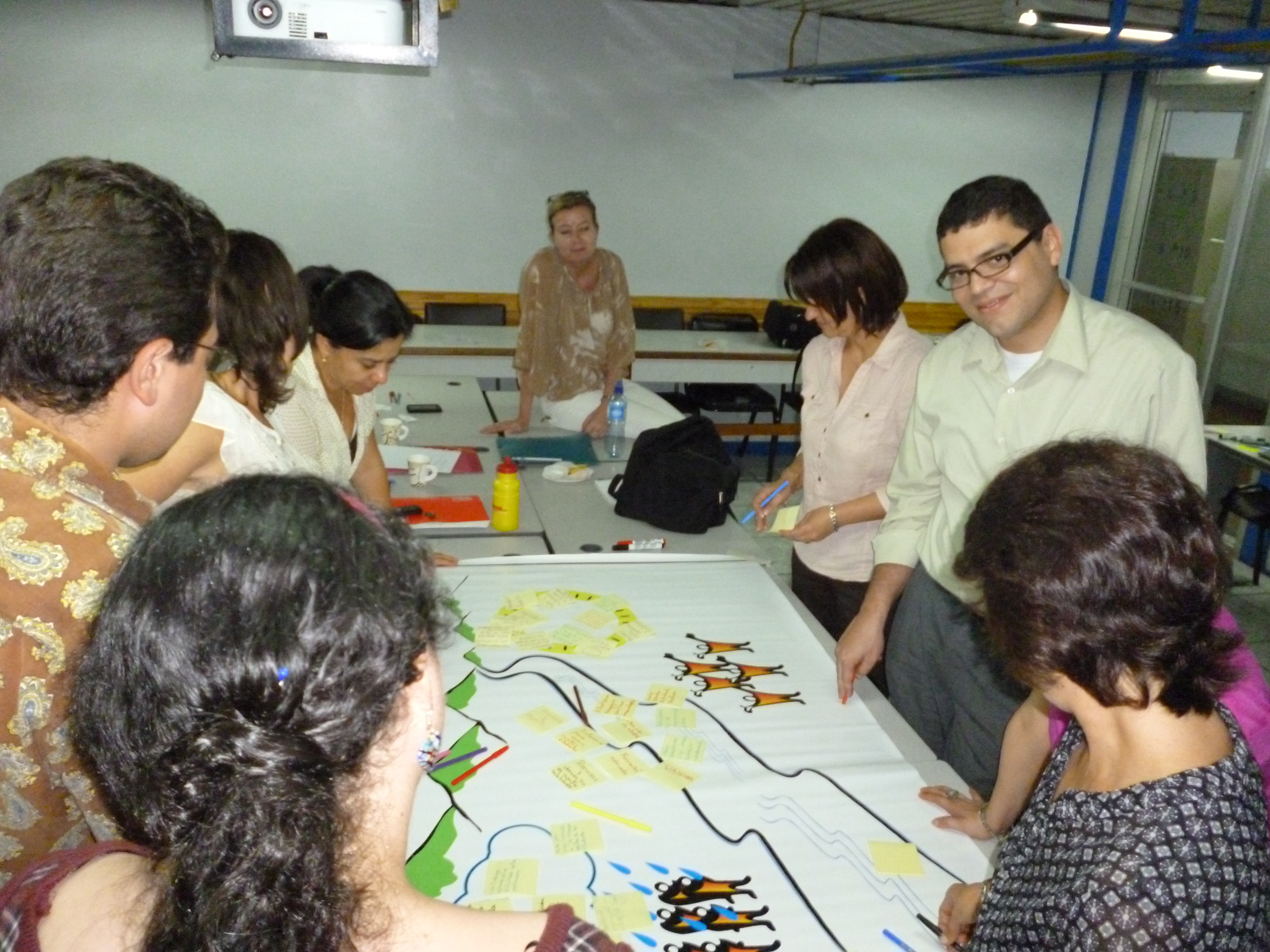
My AAU colleague, Professor Marianne Lykke, will go to Costa Rica in January to continue this work.
The second project is called “AVATAR: The use of Second Life as pedagogical approach”, and Máster Carmen Cordero, Máster Willy Castro & Máster Dinia Rojas are the local researchers in this project. My AAU colleague, Post Doc. Heilyn Camacho, who also is from Costa Rica, and I are working together in this project, and this is the context for the UNA-AAU course in SL that we currently are running. In the UNA-AAU course, we are also lucky to collaborate with Danish SL designer and educator, Inge Knudsen.

Kick-off session in the UNA-AAU course.
Before leaving for Costa Rica, Inge and I had tried to kick off the UNA-AAU course in SL, but we experienced quite a lot of technical problems and language challenges making it difficult to figure out exactly why things weren’t going as expected. Originally, Heilyn and I were supposed to go together to Costa Rica, but due to unforeseen administrative issues, I ended up going alone. Heilyn went a couple weeks later and experimented specifically with the Lego Serious Play concept to help the participants understand the course assignment better.

SL participants in UNA Virtual’s computer lab.
In relation to the UNA-AAU course, the participants and I spent two days in the lab mainly doing hands-on exercises, and we had a lot of fun. Introducing SL is always such a pleasure, and I really enjoy helping participants discover the many possibilities of this medium.

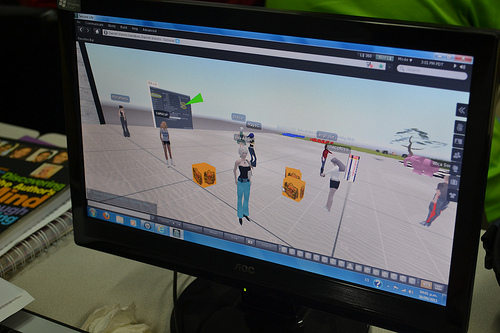
There are nine participants in the UNA-AAU course, and for the course I’ve asked them to work in three teams. In one of the in-world exercises, each team had to go to a representation of a specific country (Denmark, Costa Rica, and China (Inge is also a Sinologist)), explore, find facts and take pictures, and finally present their findings to the rest of us. Not only did this exercise demand the mastery of basic SL skills, it also highlighted the inter-cultural aspect of the course, and it seemed to work very well.
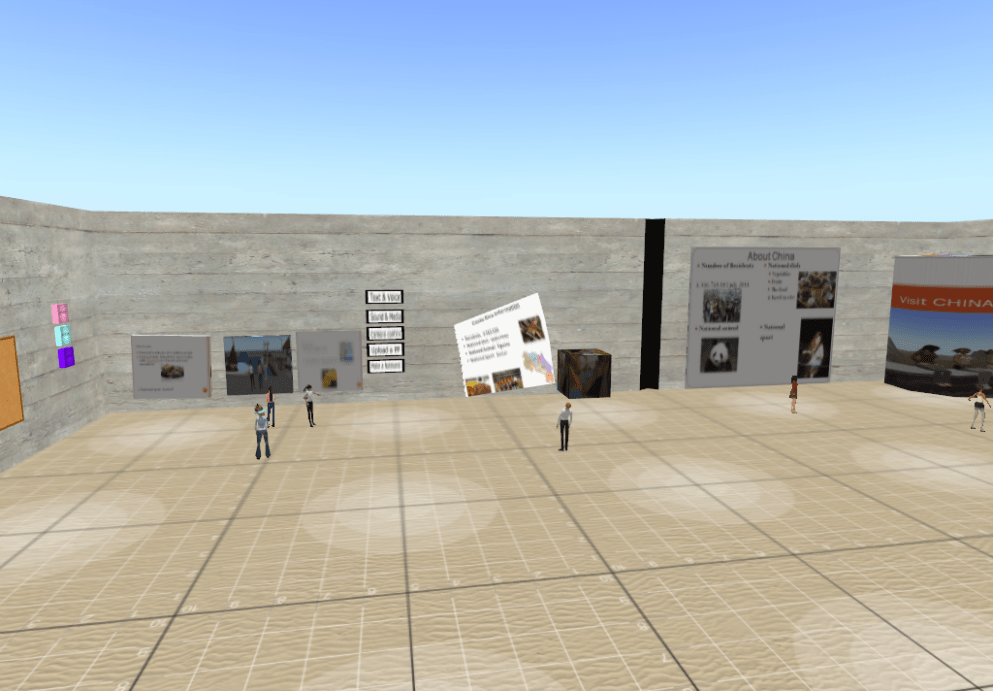 Setting up the three presentations in the sandbox.
On the second day, I gave a short talk about my research in SL, tried to elaborate on the pedagogical underpinnings of the course, and we continued exploring and trying out different SL features.
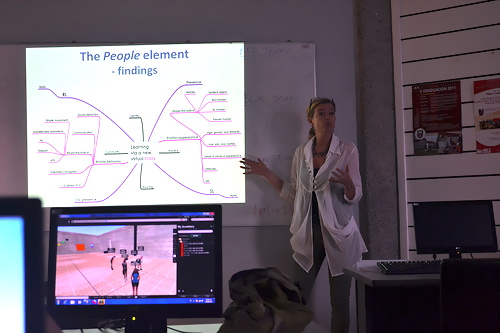
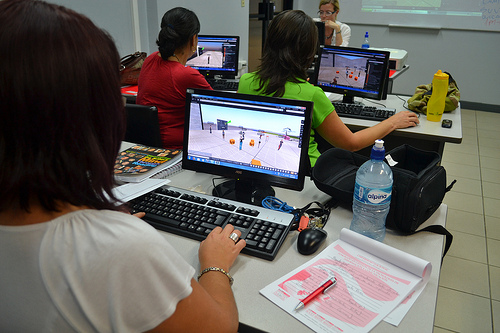
I was truly impressed by how fast the participants understood the more technical aspects of SL, but it was also very apparent that the majority of the participants did not understand English very well. Another challenge was the time that the participants are able to allocate for the course. In Costa Rica there seems to be little tradition in Academia for giving the faculty time to participate in Professional Development (PD), and because the salaries are low, many teachers actually hold two jobs to make ends meet. In the UNA-AAU course this means that the participants can only allocate 3-4 hours/week, and anyone who has been working with and in SL knows that it takes time to learn the basics and time passes quickly once you have logged in. Therefore I decided to cut the course literature (for many it would take more than 3-4 hours to read one English text), and focus on giving the participants some good and relevant experiences in SL. I have designed the course based on some of the fundamental principles of PBL (problem orientation and formulation, student control, open-ended curriculum, and qualitative assessment), but given the above-mentioned challenges, I have found it necessary to play a more instructional role than I usually would do. By the end of the course, the participants still have to present an analysis of SL as teaching and learning environment in relation to a self-chosen target group, but I have asked them to use a particular model for their analyses to ensure that they cover some of the most important didactic/instructional elements. For the presentations, each team has its own sandbox in the air above the Danish Visions Island.
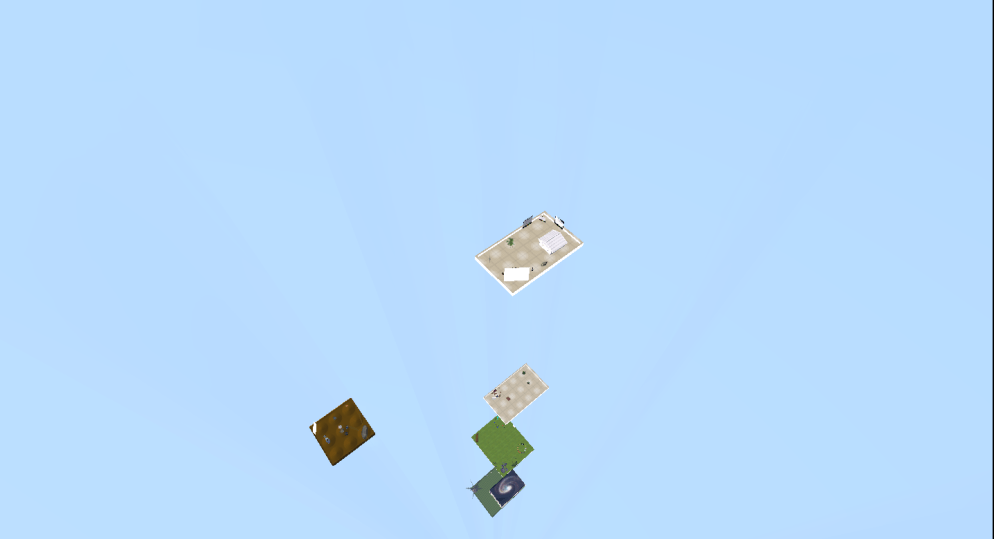
Sandboxes in the air.
In both research projects, UNA has asked us to collaborate in terms of teaching and research. Though the projects are different, they are both aiming at implementing new pedagogical strategies and technologies. Making the change to start using a PBL framework and SL as technology is a big change in itself, but based on my experience in Costa Rica, I would say that the biggest challenge has to do with culture.
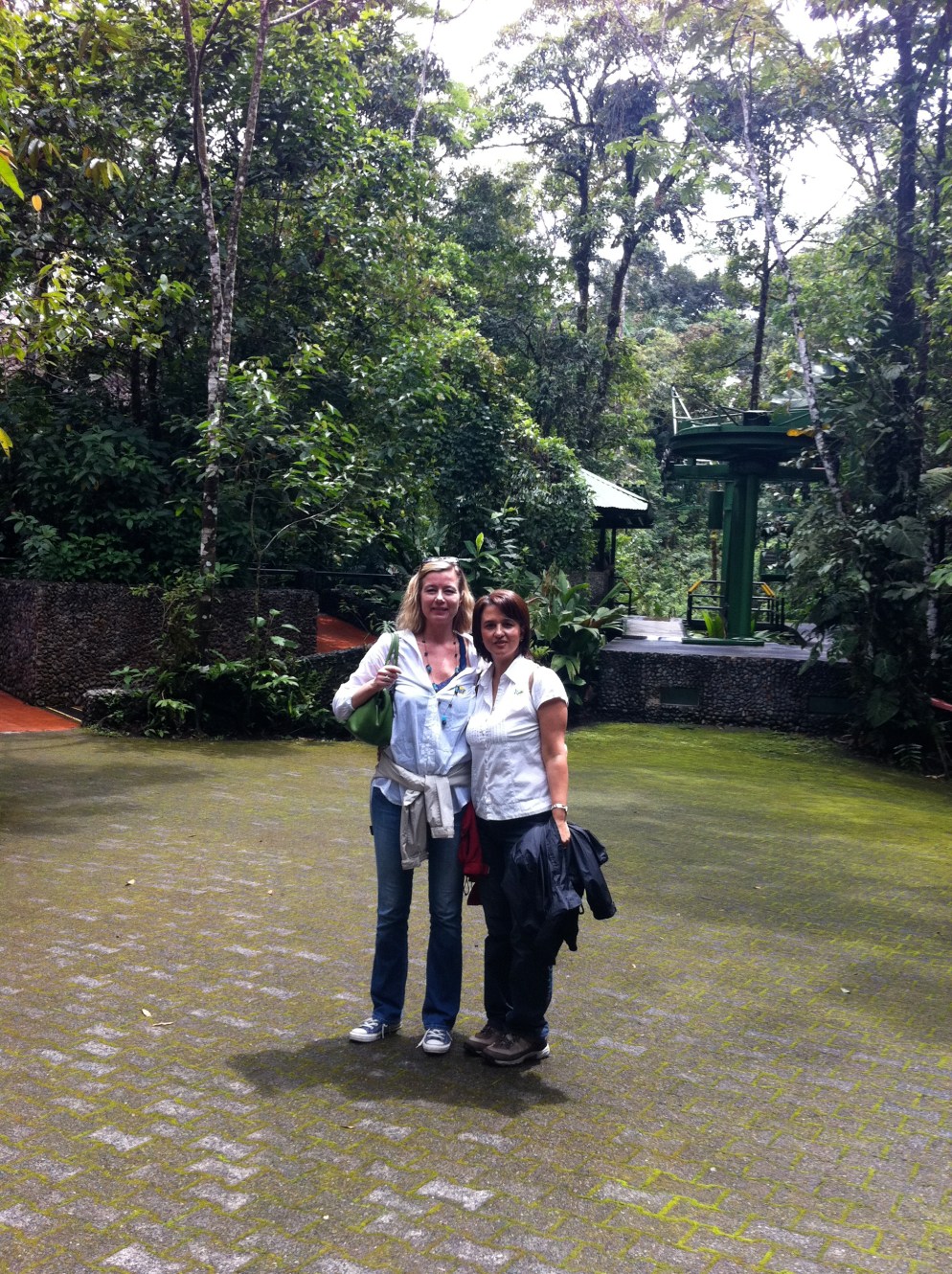 Ready to embark a gondola ride into the rainforest.
All of the teachers I met in both projects were eager to change and to learn about new kinds of pedagogical practice, and I feel confident that they will. I do, however think that there are several challenges that need to be addressed. Certainly, my colleagues and I will do our best to support these Costa Rican teachers, but unless the management of the university recognizes that PD demands time (and credit), I fear that the changes they are all hoping for may take many years. A very interesting – and somewhat paradoxical – perspective on this, is the fact that education per se is highly prioritized in Costa Rica. There are more than 50 universities in this small country with only approx. 5 mio. people! Changing a pedagogical/academic culture is obviously not something that happens over night, but it does seem like the appropriate place to start, and at least the context is something that we (from the outside) need to consider very carefully when designing for change.
And yes I still do believe that education is what’s needed – perhaps just not only as in “teacher training”, but also on a more complex level and for all of us involved in this process. Thinking about this, cultural anthropologists, Bates & Plog (1990)’s definition of culture comes to mind:
[Culture] is a system of shared beliefs, values, customs, behaviors, and artifacts that the members of a society use to cope with their world and with one another, and that are transmitted from generation to generation through learning.
/Mariis
Bates, D.G. and Plog, F. (1990:7): “Cultural Anthropology”. 3rd ed. New York: McGraw-Hill.


 Mariis' digitale refleksioner