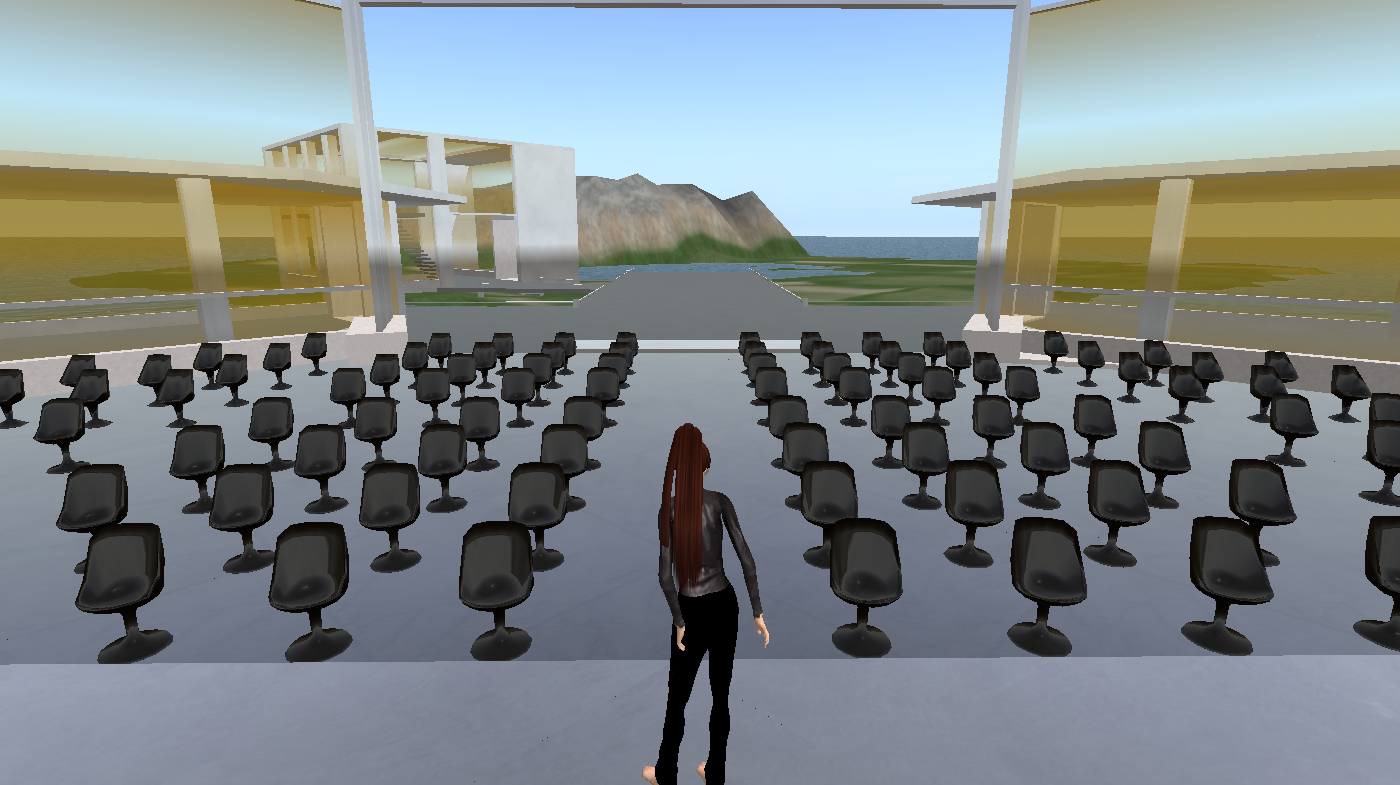
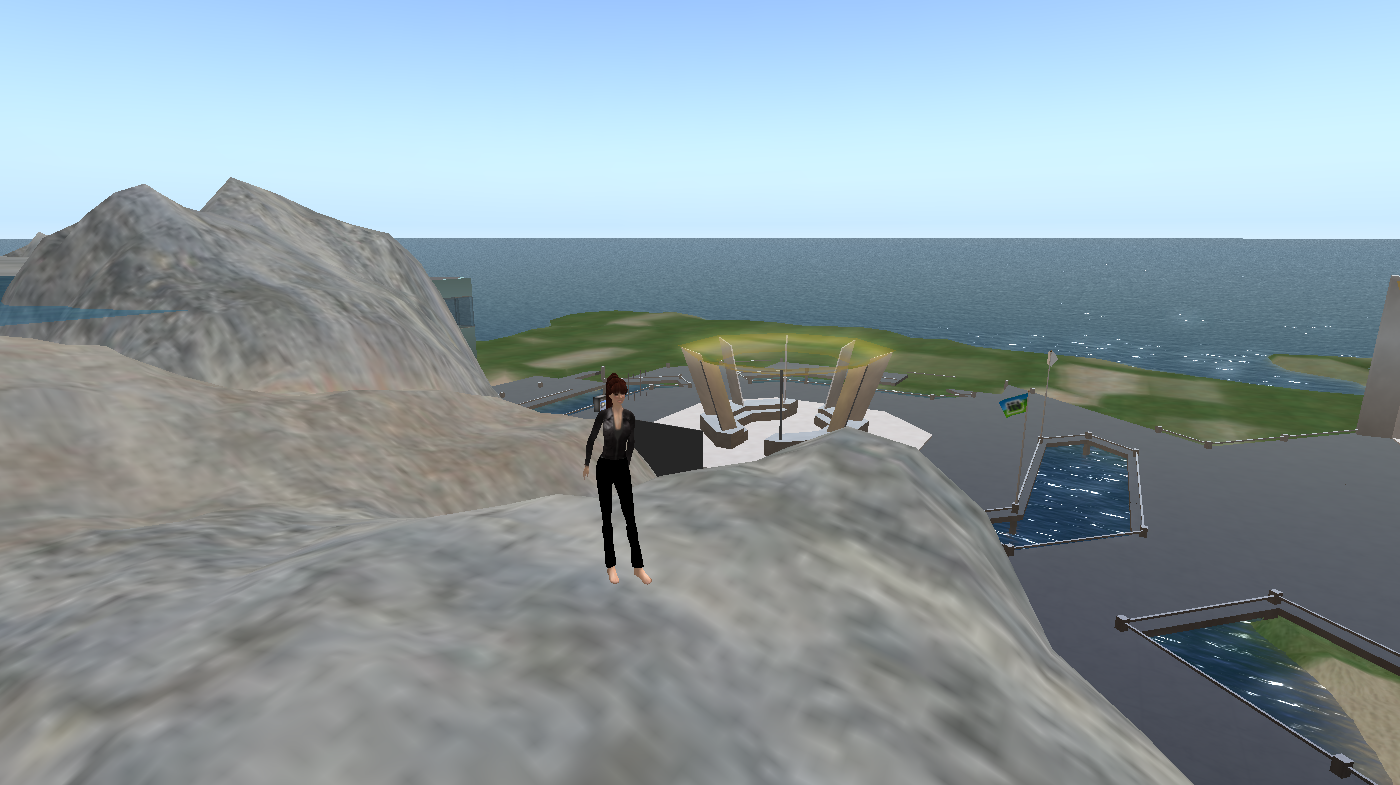
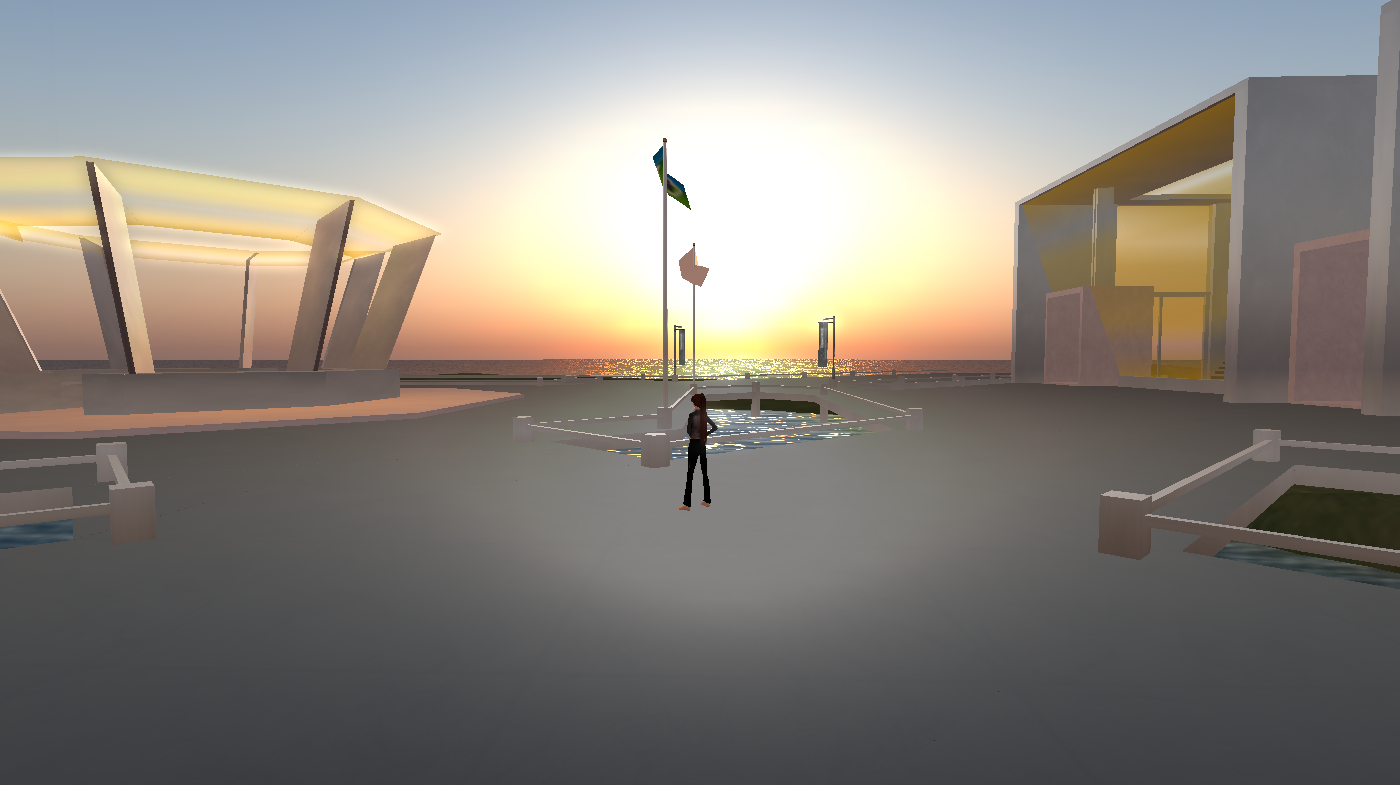
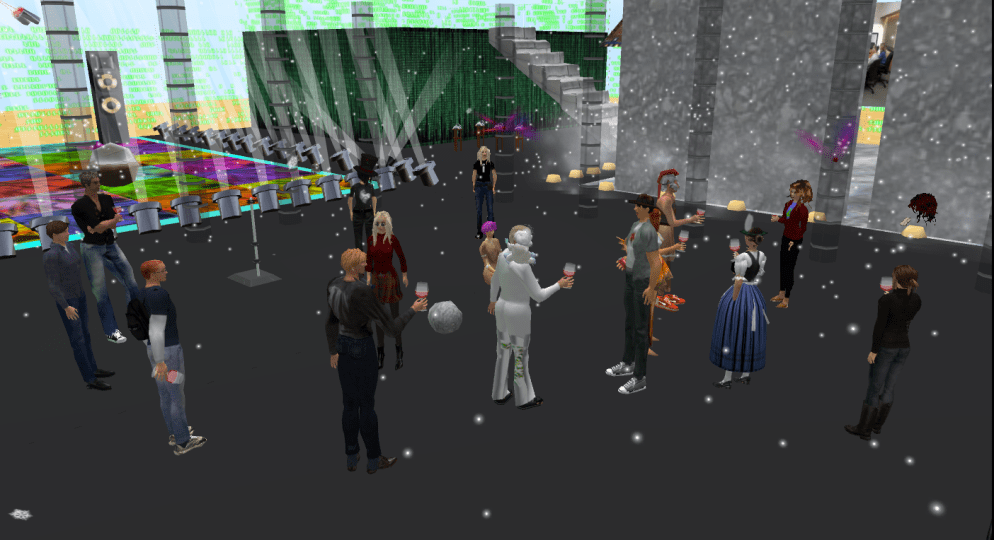
Students from Sheffield University’s iSchool visit MIL11

Late January my in-world colleague, Inge Qunhua attended a research seminar at University of Worcester’s island in SL where she had the opportunity to share some of our experiences from the MIL11 class (Danish PD students from the Master’s Program on ICT and Learning). Based on this, another in-world educator, Sheila Yoshikava of the University of Sheffield became interested in learning more, and on Friday, February 17th Inge had arranged for a meeting, where Sheila’s students from Educational Informatics could come see the MIL11 students’ sandboxes and hear about their experiences.


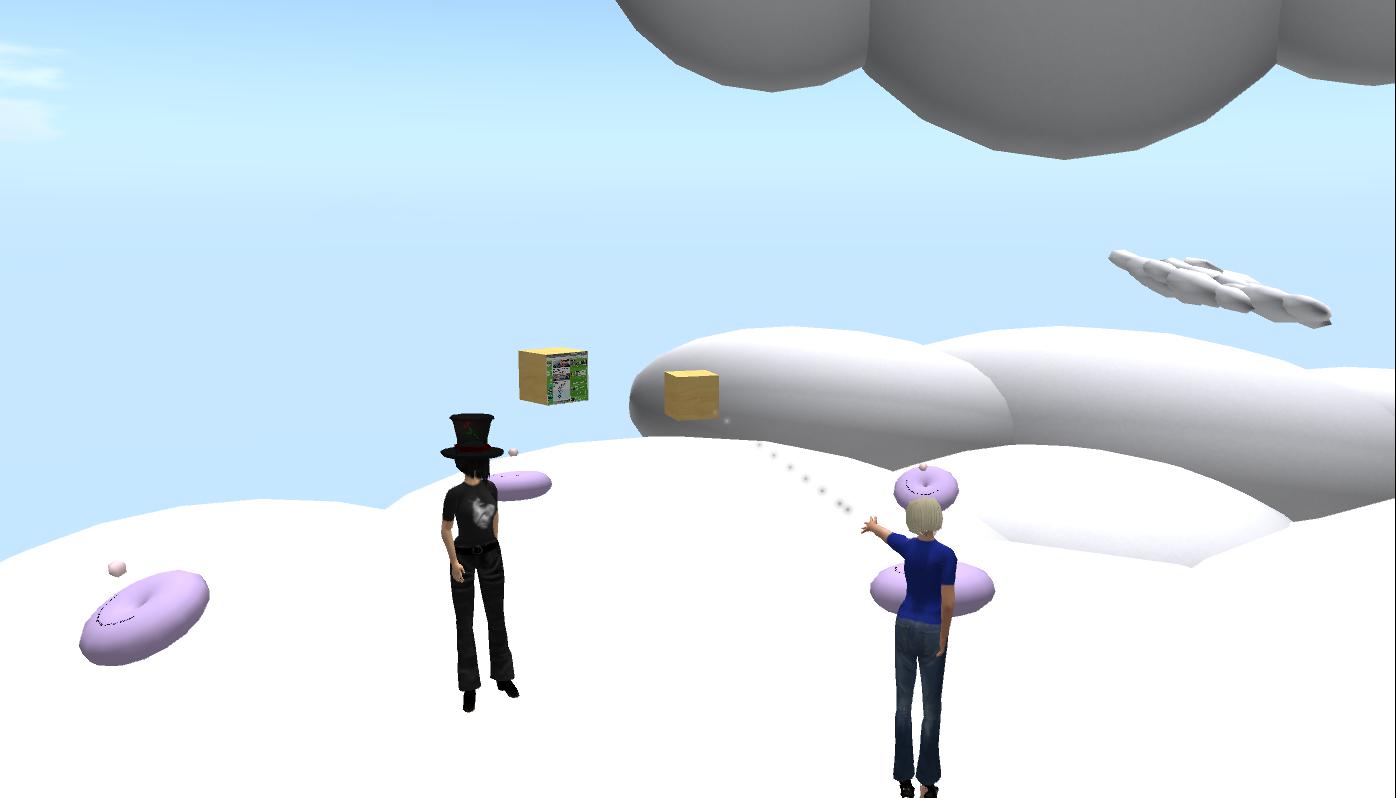
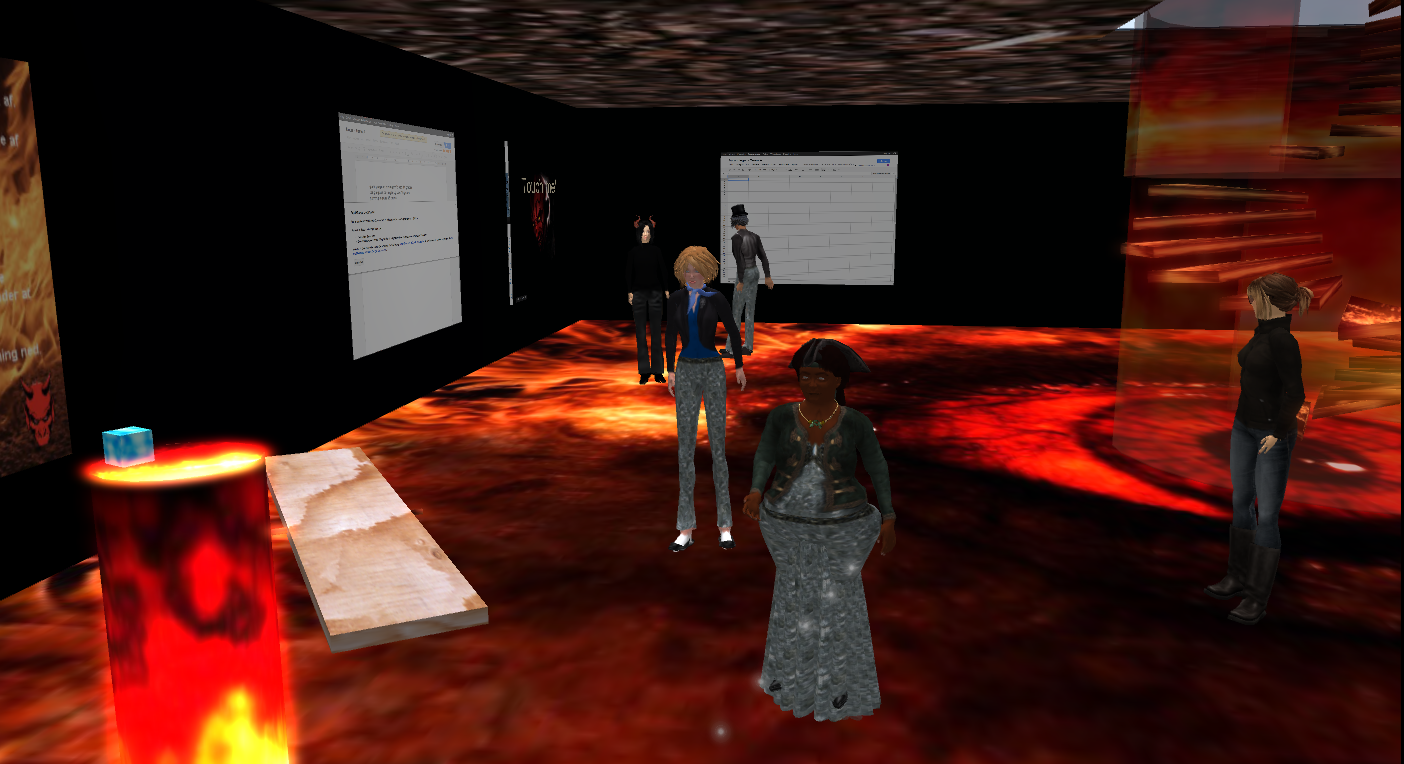
mouritzen, Anina, me, Inge & dirkovski (in front) meeting in Team B’s sandbox.

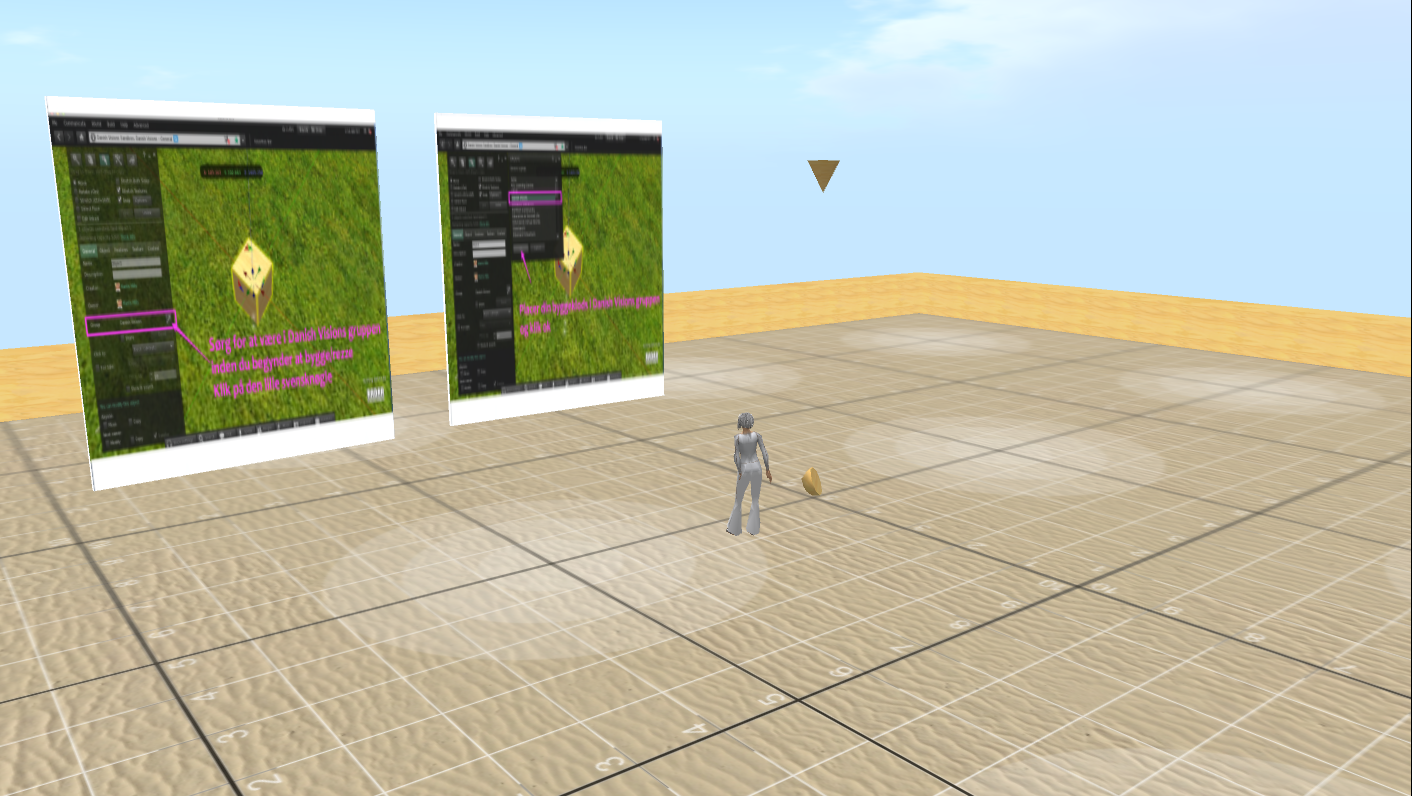
Three MIL11 students were able to participate and we meet for a short briefing in Team B’s sandbox. Inge explained how the visitors would be interested in hearing about the teams’ designs of their sandboxes.


Sheila Yoshikawa.

Sheila is the owner of Infolit iSchool Island in SL, and she writes about her in-world experiences on Adventures of Yoshikawa. RL Sheila (Webber) is faculty member in the Information School, University of Sheffield, UK and Director of the Centre for Information Literacy Research, and she also maintains a blog on general Information Literacy.
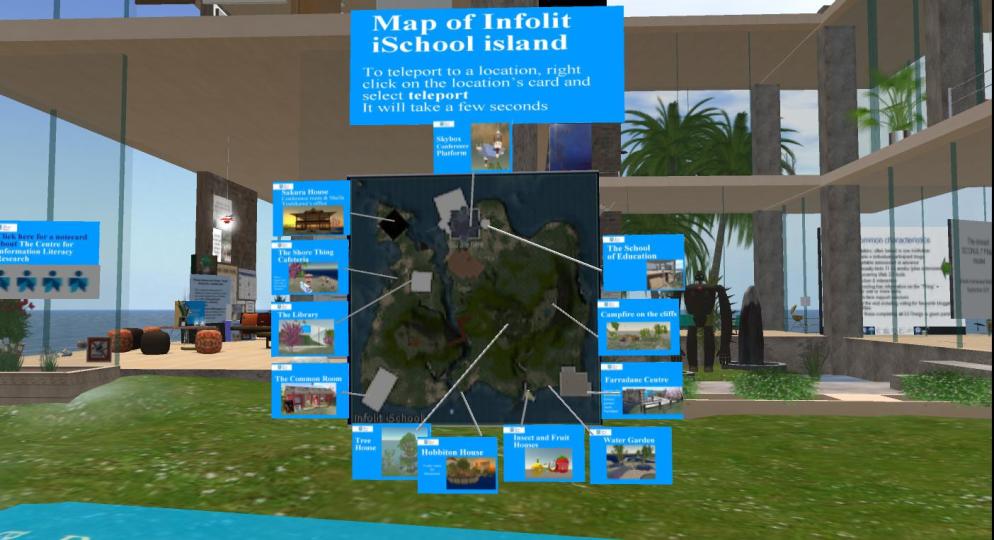
Infolit iSchool Island – welcome area.

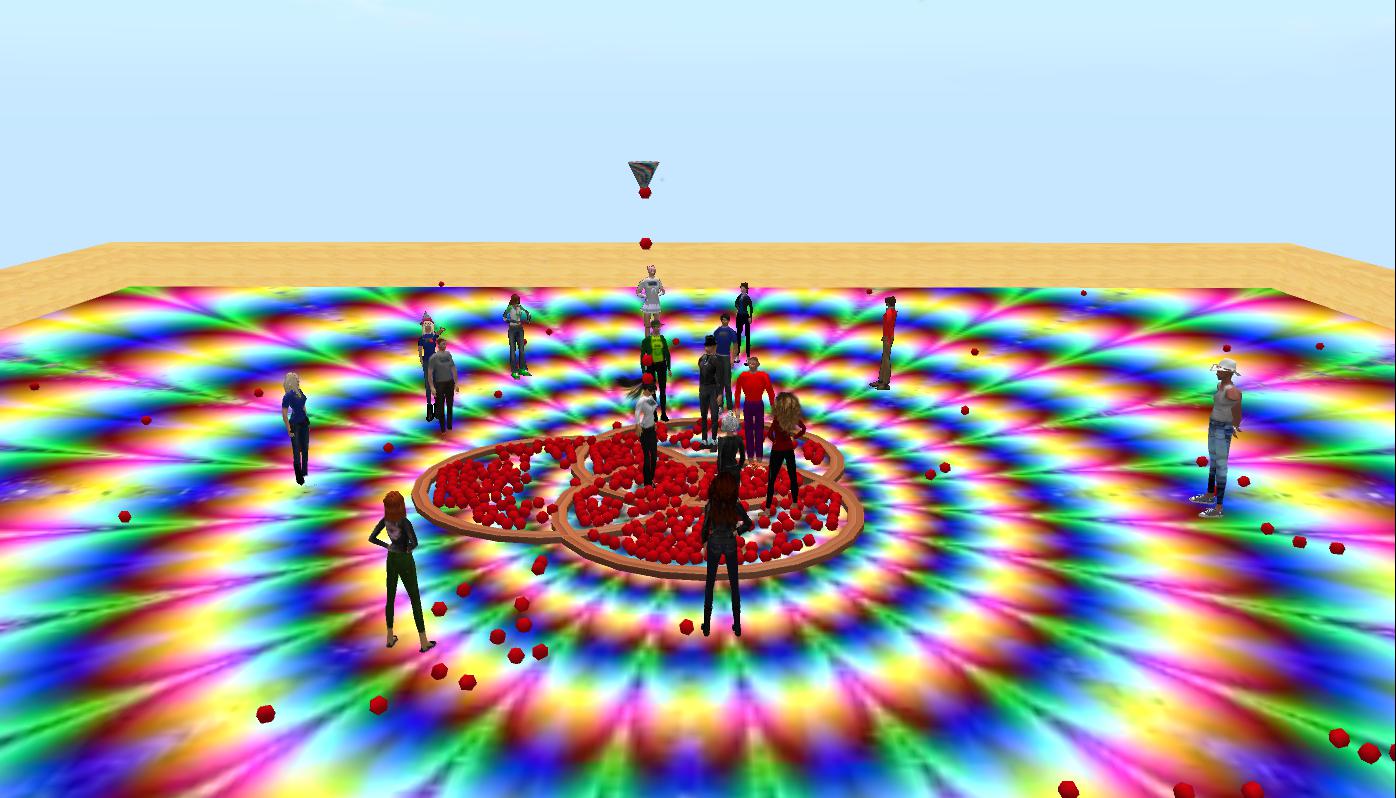
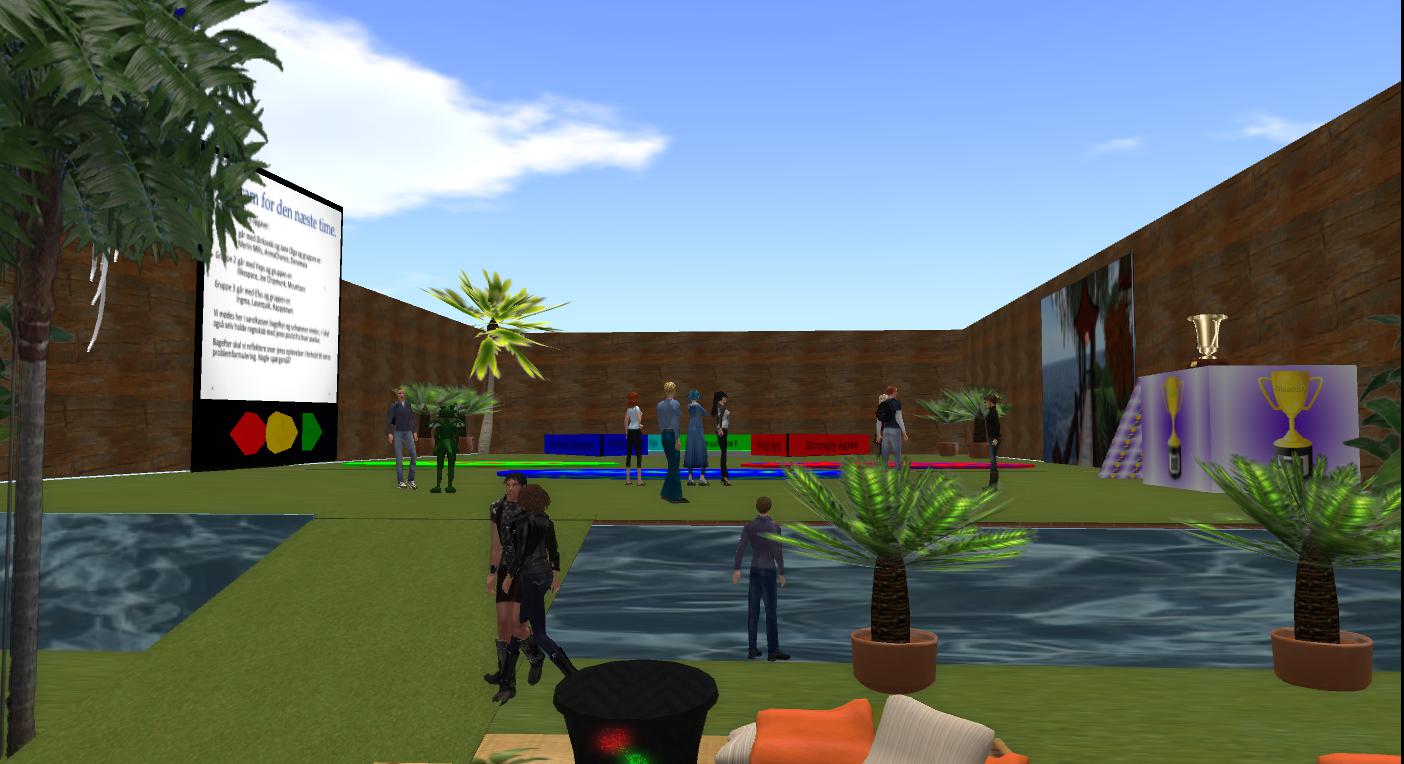
We started in Team B’s sandbox, where dirkovski explained about the team’s work and how the they had tried to design for different learning styles by using different modalities in both design of the place and in different learning activities.
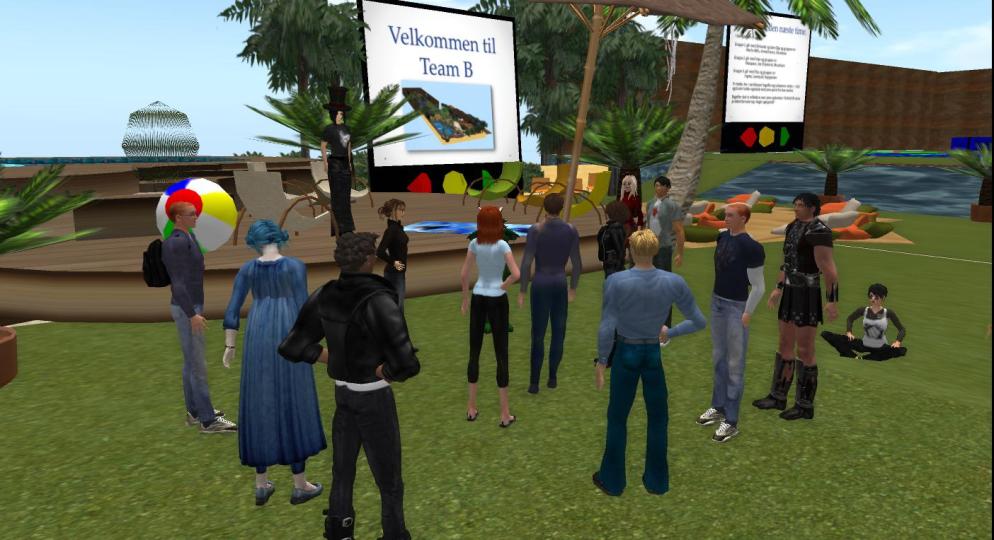

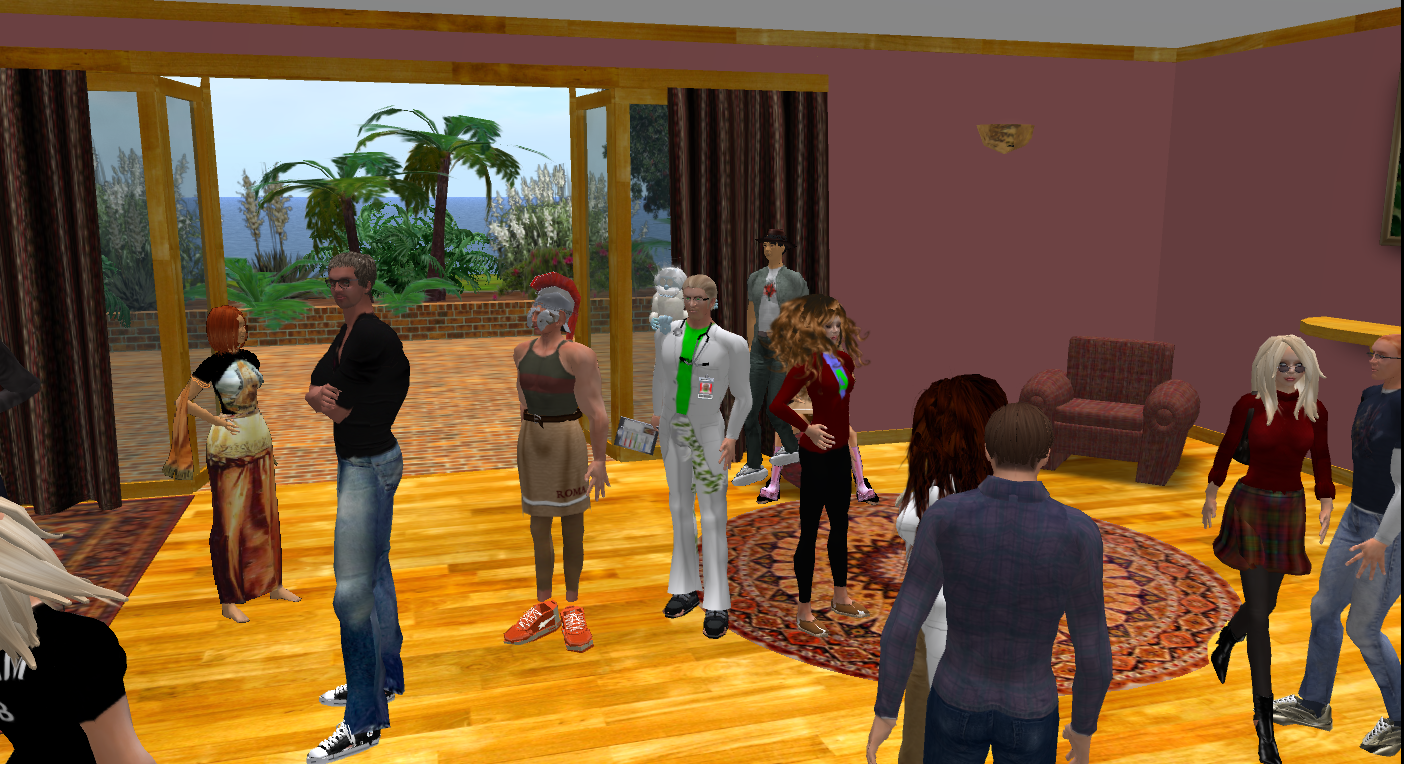
Sheffield Inf6011 students gathering in Team B’s sandbox.

Read more about Team B’s sandbox here.


Team B’s dirkovski took the Sheffield students on a tour and explained about the team’s design.
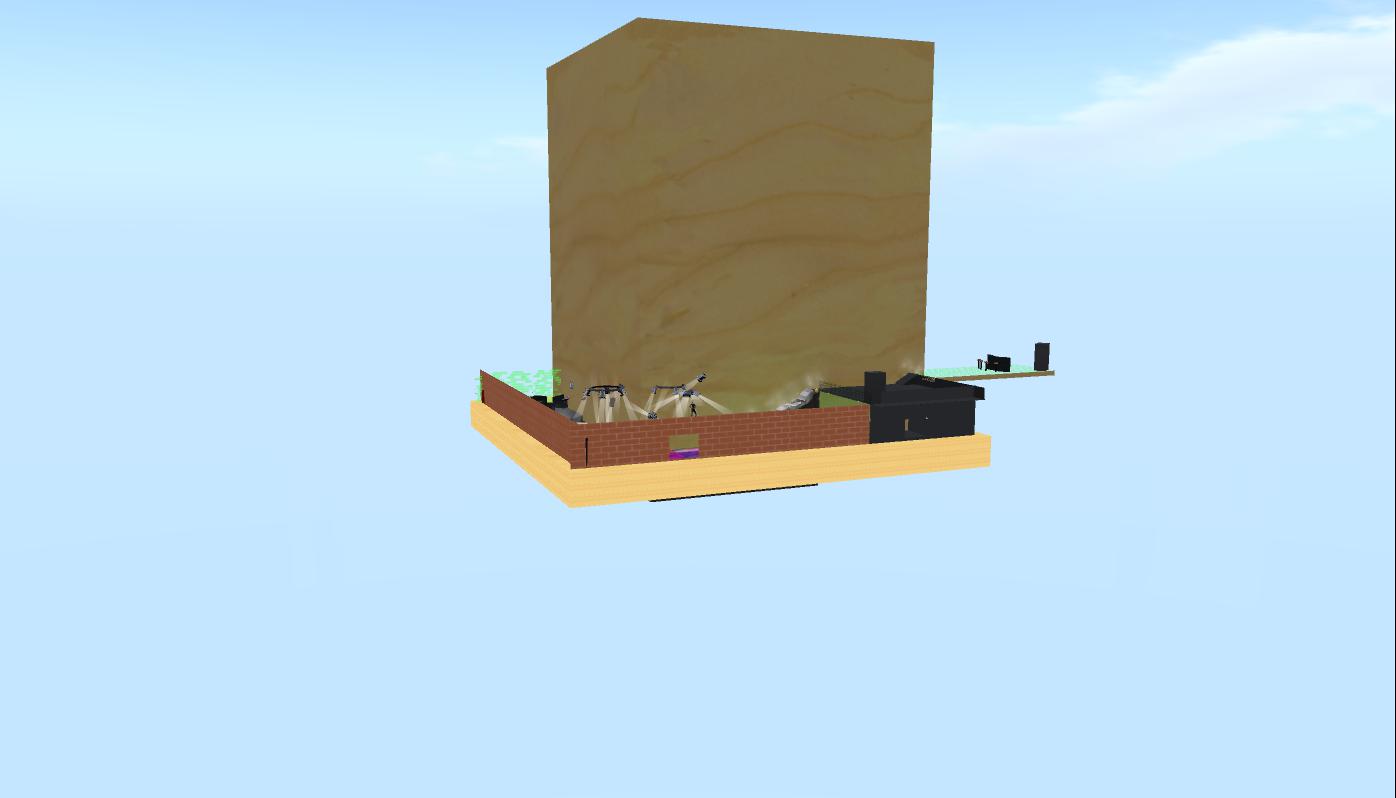
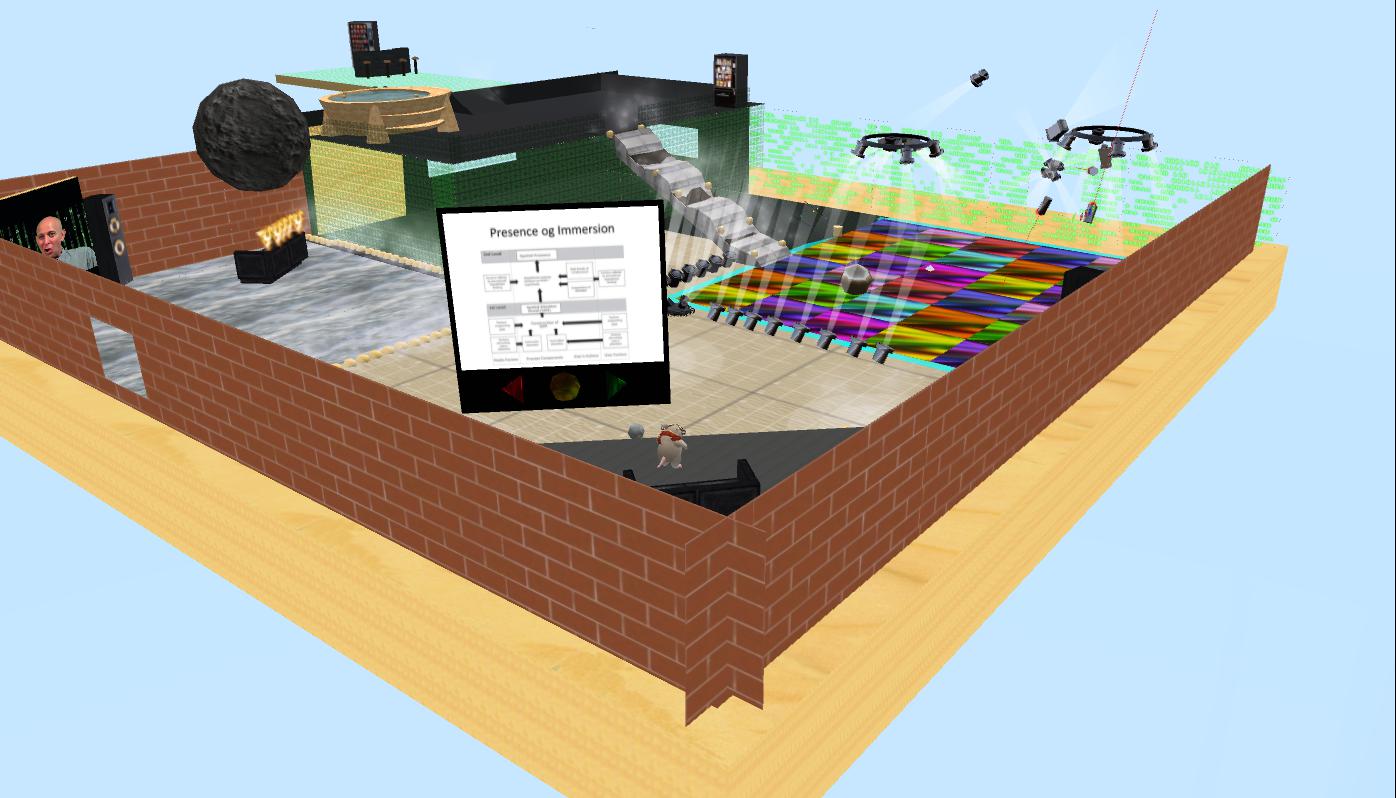
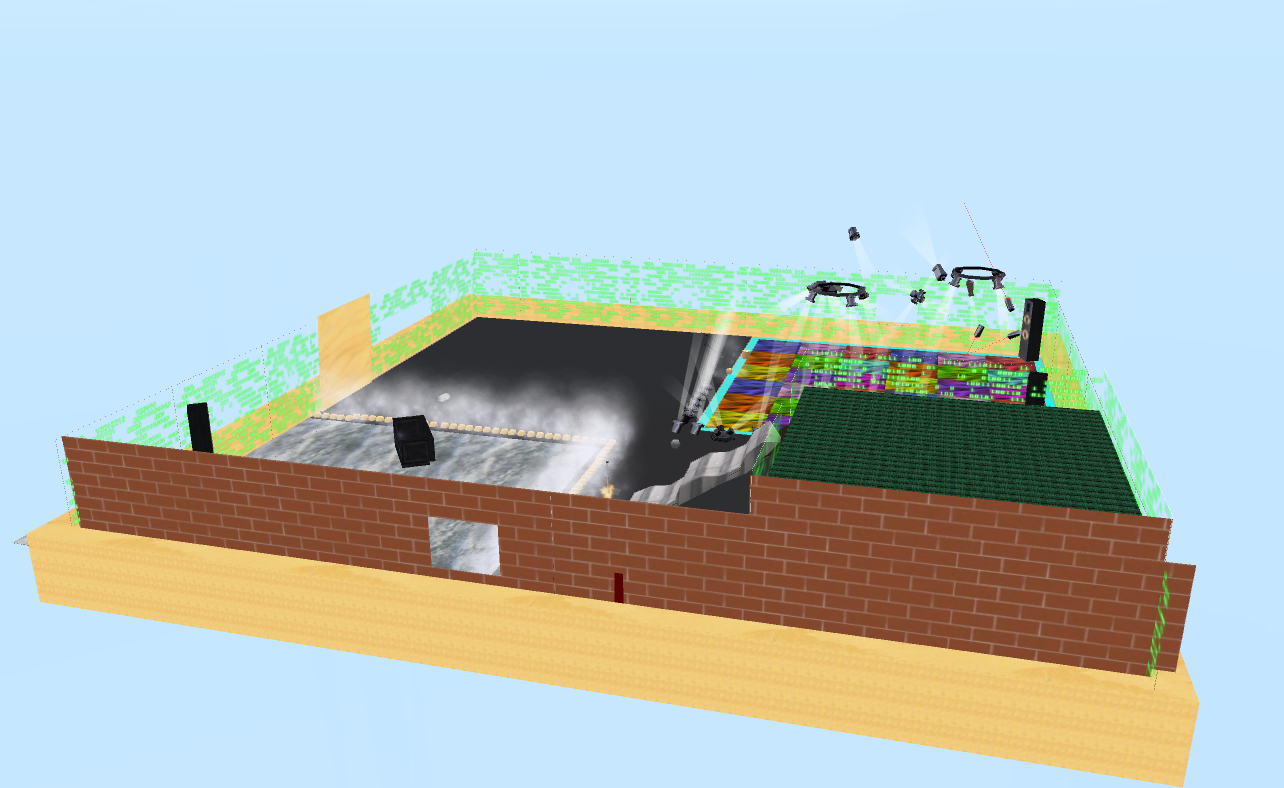
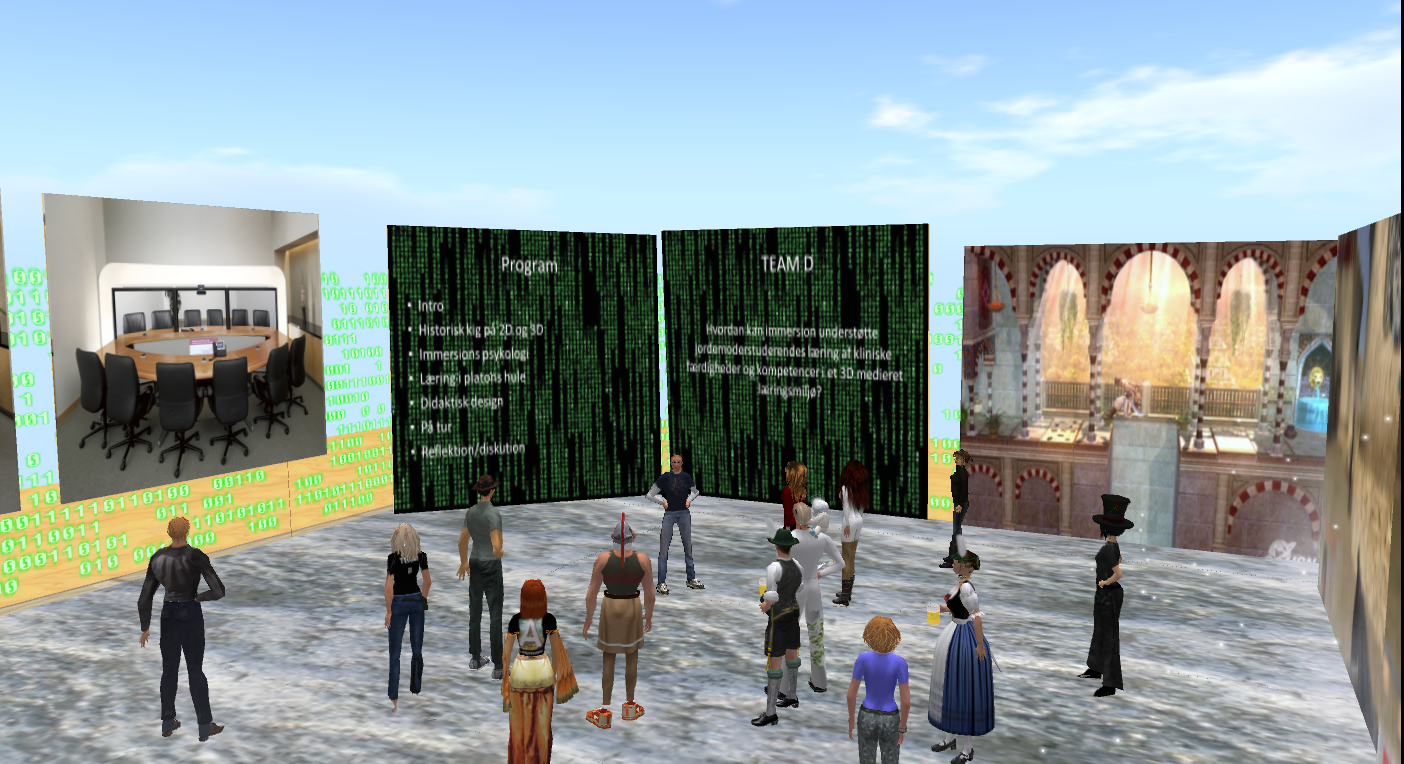
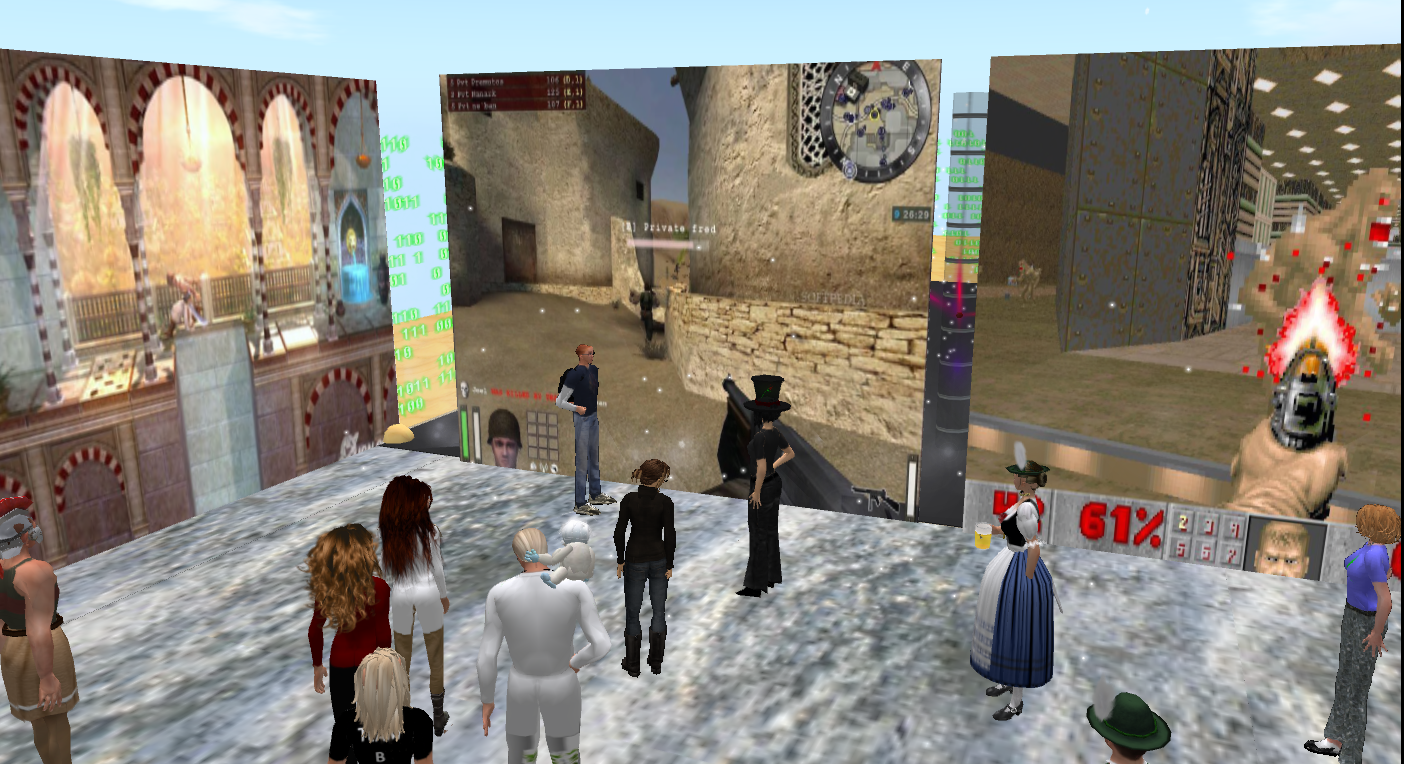
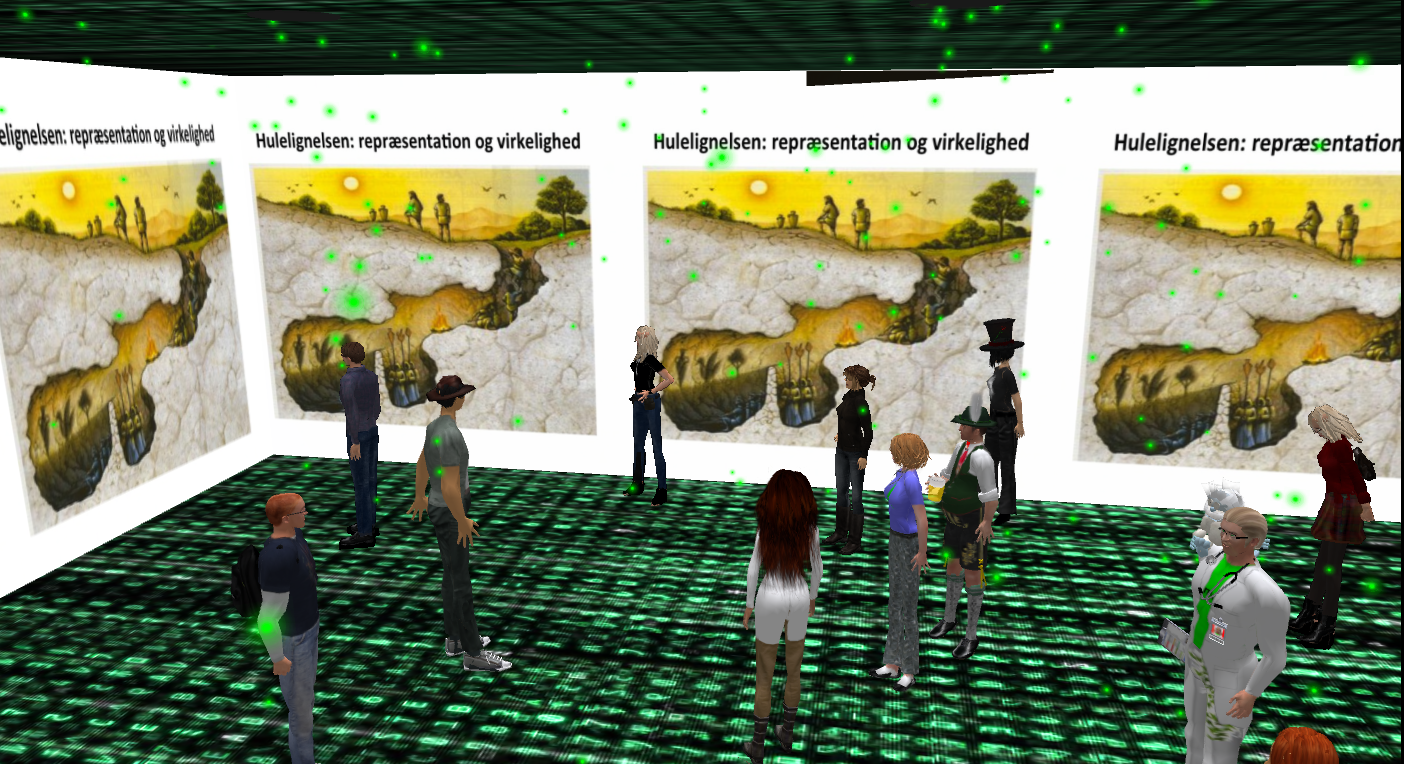
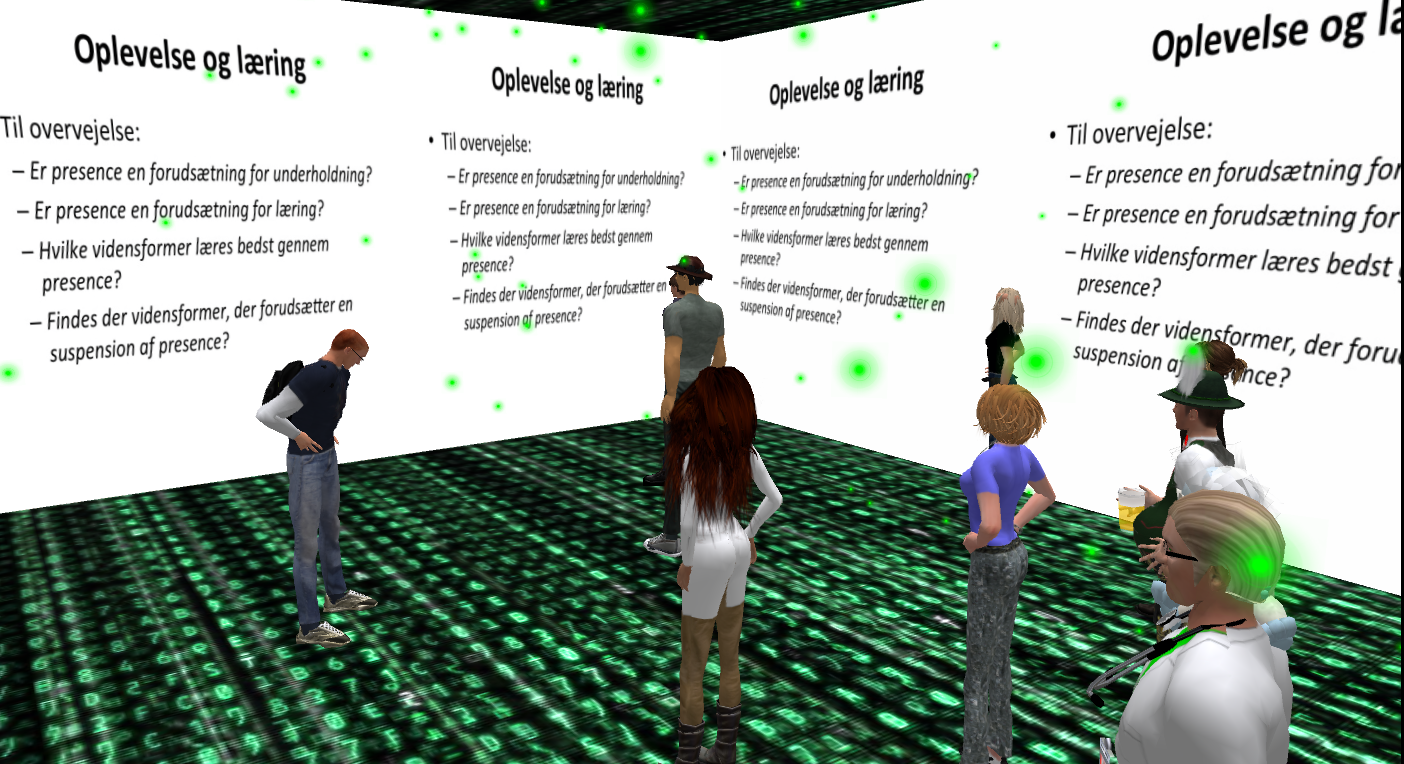
Next stop was team D’s sandbox, and here mouritzen explained how the team had wanted to make use of some of the SL affordances that enable design not-possible-in-real life and how they had tried to focus on immersion and presence in their design of the sandbox and the activities.
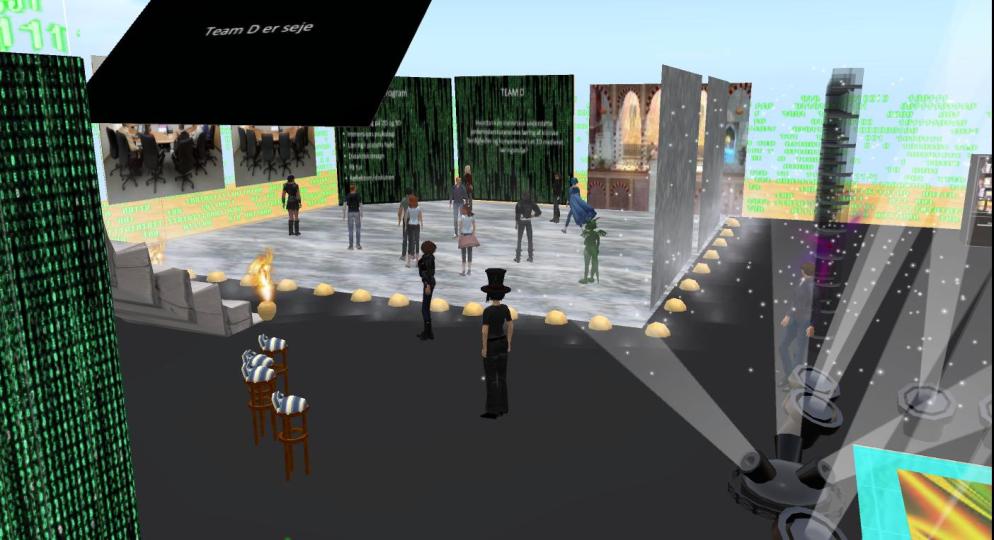

Team D’s sandbox.
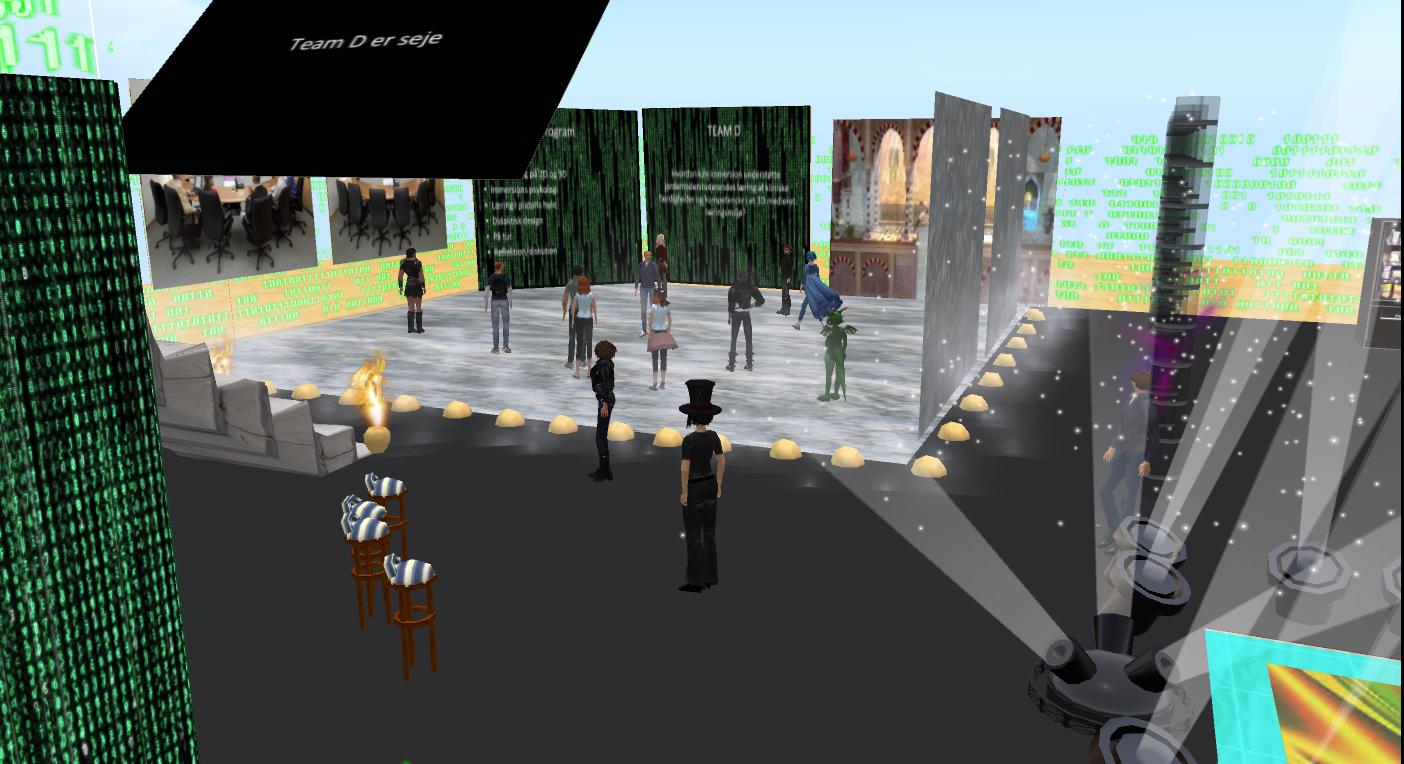
Read more about Team D’s sandbox here.
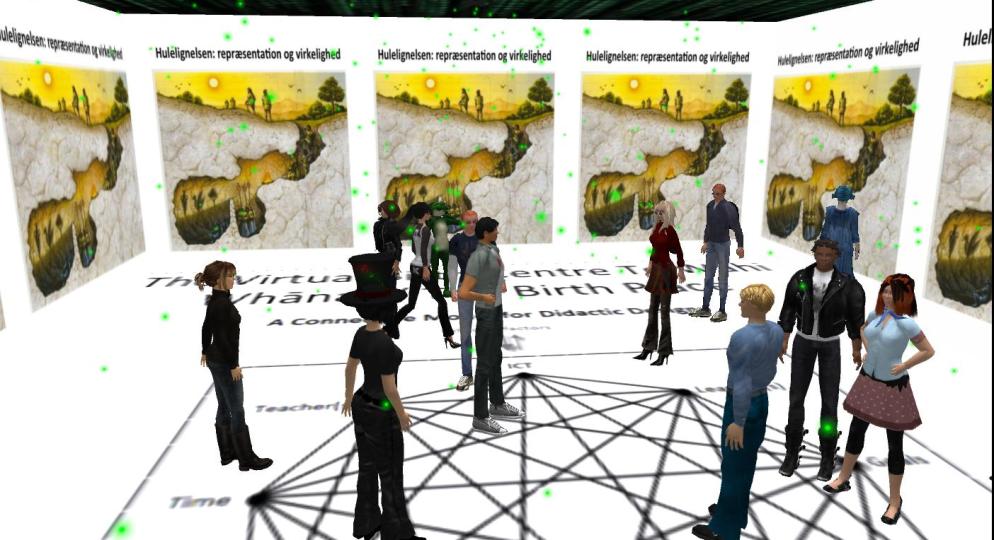

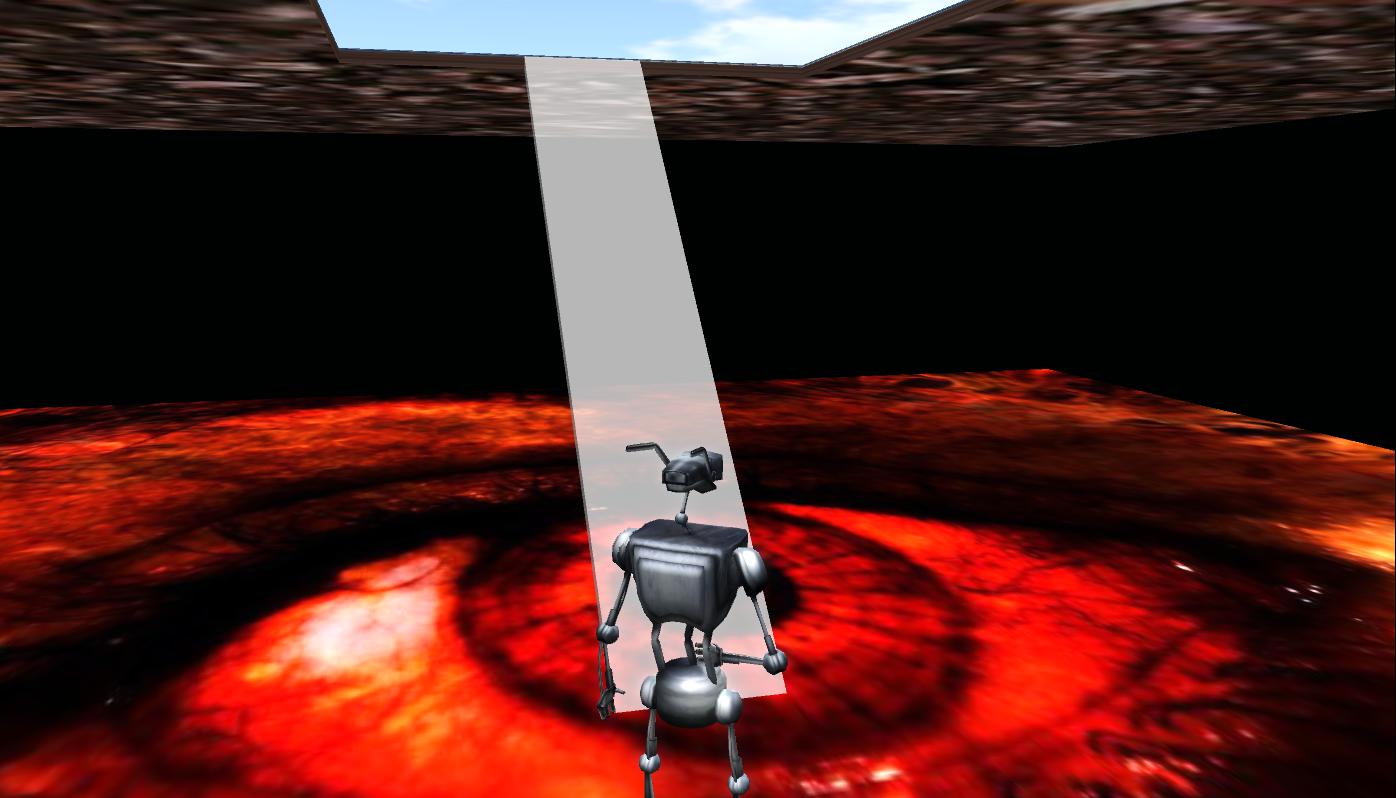
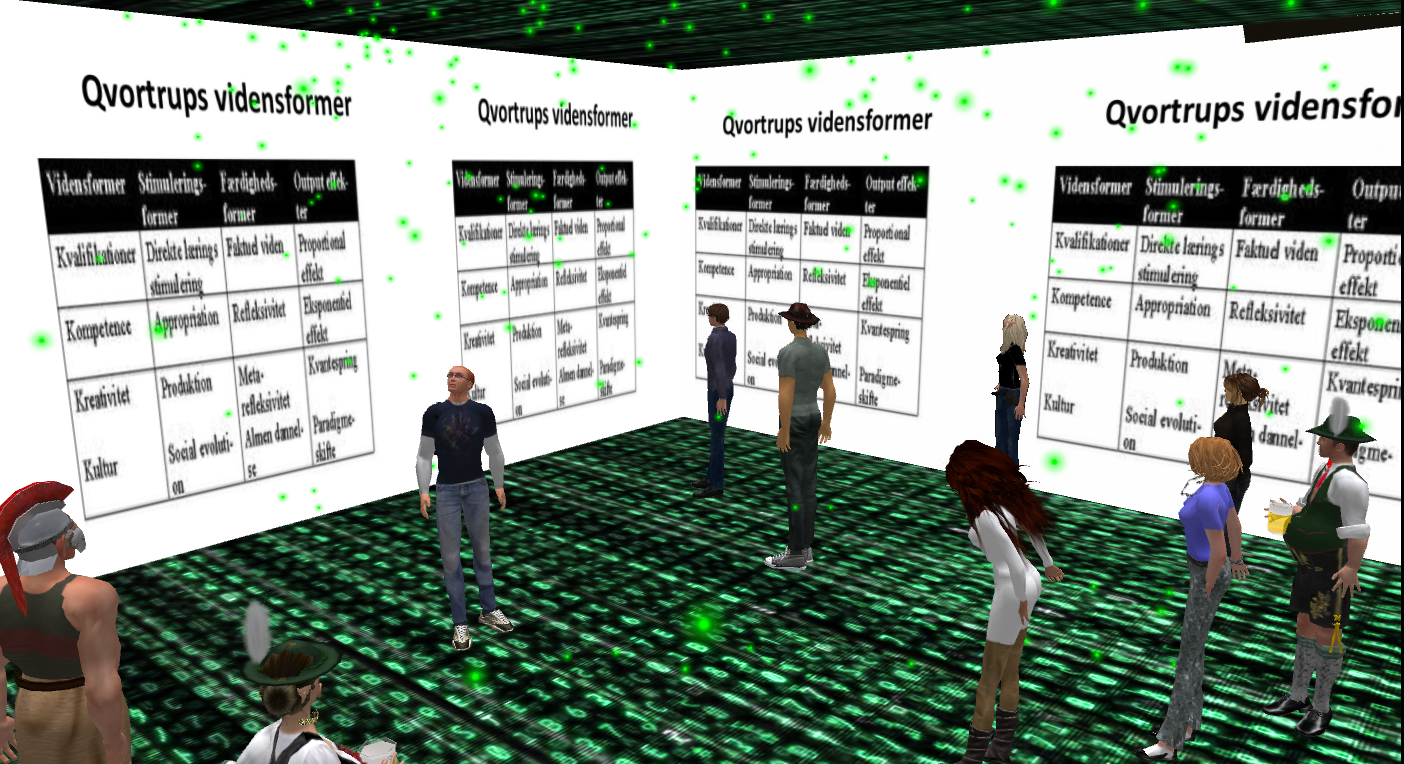
Team D’s mouritzen explained the team’s design in their Matrix inspired cave.
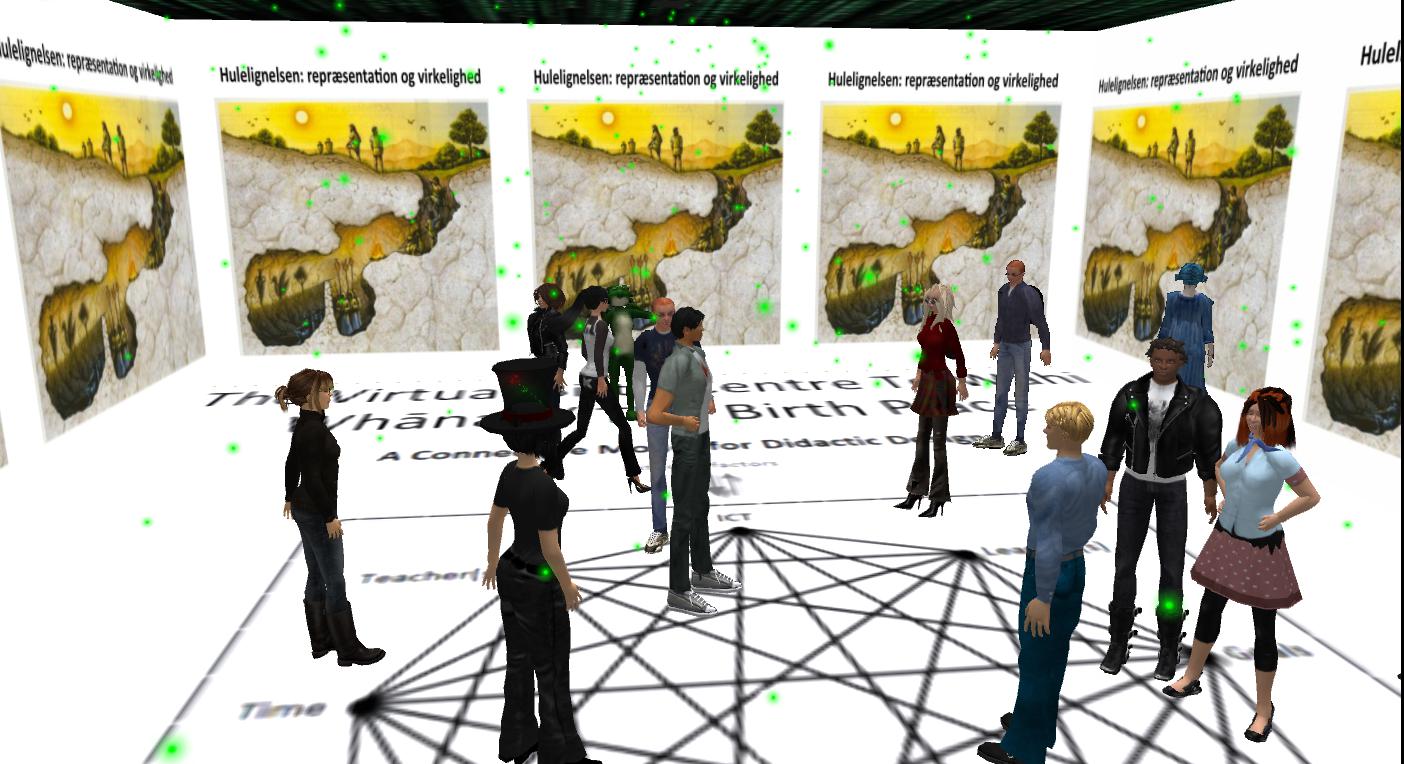
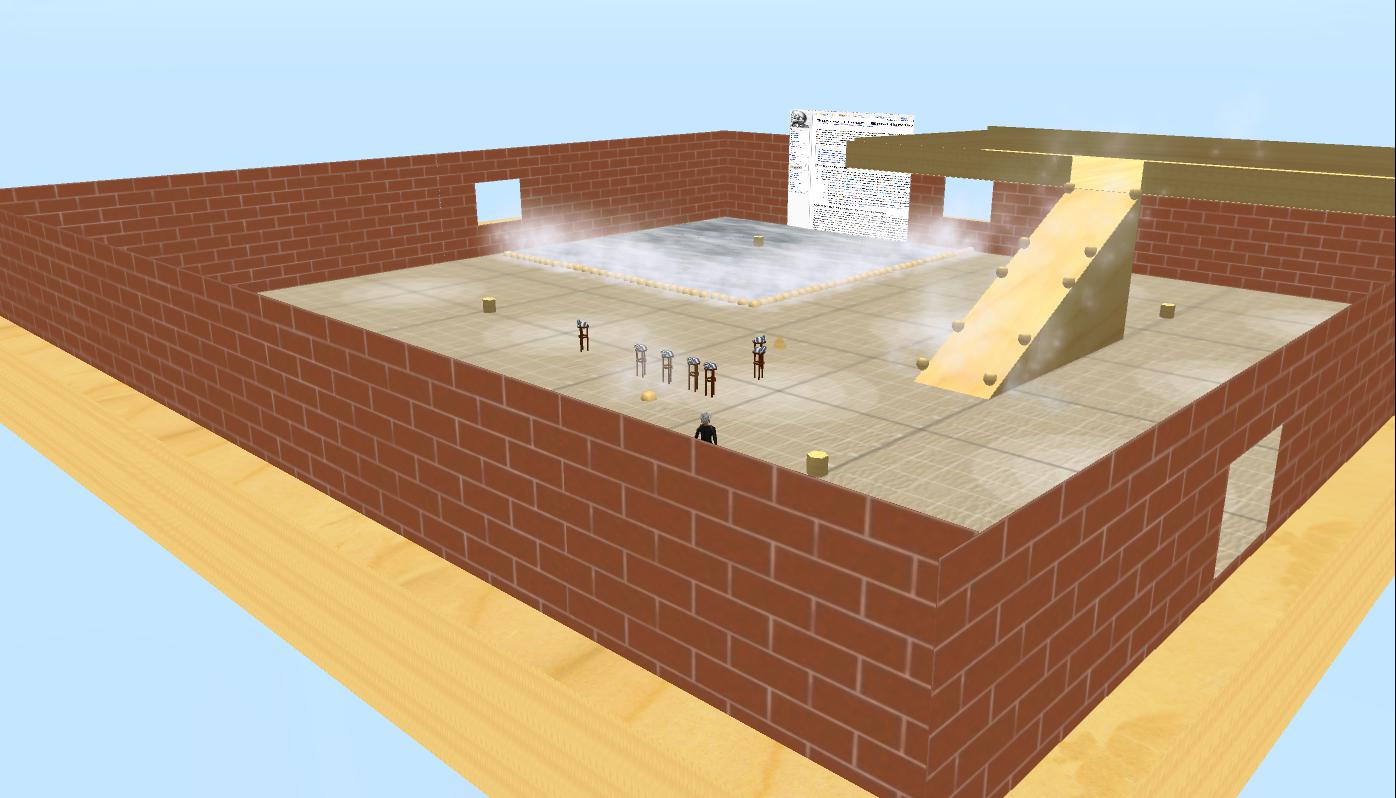
Final stop was Team E’s sandbox, and here Anina started out by explaining how they had wanted to explore how SL could be used to make physics lessons more fun and engaging.
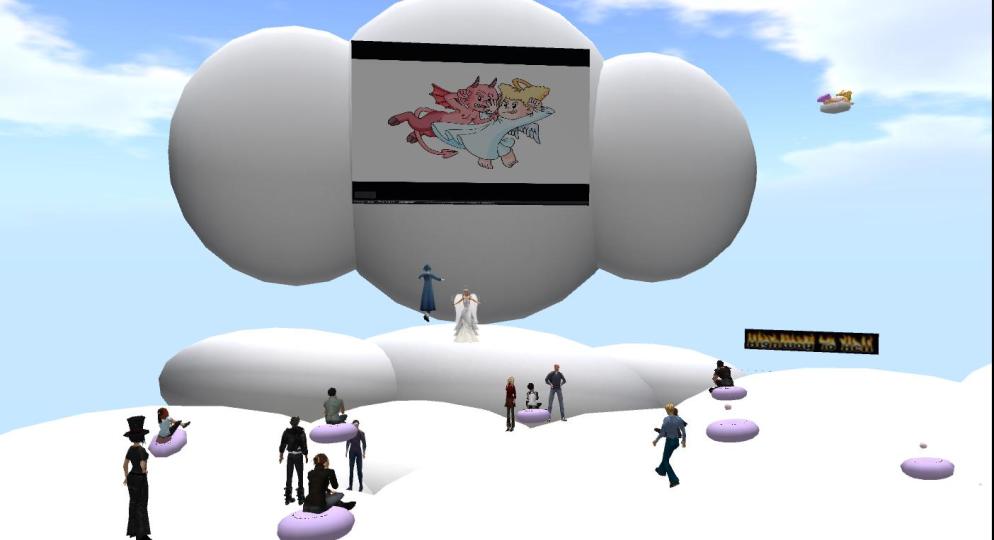

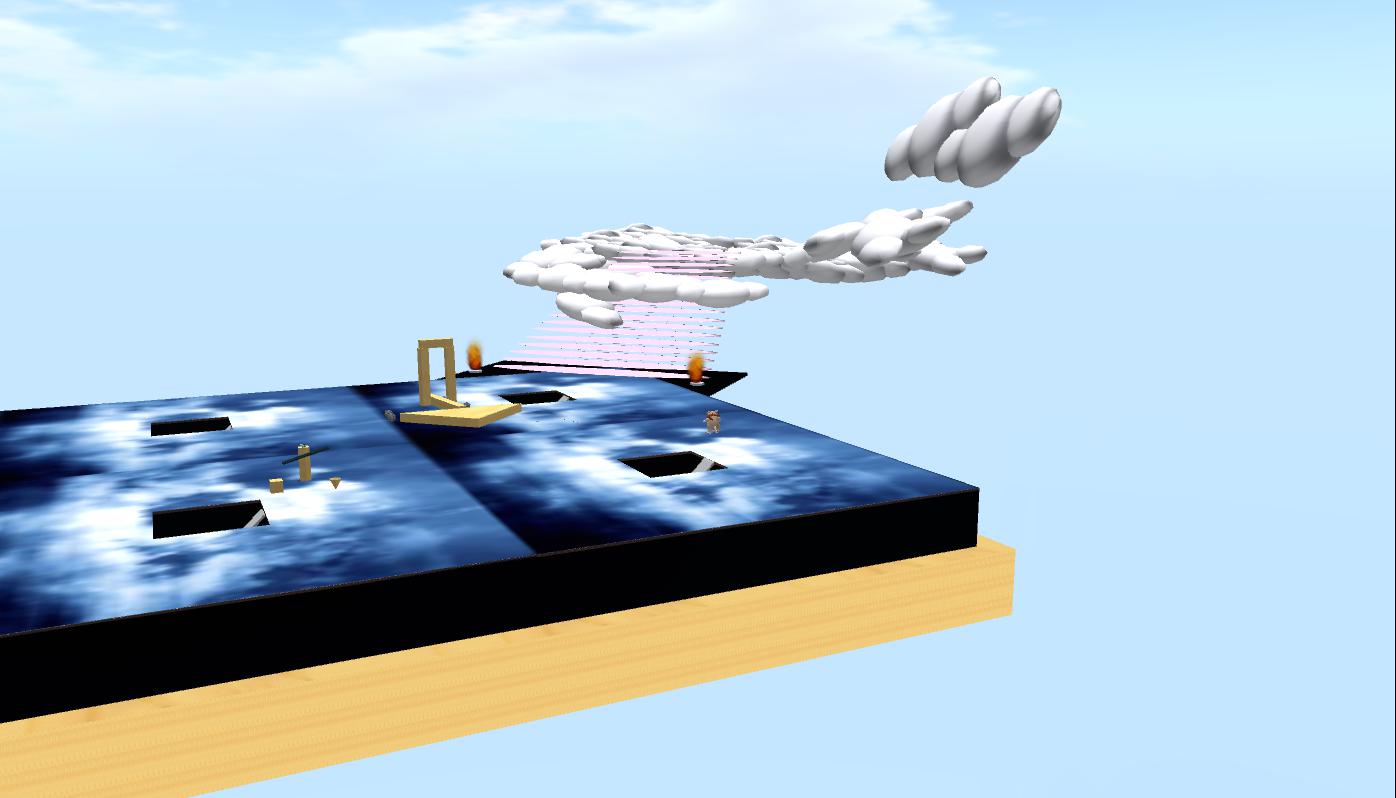
Team E’s sandbox.

Read more about Team E’s sandbox here.
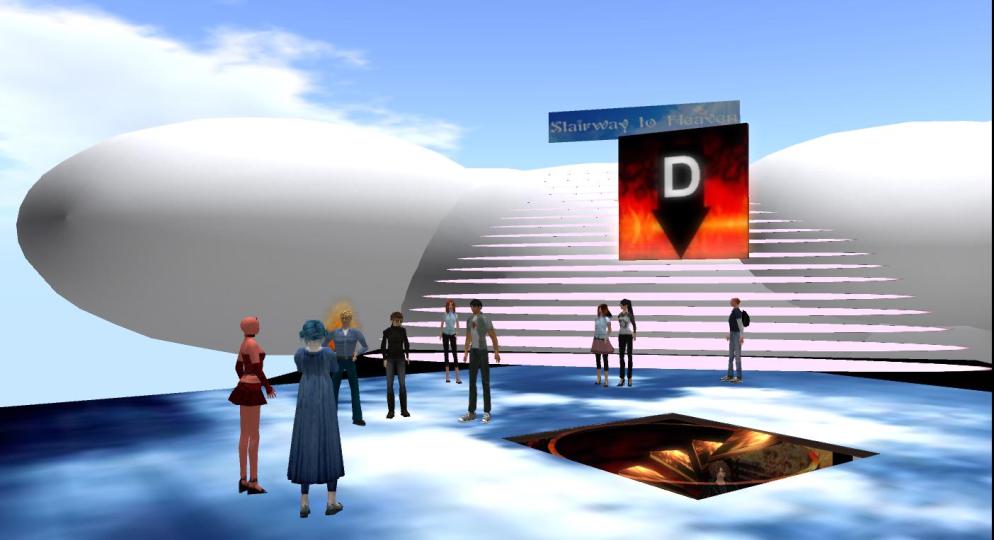

Team E’s Anina explaining the team’s design.
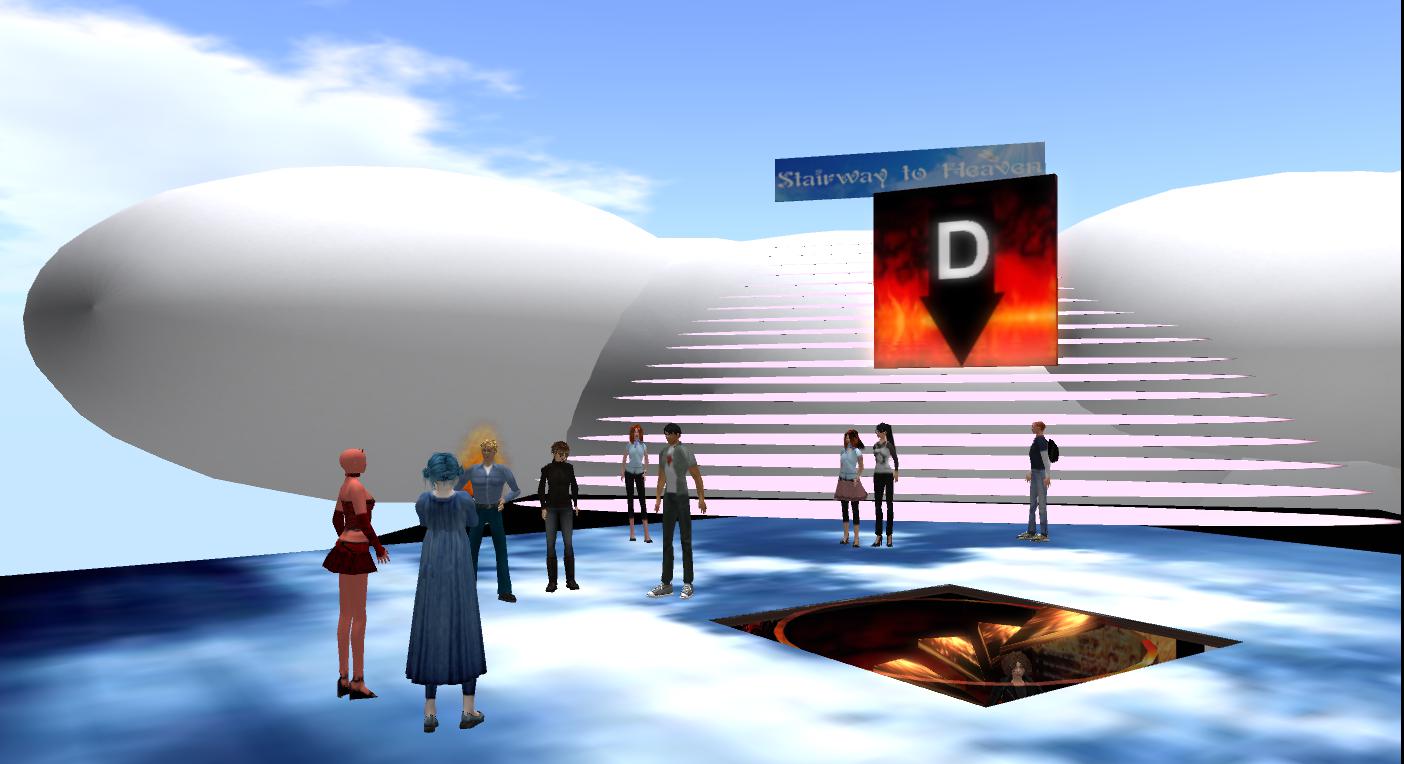
As it turned out, the Sheffield students were very new to SL – some of them had only been in-world for a couple of hours, and I think the visit was a bit overwhelming. However, judging from the feedback we received, the Sheffield students were encouraged by seeing what can be done/designed after a relatively short period in SL – when you’re a newbie building/designing often seems like an unattainable goal. Furthermore, bringing students together across countries and cultures really has a lot of potential and it is definitely something Inge and I would like to practice more in the future. As experienced in-world educators Inge and I are used to sharing our knowledge with other educators form around the world in different in-world groups and communities, and it would be just wonderful to be able to extend this type of knowledge sharing so that it included our students. A major argument for using SL in education, it that it is a fairly open technology  (at least compared to traditional LMSs/VLEs), and having visitors like this was just one small step in the right direction leading to more inclusion of  “the world outside” (albeit 3D mediated) in the university setting.

/Mariis

Interesting news regarding Kitely – 3D VW on demand service

Over on Ener Hax’ blog there are some very interesting news regarding Kitely – a 3D Virtual World “on demand” service;

  • Kitely now has a very favorable billing system in place
  • Kitely will soon open up to both email and Twitter logins – so far it has been restricted to Facebook users
  • Kitely is working on LDAP integration
Almost a year ago,  I logged in to Kitely for the first time. After just installing the Kitely plugin and a few easy clicks, I was able to login to my own “world”.


My first Kitely “world” – Mariis’ Meta – on March 28th, 2011 – accessed via the SL viewer.

Accessing Kitely via the SL viewer, there was something very familiar to this new “world”. I’m placing world in double quotes because it’s not a world in the common (SL) sense, the “worlds” are not connected in the way we know from SL, but function more as separate grids, where you have to access other “worlds” via the Kitely website (but I think they’re working on a teleport system too). On the other hand, there was something very strange (at least to me) about this new “world”; I had to use my RL name for my avatar because of the required Facebook login. Back in the spring of 2011, I was already fed up with Facebook, and I eventually decided to leave Facebook in August, 2011. I still thought the idea of being able to access VW-settings in an easy, affordable, and “on demand” way, was quite brilliant, so I’m very happy to see the recent news on the upcoming changes. One of the trends, we’ve seen in the growing field of VWs, is that they’re becoming “situational”. And because less sometimes is more, I think Kitely really represents a very interesting option in the field.

As an educator the upcoming LDAP integration also sounds very interesting because it would enable an easy way of adding larger groups of students. I have to admit that I haven’t been following the development of Kitely closely, so I’m not sure exactly how they plan to go about the future changes, but the Kitely founders seem impressingly willing to listen to their users, and there is also some indication that they are working on other education-related features.

So far, my educational use of VWs has been restricted to my adult, distance ed students because I run longer courses with this kind of students that I do with my younger on-campus students. However, with Kitely I see possibilities of introducing the concept of VWs in a much easier way, so I’ll be back in Kitely to explore and have more fun as soon as they implement the new changes :-)

/Mariis
“Loser” generated content – and LL

There is something messy about the relationship between users and corporations. (Petersen, 2008:1)

This spring, together with a colleague,  I’ll be running a class on “Audio-visual and digital media as communication tools” for our 6th semester communication students. My perspective will be on the changed conditions for marketing, production, and consumption in relation to new media, and as part of this, I’ll be using a paper by Søren Mørk Petersen entitled “Loser Generated Content: From Participation to Exploitation” (2008). In this paper, Petersen offers a critical perspective on the pros and cons of user generated innovation and content creation, and his main point is summarized in the abstract:

For many years the Internet was considered an apt technology for subversion of capitalism by the Italian post–Marxists. What we have witnessed, however, is that the Internet functions as a double–edged sword; the infrastructure does foster democracy, participation, joy, creativity and sometimes creates zones of piracy. But, at the same time, it has become evident how this same infrastructure also enables companies easily to piggyback on user generated content. (Petersen, 2008:1)

What puzzles Petersen is how at the same time new, so-called participatory media enabling user generated content can cause both very positive and very negative user experiences, and Petersen finds some explanation in combining basic principles behind the technologies in question with the logic of capitalism. The paper is good in explaining how we, the users actually pay when using “free” services, technologies, media – something that always seems to surprise the majority of students.

In preparation for this course, I’ve collected case examples from different types of SNSs, external corporate blogging etc. such as Google and Facebook, who – involuntarily – keep feeding into these kinds of discussions. Sometimes I actually appreciate talking about other media than SL, and I had not planned to include it. However, then on February 7th Linden Lab (LL) posted a call for bloggers. The call spurred quite a controversy in the SL related Twitter- and blogsphere, and I think it’ll make a perfect example of the “messy relationship between users and corporations”. So, let’s first have a look on the call:


The blog call from LL.

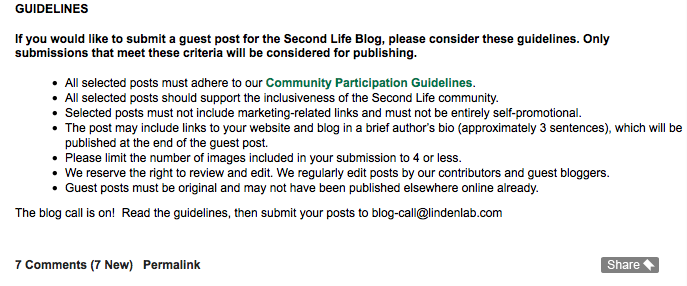
Basically, LL invites bloggers to submit original posts with “exposure” as only the only payment. This marketing approach isn’t unusual in the Web 2.0 economy, but it soon resulted in some vey negative tweets among some of the SL users I follow, and if you take a look at the comments, people were not impressed by this initiative. Lack of payment was, however not the only reason why some SL users reacted so strongly. The guidelines for submission (depicted below) also caused concerns, and I also think that the history between LL and its users had an important impact on the (negative) reactions.


LL’s guidelines for submission.

Before returning to my own take on this, let me just mention some of the reactions that quickly came about in parts of the SL blogsphere. Besides these authors’ interesting and very different perspectives on this issue, the comments are equally worth reading. One of the first reactions, I noticed was actually a comment made by Crap Mariner on the call – LL decided to delete! the comment, but prior to this, he managed to photo document it. As you can tell, this was a prickly, but satirical comment as was this one posted by Botgirl Questi, which also was deleted! Evidently, any site owner has the prerogative to moderate and even delete comments, but there are better ways of handling the process, and I’ll return to that. Inara Pey’s post “LL calls on bloggers, bloggers call out LL” fits in the more negative category, as does Chestnut Rau’s “ LL says “Calling all bloggers“, and Hamlet Au’s “SL bloggers wonder about blogging for SL on an unpaid basis“. Prokofy Neva’s “What, the Lindens do an open call for bloggers instead of a closed fic thing and you’re bitching?!” was one of the first posts I read in favor of LL’s approach, and Gwyneth Llewelyn’s “Working for free for Linden Lab’s blog” was also quite positive. Though not wanting to contribute herself, Tateru Nino also applauds the initiative in “A good effort“, and even though I don’t agree completely, I agree that the idea was good, but very, very badly executed. As an academic, I’m not used to being payed (at least not directly) for writing, and I do “love to write about Second Life”, but I will not be contributing, and this mainly has to do with the guidelines and LL’s general approach to its users.

In terms of payment, I’m not so dismayed as other SL users. From a strictly economical point of view, I think the “exposure payment” is defensible, given that for some SL users, this could actually be of great interest. When Hamlet Au contacted LL for a comment on the lack of payment, the answer confirmed that LL thought such an arrangement would be “appealing” to some of its users. However, from a PR point of view, I do think LL (again) is out of touch with some of the more critical SL users and that paying even a small sum would have bought LL a priceless amount of good will.

As an academic, I’m used to “submission guidelines”, but when reading LL’s Community Participation Guidelines, there’s a lack of transparence in terms of by whom and based on what criteria, potential submissions would be assessed. Even though this blog mainly is a manifestation of my personal views, I do try to follow general academic practice, and furthermore I try to maintain my academic integrity. Part of being an academic means providing a critical perspective on given phenomena, and I would seriously doubt that LL would accept posts pointing to some of the more critical issues concerning the use of SL. Since, the LL initiative clearly is a marketing effort, and that LL, in my opinion, suffers from a rather severe “fear of critique”, as they so clearly demonstrated by deleting Crap and Botgirl’s comments, my concern would be that LL would only want “Hollywood pretty painting pictures” – just as their marketing material in general. The great irony being that if LL admitted to certain critical issues, new users of SL probably would be better prepared for the SL experience and maybe wouldn’t leave so quickly due to unmet expectations. LL rightfully reserves the right to review and edit, and that is normal procedure when you pay somebody, however since LL doesn’t, a more sympathetic approach would be to do this in collaboration with the author(s), and an additional benefit would be that LL actually could learn something from this experience by connecting with its users.

Sadly, I’m no longer convinced that LL really wants to connect with its users, and what really sickens me is the way LL has handled this affair. Moderating posts is ok, but deleting posts that have already “aired”, and ignoring criticism only gets the opposite effect of what was wanted. It exposes a company afraid of critique and in desperate need of a PR person, and in general it adds to a very unprofessional image. I’ve been in SL for almost five years now, because despite all its shortcomings, I still consider it to be an amazing platform for all sorts of purposes. Nonetheless, I’m still surprised when LL repeatedly fails to communicate and connect with its users. LL really needs to hire someone to come and clean up this “mess” to avoid further feelings of exploitation – someone who’d genuinely appreciate the beauty and potentials of user generated innovation and content creation!

/Mariis
SL and Physics lessons – between Heaven and Hell!

Since December 5th, 2011 I’ve been running a PD class with students from the Master’s Program on ICT & Learning (MIL) at Aalborg University, and in order to pass the course, the students were asked to do in-world team presentations on the teaching and learning potential of SL. On Wednesday January 25th, Team E had to do their presentation, and this is the final post describing the students’ presentations. Background information on the course/the presentation task can be found in the post describing the first presentation, and here are links to the second, third, and fourth presentations.

Team E and their focus


Team E: Anina & Happytown

Team E’s members, Anina & Happytown are both K-12 teachers, and one of the challenges they have experienced in relation to teaching Physics in RL, is that the pupils often find it to be a boring subject matter, and so they wanted to investigate the possibility of using SL to design for fun and engaging activities, leading to the following investigation question:

How can physical activities be remediated in Second Life?

Well knowing that SL doesn’t allow for users below 16, Team E made a point out of explaining how their work should be seen as a pilot test for later exploration in a closed environment in Open Sim.

Team E’s sandbox
Just as the previous four teams, Team E also had a sandbox available from December 9th, 2011, and the pictures below reflect the progression in their work.


On December 17th, nothing much seemed to be happening in Team E’s sandbox.

A couple of days later on December 19th this shape – looking like The COI model – appeared.

Just a few days before the Midway presentation Team E’s sandbox still looked quite empty on January 1st, but we were in for a big surprise :-)

During their midway presentation on January 3rd, Team E showed us examples of how physics can be applied in SL.

… and Team E had designed animated sleighs, which their fellow classmates were invited to try out.

And then by January 11th, Team E’s building process had really taken off.

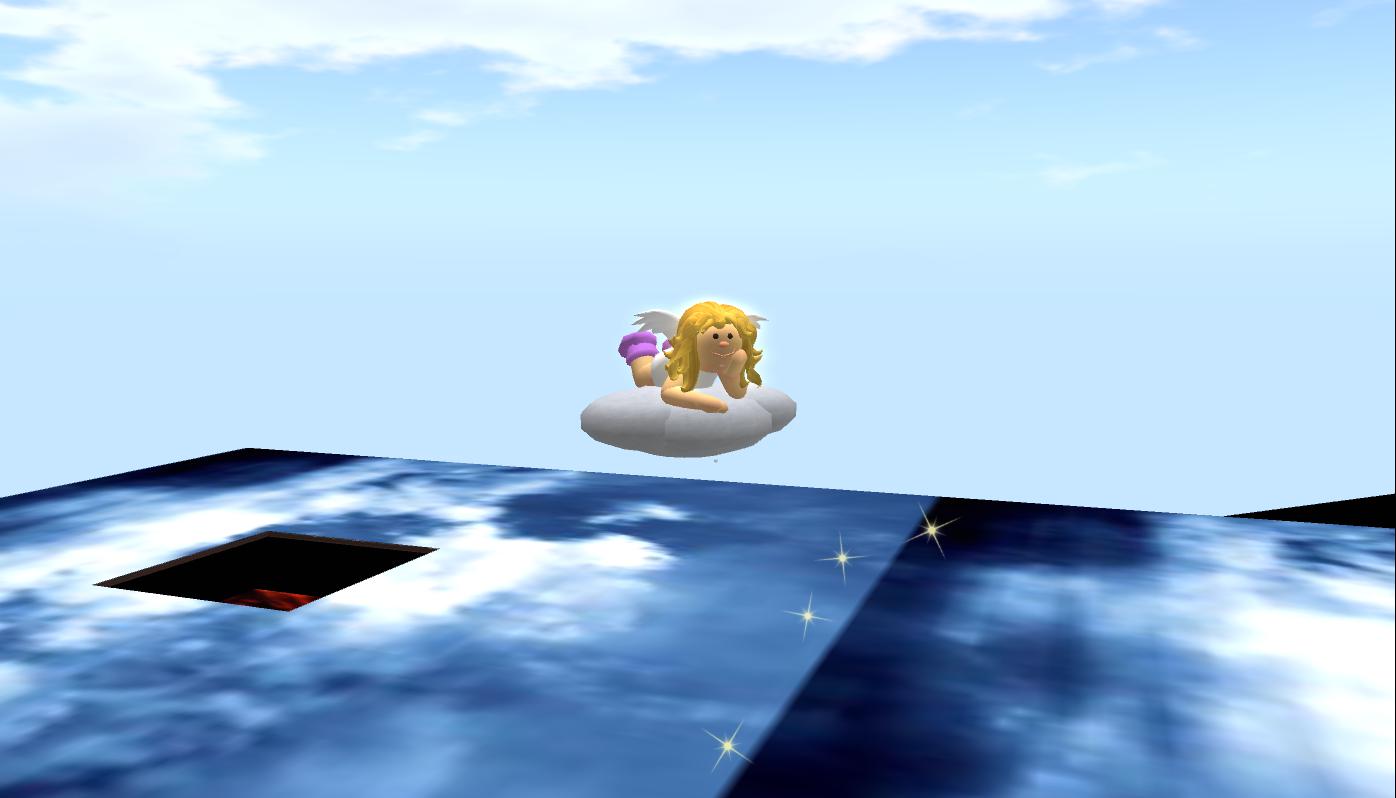
Team E also had a cute angel hovering above their sandbox on January 11th.

January 13th; more things started to happen in the air surrounding Team E’s sandbox.

On January 17th, I met briefly with Team E’s Anina to show her how to create a shared media screen.

On January, 21st it became very clear that something different was going on in Team E’s sandbox …

But exactly what, remained to be seen …

Team E’s presentation
Team E’s agenda looked like this: 

  • Remediation
  • Physics
  • Exercises
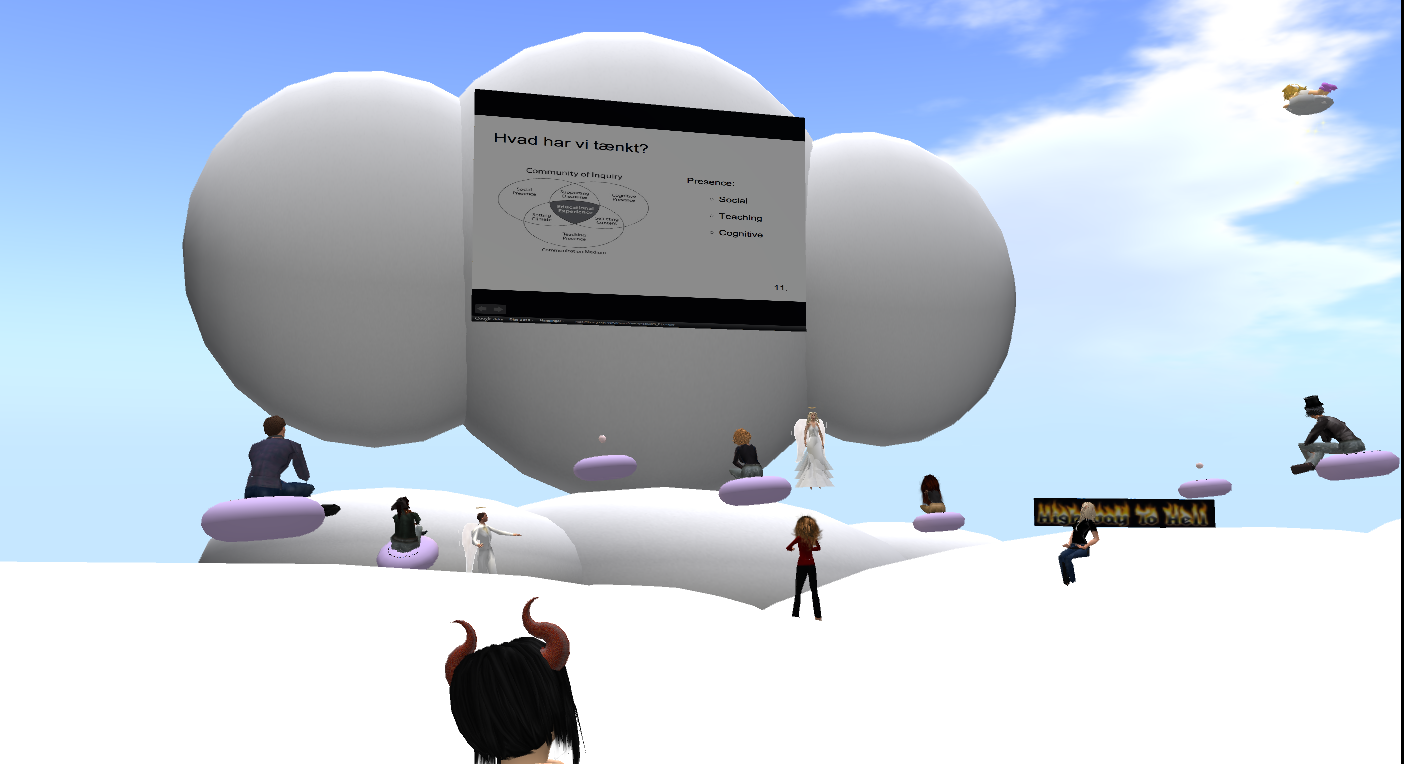
  • Reflections on our design – What have we been thinking?
  • Visit to Oddprofessor’s Museum and Science Center
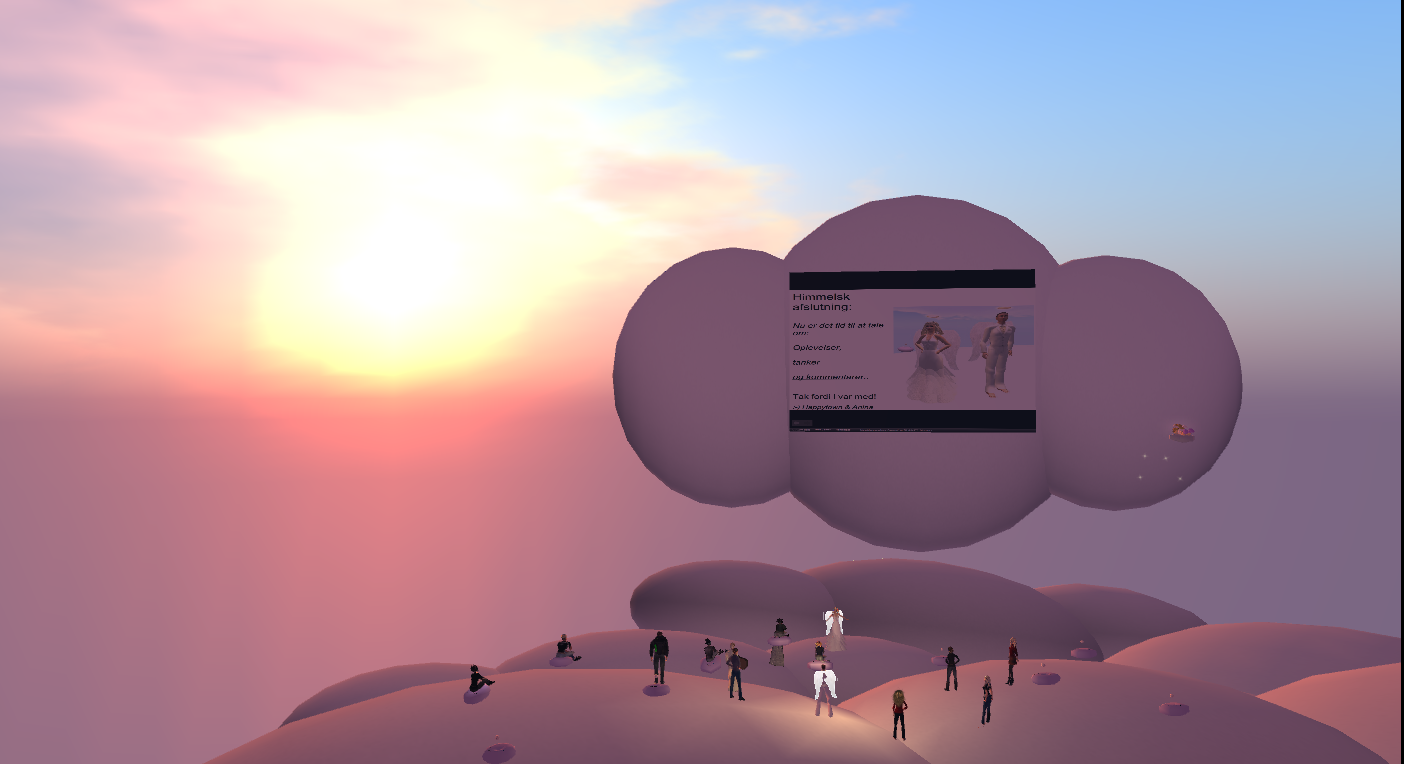
  • A heavenly closure in the sky

Team E’s slide display on one of the clouds.

Team E made extensive use of the shared media feature throughout their presentation, and chose to show their slides on one of the clouds. The tricky issue with shared media is that each user sees the displayed media individually and so the start and stopping point of a video differs. However, Team E had sent out instruction prior to their presentation and after further elaboration in-world, everybody seemed to be on the same “slide”. The team explained how they had wanted to investigate Bolter & Grusin’s concept of remediation and use it to redesign some exercises from an existing instructional design from a Physics class.


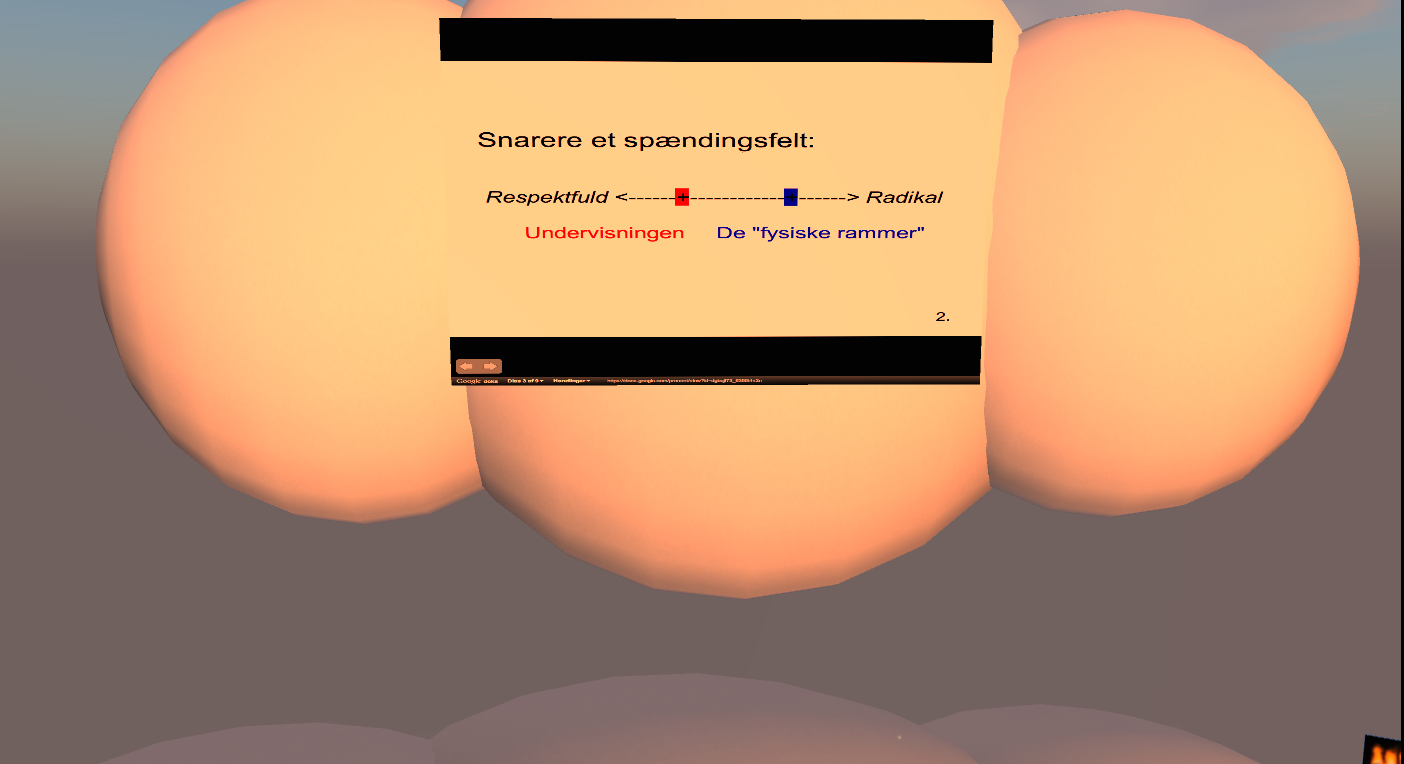
The continuum of remediation.

As part of Team E’s design strategy, they had chosen to remediate the activities in the exercises in a respectful manner drawing on RL examples, and then remediate the setting in a more radical manner based on a Heaven-Hell analogy. By drawing on different aspects of the remediation continuum, Team E wanted to design authentic exercises that would stimulate their target group’s learning and engagement due to the more fun and interesting surroundings.


Graphic overview of some key elements in Physics.

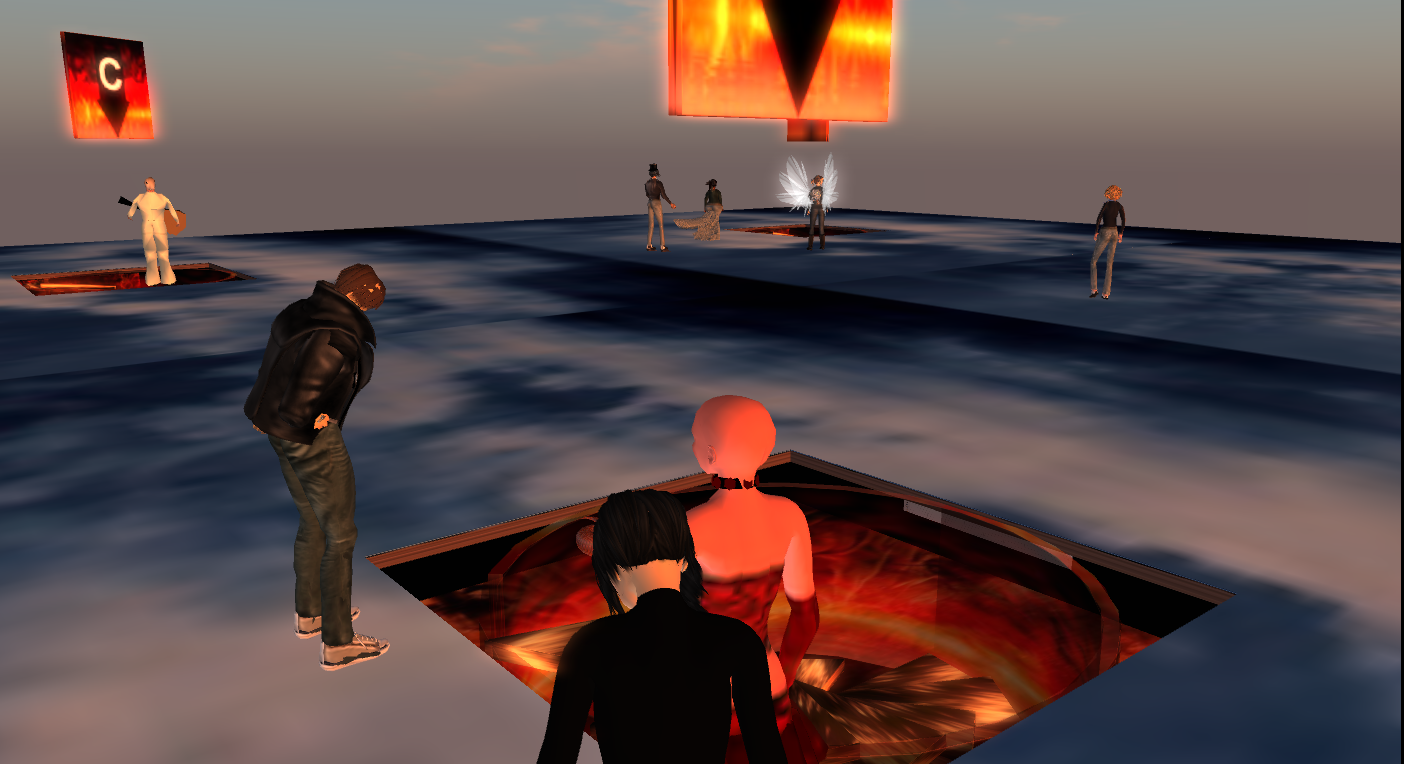
After this brief introduction to their design ideas, Team E went on to explain about the exercises that the other teams had to do, and we were asked to follow the “highway” and enter Hell …


On the Highway to Hell … aka to the Physics exercises!

Each team had been assigned their own place in Hell …

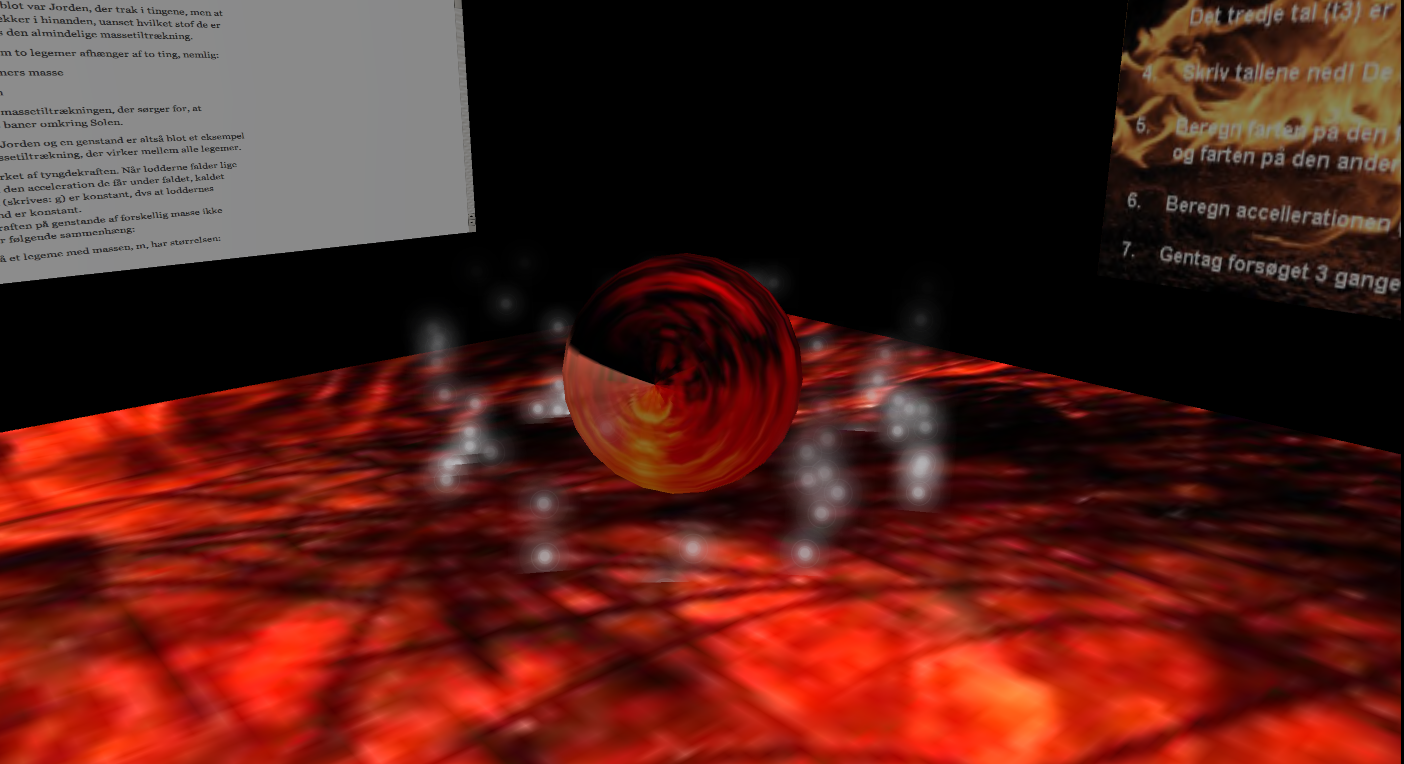
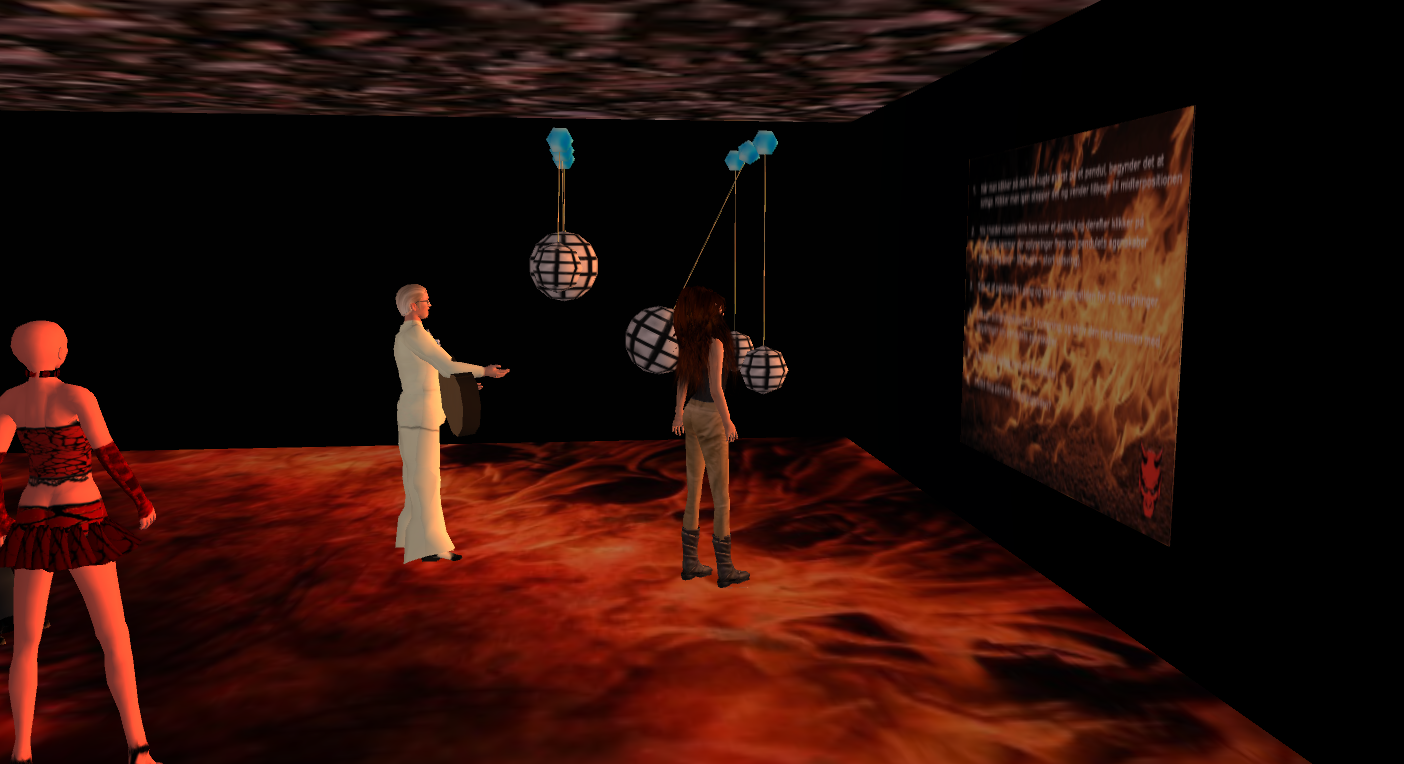
With some help from my co-facilitator, Inge Team E had designed four sound-proof rooms, one for each team, that all contained three different exercises. For each exercise, different information was displayed as text or videos, and the teams had to complete at least one exercise, and write the results in shared documents.


Gravity exercise with a ball of lava to calculate mean acceleration.

Pendulums to calculate cycle time in Factor Physics.

Calculating friction of different materials.

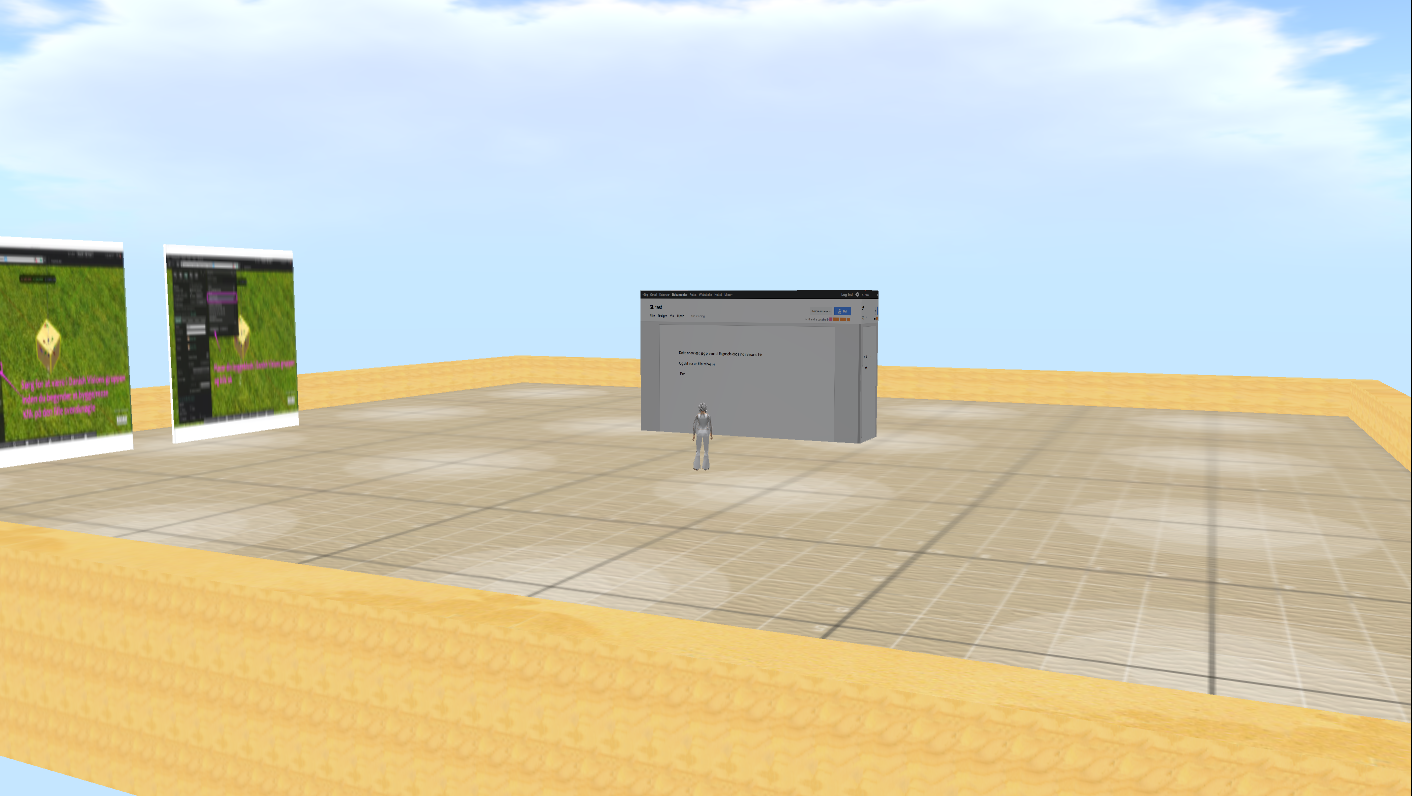
Results from the exercises had to be written in the shared docs on the walls.

I didn’t manage to visit all teams, but all of them seemed to be fully engaged in the exercises, which was no surprise with the great designs and devilish teachers:


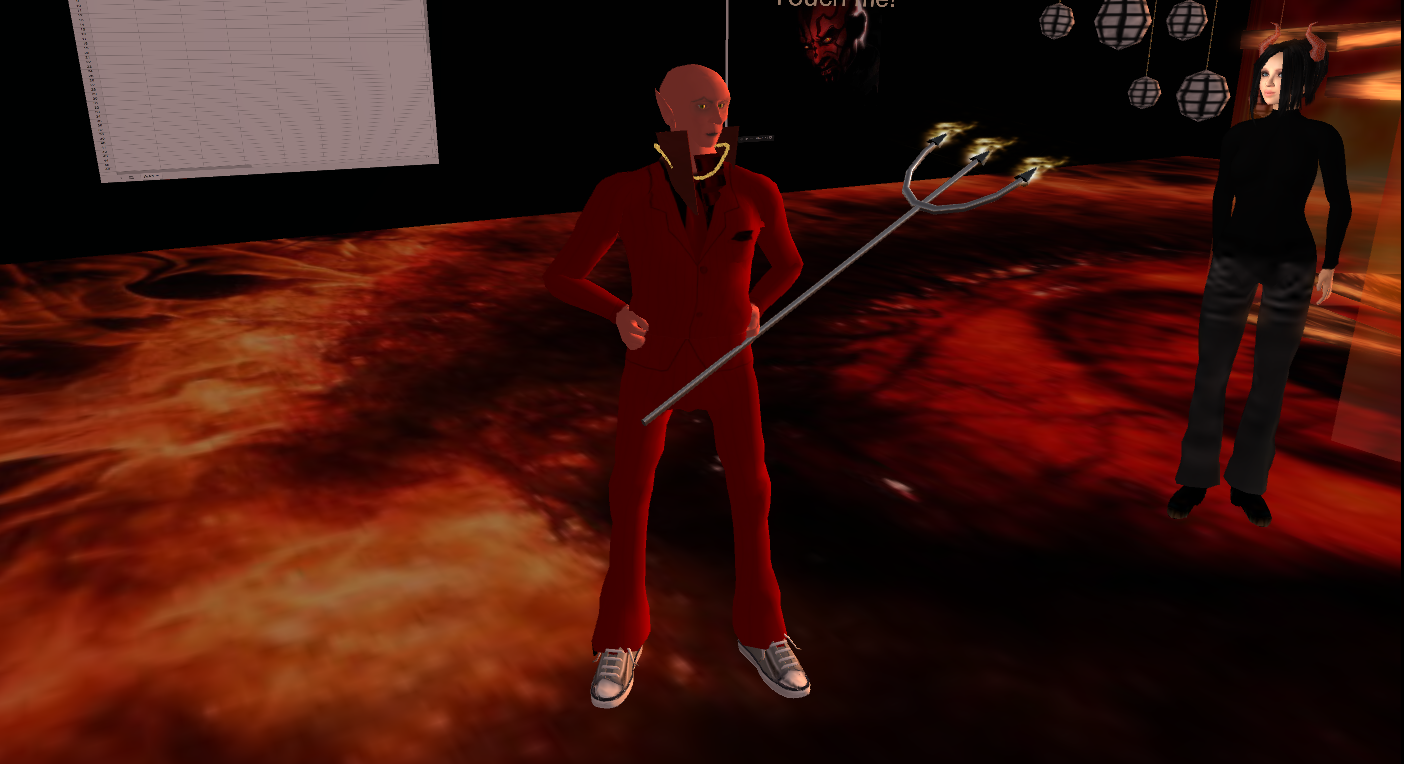
Anina,

and Happytown – their mere appearance made me listen carefully too ;-)

After the exercises, it was time to resurface and go back to Heaven.


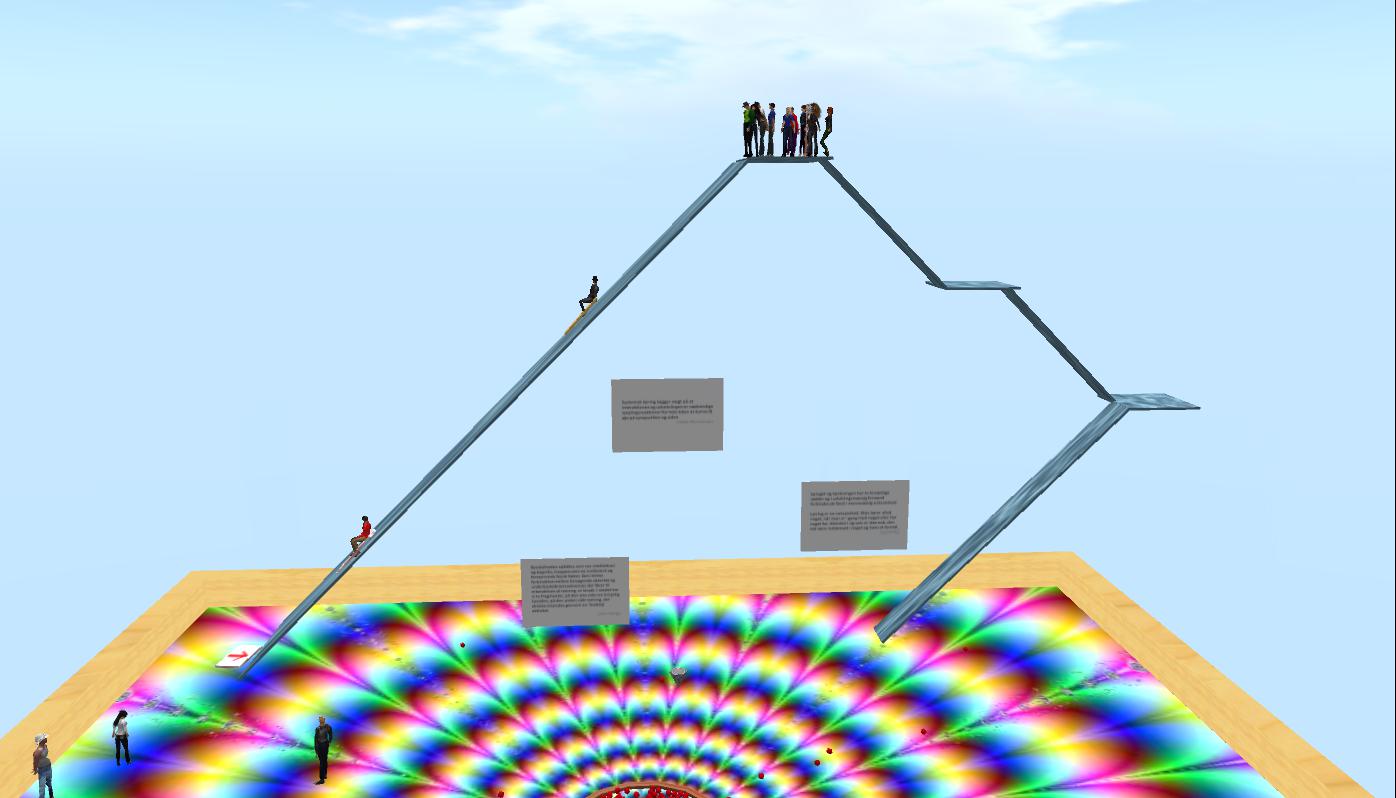
The Stairway to Heaven.

Back in the clouds, Happytown and Anina returned to their investigation question and elaborated on some of the theories (Wadley, The COI-model) they had used to support their work. Based on Nielsen’s work, Team E spoke of the necessity of the users’ ability to use their imaginative powers to feel immersed in an environment such as SL, and about the need to design for active knowledge construction via in-world artifacts.


The COI model on display.

For the mandatory tour outside the team’s own sandbox, Team E had chosen Oddprofessor’s Museum and Science Center, and we were asked to go there and explore the many fine examples of interactive objects and activities for further inspiration. The place has been created by Oddprofessor Snoodle who uses it to teach Physics/Chemistry for deaf students, and the place is filled with fun and engaging learning activties.


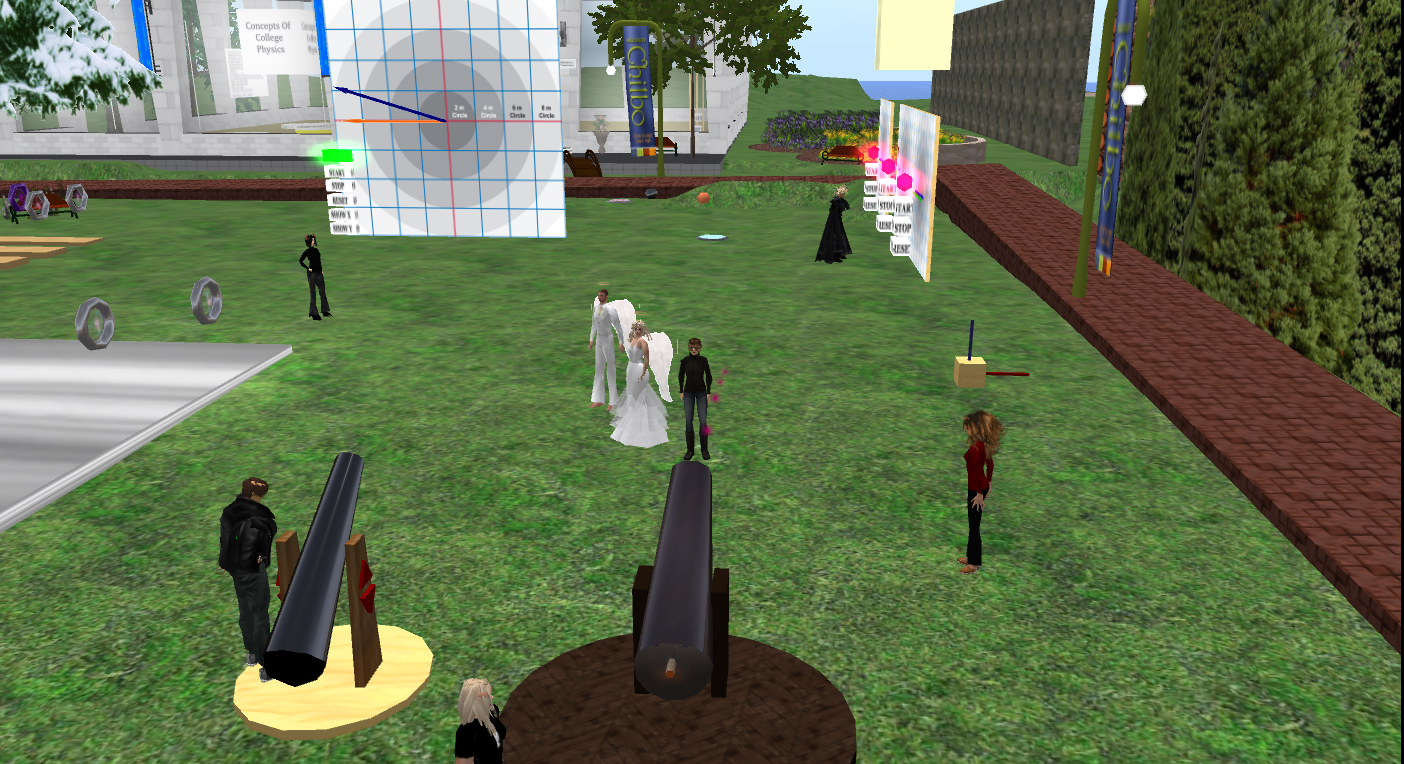
Exploring the many activities in front of the Free Fall Towers.

Learning through bowling :-)

My co-facilitator, Inge volunteered to stand in the line of fire from the canon!

Back in Team E’s sandbox, it was time for reflection and feedback.


Truly a beautiful setting for the final team presentation in the course.

Team E had wanted to show us, how SL can be used for teaching RL Physics, and I think they made a very convincing case. Their ambitious design impressed all of us, and it was a pleasure to witness such a good use of many of the features in SL. Anina & Happytown really have embraced SL, and their enthusiasm shone through their presentation, making many of us wonder what we could have learned, if only we had had the opportunity to learn Physics this way! In summary, Team E provided us with a very fine closure of this course on the educational use/potential of 3D Virtual Worlds :-)

/Mariis

SL as learning environment for Midwifery education

This is the fourth post of five describing the work of the students from the PD class, I’ve been running since December 5th, 2011 with students from the Master’s Program on ICT & Learning (MIL) at Aalborg University where the students have to do presentations in-world. Background information on the course/the presentation task can be found in this first post, and here’s the link to the second post, and the third post.  On Monday, January 23rd Team D had to present their analysis of SL as teaching and learning environment.
Team D and their focus


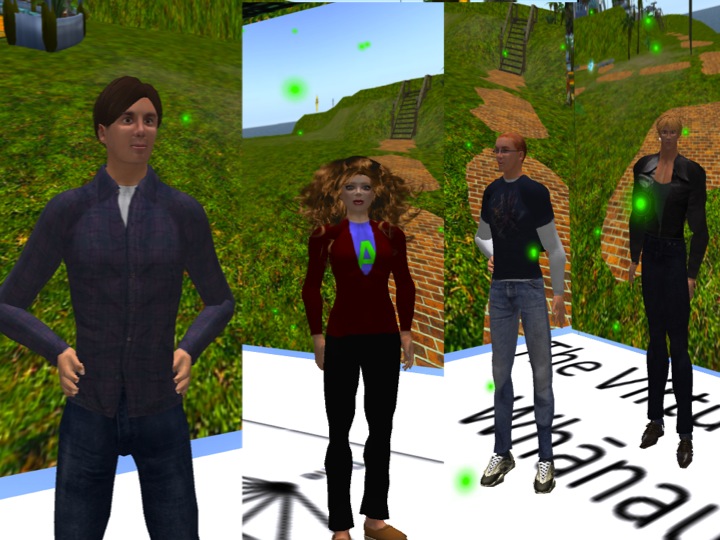
Team D; tomsteff, danamaia, mouritzen & Saxodane.

Just like the previous presenting teams, Team D’s members come from very different backgrounds working as College Teacher and IT-consultant, Midwife and Educational consultant, Assistant Engineer and AV-Lab consultant, and finally as Cooperate Psychologist and HR-consultant. danamaia was already familiar with some of the people behind the SLenz Virtual Birthing Unit-project, and the team decided to further investigate the use of SL as a supplement in Midwifery education leading to the following investigation question:

How can immersion facilitate Midwifery students’ learning of clinical skills and competences in a 3D-mediated learning environment?

Team D’s sandbox
To support the MIL students’ work in SL, each team was assigned a sandbox on December 9th (after they had learned the most basic SL skills), and the pictures below show the progression in team D’s sandbox:


December 17th; Team D has set up a shared media screen.

January 1st; Team D’s sandbox now only contains my building instructions …

However, a few days later on January 4th Team D’s building process has really taken off.

And a week later on January 11th, Team D’s sandbox is starting to get filled up with a nice addition of phantom walls based on transparent/green binary codes.

January 12th; Plywood here, plywood there – the basic building material of SL now seems to fill up Team D’s sandbox.

January 13th; The Matrix inspiration continues with the addition of a video-trailor for the movie.

On January, 20th part of the sandbox has been removed in the NW corner.

A closer look of the interior of Team D’s sandbox on January, 22nd.

Team D’s presentation

 Team D’s agenda and investigation question on display.

Team D’s agenda looked like this:

  • Intro
  • Historical perspective on 2D and 3D
  • The psychology of immersion
  • Learning in Plato’s cave
  • Didactic Design
  • Tour
  • Reflection/discussion
After we were welcomed in the team’s sandbox, Team C’s mouritzen gave us a brief overview their investigation question and of some influential games/systems in the field of 2D/3D VR/VE.

Posters with some of the influential games in game history,

and Cisco’s TelePresence system .

We were then asked to move up-stairs where Team D’s Saxodane literally walked us through Wirth et al.’s model of Spatial Presence that focusses on the construction of a mental “spatial situation model” as a prerequisite for a satisfactory user-experience in new media and VR-technology.


Team D’s representation of Wirth et al.’s Spatial Presence model.

By the end of Saxodane’s talk we were asked to take a step forward, the floor disappeared, and voila!:


… we were now prisoners in Team D’s Matrix/Plato-inspired cave!

In the cave, Team D’s tomsteff, made a very interesting comparison of Plato’s cave allegory, SL, and Beaudrillard’s thoughts on Simulacra and Simulation.


Plato’s cave allegory displayed on the walls in the cave – meta-meta?

Evidently, ontological questions on reality/virtuality/hyperreality come to mind when entering an environment such as SL, and tomsteff challenged us to consider what impact such issues would have in relation to learning.


Presence and learning – what’s the relationship?

Based on Qvortrup, tomsteff reflected on different kinds of knowledge forms in SL.

Next up was Team D’s own Midwife, danamaia, who gave us a nice introduction to the Midwifery-project in order to set the scene before visiting the place. The project has been well documented, and it was very interesting to hear about some of the research results, and not least how participating students had reacted to the project.


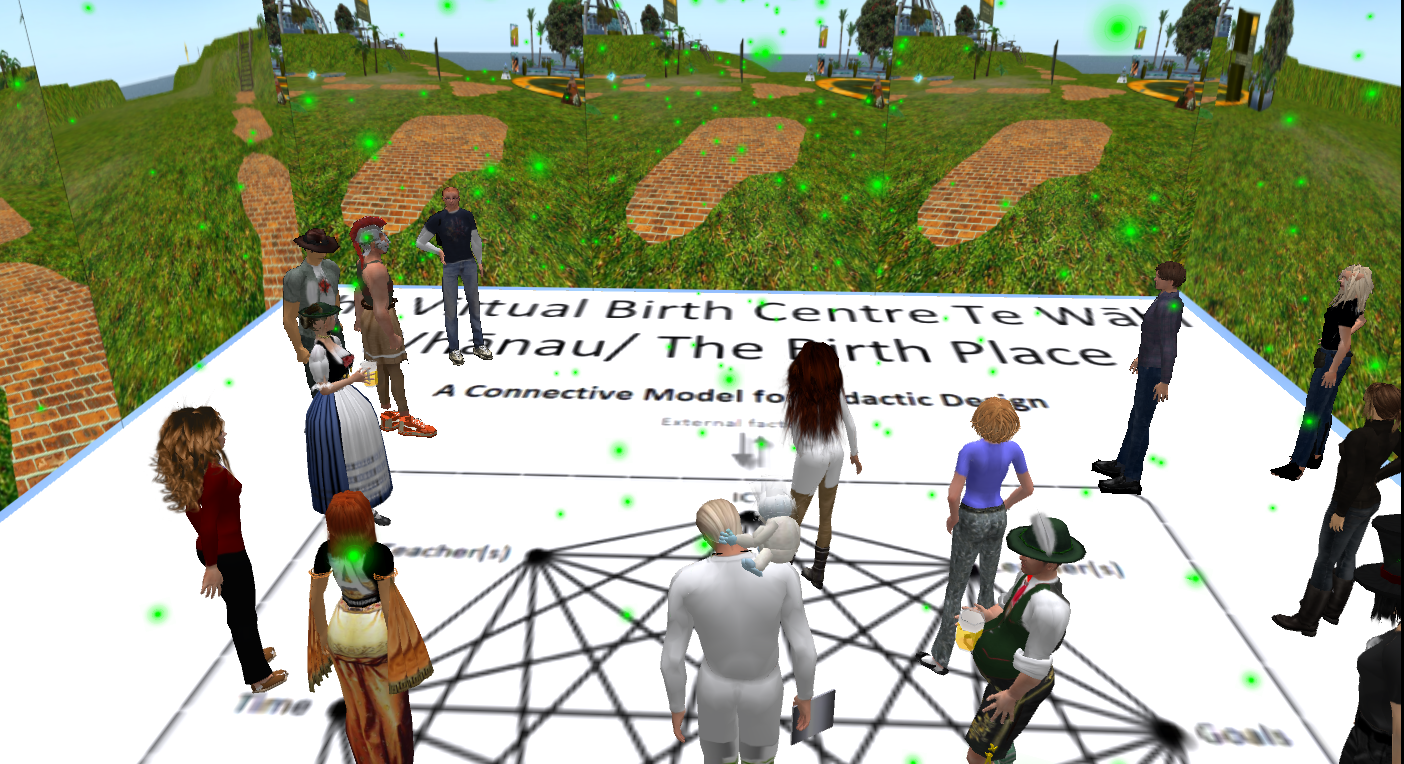
Team D’s danamaia explaining the didactic design behind The Birth Place (displayed on the walls) based on Riis’ model on the floor.

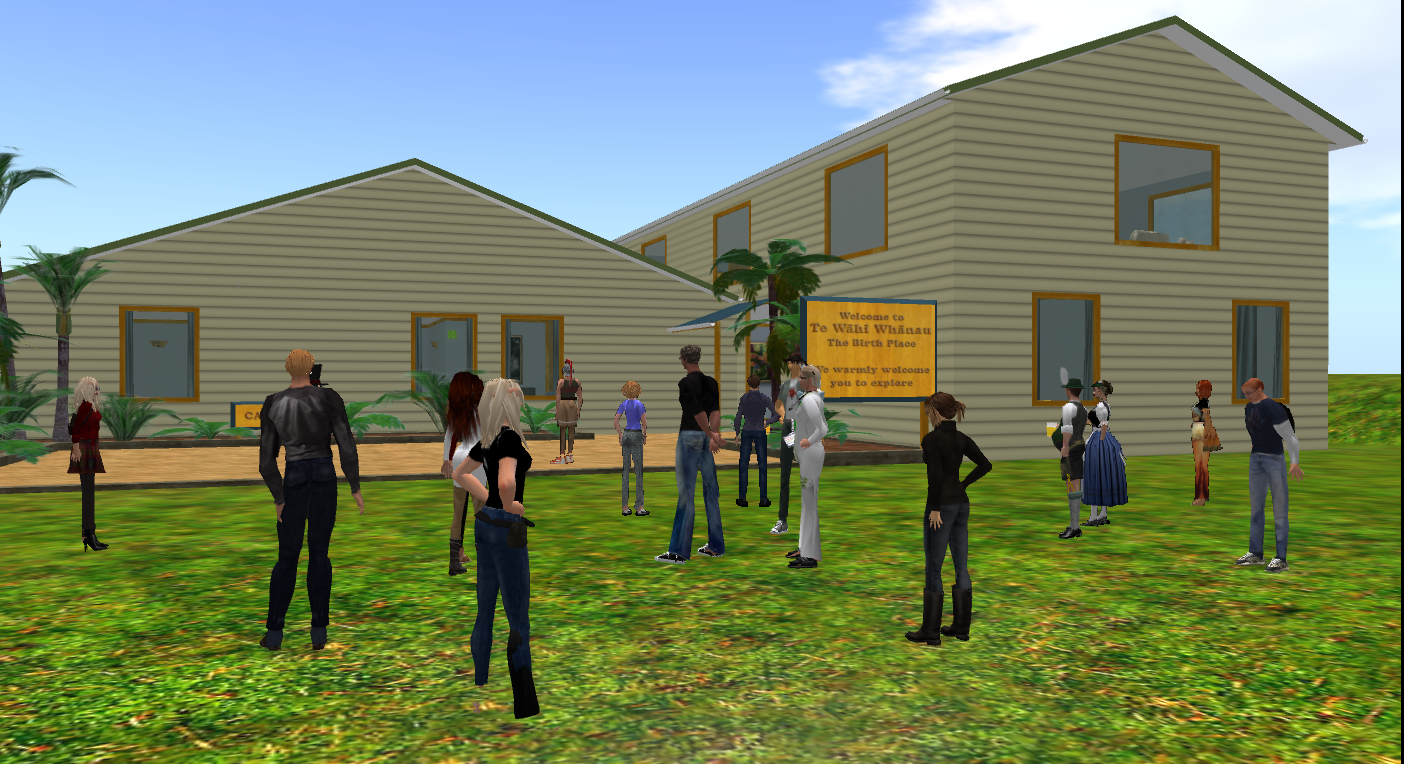
MIL11 students gathering in front of  Te Wāhi Whānau/ The Birth Place .

We were asked to take a tour and explore the premisses. The place is highly informative with many clickable objects leading to the extensive wiki and other materials.


Up-stairs danamaia explained the role-play that two students had to try based on materials from the purple pyramid.

Anina volunteered to become pregnant-in-a-click.

Even an avatar-pregnancy can be exhausting!

Anina gave the tub a try, but no luck in delivering the baby there …

With the help of “midwife”, JaneOlga Anina finally gave birth to a boy :-)

Big congrats from the cheering crowd …

Due to time constraints, we were not able to explore the role-plaing possibilities in full detail, but we did get a good impression of the potentials. After the successful birth of a new Netizen, we all went back to Team D’s sandbox, where Saxodane wrapped-up their presentation.


Saxodane presenting Team D’s final comments on SL as learning environment.

Team D has has had a strong focus on games throughout the course, and as I told them, I don’t think comparing and judging SL too much based on gaming theory/practice is appropriate. In my experience, the absence of a gameplay makes SL a very different VE – especially in terms of teaching and learning potential. Nonetheless, there were many fine elements in the team’s presentation and in their design, and once again, I think we all ended up having a very good and fun joint learning experience.


MIL students celebrating Team D’s presentation with some wine,

… and some dancing :-)

/Mariis