Thinking out-of-the-box … from inside the box!

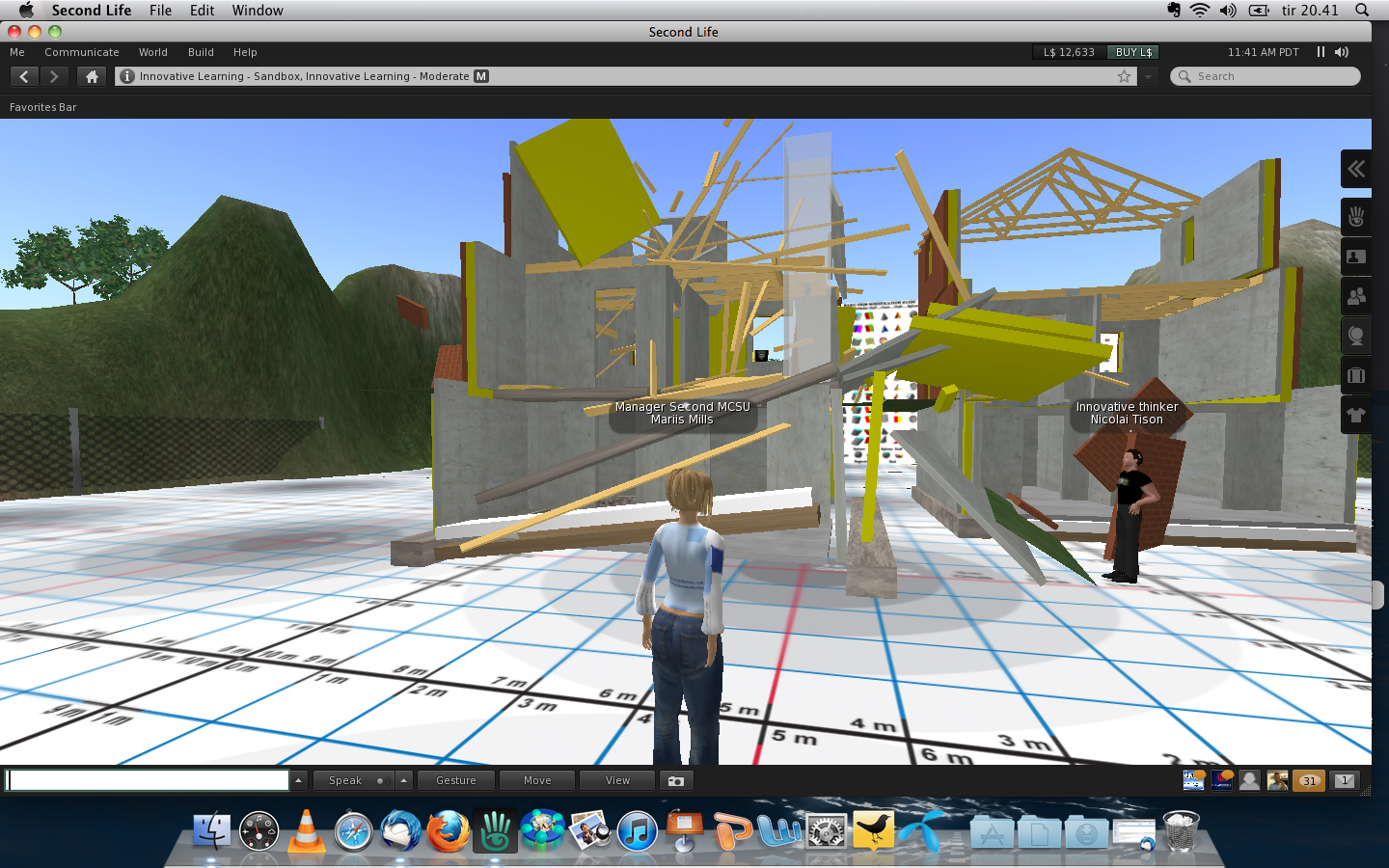
Monday, January 17th, Inge Qunhua & Severin Nordenskiold from the second group in my current SL course, “milis” did their presentation and analysis of SL as teaching and learning environment. The theme for Inge & Severin’s presentation was various types of remediation, and we started off in a respectful remediation of a classroom on the Innovative Learning Island.


All seated in the classroom on Innovative Learning.

Here Inge and Severin asked us to reflect upon our experience with being located in such type of setting. The notions of avatar-friendly and innovative design were also discussed. After this we were asked to go outside and ride the school bus to the next location.


Severin was driving, and in mouse-look it felt like being on a roller coaster ;-)

Next stop was on the island Danish Visions,where we were asked to enter a flying tea-cup to transport us to the next location.
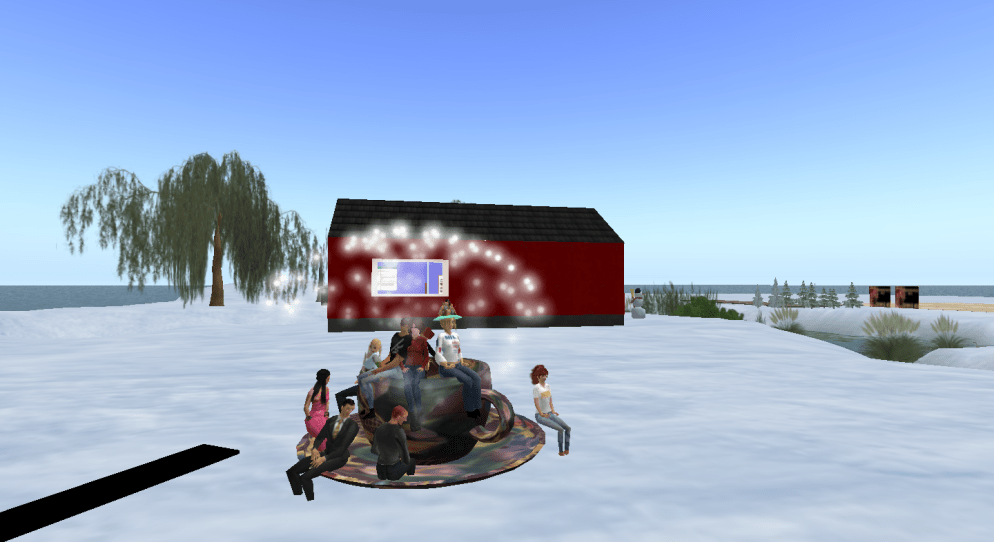

For unknown reasons – avatar-overload ;-)? – the tea-cup refused to fly!

Inge & Severin then sent us tp’s to the next location that turned out to be quite a surprise …
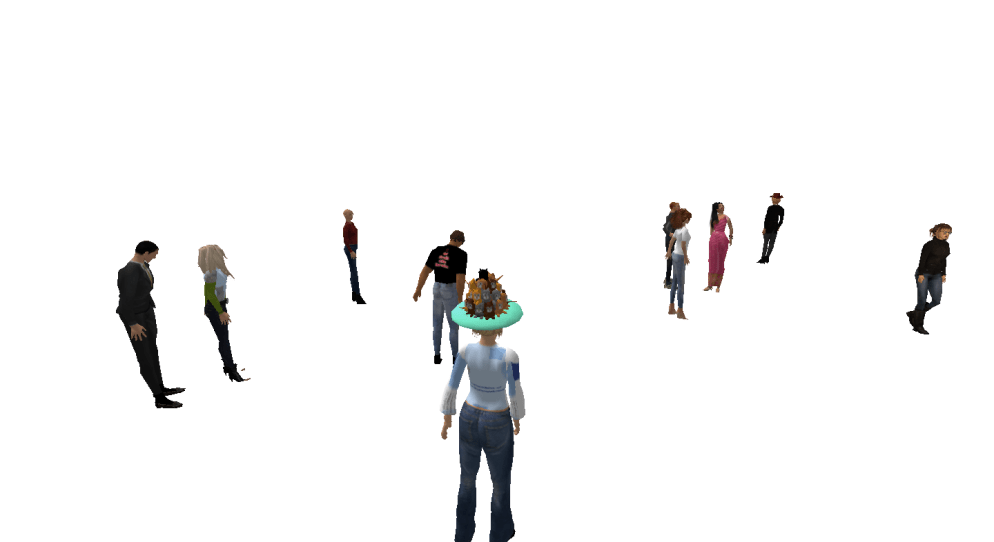

The MIL-group located somewhere in white space!?

Being immersed in what seemed to be infinite space was really a peculiar experience – the lack of orientation struck me as being both appealing and frightening. In this space Inge & Severin now asked us to co-create our own classroom. First off we had to build “chairs”, and Inge instructed us.
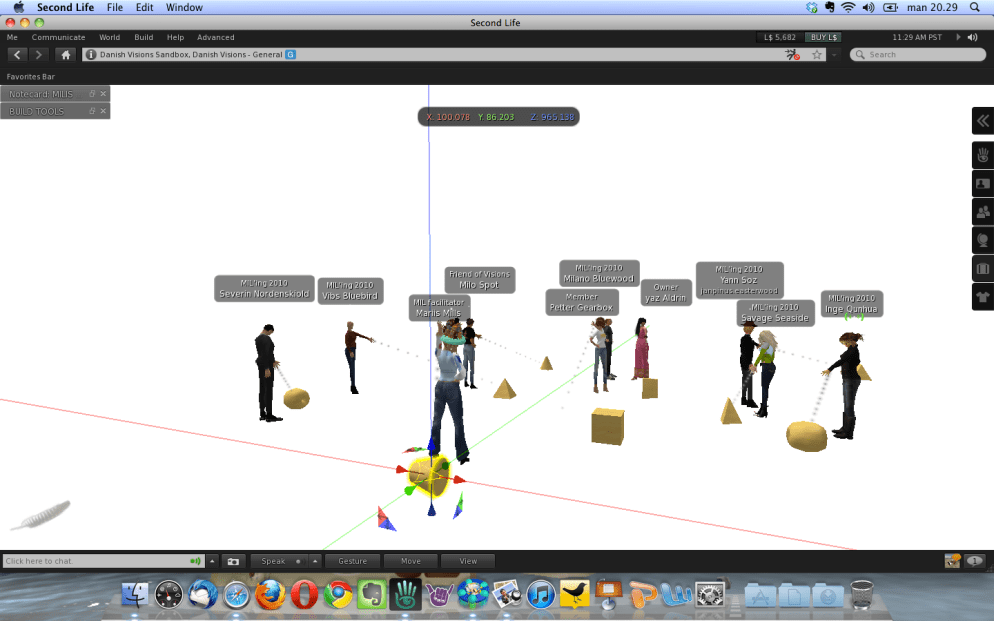


For some of the features in the building menu, Inge & Severin had prepared slides.
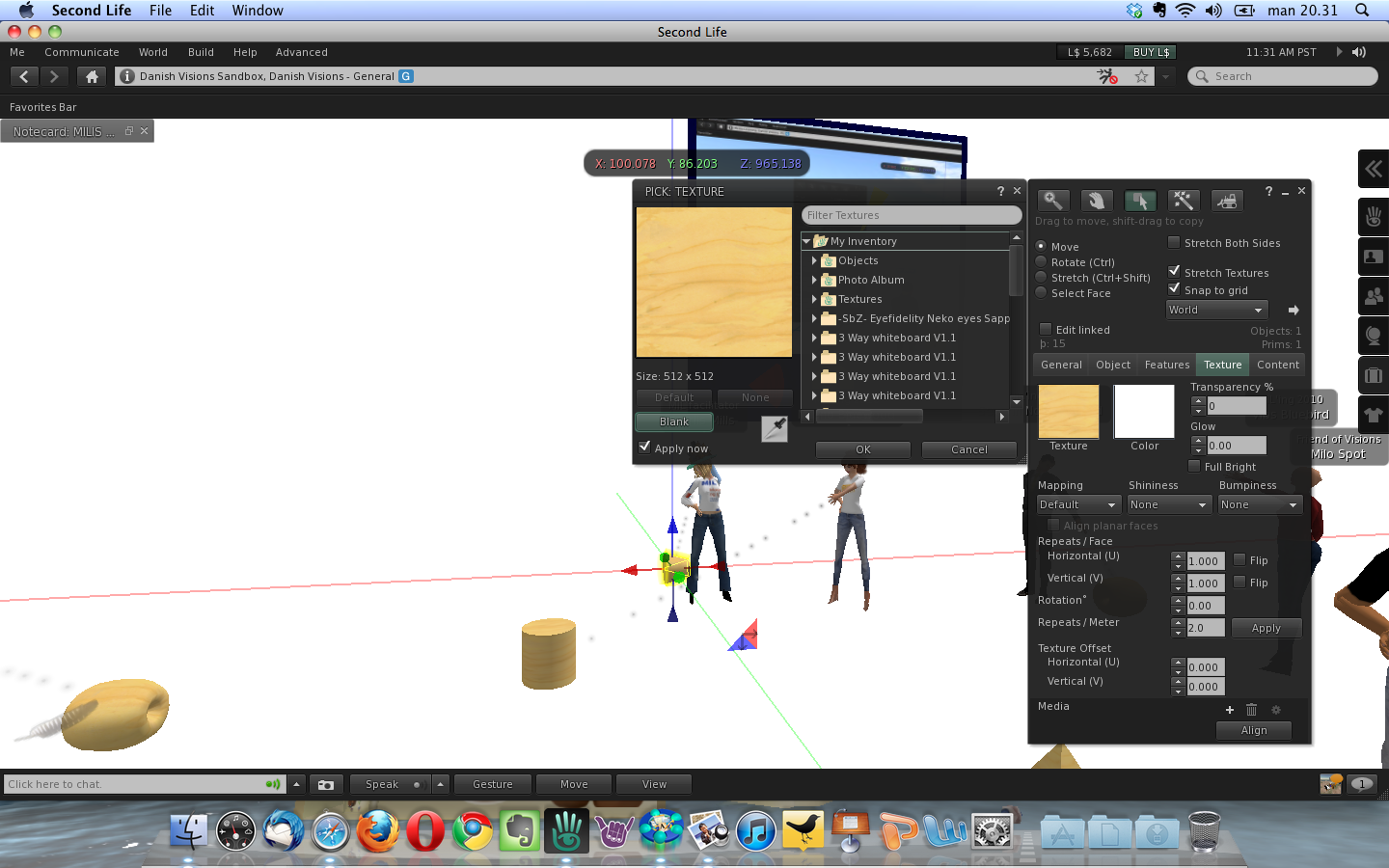
And so the “chairs” ended up being colorful building blocs with illuminating glow.
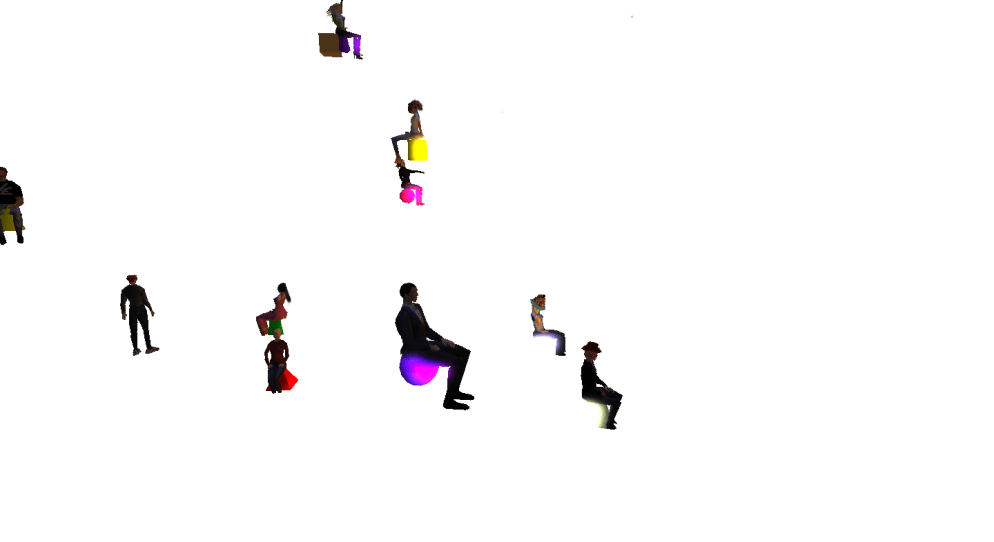

All seated in a NpIRL classroom.

Subsequently we were asked to turn our settings to “midnight”, Inge turned off additional light, rezzed a Mega-prim presenter, and then we were all set to listen to Severin & Inge’s presentation in what turned out to be a very intimate, powerful and truly radical remediation of a “classroom” setting.


Inge talking in the dark …
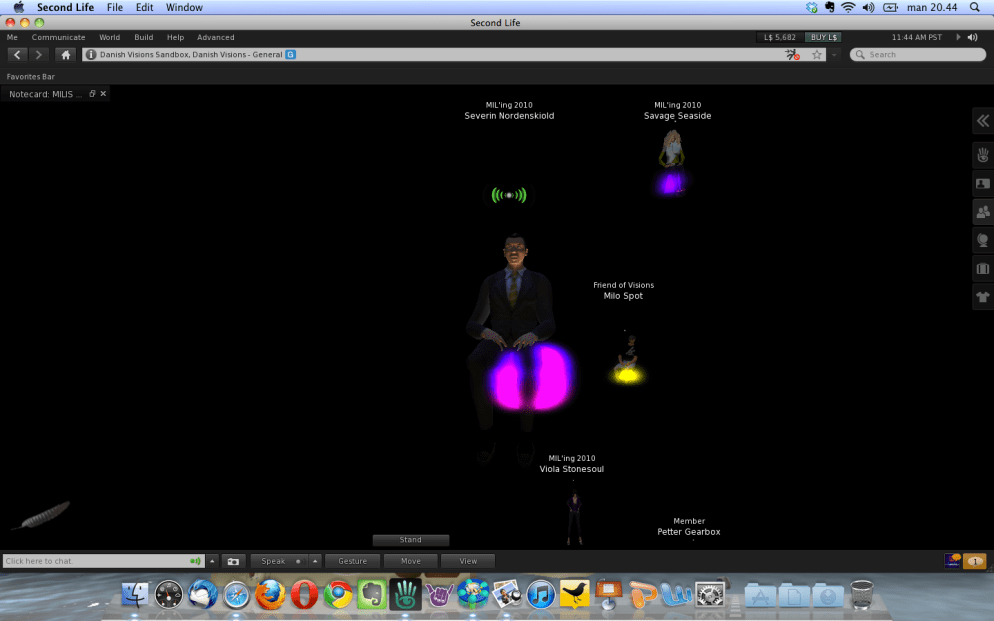

Severin talking …
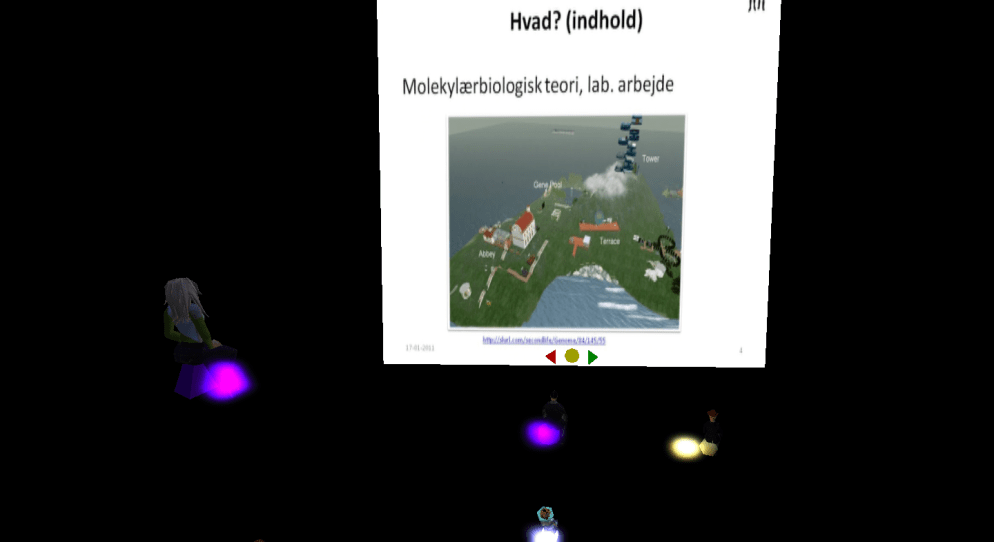

Inge & Severin’s analysis of Genome Island.

For their analysis, Inge & Severin had chosen to look closer at the teaching and learning potential of the Genome Island, since Severin works as teaching associate professor in the field of Medical Biochemistry. Professor Mary Anne Clark of Texas Wesleyan University (Max Chatnoir in-world) created the island with a special focus on teaching genetics – the video below gives a short introduction to some of the possible activities available.

In preparation for their analysis, Inge & Severin had managed to get an interview with Max Chatnoir, and so were able to share some interesting insights gained from student feedback on the use of the island. Their presentation also focused on different pedagogical strategies underpinning different fields/subject matters, and Severin finished off by explaining the next steps where we were to go to the island to try out some of the activities. When their presentation ended Inge turned on the lights, removed the texture from the space, we had been located in, and much to our surprise, we had actually been inside a wooden box!
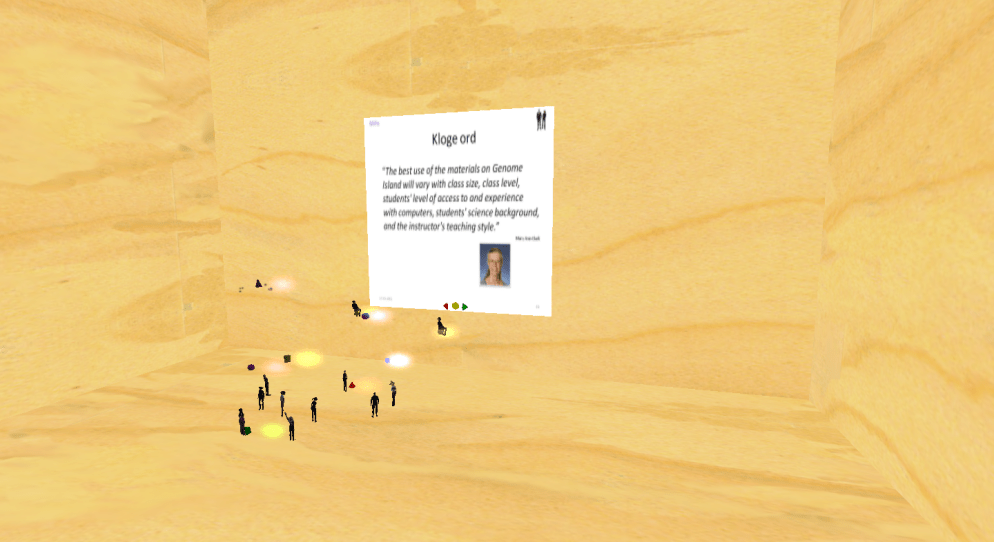

Our classroom setting turned out to be the inside of a wooden box
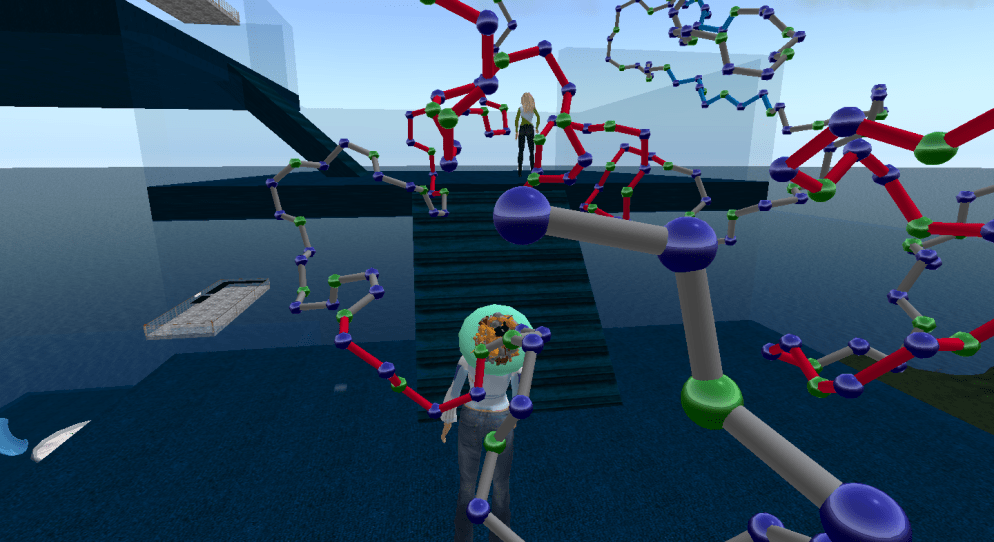

Exploring molecular structures …
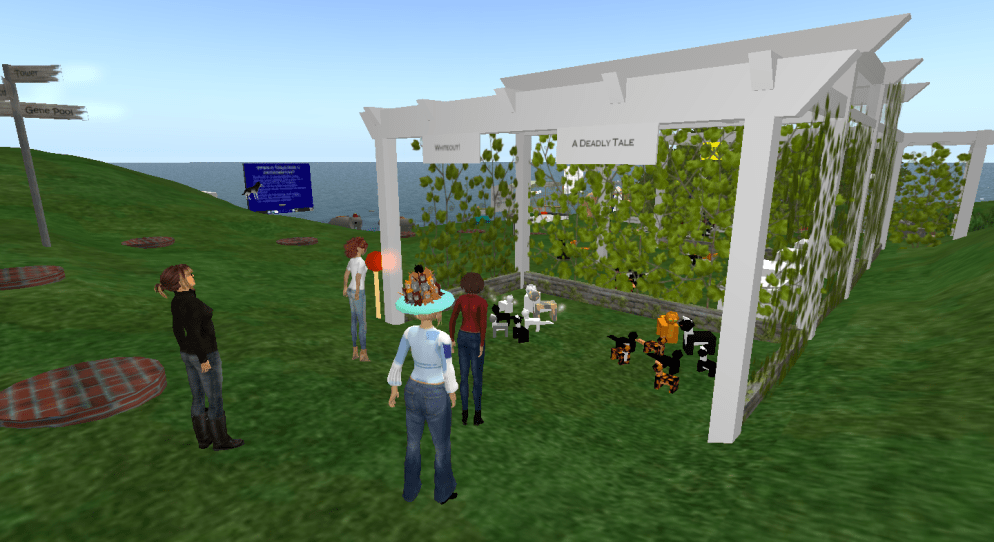

and mating cats.

Back on Inge’s island we were introduced to some of her learning designs, and this was also where we had the feedback process. Inge & Severin had organized a packed program based on different examples of both respectful and radical remediation, and thus succeeded in bridging theory and practice very well. I found the fact that we had to build our classroom from inside a to be an especially clever detail, and they also succeeded in demonstrating that a playful approach to learning can be very efficient, something that truly resonates the nature of SL.

Uh, and big thanks to Max Chatnoir for taking the time to talk to the students :-)

/Mariis

Additional resources on Genome Island:

Dr. Mary Anne Clark on Genome Island in Educase Review

Dr. Bertalan Meskó’s interview with Max Chatnoir
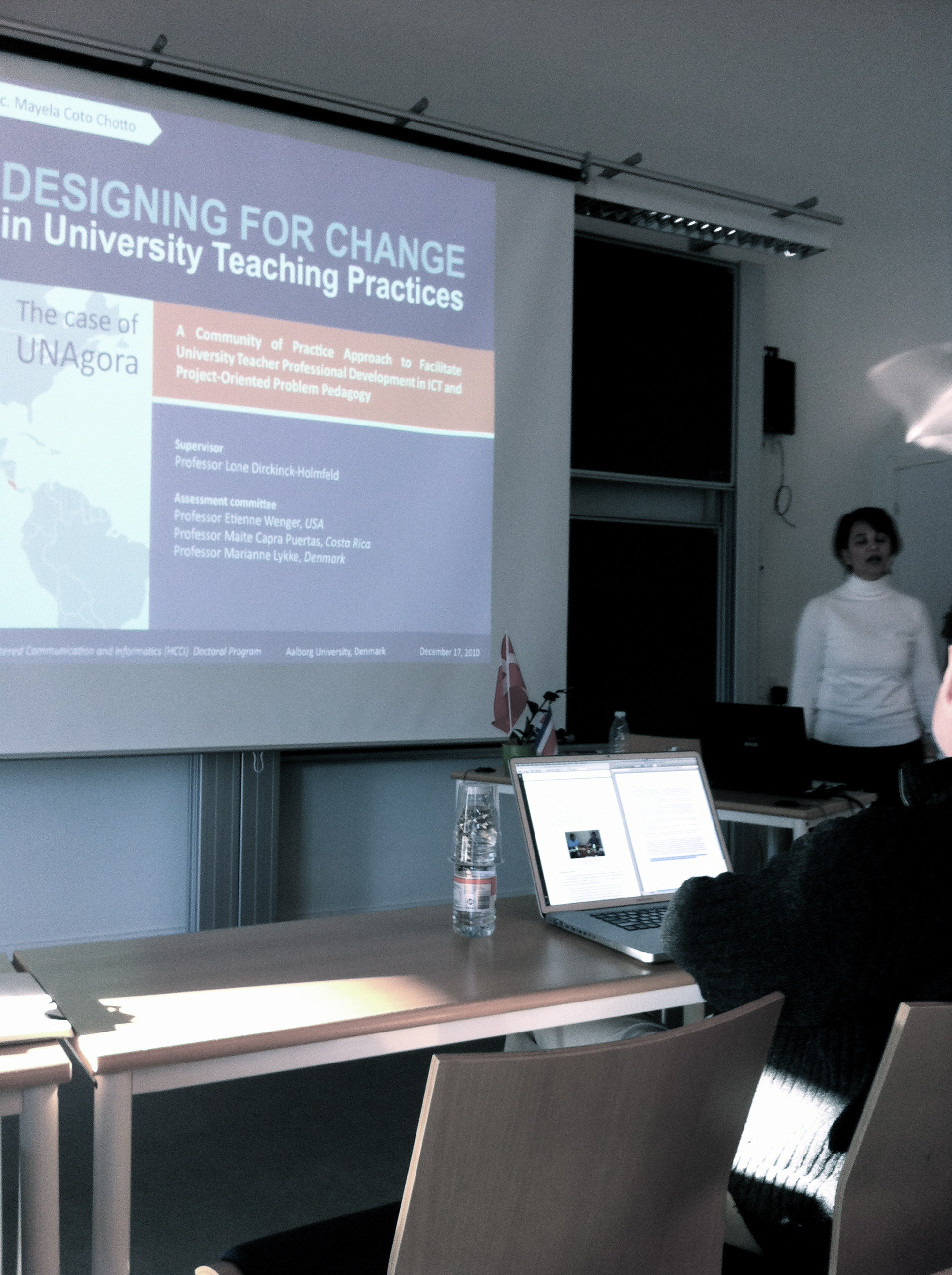
A CoP approach to facilitate university teacher PD in ICT and POPP

On December 17th, 2010 I had the great pleasure of attending my (now former as she’s back in Costa Rica) e-Learning Lab colleague, Mayela Coto’s PhD-defense. Mayela’s thesis is entitled “The case of UNAgora: A community of practice approach to facilitate university teacher professional development in ICT and project-oriented problem pedagogy”, and is now available for download here.


Mayela presenting her findings on Dec. 17th, 2010 at Aalborg University.

Here is an excerpt from the abstract:

  • The overall aim of this research is to enhance the understanding of to what extent a distributed community of practice approach affects the professional development of university teachers and whether this leads the teachers to promote a transformation in teaching practices mainly regarding the introduction of ICT and project-oriented problem pedagogy (POPP).
  • More specific research questions are concerned with what is the impact of belonging to the community of practice on teachers?; what kind of changes takes place in the teachers’ practice?; which factors support or hinder the professional development of teachers who are part of a distributed community of practice?; how does technology contribute (or not) to the formation of the community, and to the professional development process?; and what principles may be used to guide the design of a professional development model- based on communities of practice for fostering change of practice?
  • The main findings of the study were that the distributed community of practice approach appears to be a productive form of professional development under certain conditions. It provides an environment for learning and dialogue that can enrich and deepen teachers’ knowledge, as well as an understanding of important educational issues and change of values, beliefs and practices. Issues of access to technology, culture of online communication and collaboration, teachers’ workload and time have been identified as conditions that need to be carefully studied in order for the approach to be potentially effective.
  • The overall result of the approach to professional development proposed by this study, offers teachers a scope for learning, negotiation and identity formation within the community. The study also suggests that teachers who are closer to the center of the community are able to identify with, and develop a feeling of belonging to the community to a greater extent than the teachers with a peripheral role. However, it seems that both kinds of teachers are able to transform, to some extent, their teaching practices.

Mayela’s supervisor (who’s also my PhD-supervisor) was Professor, PhD Lone Dirckinck-Holmfeld (Aalborg University), whereas the examining committee consisted of Maite Capra (Univercidad Nacional Costa Rica), Marianne Lykke (Aalborg University), and Etienne Wenger.


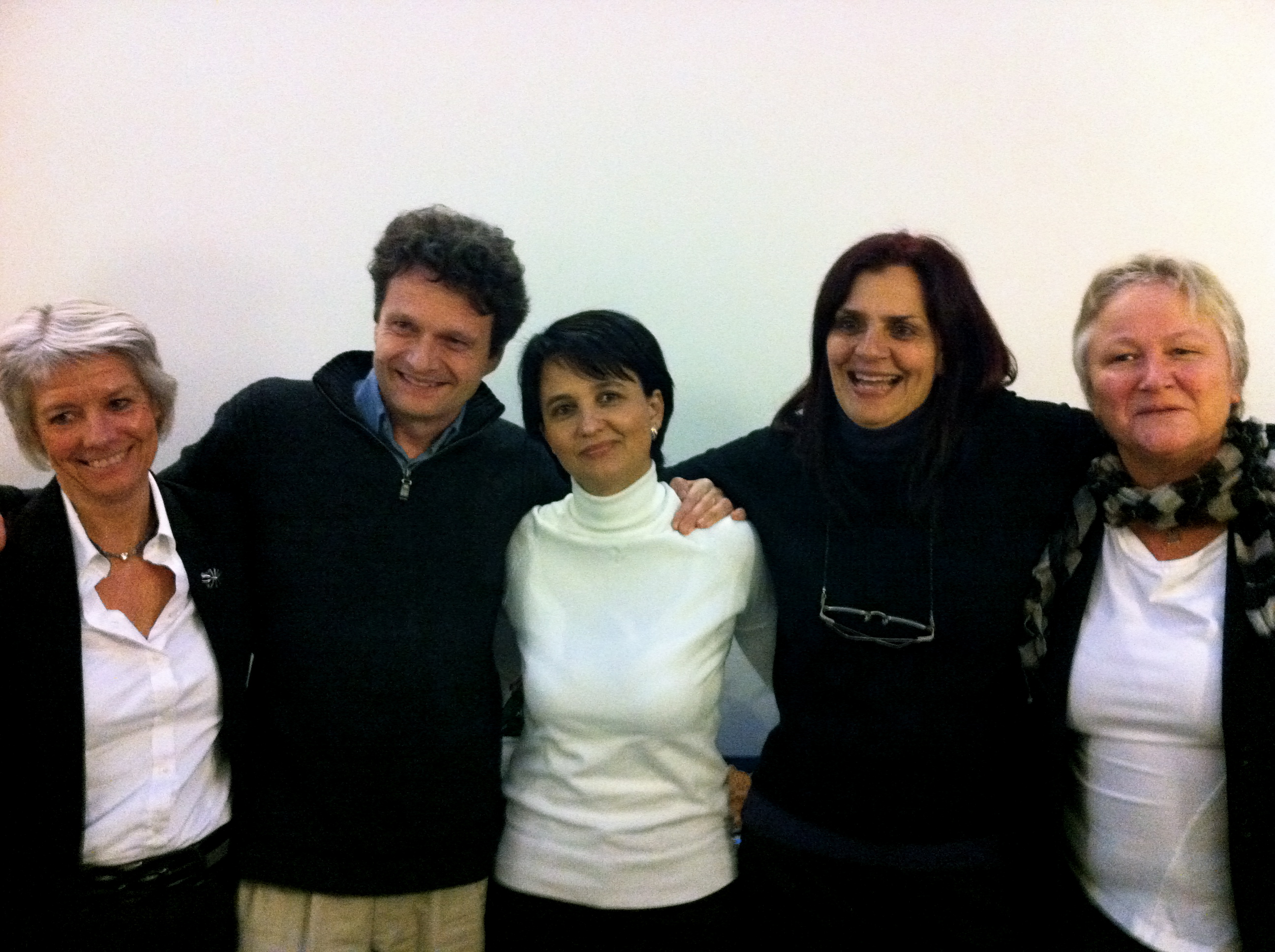
Similing faces after the very successful defense: Lykke, Wenger – Mayela Coto – Capra and Dirckinck-Holmfeld

It’s a pretty long thesis, but well worth the read :-)

/Mariis


Cooperative Learning in SL

Since December 5th 2010 I’ve been running a course in SL with 11 adult students from the Danish Master Program on ICT and Learning (MIL). The purpose of the course has been to introduce SL as teaching and learning medium based on a combination of literature studies and in-world activities. As part of the assessment criteria the students are expected to present a pedagogic analysis of SL. One student is working on her own, whereas the remaining 10 students have formed four groups; 1) Tree Crown, 2) milis, 3) MIL-Health, and 4) MILOVIOLA. The students have two hours in-world to do their presentations in designated sandboxes, and the analysis should meet the following criteria:

  • Address pedagogic design questions related to a target group of their own choice – all students are somehow working with teaching/training
  • Include a problem formulation – PBL is the pedagogic foundation of the course
  • Consist of a combination of theoretical issues transformed into practical activities in-world
  • Demonstrate knowledge of SL by using a min. of two locations during the presentations, and by using in-world objects
  • Demonstrate mastery of in-world features and objects by including an interactive element, where the presenting group teaches their fellow students something relevant to the analysis
  • Include time for peer-feedback and reflection on the experience (of presenting and teaching their peers in-world)

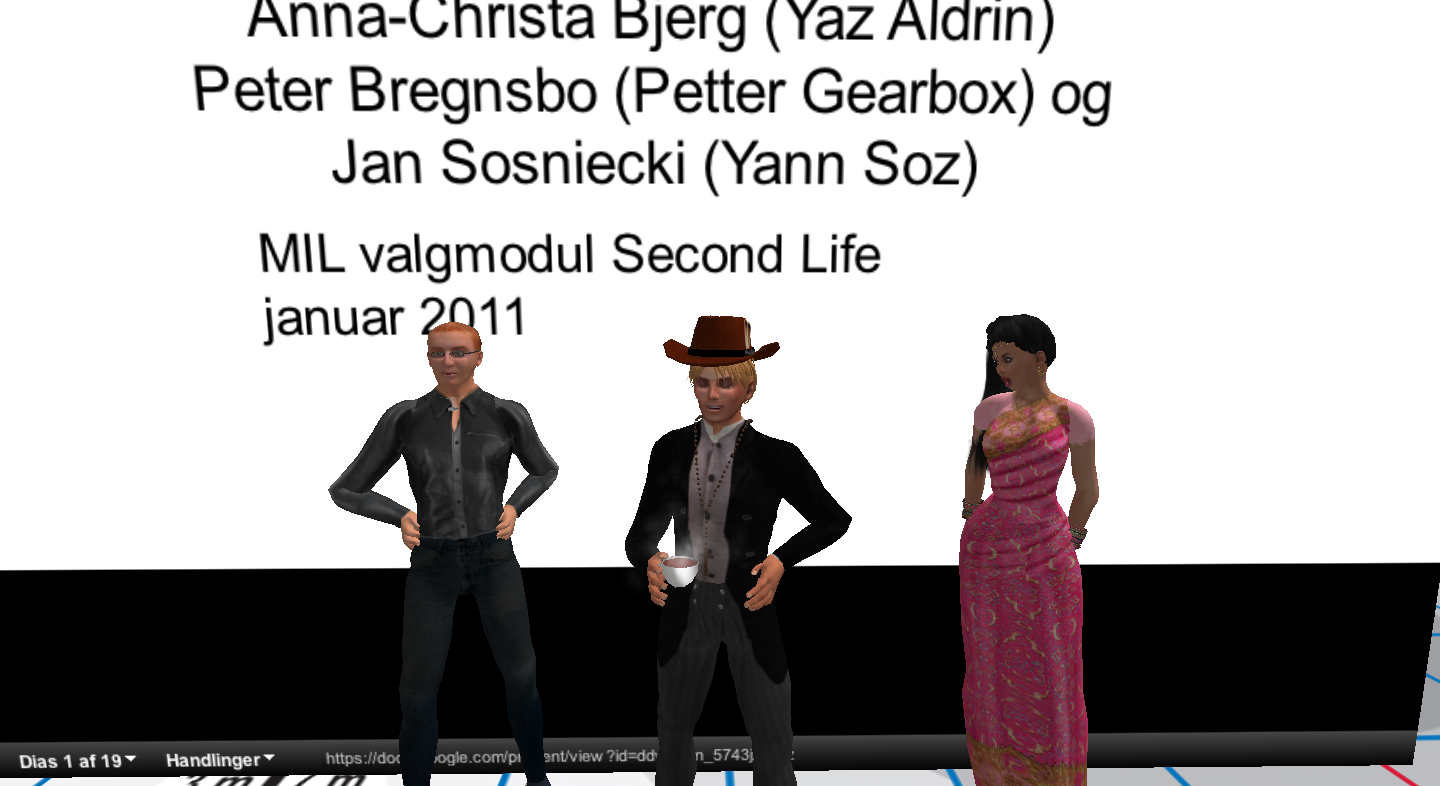
On Tuesday January 11th students Yaz Aldrin, Petter Gearbox, and Yann Soz from the “Tree Crown” group did their presentation.


Tree Crown Group: Petter Gearbox, Yann Soz & Yaz Aldrin

Teaching and learning in SL can be challenging due to technical issues, and throughout the course the students have been confronted with some of these issues – mainly related to voice- and lag problems. On this particular evening new technical issues arose. Approximately one hour before the group was supposed to start their presentation, I logged in-world to see if they were all set. The group had been allocated our regular sandbox on the Wonderful Denmark island, but as we were standing there talking about their presentation Linden Lab sent out a message stating that the region would be closed down within 5 min. due to maintenance. Luckily, we have access to several sandboxes in the course, and I decided we should go to one on the Innovative Learning island that VIA College kindly has lend us. Having never experienced this kind of technical problem before, the three students managed to stay calm, and set up their presentation screen in this new sandbox, and send out notice to the rest of the students that the start location had been changed. Despite the general confusion and due to the change of start location all students managed to find their way to this new location, but as the group started their presentation the sandbox got griefed which meant that our computer screens turned grey, froze, and eventually we were all logged out.


My screen turning grey and freezing …

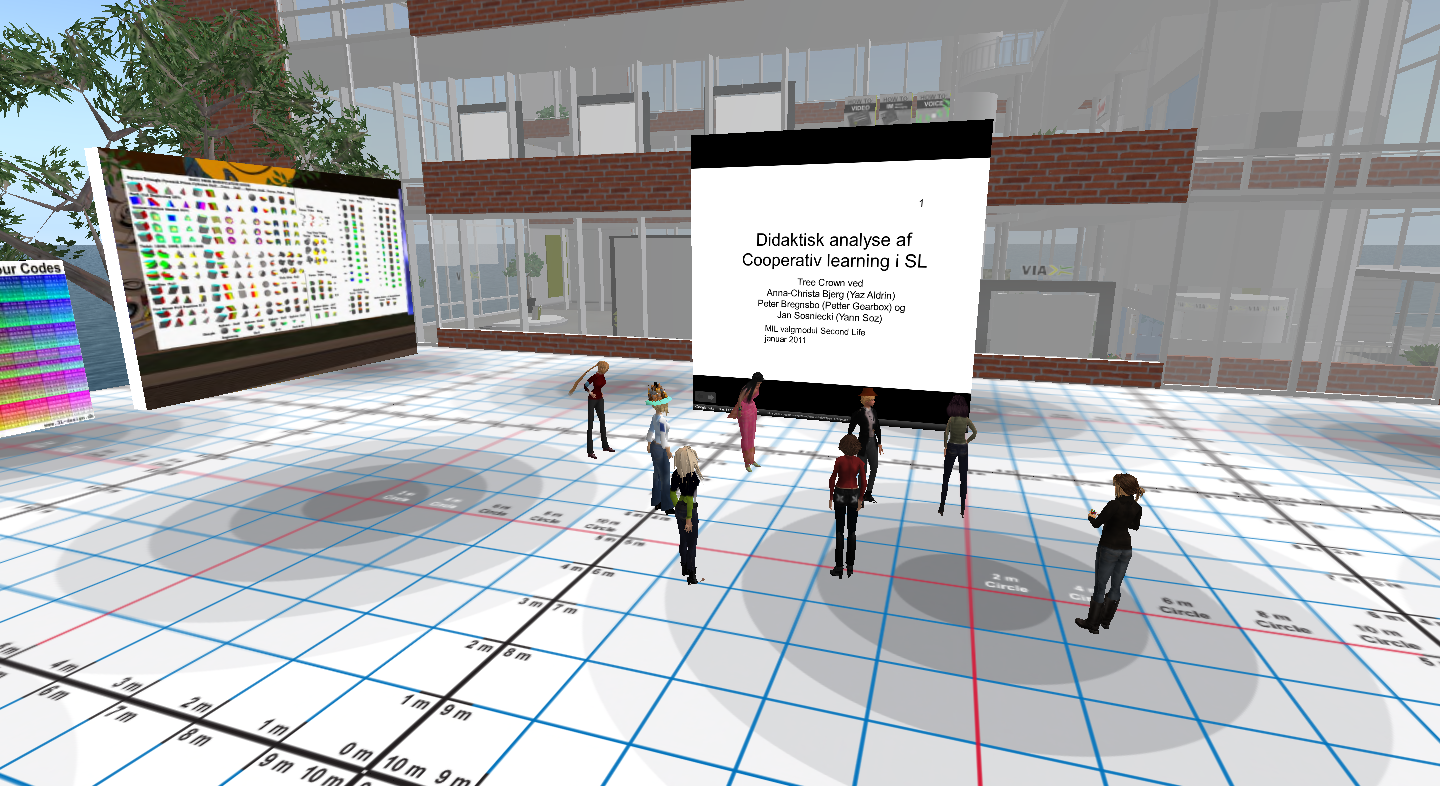
Fortunately, one of the students in this class, Inge Qunhua, is an experienced land-owner, and Inge managed to get rid of the griefer and his objects so that we could all return, and the group could finally start their presentation entitled “Didactic Analysis of Cooperative Learning in Second Life”.


Finally ready to present in VIA College’s Sandbox

One of the students in the group, Petter works as a secondary school teacher, and has been experimenting with the concept of Cooperative Learning and Kagan Structures, which has been developed by Dr. Spence Kagan. Characteristic of this teaching and learning concept is its ability to promote pupil/student engagement through structured activities. Below is a short video-introduction:

Given Petter’s positive experience with this concept in real life classrooms, the Tree Crown group decided to investigate how this concept could be applied in a medium like SL.


The group’s problem formulated as a question of what will happen when Cooperative Learning is remediated into SL.

At the core of Cooperative Learning are so-called Kagan Structures that can be described as patterns of interaction between pupils/students, and after a short theoretical presentation of the foundation and principles behind these structures, the group had decided that we should try out one of the structures called Partners. To engage in this structure the group divided their fellow students into pairs, which then were divided in two groups, A and B. Both groups were given landmarks to separate locations and were asked to teleport off to explore these locations.

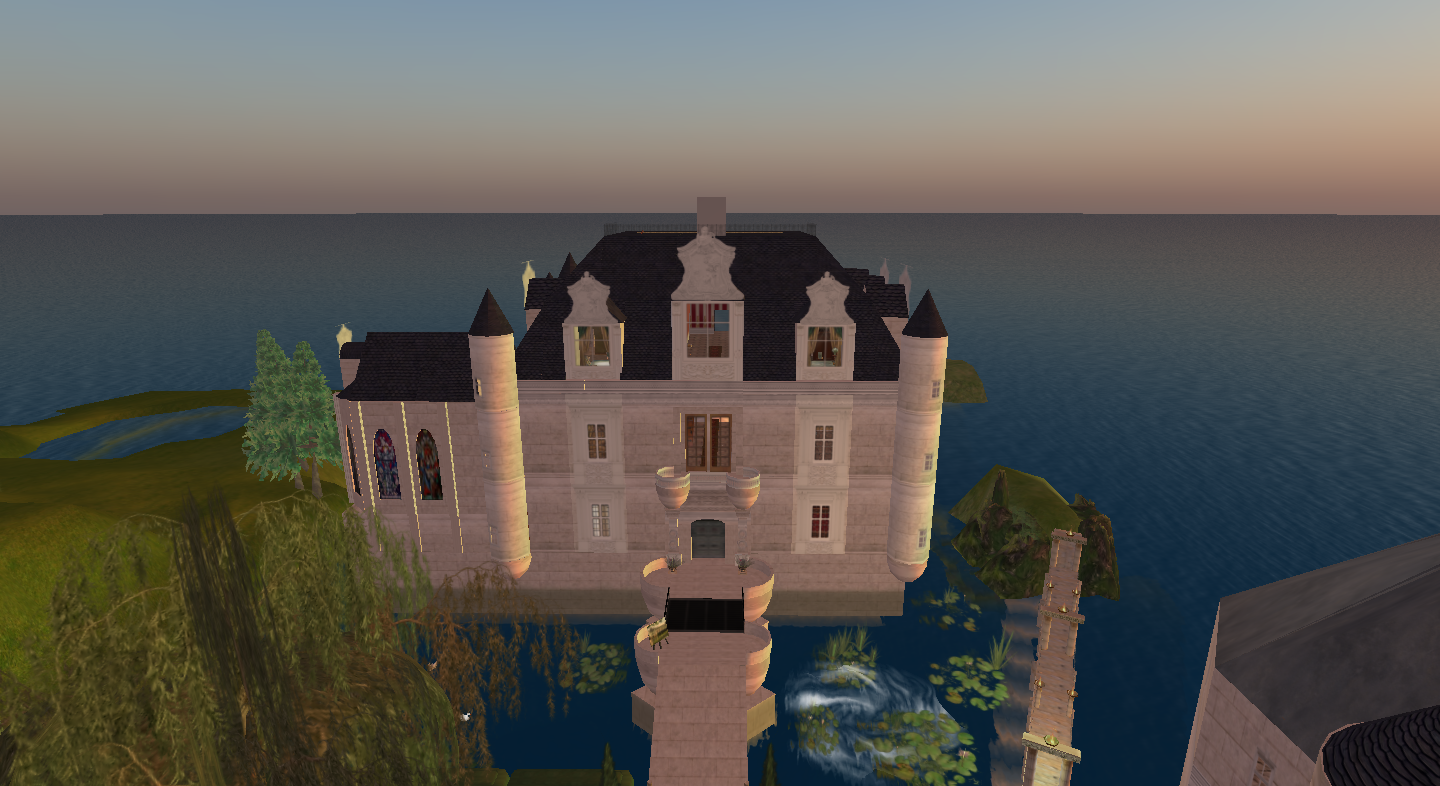
Group A was asked to visit the Chateau de Chenonceau, and engage in the different dances available there.

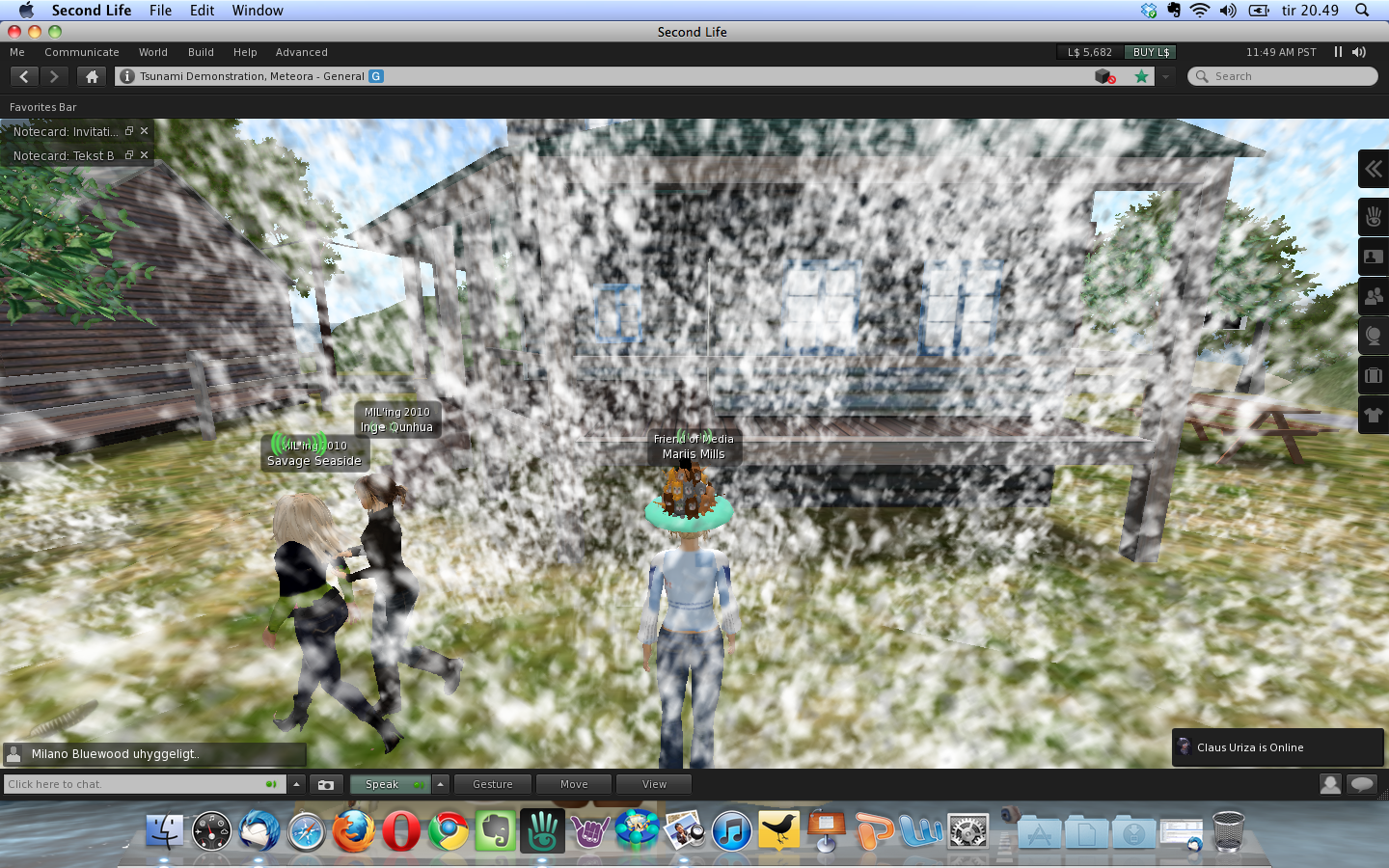
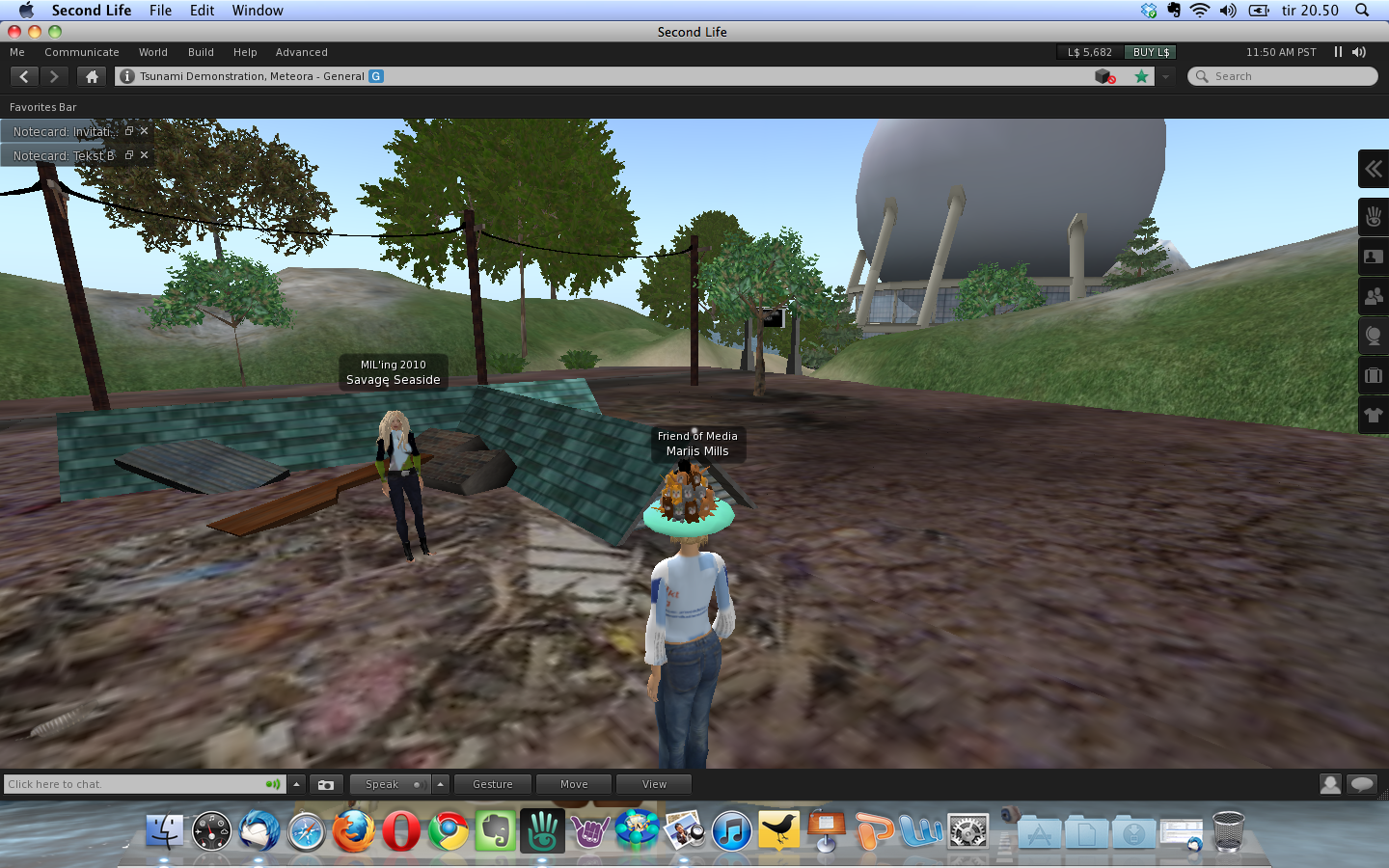
Group B, which I followed, was asked to go experience the effects of a tsunami on NOAA/ESRL, Virtual Island, Meteora.

.

After exploring these locations, we all returned to the sandbox. Here the students were asked to find their partners and go back to the locations to discuss their findings, and they were instructed how to use voice-calls in pairs. Back in the sandbox once again, the Tree Crown group elaborated on the applied Partner structure, their pedagogical considerations regarding the planning and organization of this activity, and finally asked their fellow students to reflect upon the experience.

Throughout their presentation Petter, Yann and Yaz skillfully transformed central theoretical points into SL activities and dialogue, and we all got the sense that Cooperative Learning could be applied in many ways in SL. Given the relatively short amount of time the students have spent in-world, I was quite impressed by the way they kept their calm despite the technical difficulties, the way they had organized their presentation, and how they managed to guide and instruct their fellow students.

/Mariis

In-world presentation @ “Internet – New Media – Culture 2.0” conference

Friday November 5th, I was invited to speak at a Polish organized in-world conference about “Internet – New Media – Culture 2.0“.


Conference site at the Second UMCS island

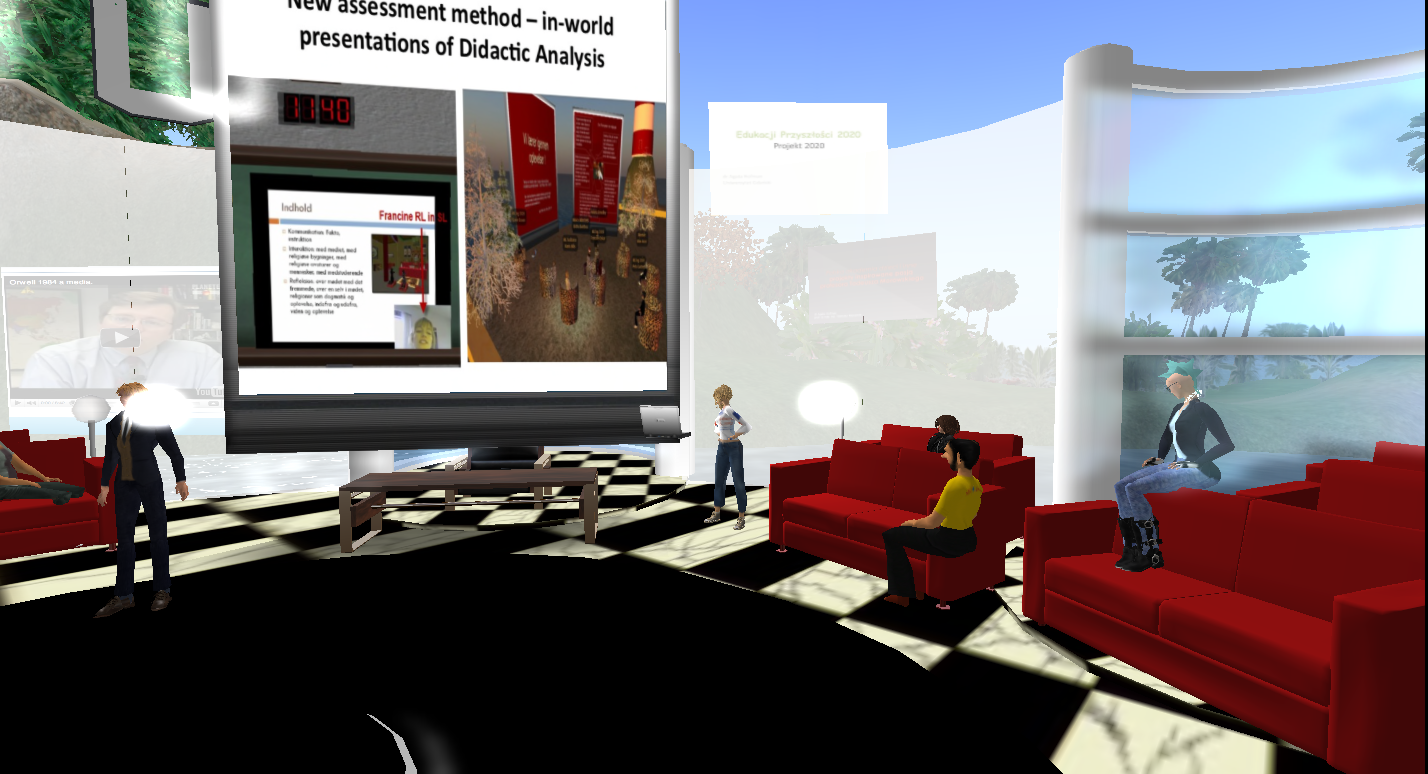
The conference was organized by colleagues from different departments of Uniwersytet Marii Curie-Skłodowskie – some of whom I’ve previously worked with in the EU funded research project COMBLE. I was very pleased to get the opportunity to talk about some of my findings, and there were some great questions and comments on especially immersion and media convergence.


Talk about the new assessment method I implemented in my 3rd research cycle.

As promised to the participants, I’m hereby uploading my presentation.

Special thanks to Raf Moczadlo for inviting me :-)

/Mariis

SL presentation in the Danish Ministry of Science

On Friday October 15th, a total of more than 200 museums, churches, exhibition halls, galleries, political institutions, and other venues will open their doors in connection to the annual “Night of Culture” that has been a Copenhagen event since 1993. As part of this event, the Danish Ministry of Science has asked me to participate by presenting research, teaching, and learning in SL.

The event will run from 6PM until midnight (local time), and I will be in the Ministry together with one of my MIL-students, Inge Knudsen, from Business College, Horsens.Inge is a highly experienced SL educator and builder, who has run in-world courses on English, Chinese and Cultural Understanding among other things and last year she won the Danish Research Network’s annual Innovation Prize because of her work in SL.


Inge and I discussing part of her presentation for the “Night of Culture”.

In-world we will be accompanied by MIL alumni, Per Christensen and two of his close colleagues, Nicolai Green Hansen and Erik Hansen – all from VIA University College. Per and his colleagues are currently preparing for a cross-cultural collaboration with a Chinese University on their island Innovative Learning, where it is also possible to see and experience another build that last year won the Danish Ministry of Education’s annual e-Learning award.


Nicolai and I discussing part of their presentation for the “Night of Culture”.

We are all still in the process of planning this event, and there are several challenges. The Ministry has put together an extensive program (in Danish) including lots of interesting activities all night. This means that it is impossible for Inge and I to foresee how many guests will find their way to our presentations. Last year approx. 1000 guests participated in the Ministry’s activities.

We have two rooms at our disposal, and so far we’ve planned for one of them to be the “Teaching and Learning Room”, while the other will be the “Presentation Room”. In the “Teaching and Learning Room” planned in-world session with Inge and Per will run twice the hour, and guests in this room will be able to participate via guest-avatars. In the “Presentation Room” several computers with logged in guest-avatars will enable guests to explore and participate in different in-world places/events covering education, business, art, music, RL rebuilds and not least places/builds NpIRL. Inge and I will oscillate between the two rooms, and in between scheduled sessions, we’ll be available for questions and discussion of the many, different research, teaching, and learning potentials of a medium like SL.

We are also in the process of preparing note cards covering all sorts of topics, events and locations – and I encourage other SL residents to send me (Mariis Mills) suggestions of interesting locations/events. The entire event will take place from 9AM – 3PM SLT. Putting together a program for a 6 hours in a row event is quite daunting, and I personally find that the biggest challenge lies in trying to convey a sense of meaning of SL for RL-guests just passing by…

When we’re done planning, I’ll update this post with SLurls to locations where it will possible to join us in-world.

/Mariis

UPDATE – program

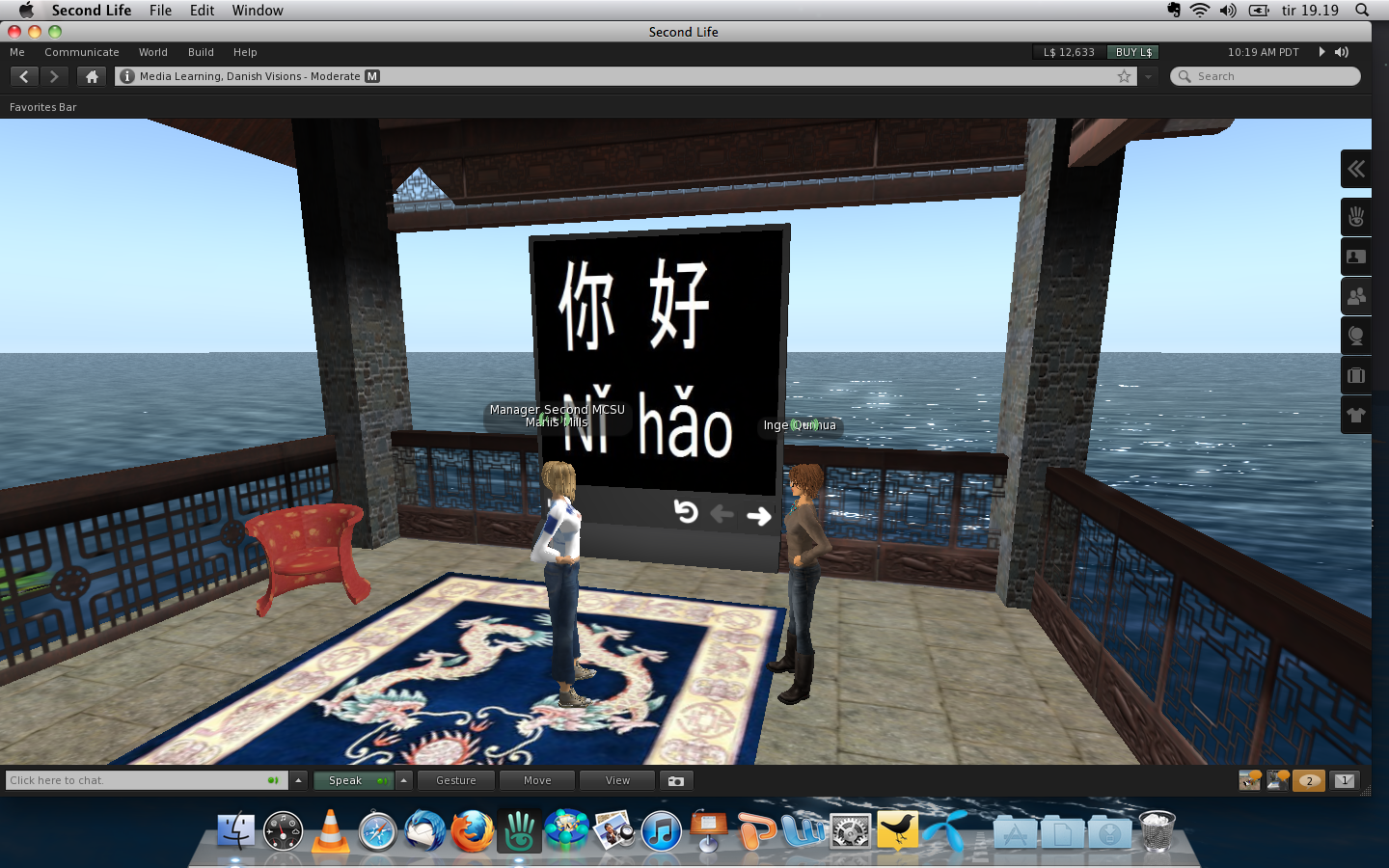
Most of the activities are directed towards the RL guests visiting the Ministry – and they will be in Danish. However, Inge Qunhua will do her sessions in English too, if anyone asks her. Inge will teach the audience how to introduce themselves in Chinese and there will be general lessons in understanding the Chinese culture.

Inge’s sessions will take place on her Island, Danish Visions. The first session starts at 10:30 AM SLT, and she will repeat it every hour until the last one at 2:30 PM SLT.

In between Inge’s sessions there will be live music and other activities on her Island.

For those interested in the Danish VIA-session please have a look in the group “Kulturnat 2010”, where you find all sorts of notices with LMs and further details on the in-world program.

In one of the two rooms in the Ministry, we will, starting at noon SLT, be streaming from Pop Art Lab, Claus Uriza – and later on we’ll visit The Yard Club, where there will be “Open Mic” with Torben Asp.

SLurl to Pop Art Lab

SLurl to The Yard Club