Gardner’s Multiple Intelligences designed in SL

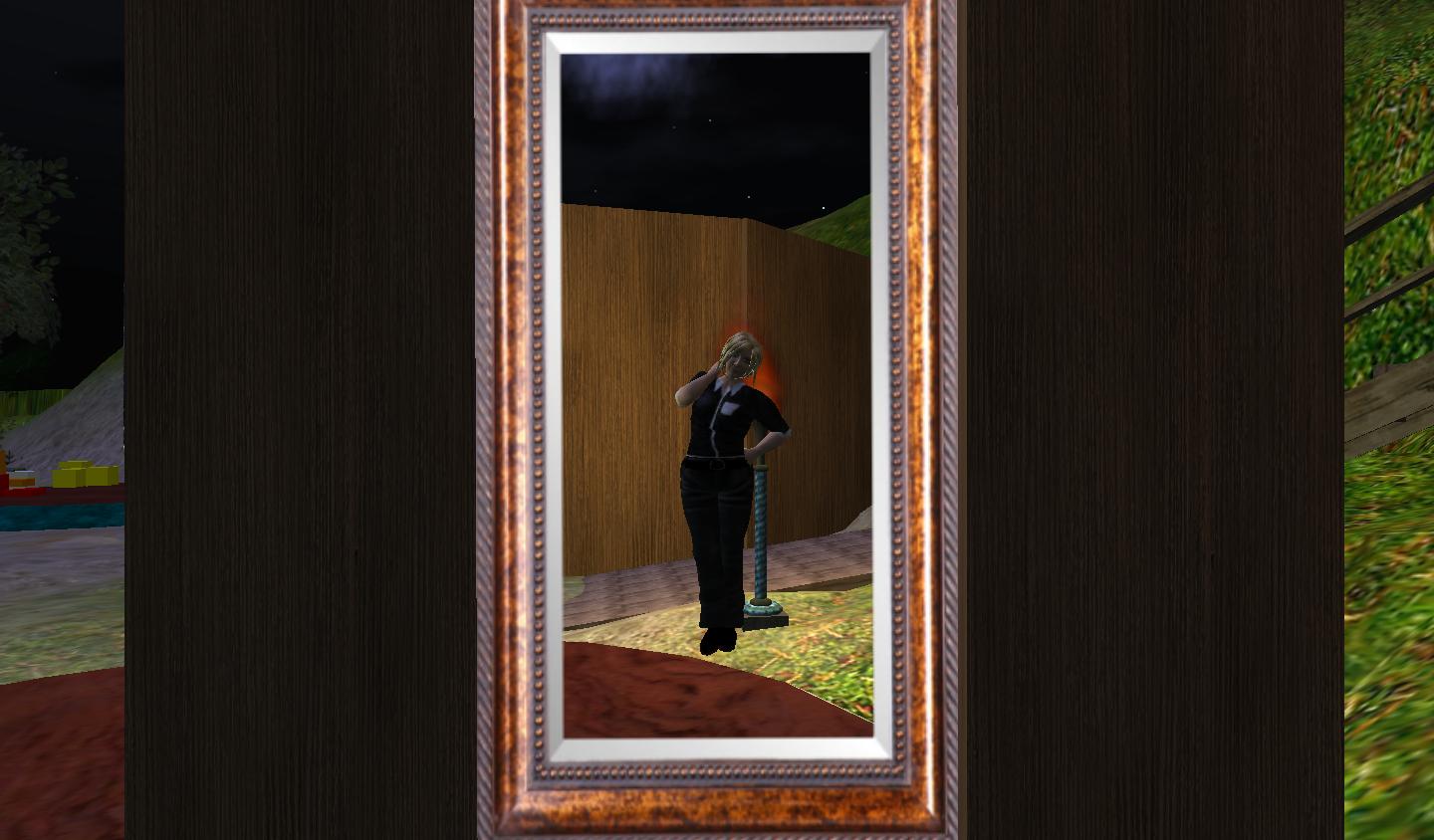
Yesterday, I discovered the Koru island, where Zotarah Shepherd has created an area dedicated to showing Howard Gardner’s Multiple Intelligences.


Examples – Spatial, Mathematical and Musical Intelligences

It’s the first time I’ve seen learning theoretical concepts so explicitly build in SL, and I think this could lead to some interesting discussions on both Gardner’s theory and educational design – so I’m quite excited about this!


Intra-personal Intelligence; Hmmm .. who am I? No really !?

I sent an IM to Zotarah asking if she would be interested in giving a tour to the NoEL group, and she answered almost immediately that she would be pleased. So now we just have to find the right time (a bit tricky, since Zotarah is located in SF) to meet ..

More on this will follow asap :-)

/Mariis

Danish seminar on SL and horisontal learning

From MIL alumni, Inger-Marie F. Christensen , I just learned about an interesting Danish seminar on SL and horisontal learning on September 24th at Southern University of Denmark (SDU).

From their website:

Vi står i disse år over for nogle store samfundsmæssige udfordringer, som ikke mindst kan ses i relationerne mellem virksomheder og medarbejder. Fra virksomhedernes side er der en øget vægt på, at den enkelte kan organisere sit eget arbejde, der nu mere ses som en helhed bestående af forskellige og stadigt varierende opgaver end som en fast jobfunktion med faste arbejdsopgaver. Samtidig er der blandt medarbejderne en stigende erkendelse af, at livslang læring ikke bare er en mulighed, men en nødvendighed for fortsat at være en attraktiv arbejdskraft.
Særligt i de regionale yderområderne har disse tendenser ført til et stigende behov for udvikling af nye fleksible uddannelsesforløb og læringsmiljøer. Dette seminar vil med udgangspunkt i Second Life søge at belyse, hvordan ny teknologi kan være med til at løse kompetenceudfordringen i yderområderne.

And there is an impressive (for Danes!) list of speakers:

Niels Henrik Helms, Direktør, Knowledge Lab
Karsten Petersen, formand, udvalget ”Regionale kompetencer”, Region Syddanmark
Flemming Just, Institutleder, Institut for Forskning og Udvikling i Landdistrikter
Nick Wilson, Direktør, Clever Zebra & vBusiness
Tony Breindal, Direktør, Breindal Media
Åge Staghøj, Chefkonsulent, VIA University College
Cynthia M. Grund, Lektor, SDU
Anja P. Nielsen, IBM Virtual Worlds Community
Steen Morten Grønbæk, Produktudviklingsleder, EUC MIDT
Bjarke Liboriussen, Ph.d.-stipendiat, SDU
Ulla Schaltz, Museumsleder, Lolland-Falsters Stiftsmuseum

Lene Vestervang, Direktør, Vestervang Consult

Unfortunately I’ve applied for a Phd-course that day, but if it doesn’t go through I’ll be there ..

Read more about the seminar here

/Mariis

Development of in-world NoEL meeting log

Soon the in-world group NoEL will start visiting interesting locations in SL again in order to both explore and evaluate potential educational design.

As a phd-student I have to document all my activities, so I’ve been working on developing a log that I can use when we have these meetings – also I hope that others will find the documentation inspirational, since I plan to publish it here on the blog.

Today I presented my draft for the log at an action learning meeting with my supervisor, Lone Dirckinck-Holmfeld and my fellow phd-students Heilyn Camacho and Mayela Coto.

The challenge of documenting the meetings is to do this while participating in the actual meeting. I’m hoping that I’ll be able to document some of the meetings via Camtasia, but I anticipate that Camtasia will not always be an option, and also I want the textual documentation just in case ..

Lone, Heilyn and Mayela were positive but also concerned that I want too much information – that I’m moving away from the focus in my phd-project. Below are the chunks of information I would like to document for each meeting;

  • Date, duration
  • Presenter(s), typically Island/location owners, incl. SL and RL contact data
  • Location, incl. landmark
  • Short description of presenter(s) and location
  • Potential subject matter and target group

Questions for the presenter(s):

  1. When did you start in SL?
  2. What is your interest in SL – personal/professional?
  3. What do you use SL objects/location for – and how do you do it in practice?
  4. What is your pedagogical (learning theoretical) foundations?
  5. What is your experience with the usage? (preferably also something about duration and individual vs. group usage)
  6. If students – what is their experiences? (how many, why, when and for how long)
  7. What is in our own opinion the educational potential of your objects/location?
  8. What is special about SL compared to other platforms?
  9. What challenges should one be aware of in using your objects/location – SL in general?
  10. Is your location open for public use? (details for usage)

Not all locations we will visit have been build explicitly for educational use, so some of the above questions will be for me to figure out afterwards ..

Based on the meetings we had before the summer holiday, I’m sure that most of the questions will be answered quite naturally during the meetings.

I would very much appriciate feedback on both interesting places to visit and comments on the information chuncks – what else do you as an educator want to know??

I’ll continue working on questions more directly related to avatar and context mediation, but since these NoEL meetings will serve as a way of exploring the field and not necessarily end up in my final dissertation, I’m keeping the questions for now …

/Mariis

Joining Second Life Community Convention – SLCC08

I have to break “the vaction silence”, since I’ve just been granted permission to participate in the Second Life Community Convention in Tampa, Florida in the beginning of september :-)))))))))))))))))

I’m just so thrilled, excited and relieved that my bosses granted me this trip. Being a PhD-student can be quite a lonesome endeavor and I’m really looking forward to meeting up with other avatars both on a social and on a professional level.

Unlike many other SL researchers, I don’t have an island of my own, where I can experiment, and – even though I’m conduction a Action Research-project on my own teaching – my interest is also in looking on other peoples educational designs, which means that my project hopefully will be based on multiple cases.

I’m quite confident that the SLCC08 will give me an opportunity to meet competent and relevant people, who might be interested in discussing and documenting their educational thoughts and designs with me both at the conference and later on in-world :-)

/Mariis, now in an even better vacation mood!

Digital Identity discussion

I’ve had the opportunity to listen to John Clippinger (Harvard Law School), Kaliya Hamlin, (IdentityWoman/evangelist for open standards in user-centric digital identity) and Reid Hoffman (LinkedIn founder/chair) discussing issues on identity on It Conversations.

A brief summary of the discussion goes like this:

As our lives increasingly straddle the physical and the virtual worlds, the management of identity becomes increasingly crucial from both a business and a social standpoint. John Clippinger, Kaliya Hamlin, and Reid Hoffman examine how online identity can foster relationships and deepen value creation. They discuss OpenID, including how America Online has chosen to adopt it, and answer questions related to such issues as anonymity and restricting information.

OpenID and this whole “open access/open source-debate” is not really an issue relevant for my phd-project. My interest on identity will be from a more socio-philosophical perspective. But the discussion was worth listening in on anyways, and I did manage to take some notes on interesting points – all worth returning to. My private ponderings are in the brackets – a few times with references, so I don’t forget!

  • New (social) networks means “new” people, since networks consists hereof
  • Privacy – anonymity – compliance are keywords when speaking of “digital identity” (A much better concept than “online identity” because the latter suggests a – in many cases false – separation between on- and offline)
  • The anonymity claim is all about having the choice – whether you exercise it or not isn’t the issue (Perhaps in some cases – when and why do we choose anonymity – is it ok for the teachers to interact with own students anonymously?)
  • Identity-management is the new buzz word (Usually management is something that needs to be learned – how do we as educators go about this?)
  • Top-down or Bottom-up identity?
  • Data security – personal and corporate control are other keywords
  • Is it possible to keep a stabile identity? (When and why – is stability always a goal? Does distributed identity necessarily mean loss of privacy?)
  • How to authenticate identity? (Usually crucial in formal education, which may be the reason why it’s so difficult for formal education to simulate otherwise)
  • From Place to Cloud – breaking away from silos (shifting metaphors to better understand new phenomena – e.g. Lakoff & Johnson)
  • OpenID – identity provider?
  • OpenID keywords are interoperability, openness, remix
  • Consumers/users aggressively expect a simplified way to navigate on the internet (Usability continues to be an important issue)
  • Social networking – micro-blogging in present tense – live stream of activities
  • If you participate in a social network people don’t care who you are, but whether you’re a good actor in that particular community, and there may be very different standards for “good acting” in different communities. (In a learning context this could be both positive and negative, if students accept learning from others than their teachers. Luckily most of them do, but in a traditional academic setting verification of sources of information is still very much at play and may collide with this …)

I forgot how pleasant (and inspirational!) it is sometimes just to be on the receiving , listening end :-)

/Mariis