Psychological Relativism – perspectives on reality/virtuality

Yesterday, in a talk at The Federal Consortium for Virtual Worlds (FCVW) conference, Jim Blascovich spoke about reality, virtuality, and our perceptions hereof. Blascovich made some interesting and provocative claims about reality, starting with the question: “What is reality?” and answering it by saying: “No one knows!” Blascovich then presented a photo of the Earth and a photo from SL, and asked are they both real? Yes! Are they both virtual? Yes!

Um, so at first glance this may seem confusing, but as far as I understood it Blascovich’ point was that our perceptions (of anything) are idiosyncratic hallucinations, and we see/perceive things that are not there and things that cannot be there – the human brain adapts and “right things” (cf. the work of George Stratton on perceptual adaptation). Together with Cade McCall, Blascovich explains this in a paper on “Attitudes in Virtual Reality“:

“In contrast to the continuing struggle and debate among interested scholars over the hard consciousness problem, many scholars from many fields concerned with the question, “What is reality?” agree that what people think of as reality is an hallucination; that is, a cognitive construction. Together with religious gurus and mystics, philosophers (Huxley, 1954) and experimental psychologists (e.g., Shepard, 1984), maintain that perceptions are invariably idiosyncratic hallucinations, albeit often assumed and treated as collective. (Blascovich & McCall, 2009, p. 3 – my emphasis)”

I don’t know … I think this is difficult to comprehend, and I couldn’t help but think about Plato and his cave-analogy. Based on a question from the twitter-audience, I did get the impression that Blascovich recognizes the empirical world (our Earth) as real though; because he went on to make the distinction between “grounded reality” and “virtual reality”. However, the tricky part is that what we consider “real” or “virtual” depends on our individual perspectives, and this is referred to as the principle of psychological relativism:

“Analogous to Einstein’s theory of special relativity regarding time and space, psychological relativity theory states that what is mentally processed (i.e., perceived or thought of) as real and what is mentally processed (and thought of) as not real (i.e., virtual) depends on one’s point of view. People contrast a particular “grounded reality”— what they believe to be the natural or physical world—with other realities they perceive—what at times they believe to be imaginary or “virtual” worlds. However, what is thought to be grounded reality and what is thought to be virtual reality is often muddled or even reversed. (Blascovich & McCall, 2009, p. 4 – my emphasis)”

While I really appreciate Blascovich’ emphasis on “context” as being crucial to our perceptions, I think the problem with relativity is that it makes it very hard to reach consensus on anything, or to achieve “collective hallucinations” so to speak – and for many people the uncertainty of relativism is unsettling. Whenever I bring students into SL, they clearly struggle with such ontological questions, and I think the uncertainty about what is/isn’t real can become a barrier to adaptation of the medium.

Fortunately, it isn’t all completely relative. The research done by Blascovich and colleagues (not least Jeremy Bailenson – cf. Infinite Reality) shows how i.e. movement, anthropometric, and photographic variables influence our perceptions. And by studying such results, we – as VW designers/users – can accommodate different perceptions and it gives us a more informed starting point for some very interesting discussions on the ontology of VWs.

Admittedly, I’m still processing some of Blascovich’ points in terms of consequences for VWs design, and I’m not sure if it makes sense or if I can make sense of it … according to Blascovich “reality is a state of mind”, and mine sure is messy!

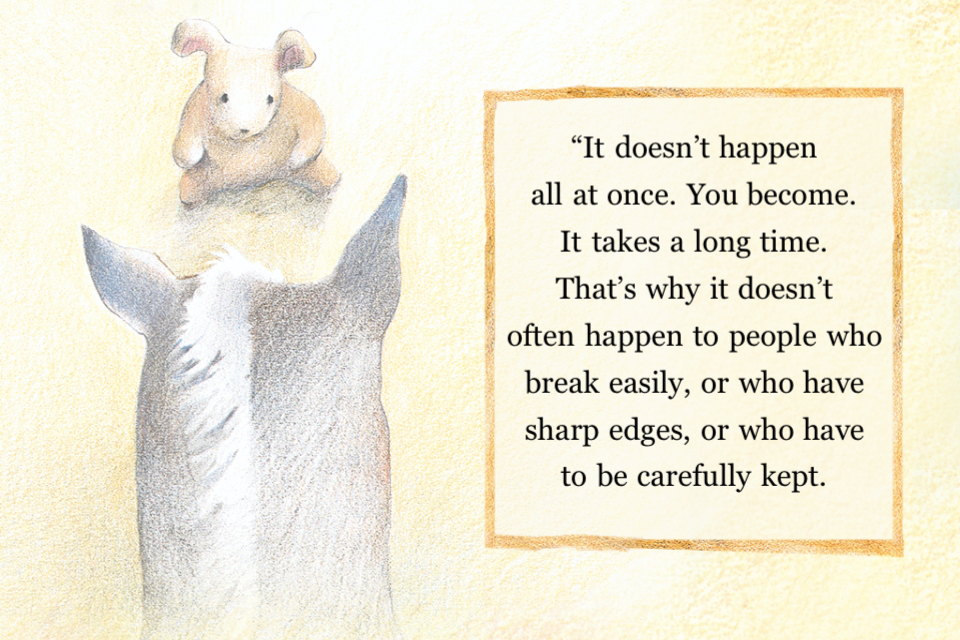
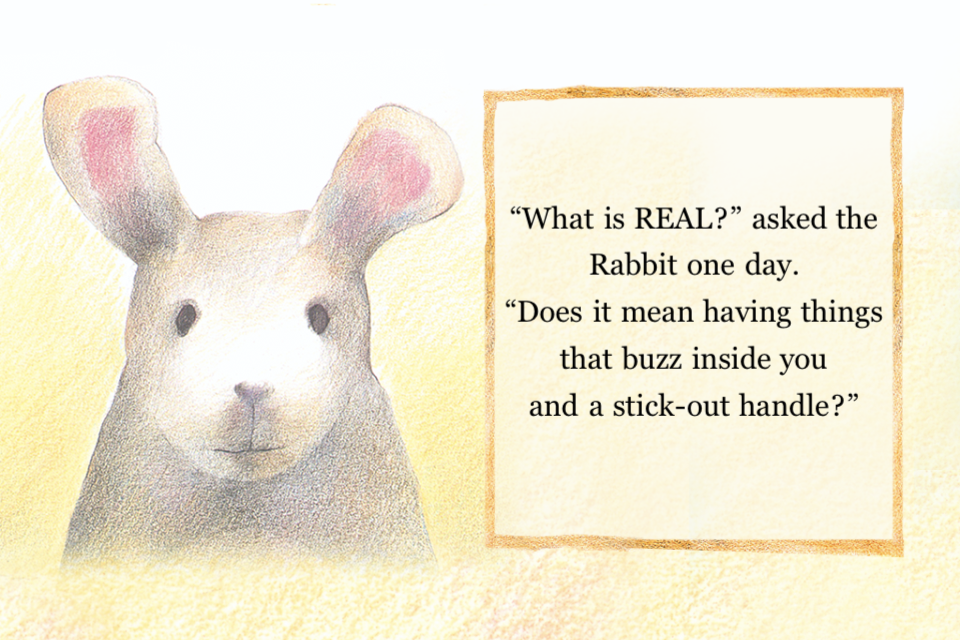
Without diminishing the work of Blascovich et al. I still think that one of the best explanations of “real” stems from a dialogue between a rabbit and a wise old skin horse:

/Mariis

SL and Physics lessons – between Heaven and Hell!

Since December 5th, 2011 I’ve been running a PD class with students from the Master’s Program on ICT & Learning (MIL) at Aalborg University, and in order to pass the course, the students were asked to do in-world team presentations on the teaching and learning potential of SL. On Wednesday January 25th, Team E had to do their presentation, and this is the final post describing the students’ presentations. Background information on the course/the presentation task can be found in the post describing the first presentation, and here are links to the second, third, and fourth presentations.

Team E and their focus


Team E: Anina & Happytown

Team E’s members, Anina & Happytown are both K-12 teachers, and one of the challenges they have experienced in relation to teaching Physics in RL, is that the pupils often find it to be a boring subject matter, and so they wanted to investigate the possibility of using SL to design for fun and engaging activities, leading to the following investigation question:

How can physical activities be remediated in Second Life?

Well knowing that SL doesn’t allow for users below 16, Team E made a point out of explaining how their work should be seen as a pilot test for later exploration in a closed environment in Open Sim.

Team E’s sandbox
Just as the previous four teams, Team E also had a sandbox available from December 9th, 2011, and the pictures below reflect the progression in their work.


On December 17th, nothing much seemed to be happening in Team E’s sandbox.

A couple of days later on December 19th this shape – looking like The COI model – appeared.

Just a few days before the Midway presentation Team E’s sandbox still looked quite empty on January 1st, but we were in for a big surprise :-)

During their midway presentation on January 3rd, Team E showed us examples of how physics can be applied in SL.

… and Team E had designed animated sleighs, which their fellow classmates were invited to try out.

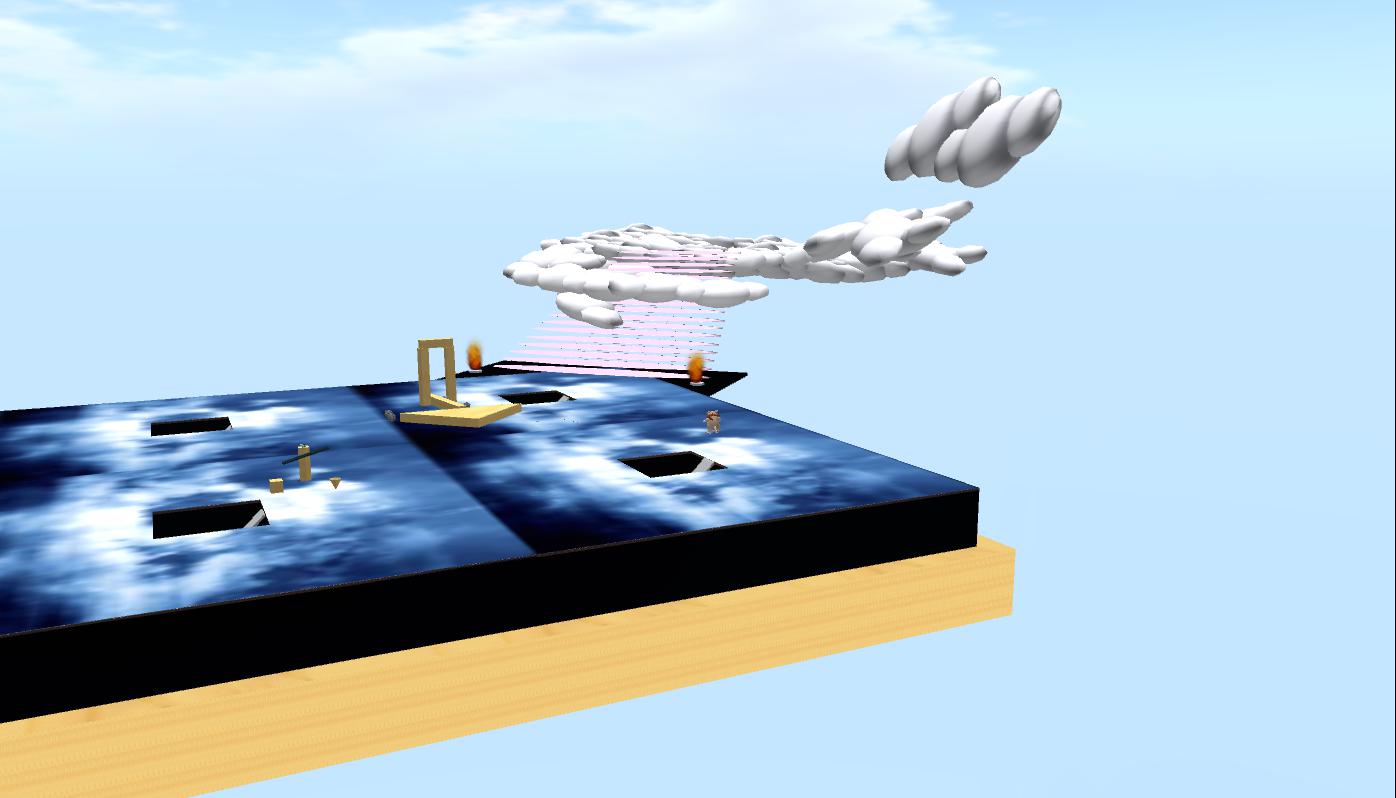
And then by January 11th, Team E’s building process had really taken off.

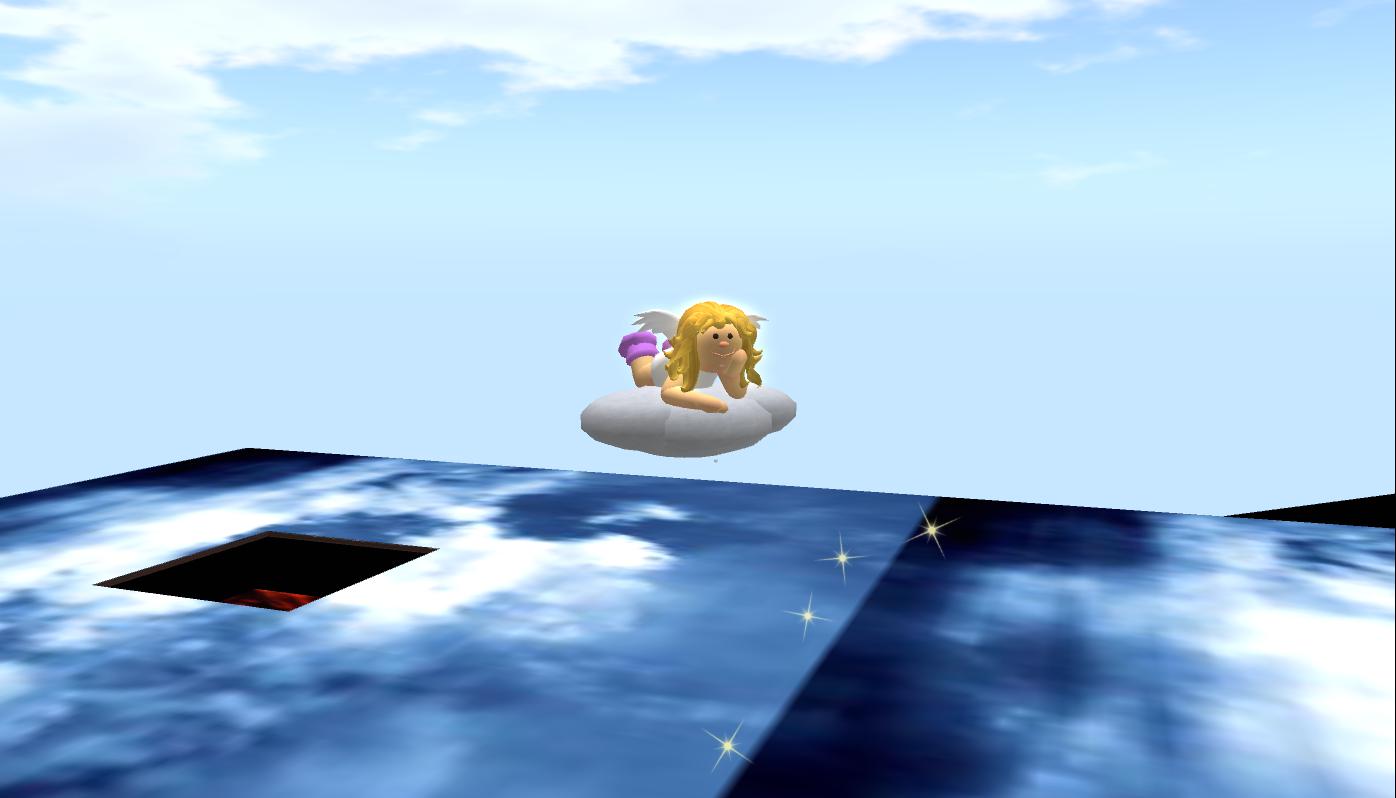
Team E also had a cute angel hovering above their sandbox on January 11th.

January 13th; more things started to happen in the air surrounding Team E’s sandbox.

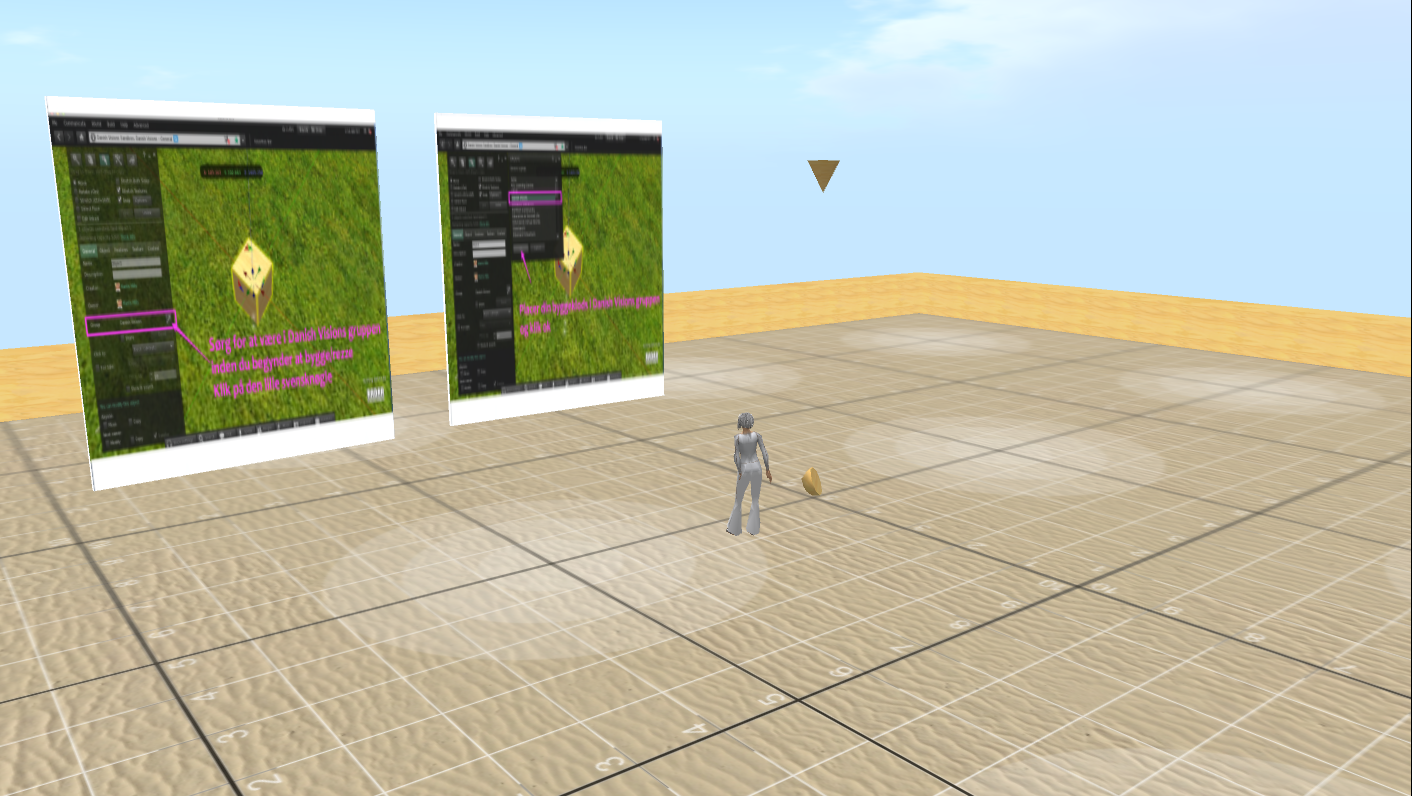
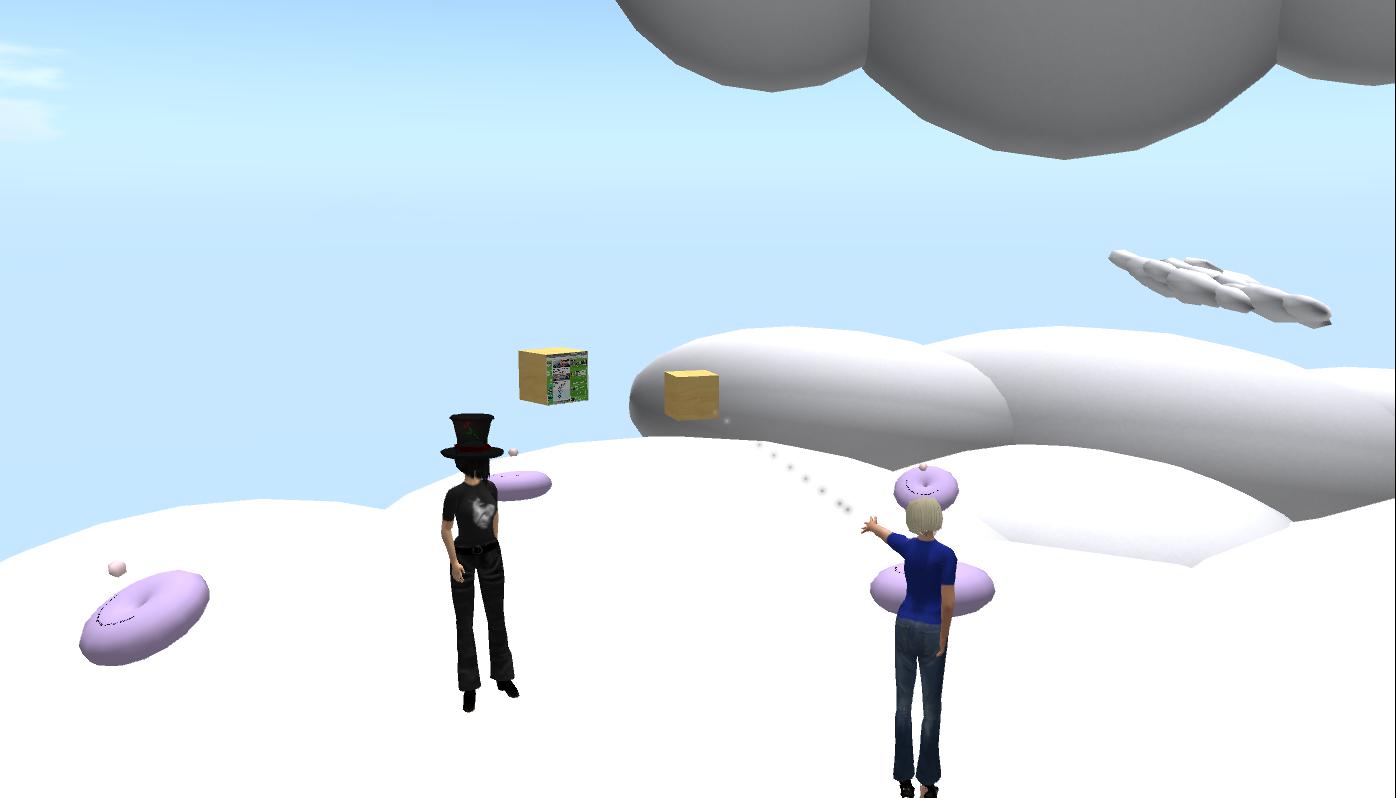
On January 17th, I met briefly with Team E’s Anina to show her how to create a shared media screen.

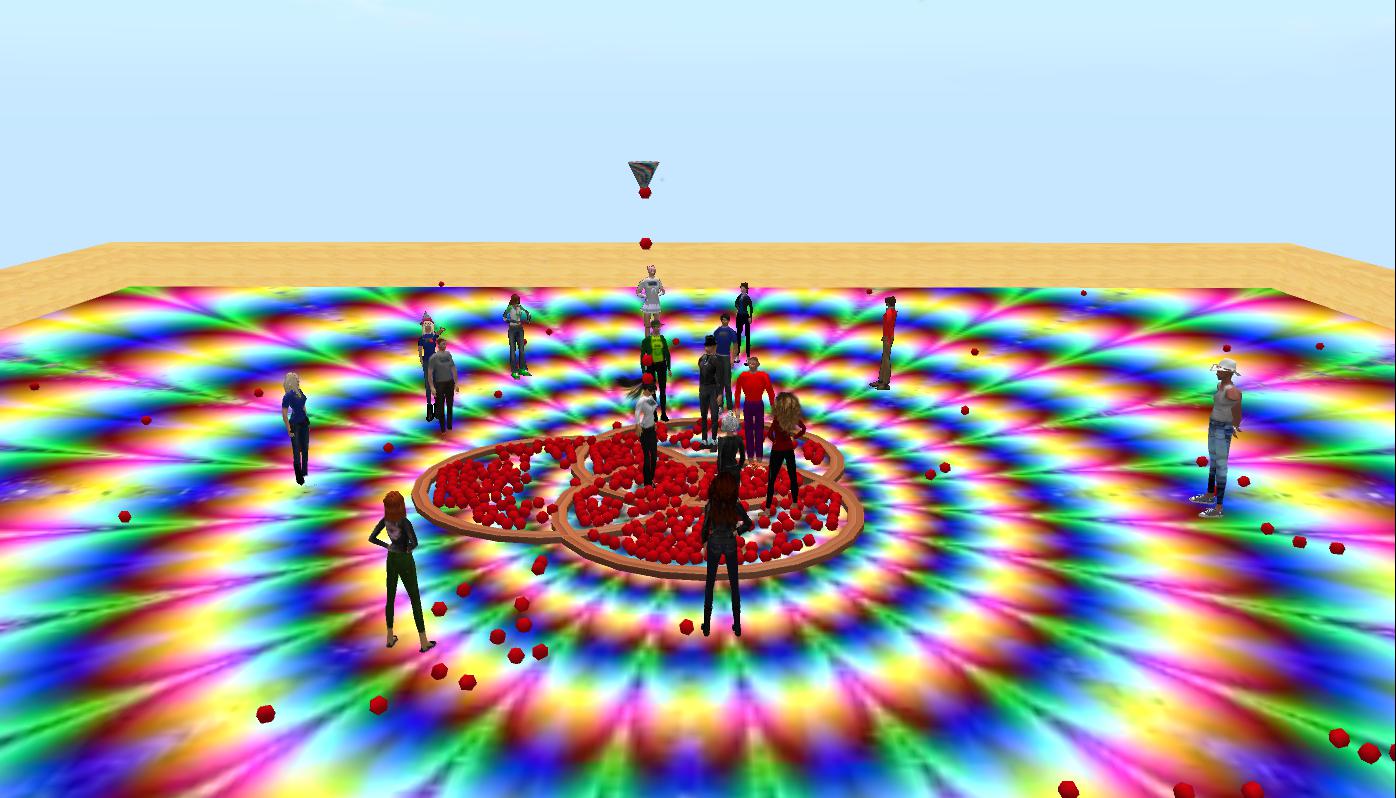
On January, 21st it became very clear that something different was going on in Team E’s sandbox …

But exactly what, remained to be seen …

Team E’s presentation
Team E’s agenda looked like this: 

  • Remediation
  • Physics
  • Exercises
  • Reflections on our design – What have we been thinking?
  • Visit to Oddprofessor’s Museum and Science Center
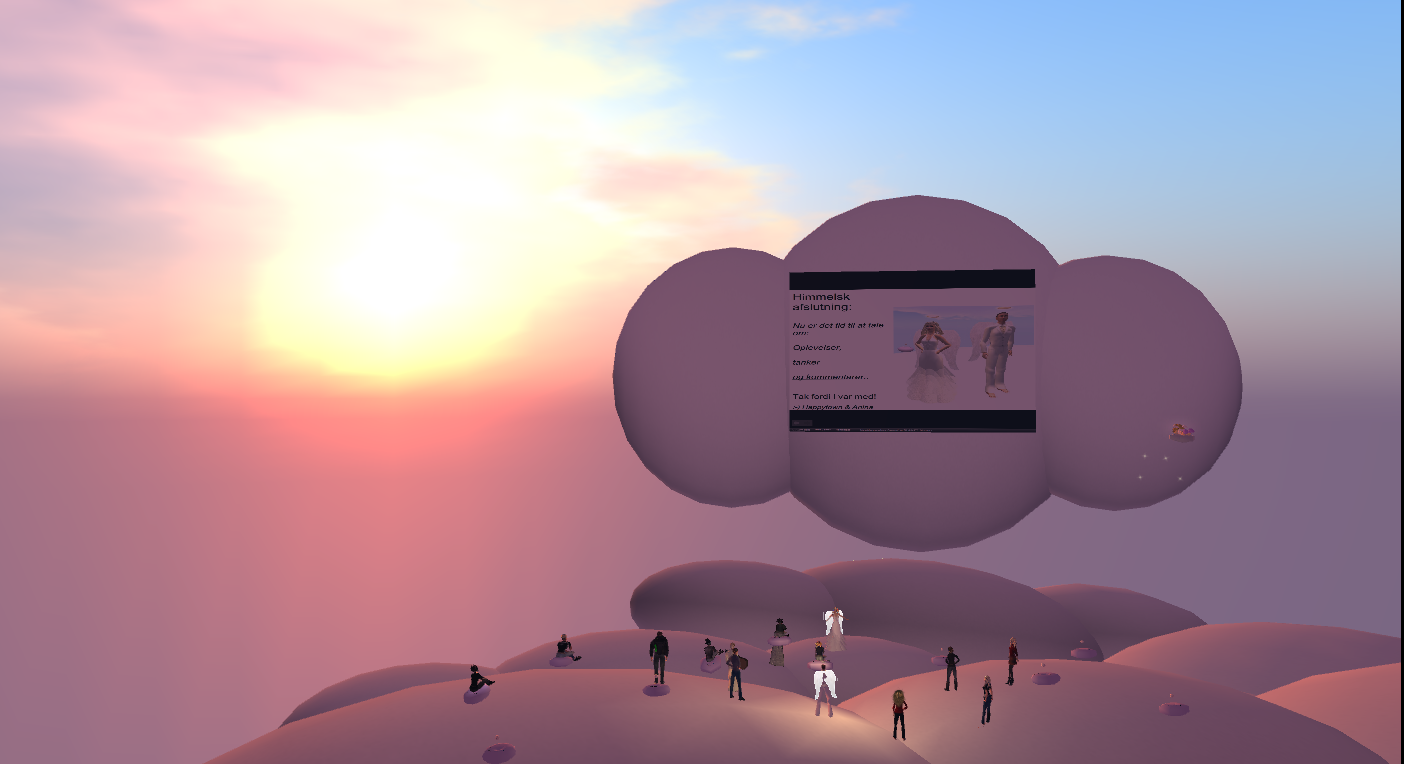
  • A heavenly closure in the sky

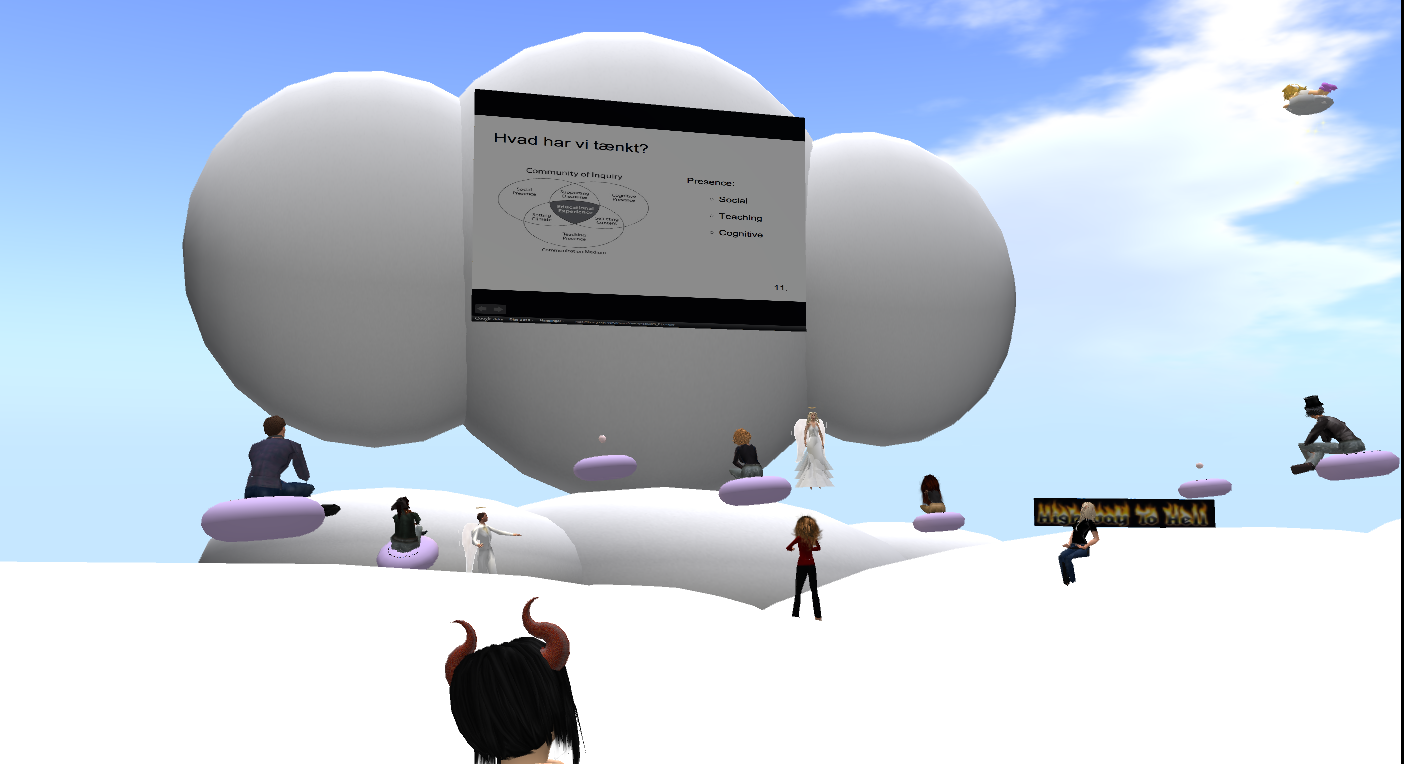
Team E’s slide display on one of the clouds.

Team E made extensive use of the shared media feature throughout their presentation, and chose to show their slides on one of the clouds. The tricky issue with shared media is that each user sees the displayed media individually and so the start and stopping point of a video differs. However, Team E had sent out instruction prior to their presentation and after further elaboration in-world, everybody seemed to be on the same “slide”. The team explained how they had wanted to investigate Bolter & Grusin’s concept of remediation and use it to redesign some exercises from an existing instructional design from a Physics class.


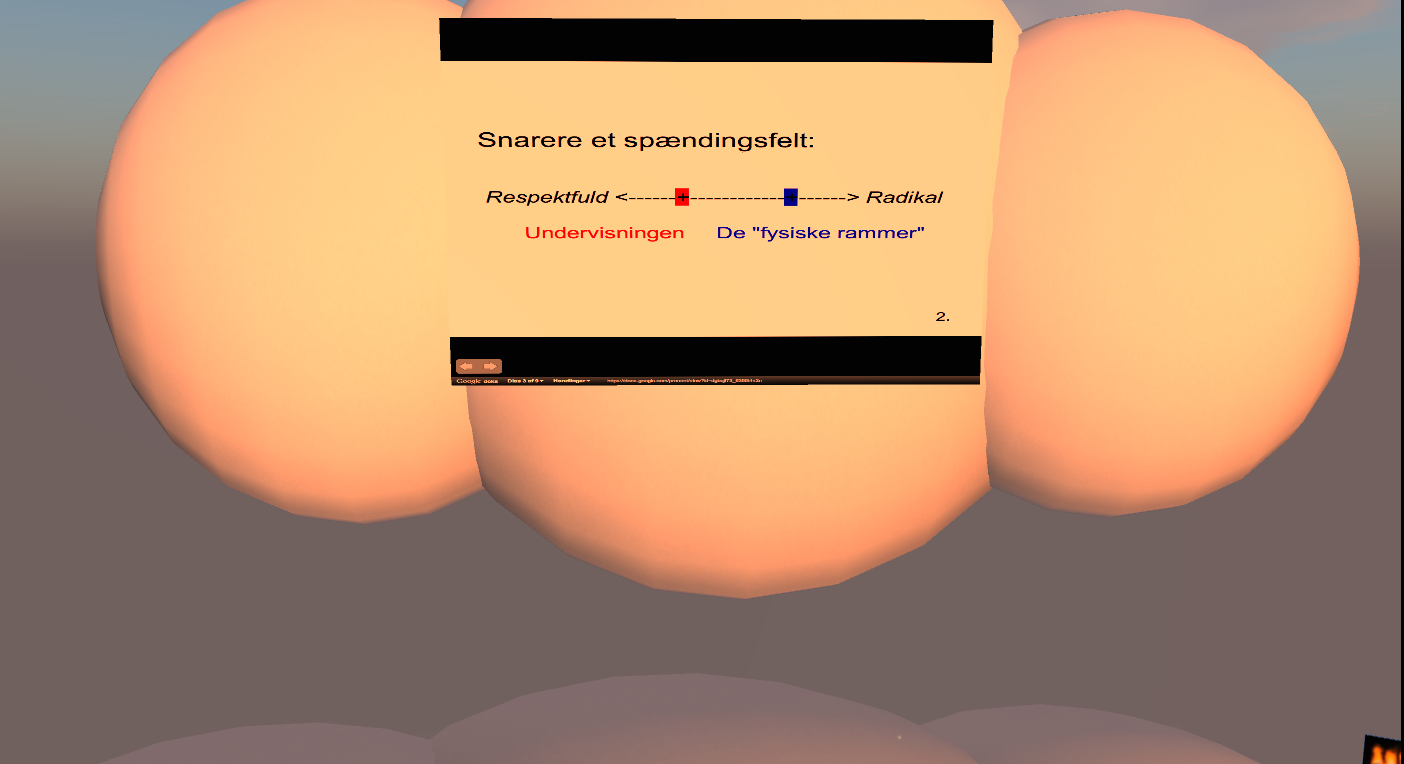
The continuum of remediation.

As part of Team E’s design strategy, they had chosen to remediate the activities in the exercises in a respectful manner drawing on RL examples, and then remediate the setting in a more radical manner based on a Heaven-Hell analogy. By drawing on different aspects of the remediation continuum, Team E wanted to design authentic exercises that would stimulate their target group’s learning and engagement due to the more fun and interesting surroundings.


Graphic overview of some key elements in Physics.

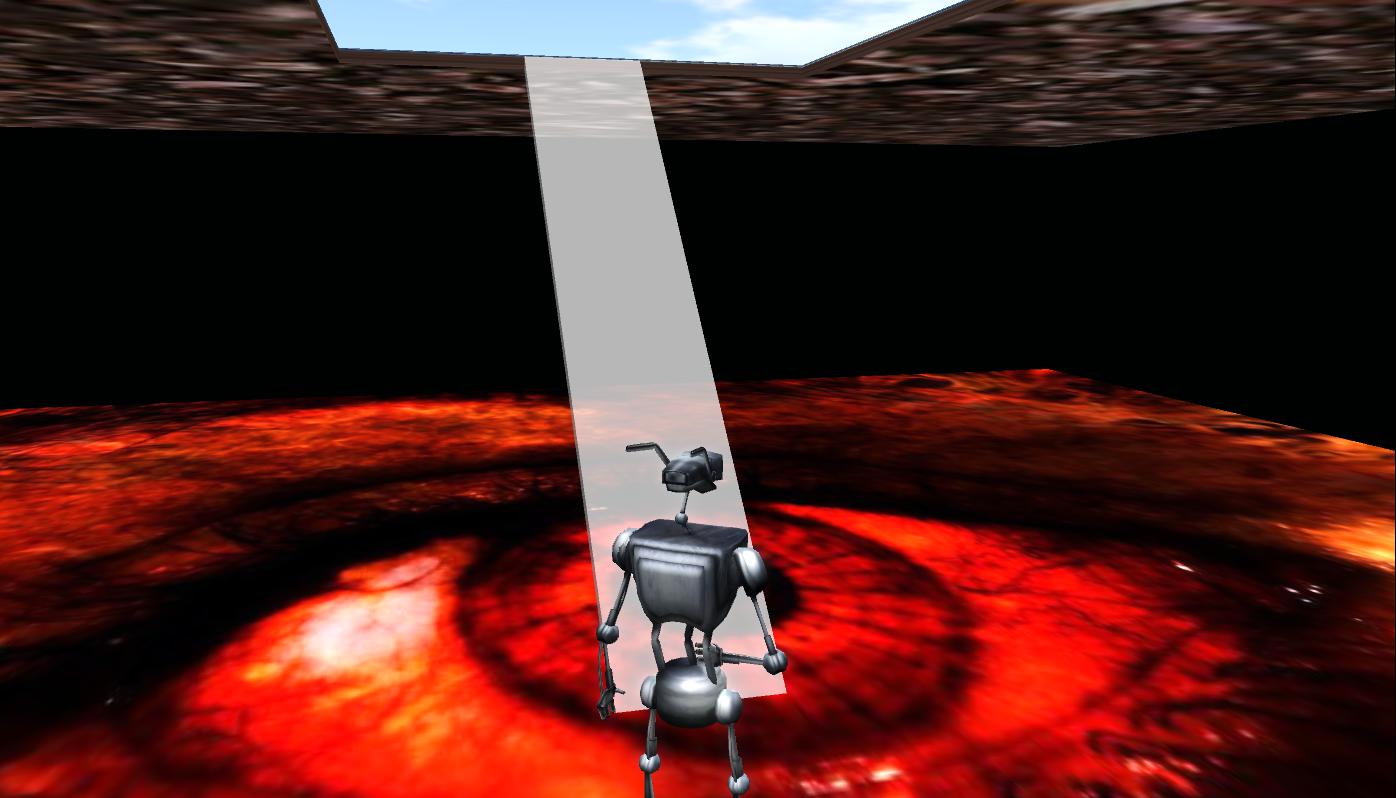
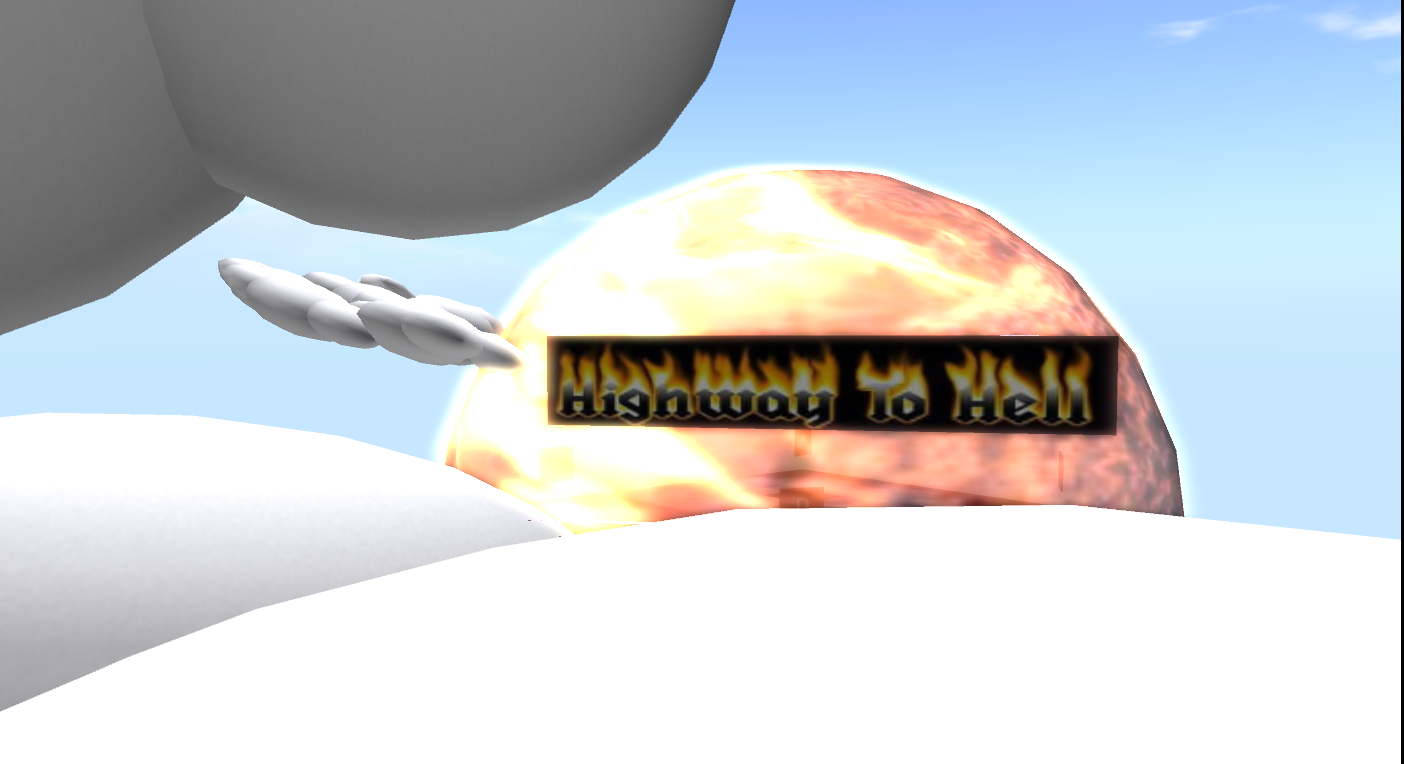
After this brief introduction to their design ideas, Team E went on to explain about the exercises that the other teams had to do, and we were asked to follow the “highway” and enter Hell …


On the Highway to Hell … aka to the Physics exercises!

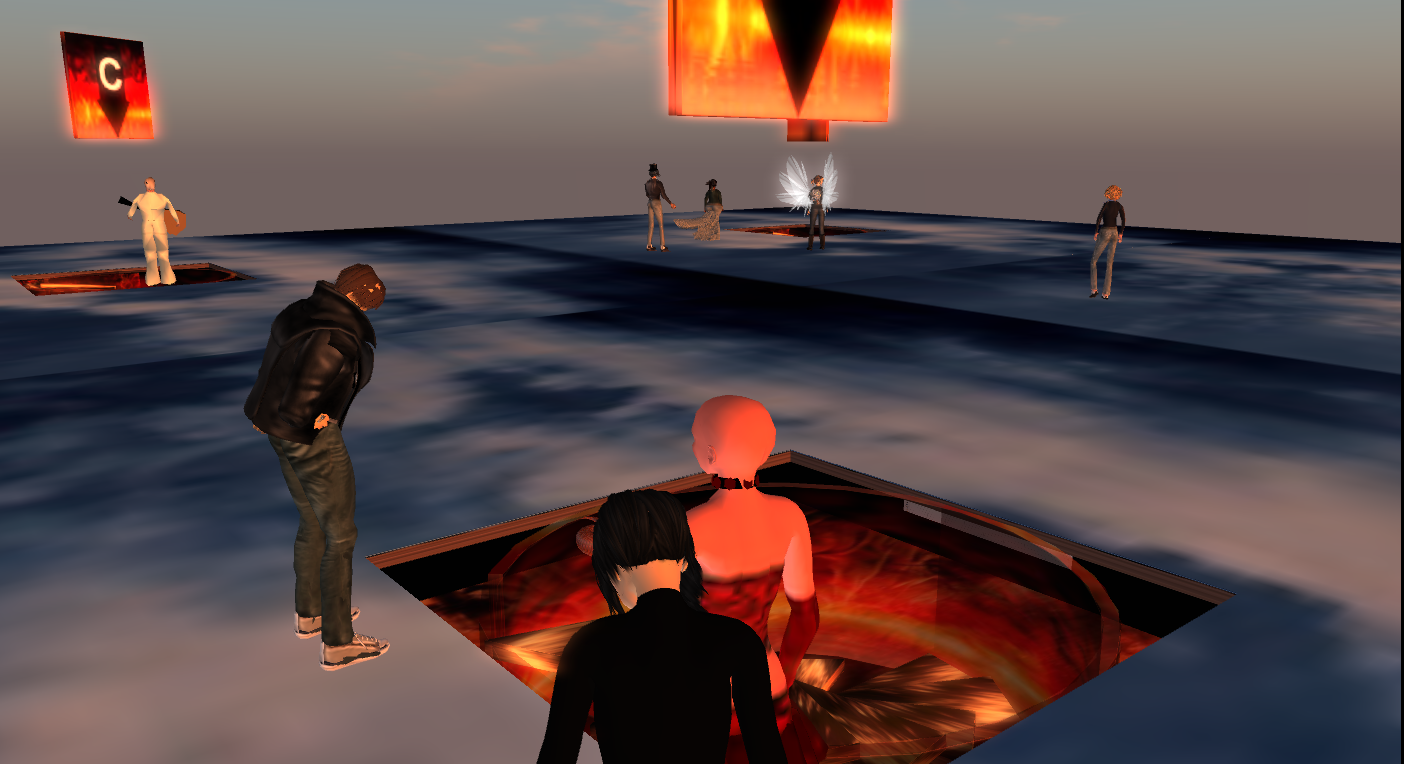
Each team had been assigned their own place in Hell …

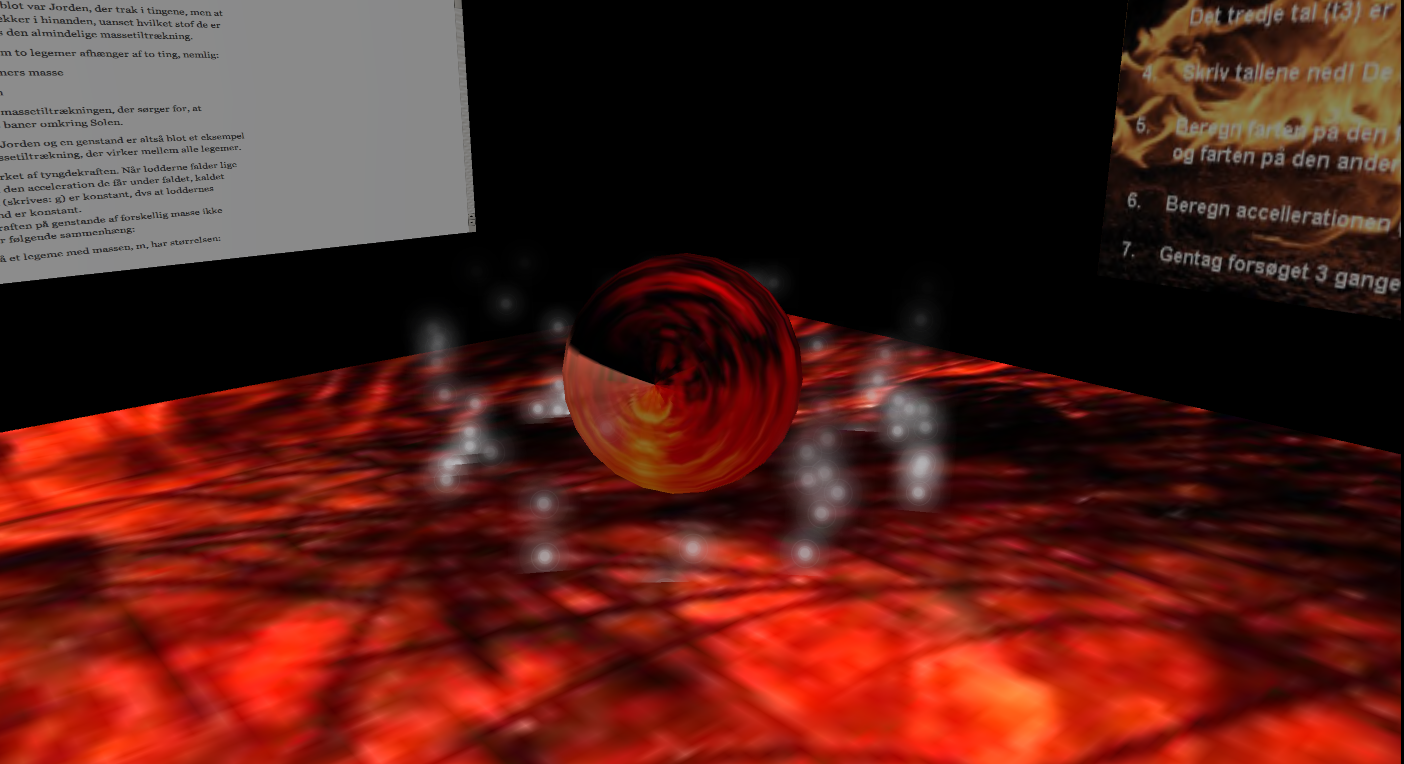
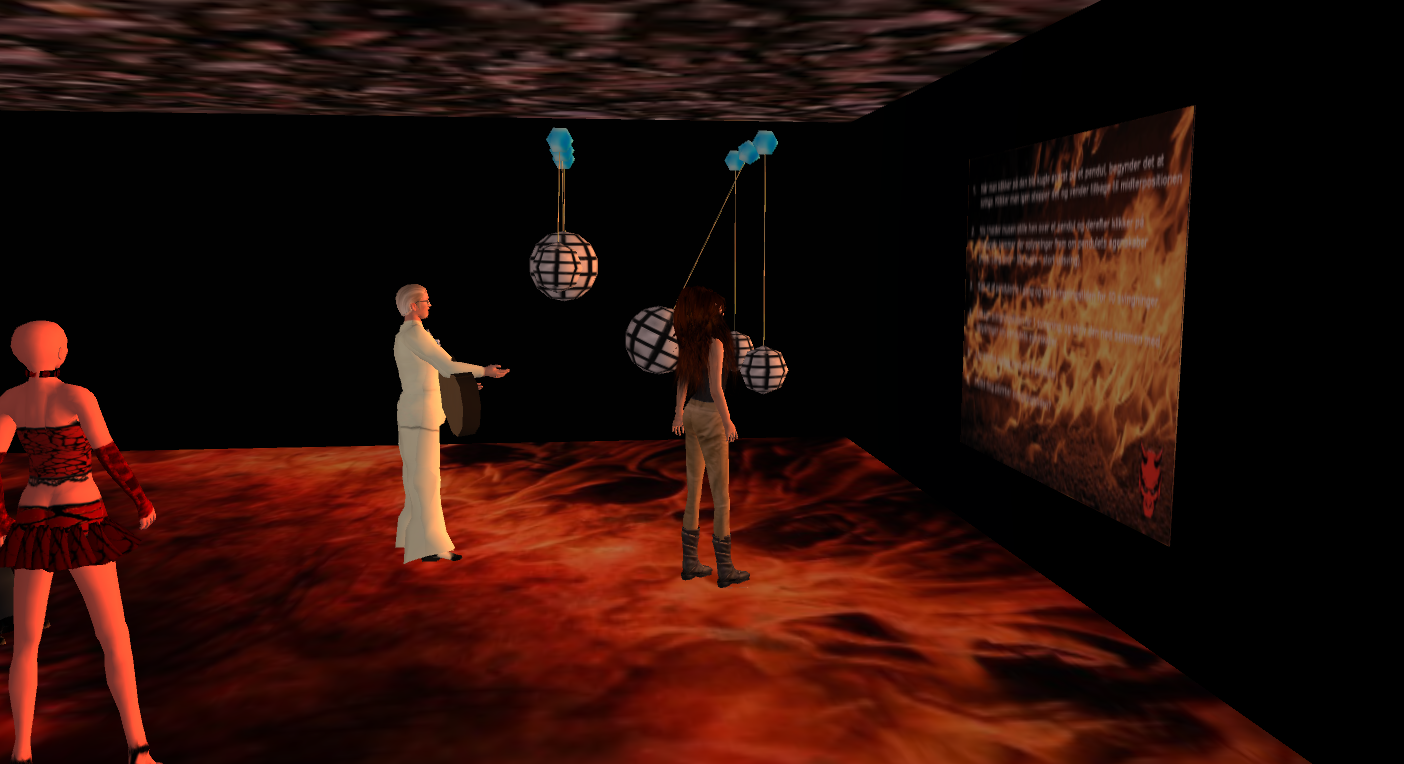
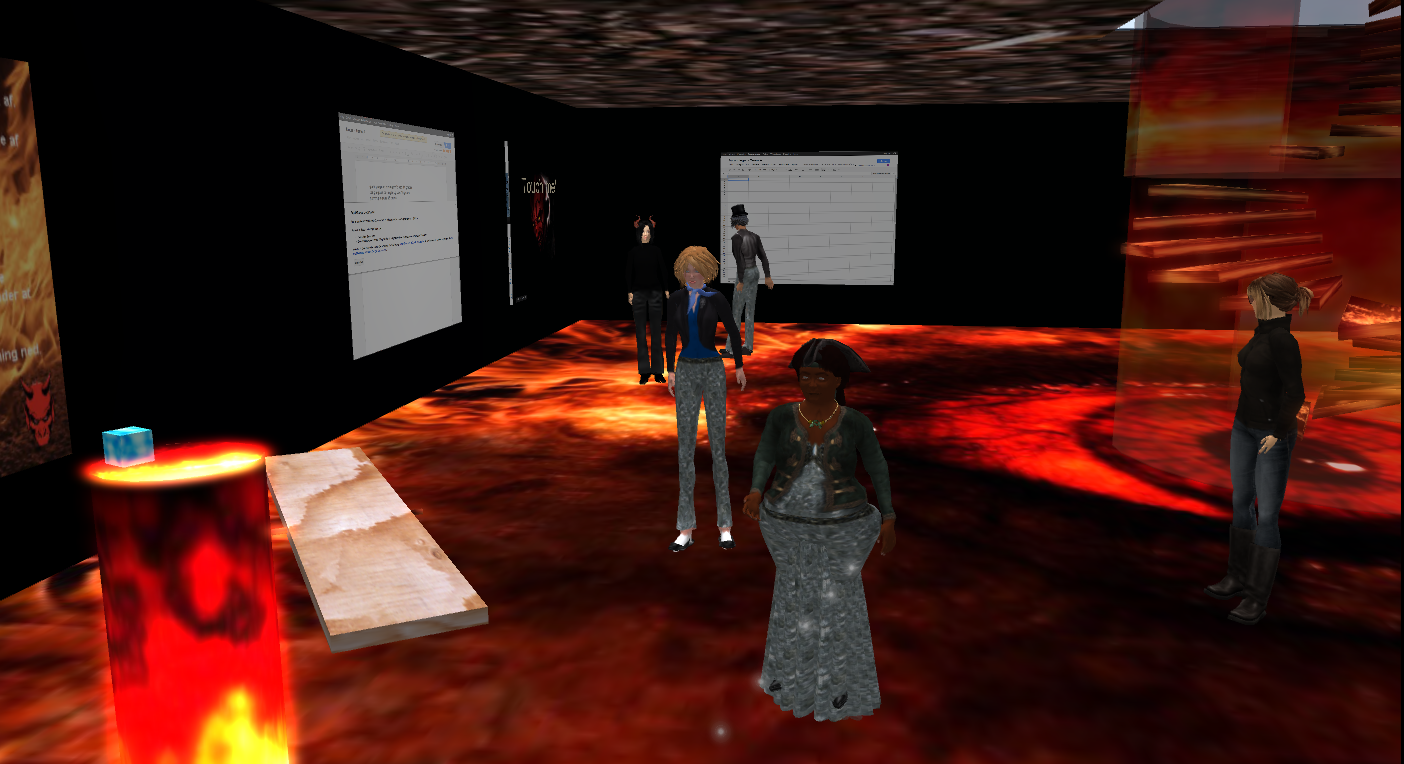
With some help from my co-facilitator, Inge Team E had designed four sound-proof rooms, one for each team, that all contained three different exercises. For each exercise, different information was displayed as text or videos, and the teams had to complete at least one exercise, and write the results in shared documents.


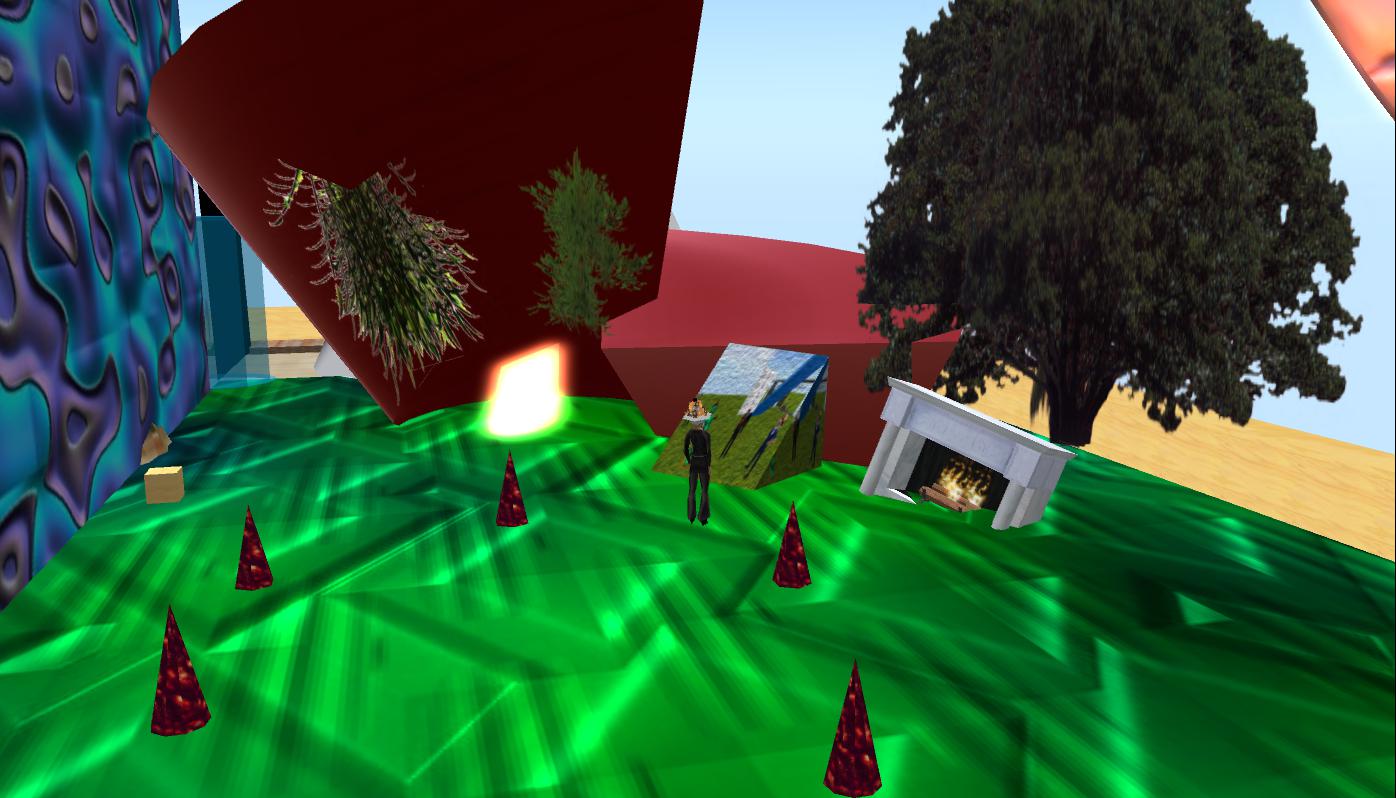
Gravity exercise with a ball of lava to calculate mean acceleration.

Pendulums to calculate cycle time in Factor Physics.

Calculating friction of different materials.

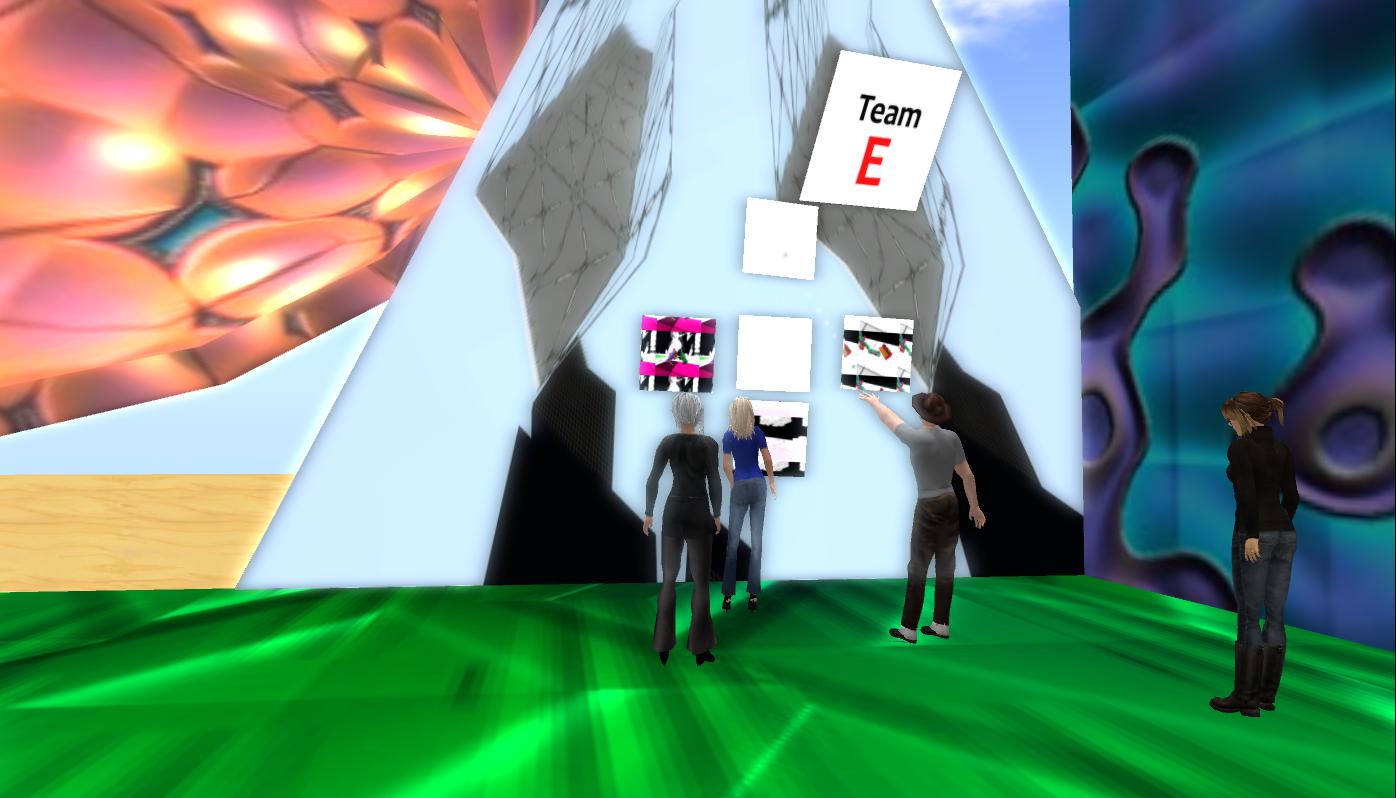
Results from the exercises had to be written in the shared docs on the walls.

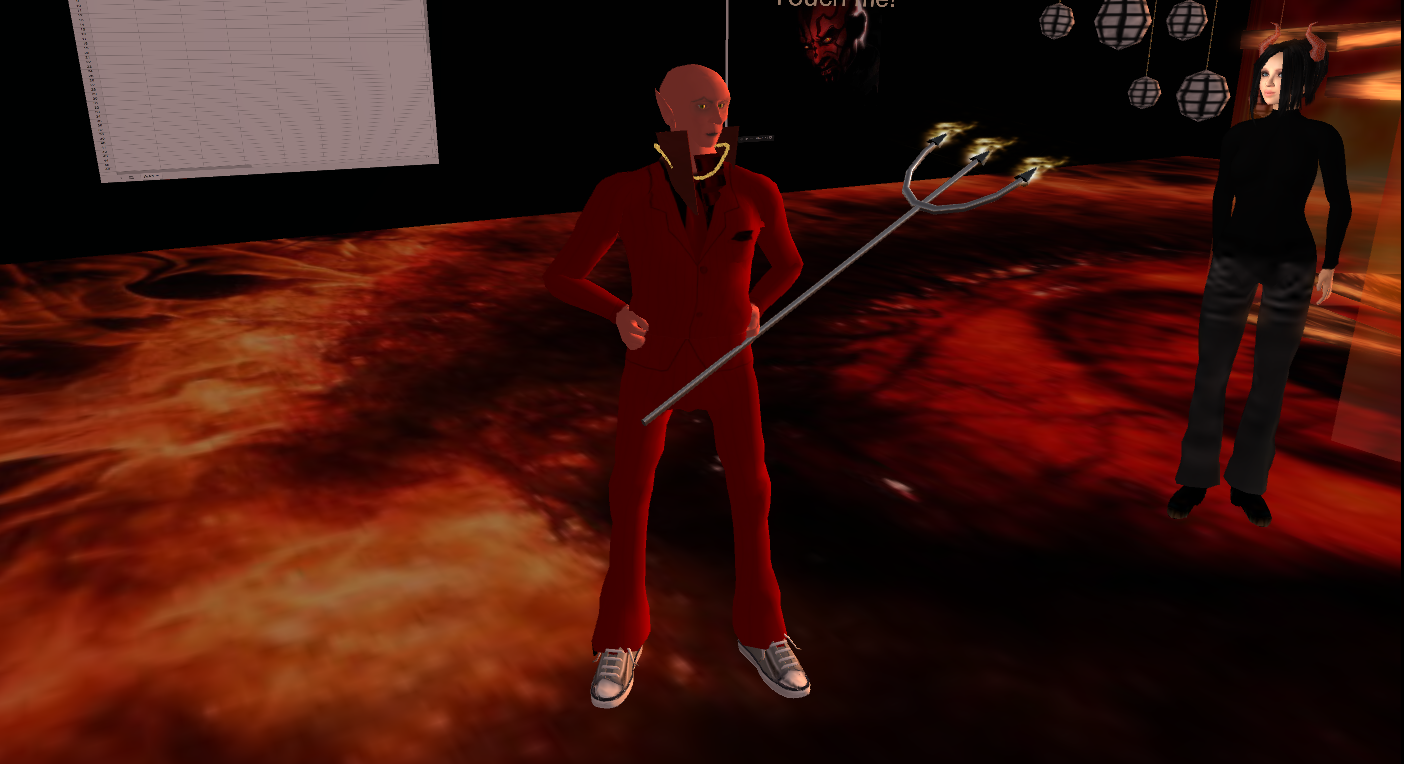
I didn’t manage to visit all teams, but all of them seemed to be fully engaged in the exercises, which was no surprise with the great designs and devilish teachers:


Anina,

and Happytown – their mere appearance made me listen carefully too ;-)

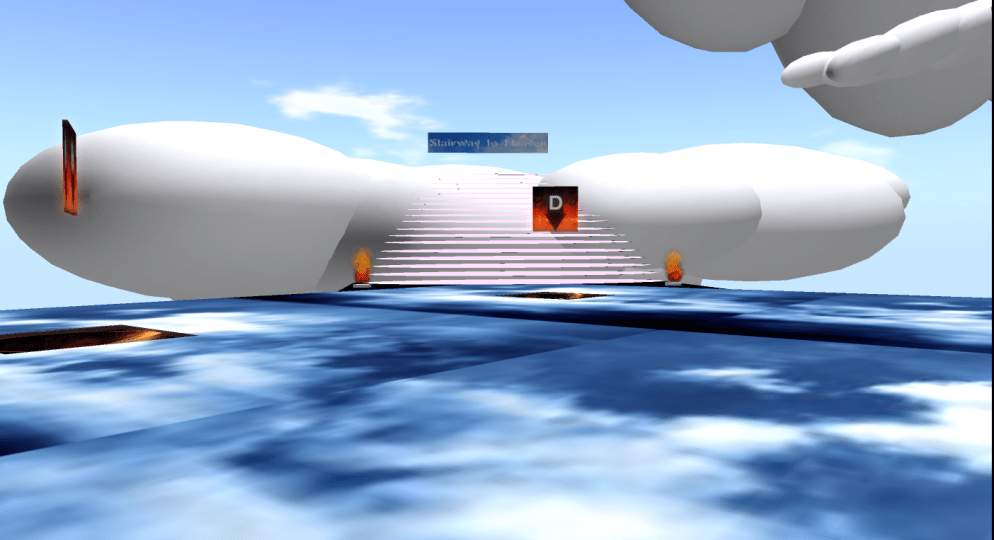
After the exercises, it was time to resurface and go back to Heaven.


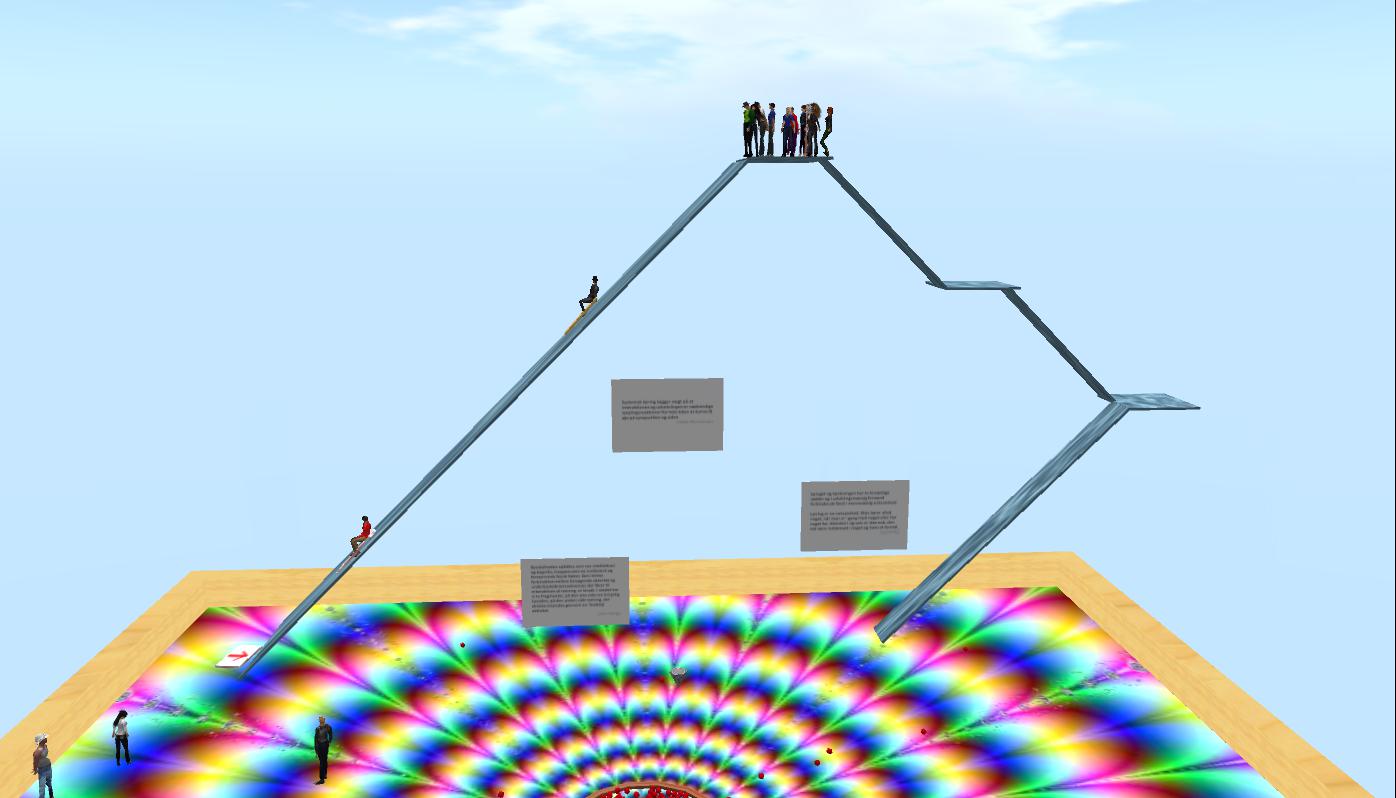
The Stairway to Heaven.

Back in the clouds, Happytown and Anina returned to their investigation question and elaborated on some of the theories (Wadley, The COI-model) they had used to support their work. Based on Nielsen’s work, Team E spoke of the necessity of the users’ ability to use their imaginative powers to feel immersed in an environment such as SL, and about the need to design for active knowledge construction via in-world artifacts.


The COI model on display.

For the mandatory tour outside the team’s own sandbox, Team E had chosen Oddprofessor’s Museum and Science Center, and we were asked to go there and explore the many fine examples of interactive objects and activities for further inspiration. The place has been created by Oddprofessor Snoodle who uses it to teach Physics/Chemistry for deaf students, and the place is filled with fun and engaging learning activties.


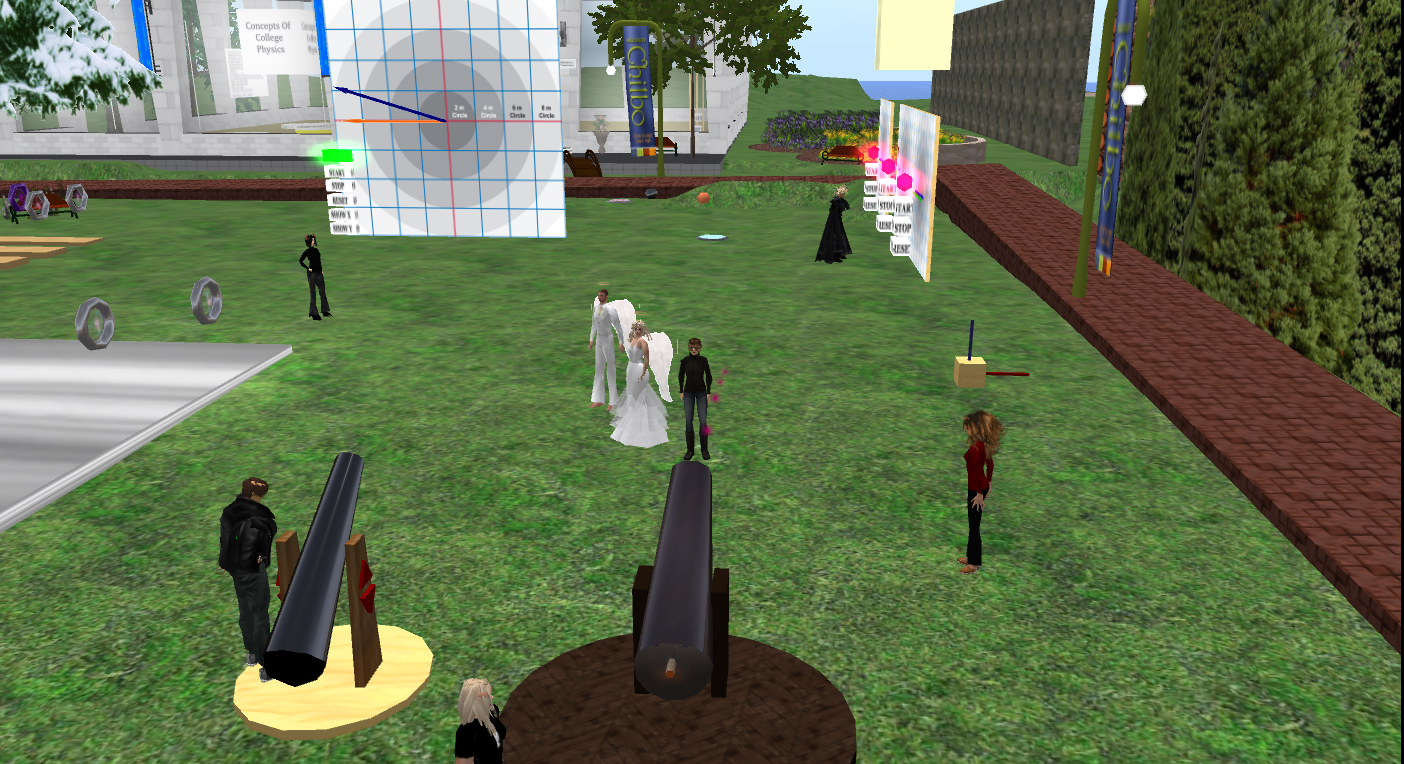
Exploring the many activities in front of the Free Fall Towers.

Learning through bowling :-)

My co-facilitator, Inge volunteered to stand in the line of fire from the canon!

Back in Team E’s sandbox, it was time for reflection and feedback.


Truly a beautiful setting for the final team presentation in the course.

Team E had wanted to show us, how SL can be used for teaching RL Physics, and I think they made a very convincing case. Their ambitious design impressed all of us, and it was a pleasure to witness such a good use of many of the features in SL. Anina & Happytown really have embraced SL, and their enthusiasm shone through their presentation, making many of us wonder what we could have learned, if only we had had the opportunity to learn Physics this way! In summary, Team E provided us with a very fine closure of this course on the educational use/potential of 3D Virtual Worlds :-)

/Mariis
Using SL to facilitate a design process in group work

In the PD class, I’ve been running since December 5th, 2011 with students from the Master’s Program on ICT & Learning (MIL) at Aalborg University, the students have to do presentations in-world, and this is the first post of five describing  their work.

Background
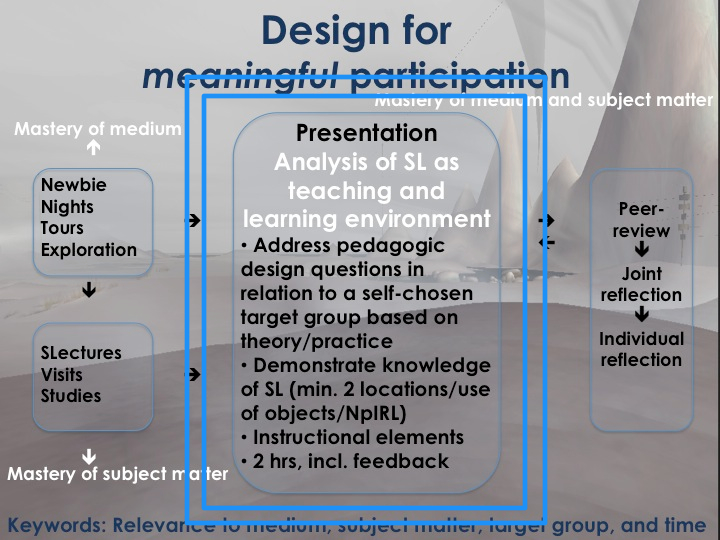
As part of the assessment criteria in the course, the students are asked to do an analysis of SL as teaching and learning environment, and instead of doing a traditional written report, the students have to present their analyses synchronously in SL as highlighted  in this slide:


The MIL11 assignment.

The analysis has to be based on both theory (general course literature combined with literature the students choose for their particular topic), and practice. For the latter part, the students have to explore, experiment, and use SL, and they can also draw on the experiences they get from the other course activities in SL. Since all educational programs at Aalborg University are founded on a PBL pedagogy, they students also have to identify and work with RL problems – the students typically choose to focus on problems they encounter in their work settings. In this MIL11 class, the students have been working in 5 teams, and on Wednesday, January 11th the first team A had to present their analysis.

Team A and their focus


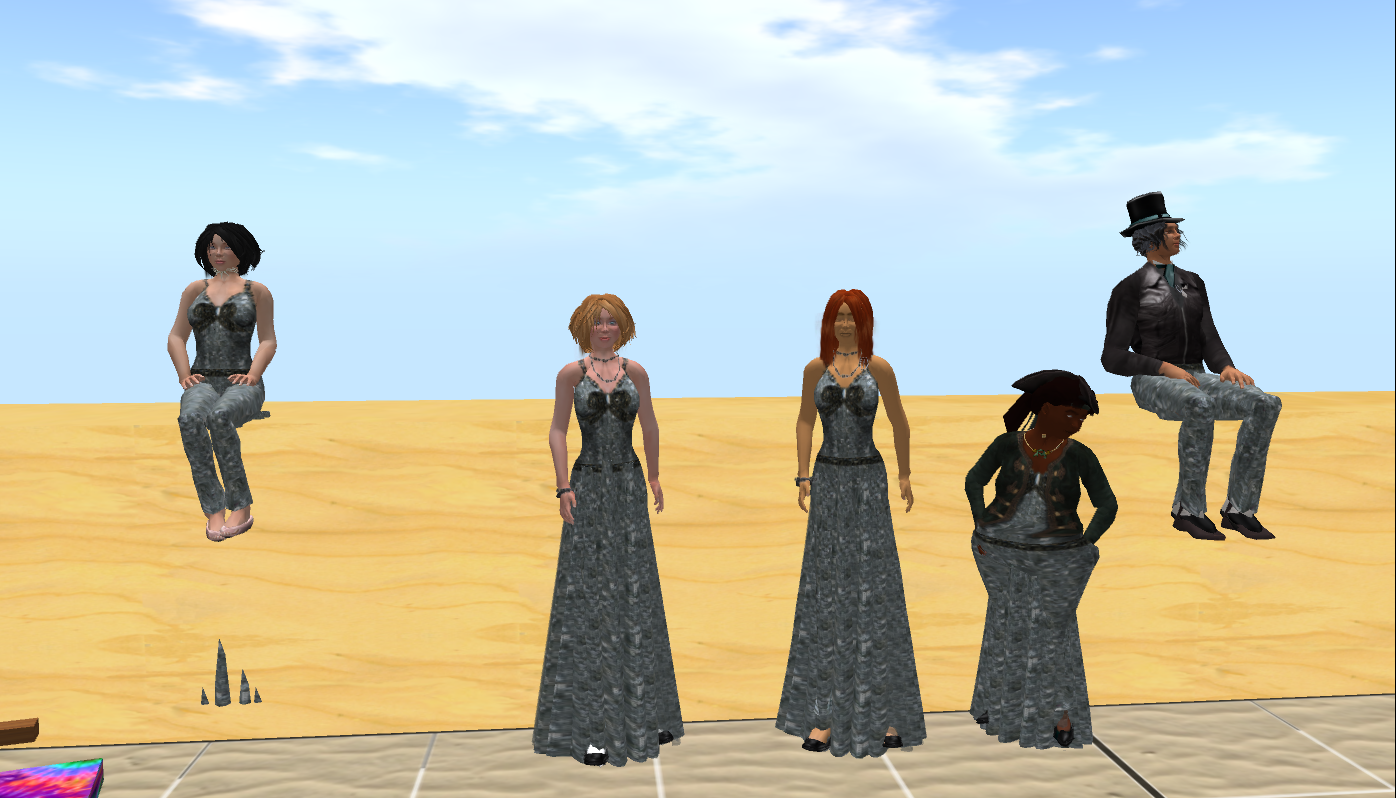
Team A: RickDJ, Ingma, MrsJJ, Ilikespace & Merlin –  all dressed up in similar clothes to highlight the team affiliation.

Team A’s members come from very different professional backgrounds, three of them are working in formal teaching (from K-12 to college), one is working in the central economic section of the city of Copenhagen, and the final member works within a special section of the law enforcement. All of the team members work with development and implementation of ICT and learning at some level in their organizations, and this is also why the signed up for the MIL Program. For their analysis/presentation, team A decided to focus on one team member’s work place, an “e-Design” educational program, and based on this context they settled for the following question to guide their investigations:

Can SL be used to facilitate a design process in project work?

In their work, the team tried to rethink and redesign an existing course for 3rd semester students, and they looked specifically at how SL can be used as a supplement to f2f and other technologies. The Team A students were interested in analyzing the particular affordances of SL that could promote certain parts of a design process for students working in groups in a blended environment.

Team A’s sandbox
To support the MIL students’ work in SL, each team was assigned a sandbox on December 9th (after they had learned the most basic SL skills), and the pictures below show the progression in team A’s sandbox.


December 17th; the team has begun rezzing and building all sorts of objects.

December 19th; the team’s presentation screen is set up for experimentation.

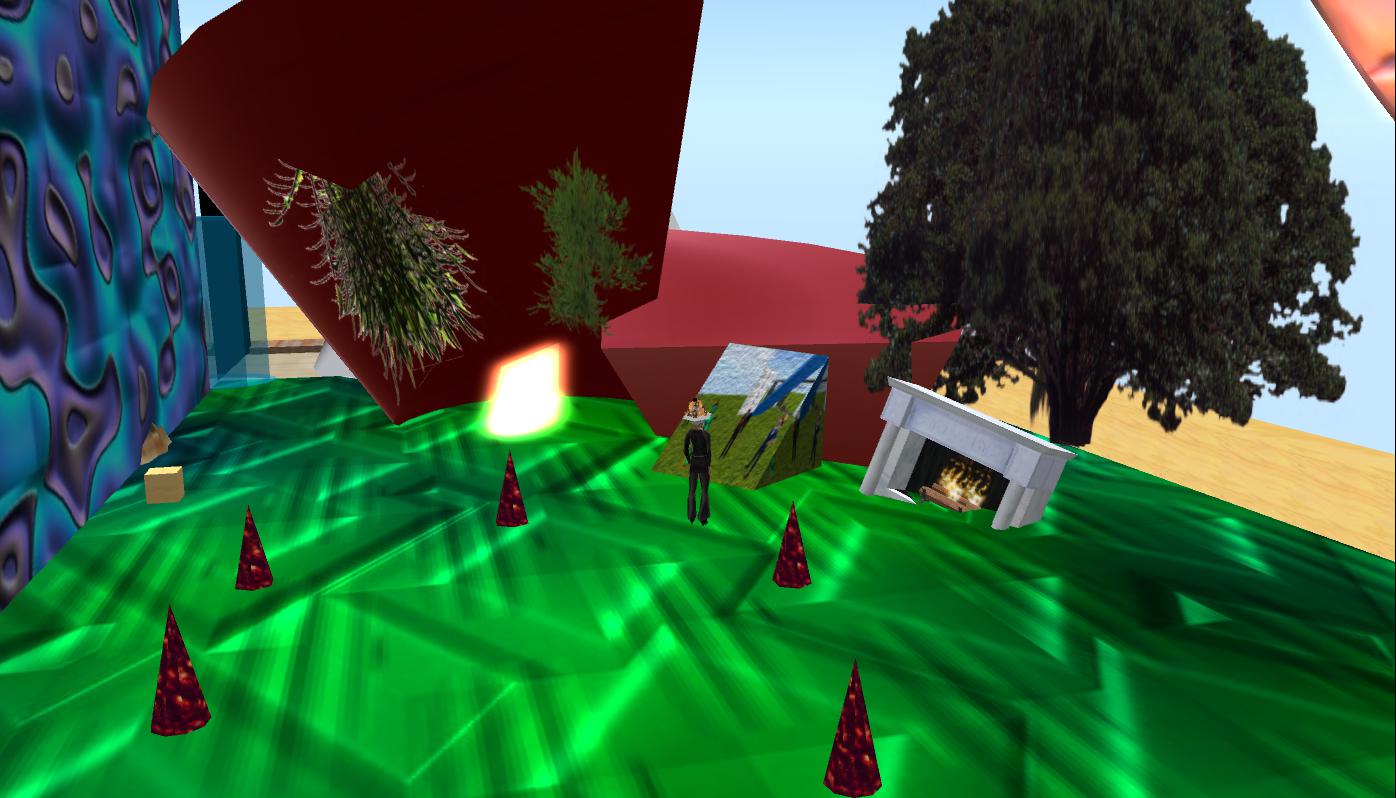
December 21st; One side of the team’s sandbox is filled up with objects creating a radical setting.

December 21st; Part of the interior design in the radical setting.

On December 22nd, I had an ad hoc meeting with some of team A’s members discussing the assignment and their design.

December 31st; the more respectful setting started to appear in the other side of the team’s sandbox.

One January 3rd, all teams were encouraged to present a status on their work, and get some feedback from me, my co-facilitator, Inge and their  fellow classmates –  and Team A chose to do so.


January 3rd; team A presenting some of their theoretical considerations for their upcoming presentation.

Team A’s presentation
Before  their presentation, Team A sent out instructions and an agenda in both SL and our regular 2D platform. The agenda looked like this:

  • 8:00 PM: Introduction in Team A’s sandbox
  • 8:30 PM: Inspiration trips
  • 8:45 PM: Group work in Team A’s sandbox
  • 9:10 PM: Presentation of the groups’ work
  • 9:20 PM: Theoretical input
  • 9:35 PM: Closing debate
  • 9:45 PM: Evaluation and feedback
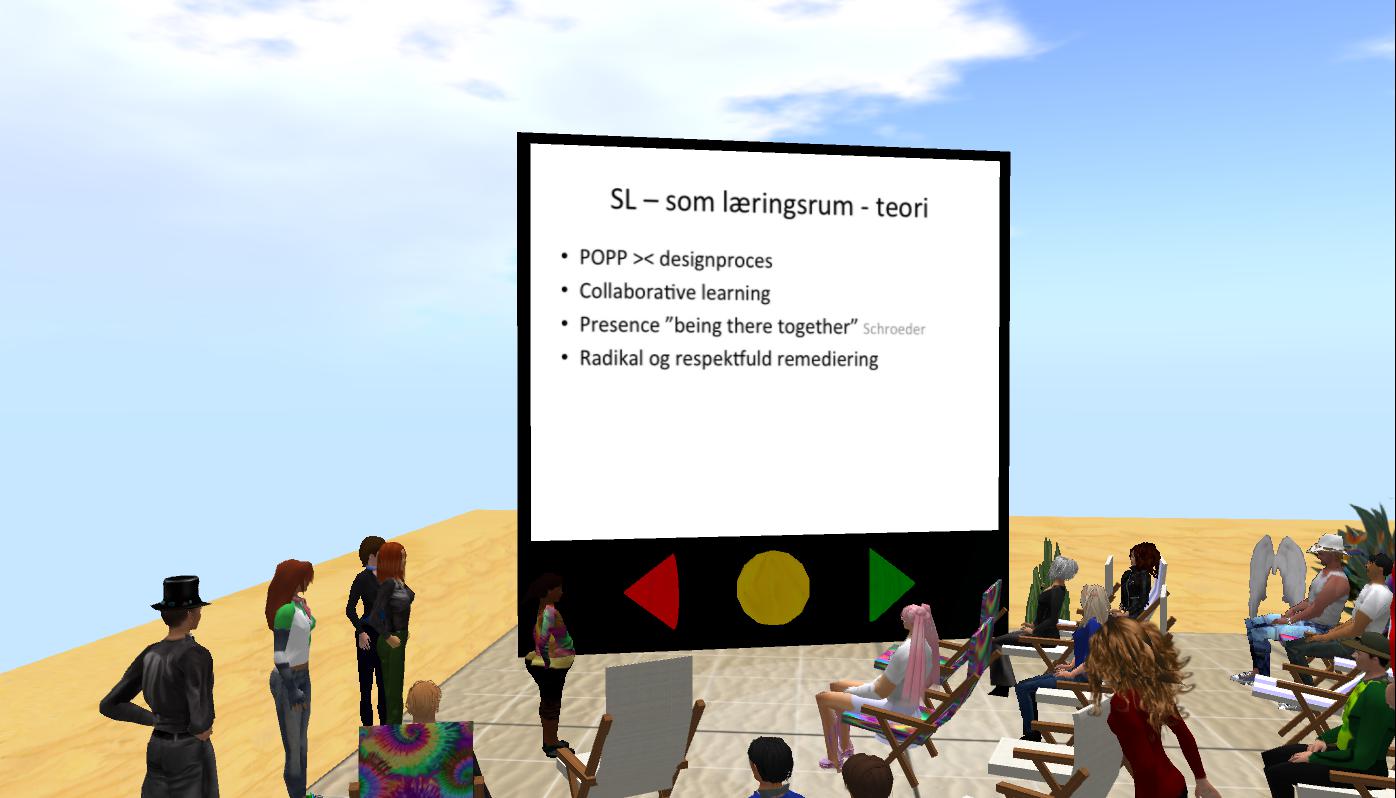
During the introduction, we were given an overview of some of the theories and concepts the team has focused on, and we were given a brief insight into the pedagogical set-up, the students at the e-Design program etc. The team members explained how they saw a close relation between Problem Oriented Project Pedagogy and the design process in general, and they continued explaining how they wanted to illustrate this by giving us small tasks to solve as examples of a typical design process. We had to go to designated locations and take photos for later inspiration. Back in the team’s sandbox, we had to build “a work table for multiple persons”, and present it.
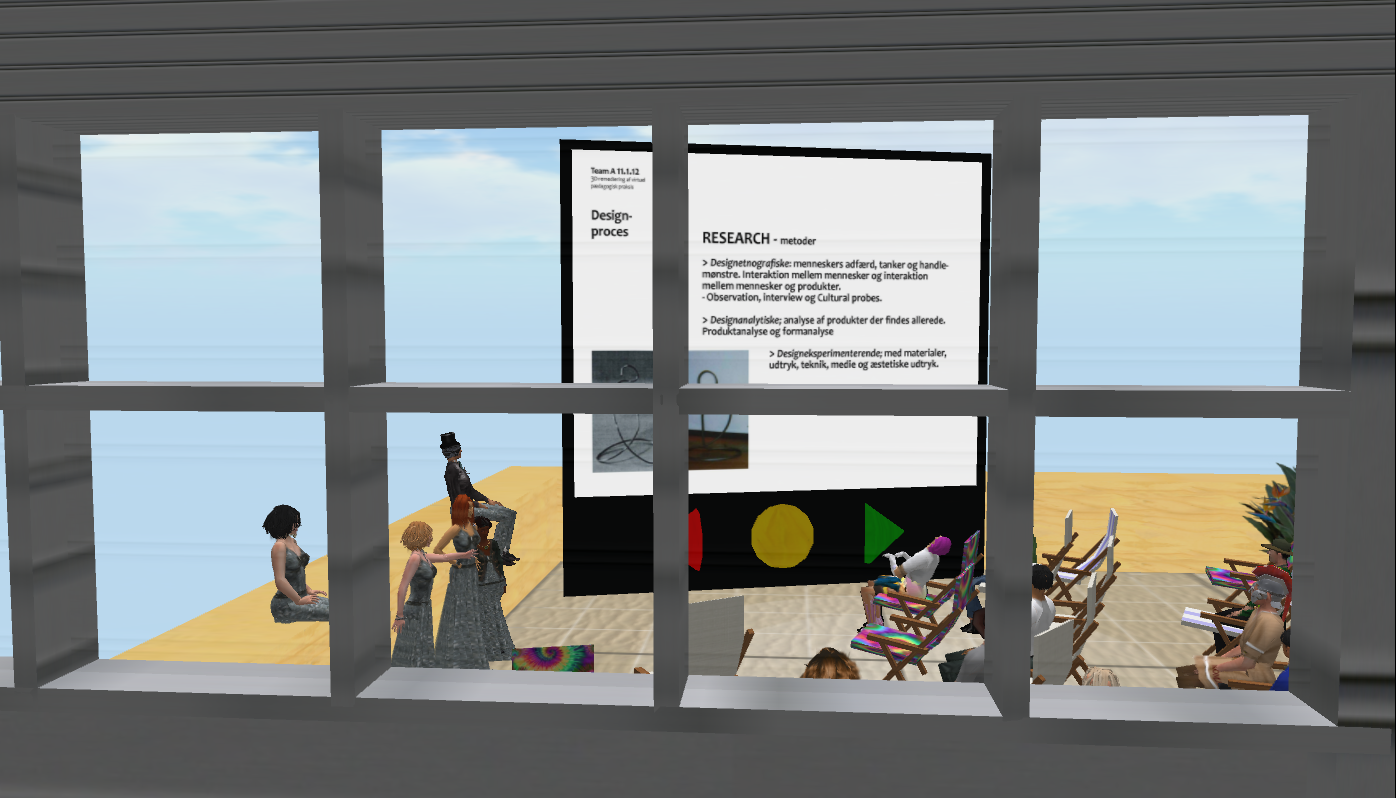
An overview of a typical design process with the research and idea generation phases highlighted.

The team felt that SL could be particularly useful in some of the more creative phases of a design process, and this was why we were asked to do tasks common to these phases. Because the students are not (due to time constraints) able to try out their hypothesis/ideas on their chosen target groups, it is common in theses presentations to ask the fellow students to act as the target group.


Among the theoretical concepts Team A chose to focus on, remediation and redesign of an existing pedagogical practice, were central – also in the way the team had designed their sandbox. The continuum between respectful and radical remediation permeated both design and activities, and in this way the team managed to visualize what otherwise may seem as quite abstract theoretical ideas.


As part of the research phase in a design process it is important to go out into the “real world” and gather information, and Team A had planned four different locations where each of the remaining teams had to go and take pictures for the following phase. The locations were two respectfully remediated places: Bartlett & Nielsen and Virtual Harlem, and two more radical places: Torley Island  and Mysterious Wave .


Team A’s Ingma acted as supervisor at Bartlett & Nielsen.

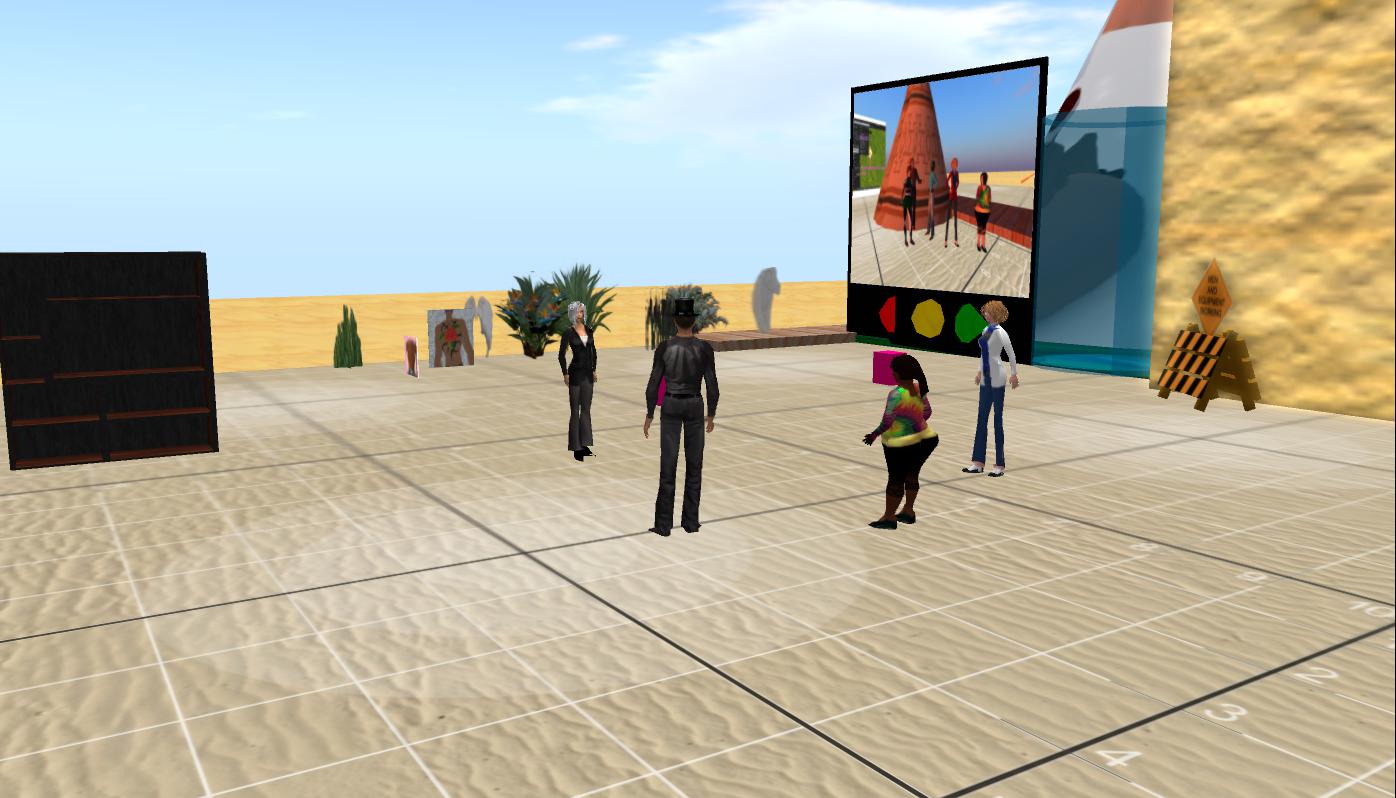
The time allocated for the inspirational trips was limited and I only managed to go to one of the four places, but judging from the following activities where the teams had to put their photos up for display, and based on this start working on designing a table, all the teams succeeded in completing the tasks despite time and technical (audio) challenges:


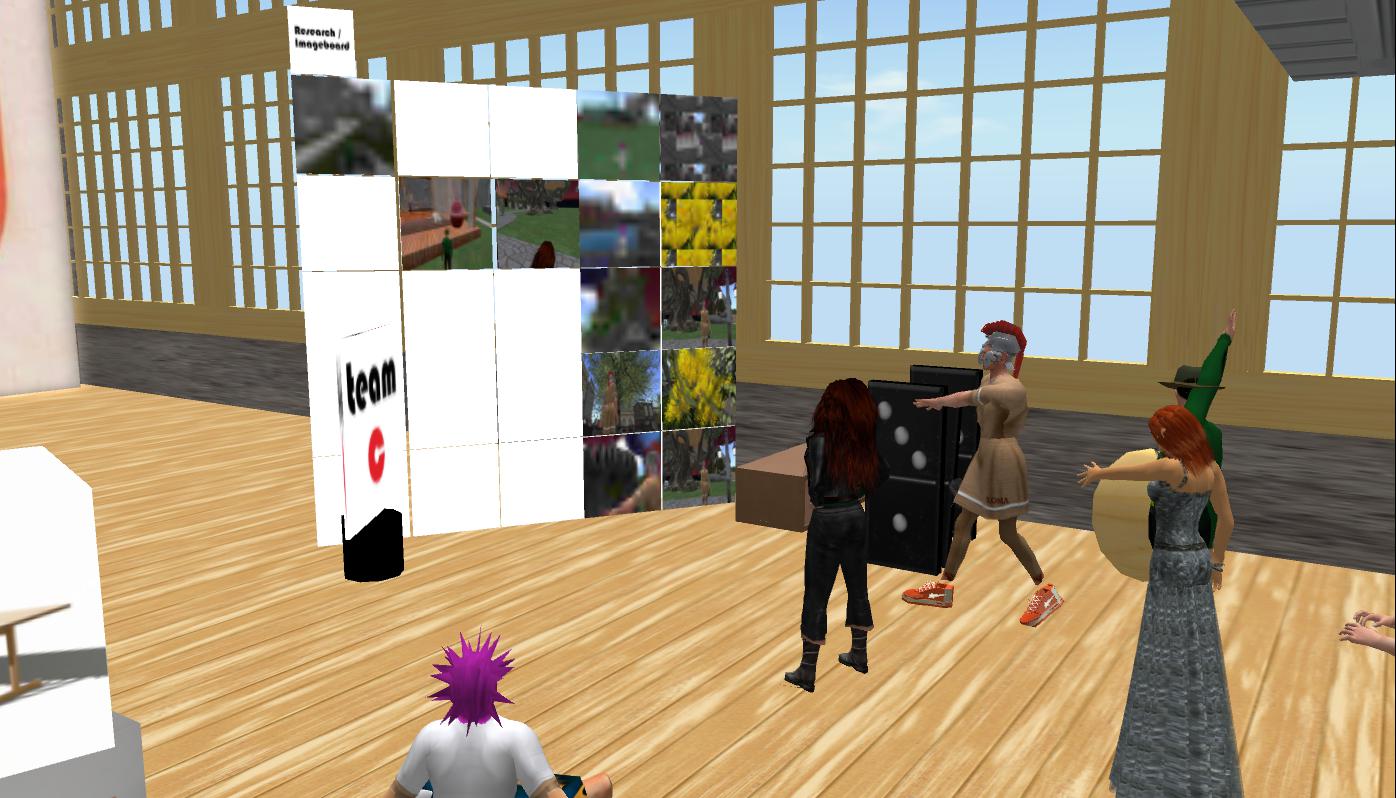
Back in Team A’s sandbox the other teams had to put their photos up for display.

Team C putting their photos on display.

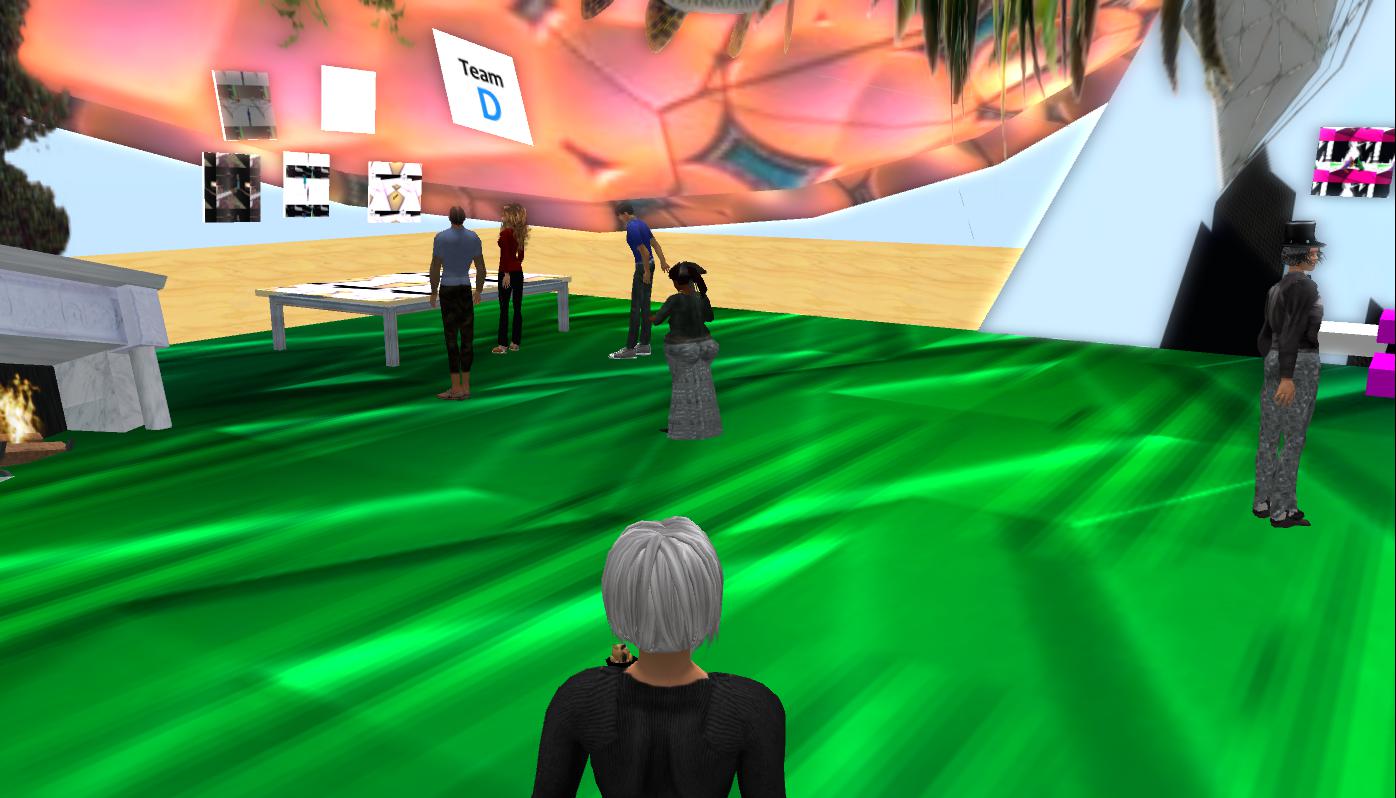
Team D building a table.
… and team B building a table.

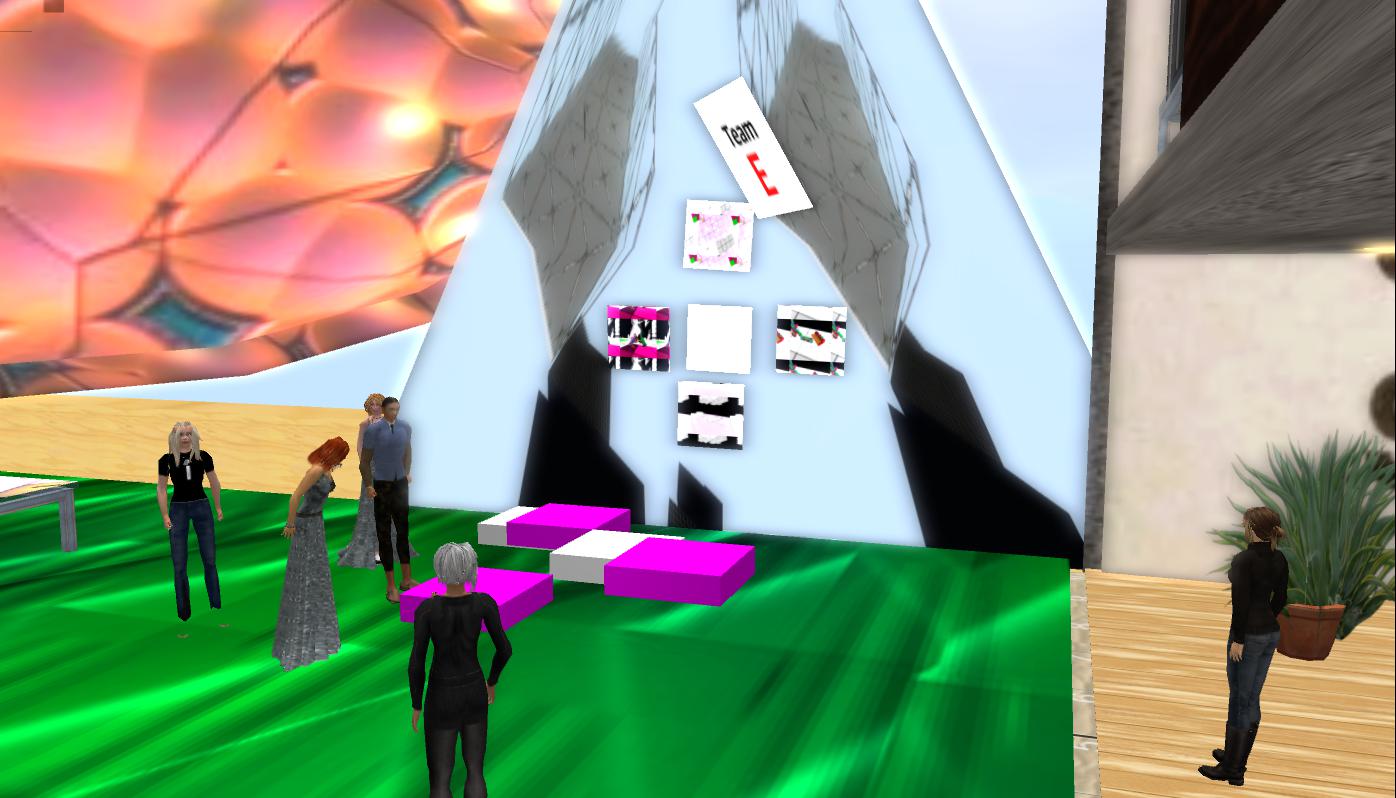
Team E presenting their flexible table, which clearly was inspired by their trip to Torleys.

After the presentation of the teams’ photos and tables, Team A continued talking about their theoretical considerations.


Team A discussing Childs, 2010 model on learners’ participation in virtual worlds.

The way Team A had planned their presentation was meant to showcase how SL potentially can be used in social constructivist learning, and even though the activities were limited due to time constraints, I think the team managed to do so. Evidently, in a short presentation like this, it is difficult to get the full experience, but by way of using the exemplary principle, it was my impression that Team A managed to make a very convincing case.


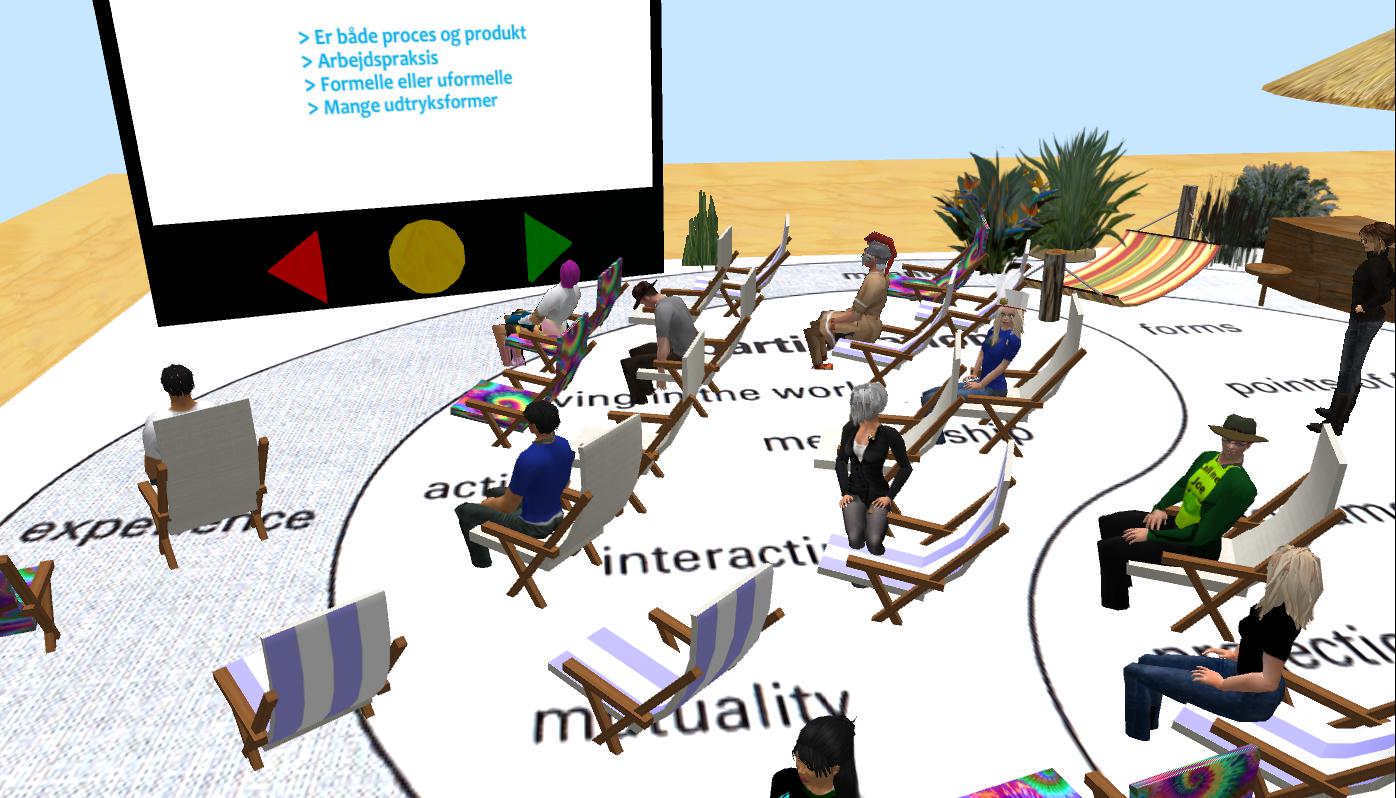
During the final part of Team A’s presentation concepts from Wenger’s 1998 social theory of learning were appropriately displayed on the floor.

In summary, I think all of the participants ended up having a very good joint learning experience, not least because Team A’s members beautifully demonstrated the value of genuine collaboration, and as one of the students from another team concluded afterwards it will be: “A hard act to follow … :)”

Next week teams B and C will be presenting – and I can hardly wait :-)

/Mariis
The Identity Maze – showcasing some PhD findings

Since December 5th, I’ve been running an in-world PD-class for students from The Master’s Program on ICT and Learning (MIL) at Aalborg University. It is my fifth course of this kind for the MIL Program, but this time around there are some significant changes. First of all, I have the great pleasure of running the course with my friend and kindred spirit, Inge Qunhua – a very talented Danish educator and in-world designer. Secondly, I will not be using this course for my PhD, but as a researcher I have of course set some research goals, and in this case I have been investigating the use of different classroom settings. As part of this, I have just finished a build I call  “The Identity Maze” that I will be using in a forthcoming in-world class.


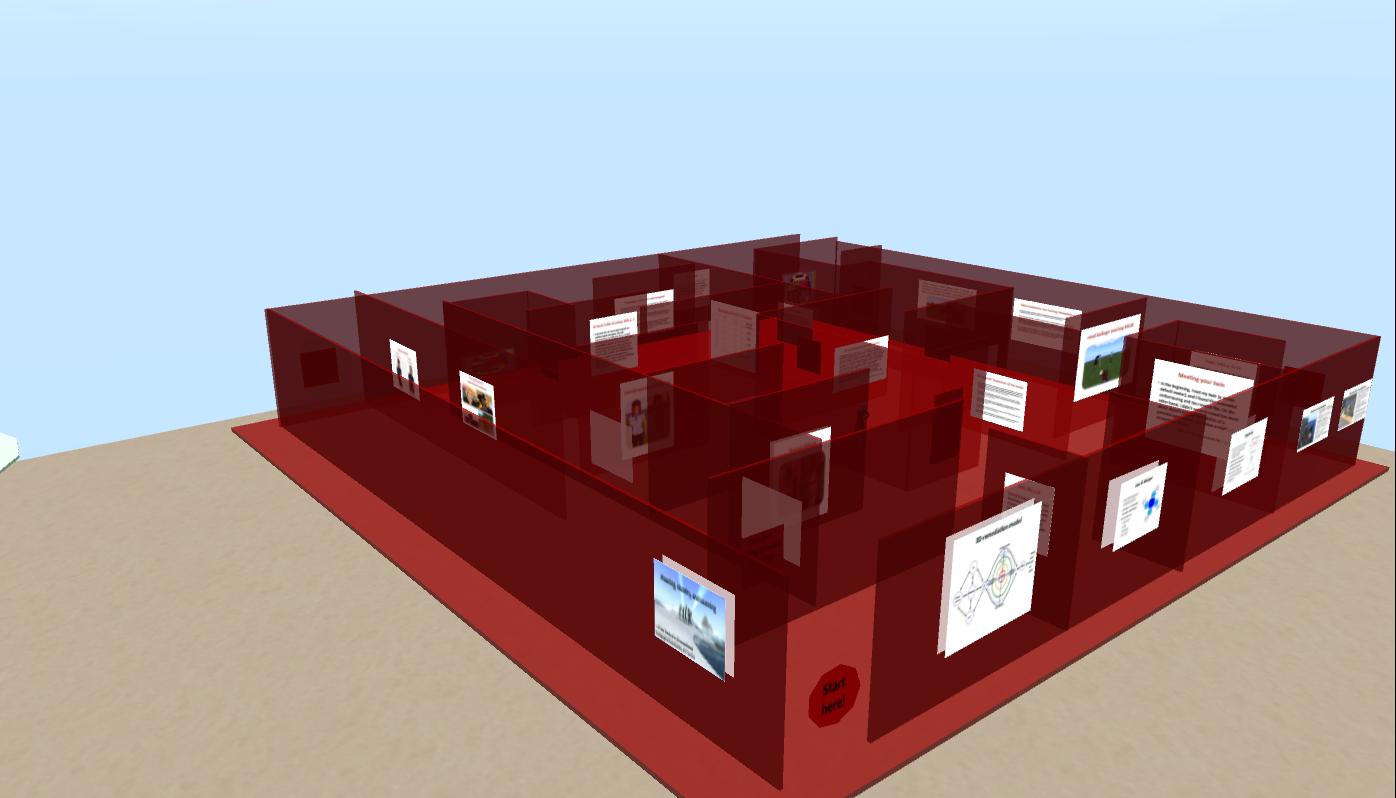
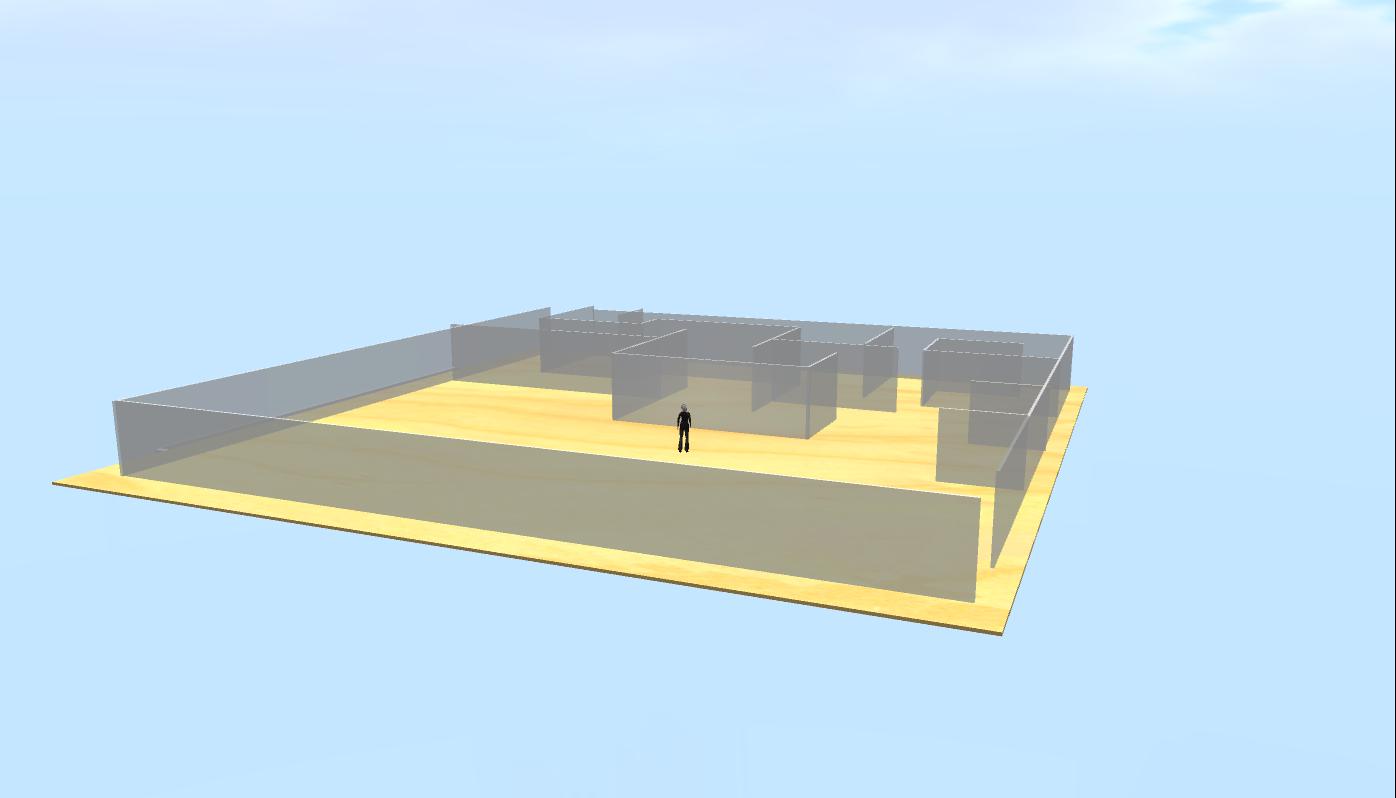
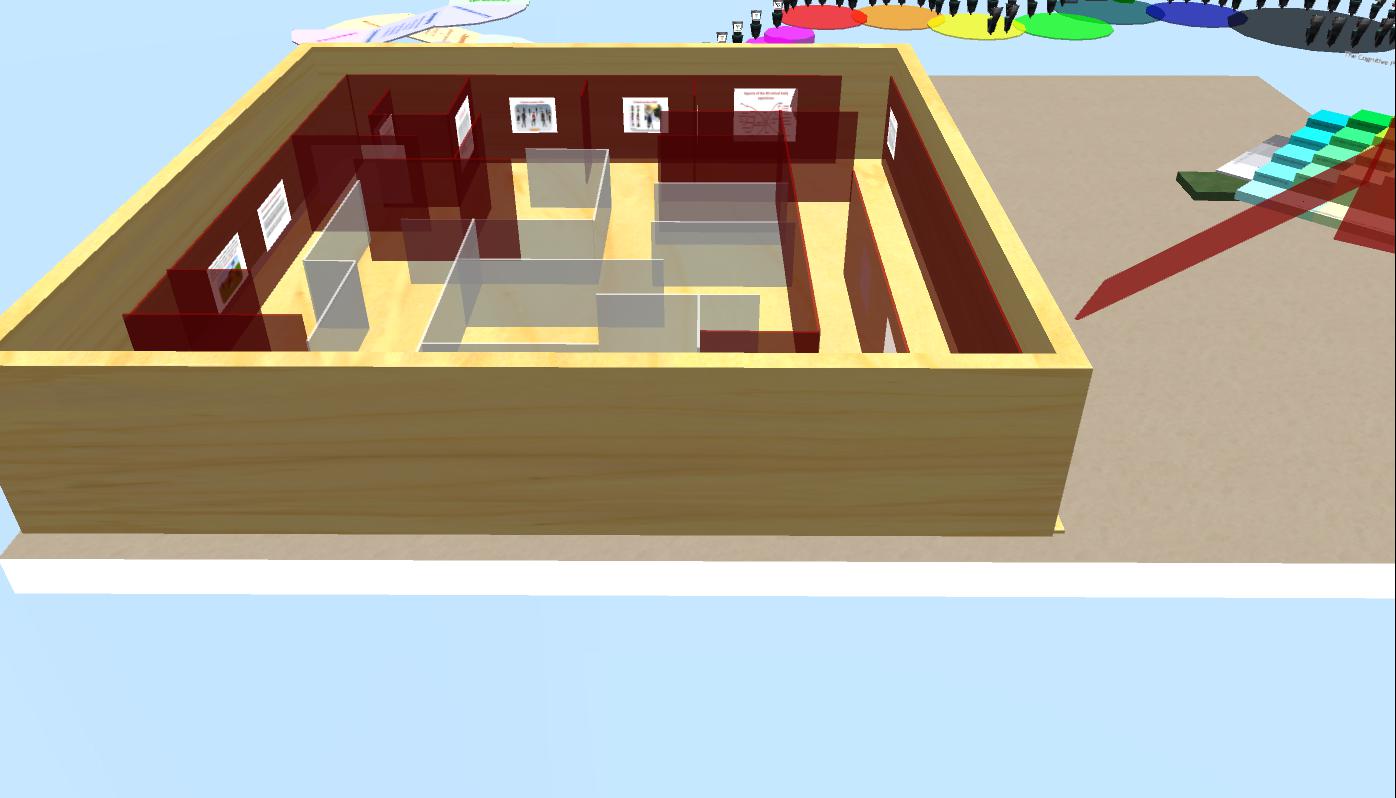
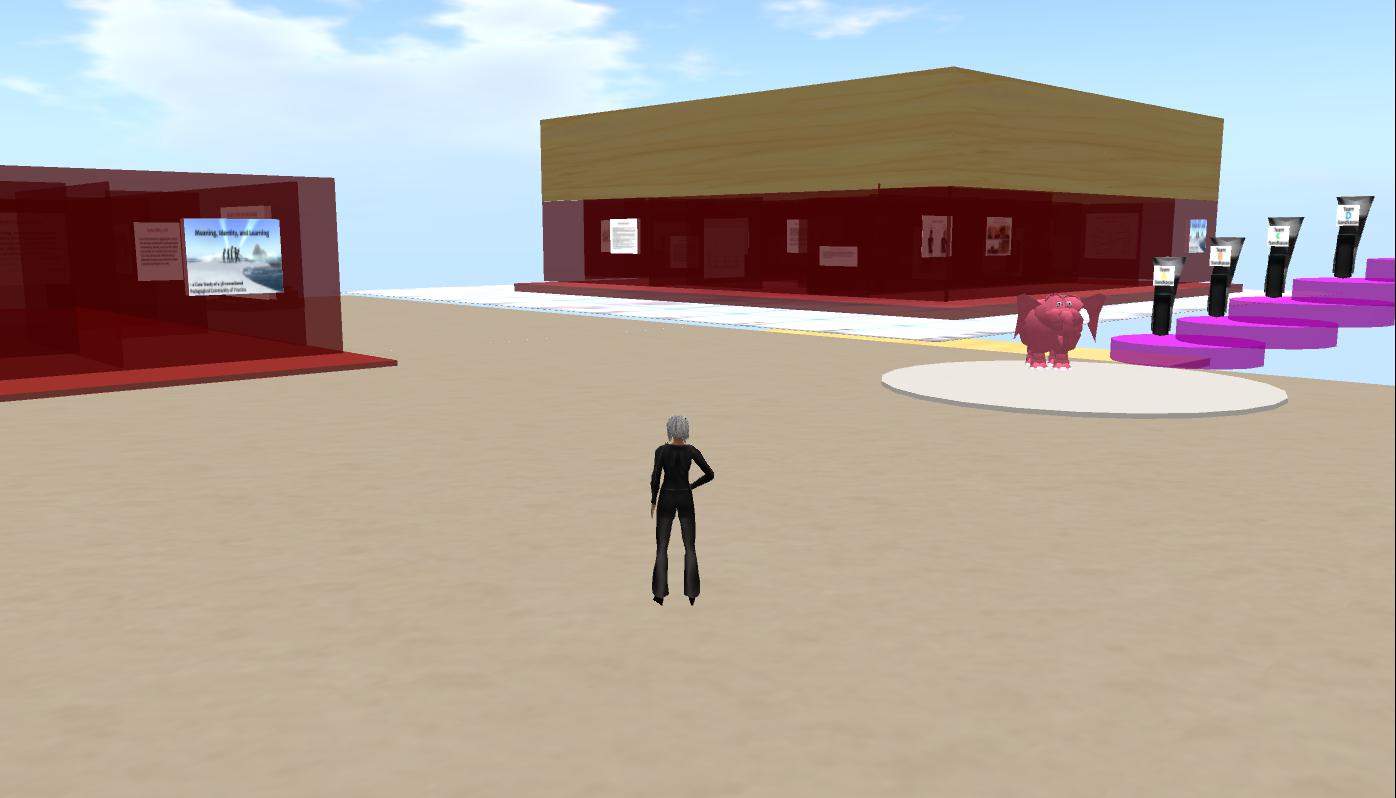
The Identity Maze – as of December 31st, 2011

In my PhD-project, I have three analytical units; people, places, and practices, and the maze is based on some of the key findings regarding the people unit. In this sense, the maze is meant to showcase some findings consisting of impressions from the students that participated in my PhD-work from 2007-2010 combined with relevant theoretical input that I also refer to in my PhD.


The theoretical foundations of my PhD-work is showcased on the sides of the maze.

The people unit deals with the avatar phenomenon, with what it means to learn through a virtual 3D body, and how this affects the identity of the learners. In my PhD, I use a combination of theories ranging from learning theory (primarily Wenger, 1998), media theory (primarily Bolter & Grusin, 1999) and theories from the field of tele-presence (primarily Schroeder, 2010 and the MIT journal on Presence). In Wenger’s Social Theory on Learning, Identity plays an important role in the learning process – learning is basically an ongoing identity process, a process of becoming. Since the beginning of my PhD-work back in 2007, it has been evident that a medium such as SL challenges the learners’ identities in a manner I’ve never seen in more traditional 2D Virtual Learning Environments (VLEs), and so it makes perfect sense to focus on Identity when learning in and about 3D Virtual Worlds.


Some important aspects of the 3D virtual body experience.

I’m definitely an amateur when it comes to building in SL, but I do build from time to time, and the process of visualizing/materializing your thoughts and ideas, is really what sets SL apart from other VLEs. It can be fun, engaging, frustrating (where’s the undo button!? ;-), and sometimes very rewarding. The pictures below show the process of building the maze.


lnge lets me have a small sky-sandbox that I use to experiment, and this was where I started building the maze.

I did create a paper-draft with measurements of the maze, but as usual when it comes to creative work, the work itself tends to rule on its own, and standing in the build, feeling it so to speak, forced me to reconsider parts of the maze. Once again, I was reminded that what works in theory, doesn’t necessarily work in practice!


When the foundation of the maze was done, I moved it to the common sandbox, we use for the course.


Determining where to put posters, pictures, and questions for reflection was very much a work based on intuition.

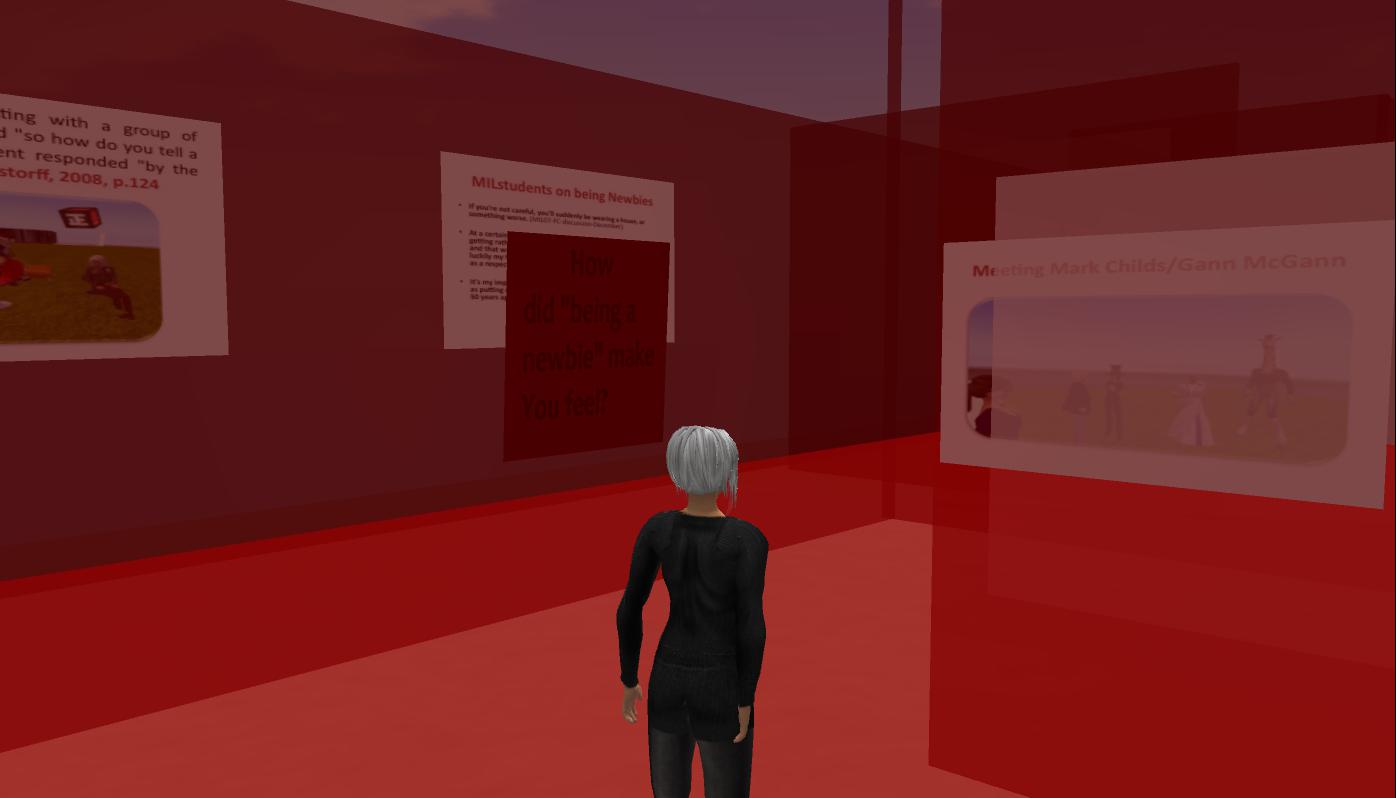
I decided to use a mixture of textures, most of which are transparent (blank, red, and white). Walking in a maze can be quite claustrophobic, so I decided to make all walls transparent. I also think the transparency gives you a nice feel of the surroundings and of other avatars. Because of transparent textures, the maze looks different from different angles/POVs – and I think that aligns well with the whole identity issue. Some of the transparent textures are deliberately white, indicating that there is more to be seen, and hopefully this will poke the curiosity of the visitor. Evidently, skilled SL-users can overlook the whole maze with their cameras, but still …

Anyways, being an amateur isn’t always easy; when I wanted to share the build with Inge, I somehow messed up the permissions, and now this original is copy only – no edit :-( So, Inge has kindly offered to rebuild the maze (based on my blank prims), and hopefully we’ll soon have a fully editable copy …


Inge’s rebuild next to the original.

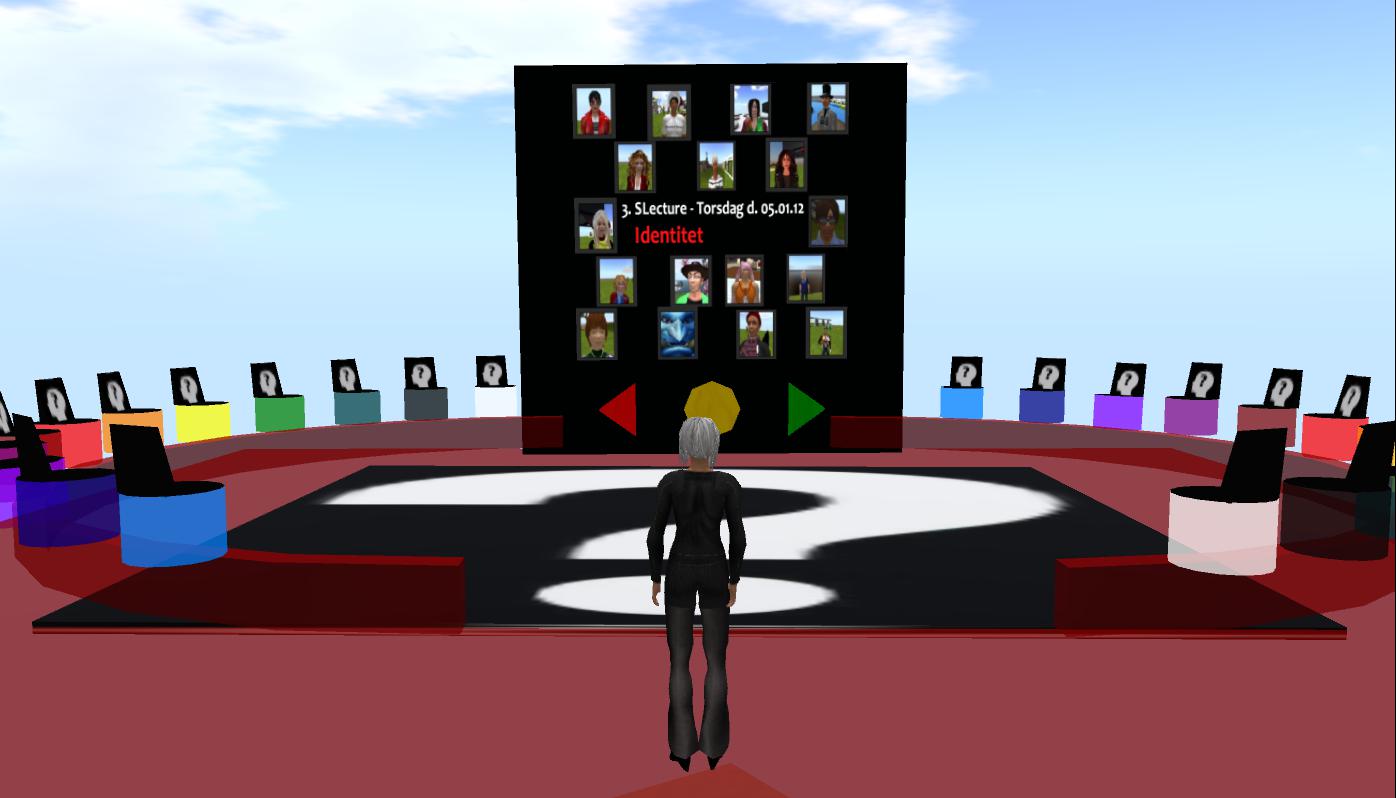
So, what’s the point of all this? Well, I intend to use the maze in a class on Thursday, 5th of January. In this class the theme is Identity, and we will focus on the students’ impressions of being avatars, and what this means in relation to learning. On our regular classroom platform, I’ve set up a couple of slides that focus on some theoretical issues (based on the course literature). After this short introduction, we’ll walk-and-talk in the maze.

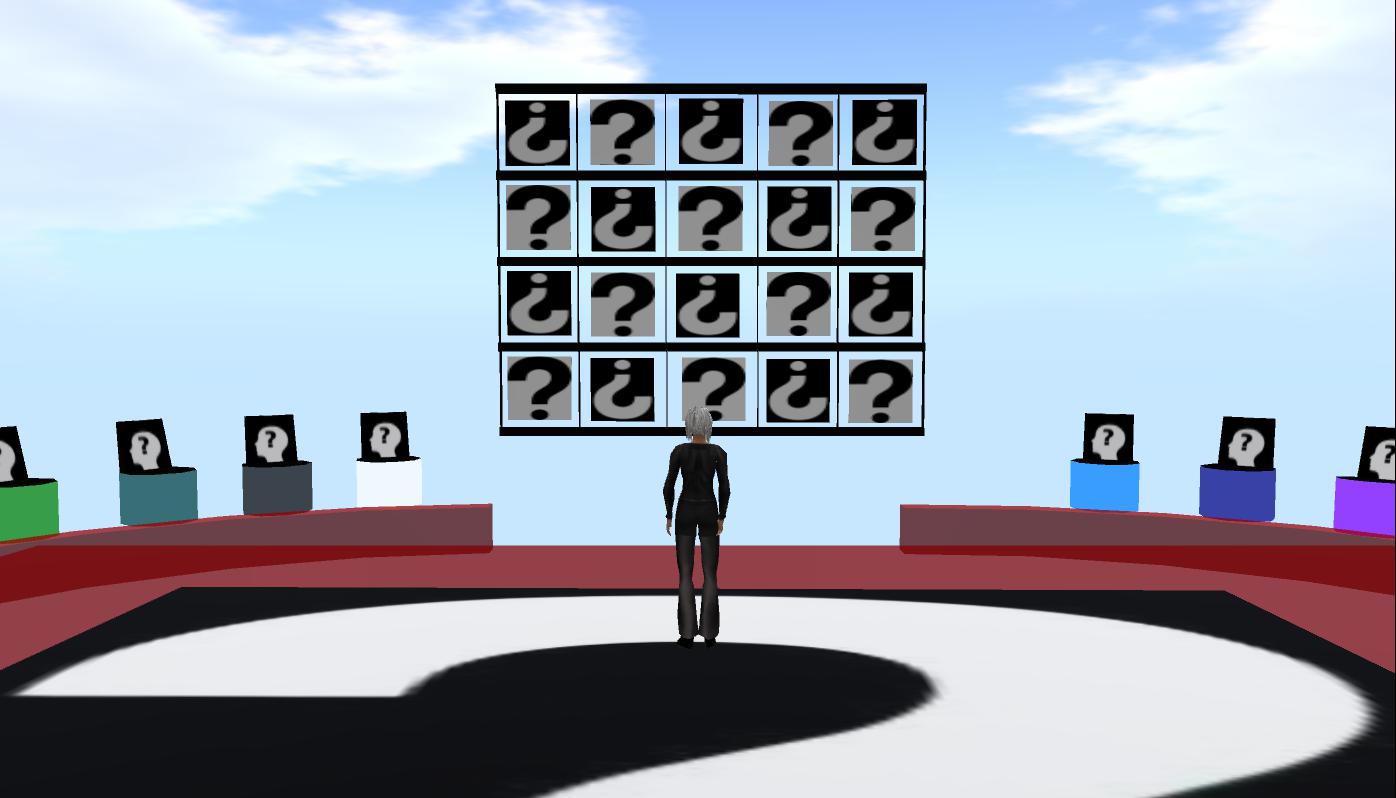
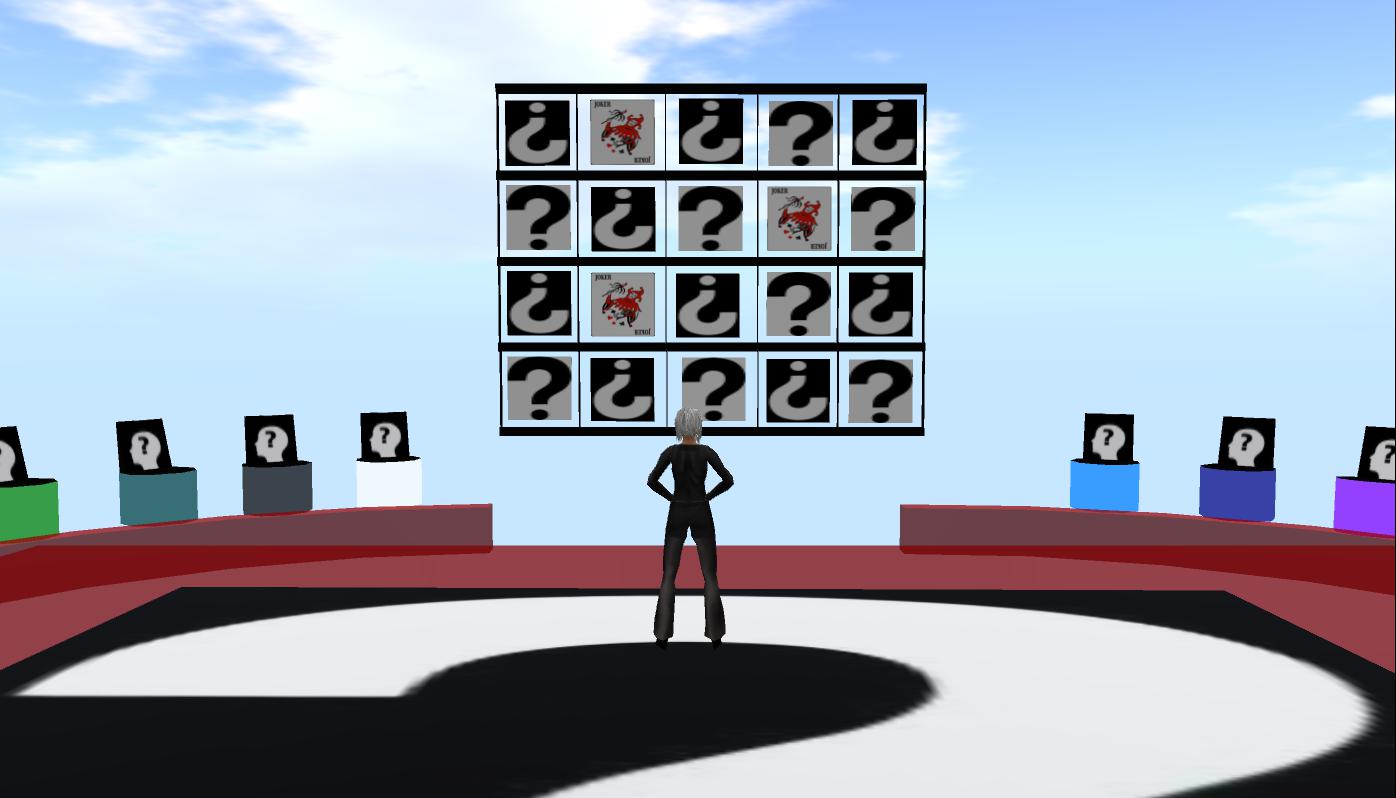
Back on the platform, I’ve created a 20-question-board. For now, when you click on the question marks, you’ll see a Joker, but on Thursday, 17 of the Jokers will be replaced with relevant questions (there are 17 students). If the student chooses what turns out to be one of the remaining three Jokers, the student can talk about anything in relation to the theme, otherwise there’ll be a tricky predefined question.

And so, on this final day of the year 2011, I leave you to pause and reflect on this quote by  Chuck Palahniuk:

“Nothing of me is original. I am the combined effort of everyone I’ve ever known.”

Happy New Year to all of those who have shaped me; especially my precious in-world friends who appreciate mixed realities and thus mixed identities – I cherish you all :-)

/Mariis
High student satisfaction in SL

On June 16th, 22 students graduated from the Master’s Program on ICT & Learning (MIL) at Aalborg University, and this is where I’ve been running courses on SL for my PhD-project since 2007. As always, graduation day was an exciting day combining student anxiety and great relief and joy. After all the exams, there was a reception where the Masters received their diplomas, the daily manager of MIL, Ulla Konnerup and the Dean of Humanities, Lone Dirckinck-Holmfeld spoke about the students’ achievements and their new roles as “ambassadors of ICT & Learning”. Finally, we finished off the day with a wonderful dinner/dance at the Utzon Center, downtown Aalborg.


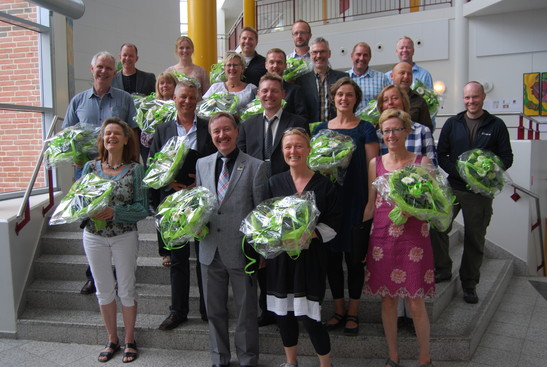
22 very happy Masters of ICT & Learning 2011.

As something new, the steering committee behind the MIL Program had decided to award the Program’s “Teacher of the Year”. All courses/modules are anonymously evaluated by the students, and based on these evaluations; I was fortunate to receive this award :-)


1 happy Teacher of the Year 2011 and 1 happy Dean (right).

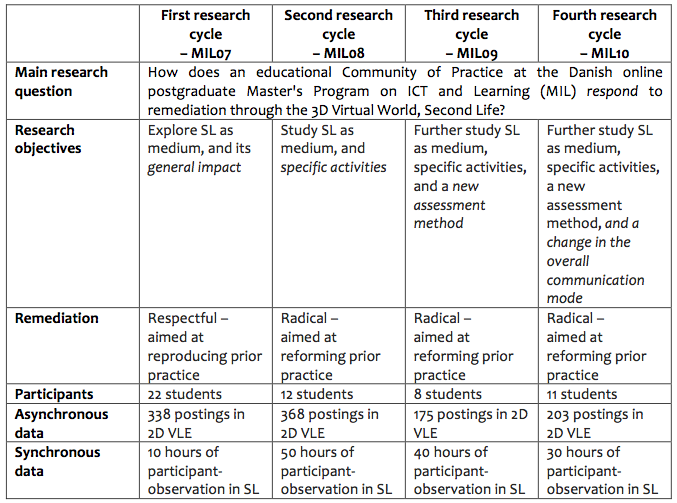
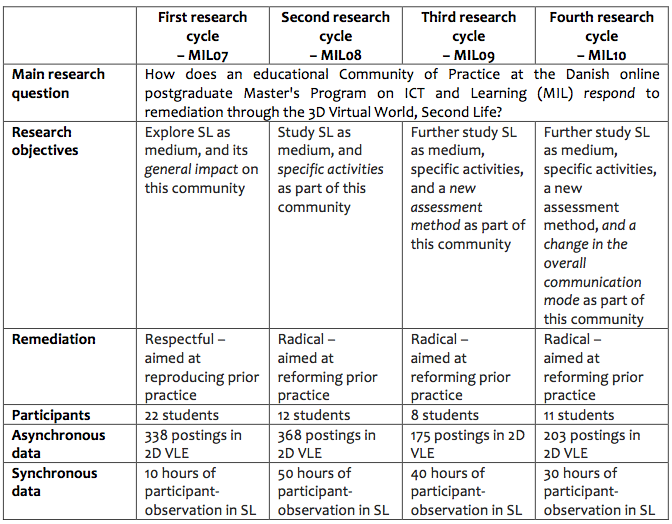
Ironically, I’ve not (yet) seen these particular students evaluations, however, based on the evaluations the students and I did as part of the SL course, I do have a few ideas as to why the students find teaching and learning in SL so satisfying. To understand this a little background information is necessary. In my PhD-project, I’ve conducted 4 research cycles, spanning from 2007-2010. Each cycle consisted of designing, implementing, and evaluating a 6-8 week online course on ICT and instructional design based in SL and a conventional 2D VLE. From a theoretical point of view, I’ve been inspired especially by Wenger’s (1998) social theory on learning as participation in Communities of Practice (CoP), Schroeder’s (2011) ideas on presence and co-presence, and Bolter & Grusin’s (1999) concept of remediation. From a methodological point of view, I’ve been inspired by Insider Action Research (Coghlan, 2007), and ethnographical methods such as longitude participant-observation (Boellstorff, 2008). 53 adult MIL-students (majority are educators) in total have participated in my study. The table below provides a brief overview of the research cycles.


PhD-overview – July 2011.

Based on my data, I’ve been able to identify 3 analytical units that will inform the answering of my research question; namely what it means to learn via 1) a new, virtual environment, via 2) a new, virtual body, and finally via 3) new, virtual activities. The picture below shows the 3 units and the related topics that emerged in all four research cycles.


3 analytical units; virtual environment, virtual body, and virtual activities.

In this short post, I will not go into details with the units, but my findings show that being remediated as avatars in a new, virtual environment where it is possible to participate in a variety of new virtual activities greatly influenced the students’ perceptions of presence and co-presence, and from a Distance Education perspective this is one of the most valuable contributions SL has to offer. Conveying a sense of “being there together” as Schroeder puts it, is essential in Distance Education, not only in terms of student satisfaction, but also in terms of learning outcome. Further, SL also provides the participants with unique opportunities of “doing things together”, and as such it is possible to attribute some of the students’ satisfaction to SL’s affordances. I would, however, like to stress that relevant affordances do not necessarily guaranty satisfaction, and though this holds true for all technology, especially in a complex system like SL, the instructional design becomes pertinent. Basically, my PhD-work has been about designing for optimal learning via SL, and in this respect, I’ve found great inspiration in Wenger’s four dimensions of learning;

  • Learning as a process of experiencing – outcome: changed meaning
  • Learning as a process of becoming – outcome: changed identity
  • Learning as a process of belonging – outcome: changed community
  • Learning as a process of doing – outcome: changed practice
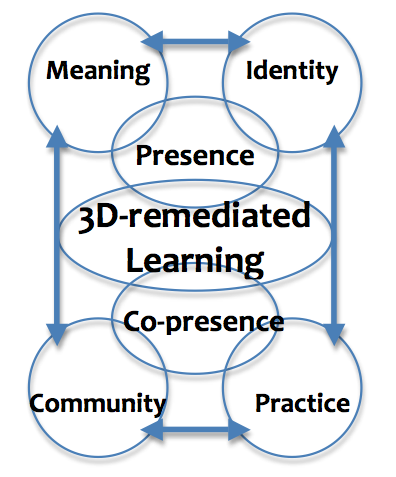
Even though, I’ve not designed exclusively for the creation of a community of practice in SL, e.g. by solely using Wenger’s proposed design principles*, the ideas of the theory are part of my, and the MIL Program’s general pedagogical foundation, and I do believe that SL is a medium that offers very good opportunities for creation of communities of practice, both in educational and other settings. Looking at my data, I’ve found a distinct connection between elements from CoP-theory and presence/co-presence as shown in the figure below.


Connected elements of presence and CoP-theory in 3D-remediated learning.

In short, the figure shows how the sense of presence facilitates the creation of meaning and identity, while the sense of co-presence facilitates the creation of community and practice. In practice, the elements overlap, and it is in fact the oscillation between the elements, which constitutes the dynamics of SL as teaching and learning environment as seen from a CoP-perspective. Based on the findings from my study, I believe that the combination of a social pedagogical strategy and the use of a medium that affords a strong sense of presence/co-presence and which is rich in terms of co-creative possibilities, actually can promote student satisfaction. Evidently, this is a very brief description of my work … more details will follow in my forthcoming dissertation that is due in September.

/Mariis
*) For an excellent example of integrating Wenger’s principles and ideas in design for teacher development in an online community, please have a look at my (now former) colleague Dr. Mayela Coto’s PhD-work.