From November 1st – December 15th I’ll be facilitating a blended course using SL at The Danish Master programme in ICT and Learning. This course serves a primary case in my PhD-project, and I did a pilot study using the same course last fall together with 22 students. This is a brief description of the course as I’ve planned it this fall.
Educational setting – Master programme on ICT and Learning
The Master programme in ICT and Learning (MIL) was established in 2000 as a shared educational enterprise on equal terms between five Danish Universities, as an attempt to enhance collaboration between universities and working life within further and continued education.The Master programme is research based; teachers come from the five different research environments at the collaborating universities, and all participants (teachers, students and administration) are comfortable with participation in both small and large scale research projects. Hence, characteristic for MIL is that the education continuously tries to reflect and change its own activity by combining research and practice.
The Master programme is blended by a combination of virtual periods and 4 face-to-face seminars pr. study year. Between seminars the teaching and learning processes are conducted in the conventional 2D virtual learning environment, FirstClass combined with various web 2.0 technologies. Despite the fact that the five universities traditionally have represented different pedagogical cultures, MIL was from the beginning build fundamentally on the pedagogical philosophy of Problem Oriented Project Pedagogy, which is a Danish version of Problem Based Learning.
MIL consists of four course modules, a module on ICT tools and two long project periods. Each course module covers a theoretical and practical approach to its field of study combining ICT with
1) Learning
2) Interaction Design
3) Organizational Learning
4) Educational Design
The progression of the programme evolves in interplay between theory, practice and experiences of the participants.
Student profile
The goal of MIL is to upgrade people working with ICT and/or learning, both in the public and in the private sector. An internal investigation conducted in 2004 gave the following profile; a typical MIL student has an average age of 45, and is married with two children in the teens. The majority of the students work fulltime. Their educational background usually stems from the humanities, and all our students have bachelor degrees or equivalent, and about 75% have higher level educations. For most of our students their primary education is more than ten years old, which often means that is has been a while since they last were students and many of them have no or little experience with blended learning. All of them are quite competent regarding general ICT-skills, and nearly 20% are highly competent technicians. About 5% of the latter have never been professionally engaged in teaching and learning. When it comes to working experience almost all of our students (95%) are experienced teachers at different levels in the educational system and in the private sector, and it is not unusual to meet students with more than ten years of teaching experience. Nearly all the participants come with a background from leadership in organization or project groups.
Main motivation for entering the MIL programme is to increase competencies regarding ICT and learning and create intersections between the two. Another strong motivation for entering the MIL programme is the wish to connect with new networks in the field.
Course setting – ICT and Educational Design
The 4th module of the MIL programme “ICT and Educational Design” consists of 2 courses, and it is in the first course that we use SL:
- Educational design, ICT based learning products and virtual learning environments; theory and analysis
- Educational design, ICT based learning products and virtual learning environments; concept and implementation
Though separate, the two courses should be regarded as connected, in the sense that the learning outcome of the first course should be more or less applied in the second course. In the first course the students usually are provided with 2-3 optional virtual learning environments between which they are asked to choose one as analytical object. Throughout the MIL programme the students are introduced to different virtual learning environments covering a wide range of mainly conventional 2D asynchronous and synchronous examples. Therefore the learning environments chosen for this course always represent the more unconventional trends, since it is our experience that these often provide more rich and radical settings, which can stimulate reflections. This study year the students can choose either the 3D virtual game Global Conflicts Palestine or SL as their analytical object. Regardless of choice, the students are expected to discuss and analyze the learning environment on the basis of the 5 following mandatory topics:
Pedagogical design and target groups
Orientation and navigation
Interaction
Learning processes
Audio-visuals
SL setting and activities
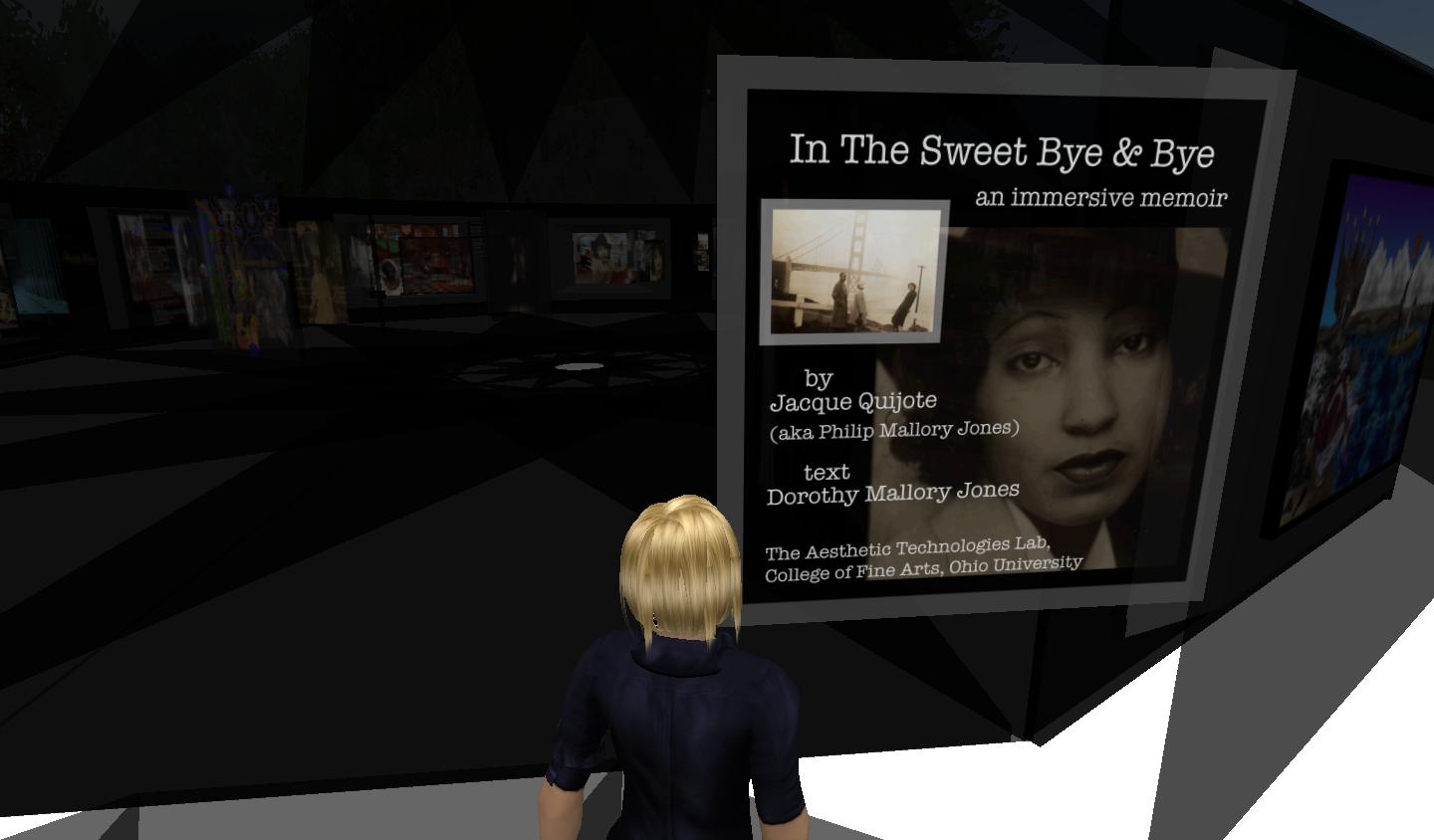
MIL does not own land in-world, but we rent 2 locations on the island, Wonderful Denmark, but these locations are mainly used as meeting places. As mentioned above the students are expected to explore and analyze SL form a pedagogical point of view. In order to show the students the rich potential, I arrange tours to different locations where we meet with the owner/designer, have a tour and discuss pedagogical topics. Afterwards the students are expected to reflect on the locations, and document their findings in the asynchronous platform, FirstClass. Naturally the students can tour on their own, locate interesting design and share these experiences.
Besides touring, I’ve planned the following activities:
- Get off to a good start – meetings where we focus on basic in-world skills
- A building class running for 3 days with guest teachers Doctor Asp & Heidi Ballinger
- Didactic Design Discussions – 4 sessions where we’ll focus on course litterature related to the students findings
- Friday Bar – social meetings just for fun
- Students Tour – students plan a tour based on their discoveries
- Christmas celebrations and course finalization
And based on my experiences from last year we’ll have a lot ad hoc meetings, whenever the students need a helping hand :-)
“Without friends no one would choose to live, though he had all other goods”
By quoting Aristotle from Nichomachean Ethics I want to take this opportunity to express my gratitude to my in-world colleagues and friends both from Denmark and the rest of the world for helping me out in showing the potentials of SL – I couldn’t do it without you guys!
As the course progresses I’ll return with posts on our experiences ..
/Mariis


 Mariis' digitale refleksioner