Psychological Relativism – perspectives on reality/virtuality

Yesterday, in a talk at The Federal Consortium for Virtual Worlds (FCVW) conference, Jim Blascovich spoke about reality, virtuality, and our perceptions hereof. Blascovich made some interesting and provocative claims about reality, starting with the question: “What is reality?” and answering it by saying: “No one knows!” Blascovich then presented a photo of the Earth and a photo from SL, and asked are they both real? Yes! Are they both virtual? Yes!

Um, so at first glance this may seem confusing, but as far as I understood it Blascovich’ point was that our perceptions (of anything) are idiosyncratic hallucinations, and we see/perceive things that are not there and things that cannot be there – the human brain adapts and “right things” (cf. the work of George Stratton on perceptual adaptation). Together with Cade McCall, Blascovich explains this in a paper on “Attitudes in Virtual Reality“:

“In contrast to the continuing struggle and debate among interested scholars over the hard consciousness problem, many scholars from many fields concerned with the question, “What is reality?” agree that what people think of as reality is an hallucination; that is, a cognitive construction. Together with religious gurus and mystics, philosophers (Huxley, 1954) and experimental psychologists (e.g., Shepard, 1984), maintain that perceptions are invariably idiosyncratic hallucinations, albeit often assumed and treated as collective. (Blascovich & McCall, 2009, p. 3 – my emphasis)”

I don’t know … I think this is difficult to comprehend, and I couldn’t help but think about Plato and his cave-analogy. Based on a question from the twitter-audience, I did get the impression that Blascovich recognizes the empirical world (our Earth) as real though; because he went on to make the distinction between “grounded reality” and “virtual reality”. However, the tricky part is that what we consider “real” or “virtual” depends on our individual perspectives, and this is referred to as the principle of psychological relativism:

“Analogous to Einstein’s theory of special relativity regarding time and space, psychological relativity theory states that what is mentally processed (i.e., perceived or thought of) as real and what is mentally processed (and thought of) as not real (i.e., virtual) depends on one’s point of view. People contrast a particular “grounded reality”— what they believe to be the natural or physical world—with other realities they perceive—what at times they believe to be imaginary or “virtual” worlds. However, what is thought to be grounded reality and what is thought to be virtual reality is often muddled or even reversed. (Blascovich & McCall, 2009, p. 4 – my emphasis)”

While I really appreciate Blascovich’ emphasis on “context” as being crucial to our perceptions, I think the problem with relativity is that it makes it very hard to reach consensus on anything, or to achieve “collective hallucinations” so to speak – and for many people the uncertainty of relativism is unsettling. Whenever I bring students into SL, they clearly struggle with such ontological questions, and I think the uncertainty about what is/isn’t real can become a barrier to adaptation of the medium.

Fortunately, it isn’t all completely relative. The research done by Blascovich and colleagues (not least Jeremy Bailenson – cf. Infinite Reality) shows how i.e. movement, anthropometric, and photographic variables influence our perceptions. And by studying such results, we – as VW designers/users – can accommodate different perceptions and it gives us a more informed starting point for some very interesting discussions on the ontology of VWs.

Admittedly, I’m still processing some of Blascovich’ points in terms of consequences for VWs design, and I’m not sure if it makes sense or if I can make sense of it … according to Blascovich “reality is a state of mind”, and mine sure is messy!

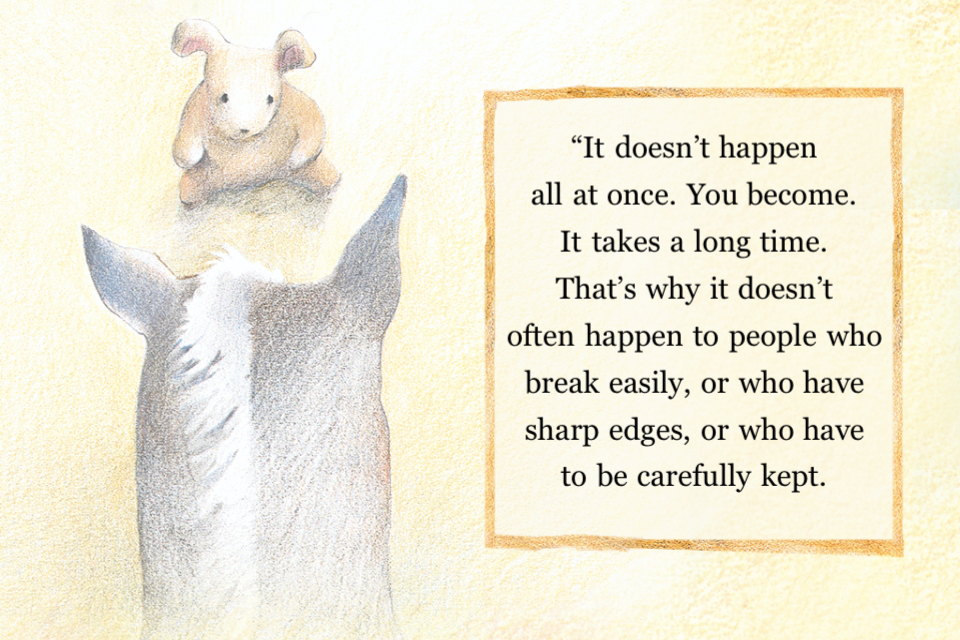
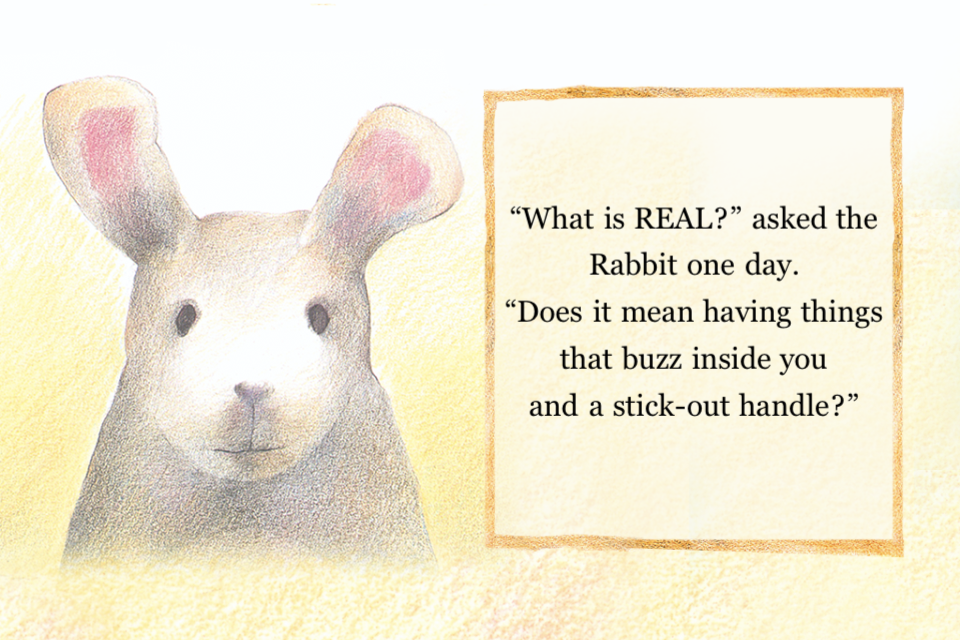
Without diminishing the work of Blascovich et al. I still think that one of the best explanations of “real” stems from a dialogue between a rabbit and a wise old skin horse:

/Mariis
Virtual World – a working definition

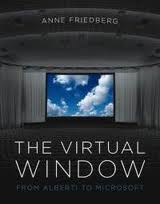
A favourite book of mine on the topic of “virtual” is Anne Friedberg‘s “The Virtual Window – from Alberti to Microsoft” in which she explores the window as metaphor, as architectural component, and as an opening to dematerialized reality. In the first chapter, Friedberg sets out to define “virtual” because “in the glare of a jargon-ridden present, the term “virtual” may have lost its descriptive power”, and she hopes “to reclaim its considerable utility for making distinctions about the ontological status – and materiality – of an object” (Friedberg, 2006, p. 7).

To start off her endeavour, Friedberg presents the following definition from Webster’s (1993) Third New International Dictionary Unabridged:

“Virtual (Latin, virtus, for strength or power) of, relating to, or possessing a power of acting without the agency of matter; being functionally or effectively but not formally of its kind.”

Subsequently, Friedberg (ibid. p. 8-11) makes the following points that I found of particular interest:

  • The virtual is a substitute – “acting without agency of the matter” – an immaterial proxy for the material.
  • “Virtual” refers to the register of representation itself – but representation can be either simulacral (with no referent in the real) or mimetic.
  • The term “original” and “copy” do not apply, because virtuality does not imply direct mimesis, but a transfer – more like a metaphor – from one plane of meaning to another.
  • A “virtual” object has a materiality and a reality but of a different kind, a second-order materiality, liminally immaterial.

Friedberg further explains that for the purpose of her study: “the term “virtual” serves to distinguish between any representation or appearance (whether optically, technologically, or artisanally produced) that appears “functionally or effectively, but not formally” of the same materiality of what it represents.” (ibid. p.11)

It’s important to notice that Friedberg mentions different production forms, which of course highlights her point that “virtual” doesn’t apply to technology mediated objects and experiences only.

In the inaugural 2008 issue of The Journal of Virtual Worlds Research, which also includes reprints of earlier writings considered seminal to the field, six of 17 papers offer explicit attempts to define “virtual worlds”, and at least two of the authors (Bittarello & Damer) also consider literary worlds (i.e. The Garden of Eden and Dante’s Inferno) to be “virtual worlds”.

Based on this and a bunch of other readings, I’ve decided to use the following quite simple working definition:

“Virtual World” =df “Any representation of a world that appears functionally or effectively, but not formally of the same materiality as the world it represents.”

Through this definition, the only thing we learn about “virtual worlds” is that they are of a different materiality than the ones they represent. And from this follows that if we want to know more about a particular “virtual world”, we need to add more to the definiendum i.e. 3D, computer-based, social etc.

I see some advantages:

  • The essence of “virtual world” refers to materiality and does not imply an inherent quality difference other than form
  • It’s possible to honour/include the history of “virtual worlds”
  • It’s possible to include both game-based and non-game based worlds – cf. the differences between Bartle and Ondrejka on the concept of “virtual worlds”
  • It’s possible to specify what isn’t a “virtual world” – a virtual representation that doesn’t refer to a world materiality
  • When talking about “virtual worlds” it’s necessary to specify what type of “virtual world” we are referring to in order to avoid confusion and ambiguity

Nonetheless, I still prefer to call it a “working” definition, because there are some important issues to consider:

  • I’m considering whether or not to include something about production/media forms – cf. Friedberg’s definition.
  • A definition must not be circular; it shouldn’t include the word to be defined. I have used the word “world” twice, but because the definition is about representation I think it’s hard not to include …
  • I’m wondering if a representation has “no referent in the real” is it then possible to talk about “the same materiality of what it represents”? Some “virtual worlds” are purely imaginary worlds that don’t exist in the real, do they then have a materiality, do they re-present?

I definitely need to consult with some of my philosophical friends on this! Meanwhile, I’m investigating different “virtual world” typologies and they provide another fruitful perspective on the concept …

/Mariis

Also check out The Virtual Window Interactive

Inspired by Friedberg’s account of Alberti, I’ve previously written about the window metaphor in SL in relation to remediation.

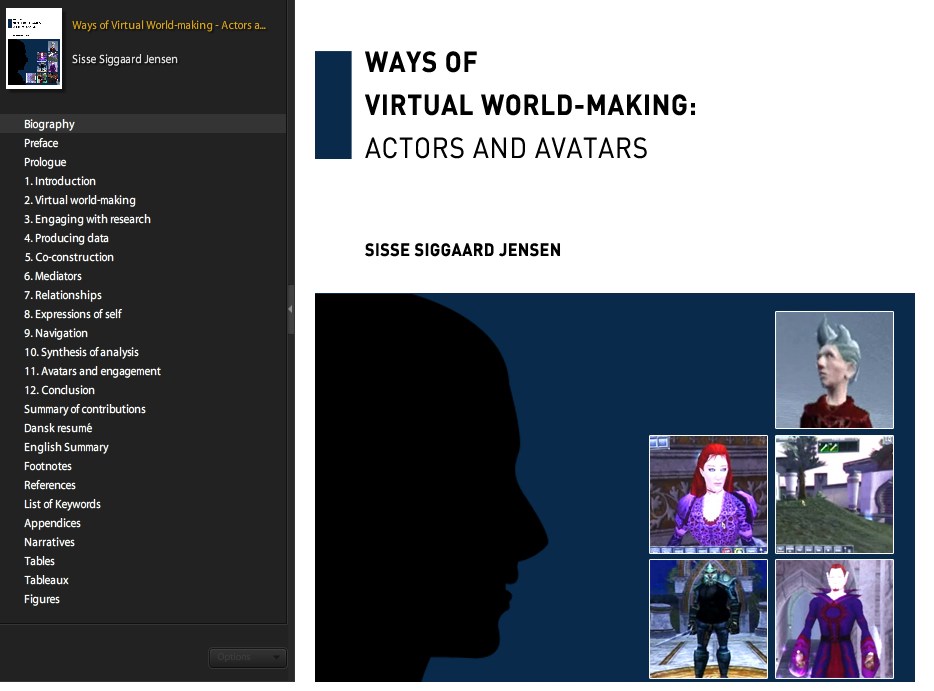
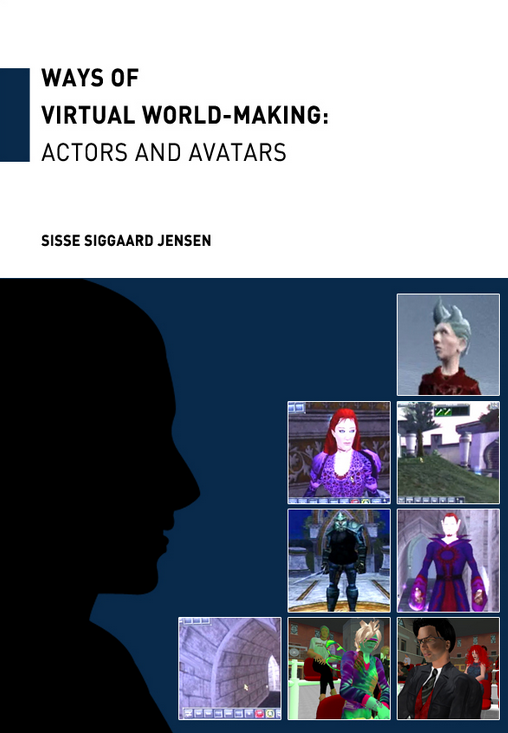
Research on “Ways of Virtual World-making – Actors and Avatars”

Sisse Siggaard Jensen, Professor, Ph.D. of Digital Communication at Roskilde University, Denmark has had her dissertation “Ways of Virtual World-making – Actors and Avatars” accepted for defense for the doctorate degree Dr. Phil. Sisse truly is one of the leading pioneers in this emerging research field, I’ve had the pleasure of meeting her many times during my PhD-work, and this is just wonderful news – big congrats Sisse :-)


The dissertation can be purchased as e-book here

UPDATE: Non-native Danish speakers can order the book by sending a request to: academicbooks@academicbooks.dk

l bought the dissertation yesterday and I have been unable to put it aside – it really is fascinating reading for those interested in research in VWs! The dissertation contributes to the research field with an interpretive, constructivist, and semiotic understanding of human actors’ engagement with the virtual worlds of EverQuest and Second Life. The study is aimed at empirical analysis of different ways of engaging with VWs, and it is based on longtime participatory observation and video interviews (from 2002-2009). The overall research question is: In what ways do actors make sense of situations of engagement with virtual worlds? 

Key theoretical and methodological influences in the study are:

  • The concept of metaphors (i.e. Lakoff & Johnson 1980, Johnson 1987)
  • The sense-making approach (i.e. Dervin 2003)
  • The optic of actor-network theory (i.e. Latour 2005)
  • The emphasis on ways of seeing in relation to video analysis (i.e. Grimshaw 2001, 2005)

Besides contributing with models of her own (actor-network diagram, sense-making triangle) that I need to study further, I also noted that Sisse provides some very good overviews of key points of interest in VW research such as; history of VWs, and overviews of research in relation to avatars, identity, and engagement. Further, Sisse’s work with video interviews and analysis hereof also makes this dissertation interesting from a methodological point of view, and in general it is a valuable resource and important contribution to the field.

Sisse will defend her dissertation on Friday June 1, 2012 at 1 – 5 PM (GMT+1) in building 00, at Roskilde University, and it will be streamed on Roskilde university’s website: ruc.dk as well as on the blog: worlds.ruc.dk, which is the blog of the Danish research project “Sense-making strategies of the innovations of Virtual Worlds”.

The opponents for the defense are: Professor Jay D. Bolter, Georgia Institute of Technology, Professor Andrew Burn, London University, Professor Kim C. Schrøder, Roskilde University (chair).

/Mariis

References

  • Dervin, B. (2003): Sense-Making’s journey from metatheory to methodology to method: An example using information seeking and use as research focus. In Dervin, B.; Foreman-Wernet; L & Lauterbach; E.  (Eds.). (2003). Sense-Making Methodology reader: Selected writings of Brenda Dervin (pp. 133-164). Cresskill, NJ: Hampton Press.
  • Grimshaw, A. (2001): The Ethnographer’s Eye: Ways of Seeing in Anthropology. Cambridge: Cambridge University Press.
    Grimshaw, A. (2005):  Eyeing the Field: New Horizons for Visual Anthropology. In: A. Grimshaw & A. Ravetz (Eds.), Visualizing Anthropology (pp. 17-31). Bristol, UK: New Media Intellect.
  • Johnson, M. (1987): The Body in the Mind. The Bodily Basis of Meaning, Imagination, and Reason. Chicago, London: The University of Chicago Press.
  • Lakoff, G., & Johnson, M. (1980): Conceptual Metaphor in Everyday Language. The Journal of Philisophy, 77(8), 453-486.
  • Lakoff, G., & Johnson, M. (2003 [1980]): Metaphors we live by. Chicago: The University of Chicago Press.
  • Latour, B. (2005): Reassembling the Social. An Introduction to Actor-Network-Theory. Oxford, New York: Oxford University Press.

What’s needed is education!?

About a month ago, I spent one week at the Universidad Nacional (UNA) in Costa Rica participating in two research projects, and on some level this Mimi & Eunice strip sums up my experience:


Source

I don’t mean to say that I went to Costa Rica thinking that my colleagues there are doing anything wrong, but I did have a rather naïve presumption that the greatest challenge for facilitating change would be pedagogical.  However, as it happened there were other just as important challenges, and the research stay turned out to be very educational for me.

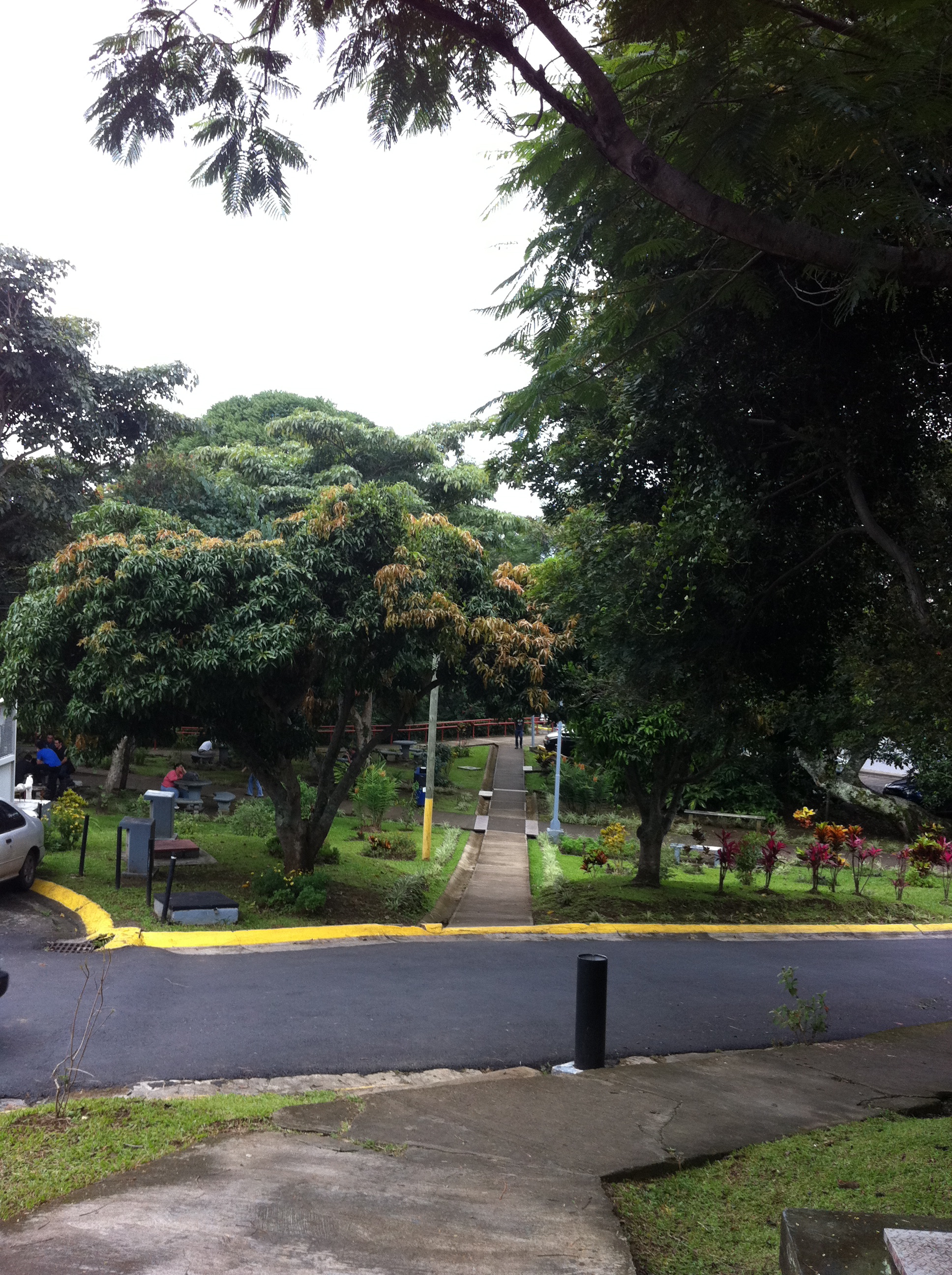
From the UNA campus – very exotic seen from the eyes of a Dane.

The first project is called ” Curricular Innovation of Study Plans in the disciplinary area of System Engineering at the Universidad Nacional, considering POPP (problem oriented project pedagogy) as a methodological approach”. Dra. Mayela Coto and Máster Sonia Mora are the local researchers in this project. Maylea Coto received her PhD from Aalborg University (AAU) in December 2010, but is back living in Costa Rica with her family.

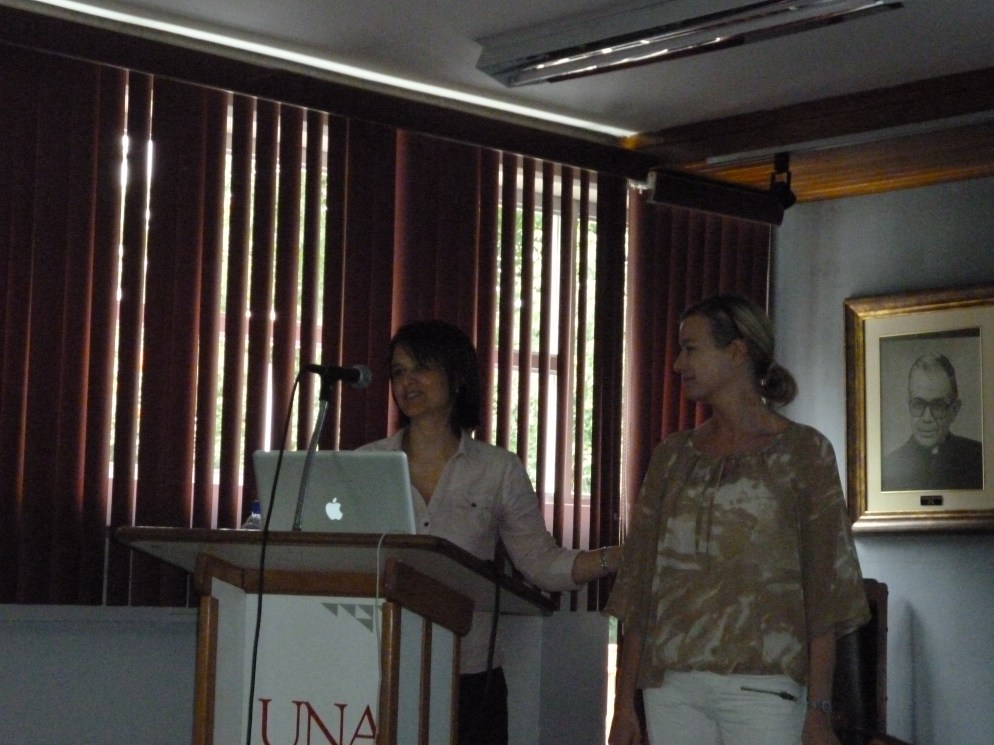
My role in this project is fairly limited. I was invited to give an introductory lecture on the Aalborg PBL model (incl. the particular POPP approach) and to participate in a couple of workshops and research meetings focusing on implementing PBL.

My AAU colleague, Professor Marianne Lykke, will go to Costa Rica in January to continue this work.

The second project is called “AVATAR: The use of Second Life as pedagogical approach”, and Máster Carmen Cordero, Máster Willy Castro & Máster Dinia Rojas are the local researchers in this project. My AAU colleague, Post Doc. Heilyn Camacho, who also is from Costa Rica, and I are working together in this project, and this is the context for the UNA-AAU course in SL that we currently are running. In the UNA-AAU course, we are also lucky to collaborate with Danish SL designer and educator, Inge Knudsen.


Kick-off session in the UNA-AAU course.

Before leaving for Costa Rica, Inge and I had tried to kick off the UNA-AAU course in SL, but we experienced quite a lot of technical problems and language challenges making it difficult to figure out exactly why things weren’t going as expected. Originally, Heilyn and I were supposed to go together to Costa Rica, but due to unforeseen administrative issues, I ended up going alone. Heilyn went a couple weeks later and experimented specifically with the Lego Serious Play concept to help the participants understand the course assignment better.


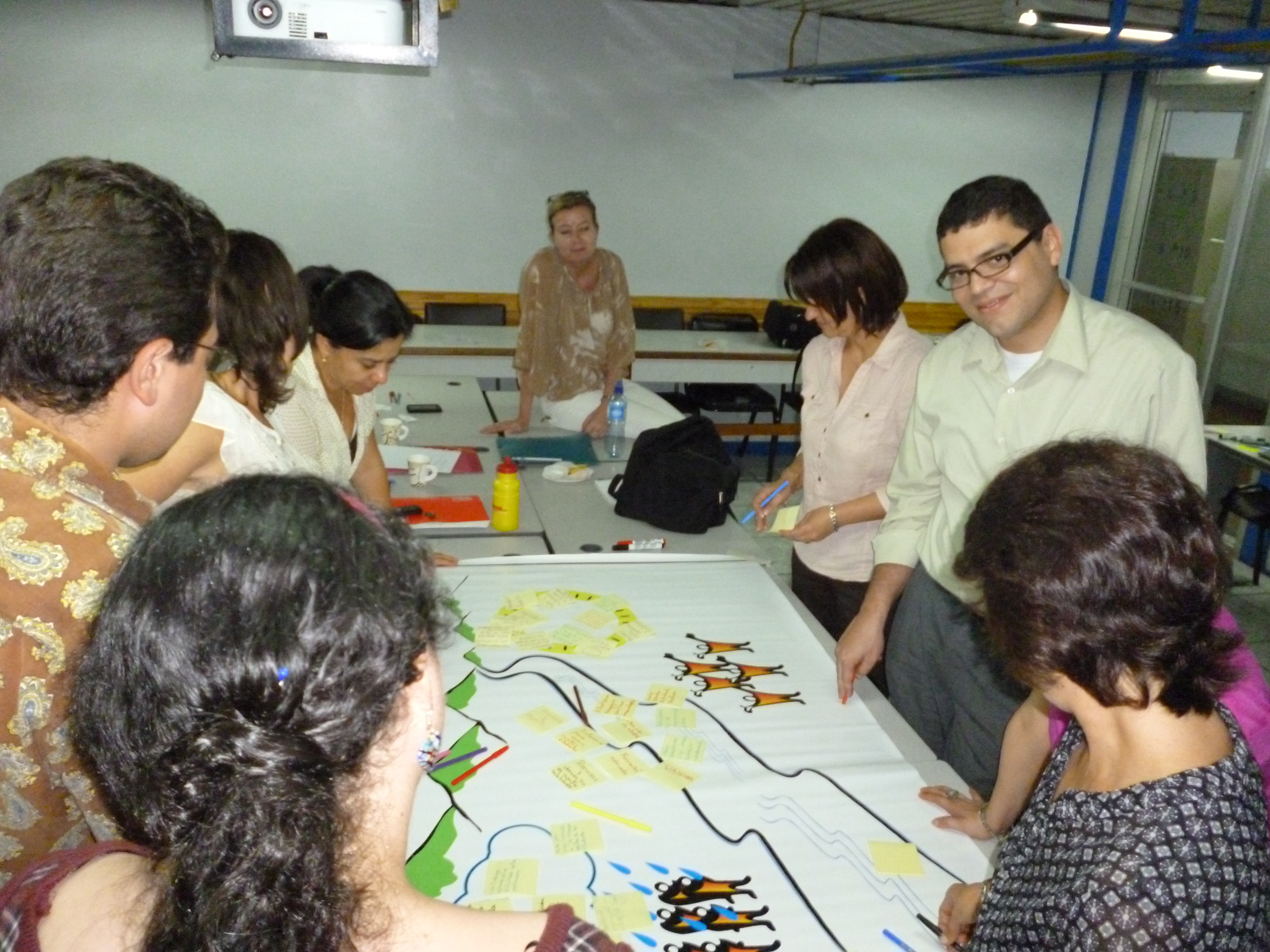
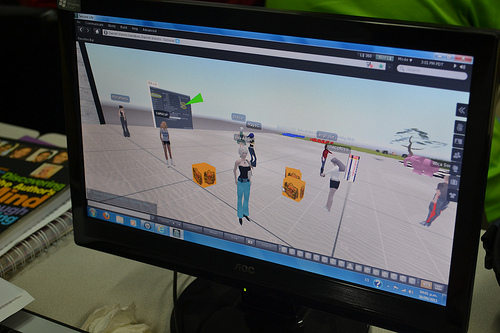
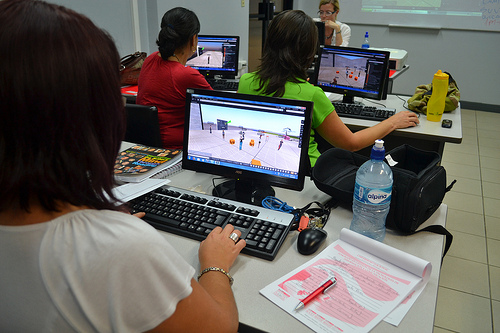
SL participants in UNA Virtual’s computer lab.

In relation to the UNA-AAU course, the participants and I spent two days in the lab mainly doing hands-on exercises, and we had a lot of fun. Introducing SL is always such a pleasure, and I really enjoy helping participants discover the many possibilities of this medium.

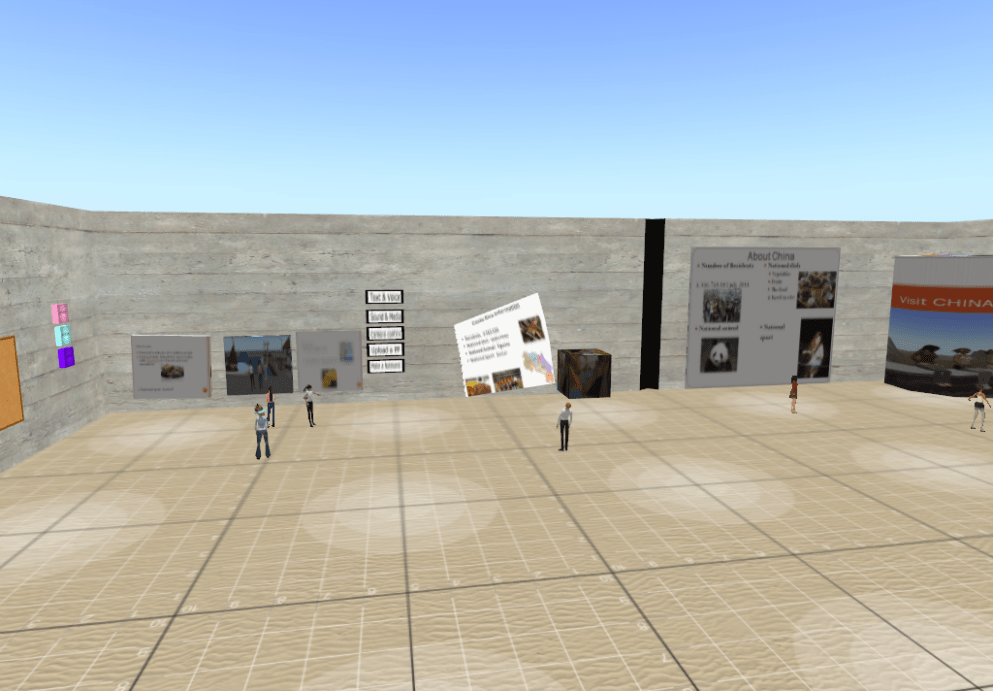
There are nine participants in the UNA-AAU course, and for the course I’ve asked them to work in three teams. In one of the in-world exercises, each team had to go to a representation of a specific country (Denmark, Costa Rica, and China (Inge is also a Sinologist)), explore, find facts and take pictures, and finally present their findings to the rest of us. Not only did this exercise demand the mastery of basic SL skills, it also highlighted the inter-cultural aspect of the course, and it seemed to work very well.

Setting up the three presentations in the sandbox.
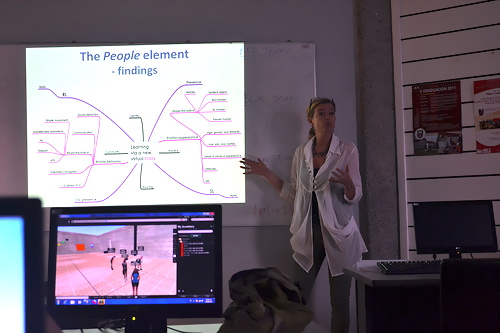
On the second day, I gave a short talk about my research in SL, tried to elaborate on the pedagogical underpinnings of the course, and we continued exploring and trying out different SL features.

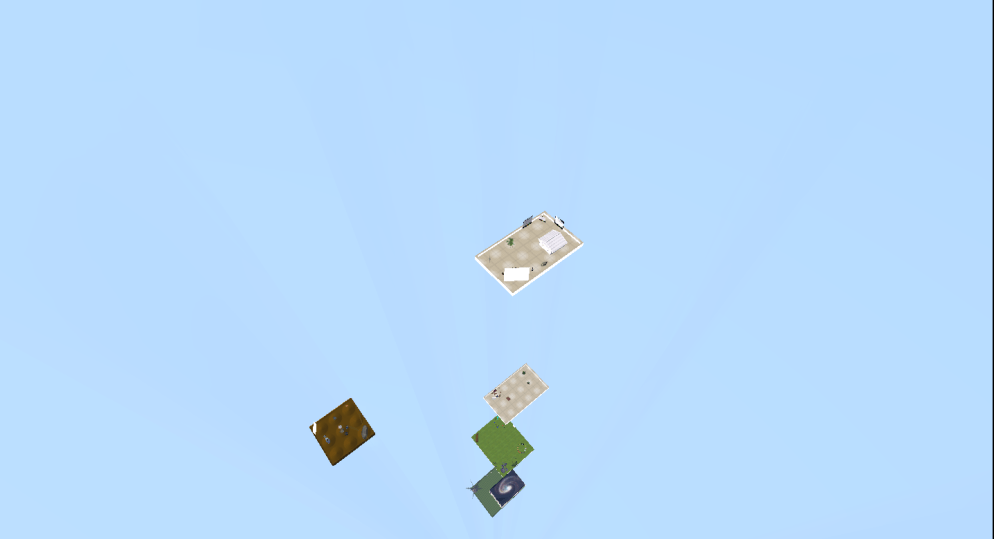
I was truly impressed by how fast the participants understood the more technical aspects of SL, but it was also very apparent that the majority of the participants did not understand English very well. Another challenge was the time that the participants are able to allocate for the course. In Costa Rica there seems to be little tradition in Academia for giving the faculty time to participate in Professional Development (PD), and because the salaries are low, many teachers actually hold two jobs to make ends meet. In the UNA-AAU course this means that the participants can only allocate 3-4 hours/week, and anyone who has been working with and in SL knows that it takes time to learn the basics and time passes quickly once you have logged in. Therefore I decided to cut the course literature (for many it would take more than 3-4 hours to read one English text), and focus on giving the participants some good and relevant experiences in SL.  I have designed the course based on some of the fundamental principles of PBL (problem orientation and formulation, student control, open-ended curriculum, and qualitative assessment), but given the above-mentioned challenges, I have found it necessary to play a more instructional role than I usually would do. By the end of the course, the participants still have to present an analysis of SL as teaching and learning environment in relation to a self-chosen target group, but I have asked them to use a particular model for their analyses to ensure that they cover some of the most important didactic/instructional elements. For the presentations, each team has its own sandbox in the air above the Danish Visions Island.


Sandboxes in the air.

In both research projects, UNA has asked us to collaborate in terms of teaching and research. Though the projects are different, they are both aiming at implementing new pedagogical strategies and technologies. Making the change to start using a PBL framework and SL as technology is a big change in itself, but based on my experience in Costa Rica, I would say that the biggest challenge has to do with culture.


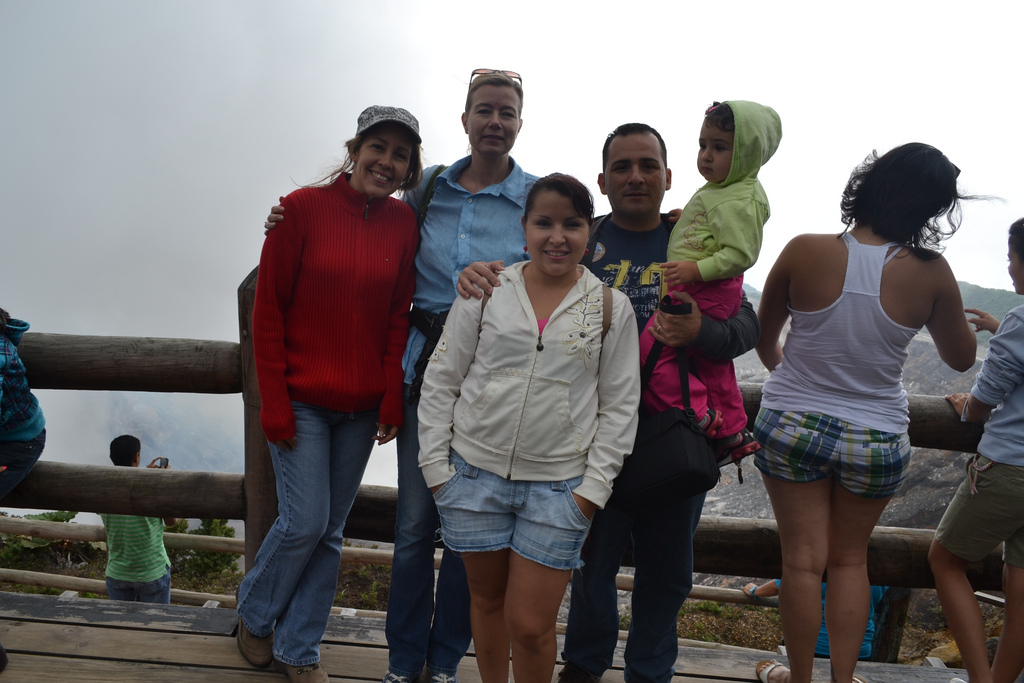
Visiting the Poas Volcano.

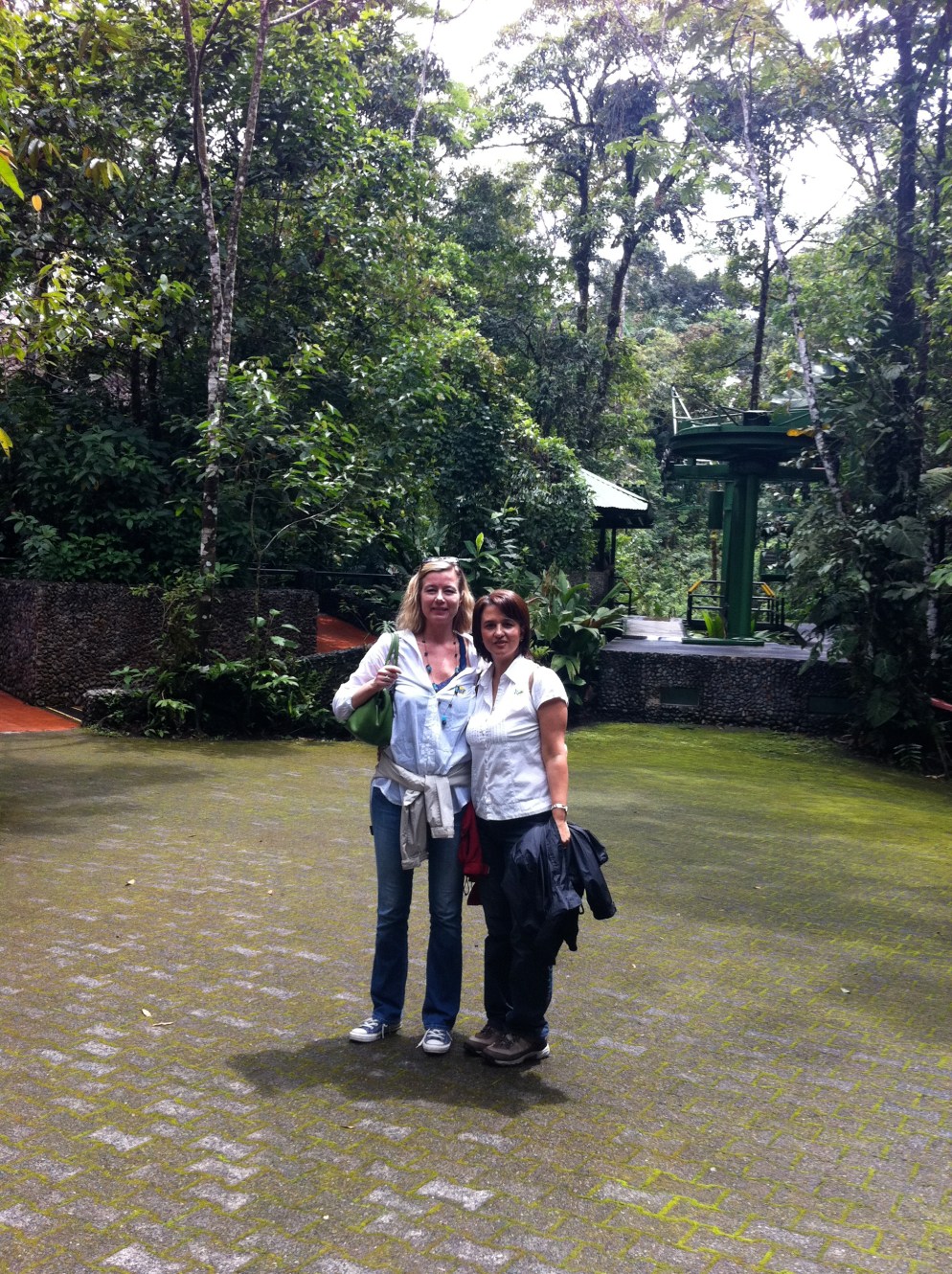
Ready to embark a gondola ride into the rainforest.

All of the teachers I met in both projects were eager to change and to learn about new kinds of pedagogical practice, and I feel confident that they will. I do, however think that there are several challenges that need to be addressed. Certainly, my colleagues and I will do our best to support these Costa Rican teachers, but unless the management of the university recognizes that PD demands time (and credit), I fear that the changes they are all hoping for may take many years. A very interesting – and somewhat paradoxical – perspective on this, is the fact that education per se is highly prioritized in Costa Rica. There are more than 50 universities in this small country with only approx. 5 mio. people! Changing a pedagogical/academic culture is obviously not something that happens over night, but it does seem like the appropriate place to start, and at least the context is something that we (from the outside) need to consider very carefully when designing for change.

And yes I still do believe that education is what’s needed – perhaps just not only as in “teacher training”, but also on a more complex level and for all of us involved in this process. Thinking about this, cultural anthropologists, Bates & Plog (1990)’s definition of culture comes to mind:

[Culture] is a system of shared beliefs, values, customs, behaviors, and artifacts that the members of a society use to cope with their world and with one another, and that are transmitted from generation to generation through learning.

/Mariis

Bates, D.G. and Plog, F. (1990:7): “Cultural Anthropology”. 3rd ed. New York: McGraw-Hill.