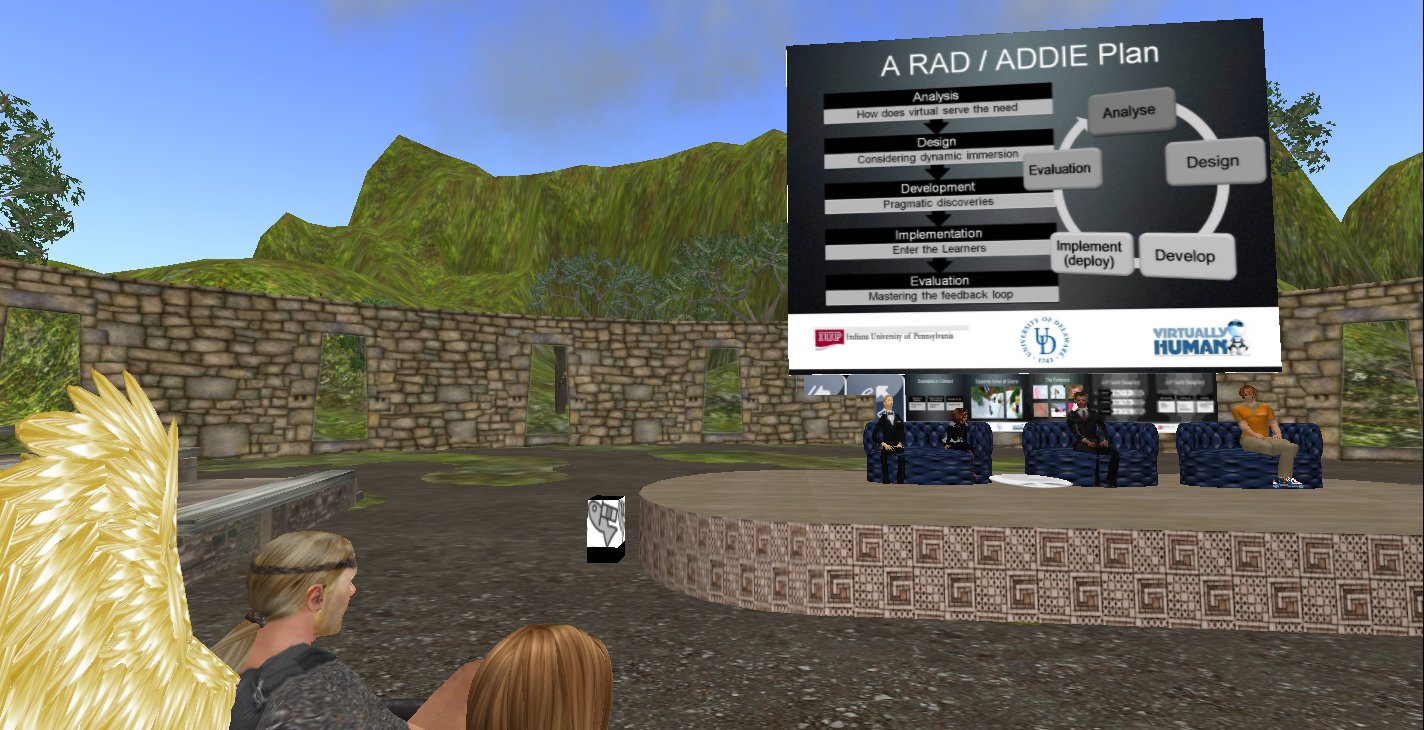
Connecting theory and practice through SL designed case-based simulations

On Wednesday, January 19th Milano Bluewood, Savage Seaside, and Vibs Bluebird from the MIL-Health group did their presentation and analysis of SL as teaching and learning environment based on a Danish in-world project called CaseConnexion (Danish description). This is a project aimed at Nurse Education, and Milano is actively involved in the project. A pilot study was run in the fall of 2009, and it was the experiences from this study, the group had decided to present and discuss, and so naturally we started off on the island CaseConnexion.


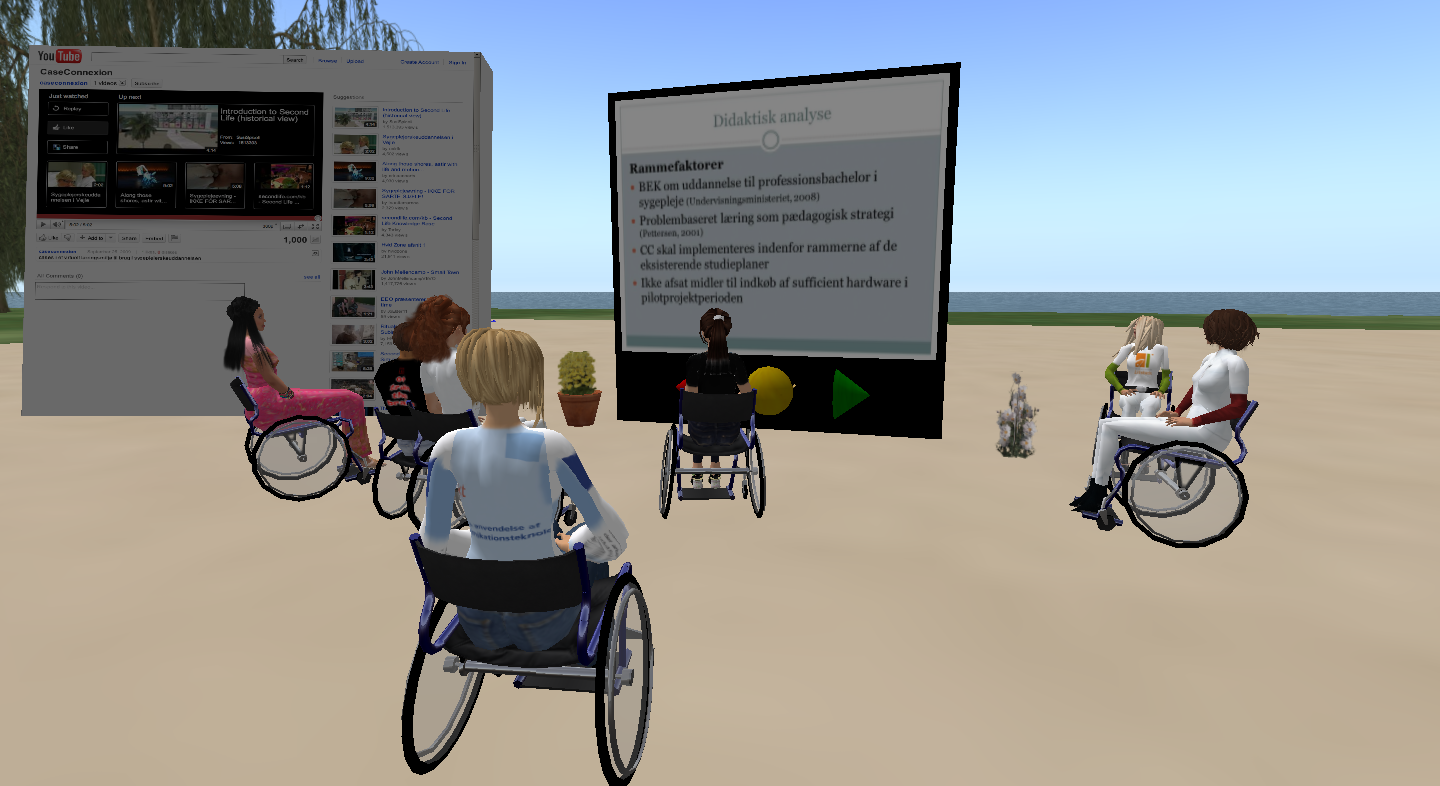
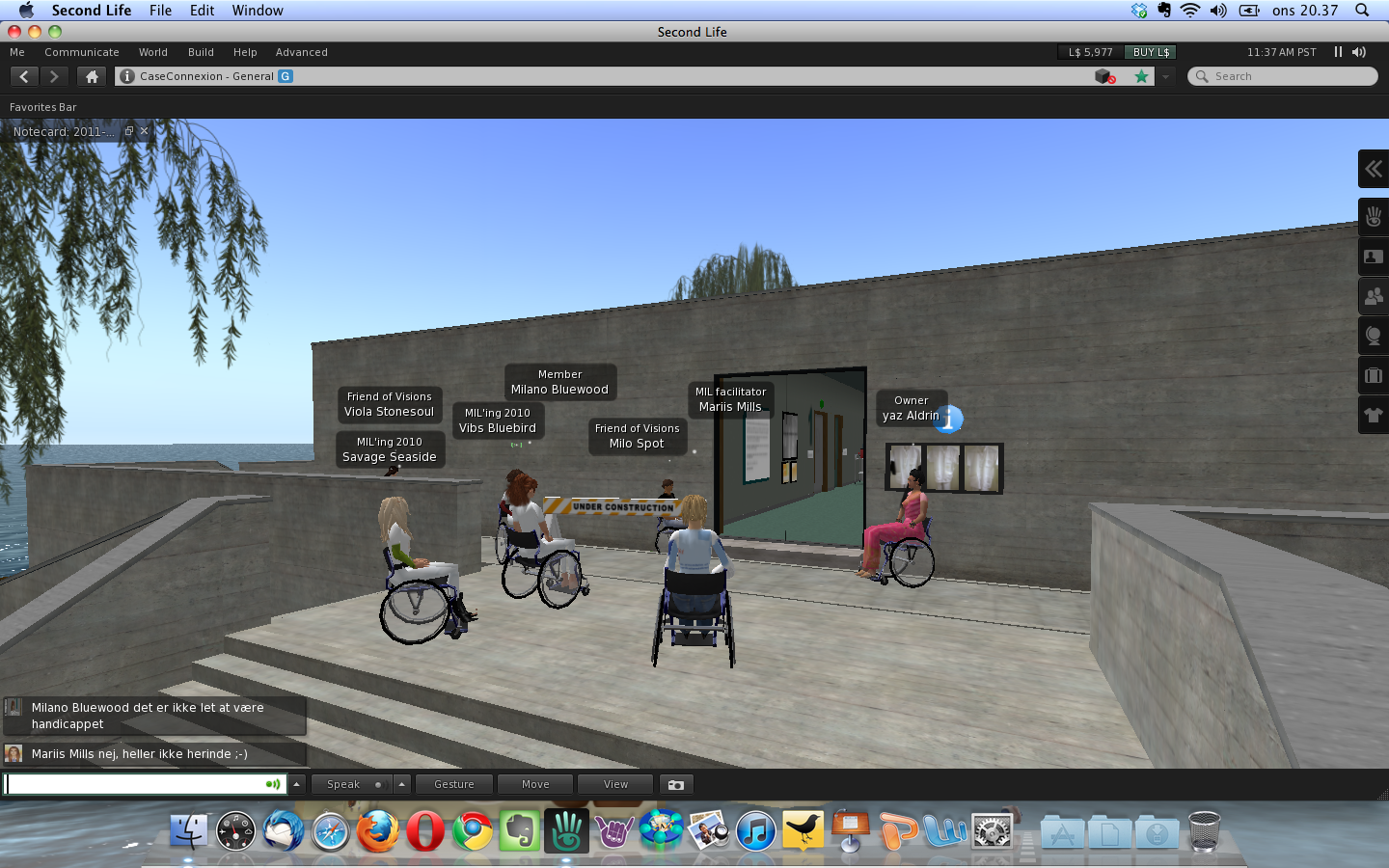
Milano, Vibs, and Savage presenting in CaseConnexion’s sandbox

The main purpose of starting the in-world CaseConnexion project was to investigate its potentials in bridging/connecting some of the theoretical and clinical elements of Nurse Education. A survey, with answers from 85 students and 7 teachers, pointed to a variety of issues that should be addressed in future use of CaseConnexion (thoroughly described in this Danish evaluation report); steep learning curve, lack of identification with the avatar, fear of looking stupid in front of class-mates, technical difficulties and “waste” of valuable time spent on learning the system rather than the subject matter as a consequence of the former issues.

These were all issues that we also had encountered and discussed during this MIL-course, and so the group wanted our feedback on ways to solve these problems. As the group explained, the survey fortunately also pointed to issues on the plus side such as variation in teaching and learning methods, and the ability to practice skills without actually hurting/harming real humans through case-based role-play. As part of the set-up for their presentation, the group provided us with wheel chairs, which contributed to set the scene. It was interesting to experience and observe how we all felt the limitations of this type of handicap, and this led to discussions on how design can enhance/limit the sense of embodiment. We were also asked to watch this brief Danish video abut the project.

Next part of the presentation was to drive over to the hospital …


Racing towards the hospital … except that racing while taking pictures is a no-go in SL!


First quiz at the entrance; pick the right uniform or you’ll not be allowed enter!


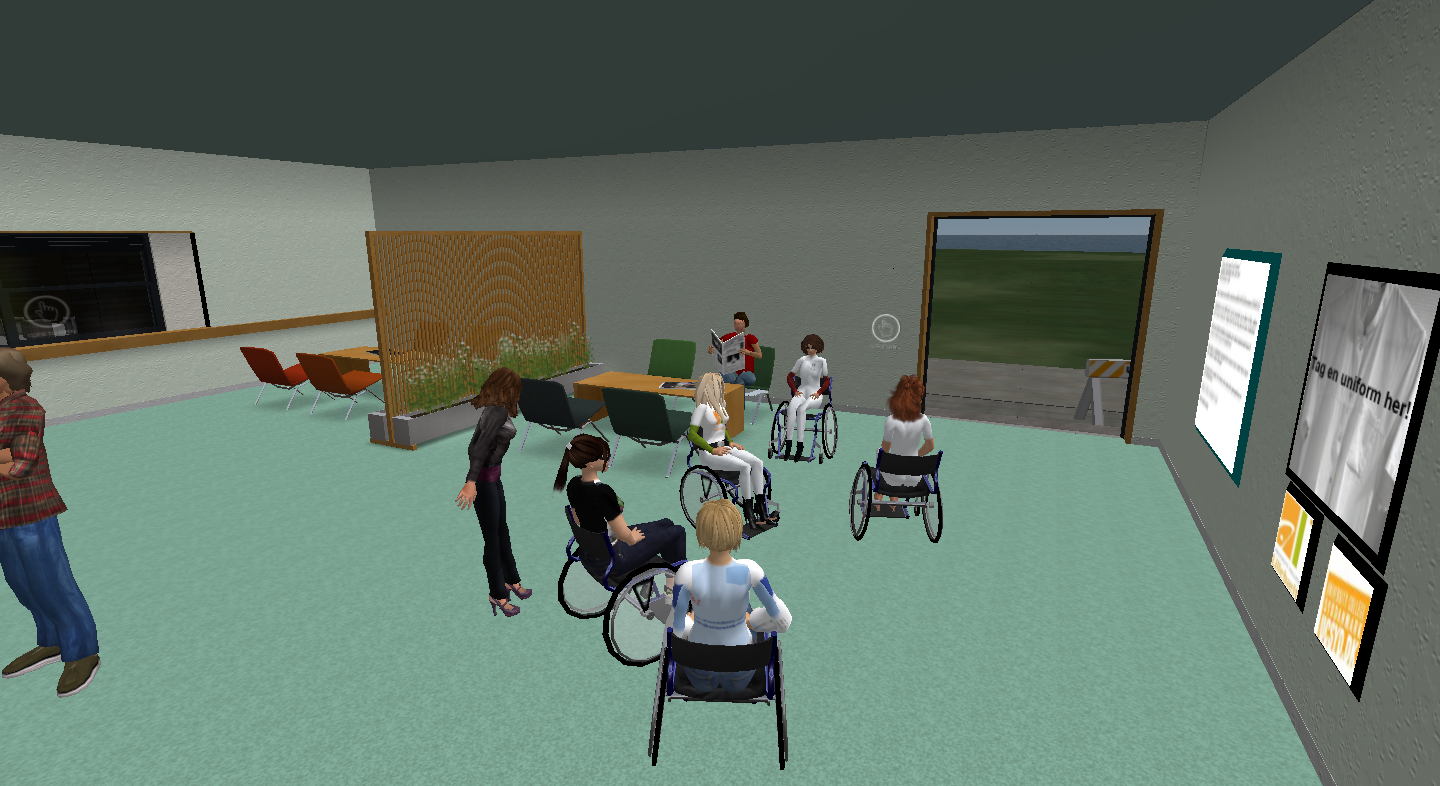
Reception area with free uniforms and bots to add to the RL-feel of this respectful remediation of a hospital environment.


Wash your hands upon entrance into patients’ rooms – otherwise simulations don’t work.


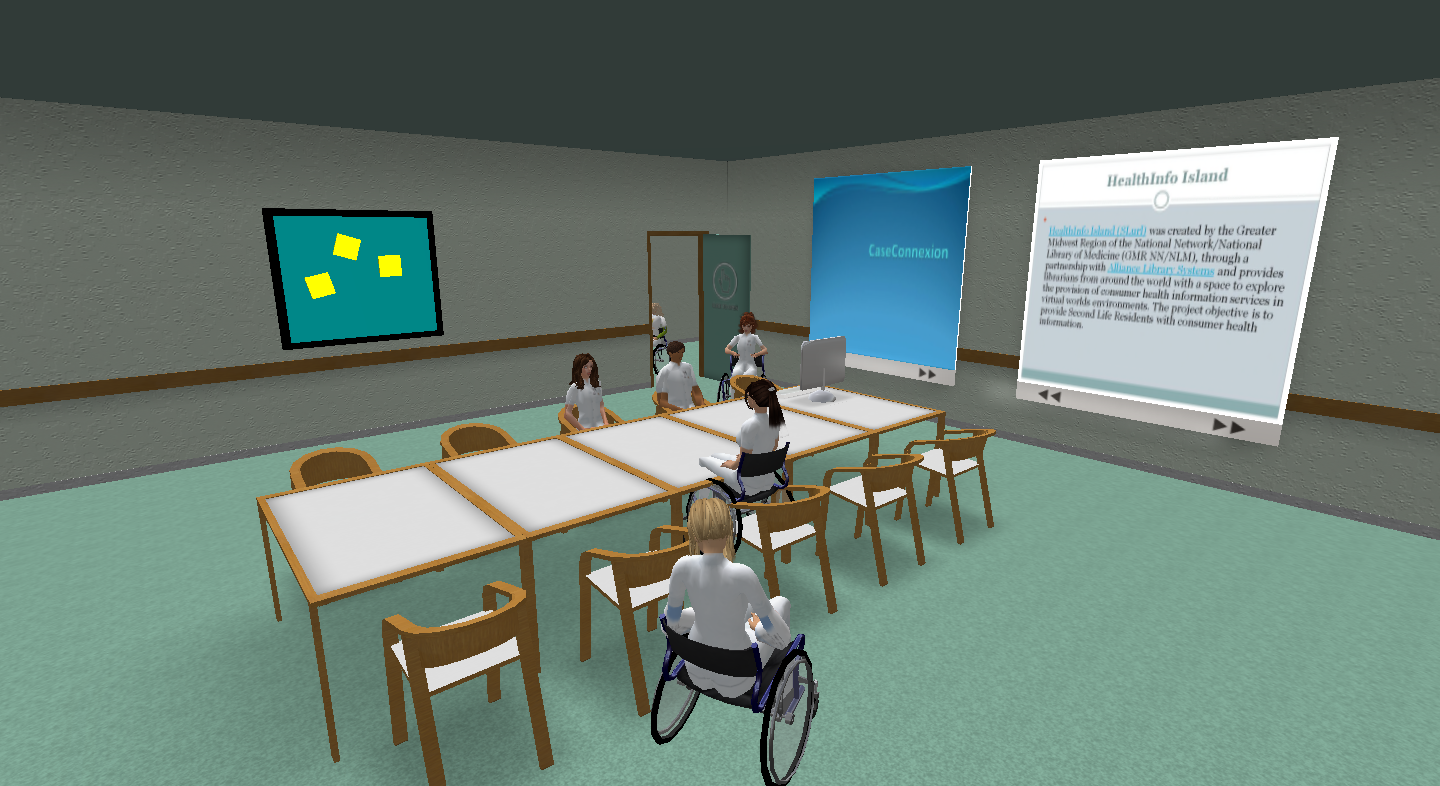
Staff’s conference room.


Exploring patient cases.

After exploring the hospital we went back to the sandbox, where Milano, Savage, and Vibs presented other, international examples of in-world Nurse Education – one of them being a project led by University of Auckland in collaboration with several other universities. After watching a few minutes of the video below, we were asked to go to the island Land of the Long White Cloud.

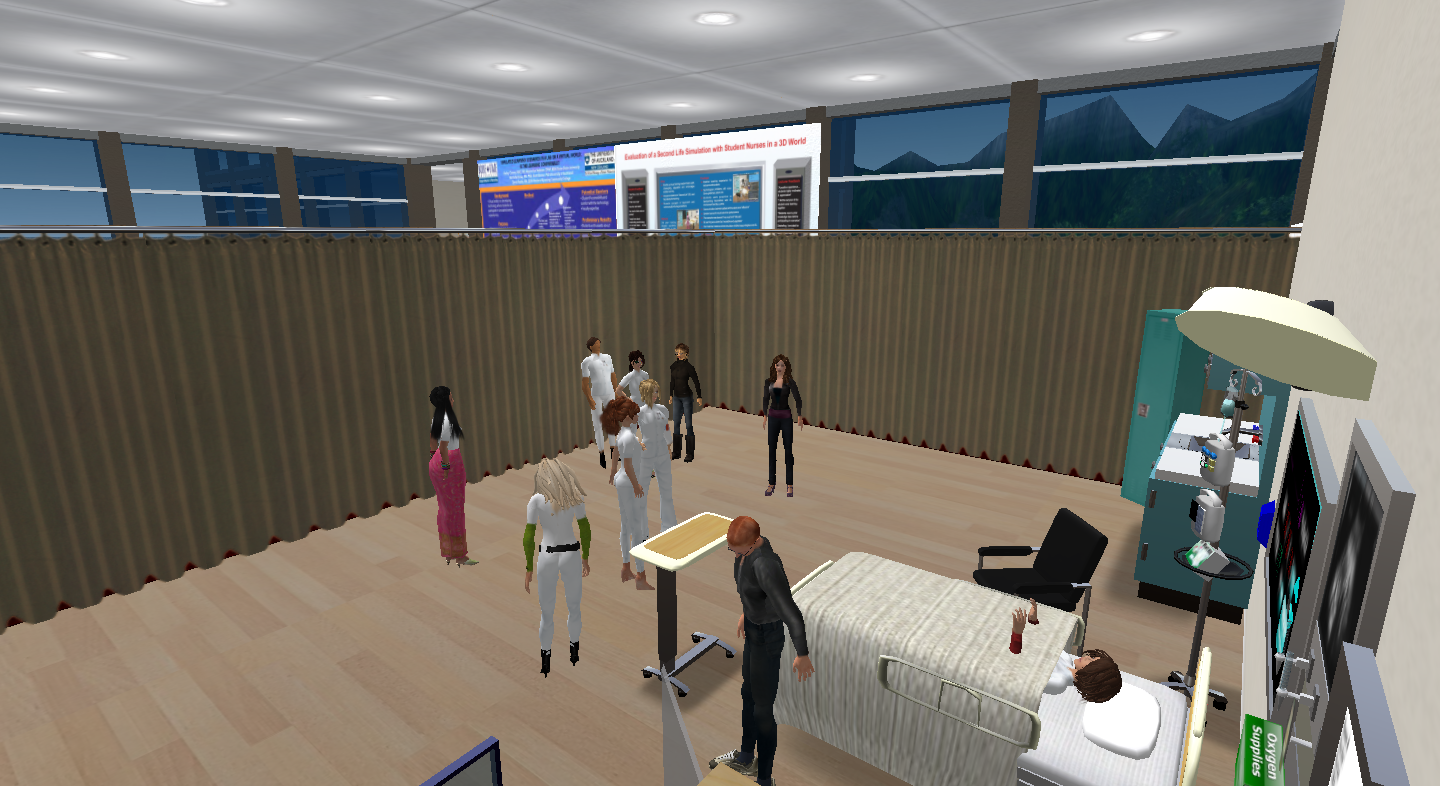
In the hospital on the Land of the Long White Cloud, we had the opportunity to investigate a different patient room also designed to be used in case-based teaching and learning.


An avatar  (as opposed to a bot as we saw on CaseConnexion) can climb into the bed and actively participate in the case.


The patient room from one side of the curtain …


… and the same patient room from the other side. A nice feature enabling the instructors and other audience to overlook the simulation. Just as in real life  – except for the ability to change POV.


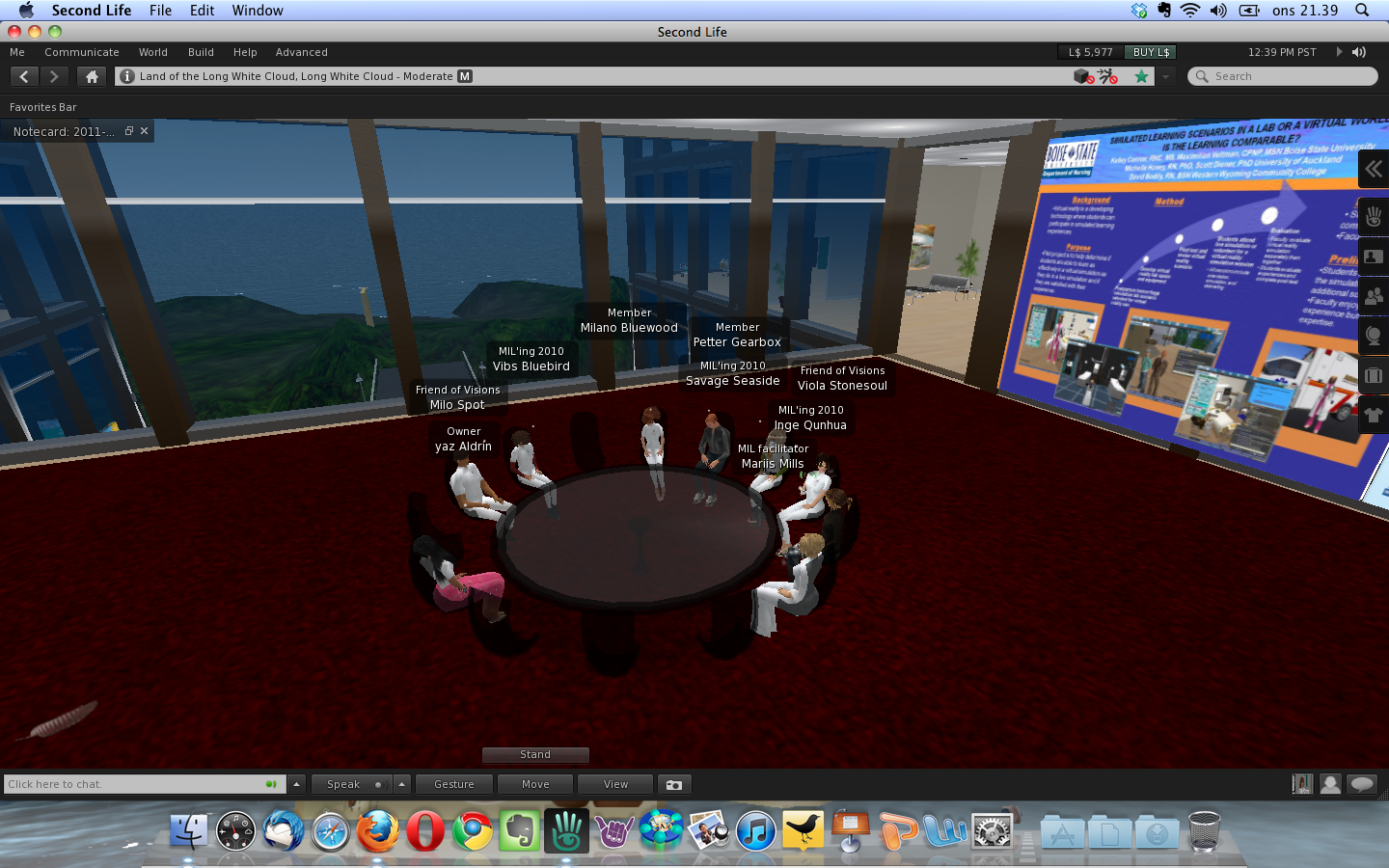
Debriefing/feedback session

Having tried out different features of the patient room, the MIL-Health group invited us to the debriefing table, where we continued discussions on especially design for embodiment, sense of presence and collaboration. Milano, Savage, and Vibs had prepared a presentation, which in itself illustrated the connection between theory and practice, and it was refreshing to discuss some of the more difficult parts of designing for teaching and learning in 3D-avatar based worlds like SL.

The CaseConnexion project showed that designing for teaching and learning in SL is challenging and complex, and this is also my personal experience from having run 5 in-world courses. Milano, Savage, and Vibs’ session reminded me of László Moholy-Nagy by whom I’ve previously been inspired, and one of his famous quotes on design from Vision in Motion:

Design has many connotations. It is the organization of materials and processes in the most productive, economic way, in a harmonious balance of all elements necessary for a certain function. It is not a matter of façade, of mere external appearance; rather it is the essence of products and institutions, penetrating and comprehensive. Designing is a complex and intricate task. It is integration of technological, social and economic requirements, biological necessities, and the psychophysical effects of materials, shape, color, volume, and space: thinking in relationships.”

/Mariis

A CoP approach to facilitate university teacher PD in ICT and POPP

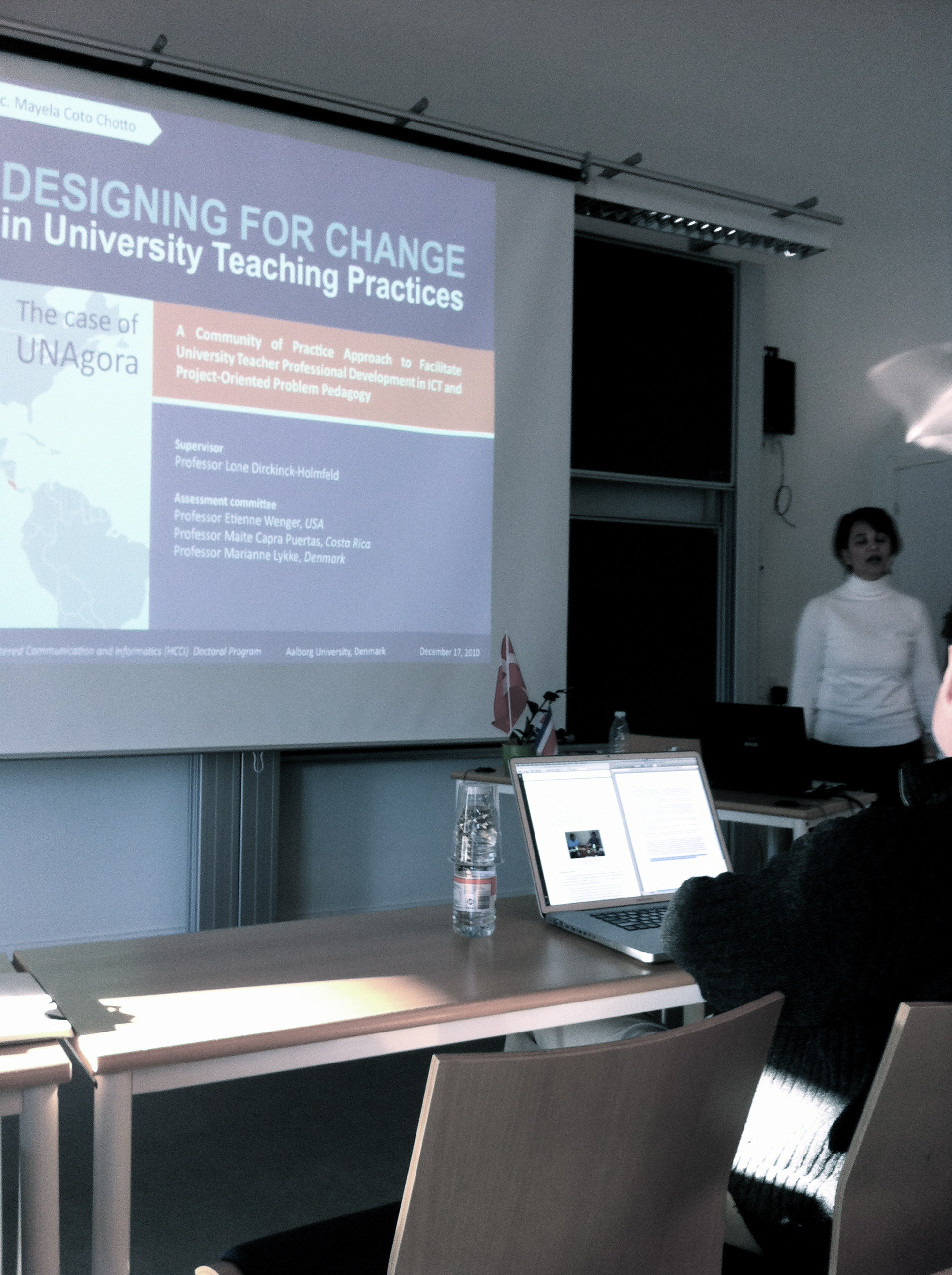
On December 17th, 2010 I had the great pleasure of attending my (now former as she’s back in Costa Rica) e-Learning Lab colleague, Mayela Coto’s PhD-defense. Mayela’s thesis is entitled “The case of UNAgora: A community of practice approach to facilitate university teacher professional development in ICT and project-oriented problem pedagogy”, and is now available for download here.


Mayela presenting her findings on Dec. 17th, 2010 at Aalborg University.

Here is an excerpt from the abstract:

  • The overall aim of this research is to enhance the understanding of to what extent a distributed community of practice approach affects the professional development of university teachers and whether this leads the teachers to promote a transformation in teaching practices mainly regarding the introduction of ICT and project-oriented problem pedagogy (POPP).
  • More specific research questions are concerned with what is the impact of belonging to the community of practice on teachers?; what kind of changes takes place in the teachers’ practice?; which factors support or hinder the professional development of teachers who are part of a distributed community of practice?; how does technology contribute (or not) to the formation of the community, and to the professional development process?; and what principles may be used to guide the design of a professional development model- based on communities of practice for fostering change of practice?
  • The main findings of the study were that the distributed community of practice approach appears to be a productive form of professional development under certain conditions. It provides an environment for learning and dialogue that can enrich and deepen teachers’ knowledge, as well as an understanding of important educational issues and change of values, beliefs and practices. Issues of access to technology, culture of online communication and collaboration, teachers’ workload and time have been identified as conditions that need to be carefully studied in order for the approach to be potentially effective.
  • The overall result of the approach to professional development proposed by this study, offers teachers a scope for learning, negotiation and identity formation within the community. The study also suggests that teachers who are closer to the center of the community are able to identify with, and develop a feeling of belonging to the community to a greater extent than the teachers with a peripheral role. However, it seems that both kinds of teachers are able to transform, to some extent, their teaching practices.

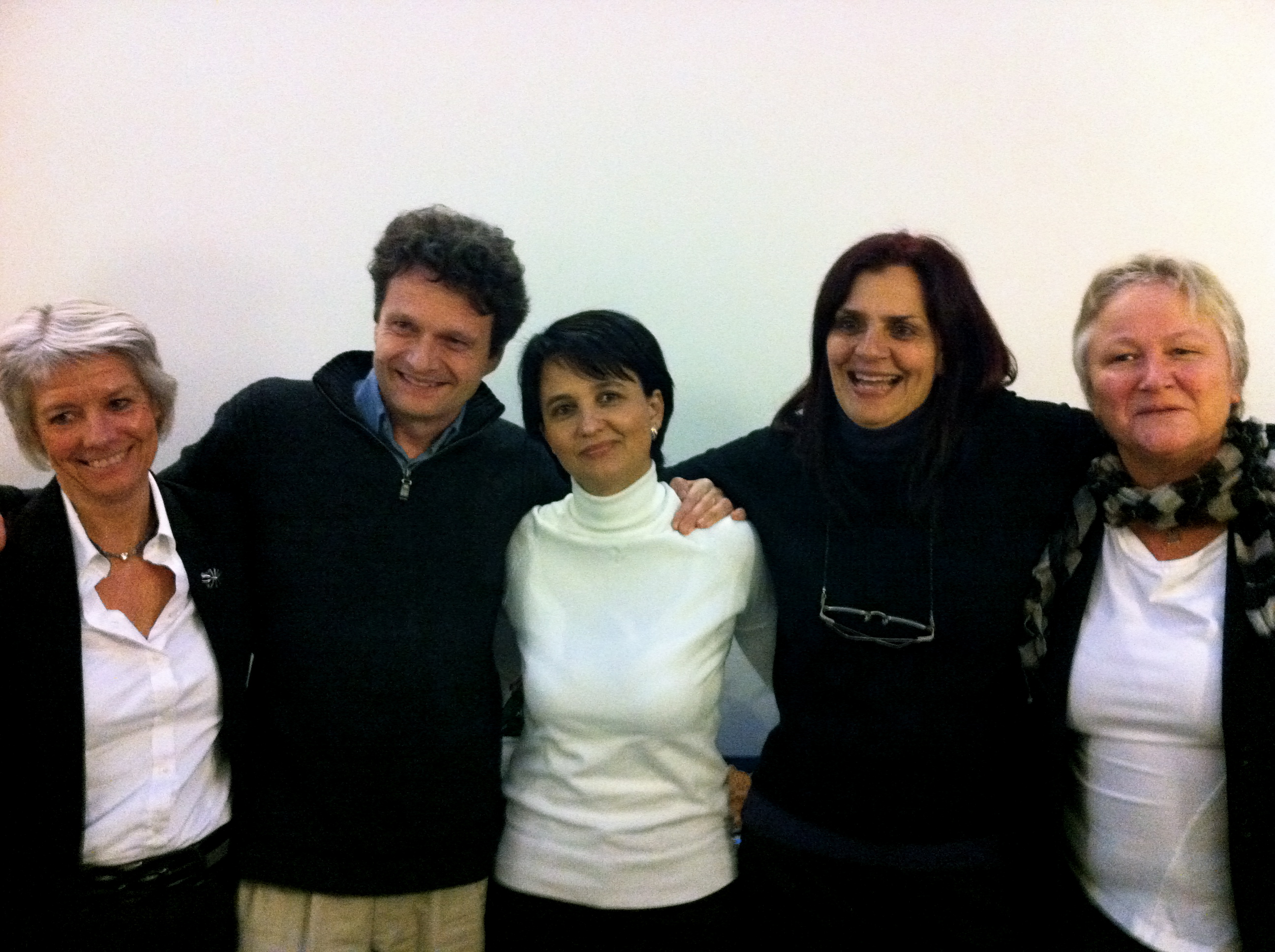
Mayela’s supervisor (who’s also my PhD-supervisor) was Professor, PhD Lone Dirckinck-Holmfeld (Aalborg University), whereas the examining committee consisted of Maite Capra (Univercidad Nacional Costa Rica), Marianne Lykke (Aalborg University), and Etienne Wenger.


Similing faces after the very successful defense: Lykke, Wenger – Mayela Coto – Capra and Dirckinck-Holmfeld

It’s a pretty long thesis, but well worth the read :-)

/Mariis


The AVATAR project: “Added Value of teAching in a virTuAl woRld”

Alumni from The Danish Online Masters Program in ICT and Learning (MIL) and one of the participants in my first research cycle in SL back in 2007, Inger-Marie F. Christensen from Southern University of Denmark (SDU), is currently involved in an interesting project called AVATAR “Added Value of teAching in a virTuAl woRld”.

The project runs for two years (December 2009 – November 2011), is co-financed by the European Commission under the Lifelong Learning Sub-Programme Comenius, and involves partners from Austria, Bulgaria, Denmark, Italy, Spain and the UK.

AVATAR is inspired by the lack of ICT use in schools throughout Europe despite the possible educational benefits and social learning opportunities they promote, and the project’s primary aim is to enhance the quality of teaching and education in secondary schools.

So far a six-month research phase has been completed based on desktop research, online questionnaires, video interviews, and case studies. The next phase of the project will be to design, build and develop training contents, activities and virtual labs for an upcoming AVATAR course “Teaching in a Virtual World” on an e-learning platform combined with SL and Teen Grid. This course is expected to run from mid-January 2011 and will be open for secondary school teachers and their students. The project partners will collectively select about 100 secondary school teachers from each partner country to participate in the course and test out virtual worlds in their classrooms. Towards the end of the course, each teacher trainee will design a “project work”, consisting of a lesson or course in a subject of their choice to test out on a group of students at their school.

The AVATAR course aims at enhancing the level of ICT use in education by providing teachers with new methodological and pedagogical tools. Virtual Worlds (VW) can help teachers and students learn key skills and information in different subjects, while incorporating collaborative learning and a learning-by-doing approach.

Course description and application form is expected to be published here on the project website by the end of July :-)

/Mariis

#vwbpe 2010 – 2nd day impressions (part two’ish)

Continuing my reflections on the 2nd day of the VWBPE-conference the next session I participated in was on “Rapid Development of Interactive Educational Content in Virtual Worlds: From Analysis to Evaluation”– a panel consisting of DoctorPartridge AllenFirery Broome, Quincy Solo Sherman Gustafson, who shared their experiences with content development. The panel spoke of their work with “Immersive Learning Simulations” (ILS) and the premise was stated in the abstract, which can be found here in the programme;

Emerging technologies in Immersive learning, like Second Life, afford us significant opportunities to explore new mechanisms for educational interaction, but they also present us with a wealth of new challenges. A common theme with the adoption of such technologies is that we are recycling older technologies rather than genuinely leveraging the tools and resources exposed by the new technology. This panel is composed of people who have been confronting this challenge, and working diligently to embrace both the new immersive learning technology and to fully utilize the new features and facilities inherent in those technologies.

I always find it highly inspirational to hear other instructional designers talk about their approach and their theoretical foundations, and a couple of things struck me in this. First of all there seems to be growing consensus on using the term “immersive” to describe the main affordance of technology/media like Second Life. I understand the need to distinguish Second Life from other types of virtual teaching and learning environments, but I find the use of “immersive” somewhat problematic. If by “immersive” we simply refer to a sense of “being in a place” as opposed to the less concrete “space” concept, I agree that virtual worlds like Second Life can promote this sense, but it is only a potential, not a given. I’ve had students in all my in-world courses that didn’t feel immersed at all, but this is also a matter of how you define “immersive” and something I’ll return to in later posts. Secondly, I agree with the panel that there are two major strategies for the technology/media adoption namely “recycling” and “genuine leveraging the new affordances” – two strategies that I refer to as respectful vs. radical remediation and have incorporated in my model for 3D-remediation of people, places and practices.
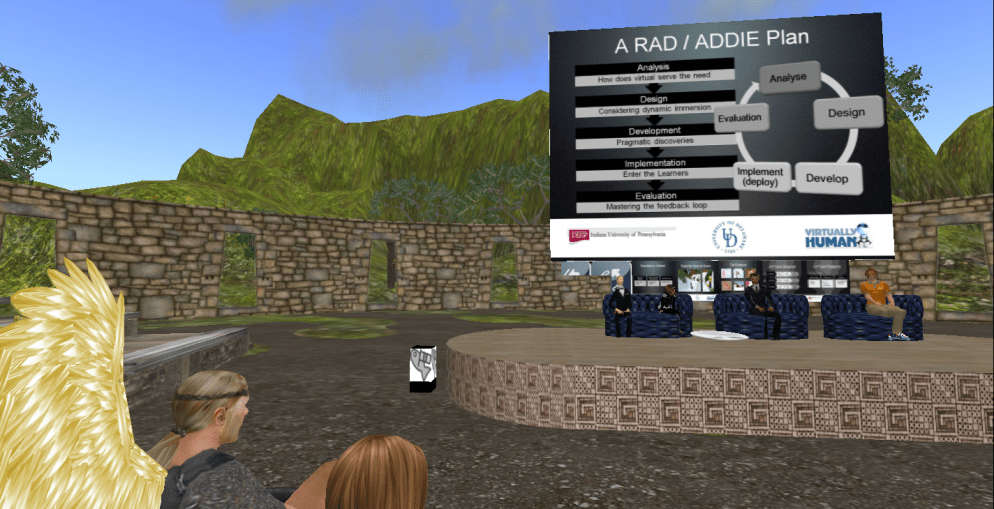
When describing their work the panel referred to the ADDIE model, one of the most common instructional design models that resembles the classic Action Research cycle of planning, acting, observing and reflecting – especially if continual feedback is applied i.e. through the use of RAD.

After I started writing this post my Mac broke down again – this time apparently for good – and sadly I hadn’t taken any backup of my vwbpe-photos or notes, so the rest of this will be based on memory (hence the ‘ish in the title).

The next event “Learning in 3D: A New Educational Dimension” with Abbott Bundy & Wada Trip was something I had been really looking forward to. When I did my first lecture on SL back in the fall 2007 I relied heavily on the work – primarily blog postings – of both Abbott & Wada and I’ve been following them on a regular basis ever since. Based on the abstract for the session it was clear that they would talk about their book “Learning in 3D. Adding a New Dimension to Enterprise Learning and Collaboration”, and since I haven’t read it, I found it quite interesting – the session is archived here on Treet.tv.

Afterwards Abbott wrote a post on his experience stating that he had seen the future of conferencing – in many ways I tend to agree that participation through 3D Virtual worlds can replace RL participation, but I think it’ll be quite some time before the larger part of at least the academic society will follow and it also requires a whole new outlook on identity validation. So many people I meet tell me they would never take an avatar serious. Essentially Abbott & Wada talked about instructional design, principles and practices and demonstrated a model they’ve come up with and I definitely need to have a closer look at that. They also mentioned Light Sequent, who also contributed to the book and who wrote a Masters Thesis on “Learning archetypes as tools of Cybergogy for a 3D educational landscape: a structure for eTeaching in Second Life.” It is worth noticing that they use the word archetype in a non-jungian way, and more as some sort of  characteristic traits of pedagogical practice (building blocks i.e. instructional strategies, methods for facilitating learning) – a bit confusing, I think, but I need to read the book to learn more…

Another much anticipated session was conducted by my two friends Chimera Cosmos & Spiral Theas, who presented their work with “Learning in a Virtual World: Using SL for Medical Education” – slides can be found here. There’s also a recording of the session here, but as you can hear the sound wasn’t terrific, especially Spiral’s voice was breaking up. Based on a pilot study on Continuing Medical Education, that they did together with colleagues and 14 participant family practice physicians (described in an article here) Chimera & Spiral presented some interesting results and also showed us how they had been experimenting with the use of mock avatars in role-playing. At a certain point Chimera logged in (via another computer) as the diabetic patient, Mariana Hexicola and started communicating with the audience. From the post Spiral wrote afterwards it was evident that they deliberately wanted to show, not just talk about, the things they had implemented in the pilot study.
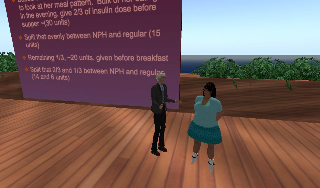
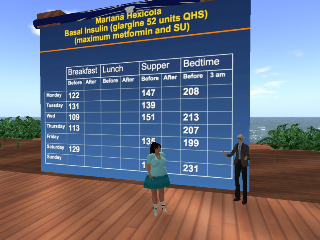
Pictures kindly provided by Spiral show the overweight, diabetic patient, Mariana interacting with the Professor as part of the pilot study.

The study proved some highly interesting results with participant improvement in clinical skills, but what also was fascinating, was the participants’ rating of the experience in SL as they all agreed that the experience was superior to other online methods, and the majority felt that the SL method was as good as, if not better than, f2f methods. Having read the above mentioned article, I’m quite sure that the success stems from a very deliberate instructional design strategy, which addressed the participants’ needs not only as learners of a particular subject matter, but also as users of SL. Even though it is a small study, I think it supports the growing body of studies done by especially natural scientists in virtual worlds very nicely, and the article is well worth a read even for educators in other fields.

After this, the next session I wanted to attend was on “Creating a Positive First Hour Experience“, which of course is highly relevant, but as the presenter decided to do his session in text only, I decided to skip it. SL simply doesn’t appeal to me without voice … I might as well read a regular text in my own pace. Instead I decided to get some sleep before attending the last session (at 5 am in Denmark), which was by another friend of mine, Tab Scott who has been actively teaching and researching in SL since 2005.

RL Tab is Director of Creative Research Lab at Montana State University and Tab presented some of the many projects the lab has been involved in since 2005 and also gave some hints as to where they are heading in the future – there’s a recording of the session here. A central keyword of the CRLab is collaboration, and when Tab first entered SL is was to investigate whether SL could be used as an environment to support collaboration, and well they’ve been using it in teaching architecture and arts classes successfully ever since. One of the many things I appreciate about Tab’s philosophy and approach to using SL is that he doesn’t see it as a stand-alone technology. Now, first of all there’s a very pragmatic reason for that, namely the stability of the environment. As Tab mentioned using SL back in 2005 (and even when I entered in 2007) could be really frustrating due to technical issues, constant updates of the viewer, maintenance etc. The stability of SL has improved a lot, but there still is a risk that you or your students will have technical problems, so a backup plan is highly recommendable. (i.e. Chimera and Spiral had Skype as backup as part of their instructional design). But I think a more appealing reason for not using SL alone stems from the fact that even though the core of the environment is 3D, the more interesting uses (naturally depending on your goals) often come when combing it with other 2D technologies such as SNS, shared documents and streamed media and at the CRLab they work with the concept of PLE’s thus trying to ensure that the students become media literate in a broader sense. Given that most new users find the learning curve in SL pretty steep, I think it makes perfect sense to include some more familiar technologies that also can help reduce the alienation some new users experience.

At the CRLab collaboration goes way beyond university and even state and county boarders, and another of Tab’s points was that we as in-world educators need to help each other validate the use of SL. I agree and I think that even though educators have been tirelessly using SL for many years now, it still is an emerging technology and in my point of view we have yet to pass the early adopter phase. Someone in the audience, who had been using SL for three years, mentioned that his problem wasn’t to get the students to use SL, but rather the rest of the faculty – and this is definitely something I can relate to.

Having a conference like this vwbpe – with proceedings expected in May 2010 – certainly is a good way of spreading the message and thus hopefully convincing more educators to at least have a go at using SL. I spent two great, inspirational and meaningful days participating in this, and my only regret – just like at RL conferences – is that I missed so many other interesting sessions. But unlike most RL conferences, many of the sessions were recorded:

All sessions on Treet.tv
All sessions on Metaworld

/Mariis